
Vet-Friendly Frozen Dog Treat Recipes You Can Trust (Complete Guide for Dog Parents)
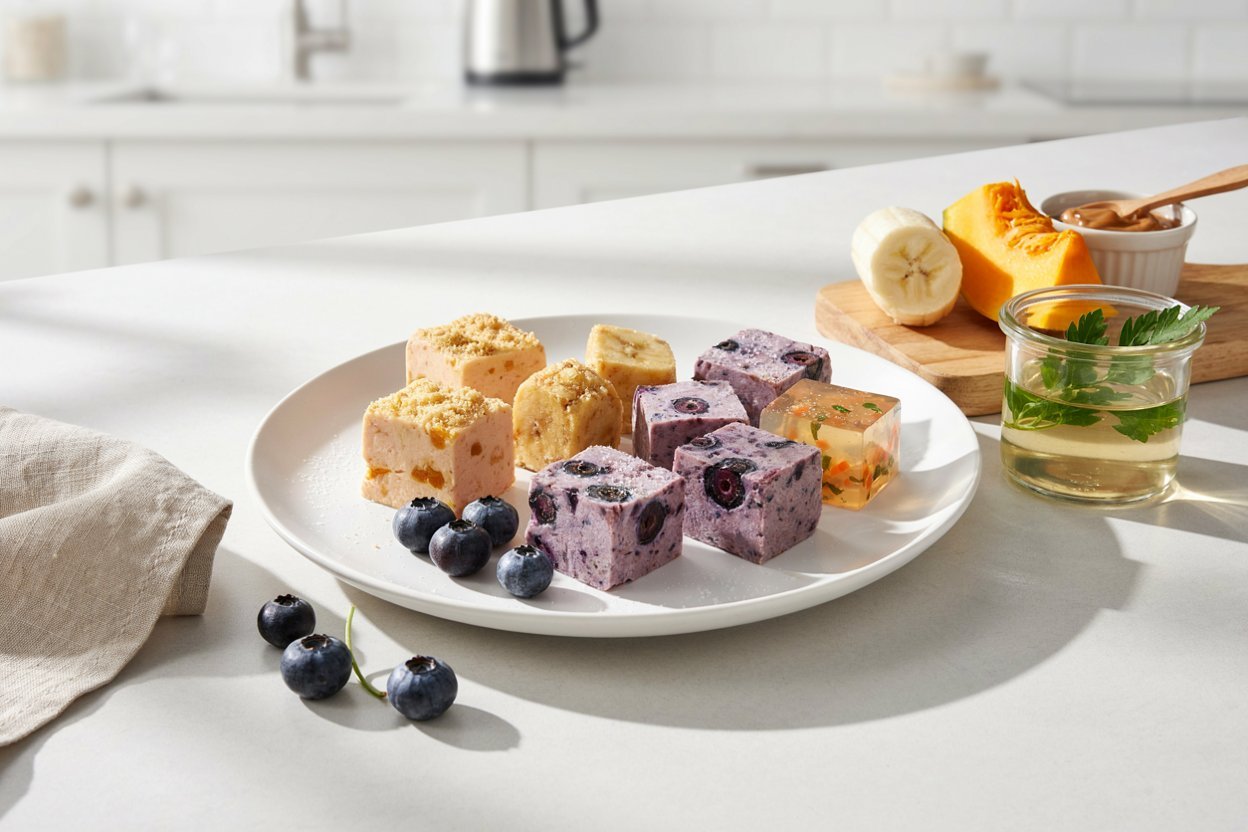
I started making frozen treats for my dog during one particularly brutal stretch of summer, mostly out of desperation to keep him occupied somewhere cooler than the backyard.
What began as a way to survive a heat wave turned into something I genuinely look forward to now, an easy way to hand him something cold, simple, and made from ingredients I actually recognize, rather than another bag from the treat aisle.
Along the way I learned which textures he actually gets excited about, how small a portion really needs to be, and more than a few mistakes about freezer storage that I’ll get into later in this guide.
This guide walks through one simple, genuinely flexible frozen treat you can build from a range of dog safe ingredients, along with the reasoning behind each one, real variations to keep things interesting, and everything else that separates a genuinely trustworthy recipe from a quick internet post.
If you want to build out your treat rotation beyond this one recipe, a few related guides are worth having open alongside this one.
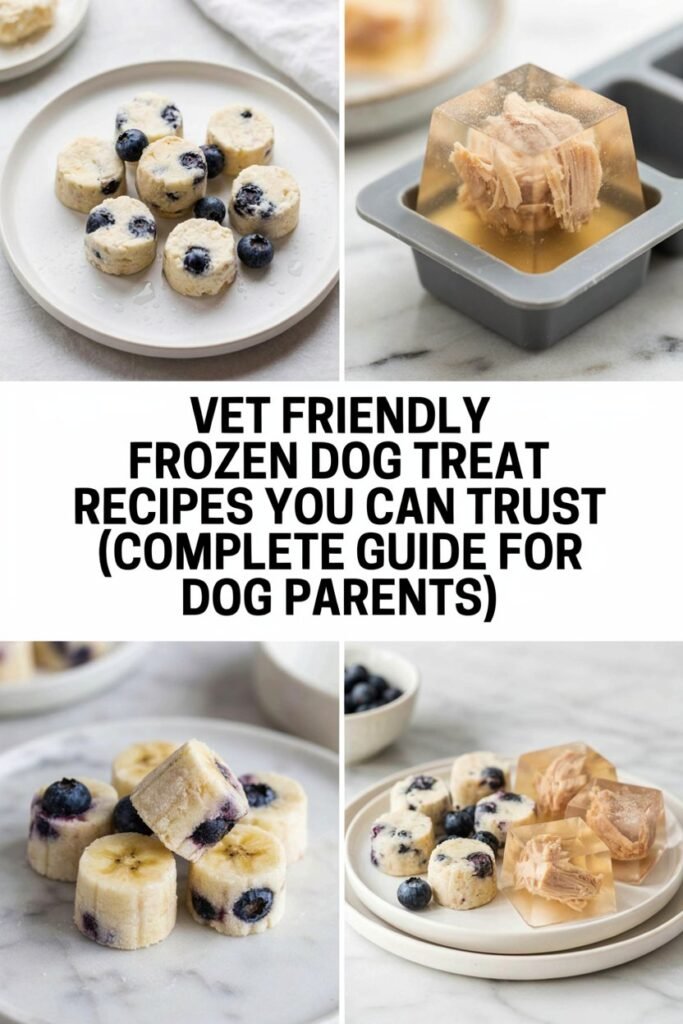
Cooling dog treats for summer days covers a similar hydration focused approach with more heat safety detail, easy frozen coconut dog treats for summer offers a more specific flavor direction, homemade banana dog treat recipes and simple carrot based dog treat recipes for beginners round out your everyday treat rotation, 3 ingredient peanut butter dog gummies, peanut butter banana gummies for dogs, and homemade beef bone broth gummies give you a few more gelatin based options, and DIY frozen dog treats using pantry ingredients is worth a look if you’d rather skip a grocery trip entirely.
Disclaimer: This post may contain affiliate links, which means I may earn a small commission at no extra cost to you. Always use dog-safe ingredients and consult your veterinarian before introducing new treats, especially if your dog has allergies or health concerns.
Amazon Shopping List You Need
- Silicone Dog Treat Molds (Bone or Paw Shapes)
- Dog-Safe Peanut Butter (Xylitol-Free)
- Silicone Ice Cube Trays for Frozen Treats
- Stainless Steel Mixing Bowl Set
- Measuring Cups and Spoons Set
- Airtight Treat Storage Container
- Dog Treat Freezer Storage Bags
What Makes a Frozen Dog Treat a Good Choice?
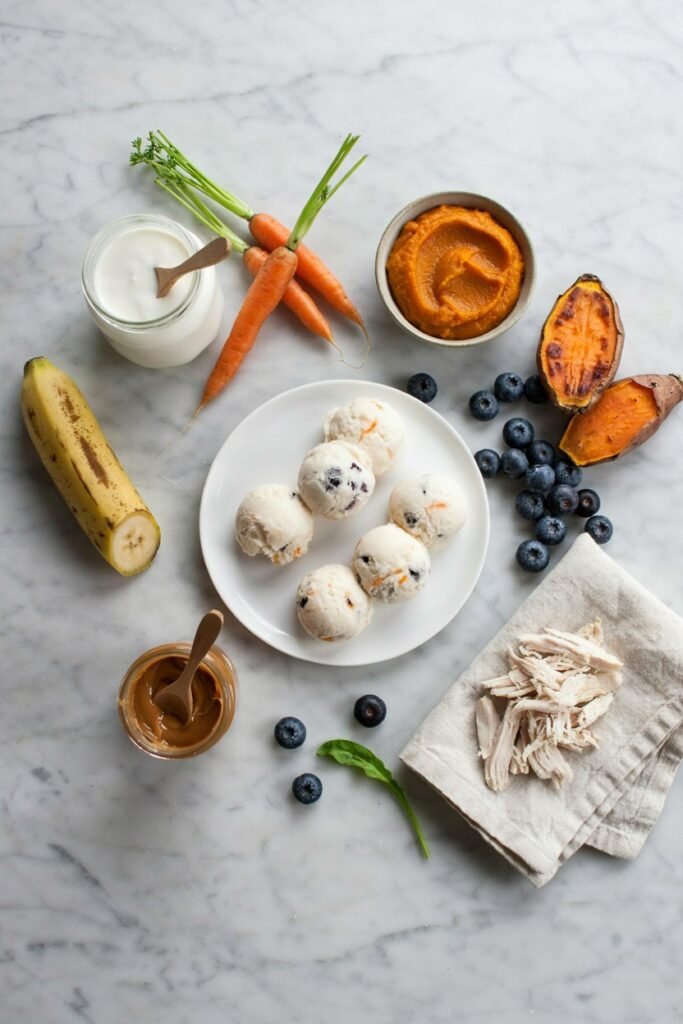
The best frozen treats are built around a small handful of simple, recognizable ingredients rather than anything complicated.
Plain unsweetened yogurt, pumpkin puree, bananas, blueberries, peanut butter without xylitol, cooked chicken, carrots, and sweet potato all show up repeatedly in this guide because they’re genuinely reliable, both in terms of safety and in how well they hold up once frozen.
Not every human food is safe for dogs, though. A particularly important warning is to avoid ingredients such as xylitol or products containing it, grapes and raisins, chocolate, macadamia nuts, onions and garlic, excessively salty ingredients, and anything heavy on added sugar.
None of the ingredients in this recipe include any of these, but it’s worth knowing why they’re excluded rather than just taking it on faith, especially if you plan to substitute or experiment beyond what’s listed here.
It’s also worth being upfront that “vet friendly” doesn’t mean every version of this recipe is automatically appropriate for every individual dog.
Dogs with allergies, pancreatitis, diabetes, kidney disease, sensitive stomachs, or other dietary restrictions may need something different, and it’s always worth checking with your own veterinarian if your dog falls into one of those categories.
Ingredients I Feel Comfortable Using
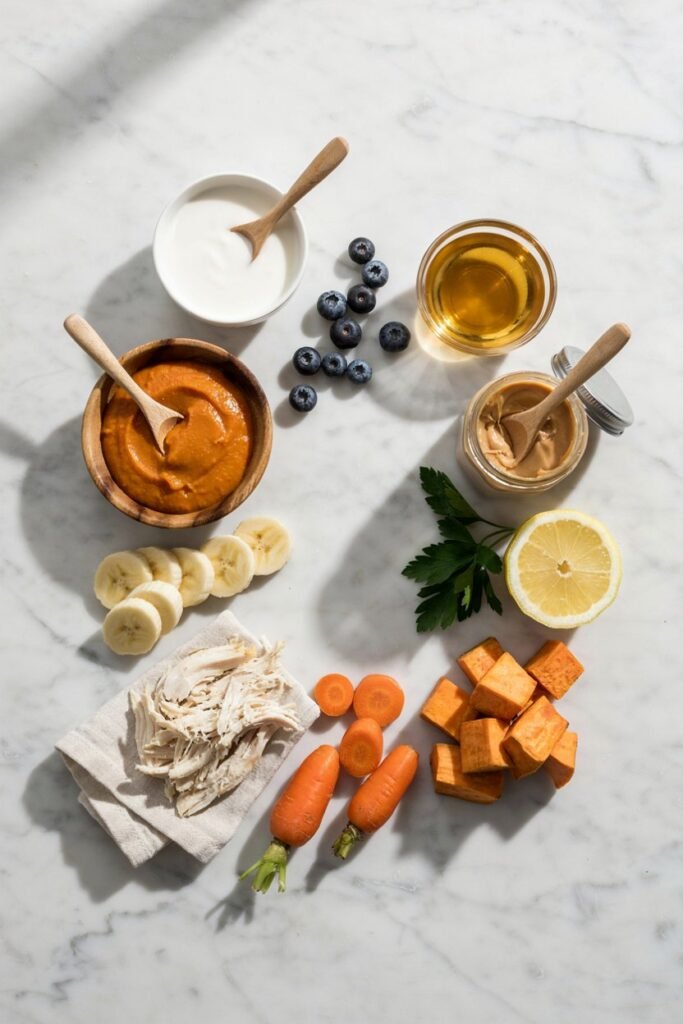
Plain unsweetened yogurt. A reliable base for a lot of frozen treats, as long as it’s free of artificial sweeteners.
Pumpkin puree. Plain, not pie filling, and a good source of fiber and moisture.
Bananas. Naturally sweet and easy to mash or slice into portions.
Peanut butter. Only plain peanut butter with no xylitol on the ingredient label.
Cooked chicken. Fully cooked, unseasoned, and shredded or diced.
Carrots and sweet potato. Cooked until soft, or grated raw depending on the texture you’re going for.
Low sodium broth. Chicken or beef, onion and garlic free, for a savory version.
Ingredients I Avoid in Homemade Dog Treats
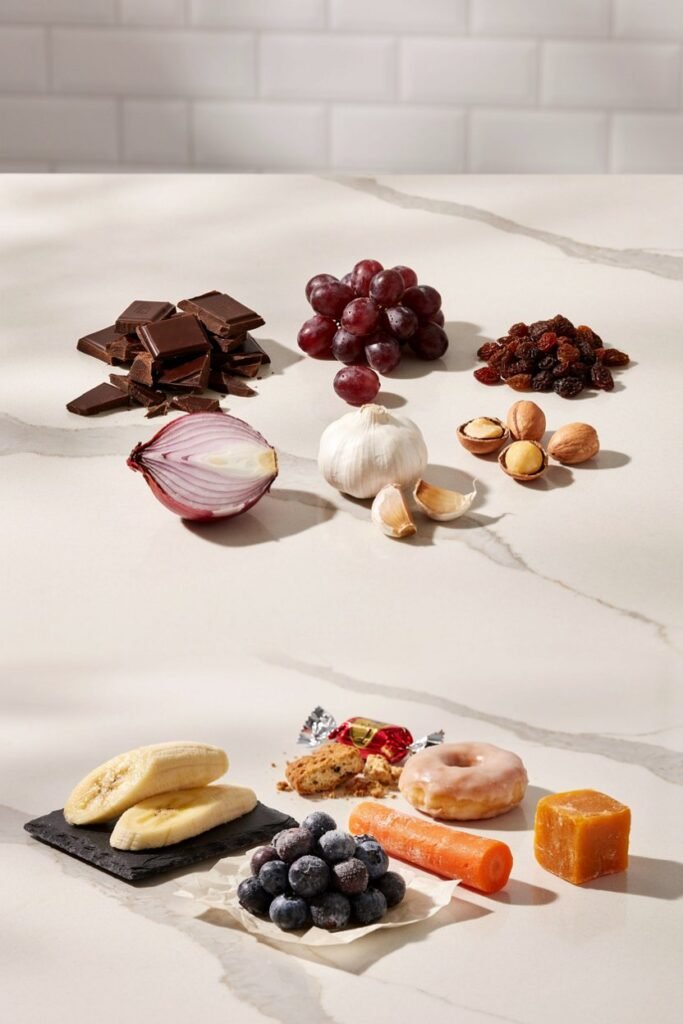
I would never use regular peanut butter without checking the label first. Some peanut butter products can contain xylitol, which is extremely dangerous for dogs even in small amounts, and it isn’t always obvious from the front of the jar.
I also skip added sugar, artificial sweeteners, chocolate, grapes, raisins, and any heavily processed ingredient I can’t easily identify. If a label has more than a handful of ingredients I don’t recognize, it doesn’t go anywhere near a treat I’m making for my dog.
Vet-Friendly Frozen Dog Treat
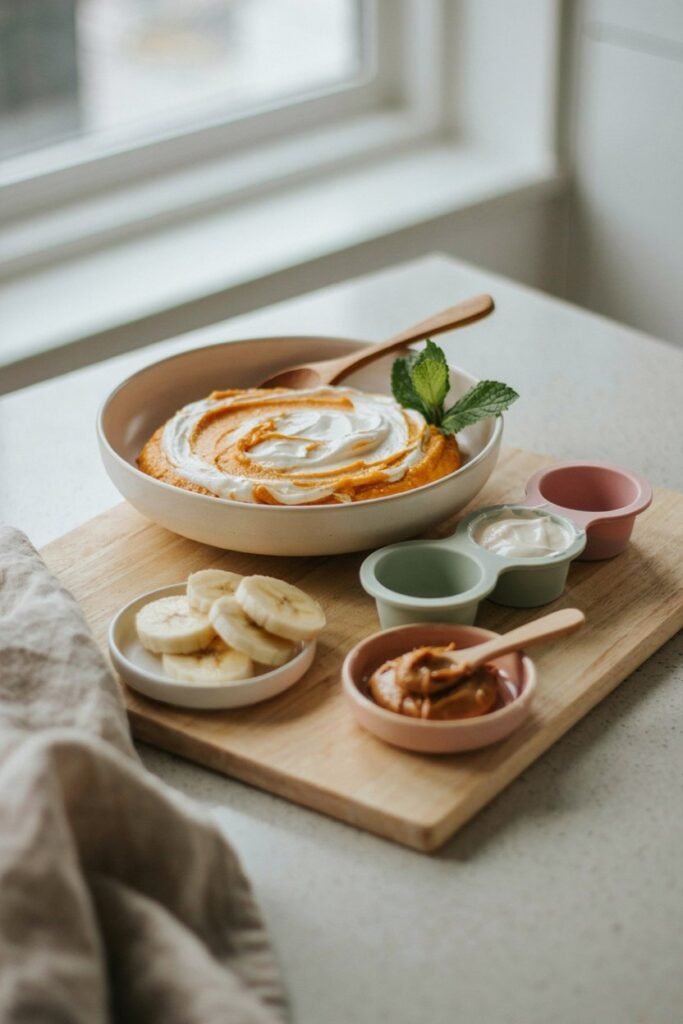
Yield: About 8 to 10 small treats, depending on mold size Prep Time: 5 to 10 minutes Freeze Time: At least 4 hours Storage: Freeze up to 2 to 3 months, depending on the ingredients used
Ingredients
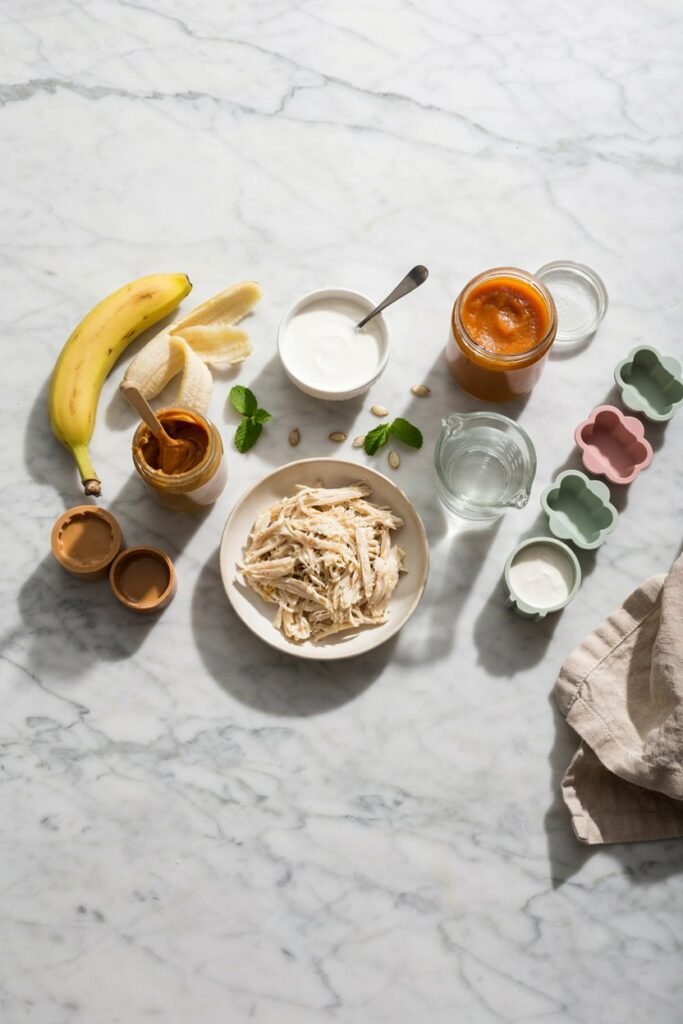
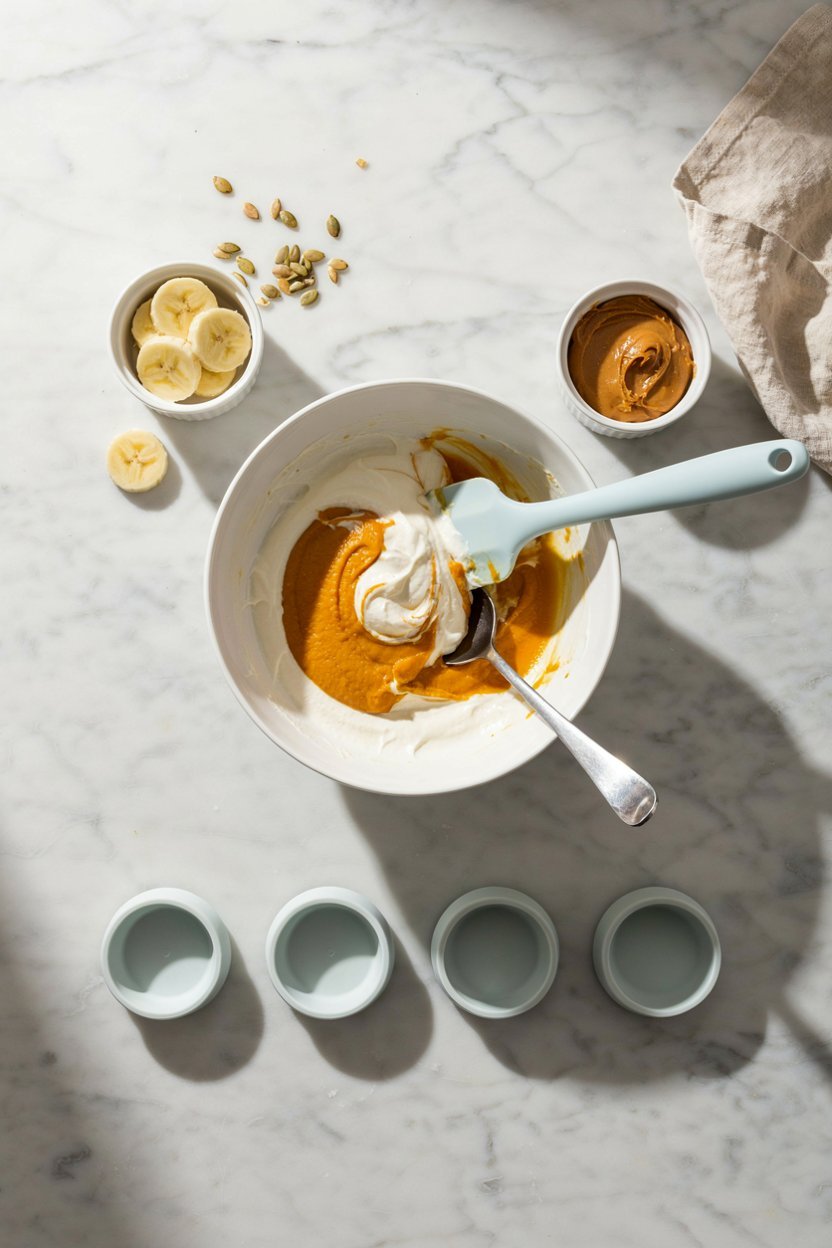
- 1 cup base of your choice. Plain unsweetened yogurt makes a creamy, cooling base that pairs well with almost any flavor booster. Plain pumpkin puree offers a smoother, fiber rich option that’s especially gentle on digestion. Low sodium broth, onion and garlic free, creates a savory version that appeals to dogs who prefer flavor over sweetness.
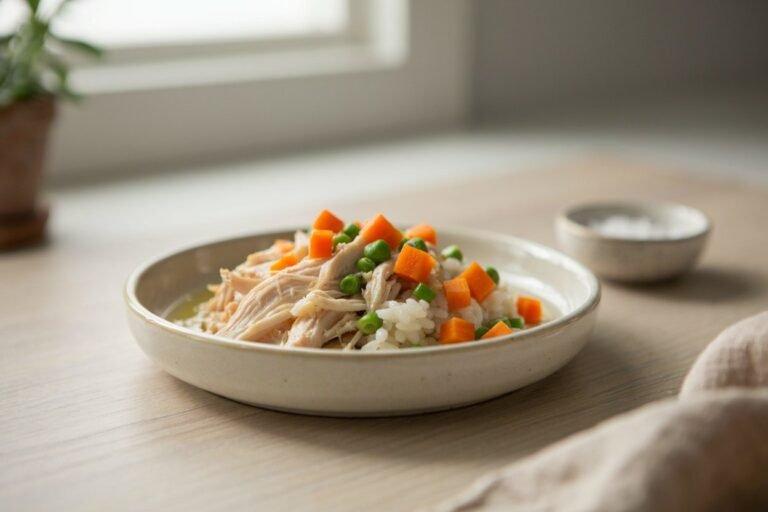
- 2 tablespoons flavor booster, optional. A ripe banana adds natural sweetness and a smooth texture. A spoonful of plain peanut butter, checked carefully for xylitol, adds richness. A small handful of finely shredded cooked chicken adds protein and a savory note, particularly good paired with the broth base.
- 2 to 3 tablespoons water, as needed. Helps loosen a thicker base into a pourable consistency for the mold.
How to Make It
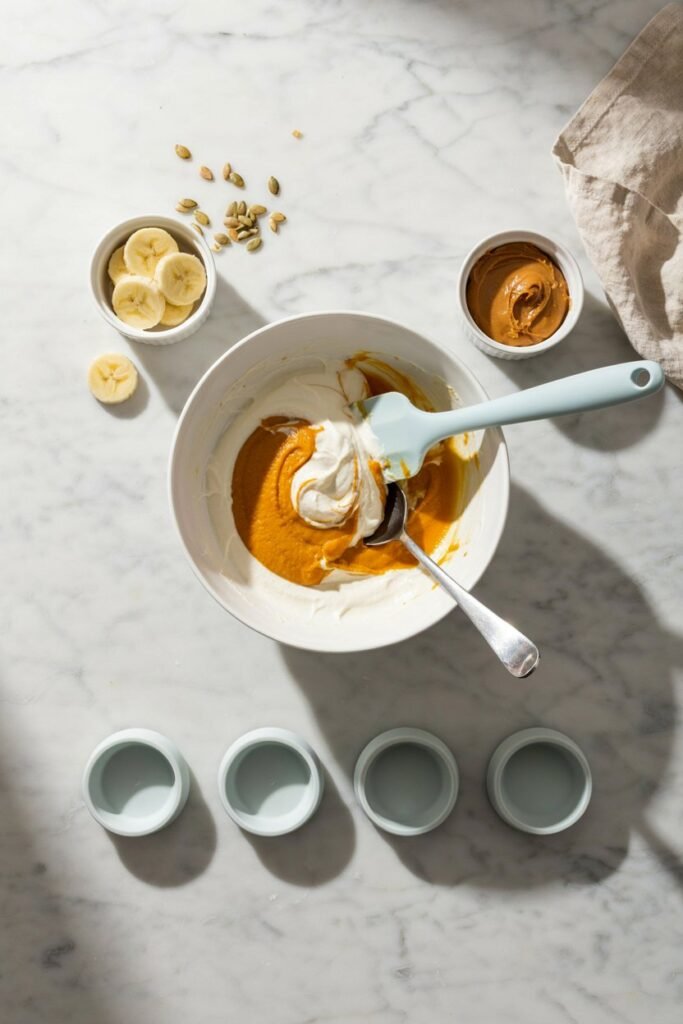
- Prepare your base. If using yogurt or pumpkin, simply measure it into a bowl, since both are already close to the right consistency. If using broth, warm it slightly to dissolve any fat that may have solidified, then let it cool back down before continuing.
- Mix in your flavor booster. Mash the banana with a fork until smooth, stir the peanut butter in a spoonful at a time until fully dissolved with no clumps, or fold in the shredded chicken evenly throughout the base.
- Check the consistency. The mixture should be pourable but not watery. If it’s too thick, add water a tablespoon at a time, stirring well after each addition, until it loosens up.
- Fill your mold. Pour the mixture into small silicone molds for the cleanest release, or a standard ice cube tray if that’s what you have on hand, filling each cavity about three quarters full to leave room for expansion.
- Freeze until fully solid. Place the mold on a flat surface in the freezer for at least 4 hours, though overnight guarantees a fully solid treat all the way through, especially for thicker bases like peanut butter or yogurt.
- Release and store. Once solid, pop the treats out and transfer any you’re not serving right away into an airtight freezer bag or container.
How to Adjust This Recipe
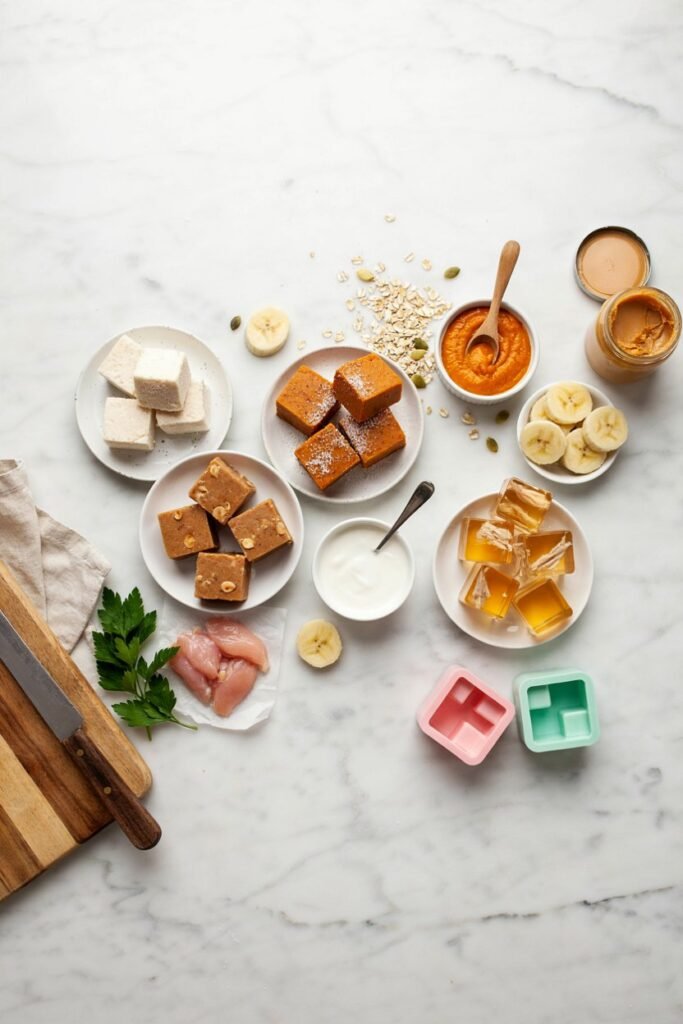
For a lighter, everyday treat. Use the yogurt or pumpkin base with nothing else added, keeping the recipe simple and low calorie.
For a richer, occasional treat. Use peanut butter as the flavor booster, and keep the portion size smaller than the lighter versions given the added calories.
For a savory option. Use the broth base with shredded chicken folded in, which tends to appeal to dogs who prefer flavor over sweetness.
For a picky eater. Warm the base slightly more than usual before mixing, since heat amplifies aroma, which is often the biggest factor in getting a hesitant dog interested in a new treat.
How Many Treats Should a Dog Have?
Treats should generally remain a small part of a dog’s overall diet, and calories from homemade frozen treats count too.
Instead of a flat number like three treats a day, think about your dog’s size, existing diet, activity level, and overall calorie needs when deciding how many to offer.
For puppies, senior dogs, dogs with medical conditions, and dogs on a prescription diet, it’s worth checking with your veterinarian before introducing homemade treats regularly.
Storage
Freezer. Store in an airtight container or bag for 2 to 3 months, with fruit or pumpkin based versions holding up well throughout that range and broth based versions on the shorter end given their lower fat content.
Serving. Offer straight from the freezer, or let it sit for a minute or two if your dog prefers a slightly softer texture.
I learned pretty quickly that making a huge batch sounds convenient until you realize your freezer is full of dog treats you’re trying to separate with a butter knife.
A few habits that have made this much easier over time: using small, freezer safe containers rather than one large bag, separating treats into a single layer before they fully freeze together, labeling containers with the date, making smaller batches more often rather than one enormous batch all at once, and keeping treats away from strongly scented freezer foods, since some ingredients pick up odors more than you’d expect.
Ingredients I Always Check Before Using
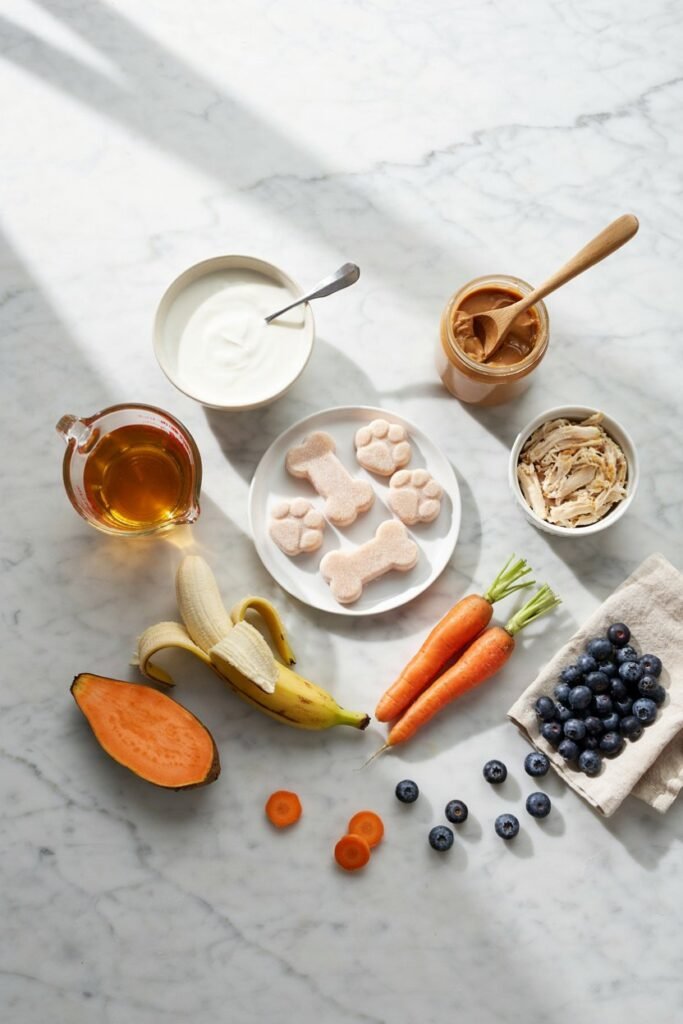
Peanut butter. Check the ingredient label and avoid anything containing xylitol.
Yogurt. Use plain, unsweetened yogurt without artificial sweeteners.
Chicken. Use fully cooked, unseasoned chicken with no bones.
Broth. Only use dog appropriate broth without onion, garlic, excessive salt, or unsafe seasonings.
Fruit, if adding any. Wash it properly and remove seeds, pits, stems, or cores where necessary.
Common Problems When Making Frozen Treats
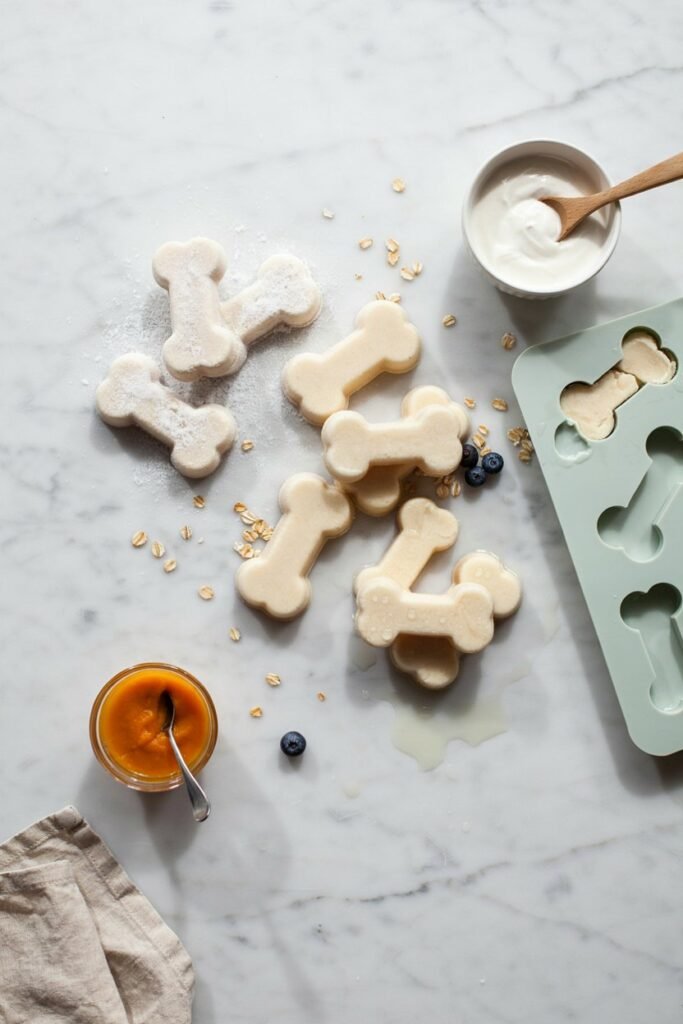
Why are my frozen treats too hard? Ingredients with less water content freeze harder. Adding a small splash of water before freezing usually softens the final texture.
Why won’t my treats come out of the mold? Let the mold sit for a minute, or briefly run the outside under lukewarm water.
Why does my dog not like frozen treats? Some dogs prefer partially thawed treats over ones served rock solid straight from the freezer.
Can I use silicone molds? Yes, small silicone molds are genuinely convenient for portion control, and they make it easy to pop treats out cleanly without needing to run water over an ice cube tray.
Can I make these without peanut butter? Yes, most versions of this recipe work fine with plain yogurt or mashed banana instead, without needing to force peanut butter into every batch.
Frequently Asked Questions
Are frozen treats safe for dogs? Generally, yes, when made with appropriate ingredients and given in reasonable portions. Very hard, large frozen pieces can be a concern for aggressive chewers, so size and texture matter as much as the ingredients themselves.
How often can I give my dog frozen treats? A few times a week is reasonable for most healthy adult dogs, adjusted for their size, activity level, and overall diet.
Can dogs eat frozen yogurt? Plain, unsweetened yogurt frozen at home is fine in small amounts. Commercial frozen yogurt often contains added sugar or other ingredients that aren’t appropriate.
Can I freeze peanut butter for my dog? Yes, as long as it’s plain peanut butter without xylitol.
Can puppies have frozen treats? In small amounts, generally yes, though very hard frozen treats may be too much for young teeth, so a partially thawed version is often a better choice for puppies.
How long do homemade dog treats last in the freezer? Most versions of this recipe hold their quality for about 2 to 3 months, though broth based versions tend to be best used a bit sooner given their lower fat content.
Can dogs eat frozen fruit? Yes, most dog safe fruits can be frozen without an issue, as long as seeds, pits, and cores are removed first.
What ingredients should never be used in homemade dog treats? Xylitol, grapes, raisins, chocolate, macadamia nuts, onions, garlic, and excessive salt or sugar should all be avoided entirely.
Can dogs have homemade treats every day? In small, appropriate portions, yes, but treats should stay a small part of their overall daily calorie intake rather than a regular, sizable addition.
Which base is best for a first attempt? Plain yogurt is the easiest starting point, since it’s already the right consistency and doesn’t require any warming or extra prep before mixing.
Vet Friendly Frozen Dog Treats
Ingredients
Equipment
Method
- Wash the blueberries thoroughly and remove any stems.
- Add the blueberries, plain Greek yogurt, and water to a blender.
- Blend until the mixture is smooth and evenly combined.
- Pour the mixture into small silicone molds.
- Place the molds in the freezer and freeze for at least 4 hours, or until completely firm.
- Remove a treat from the mold and allow it to soften slightly before serving.
- Use plain, unsweetened Greek yogurt that does not contain xylitol or other artificial sweeteners. Introduce new treats gradually and serve them in moderation.
- These treats are intended as an occasional snack and should not replace your dog’s regular complete and balanced food.
- If your dog has food allergies, digestive problems, diabetes, or is following a veterinarian prescribed diet, check with your veterinarian before introducing new treats.
Final Thoughts
I’d rather make a small batch using a few familiar ingredients than put together something elaborate with a list of things I can’t pronounce.
This one recipe, built around whichever base and flavor booster you have on hand, covers a genuinely wide range of textures and flavors without needing a separate recipe for every mood or occasion.
Start with whichever combination matches what’s already in your kitchen, and keep a small rotation of these in the freezer so a good treat is never more than a few minutes away.

8 Comments