10 Safe Berries Your Cat Will Enjoy.
A few months ago, I was standing in the kitchen preparing breakfast.
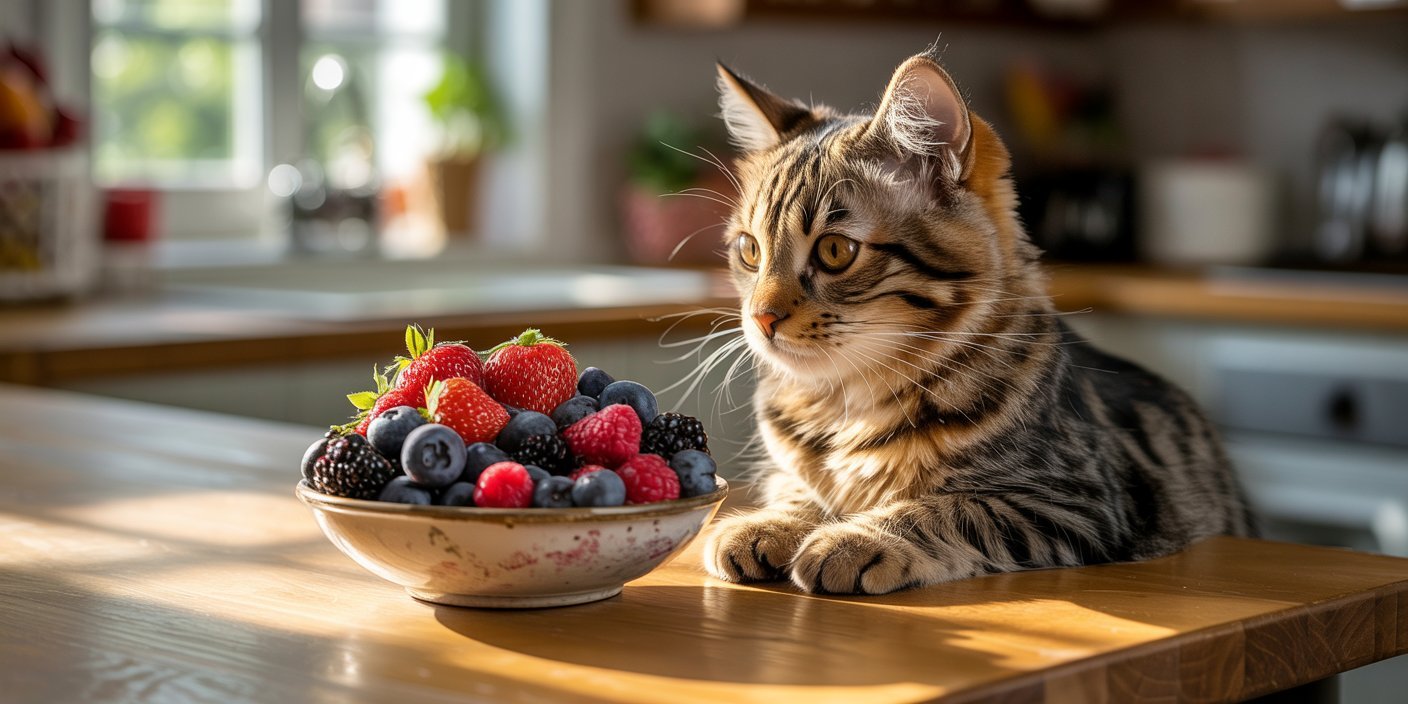
I had a bowl of fresh berries sitting on the counter—blueberries, strawberries, and raspberries.
As I started rinsing them in the sink, I noticed my cat quietly watching from the dining chair like a tiny furry food inspector.
At first, I didn’t think much of it. My cat usually ignores fruits and vegetables because, like most cats, she prefers anything that smells remotely like fish or chicken.
But that morning was different.
The moment I placed the bowl on the table, she stretched her neck forward and gently tapped a blueberry with her paw.
Within seconds, the blueberry rolled across the table, and before I could react, she sniffed it carefully like she had just discovered something fascinating.

That little moment made me curious. Could cats actually eat berries safely?
After doing quite a bit of research and talking to our veterinarian, I discovered something interesting.
While cats are obligate carnivores and don’t need fruit in their diet, certain berries can be safe for cats when offered in very small amounts as occasional treats.
Some berries even contain antioxidants, vitamins, and hydration that may provide small health benefits. The key is choosing the right ones and offering them properly.
So if you’ve ever wondered whether your curious cat can enjoy a tiny fruit treat now and then, here are 10 safe berries your cat might enjoy, along with tips I personally follow when offering them at home.
1. Blueberries: The Berry That Started My Cat’s Curiosity
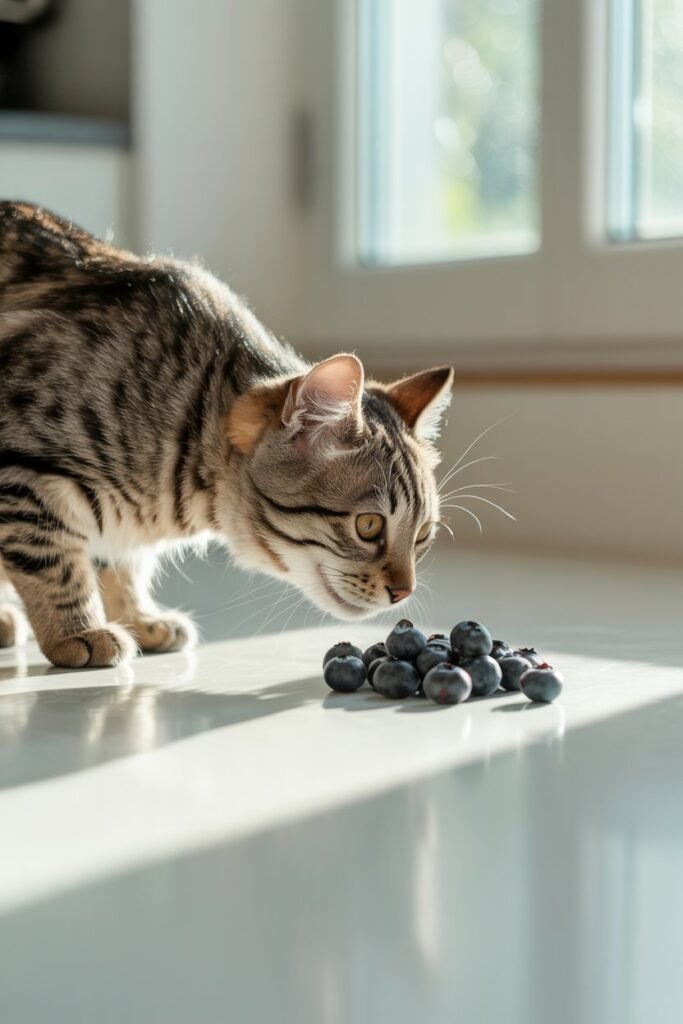
Blueberries were actually the first fruit my cat ever showed interest in.
After that morning in the kitchen, I decided to cut a blueberry in half and place a tiny piece on the floor just to see what would happen.
Instead of ignoring it, she sniffed it carefully, tapped it with her paw again, and eventually gave it a small nibble.
Blueberries are considered one of the safest berries for cats. They contain antioxidants that help support overall health and may help reduce inflammation in the body.
Some of the nutrients found in blueberries include:
- Vitamin C
- Vitamin K
- Fiber
- Natural antioxidants
Even though blueberries are healthy for humans, cats should only eat one or two small pieces at a time.
Whenever I offer blueberries to my cat now, I always:
- Wash them thoroughly
- Cut them into small pieces
- Offer them as an occasional treat
Sometimes she eats them, and sometimes she simply plays with them like a toy.
2. Strawberries: A Sweet Treat My Cat Loves to Investigate
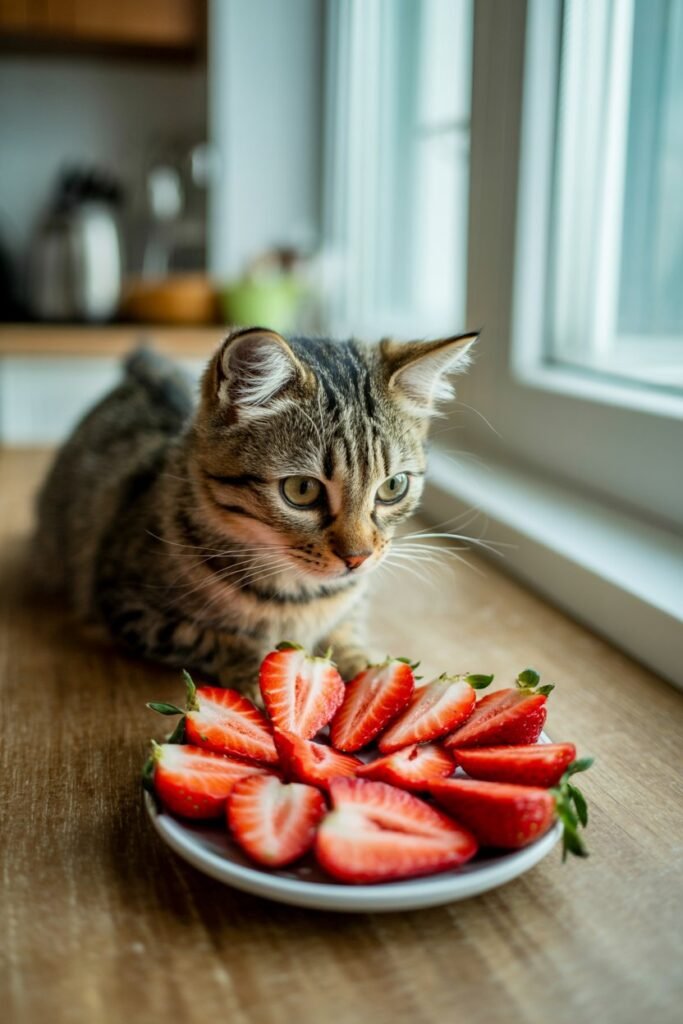
Strawberries were the next berry I experimented with at home.
One afternoon while slicing strawberries for a smoothie, my cat once again appeared beside the kitchen counter. She seemed fascinated by the bright red color and the sweet smell.
I decided to cut a very tiny piece and place it on the floor near her food bowl.
To my surprise, she sniffed it carefully and gave it a few curious bites.
Strawberries contain nutrients like:
- Vitamin C
- Fiber
- Antioxidants
However, strawberries are naturally sweeter than most berries, so they should only be offered in very small amounts.
My personal rule when giving strawberries to my cat is simple:
- Remove the leafy top
- Cut a tiny piece
- Offer it occasionally
Most of the time, she seems more entertained by pushing the strawberry piece across the floor than actually eating it.
3. Raspberries: A Berry That Should Be Served Sparingly
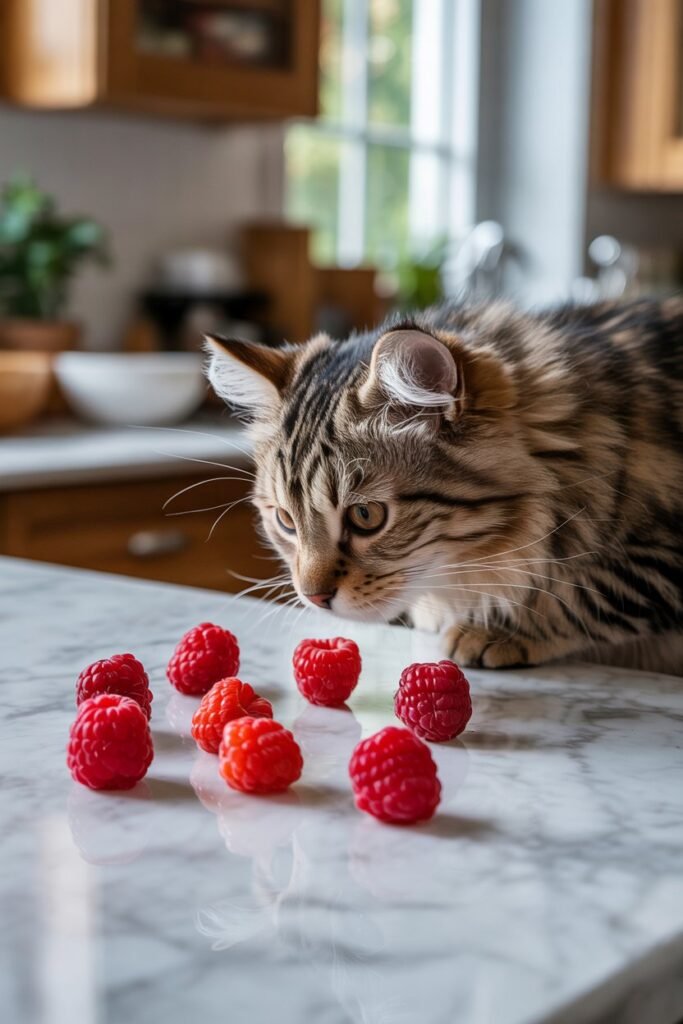
Raspberries are another berry that cats can eat safely, but they must be given in very small portions.
The first time I introduced raspberries to my cat, she seemed unsure about the texture.
Raspberries are softer and slightly more fragile than other berries, which made her poke them repeatedly with her paw before deciding whether they were food or a toy.
Raspberries contain:
- Fiber
- Antioxidants
- Vitamin C
However, they also contain a very small amount of naturally occurring compounds that mean they should only be given occasionally.
Whenever I offer raspberries to my cat, I stick to one simple rule:
One berry at a time, and not very often.
It’s always better to treat fruit as an occasional curiosity rather than a regular snack.
4. Blackberries: The Berry My Cat Turned Into a Toy First
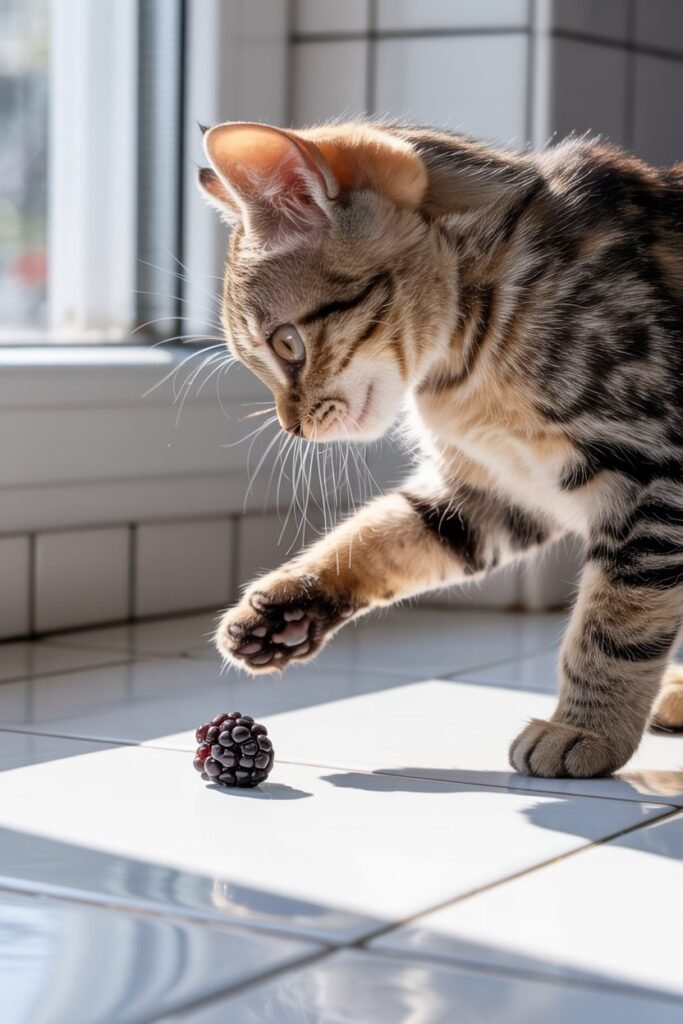
Blackberries were one of the berries I wasn’t sure my cat would like at all.
They’re bigger than blueberries and have a slightly different texture, so I assumed she might ignore them.
One afternoon while I was preparing a fruit bowl for a snack, I decided to experiment.
I cut a blackberry into two small pieces and placed one on the kitchen floor near where she was sitting.
Instead of eating it right away, she started doing something I’ve noticed cats love to do with small objects.
She tapped the blackberry with her paw and watched it roll across the floor. Within seconds, it had turned into a tiny game of “catch the berry.”
Eventually she sniffed it again and took a small bite.
Blackberries are safe for cats when offered in small portions and contain nutrients like:
- Vitamin C
- Vitamin K
- Antioxidants
- Fiber
Because blackberries are larger than many berries, I always cut them into small pieces before offering them to my cat. This helps prevent choking and makes them easier to nibble.
Of course, just like every fruit on this list, blackberries should only be given occasionally and in tiny amounts.
5. Cranberries: The Berry My Cat Completely Rejected
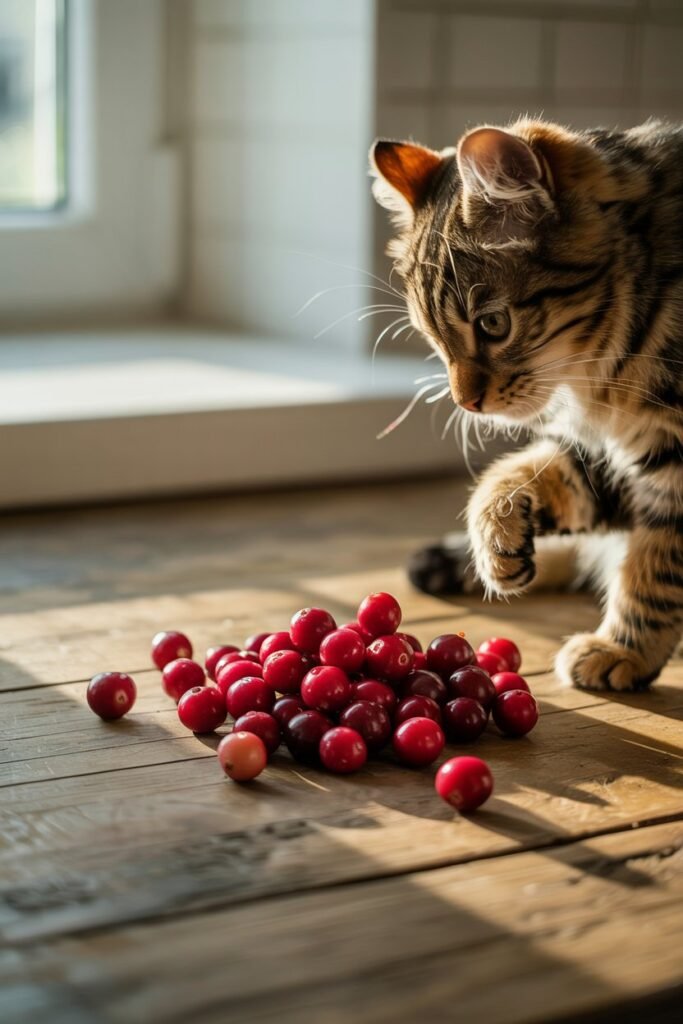
Not every berry experiment in my kitchen has been successful.
The first time I tried offering a cranberry to my cat, I thought she might at least sniff it out of curiosity. I placed a tiny piece on the floor and waited to see what would happen.
She walked over, sniffed it once, and then looked up at me like I had completely disappointed her.
Cranberries are known for their tart flavor, which might explain why many cats simply aren’t interested in them.
However, fresh cranberries are still considered safe for cats in small amounts. They contain antioxidants and are sometimes included in cat food formulas designed to support urinary health.
If you ever decide to offer cranberries to your cat, keep these tips in mind:
- Use only fresh cranberries
- Cut them into small pieces
- Offer a tiny portion
What you should never give cats are sweetened cranberry products like cranberry juice or dried cranberries, since those usually contain added sugars.
In my house, cranberries remain one of the few berries my cat politely refuses.
6. Bilberries: A Berry That Reminds Me of Blueberries
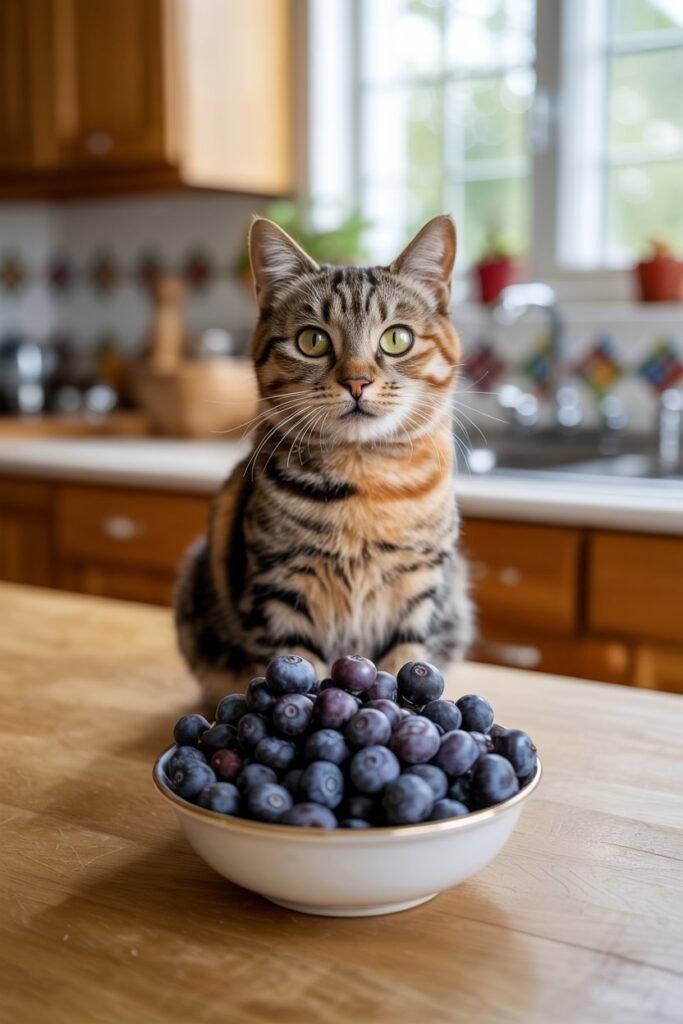
Bilberries aren’t something I buy often, but the first time I saw them at a local market, I immediately thought about trying them at home with my cat.
They look very similar to blueberries, which was probably why my cat approached them with the same curiosity she had shown months earlier when she discovered her first blueberry.
Bilberries contain antioxidants and nutrients that may support eye health and overall wellness. While cats don’t need these nutrients from fruit, small amounts are generally considered safe.
When I brought bilberries home, I washed them carefully and placed one on the kitchen floor.
My cat walked over slowly, sniffed it, tapped it with her paw, and then gave it a tiny bite. It seemed familiar enough for her to treat it the same way she treated blueberries.
Just like with blueberries, bilberries should be:
- Washed thoroughly
- Offered in small portions
- Given only occasionally
Sometimes the most interesting thing about introducing new foods to a cat isn’t whether they eat it—it’s watching how they investigate it first.
7. Gooseberries: A Berry My Cat Wasn’t Sure About
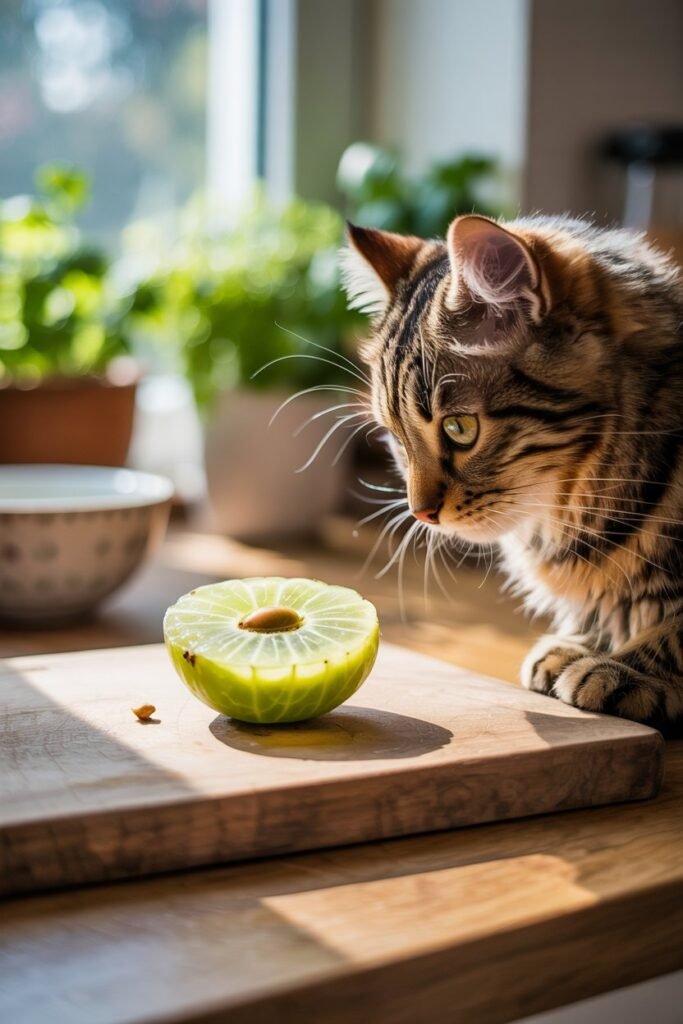
Gooseberries are one of those fruits that many people don’t keep around the house very often, so I didn’t expect my cat to ever encounter one.
But one weekend, while preparing fruit for a simple breakfast, I had a few gooseberries sitting on the counter.
My cat noticed them almost immediately and climbed onto the chair beside the table to inspect them.
Gooseberries have a slightly firm skin and a tart taste, which means not every cat will enjoy them.
I sliced a very small piece and placed it on the floor for her to examine.
Just like with several of the other berries I had tested, the first reaction wasn’t eating—it was playing. She tapped the piece gently with her paw and watched it slide across the tile floor.
Eventually she sniffed it again and took a tiny nibble before losing interest.
Gooseberries can be safe for cats if:
- They are fully ripe
- Cut into small pieces
- Offered only occasionally
Because of their tart flavor, many cats will simply ignore them after the first taste.
Still, it’s always interesting to see which foods spark a cat’s curiosity and which ones they decide are not worth their attention.
8. Mulberries: The Messy Berry My Cat Found Interesting
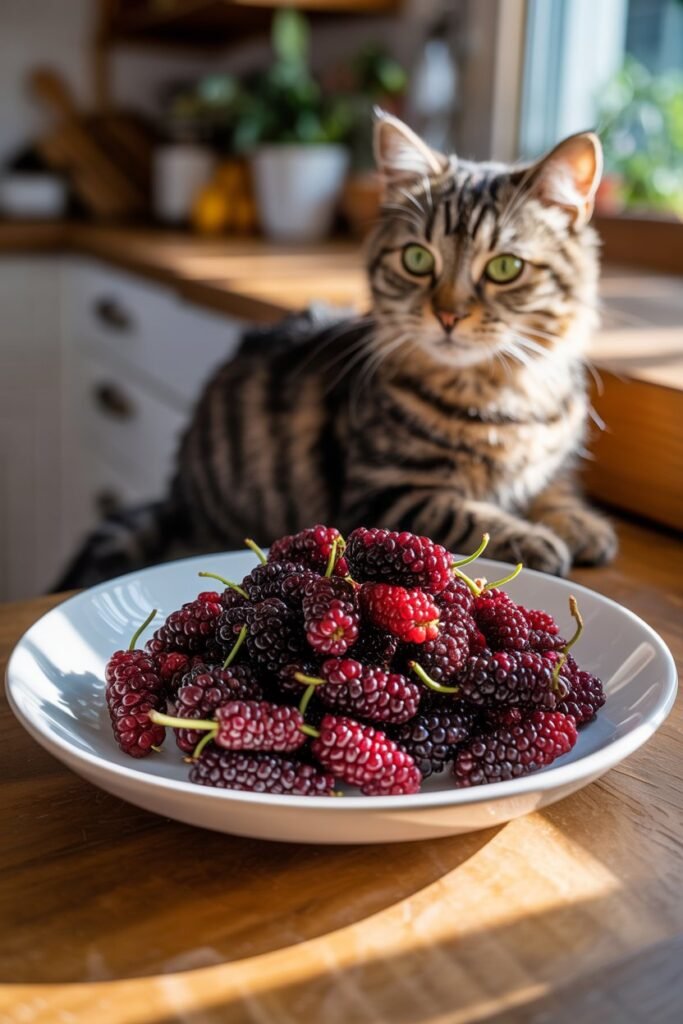
Mulberries were a little unexpected in my house.
I had picked up a small container from a local market one weekend because they looked fresh and different from the berries I usually buy.
When I set them on the kitchen counter, my cat immediately noticed them.
She has a habit of appearing the moment I start preparing food, almost like she’s part of the quality control team.
Mulberries are soft and slightly sweet, which makes them one of the gentler berries on this list. Because they are so delicate, they tend to release juice easily.
The first time I cut one open, I realized quickly that offering them on the carpet would not be a good idea.
Instead, I placed a tiny piece on the kitchen tile floor.
My cat walked over, sniffed it carefully, and tapped it with her paw the same way she had done with several other berries before.
After a few seconds of investigating, she gave it a small bite.
Mulberries contain nutrients such as:
- Vitamin C
- Iron
- Fiber
While these nutrients are helpful for humans, cats don’t actually need fruit in their diet.
That’s why I only offer mulberries as a very occasional curiosity rather than a regular snack.
Whenever I do give my cat a small piece, I make sure it is:
- Fresh
- Washed thoroughly
- Free of stems
And of course, I always keep the portion extremely small.
9. Acai Berries: A Berry I Approach Carefully With My Cat
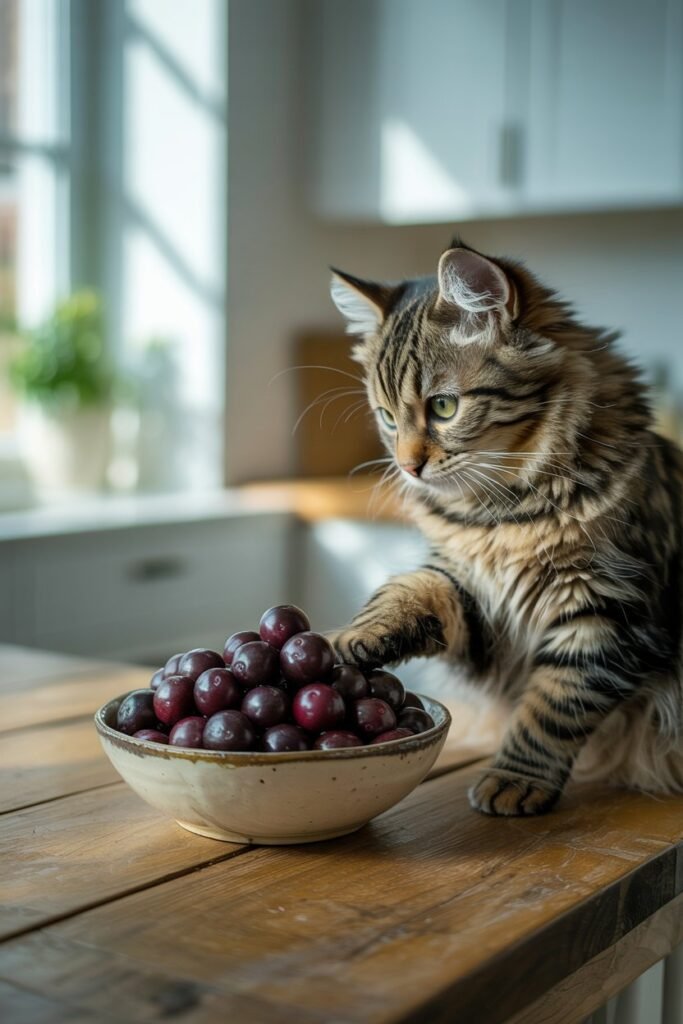
Acai berries are often talked about as a “superfood,” and you see them everywhere now — in smoothie bowls, juices, and health snacks.
The first time I bought acai products, it actually made me wonder whether my cat would show the same curiosity she had with blueberries and strawberries.
But I quickly realized something important: most acai products people buy are not plain berries.
They usually contain added sugar, syrups, chocolate, or other ingredients that are not safe for cats.
Because of that, I’ve always been extra cautious with acai.
If acai berries are ever offered to a cat, they should only be:
- Plain
- Unsweetened
- In their natural form
- Given in extremely tiny portions
The truth is, cats don’t need acai berries at all. They don’t benefit from them the way humans might, and their digestive systems are designed primarily for animal protein.
For that reason, I personally stick with simpler berries like blueberries or strawberries when I occasionally offer fruit to my cat. Those tend to be easier and safer options.
Still, if a cat becomes curious about acai, the most important thing is making sure the berry is completely natural and free from any added ingredients.
10. Elderberries: A Berry That Requires Extra Care
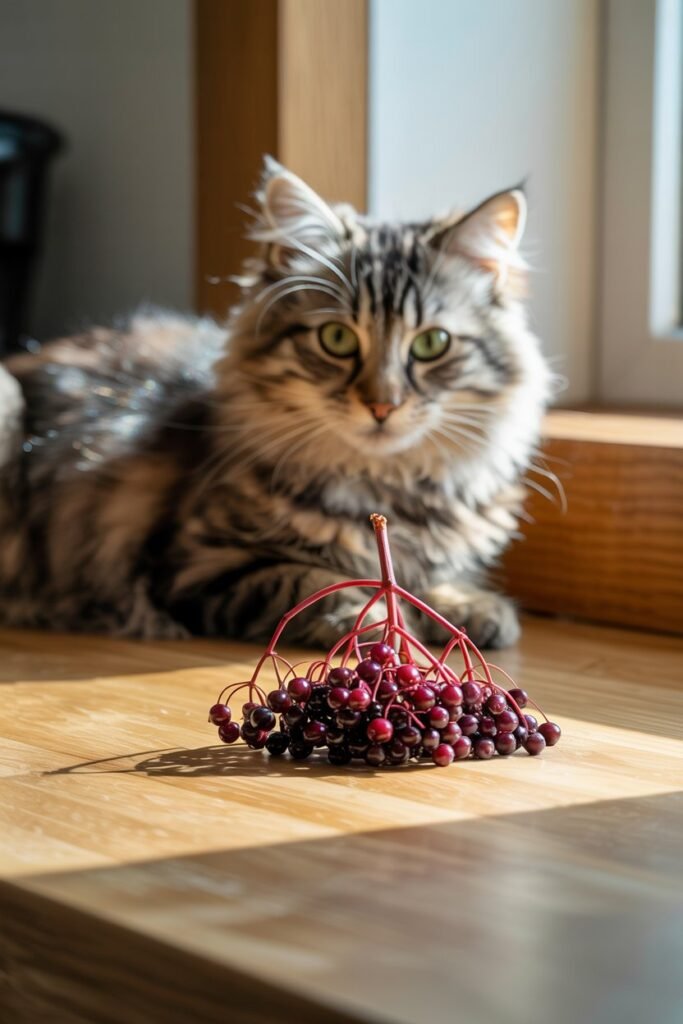
Elderberries are a little different from the other berries on this list because they require proper preparation before they can be considered safe.
Raw elderberries contain natural compounds that may cause stomach upset in both humans and animals. Because of this, raw elderberries should never be given to cats.
I remember the first time I read about elderberries while researching safe fruits for pets.
At first I thought they looked similar to blueberries, but once I learned about the preparation required, I decided they weren’t worth experimenting with at home.
When elderberries are fully cooked, those compounds are reduced, which is why cooked elderberries are sometimes used in jams or syrups for humans.
However, even cooked elderberries should only be offered to cats in very tiny portions, and honestly, most veterinarians recommend simply avoiding them altogether.
If elderberries are ever given to a cat, they must always be:
- Fully cooked
- Served in extremely small amounts
- Completely free of stems and leaves
Because there are many other berries that are naturally safe, elderberries are usually not the first choice when it comes to offering fruit to cats.
In my home, I’ve learned that sticking with simple berries like blueberries is much easier and safer than experimenting with fruits that require special preparation.
Final Thoughts
While cats don’t need fruit in their diet, a few berries can be a fun and safe treat when offered in tiny amounts.
I’ve learned that my cat is usually more curious than hungry when it comes to berries, often batting them around before deciding whether to take a bite.
The key is always moderation—choose safe berries, serve small pieces, and watch how your cat reacts.
When offered occasionally, these little fruity treats can add a bit of variety and curiosity to your cat’s day.