Longevity Foods for Cats: How to Keep Your Feline Healthy.
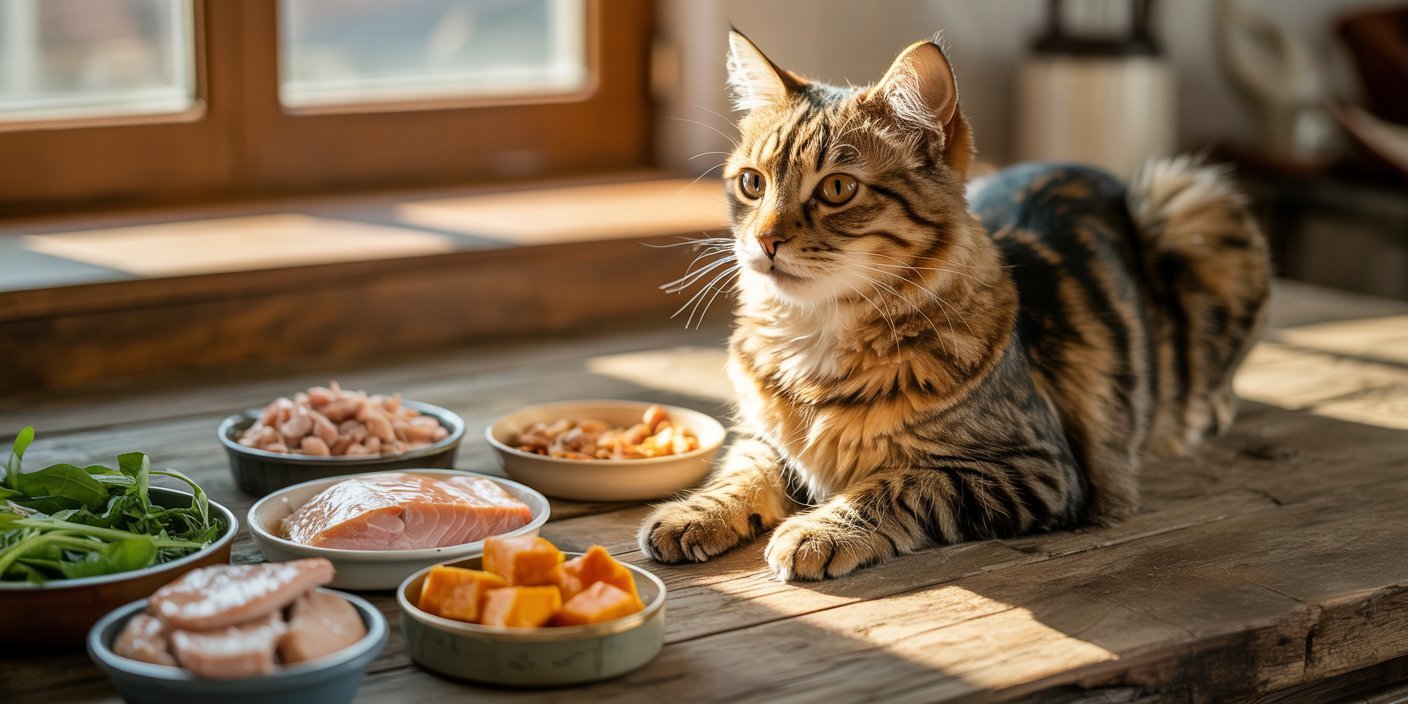
Every cat owner dreams of seeing their furry friend live a long, healthy, and happy life. Cats are not just pets—they become part of the family, sharing our homes, our routines, and our hearts.
I remember when I first adopted my cat, Luna. She was a tiny, curious kitten with bright eyes and boundless energy.
I wanted to give her the best life possible, but I quickly realized that keeping her healthy wasn’t just about love—it was about food, lifestyle, and care.
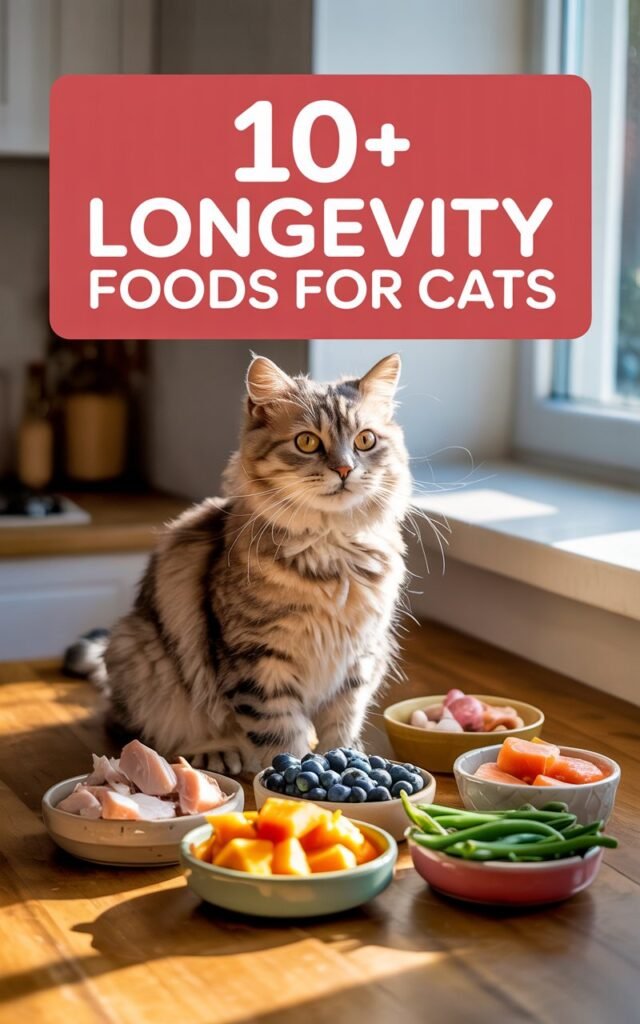
In this post, I’ll walk you through the best longevity foods for cats, explain why they matter, and give practical tips to integrate them into your cat’s diet.
This is not just a list of foods—it’s a guide to helping your cat thrive for years to come.
Disclaimer: This post contains affiliate links. If you make a purchase through these links, we may earn a small commission at no extra cost to you.
Amazon Shopping List: Longevity Foods for Cats: How to Keep Your Feline Healthy
- High-Protein Wet Cat Food (Chicken or Salmon-Based)
Supports muscle maintenance, hydration, and long-term health for cats of all ages.
BUY NOW ON AMAZON - Omega-3 Fish Oil for Cats
Helps support brain health, reduces inflammation, and promotes healthy skin and coat.
BUY NOW ON AMAZON - Grain-Free High-Quality Cat Treats
Provides clean protein-based snacking without unnecessary fillers or additives.
BUY NOW ON AMAZON - Hydration Water Fountain for Cats
Encourages more drinking to support kidney and urinary tract health.
BUY NOW ON AMAZON - Probiotic Cat Supplement Powder
Supports digestion, gut health, and nutrient absorption for overall longevity.
BUY NOW ON AMAZON
1. High-Quality Protein: The Foundation of Longevity
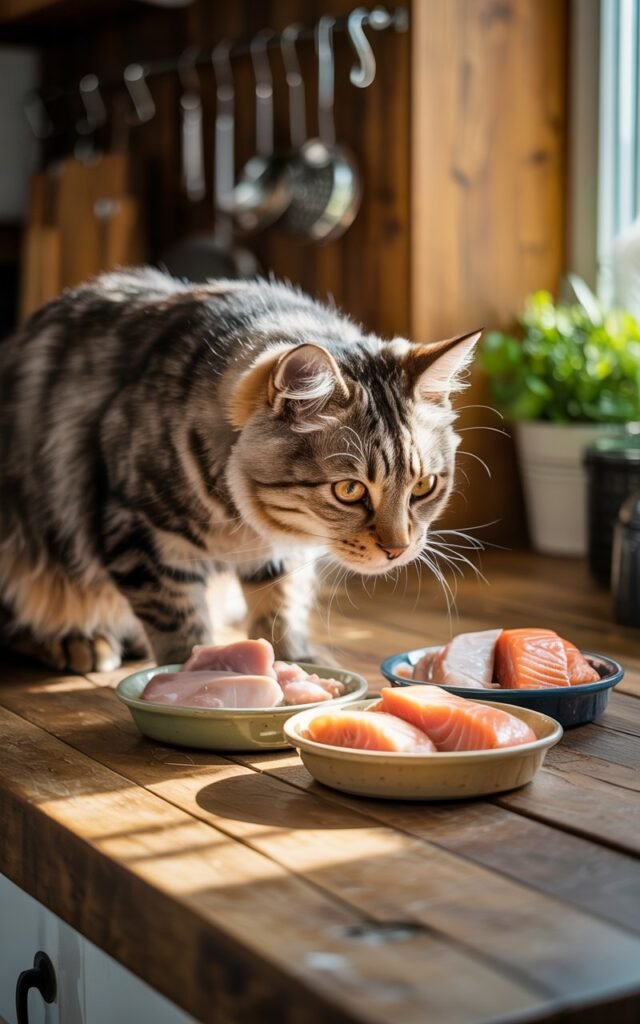
Cats are obligate carnivores, which means protein is their most important nutrient. High-quality protein supports:
- Muscle maintenance
- Healthy fur and skin
- Immune system strength
- Overall vitality
Best protein sources for longevity:
- Chicken and turkey: Lean, easy to digest, and packed with essential amino acids.
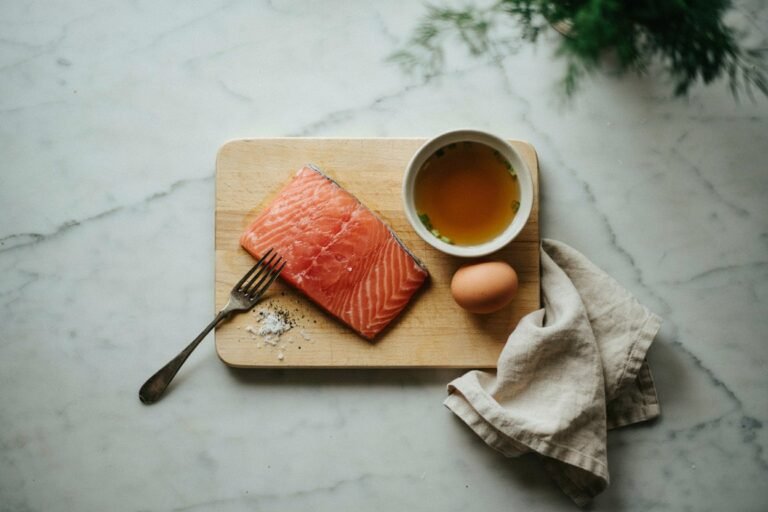
- Salmon and other oily fish: Provide omega-3 fatty acids for brain and heart health.
- Beef or lamb: Rich in taurine, an amino acid critical for heart and eye health.
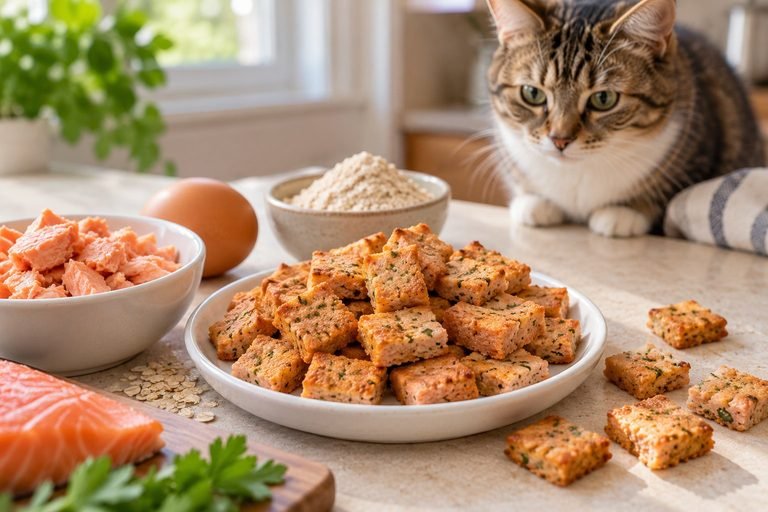
Personal Tip: I always mix small amounts of cooked chicken or salmon into Luna’s meals a few times a week. She loves it, and her coat has never looked shinier.
Important: Avoid processed meats or anything with added seasoning, as cats are sensitive to salt and spices.
2. Omega-3 and Omega-6 Fatty Acids: For a Shiny Coat and Healthy Heart
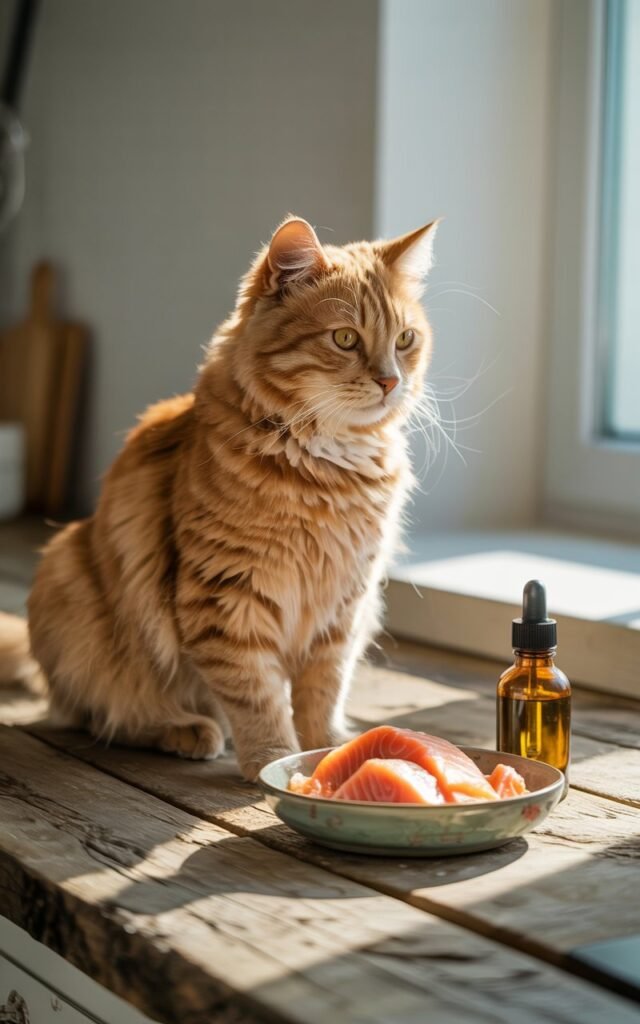
Fat isn’t bad for cats—it’s essential. The right balance of omega-3 and omega-6 fatty acids helps with:
- Reducing inflammation
- Supporting joint health
- Improving brain function
- Maintaining a glossy coat
Top sources:
- Fatty fish (salmon, sardines, mackerel)
- Fish oil supplements (consult your vet for dosage)
- Chicken fat or natural animal fats
Personal Tip: Luna gets a few drops of salmon oil added to her wet food twice a week. Her coat is soft, shiny, and she’s full of energy even at 10 years old.
3. Taurine-Rich Foods: Protecting Heart and Eyes
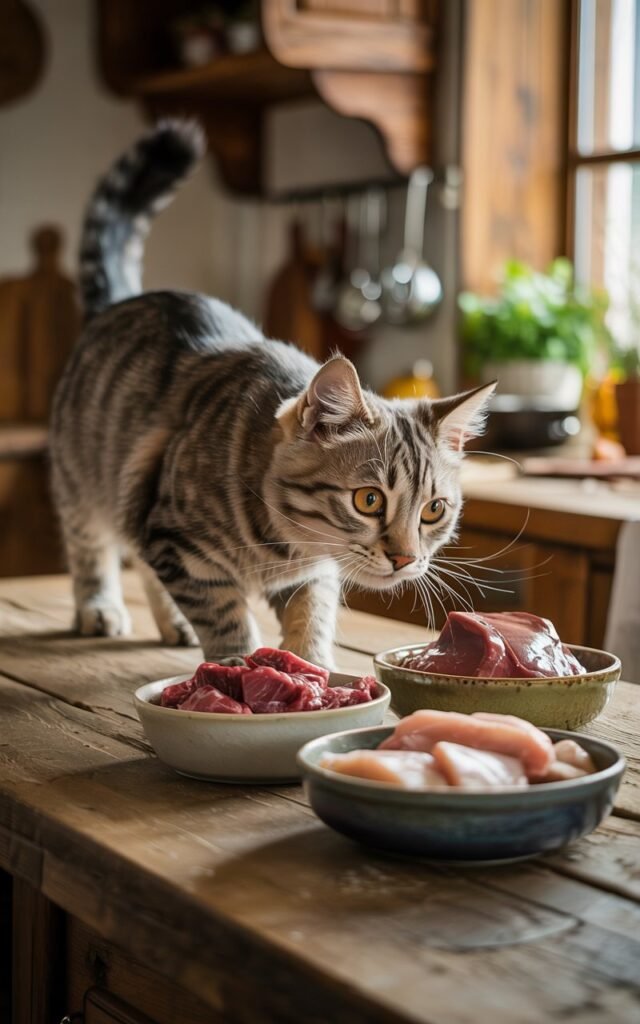
Taurine is an amino acid cats cannot produce enough of themselves, so it must come from their diet. Low taurine can lead to:
- Heart disease (dilated cardiomyopathy)
- Vision problems
- Reproductive issues
Natural sources of taurine:
- Chicken and turkey
- Beef and lamb
- Fish (especially dark meat and organs like liver)
Personal Tip: I make sure Luna’s diet includes taurine-rich wet foods. She eats more enthusiastically, and her eyes remain bright and healthy.
4. Antioxidant-Rich Foods: Fighting Aging from the Inside
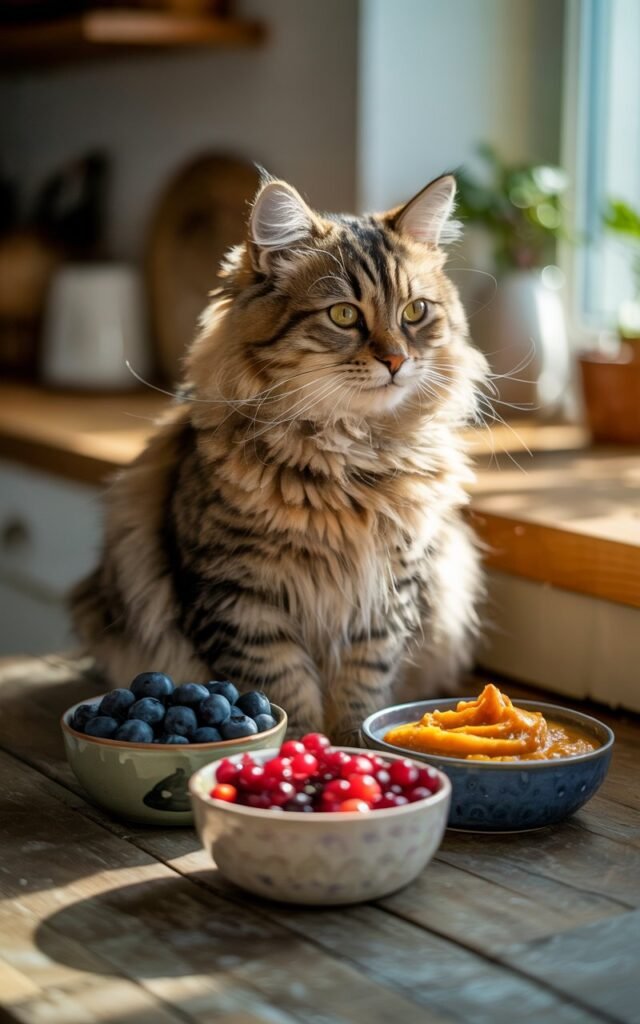
A big part of cat longevity nutrition, anti-aging cat diet, and healthy aging diet for cats is including antioxidant-rich foods for cats.
These nutrients help support feline immune health, immune system support, cell protection, inflammation control, organ health, and overall cat wellness and vitality.
I focus more on foods that naturally support cat health, energy levels, digestion, coat health, skin health, and long-term feline wellbeing, instead of just basic feeding.
For me, it’s about building a simple nutrient-rich cat diet, natural cat nutrition plan, longevity-focused feeding routine for cats, holistic cat care approach for healthy aging, and preventive cat health care through diet over time.
5. Fiber for Healthy Digestion
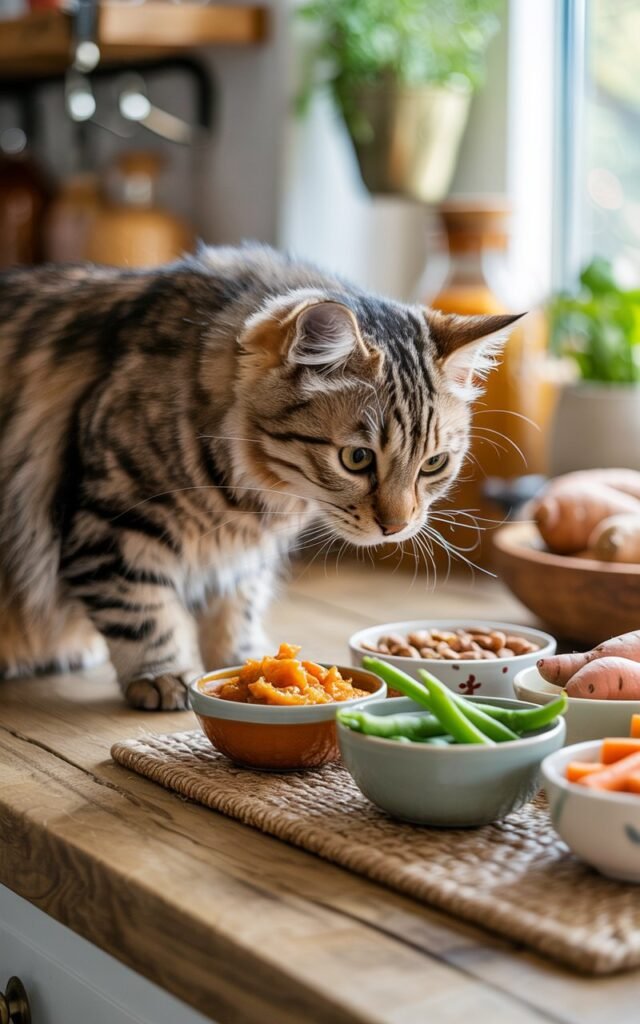
Cats need fiber for gut health, even though they are meat-eaters. Fiber helps:
- Prevent hairballs
- Regulate bowel movements
- Maintain a healthy weight
Good sources of fiber:
- Pumpkin
- Green beans (cooked and plain)
- Psyllium husk (tiny amounts, consult vet)
Personal Tip: When Luna was shedding heavily, I started adding a small spoon of cooked green beans to her food.
Hairballs reduced significantly, and she was more comfortable after grooming sessions.
6. Hydration: Wet Foods and Water
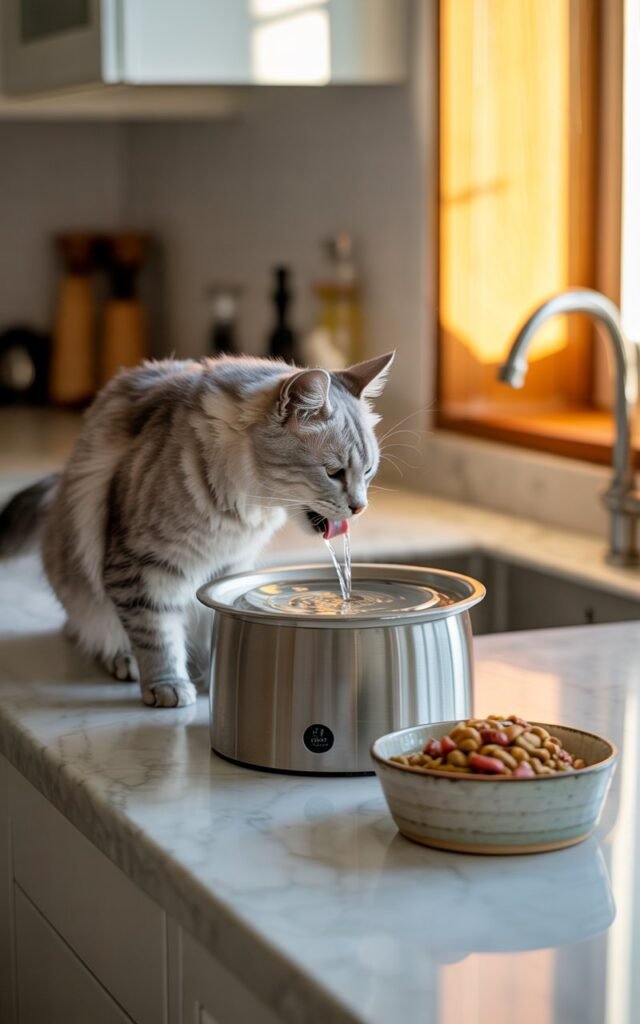
Proper hydration plays a key role in feline longevity nutrition, feline hydration care, and daily cat health maintenance.
I’ve learned that many cats don’t naturally drink enough water, so focusing on hydration for cats, wet cat food benefits, and overall feline wellness and vitality really makes a difference.
I now include more high-moisture wet cat food for hydration support because it helps with kidney health, urinary tract health, digestion, bladder health, toxin flushing, and overall cat vitality and energy levels.
Alongside that, I always make sure fresh water is available throughout the day.
For me, it’s about building simple habits that support a healthy cat diet, hydration-focused feeding routine, natural cat nutrition plan, and long-term feline health and longevity care strategy without overcomplicating things.
7. Supplements That Support Longevity
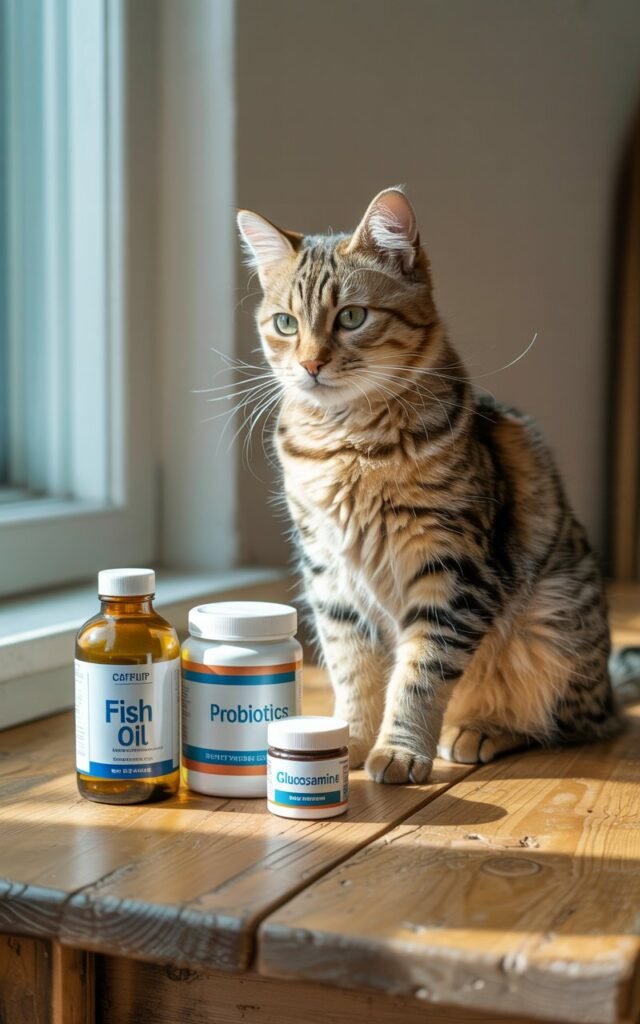
Supporting cat longevity nutrition and feline wellness can also include the right supplements, when needed.
I’ve learned that certain additions can help support joint health, immune system function, digestion, and overall cat vitality.
Common cat supplements for health and longevity may include omega-3 fatty acids for skin and coat health, probiotics for better digestion, and vitamins that support long-term feline immune health and energy levels.
The goal is not to overdo it, but to support balance where the diet may need extra help.
For me, it’s about keeping things simple and intentional—choosing safe cat health supplements that support a natural cat nutrition plan, healthy aging in cats, and long-term feline care routine without unnecessary extras.
8. Foods to Avoid for Longevity
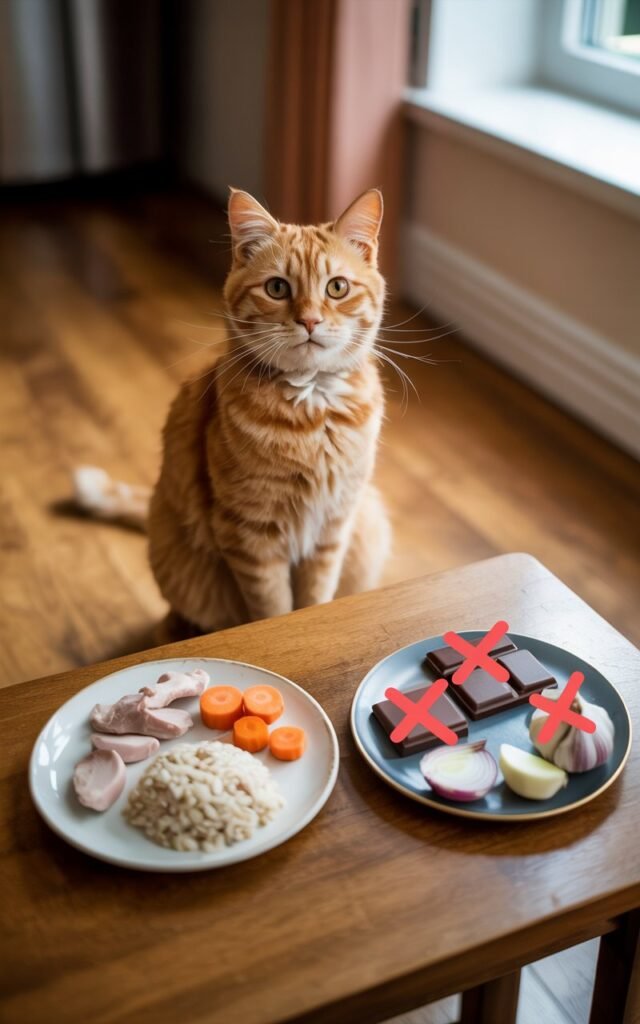
When learning about cat longevity and health, I quickly realized that avoiding the wrong foods is just as important as choosing the right ones.
Many processed treats and low-quality foods with fillers, artificial additives, preservatives, and excess grains don’t support long-term feline health and nutrition.
I also became more careful about common human foods that are unsafe for cats, like onions, garlic, chocolate, and heavily seasoned meals.
Even small amounts can be harmful over time and affect overall cat wellness, digestion, and immune health.
For me, it’s really about keeping things simple and clean—choosing safer, more natural options that support healthy aging in cats, better digestion, and long-term cat care nutrition.
9. Homemade vs. Commercial Cat Foods
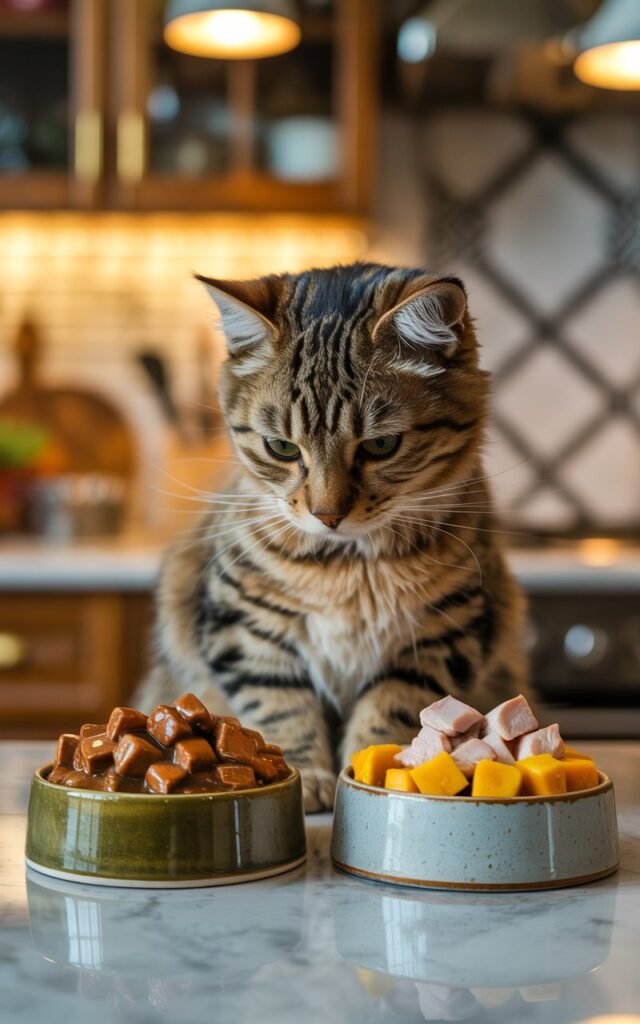
When comparing homemade cat food vs commercial cat food, I realized both can work, but the key difference is ingredients and quality.
Commercial options are convenient, but I always check labels for fillers, preservatives, artificial additives, and low-quality ingredients that may not support long-term cat health and nutrition.
Homemade food gives more control over what goes into my cat’s bowl, which makes it easier to focus on simple, natural ingredients that support feline health, digestion, immunity, and longevity diet for cats.
For me, the main goal is choosing what best supports a healthy cat diet, long-term wellness, and cat longevity nutrition, not just convenience.
10. Portion Control and Weight Management
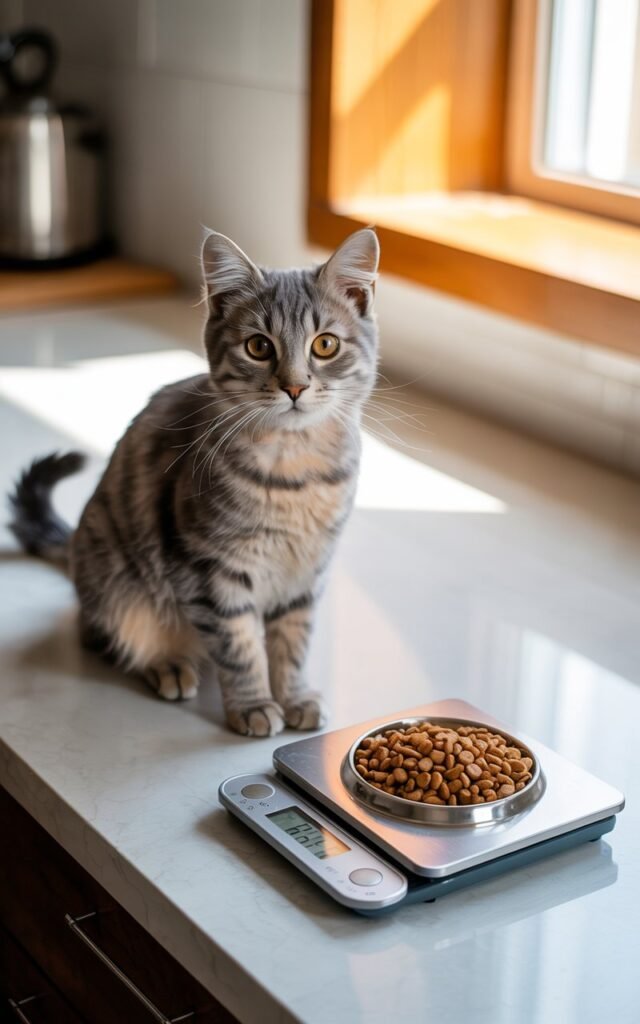
When I started focusing more on cat longevity and health, I quickly realized that portion control plays a huge role in overall wellbeing.
Even with the best cat nutrition and diet, overfeeding can lead to weight issues that affect energy, joints, and long-term feline health.
Now I pay closer attention to how much my cat eats each day instead of just what they eat.
Using proper cat portion control and feeding guidelines helps maintain a healthy weight and supports better digestion and long-term cat wellness and longevity.
I also learned that small, consistent portions throughout the day can be better than large servings.
It keeps their energy stable and supports a more balanced healthy cat diet and weight management routine.
For me, it’s all about balance—making sure my cat stays active, healthy, and supported through mindful feeding habits and proper long-term feline care nutrition.
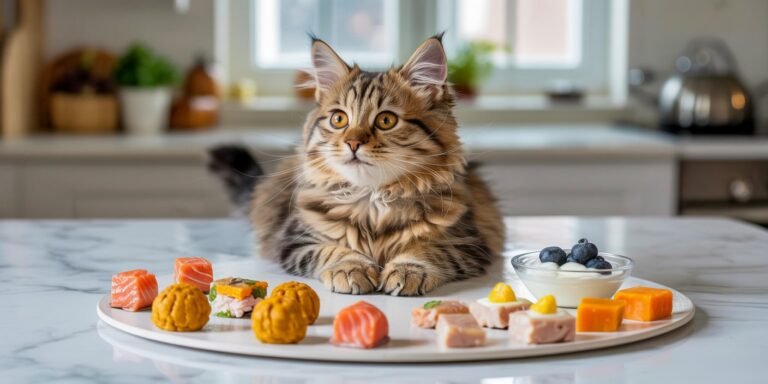
11. The Role of Treats
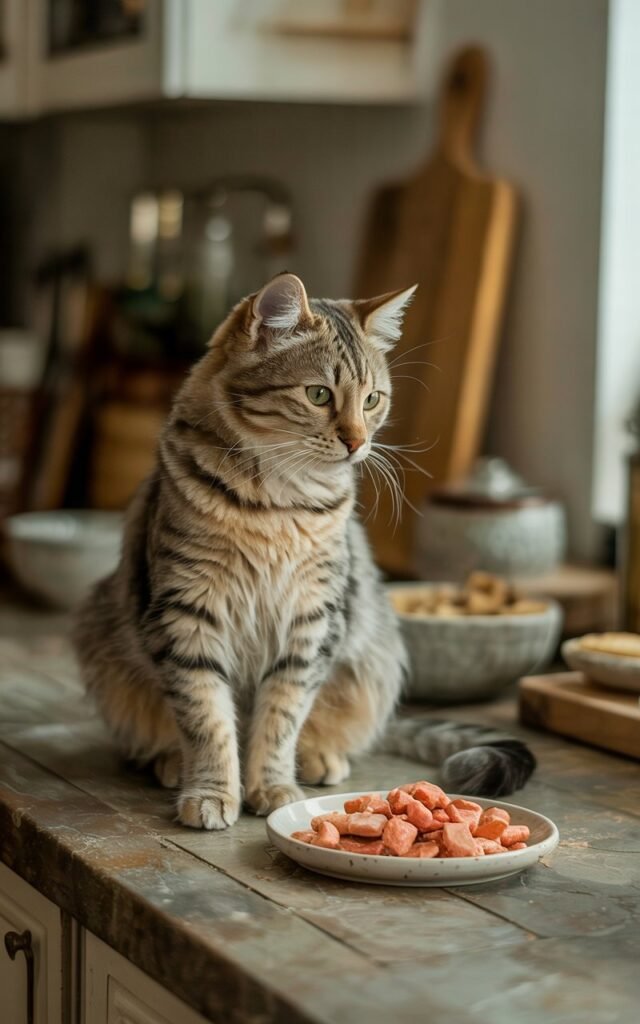
When thinking about cat longevity and nutrition, treats can still have a place—but only when used in moderation.
I used to see treats as just a way to spoil my cat, but now I look at them as part of a balanced cat diet and health routine.
The key is keeping treats simple, low in additives, and not letting them replace proper meals.
Too many treats can affect cat weight management, digestion, and overall feline health, so I’ve learned to use them more intentionally.
Now, I treat snacks as small rewards rather than daily extras.
This helps support a more balanced healthy cat diet, portion control, and long-term cat wellness, without overdoing it.
For me, it’s about finding that balance—enjoying treat moments while still focusing on cat nutrition, longevity, and overall wellbeing.
12. Lifestyle Factors That Complement Longevity Foods
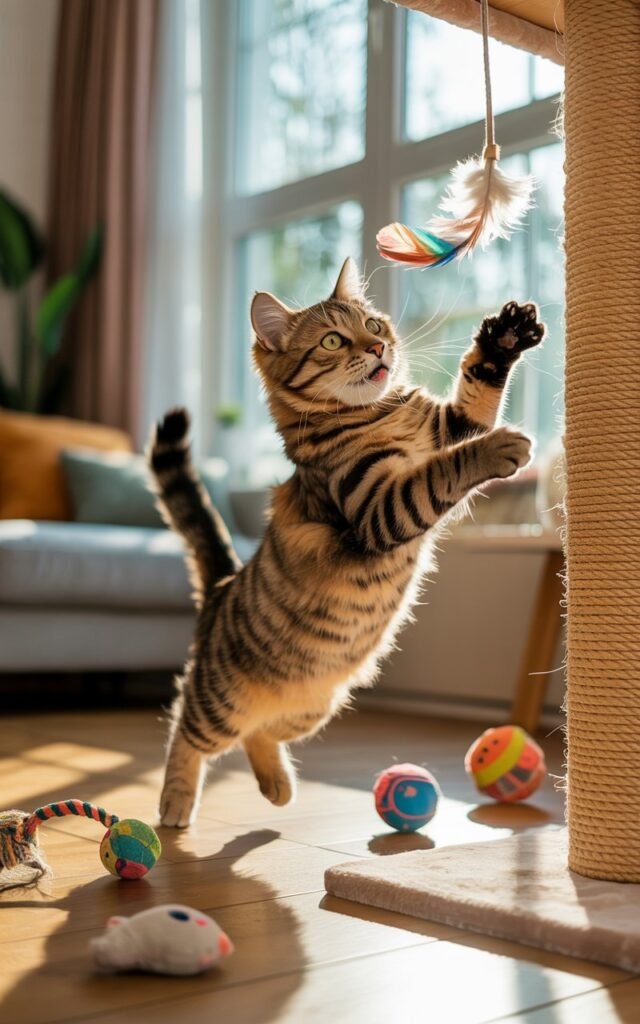
In my focus on cat longevity and nutrition, I’ve learned that food alone isn’t enough.
A healthy diet works best alongside simple lifestyle habits that support feline health and wellness.
Daily activity, playtime, mental stimulation, and a calm environment all contribute to cat wellbeing and long-term health.
I’ve noticed that regular movement and engagement help improve energy levels, behavior, and even digestion.
Small routines like consistent feeding times, fresh water, and a low-stress home environment all support a more stable healthy cat lifestyle and longevity care routine.
These simple habits make a real difference over time.
For me, it’s about combining good nutrition with healthy daily habits, creating balance that supports long-term cat health, happiness, and overall longevity.
Final Thoughts
Cats are family, and giving them the best chance at a long life starts with their food.
High-quality protein, essential fatty acids, taurine, antioxidants, fiber, and hydration form the foundation of a longevity diet.
Combined with portion control, safe treats, and a stimulating environment, your cat can thrive well into their senior years.
I’ve seen firsthand how a carefully managed diet and lifestyle can transform a cat’s health.
Luna’s energy, shiny coat, and bright eyes are proof that thoughtful nutrition really does make a difference.
Your cat deserves the same care—and the right foods today can mean many more happy, healthy years together.