
3 Simple Farmer’s Dog Food Recipes You Can Make at Home
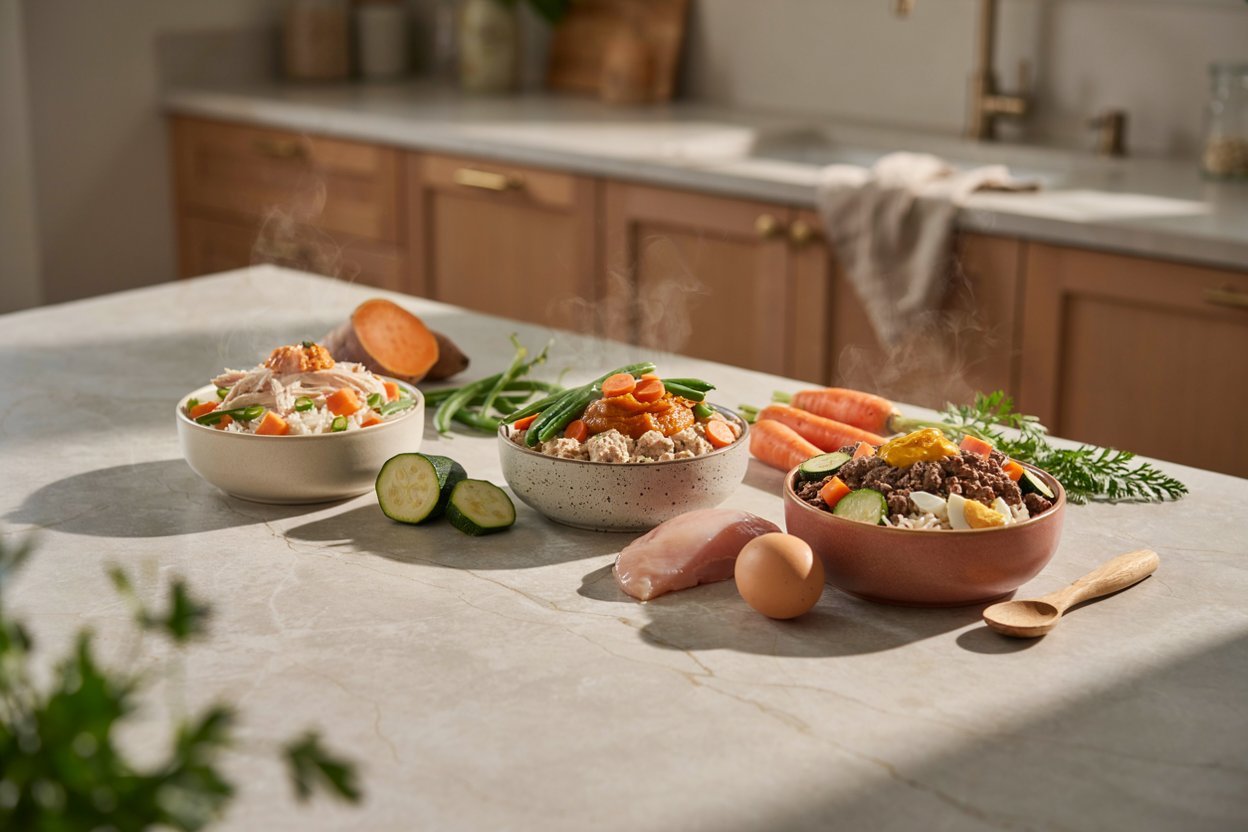
Homemade dog food doesn’t have to involve complicated ingredients or hours in the kitchen.
These three simple recipes use familiar foods such as lean meat, vegetables, rice, and eggs to create fresh meals your dog may genuinely enjoy.
I especially like recipes like these for busy weeks because they can be prepared in batches, portioned ahead of time, and stored for later.
There’s one important distinction worth making before getting started: a homemade recipe that looks healthy isn’t necessarily nutritionally complete for long term feeding.
So along with the recipes themselves, this guide covers preparation, portions, storage, substitutions, and the nutrition details you should know before making homemade food a regular part of your dog’s routine.

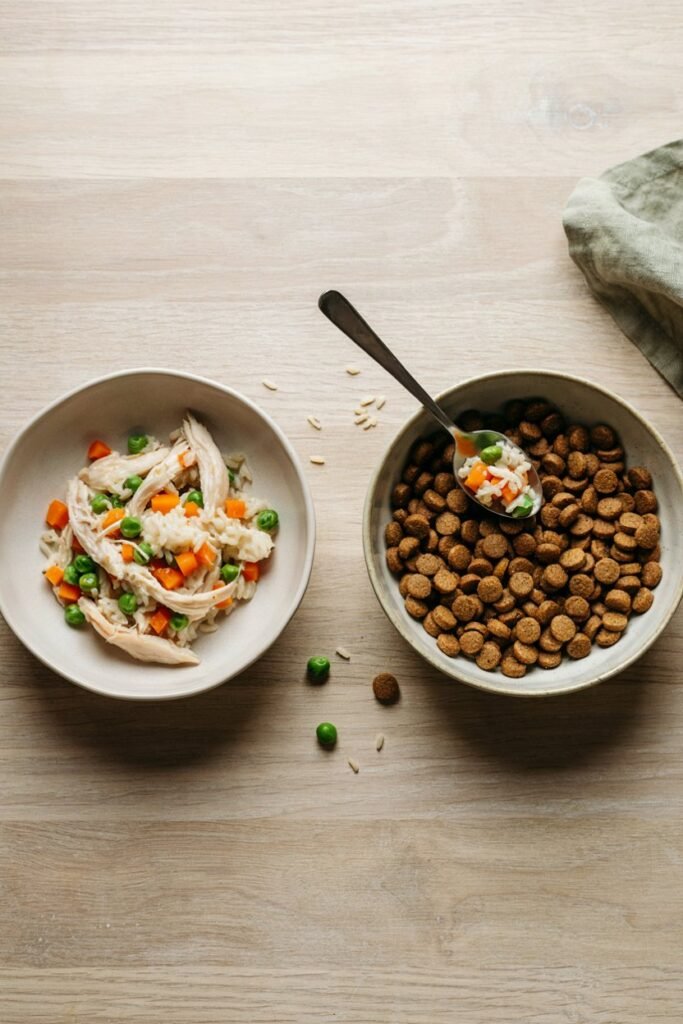
These recipes are inspired by the kind of simple, fresh food approach that’s grown popular in fresh dog food delivery services, and they’re meant as a homemade, from scratch alternative rather than an official recipe from any particular brand.
If you want to go deeper into any part of this topic, a few related guides worth having open alongside this one include homemade dog food with vet approved ingredients for a full breakdown of nutritional balance, 7 high protein homemade dog food recipes for more variety once you’ve got the basics down, simple homemade dog food recipes for beginners if this is your very first time cooking for your dog, healthy homemade beef and apple stew for dogs for a slow cooked option, 3 ingredient cooked dog food recipes for the simplest possible version of homemade feeding, and human foods dogs can safely eat if you’re also wondering what’s safe to share from your own plate.
Disclaimer: This post may contain affiliate links, which means I may earn a small commission at no extra cost to you. Always consult your veterinarian before changing your dog’s diet or introducing homemade meals.
Amazon Shopping List You Need
- Large Nonstick Cooking Pot with Lid
- Digital Kitchen Food Scale
- Glass Meal Prep Containers with Lids
- Airtight Dog Food Storage Container
- Stainless Steel Dog Food Bowls
- Silicone Freezer Portion Trays
- Dog Multivitamin Supplement Powder
Before You Make Homemade Dog Food
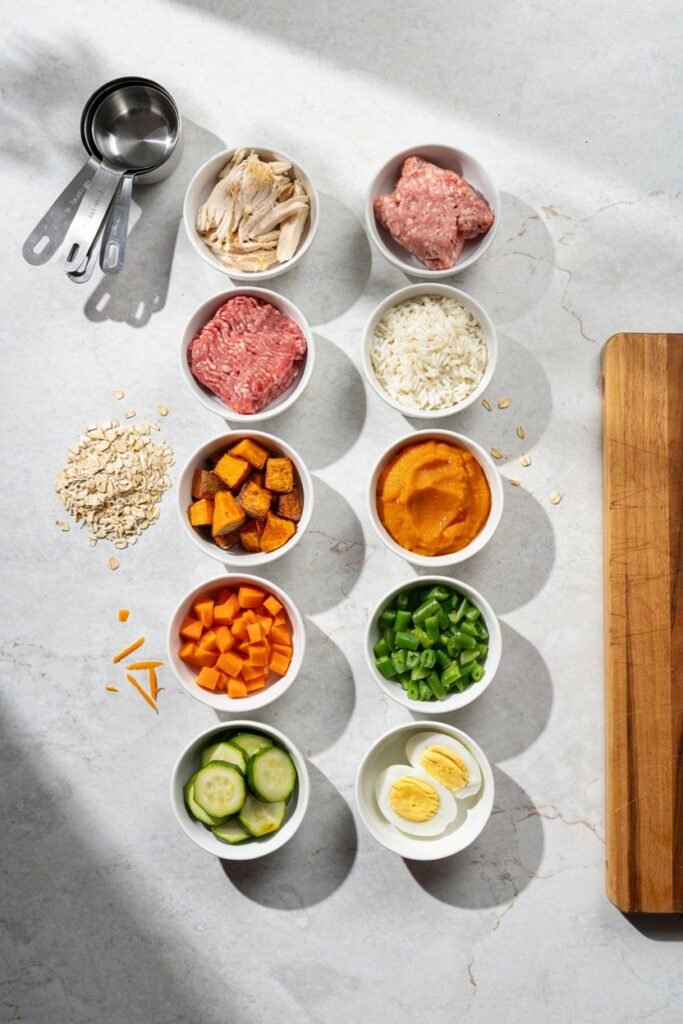
It helps to understand the difference between occasional homemade food and a complete homemade diet before you turn on the stove. Dogs need more than protein and vegetables to thrive over the long run.
A properly formulated diet intended for daily, long term feeding needs to account for protein, fat, carbohydrates, calcium, phosphorus, essential fatty acids, vitamins, minerals, and a range of trace nutrients, all in specific proportions.
Simply adding a multivitamin to a homemade meal isn’t necessarily enough to balance it out.
Vitamins and minerals interact with each other in ways that are easy to get wrong without proper formulation, and calcium to phosphorus ratios in particular are commonly overlooked.
If you’re planning to feed homemade meals exclusively over the long term, working with a veterinarian or a board certified veterinary nutritionist is the most reliable way to make sure nothing important is missing.
What Makes a Good Homemade Dog Food Recipe?
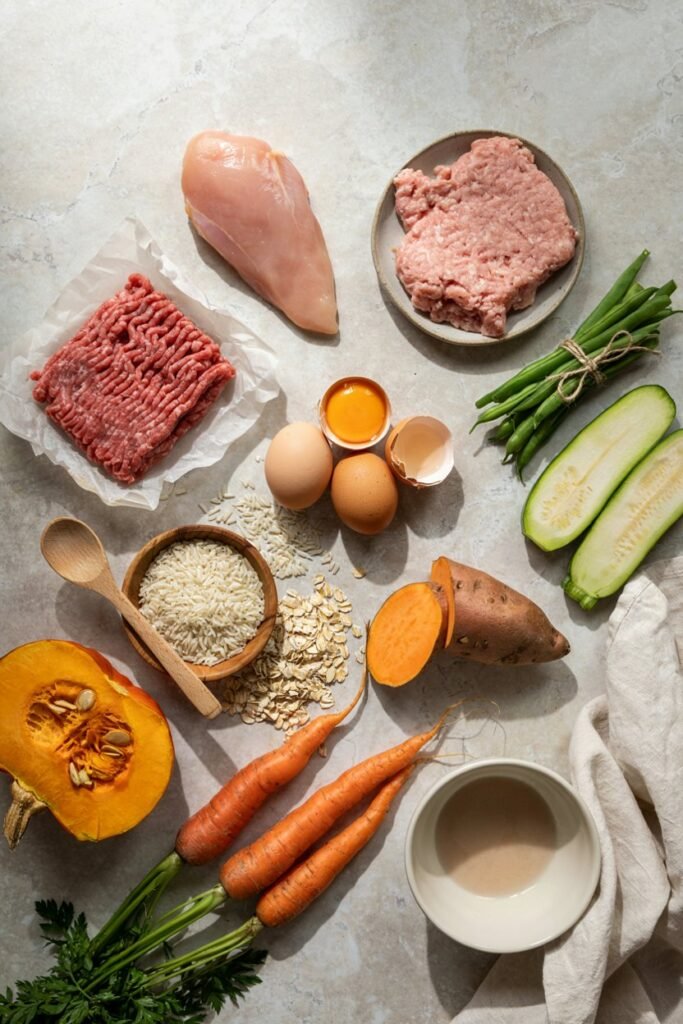
Keep the ingredients simple. Dogs don’t need a complicated list of trendy superfoods to eat well. A handful of familiar, whole ingredients prepared properly goes a long way.
Use a reliable protein source. Chicken, turkey, lean beef, eggs, and fish, when appropriate, all work well as the foundation of a homemade meal.
Include digestible carbohydrates. Brown or white rice, oats, sweet potato, and pumpkin all provide steady energy and fiber without being hard on a dog’s digestion.
Add dog safe vegetables. Carrots, green beans, peas, zucchini, and pumpkin round out a meal with vitamins, minerals, and additional fiber.
Avoid unnecessary seasoning. No onions, garlic, excessive salt, spicy sauces, or heavily seasoned leftovers belong anywhere near a dog’s bowl, no matter how harmless a small amount might seem.
Recipe One: Simple Chicken, Rice & Vegetable Dog Food
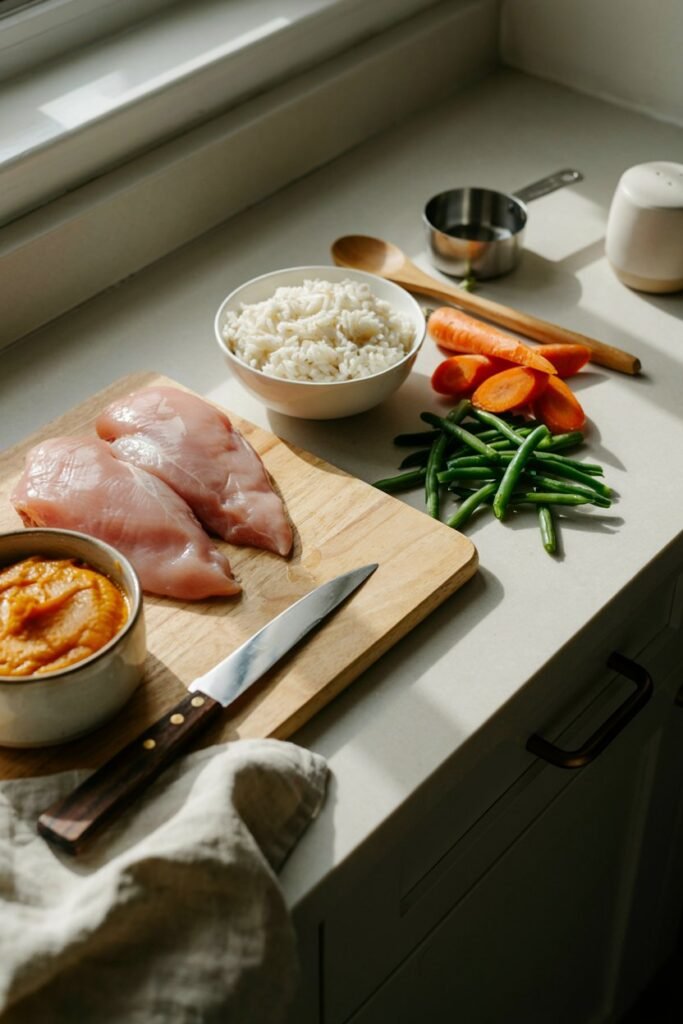
This is the beginner friendly recipe of the three, built around ingredients most kitchens already have on hand.
Ingredients
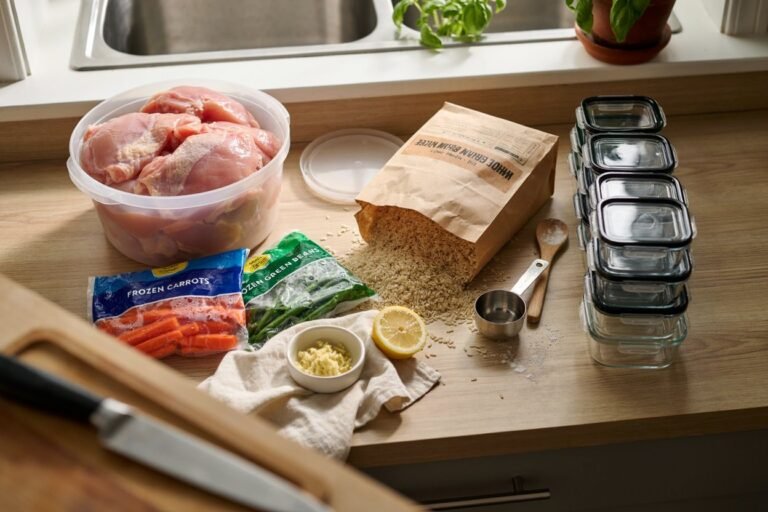
- Lean chicken breast or boneless chicken thigh
- Cooked rice
- Carrots
- Green beans
- Pumpkin
- Water as needed
Bones should never be included in any homemade meal.
Why I Like This Recipe
Chicken provides the lean animal protein that forms the backbone of the meal.
Rice offers an easily digestible carbohydrate source that most dogs tolerate well, even ones with a sensitive stomach.
Carrots and green beans add fiber and a bit of texture that keeps the meal from feeling one note.
Pumpkin contributes both fiber and moisture, which helps the whole meal come together into something soft and easy to eat.
How to Make It
- Cook the chicken thoroughly, with no seasoning added.
- Allow it to cool slightly before handling.
- Cook the vegetables until tender, whether steamed or boiled.
- Prepare the rice separately according to package instructions.
- Chop or shred the cooled chicken into small pieces.
- Combine everything in a large bowl.
- Cool completely before portioning.
- Refrigerate or freeze in individual servings.
Important Note
This recipe isn’t automatically a complete and balanced diet suitable for long term exclusive feeding.
It works well as an occasional meal, a topper, or a starting point for a properly formulated diet, but it shouldn’t quietly become your dog’s only food without further planning.
Recipe Two: Turkey, Sweet Potato & Green Bean Dog Food
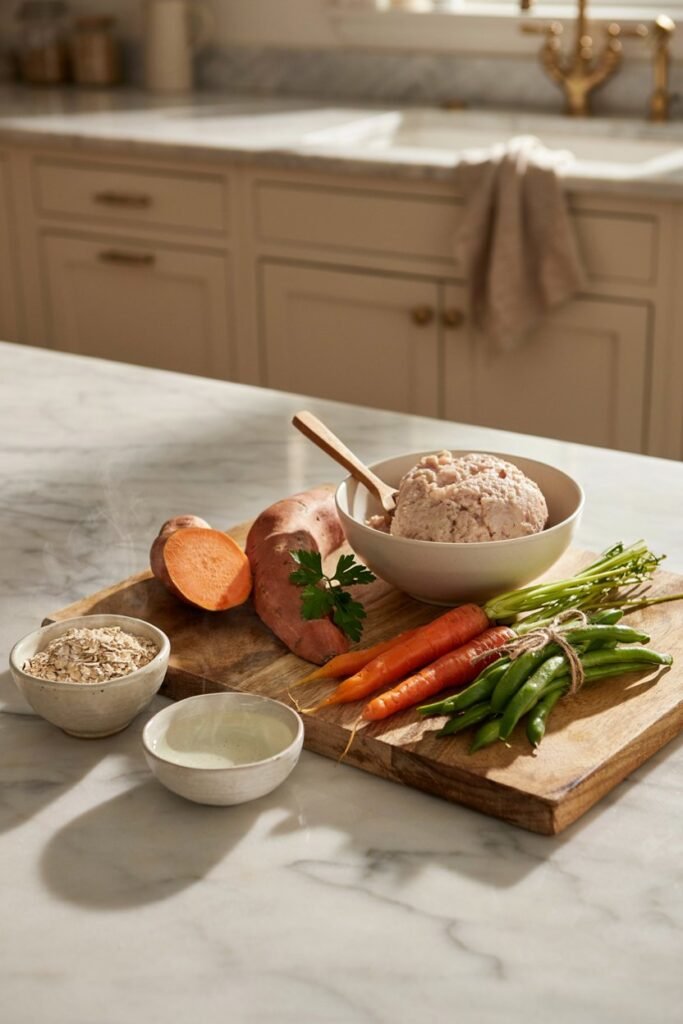
A noticeably different combination from the first recipe, built around a leaner protein and a naturally sweet carbohydrate.
Ingredients
- Lean ground turkey
- Sweet potato
- Green beans
- Carrots
- Cooked oats or rice
- Water
Why turkey? It’s one of the leanest common proteins available, which makes this a good option for dogs who need to manage their weight without sacrificing protein intake.
Why sweet potato? It offers fiber, vitamin A, and a natural sweetness dogs tend to find appealing, along with a soft texture that’s easy to digest.
Why green beans? They add volume and fiber to the bowl without contributing many extra calories, which is useful for keeping portions in check.
Preparation
Cook the turkey completely, breaking it apart as it browns and draining any excess liquid.
Cook the sweet potato until soft enough to mash easily. Steam or lightly cook the green beans and carrots until tender.
Combine everything once it has cooled to room temperature, then portion according to your dog’s individual needs.
Recipe Three: Beef, Egg & Vegetable Dog Food
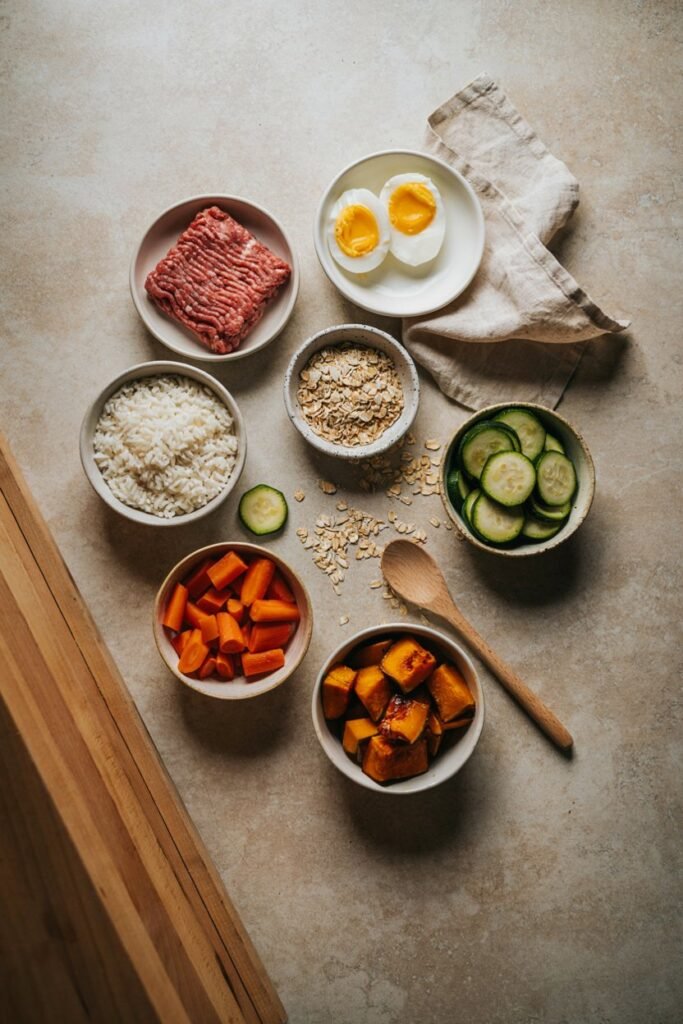
The richest of the three recipes, and a good option for rotating in a different protein source.
Ingredients
Here’s a shorter version that still gives readers useful information without making the ingredient section feel heavy.
- Lean ground beef: A rich source of protein, iron, and zinc. Choose lean beef and drain excess fat after cooking.
- Fully cooked egg: Adds protein, healthy fats, and several important vitamins and minerals. Cook it plain without salt or seasoning.
- Rice or oats: Provides carbohydrates for energy and makes the meal more filling. Use plain cooked rice or oats without added sugar or salt.
- Zucchini: Adds moisture, fiber, and vitamins while keeping the recipe light and easy to digest.
- Carrots: Provide fiber and beta carotene along with a natural sweetness dogs tend to enjoy. Cook until tender.
- Pumpkin: Adds fiber and moisture and gives the meal a soft texture. Use plain pumpkin puree, not pumpkin pie filling.
Preparation
Cook the beef thoroughly and drain off any excess fat, since beef tends to release more fat than chicken or turkey during cooking.
Cook the egg completely, whether scrambled or hard boiled, and never serve it raw.
Prepare the vegetables and the carbohydrate base separately, then combine everything once it has cooled.
As with the other two recipes, this one shouldn’t automatically be considered complete and balanced simply because it contains several food groups.
Variety across food groups is a good sign, but it isn’t the same thing as verified nutritional completeness.
How Much Homemade Dog Food Should You Feed?
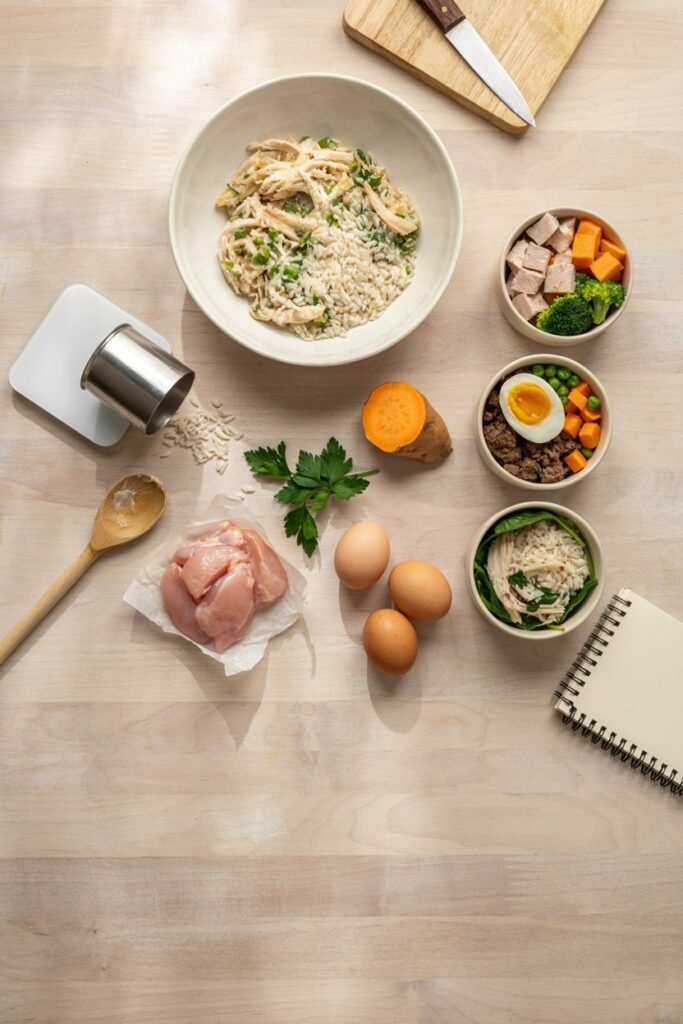
There’s no single “feed this many cups per pound” rule that works for every dog, and treating one as universal is one of the more common mistakes in homemade feeding.
Calorie requirements vary significantly based on body weight, age, breed, activity level, neutered status, body condition, health conditions, current diet, and any specific weight gain or weight loss goals.
| Dog | What Affects Portions |
|---|---|
| Small adult dog | Smaller meals and higher calorie density may be appropriate |
| Medium adult dog | Portion depends heavily on activity and body condition |
| Large adult dog | Larger total calorie requirement, but individual needs vary |
| Senior dog | Activity and health status can change calorie needs |
| Puppy | Growth requirements make professional nutritional guidance especially important |
A more reliable approach than guessing is to start with your veterinarian’s recommended daily calorie intake for your dog, then work out how much of the homemade recipe fits within that total.
How to Transition Your Dog to Homemade Food
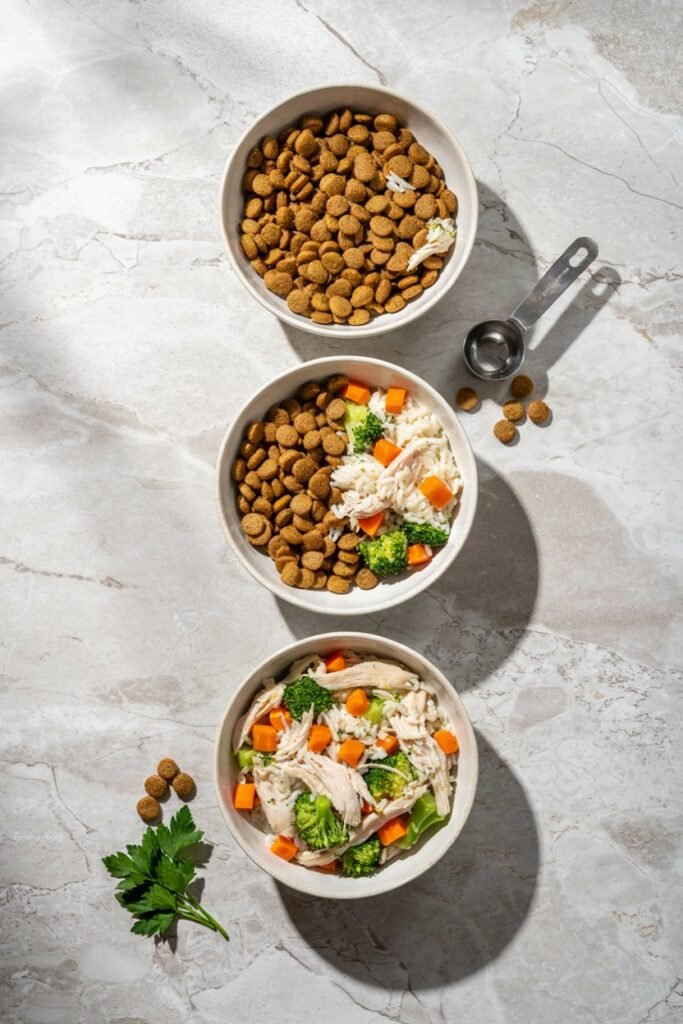
Don’t replace your dog’s entire diet all at once. A gradual transition gives their digestive system time to adjust.
Days 1 to 2. Mostly current food, with a small amount of the new homemade recipe mixed in.
Days 3 to 4. Increase the homemade portion while continuing to reduce the old food.
Days 5 to 6. Continue increasing the homemade portion if stools remain normal throughout.
Day 7. Transition further, or complete the switch, if your dog has tolerated the process well.
Some dogs need a slower transition than others.
Watch for loose stool, vomiting, excessive gas, reduced appetite, constipation, or itching and other unusual reactions throughout the process.
If symptoms are significant or persistent, stop experimenting and contact your veterinarian rather than pushing through.
How to Store Homemade Dog Food
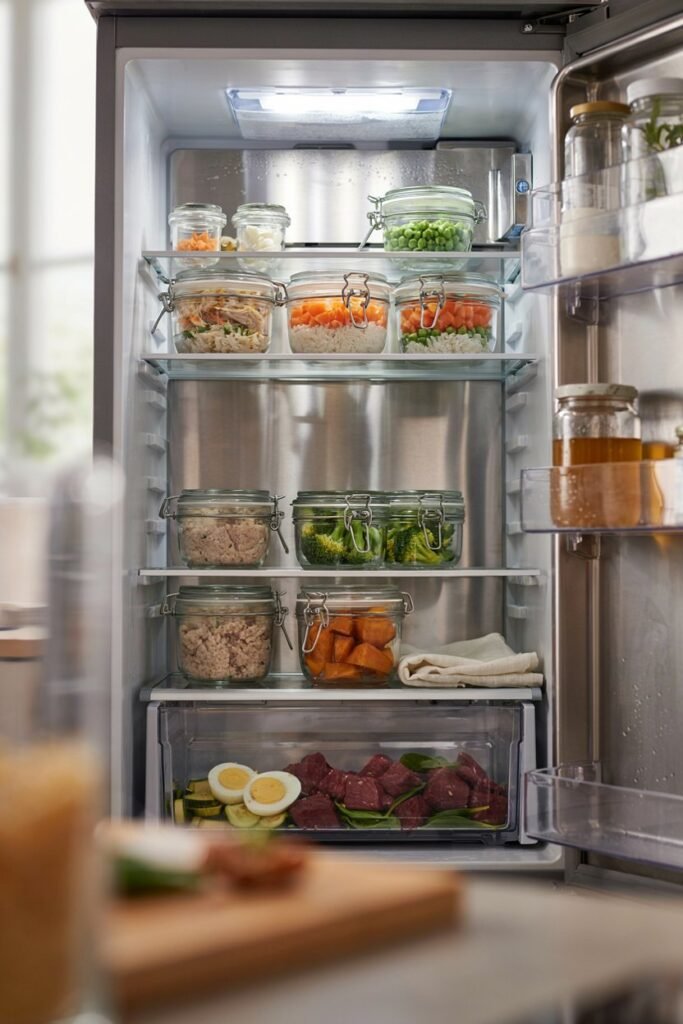
Refrigerator. Cool cooked homemade dog food promptly and store it in airtight containers rather than leaving it out to cool on the counter for long stretches.
Freezer. Divide the finished batch into individual meal portions before freezing, which makes thawing exactly what you need far more convenient.
Thawing. Thaw frozen portions in the refrigerator rather than leaving them sitting out at room temperature for extended periods.
Reheating. Warm gently if you’d like, but make sure the food isn’t hot before serving it.
| Storage Method | Best Practice |
|---|---|
| Refrigerator | Keep promptly chilled in sealed containers |
| Freezer | Portion before freezing |
| Thawed food | Keep refrigerated and use promptly |
| Serving | Bring to a comfortable temperature before feeding |
Ingredients You Should NEVER Add
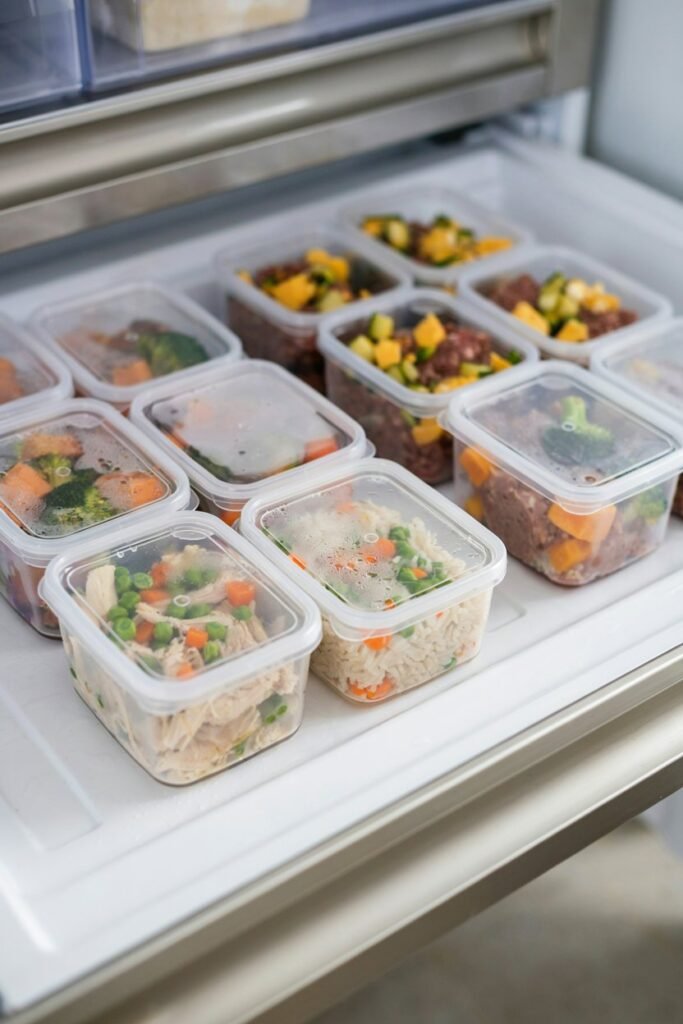
- Onions and garlic damage red blood cells and can lead to anemia, even in small or powdered amounts.
- Chives carry a similar risk, since they’re part of the same plant family as onions and garlic.
- Grapes and raisins can cause serious kidney problems, with no reliably safe amount to offer.
- Chocolate contains a compound dogs metabolize far more slowly than people do, making it toxic even in modest amounts.
- Xylitol causes a rapid, dangerous drop in blood sugar and shows up in some peanut butters and baked goods.
- Macadamia nuts can cause weakness, tremors, and elevated body temperature.
- Alcohol affects dogs far more severely than humans, even in small quantities.
- Excessively salty foods can lead to serious sodium related health issues in large amounts.
- Cooked bones can splinter and cause internal injury, unlike the softer texture of raw bone.
- Highly seasoned sauces often hide salt, garlic, or onion even when the main ingredient looks harmless.
Can Dogs Eat These Recipes Every Day?
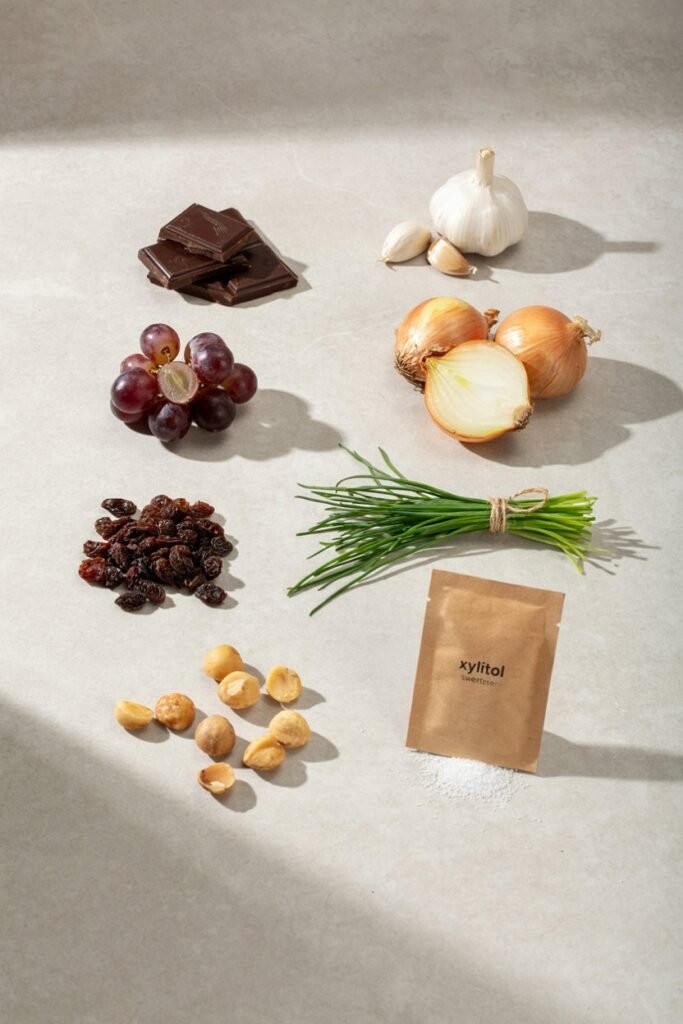
Not necessarily. Homemade food can be used a few different ways, and it’s worth being clear about which one applies to your situation.
As an occasional meal. Generally easy to incorporate without disrupting the nutritional foundation of a complete commercial diet.
As a topper. A small amount mixed into regular food can make meals more appealing, especially for picky eaters, without needing to be nutritionally complete on its own.
As part of a long term homemade diet. This requires much more careful nutritional formulation, ideally with veterinary or veterinary nutritionist input, since daily feeding leaves far less room for gaps to go unnoticed.
Many people searching for recipes like these are actually considering replacing commercial food entirely, so it’s worth pausing on this distinction rather than skipping past it.
How to Make These Recipes More Convenient
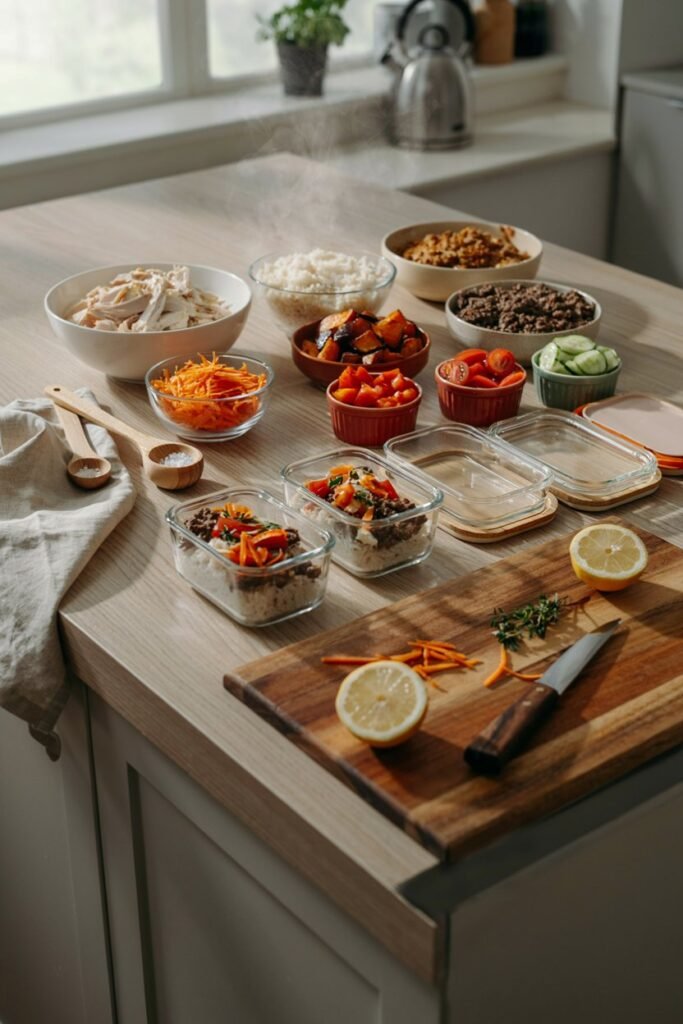
When I make homemade food, I’d much rather spend one afternoon preparing several portions than pull out the cutting board every single night.
I let everything cool completely, divide it into meal sized containers, and keep only what I need for the next few days in the refrigerator, with the rest going straight into the freezer.
A few habits that make this easier over time:
- Cook protein in larger batches than you need for just one meal
- Use frozen dog safe vegetables to cut down on prep time
- Cook a big batch of rice or oats ahead of time and portion it out as needed
- Portion meals immediately after cooking, rather than storing one large container
- Label containers with the recipe and date prepared
- Freeze extra portions in individual servings
- Keep a simple feeding log to track what your dog responds well to
Simple Ingredient Substitutions
| Original Ingredient | Possible Alternative |
|---|---|
| Chicken | Turkey |
| Rice | Oats |
| Sweet potato | Pumpkin |
| Green beans | Zucchini |
| Carrots | Peas |
| Lean beef | Lean turkey |
Substituting ingredients can change the calorie and nutrient composition of a recipe, sometimes more than expected.
That matters most if you’re using the recipe as a primary diet rather than an occasional meal, since small nutritional shifts add up over daily, long term feeding in a way they simply don’t for an occasional bowl.
Frequently Asked Questions
Can I feed homemade dog food every day? Yes, as long as the recipe is properly balanced for long term feeding, ideally with guidance from a veterinarian or veterinary nutritionist.
As an occasional meal or topper, these recipes work well without that extra formulation.
Can I use chicken thighs instead of chicken breast? Yes, chicken thighs work fine and tend to be slightly higher in fat, which some dogs find more appealing.
Can I freeze homemade dog food? Yes, portioning it into individual servings before freezing makes future meals much easier to manage.
Can puppies eat homemade dog food? They can, but puppies have more specific nutritional needs during growth, so any recipe intended as a puppy’s regular diet should be reviewed by a veterinarian first.
Is rice good for dogs? Yes, both white and brown rice are commonly used and generally well tolerated, with white rice being gentler for a sensitive stomach.
Can I add eggs to homemade dog food? Yes, fully cooked eggs are a good source of protein and healthy fat, and they’re a common addition across many homemade recipes.
How long does homemade dog food last? Refrigerated meals typically last 3 to 4 days. Frozen portions generally hold their quality for up to 3 months.
Can I mix homemade food with kibble? Yes, many owners use homemade food as a topper or partial addition to commercial food rather than a full replacement, which is a perfectly reasonable way to use these recipes.
Does homemade dog food need supplements? Often, yes, particularly calcium, if it’s going to serve as a dog’s primary diet over the long term. Occasional meals generally don’t need the same level of supplementation.
Can homemade dog food be a complete diet? It can, but only when it’s formulated with attention to a dog’s full nutritional needs, typically with input from a veterinarian or board certified veterinary nutritionist rather than assembled casually.
Final Thoughts
These three recipes are a good starting point if you want to prepare simple, fresh food for your dog, but the most important part is knowing what role the food will play in your dog’s overall diet.
A homemade meal can be fresh, wholesome, and carefully prepared without automatically meeting every nutritional requirement on its own.
If you’re using homemade food as an occasional meal or topper, these recipes give you several simple combinations to work with right away.
If you’re planning to replace your dog’s regular food completely, take the extra step of having the diet properly formulated for your dog’s age, size, activity level, and health needs before making the switch permanent.



One Comment