
5 Incredible Things Cats Can Sense That Humans Often Miss

Every cat owner has experienced that strange moment when their cat suddenly stares at an empty hallway, runs to the front door just before someone arrives, or notices something long before anyone else in the house.
Moments like these make you wonder whether cats are simply observant or if their senses are far more powerful than we realize. While stories about cats often sound mysterious, many of their incredible abilities have scientific explanations.

Their hearing, smell, eyesight, and sensitivity to tiny environmental changes allow them to detect things people completely miss.
Understanding these abilities can help you care for your cat better and appreciate why they behave the way they do, which ties closely into the everyday habits I cover in my happy healthy cat tips and daily cat care routine.
In this guide, I am sharing five amazing things cats can sense, what science says about each one, and what those behaviors might actually mean inside your home.
Disclaimer
This post may contain affiliate links. As an Amazon Associate, I earn from qualifying purchases at no additional cost to you. I only recommend cat-safe products and useful pet supplies that I genuinely find helpful for creating a comfortable environment for cats. Individual cats can respond differently to sounds, scents, movement, and changes around them.
Shop on Amazon With 50% Discount On Your Orders
- Interactive Cat Toys – I use these to give cats something engaging to explore, chase, and interact with during playtime.
- Cozy Cat Bed – I use a comfortable cat bed to give cats a quiet, familiar place where they can relax and observe what is happening around them.
- Cat Water Fountain – I use a water fountain to provide fresh, moving water and encourage regular drinking.
Why Cats Have Extraordinary Senses

Cats evolved as both skilled hunters and small, vulnerable prey animals, and that combination shaped some genuinely remarkable senses.
Their eyes are built for exceptional night vision, letting them see clearly in light levels that would leave a person nearly blind.
Their hearing range extends well beyond what humans can detect, originally useful for tracking small, fast moving prey like rodents and insects.
Their sense of smell is far more powerful than ours, built around a nose with many more scent receptors than a human’s.
Their whiskers act as an entire secondary sensory system, picking up on air movement and tiny vibrations.
All of this adds up to an animal that is constantly gathering far more information about its environment than we ever notice ourselves.
1. Cats Can Sense Tiny Sounds Humans Never Hear

One of my cats always reaches the front door long before anyone rings the bell.
At first I thought it was coincidence until I realized she was hearing the car pull into the driveway long before I noticed it myself, sometimes a full minute or more before I heard anything at all.
Cats can hear ultrasonic frequencies that are completely inaudible to humans.
This is part of why they are such effective hunters, since it allows them to detect the high pitched sounds rodents and insects make as they move.
It also means cats often hear things we cannot, including the faint buzzing of certain electrical devices or the sound of footsteps from much farther away than we would expect.
Why It Matters
This heightened hearing explains a lot of behavior that can otherwise seem strange, including a cat suddenly staring intently at a wall or ceiling.
In many cases, they are simply picking up on a sound, whether it is an insect inside the wall, a pipe, or some other faint noise, that is entirely outside the range of human hearing.
Interesting Fact
Cats can hear frequencies up to about 64 kHz, far beyond the roughly 20 kHz upper limit of human hearing.
2. Cats Can Detect Changes in Human Bodies

Many cat owners have a story about their cat suddenly acting differently around them during an illness, a stressful period, or even before they themselves realized something had changed.
Researchers believe cats may respond to changes in body odor, temperature, and behavior, although more research is still needed to fully understand exactly what they are picking up on and how reliably.
Cats have an extraordinarily sensitive sense of smell, and subtle shifts in a person’s scent, whether from hormonal changes, stress, or illness, may be detectable to them well before those changes are noticeable to another person.
Some cats also appear to respond to changes in a person’s behavior or routine, such as moving more slowly, sleeping more, or spending more time in one particular spot, all of which a cat naturally notices given how closely they observe the humans they live with.
It is important to be careful with claims here, since cats are not medical diagnostic tools and should never be relied upon in place of proper veterinary or medical care.
What does seem clear is that cats are simply very good at noticing change, and a person’s scent and behavior are two of the most obvious things for a cat to pick up on.
3. Cats Can Sense Weather Changes Before Storms
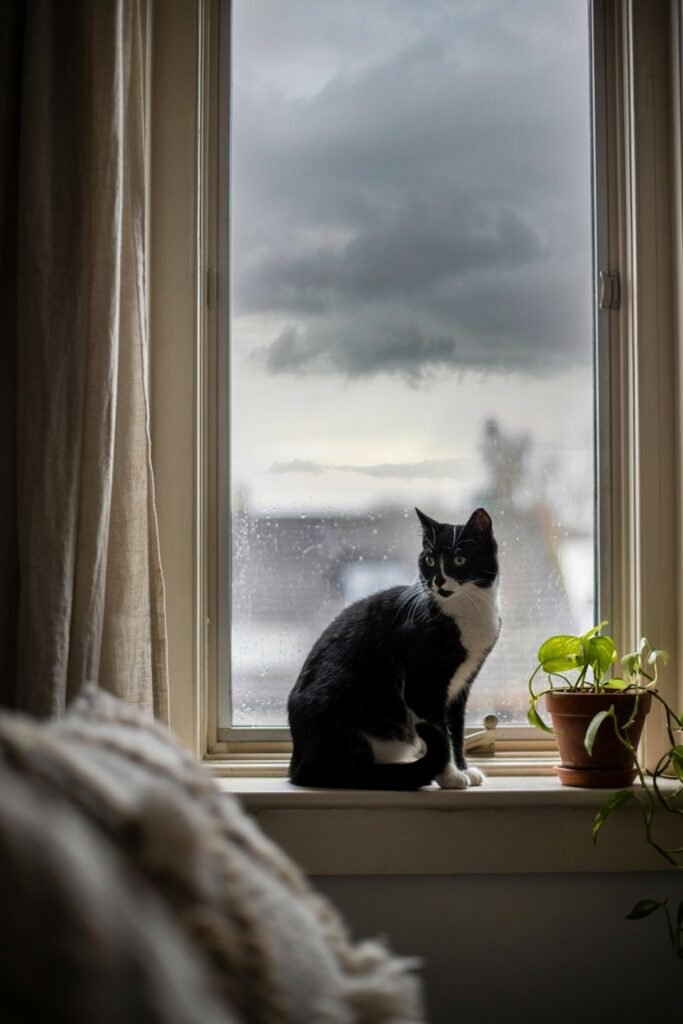
Many owners notice their cat becoming unusually restless, hiding, or acting anxious in the hours before a storm actually arrives.
This is often attributed to a cat’s sensitivity to shifts in air pressure, which tends to drop noticeably before a storm system moves in.
Cats may also be responding to static electricity building up in the air, changes in humidity, distant thunder vibrations that are still too faint or too low frequency for a person to notice, or increasing wind.
Common signs that a cat may be sensing an approaching storm include hiding in an unusual spot, general restlessness, excessive grooming, or repeatedly looking out of windows as if watching for something.
If your cat tends to show these signs, providing a quiet, comfortable space they can retreat to, along with familiar bedding or a favorite toy, can help them feel more secure until the weather passes.
4. Cats Can Detect Tiny Movements Through Their Whiskers
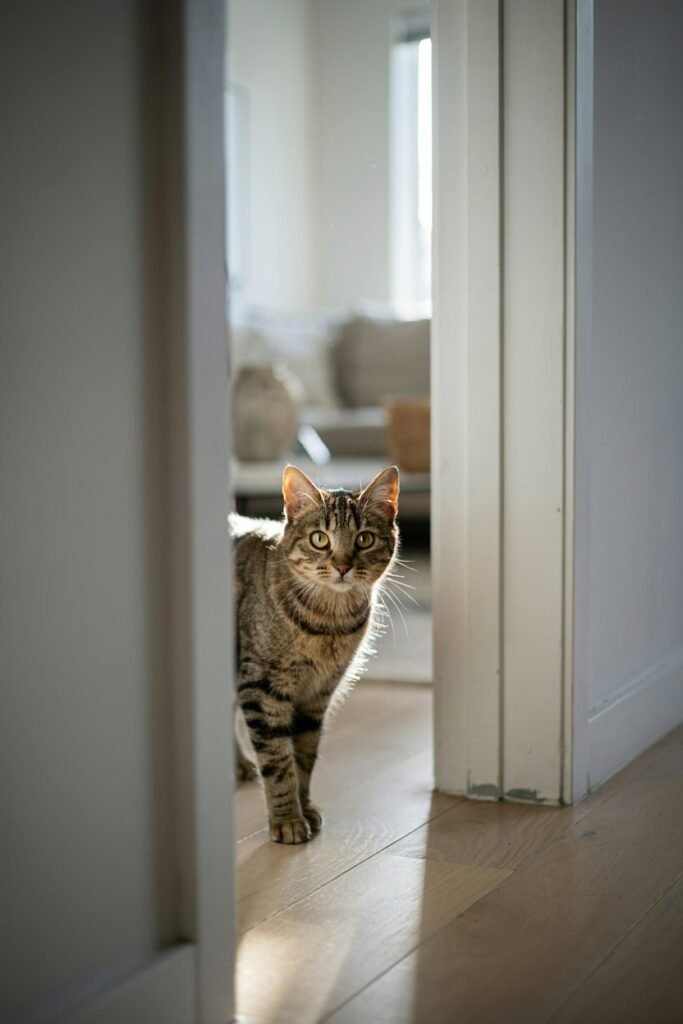
Whiskers are often thought of as simply decorative, but they are actually one of the most sophisticated sensory tools a cat has.
Each whisker is deeply rooted and highly sensitive to touch, allowing a cat to detect airflow and even the tiniest vibrations in the air around them.
This ability helps cats judge whether they can fit through a narrow space without needing to test it physically first, since their whiskers roughly correspond to the width of their body.
It also helps them track the movement of prey, sense nearby objects in darkness without needing to see them clearly, and generally build a detailed mental map of their immediate surroundings using touch alone.
Many readers do not realize just how much information a cat’s whiskers are constantly gathering, which is part of why trimming or cutting them, even accidentally, can genuinely disorient a cat and should always be avoided.
5. Cats Can Sense Human Emotions

Whenever I feel stressed while working, my cat almost always curls up beside my chair.
Whether it’s responding to my voice, posture, or daily routine, it seems to notice changes before I even realize how tense I am.
Cats appear to pick up on a combination of cues when it comes to human emotions, including tone of voice, facial expressions, changes to a normal routine, and general body language.
Some research also suggests that animals, including cats, may respond to shifts in a person’s stress hormones, detectable through subtle scent changes, though this area is still being studied.
A sudden shift in a cat’s behavior, such as becoming more clingy, more distant, or more vocal, often lines up with periods of noticeable stress or emotional change in their owner’s life, which many cat owners recognize instinctively even without knowing the science behind it.
Can Cats Really Sense Ghosts?

This is one of the most commonly asked questions about cat behavior, and it deserves an honest, respectful answer.
When a cat stares intently into an empty corner or seems to track something moving across a room that a person cannot see, it is easy to assume something supernatural is happening.
In reality, there are several far more grounded explanations. A cat’s superior hearing may be picking up on a faint sound a person cannot detect.
Their exceptional eyesight, particularly their ability to notice subtle motion, may be catching a shadow, a reflection, dust particles catching the light, or an insect moving along the floor or wall.
Air currents from a vent, a draft, or a nearby door can also catch a cat’s attention in a way that looks mysterious to us but is simply their whiskers or fur detecting movement.
There is no scientific evidence that cats detect supernatural activity, but their heightened senses often explain behaviors that seem mysterious at first glance.
Common Behaviors Explained

| Behavior | Possible Reason |
|---|---|
| Staring at a wall | Hearing insects or noises inside pipes or walls |
| Sudden zoomies | Built up hunting energy needing an outlet |
| Hiding | Loud noises or a drop in air pressure before weather changes |
| Sniffing visitors | Gathering scent information about someone new |
| Sitting on you | Seeking warmth, comfort, or simply following a familiar routine |
How to Support Your Cat’s Natural Senses

Never trim or cut a cat’s whiskers, since doing so can genuinely disorient them and interfere with how they navigate their environment.
Providing window perches gives your cat a chance to use their eyesight and hearing to observe the outside world, which many cats find deeply satisfying.
Puzzle toys engage a cat’s natural instincts around scent and problem solving, offering the kind of mental stimulation that mirrors what my ways to make your cat’s life amazing guide covers in more depth.
Keeping a consistent daily routine helps reduce stress, since cats are highly attuned to changes and often respond better when their environment feels predictable.
Reducing loud, sudden noises where possible can help a cat who seems especially sensitive to sound.
Scheduling regular veterinary visits remains one of the most important things you can do for your cat’s overall wellbeing, since their heightened senses cannot replace proper medical care and monitoring.
Diet plays a role in supporting overall sensory health too, and ingredients rich in nutrients that support eye, skin, and cognitive health are worth including where appropriate, similar to what I cover in my guide to superfoods for cats.
Frequently Asked Questions
Can cats sense earthquakes? Many owners report unusual behavior in their cats shortly before an earthquake, possibly related to their sensitivity to subtle vibrations or changes in the environment, though this is difficult to study rigorously and remains an area of ongoing interest.
Can cats sense pregnancy? Some owners notice a change in their cat’s behavior around a pregnant person, potentially related to shifts in scent, hormones, or routine, though there is no confirmed scientific mechanism proving cats specifically detect pregnancy.
Can cats smell illness? Cats may respond to changes in a person’s scent that accompany certain illnesses, though they should never be relied upon as a diagnostic tool in place of proper medical care.
Why does my cat stare at nothing? This is most often explained by a cat noticing a sound, a movement, or a shadow that is simply too subtle for a person to detect, rather than anything supernatural.
Why does my cat hide before storms? Cats may be responding to a drop in air pressure, distant thunder vibrations, static electricity, or changes in wind, all of which can occur well before a storm becomes noticeable to a person.
Can cats recognize their owners by smell? Yes, scent plays a major role in how cats identify familiar people, often alongside voice and visual recognition.
Do cats know when you’re sad? Many cats appear to respond to changes in tone of voice, body language, and routine that often accompany sadness or stress, even if the exact mechanism behind that response is still being studied.
Final Thoughts
The more time I spend watching cats, the more I realize many of their mysterious behaviors have surprisingly practical explanations.
Their remarkable hearing, powerful sense of smell, sensitive whiskers, and ability to notice subtle changes make them incredibly aware of the world around them.
Paying attention to these instincts not only helps you understand your cat better but can also strengthen the bond you share every day.
If you want to keep learning more about what makes cats tick, my guides on daily cat care routine and homemade cat food for senior cats go hand in hand with understanding these instincts, especially as cats age and their sensory needs shift alongside their care routine.
And if you’re curious about safe foods that support your cat’s overall health, my post on safe berries for cats is a good next read.