
Homemade Turkey Dog Food Recipe for Beginners
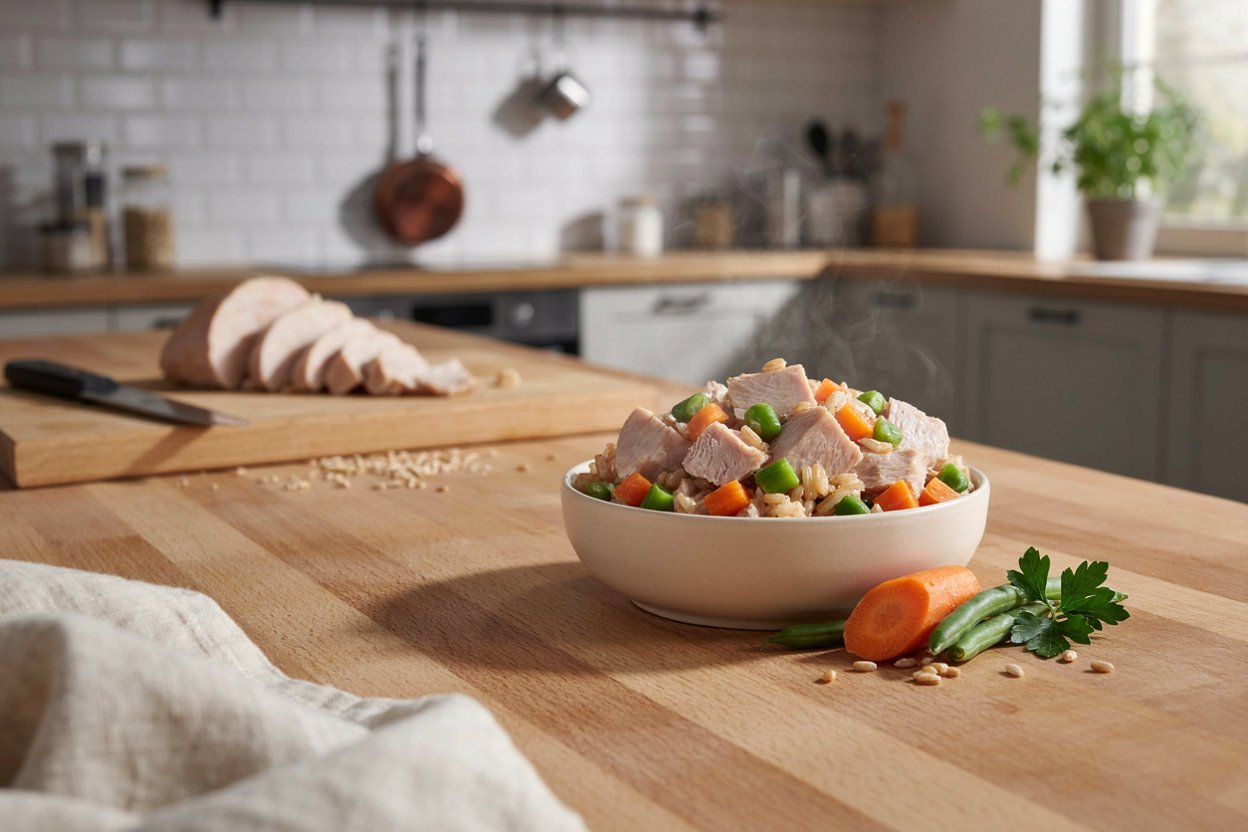
Ground turkey tends to get most of the attention in beginner dog food recipes, but cooking with a whole cut, like turkey breast or thigh, diced by hand, is just as approachable and teaches you a couple of genuinely useful skills along the way: how to safely debone a cooked cut, and how to judge doneness in a piece of meat rather than just watching for browned crumbles in a pan.
This recipe walks through that version specifically, using diced turkey rather than ground, along with everything you need to make it a confident first attempt at cooking for your dog.
If you want to build out your homemade cooking rotation beyond this one recipe, a few related guides are worth having open alongside this one.
Homemade dog food with vet approved ingredients covers what a fully balanced diet needs beyond just picking good ingredients, ground turkey dog food recipe for beginners is worth comparing against this one if you’d rather work with ground meat instead of a whole cut, one pot homemade dog food recipes for beginners and 3 ingredient cooked dog food offer other simple starting points, healthy homemade dog meals you can make at home covers how to adjust a meal for specific health goals, simple homemade dog meals you can freeze pairs well with this recipe for batch cooking, homemade dog food recipes for small dogs is worth a look if you’re cooking for a smaller breed specifically, and human foods dogs can safely eat is a good reference for what’s safe to share from your own kitchen more broadly.
Disclaimer
This post may contain affiliate links. As an Amazon Associate, I earn from qualifying purchases at no additional cost to you. I only recommend dog-safe ingredients and kitchen tools that I genuinely find useful for preparing homemade dog food. Homemade diets need to be nutritionally balanced for your dog’s individual needs, especially when fed long term. Consult your veterinarian or a qualified veterinary nutritionist before making homemade dog food a regular part of your dog’s diet.
Shop on Amazon With 50% Discount On Your Orders
- Digital Kitchen Scale – I use this to measure turkey, vegetables, grains, and other ingredients accurately so each batch stays consistent.
- Freezer-Safe Meal Prep Containers – I use these to divide homemade turkey dog food into individual portions and keep larger batches organized in the freezer.
- Stainless Steel Mixing Bowls – I use these whenever I prepare homemade dog food because they are durable, easy to clean, and useful for mixing larger batches.
Why Cook With a Whole Cut Instead of Ground Turkey
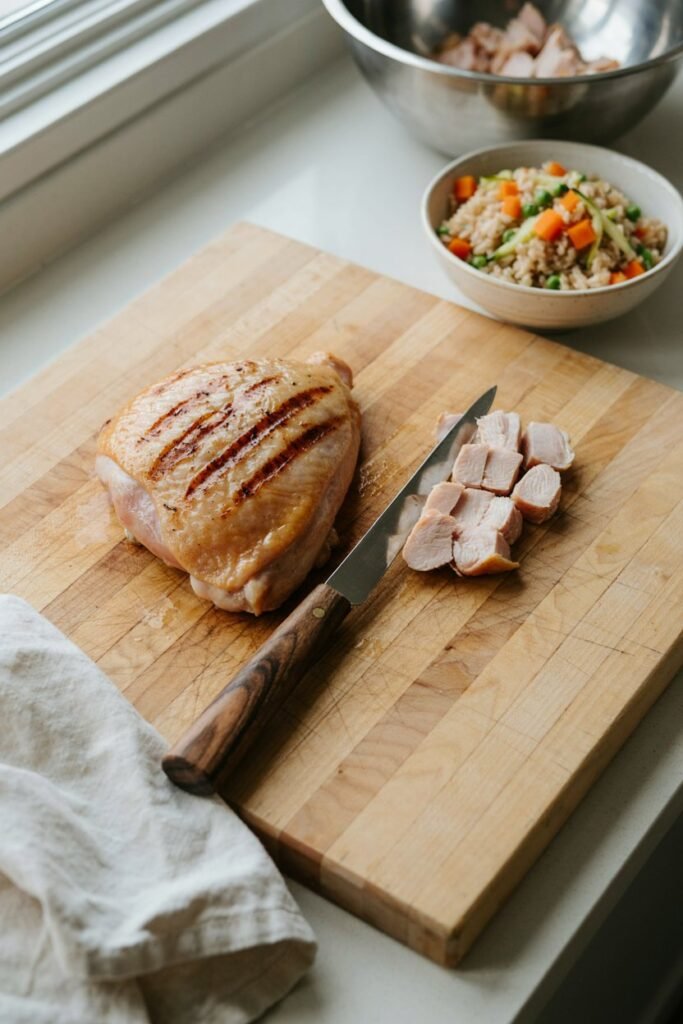
Ground turkey is genuinely easier in some ways, since there’s no deboning involved and it cooks evenly with just a bit of stirring. Working with a whole cut like turkey breast or thigh has its own advantages though.
It’s often a bit cheaper per pound, especially bone in cuts, it holds moisture better through cooking than ground meat sometimes does, and learning to debone a cooked piece of poultry safely is a skill that carries over to nearly every other homemade recipe you’ll make going forward, for your dog or otherwise.
It’s a genuinely good recipe to start with if you want to build real kitchen confidence rather than just following a set of steps once.
Before You Start
As with any homemade recipe, it’s worth being upfront that this recipe isn’t automatically a complete, nutritionally balanced diet suitable for daily, long term feeding just because it’s made from real, whole ingredients.
Dogs need appropriate amounts of protein, fat, carbohydrates, calcium, phosphorus, essential fatty acids, vitamins, minerals, and a range of trace nutrients, all in specific proportions that a simple recipe doesn’t fully provide on its own.
This meal works well as a regular addition, an occasional full meal, or a foundation you build on with proper supplementation.
If you’re planning to replace your dog’s complete commercial diet entirely, working with a veterinarian or a board certified veterinary nutritionist is the most reliable way to make sure the final recipe is genuinely balanced for daily use.
Understanding the Ingredients
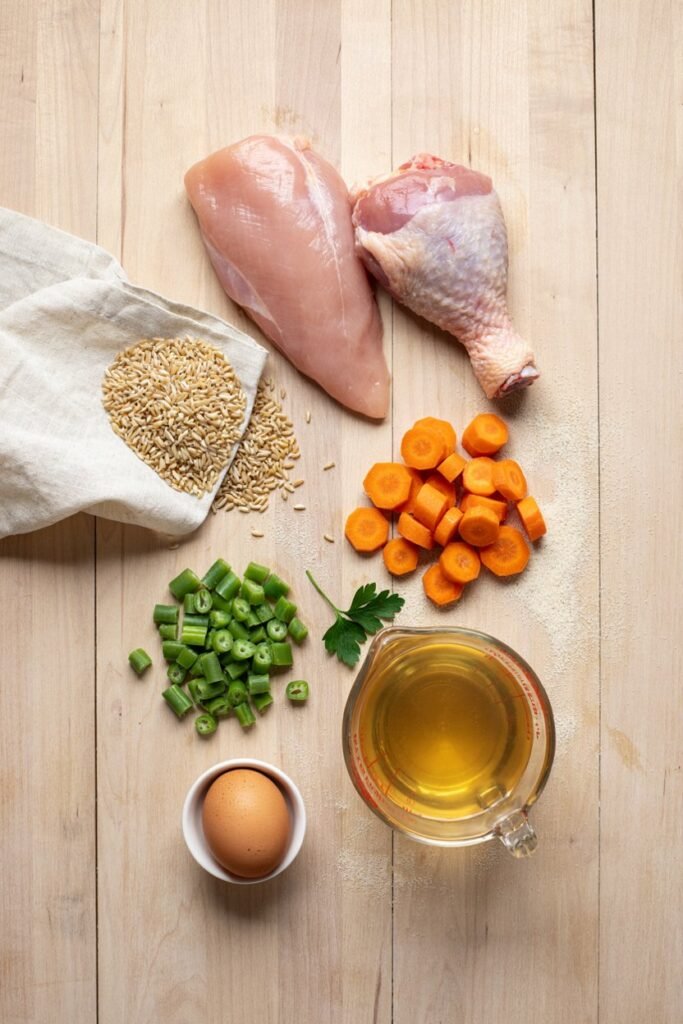
Turkey breast or thigh, bone in or boneless. Breast meat is leaner, while thigh carries a bit more natural fat and flavor, which some dogs find more appealing.
Bone in cuts are typically cheaper and hold moisture well through cooking, though every bone must be completely removed before the meat goes anywhere near your dog’s bowl.
Brown rice. Rice provides a reliably tolerated carbohydrate that cooks down soft and absorbs flavor well, making it a dependable pairing for turkey.
Carrots. Carrots contribute fiber, a bit of natural sweetness, and a firm texture that holds up well once diced and mixed into the finished meal.
Green beans. Green beans add volume and fiber without contributing many extra calories, and they cook down tender alongside the other ingredients.
Low sodium chicken or turkey broth. Broth adds flavor and moisture throughout the cooking process, and it’s essential that whatever broth you use is completely free of onion, garlic, and excessive salt.
Egg, added after cooking. A single egg, scrambled separately and stirred in once the mixture has cooled, adds extra protein without needing to cook alongside the rest of the meal.
Ingredients I Avoid
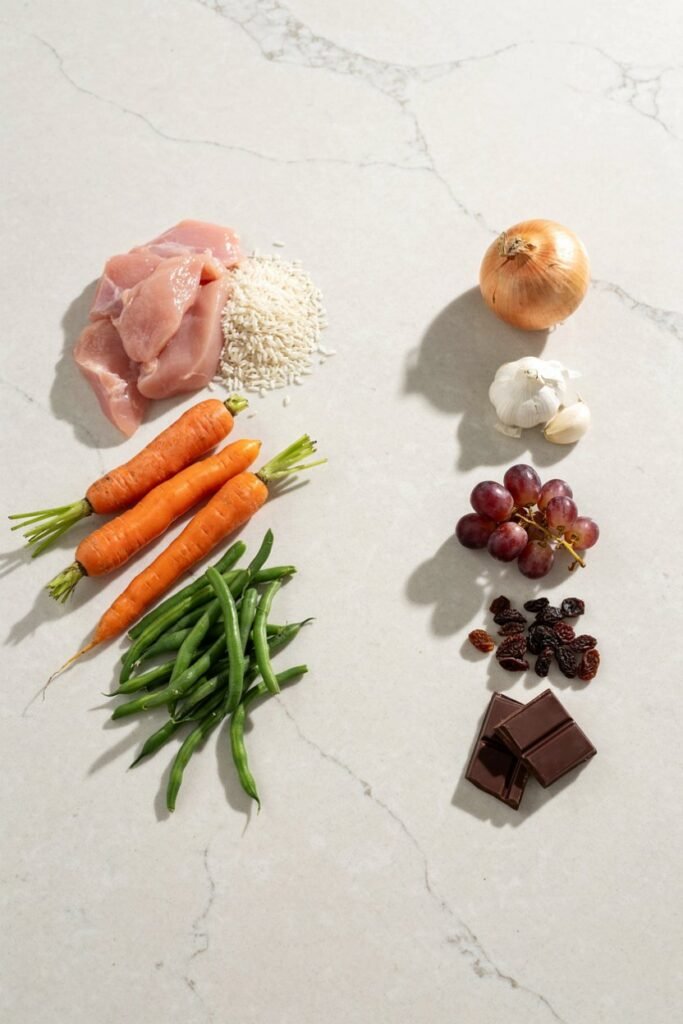
Onion, garlic, chives, excessive salt, seasoning blends, rich sauces, xylitol, grapes, raisins, chocolate, and cooked bones have no place in this recipe.
It’s worth checking the broth label specifically before using it, since a surprising number of otherwise plain sounding broths include onion or garlic for flavor, even inexpensive store brands.
Homemade Turkey Dog Food Recipe
Yield: About 8 to 10 servings, depending on your dog’s size Prep Time: 10 minutes Cook Time: 30 to 35 minutes Total Time: About 45 minutes Storage: Refrigerate up to 4 days, freeze up to 3 months
Ingredients
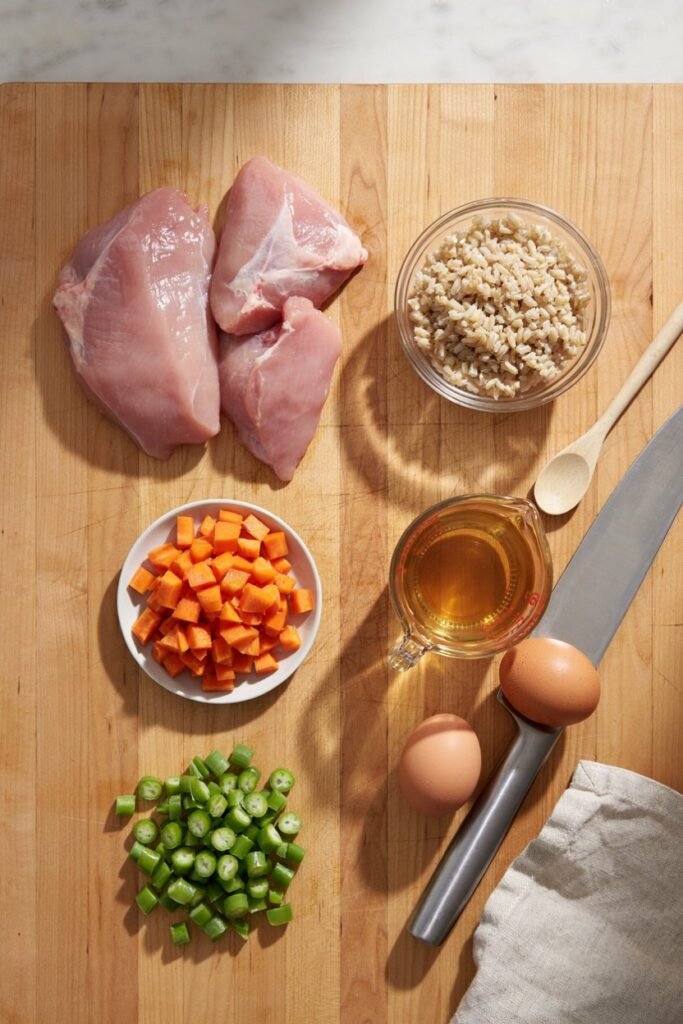
- 2 pounds turkey breast or thigh, bone in or boneless. Choose whichever cut you prefer, keeping in mind that bone in tends to be more affordable and thigh meat carries more natural fat and flavor than breast.
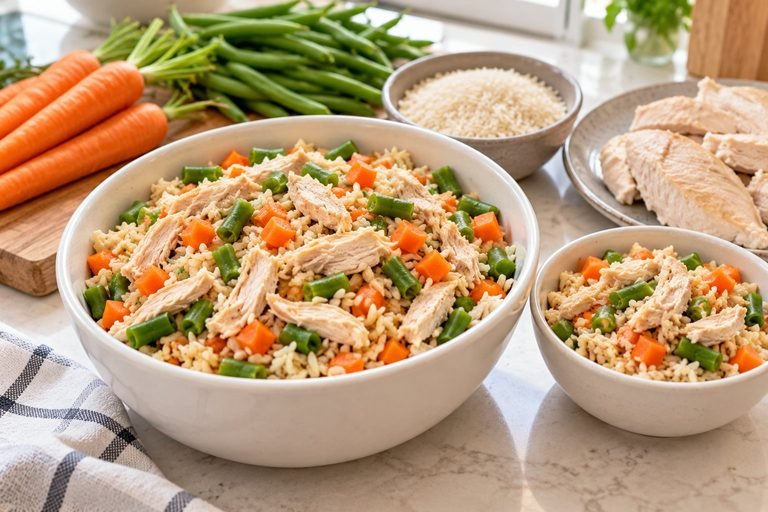
- 1.5 cups brown rice, uncooked. Rice absorbs flavor from the broth as it cooks and provides a filling, digestible carbohydrate base.
- 1 cup carrots, chopped. Carrots add fiber and a bit of natural sweetness.
- 1 cup green beans, chopped. Green beans add volume and fiber without many extra calories.
- 3.5 cups low sodium chicken or turkey broth, onion and garlic free. Broth serves as the cooking liquid, keeping the turkey moist as it cooks and adding flavor throughout.
- 1 egg, scrambled separately, added after cooking.
How to Make It
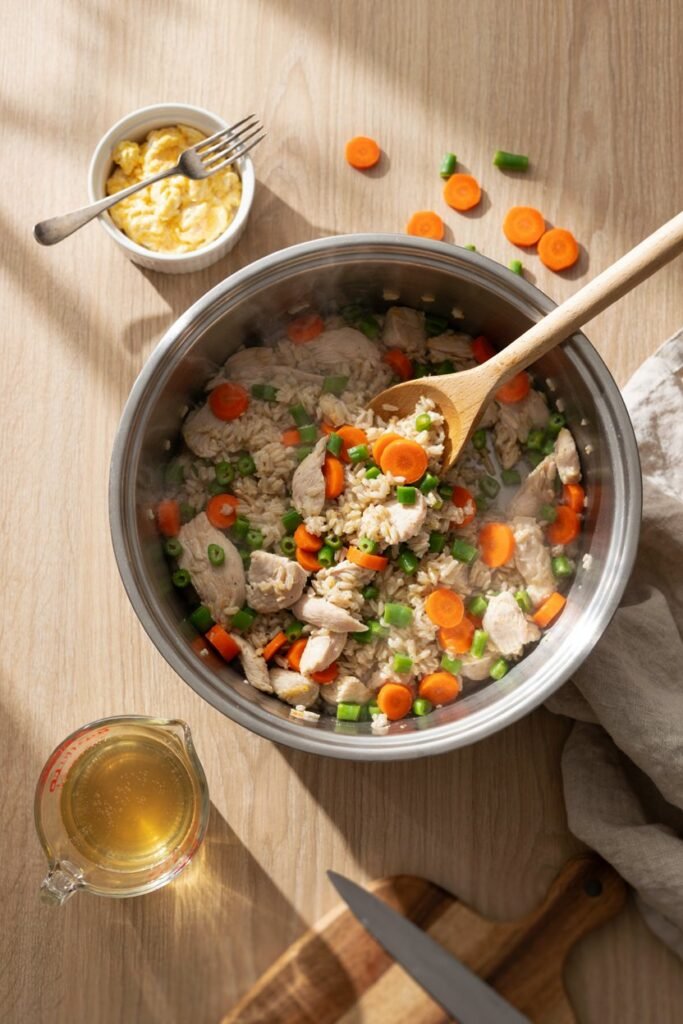
- Place the turkey in a large pot and cover with the broth, adding a bit of extra water if needed to fully submerge the meat.
- Bring to a gentle simmer over medium heat, then reduce to low, cover, and cook for about 25 to 30 minutes, until the turkey is fully cooked through with no pink remaining and reaches a safe internal temperature.
- Remove the turkey from the pot, reserving the cooking liquid, and let it cool enough to handle safely.
- If using a bone in cut, carefully remove every bone, checking more than once for smaller fragments, then dice the meat into small, dog appropriate pieces.
- Return the reserved cooking liquid to the pot, add the rice, carrots, and green beans, and simmer until the rice is tender, about 20 minutes, adding a bit more broth or water if the mixture looks dry before the rice is fully cooked.
- Stir the diced turkey back into the pot once the rice and vegetables are done.
- Remove from heat and let the full mixture cool to room temperature.
- Scramble the egg separately, then stir it into the cooled mixture.
- Portion into individual servings before refrigerating or freezing.
How to Debone Cooked Turkey Safely
Let the turkey cool enough to handle comfortably before starting, since working with meat that’s still very hot makes it harder to feel for smaller bones.
Pull the meat apart gently with your fingers or two forks, running your fingers along each piece as you go to check for any remaining bone fragments, particularly around joints and the edges of the cut. Take your time with this step specifically.
It’s the one place in this recipe where rushing genuinely increases risk, since a missed bone fragment can splinter and cause serious injury if it ends up in your dog’s food.
How Much Should You Serve?
There’s no single serving size that works for every dog, and feeding amounts depend on your dog’s weight, age, activity level, body condition, and the rest of their diet.
As a general starting point, most adult dogs eat somewhere between 2 and 3 percent of their body weight in food per day, split across two meals, though this shifts for puppies, seniors, or dogs with specific health conditions.
Working with your veterinarian to calculate a more precise calorie target is the most reliable way to get portions right.
Storage
Refrigerator. Store in a clean, airtight container and use within about 4 days.
Freezer. Portion the mixture into individual servings before freezing, which makes future meals far more convenient. Most portions hold their quality for up to 3 months in the freezer.
Thawing. Thaw frozen portions in the refrigerator overnight rather than leaving them out at room temperature.
Reheating. Warm gently if desired, and always check that the food isn’t too hot before serving it.
How to Transition Your Dog to This Recipe
Don’t replace your dog’s regular food with this recipe all at once. A gradual transition over about a week gives their digestive system time to adjust.
Start with a small amount mixed into their regular food, gradually increasing the proportion over several days while watching for loose stool, vomiting, excessive gas, or reduced appetite.
If symptoms are significant or persistent, slow the process down or contact your veterinarian rather than pushing through.
Easy Ingredient Substitutions
Turkey to chicken. Use the same quantity of bone in or boneless chicken, following the same cooking and deboning process.
Brown rice to white rice or oats. White rice is gentler on a sensitive stomach and cooks slightly faster, so reduce the simmer time by about 5 minutes if making this swap.
Carrots and green beans to other vegetables. Peas, zucchini, or a small amount of chopped spinach added near the end of cooking all work as substitutes.
Good Ingredients to Look For
Named animal proteins. Turkey, in any cut, clearly identifies exactly what’s going into the pot, which is always preferable to a vague or unspecified protein source.
Fiber rich vegetables. Carrots, green beans, peas, and zucchini add volume, vitamins, and digestive support without excessive calories.
Digestible carbohydrates. Rice and oats provide steady energy and are generally gentle on a dog’s stomach compared to heavier or more processed carbohydrate sources.
Plain, onion and garlic free broth. A good broth adds real flavor and moisture without introducing anything unsafe, as long as the label is checked carefully every time.
Ingredients You Should Never Add
- Onion, garlic, and chives damage red blood cells and can cause anemia, even in small amounts.
- Excess salt and seasoning blends offer no benefit to a dog and can be genuinely harmful in larger quantities.
- Xylitol containing products cause a dangerous, rapid drop in blood sugar.
- Grapes and raisins can cause serious kidney problems, with no reliably safe amount.
- Chocolate is toxic even in modest amounts.
- Cooked bones can splinter and cause internal injury, which is exactly why thorough deboning matters more with this recipe than with a ground meat version.
Common Mistakes to Avoid

Rushing the deboning step. This is the single most important thing to get right in this entire recipe, and it deserves more time and attention than any other step.
Not checking the broth label. This remains one of the most common ways an otherwise careful recipe accidentally ends up with onion or garlic in it.
Cutting the turkey into pieces that are too large. Dicing it small enough for your specific dog’s size matters for both safety and ease of eating.
Skipping the transition period. Switching too quickly from a dog’s regular food to this recipe is one of the most common causes of digestive upset when starting homemade feeding.
Discarding the cooking liquid. Reserving it and using it to cook the rice and vegetables adds real flavor and saves you from needing extra broth.
Frequently Asked Questions
Can I feed this recipe every day? As an occasional meal or topper, yes, without much concern. As a sole, long term diet, it should be reviewed and properly formulated with a veterinarian’s input first.
Is bone in or boneless turkey better for this recipe? Bone in is often cheaper and can add flavor to the cooking liquid, though it requires careful deboning afterward. Boneless is simpler and skips that step entirely, at a slightly higher cost per pound.
How do I know the turkey is fully cooked? It should reach a safe internal temperature with no pink remaining, and the meat should pull apart easily rather than feeling tough or rubbery.
Can I use this same method with chicken instead of turkey? Yes, chicken breast or thigh works as a direct substitute using the same cooking and deboning process.
How long does this recipe last in the refrigerator? Generally about 4 days when stored in a clean, airtight container.
Can I freeze this recipe? Yes, portioning it into individual servings before freezing makes future meals much easier to manage, and it holds up well for up to 3 months frozen.
Can puppies eat this recipe? Puppies have different nutritional requirements because they’re actively growing, so this recipe shouldn’t become a puppy’s regular diet without a veterinarian reviewing it first.
Do I need to add a calcium supplement? If you’re using this recipe as an occasional meal or topper, generally not. If you’re planning to feed it regularly as your dog’s primary diet, a vet recommended calcium supplement is usually necessary, since muscle meat alone doesn’t provide enough on its own.
What’s the difference between this recipe and a ground turkey version? The main difference is technique. This version teaches you to cook and debone a whole cut, while a ground turkey recipe skips that step entirely in exchange for a bit less control over texture and moisture.
Is diced turkey harder to portion than ground turkey? Not really, once it’s diced and mixed with the rest of the meal, it portions just as easily by volume or weight as a ground meat version would.
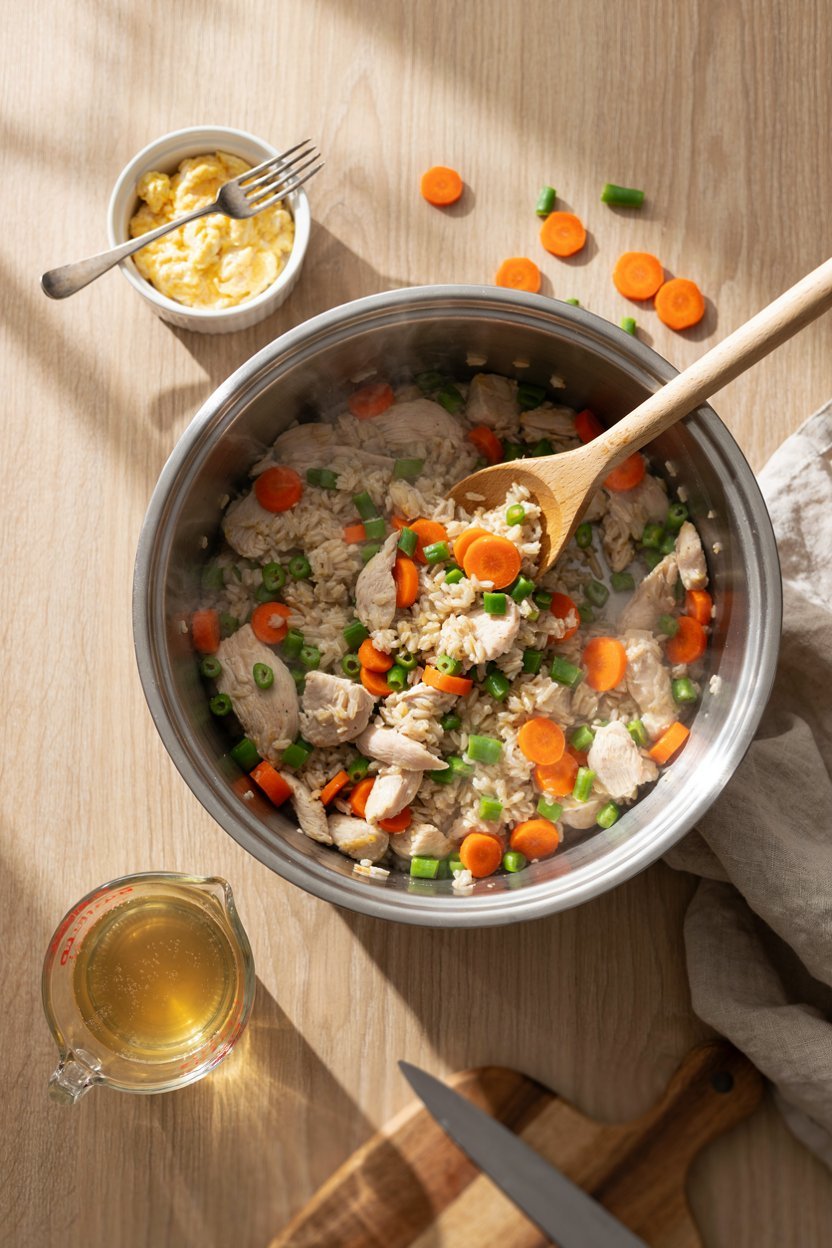
Homemade Turkey Dog Food Recipe
Ingredients
Equipment
Method
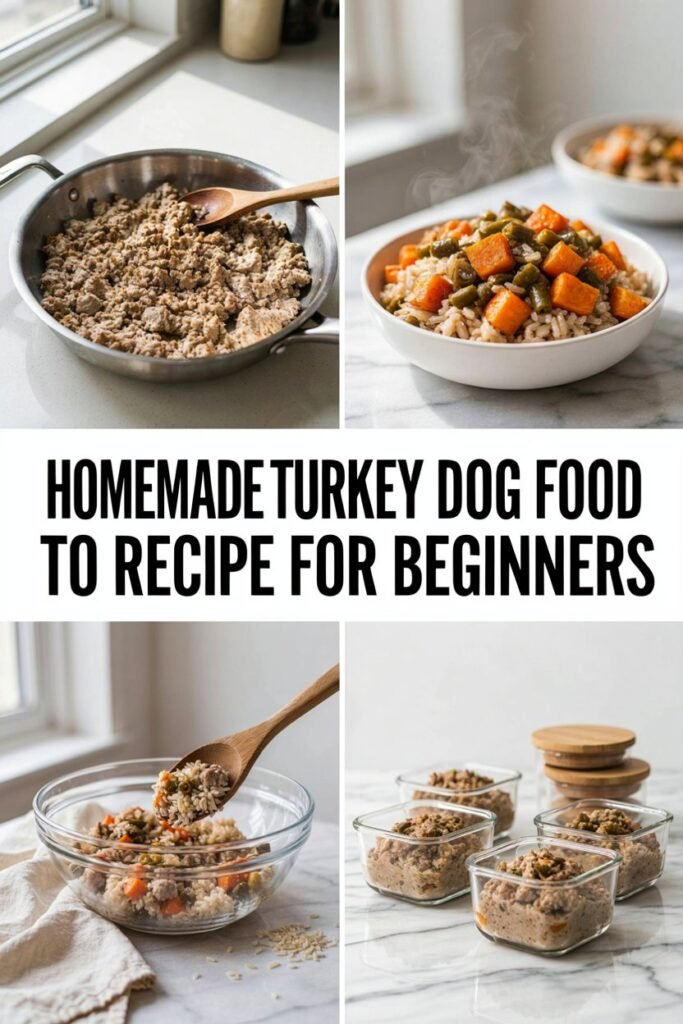
- Cook the ground turkey in a large skillet over medium heat until thoroughly cooked. Do not add salt, onion, garlic, or seasonings.
- Drain excess fat if needed and allow the turkey to cool slightly.
- Prepare the brown rice until tender.
- Cook the carrots and green beans until soft and easy for your dog to eat.
- Add the cooked turkey, rice, carrots, green beans, and pumpkin puree to a large mixing bowl.
- Add the water and gently stir until everything is evenly combined.
- Allow the food to cool completely before serving or portioning for storage.
- Use plain, unseasoned ground turkey. Avoid onion, garlic, excessive salt, seasoning blends, and cooked bones.
- This recipe should not be presented as a complete and balanced long term diet unless it has been formulated to meet your dog’s nutritional requirements. For regular homemade feeding, consider having the recipe reviewed by a veterinarian or veterinary nutritionist.
Final Thoughts
Working with a whole cut of turkey instead of ground meat takes a bit more hands on attention, particularly around deboning, but it’s a genuinely worthwhile skill to build early if you plan to keep cooking for your dog long term.
Take your time with the deboning step specifically, and once you’ve got the process down, you’ll find it opens up a lot more recipes down the line that call for a whole cut rather than something pre ground.

One Comment