
Ground Turkey Dog Food Recipe for Beginners
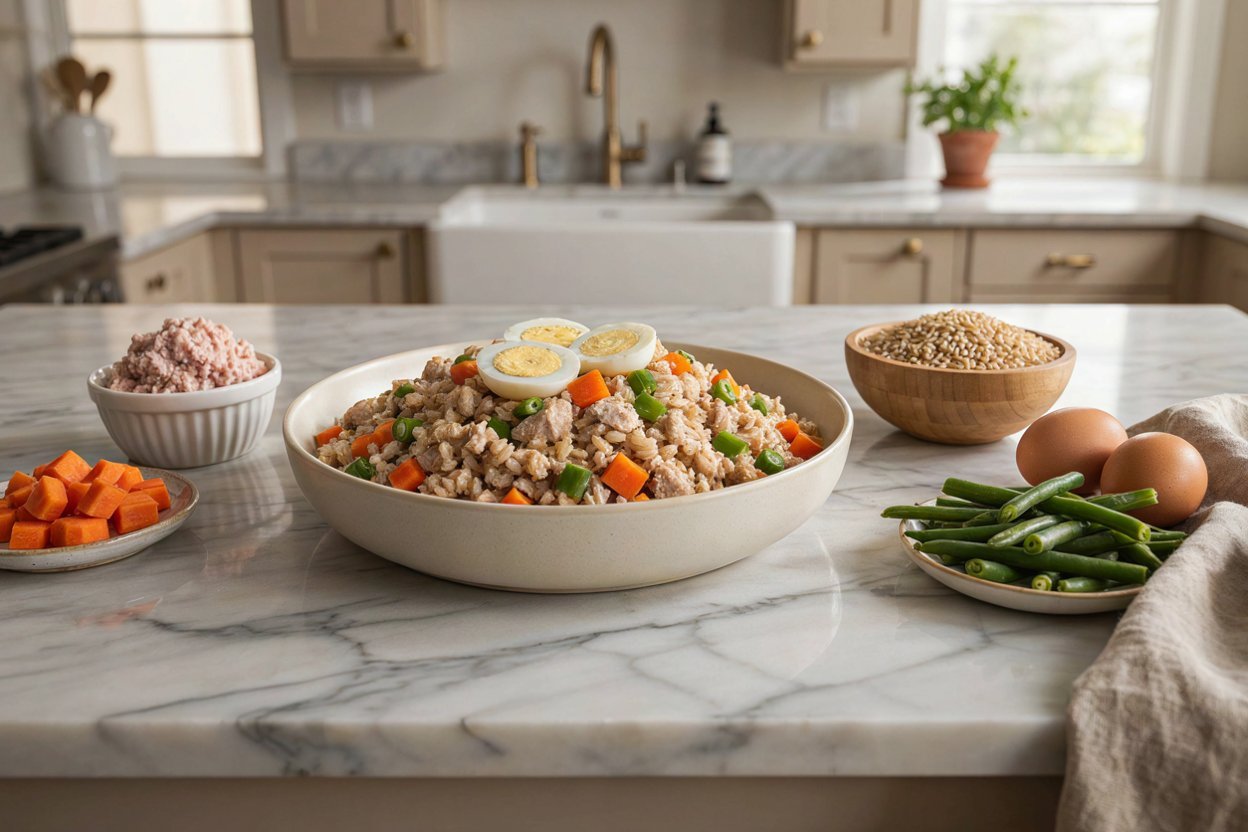
Ground turkey is one of the easiest places to start if you’re new to cooking for your dog. It’s lean, widely available, mild enough that most dogs take to it immediately, and forgiving enough as an ingredient that it’s hard to seriously mess up your first attempt at a homemade meal.
This recipe is built specifically with a beginner in mind: a short ingredient list, straightforward preparation, and enough explanation along the way that you’ll understand exactly why each ingredient is there rather than just following steps blindly.
If you want to keep building your homemade cooking skills beyond this one recipe, a few related guides are worth having open alongside this one.
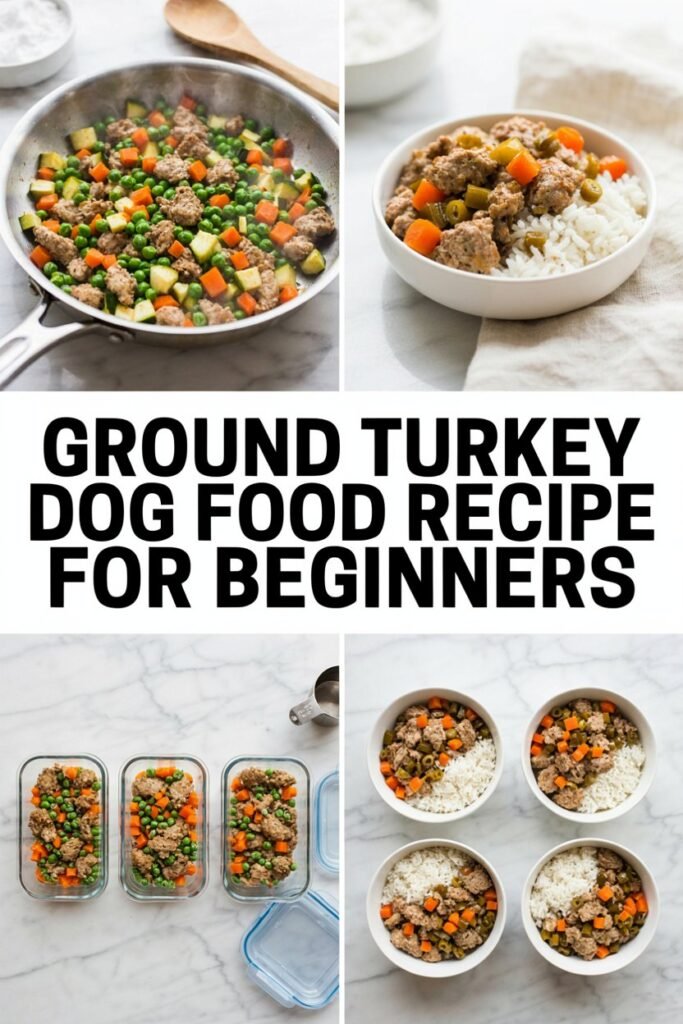
Homemade dog food with vet approved ingredients covers what a fully balanced diet actually needs, simple homemade dog food recipes for beginners and 3 ingredient cooked dog food offer more easy starting points, 7 high protein homemade dog food recipes, 3 simple farmer’s dog food recipes, and fresh dog food recipes that dogs love give you plenty of room to grow your rotation once you’re comfortable, 10 homemade dog meals with sweet potato pairs especially well with the turkey used here, and human foods dogs can safely eat is a good reference if you’re also wondering what’s safe to share from your own kitchen.
Why Ground Turkey Is a Good Starting Point
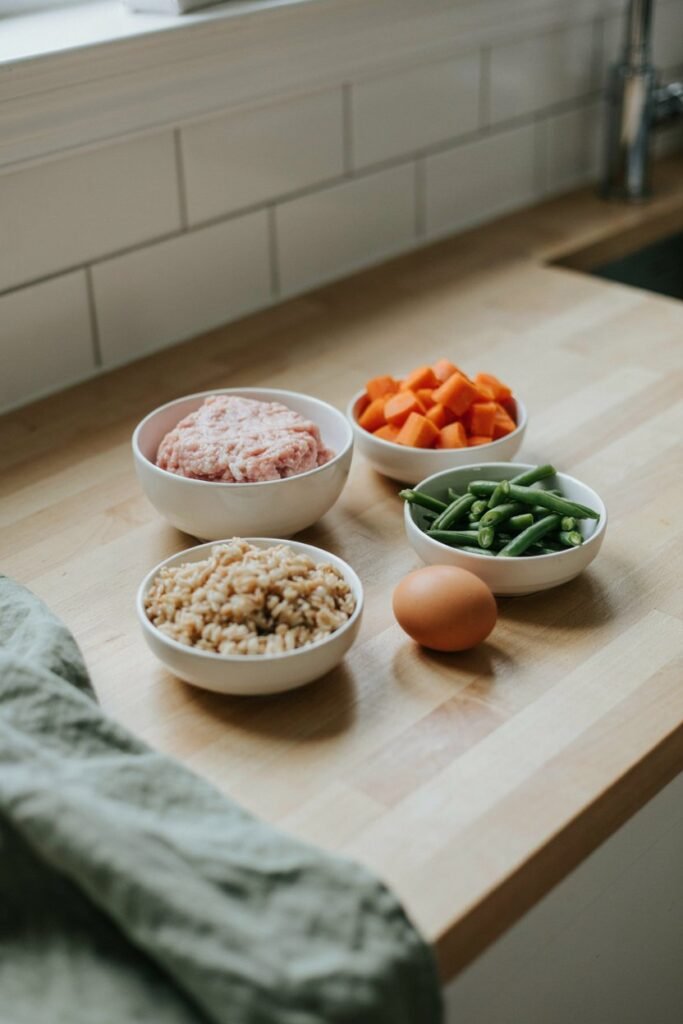
Turkey is one of the leanest common proteins available, which makes it gentle on digestion and a reasonable choice even for dogs who haven’t had much variety in their diet before.
It’s also budget friendly compared to some other proteins, easy to find at any grocery store, and cooks quickly without needing any special technique. None of that means turkey is automatically better than chicken or beef, just that it’s a genuinely low risk place to begin if you’ve never cooked for your dog before and want a recipe that’s hard to get wrong.
Before You Start
It helps to understand one thing clearly before you turn on the stove: this recipe, like most simple homemade meals, isn’t automatically a complete and balanced diet suitable for feeding as your dog’s sole food over the long term. Dogs need more than protein and vegetables to thrive day after day.
A properly formulated diet intended for daily feeding accounts for protein, fat, carbohydrates, calcium, phosphorus, essential fatty acids, vitamins, minerals, and a range of trace nutrients, all in specific proportions that a simple recipe like this one doesn’t fully cover on its own.
Used as an occasional meal, a topper, or a starting point while you learn the basics of homemade cooking, this recipe is genuinely useful. Used as the only thing your dog eats every day indefinitely, it needs more planning, ideally with input from a veterinarian or a board certified veterinary nutritionist.
Ground Turkey Dog Food Recipe
Yield: About 6 to 8 servings, depending on your dog’s size Prep Time: 10 minutes Cook Time: 25 minutes Total Time: About 35 minutes Storage: Refrigerate up to 4 days, freeze up to 3 months
Ingredients
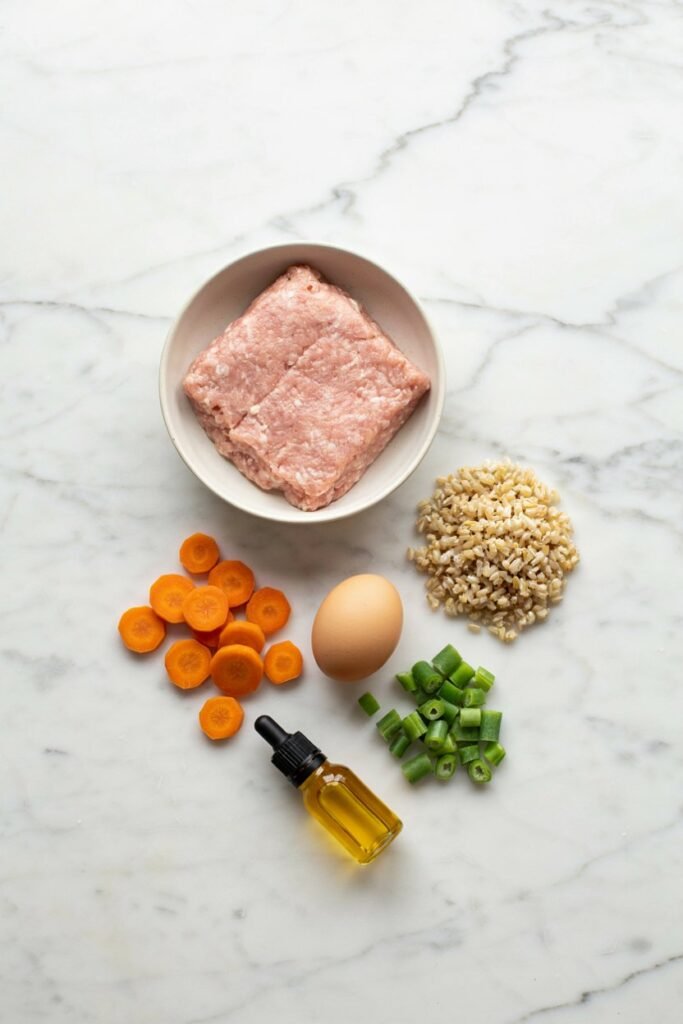
- 2 pounds ground turkey. Turkey provides the main protein in this meal, supporting muscle maintenance and giving the dish its primary flavor. Look for plain ground turkey with no added seasoning, and a moderate fat content rather than the leanest option available, since a small amount of fat helps the meal feel satisfying rather than dry.
- 1.5 cups cooked brown rice. Rice supplies an easily digestible carbohydrate that most dogs tolerate well, including dogs with a sensitive stomach. Brown rice specifically adds a bit more fiber than white rice, though either works fine in this recipe.
- 1 cup carrots, chopped. Carrots contribute fiber, a bit of natural sweetness, and beta carotene, and their firm texture holds up well once mixed into the rest of the meal.
- 1 cup green beans, chopped. Green beans add volume and fiber without contributing many extra calories, which is useful for keeping portions reasonable, especially if your dog needs to maintain a healthy weight.
- 1 egg. A single egg adds extra protein and a bit of healthy fat, and it’s an easy way to boost the nutritional value of the meal without complicating the recipe.
- 1 teaspoon fish oil, optional. Fish oil contributes omega fatty acids that support skin and coat health, and it’s a simple addition if you have it on hand, though the recipe still works fine without it.
How to Make It
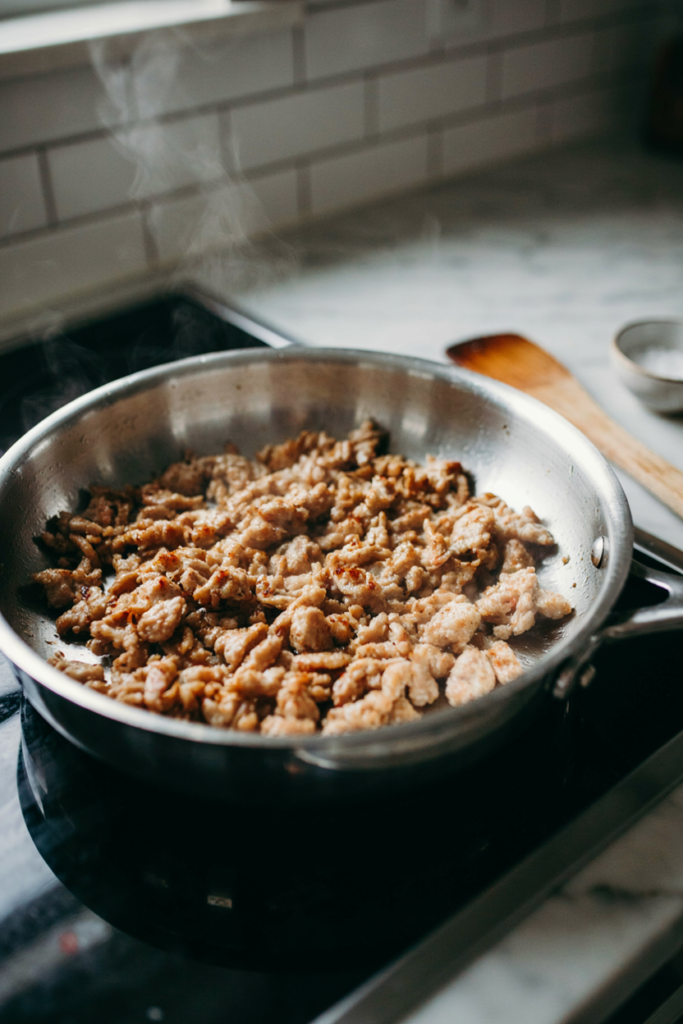
- Cook the ground turkey thoroughly in a large skillet or pot, breaking it into small pieces as it browns. Use nothing else in the pan, no oil, salt, or seasoning of any kind.
- While the turkey cooks, prepare the rice separately according to package instructions, using plain water with nothing added.
- Steam or boil the carrots and green beans until tender, then chop into small, manageable pieces.
- Scramble the egg in a separate small pan until fully cooked, with nothing added.
- Once everything has cooled to room temperature, combine the turkey, rice, carrots, green beans, and egg in a large bowl.
- Stir in the fish oil, if using, once the mixture has cooled.
- Mix everything together evenly, then portion into individual servings.
How Much Should You Serve?
There’s no single serving size that works for every dog, and it’s worth resisting the urge to look for one universal number. Feeding amounts depend on your dog’s weight, age, activity level, body condition, and the rest of their diet.
As a general starting point, most adult dogs eat somewhere between 2 and 3 percent of their body weight in food per day, split across two meals, though this shifts for puppies, seniors, or dogs with specific health conditions. Working with your veterinarian to calculate a more precise calorie target is the most reliable way to get portions right, rather than relying on a generic estimate.
Storage
Refrigerator. Store in a clean, airtight container and use within about 4 days.
Freezer. Portion the mixture into individual servings before freezing, which makes future meals far more convenient since you’re only thawing what you actually need. Most portions hold their quality for up to 3 months in the freezer.
Thawing. Thaw frozen portions in the refrigerator overnight rather than leaving them out at room temperature.
Reheating. Warm gently if desired, and always check that the food isn’t too hot before serving it.
How to Transition Your Dog to This Recipe
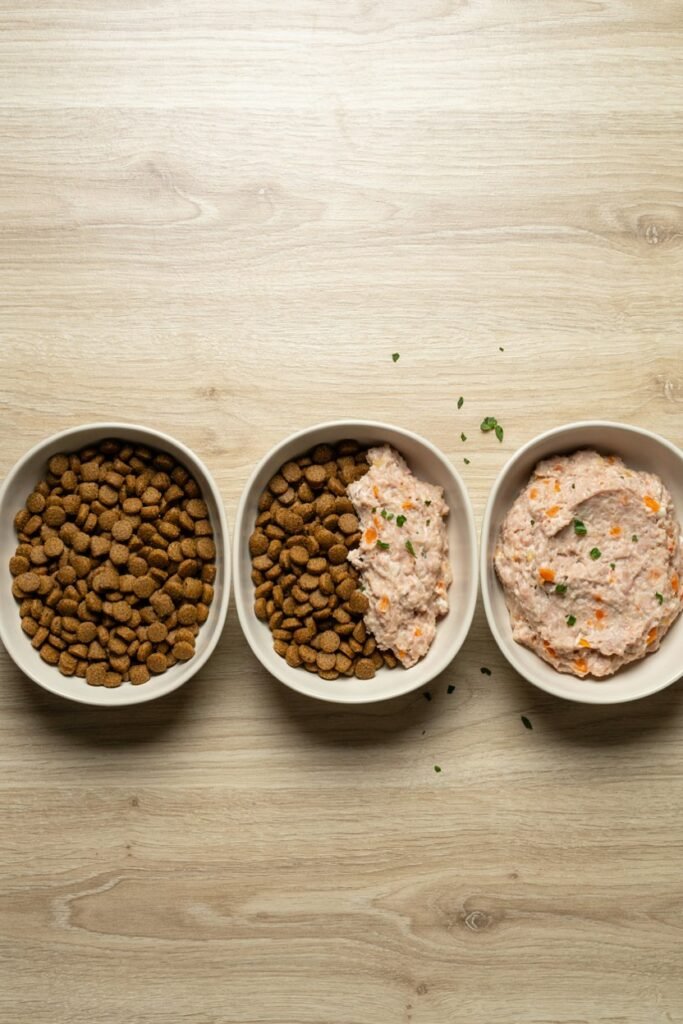
Don’t replace your dog’s regular food with this recipe all at once. A gradual transition over about a week gives their digestive system time to adjust without triggering an upset stomach.
Days 1 to 2. Mostly current food, with a small amount of the turkey recipe mixed in.
Days 3 to 4. Increase the homemade portion while continuing to reduce the old food.
Days 5 to 6. Continue increasing the homemade portion if stools remain normal throughout.
Day 7. Complete the switch, or continue further, if your dog has tolerated the process well.
Watch for loose stool, vomiting, excessive gas, or reduced appetite throughout the transition. If symptoms are significant or persistent, slow the process down or contact your veterinarian rather than pushing through.
Easy Ingredient Substitutions
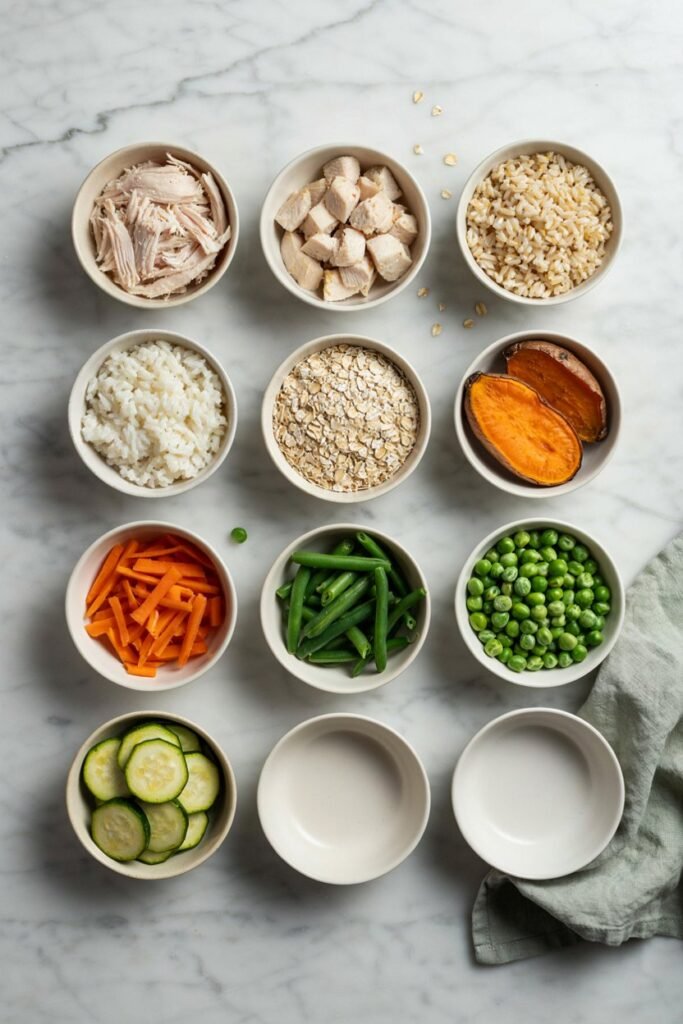
Turkey to chicken. Use the same quantity of plain, cooked lean chicken if turkey isn’t available or your dog doesn’t tolerate it well.
Brown rice to white rice or oats. White rice is gentler on a sensitive stomach, while oats offer a different texture and a similar fiber content.
Carrots to sweet potato. Cook thoroughly and mash before mixing in, which changes the texture of the meal slightly but works well nutritionally.
Green beans to peas or zucchini. Both work as a direct swap in the same quantity.
Substitutions can shift the overall calorie and nutrient composition of the recipe, so it’s worth keeping that in mind if you’re using this meal regularly rather than as an occasional addition.
Ingredients You Should Never Add
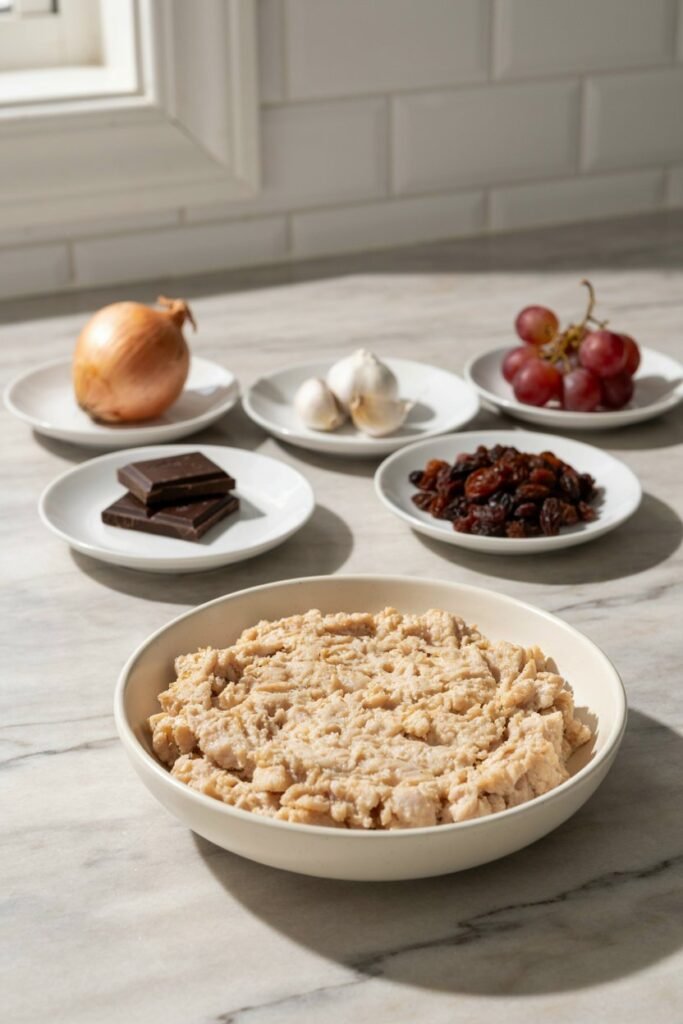
- Onion, garlic, and chives damage red blood cells and can cause anemia, even in small amounts.
- Excess salt and seasoning blends offer no benefit to a dog and can be genuinely harmful in larger quantities.
- Rich sauces or gravies often hide salt, onion, or garlic even when the main ingredient looks harmless.
- Xylitol containing products cause a dangerous, rapid drop in blood sugar.
- Grapes and raisins can cause serious kidney problems, with no reliably safe amount.
- Chocolate is toxic even in modest amounts, depending on the type and your dog’s size.
- Cooked bones can splinter and cause internal injury.
Good Ingredients to Look For When Cooking for Your Dog
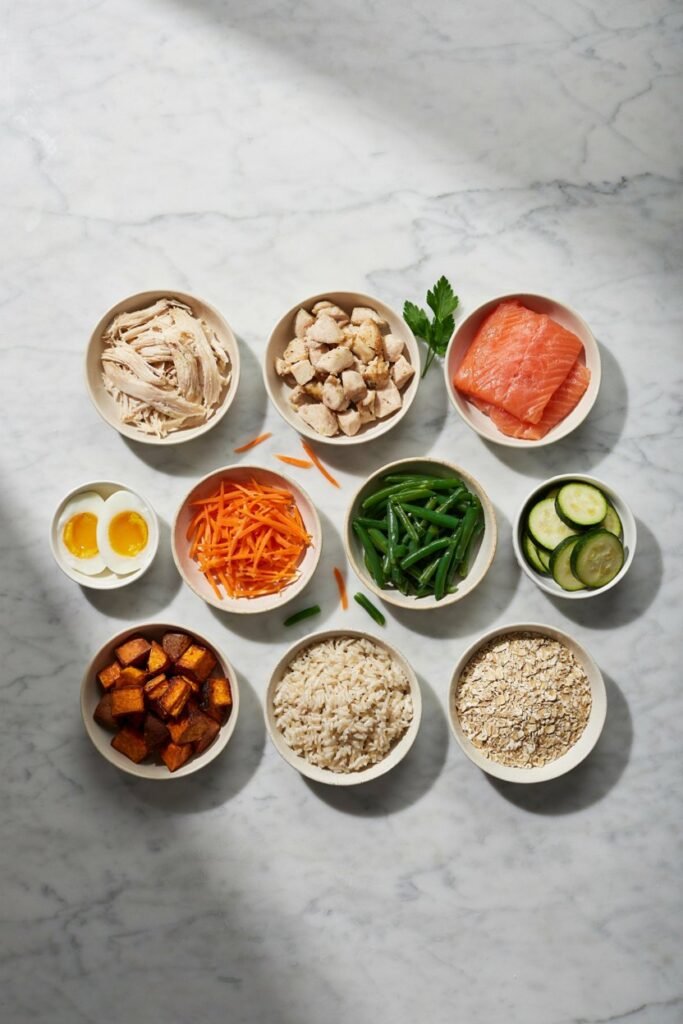
Beyond what’s used in this specific recipe, a few ingredients consistently show up in a genuinely well built homemade meal, and it’s worth knowing why each one earns its place.
Named animal proteins. Turkey, chicken, beef, salmon, and eggs all provide the amino acids dogs need for muscle maintenance and overall energy, and using a specific, identifiable protein rather than a vague filler is always a good sign.
Fiber rich vegetables. Carrots, green beans, peas, and zucchini add volume, vitamins, and digestive support without excessive calories.
Digestible carbohydrates. Rice, oats, and sweet potato provide steady energy and are generally gentle on a dog’s stomach compared to heavier or more processed carbohydrate sources.
Healthy fats. Fish oil, flaxseed oil, or a small amount of olive oil support skin, coat, and joint health, and most homemade meals benefit from a small addition of one of these.
Calcium sources. Since muscle meat alone doesn’t provide enough calcium, a vet recommended supplement is usually necessary for any homemade meal intended for regular, long term feeding.
Plain, unseasoned preparation throughout. No salt, garlic, onion, or seasoning blends, ever, regardless of how small the amount or how harmless it seems.
Common Mistakes to Avoid
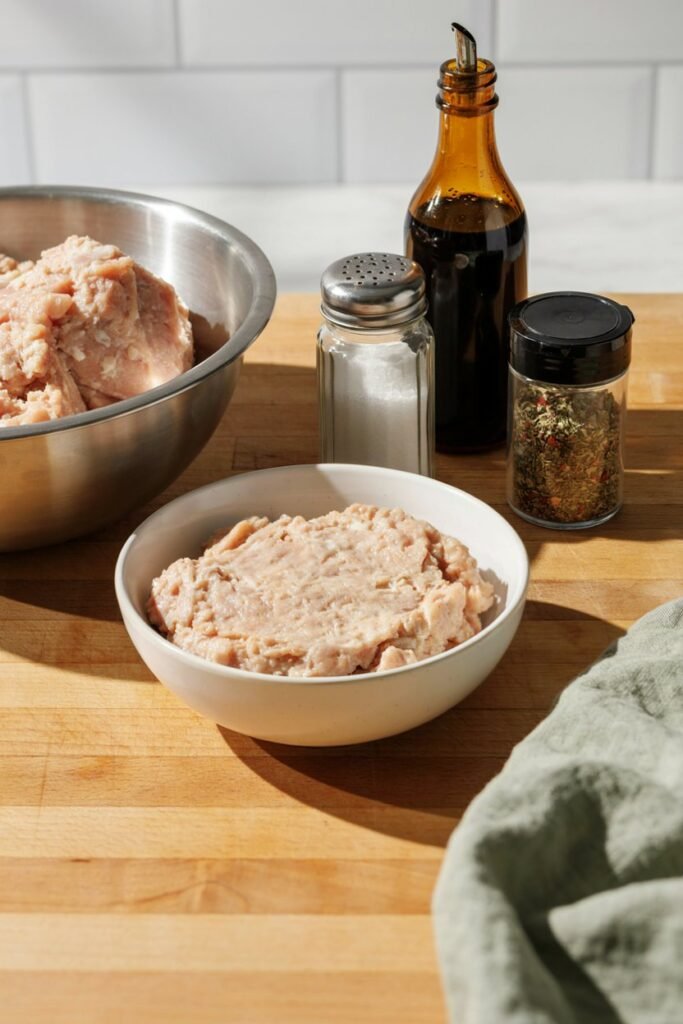
Adding seasoning out of habit. Dogs don’t need or benefit from the same seasoning people enjoy in their own cooking, even something as simple as salt and pepper.
Guessing at long term nutritional balance. A few whole ingredients don’t automatically add up to a complete diet, no matter how wholesome each one is individually.
Feeding too much. Homemade food is calorie dense, and it’s easy to overfeed without realizing it, especially when portions look smaller than a typical bowl of kibble.
Skipping the transition period. Switching too quickly is one of the most common causes of digestive upset when starting homemade feeding for the first time.
Making one huge batch without freezing portions. If the food won’t be used safely within its refrigerator window, portioning and freezing from the start is the better call.
Frequently Asked Questions
Can I feed this ground turkey recipe every day? As an occasional meal or topper, yes, without much concern. As a sole, long term diet, it should be reviewed and properly formulated with a veterinarian’s input first.
Can I use ground turkey breast instead of regular ground turkey? Yes, ground turkey breast is leaner and works fine, though the finished meal may be slightly drier since it has less natural fat.
Is turkey easier for dogs to digest than chicken? Not necessarily easier, but generally comparable. Both are considered gentle, easily digestible proteins, and the better choice often comes down to your individual dog’s preference or tolerance.
Can puppies eat this recipe? Puppies have different nutritional requirements because they’re actively growing, so this recipe shouldn’t become a puppy’s regular diet without a veterinarian reviewing it first, particularly around calcium levels.
Can senior dogs eat this recipe? Often, yes, since lean turkey tends to be gentle on digestion, though senior dogs with specific health conditions should have any dietary change reviewed by their vet.
How long does this recipe last in the refrigerator? Generally about 4 days when stored in a clean, airtight container.
Can I freeze this recipe? Yes, portioning it into individual servings before freezing makes future meals much easier to manage, and it holds up well for up to 3 months frozen.
Do I need to add a calcium supplement? If you’re using this recipe as an occasional meal or topper, generally not. If you’re planning to feed it regularly as your dog’s primary diet, a vet recommended calcium supplement is usually necessary, since muscle meat alone doesn’t provide enough on its own.
Can I double the recipe for batch cooking? Yes, this recipe scales up easily. Just make sure you have a large enough pot for the turkey and enough freezer space for the extra portions.
Is this recipe nutritionally complete on its own? No, not for long term daily feeding. It’s a genuinely useful, simple homemade meal, but true nutritional completeness for everyday feeding requires proper formulation, ideally with veterinary guidance.
Final Thoughts
Ground turkey is a genuinely forgiving place to start if homemade dog food still feels a little intimidating. The ingredients are easy to find, the preparation is straightforward, and the recipe leaves plenty of room to substitute or adjust as you figure out what your own dog responds to best.
Start here, get comfortable with the basic process of cooking, cooling, and portioning, and you’ll have a solid foundation for branching out into more recipes down the line.

2 Comments