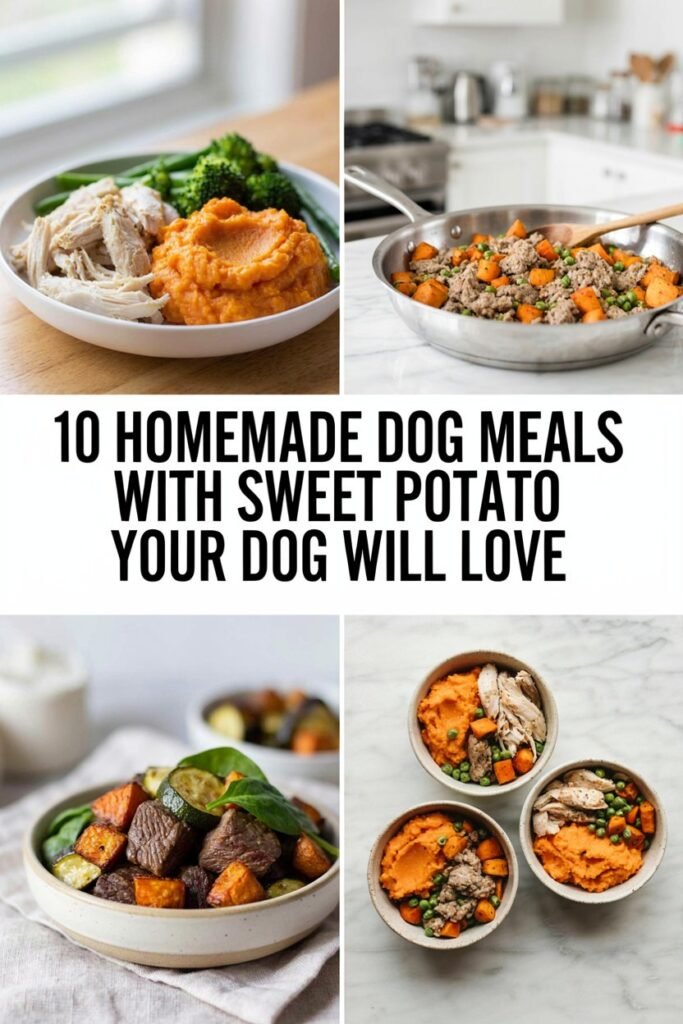
10 Homemade Dog Meals With Sweet Potato Your Dog Will Love
If you have ever stood in your kitchen holding a sweet potato and wondering whether it is actually okay to share with your dog, you are not alone.
Sweet potato shows up in almost every homemade dog food recipe online, but very few articles explain why it works so well, how much your dog can safely eat, or how to turn it into a complete meal instead of just a side dish.
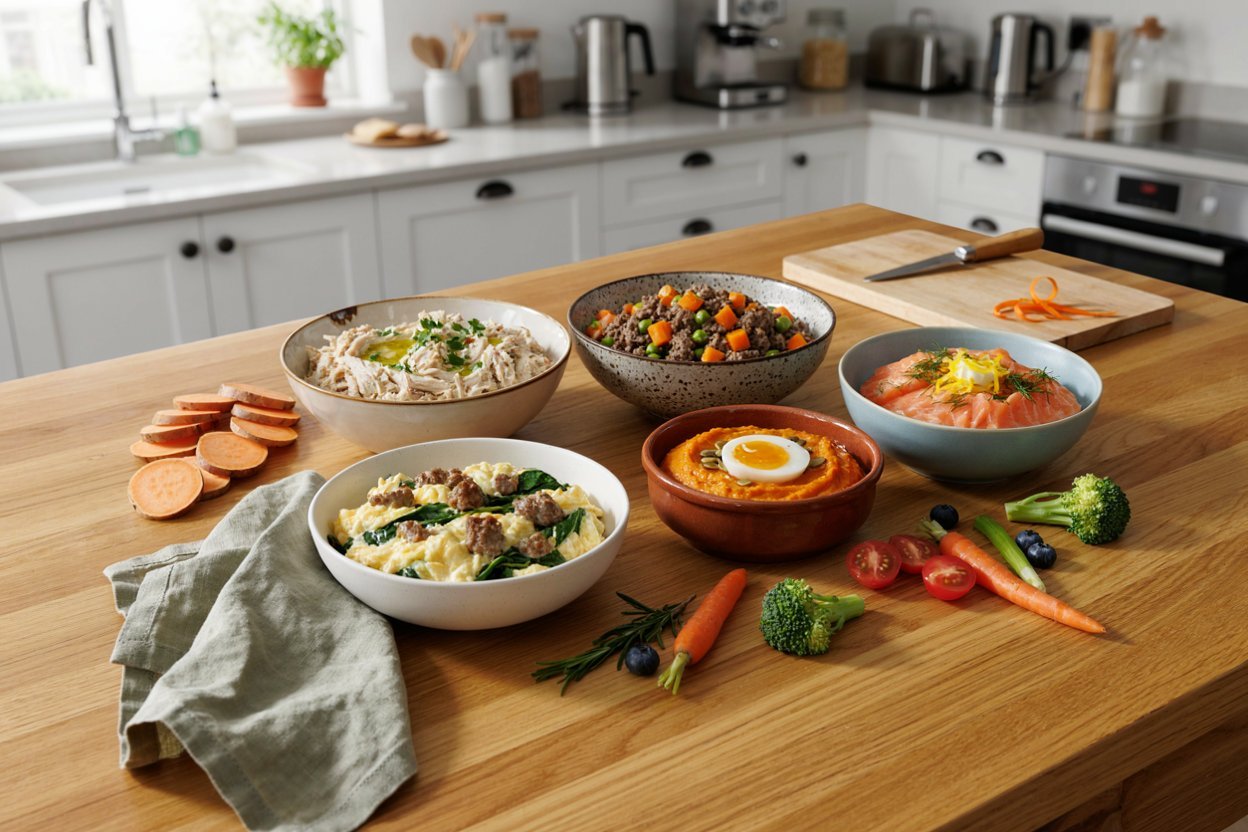
This guide covers everything you need. You will find ten different homemade meals built around sweet potato, each with a different protein so your dog gets variety instead of the same bowl on repeat.
You will also learn how much sweet potato is appropriate, how to make these meals more nutritionally balanced, which ingredients to avoid, and how to store everything safely.
If you are new to cooking for your dog in general, our simple homemade dog food recipes guide is a good companion piece, and our roundup of healthiest homemade dog foods covers other ingredient combinations worth trying.
Why Sweet Potato Is Such a Useful Ingredient for Homemade Dog Meals
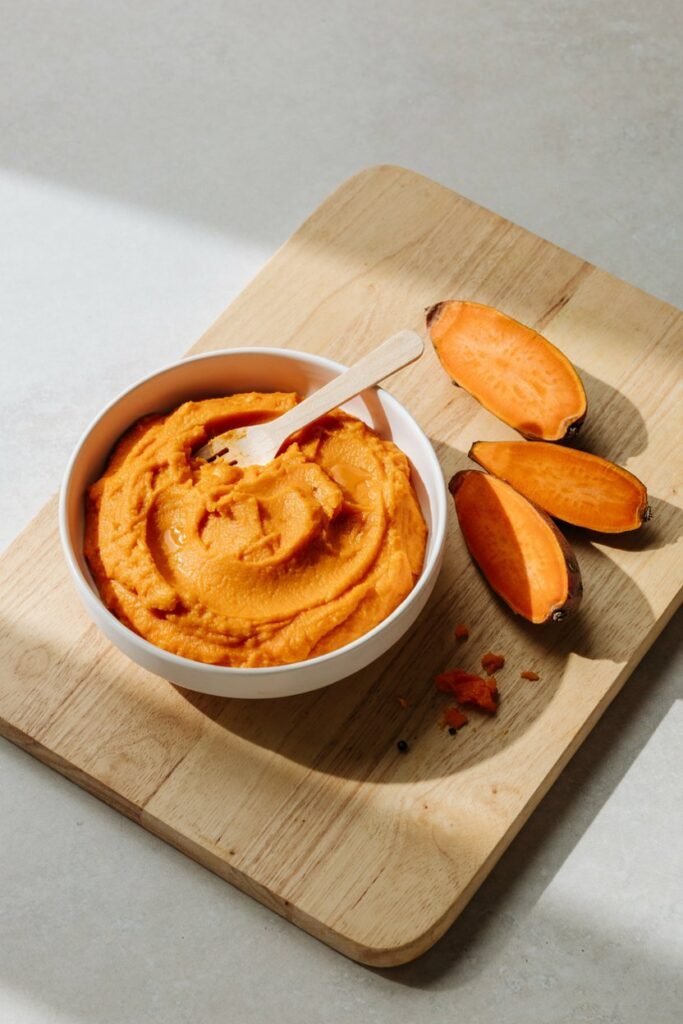
Sweet potato has become a staple in homemade and commercial dog food for good reason. It is affordable, easy to find year round, gentle on most dogs’ digestion, and holds up well to batch cooking and freezing.
It also brings real nutritional value to the table. Sweet potato is a good source of dietary fiber, which supports healthy digestion and stool quality. It contains beta carotene, which the body converts to vitamin A and which supports eye health, immune function, and skin condition.
It also provides potassium, vitamin C, and vitamin B6, along with complex carbohydrates that give dogs a steady source of energy rather than a quick spike.
Because it is naturally sweet and soft once cooked, most dogs enjoy the taste and texture, which makes it useful for picky eaters or dogs recovering from an upset stomach.
Is Sweet Potato Safe for Dogs?
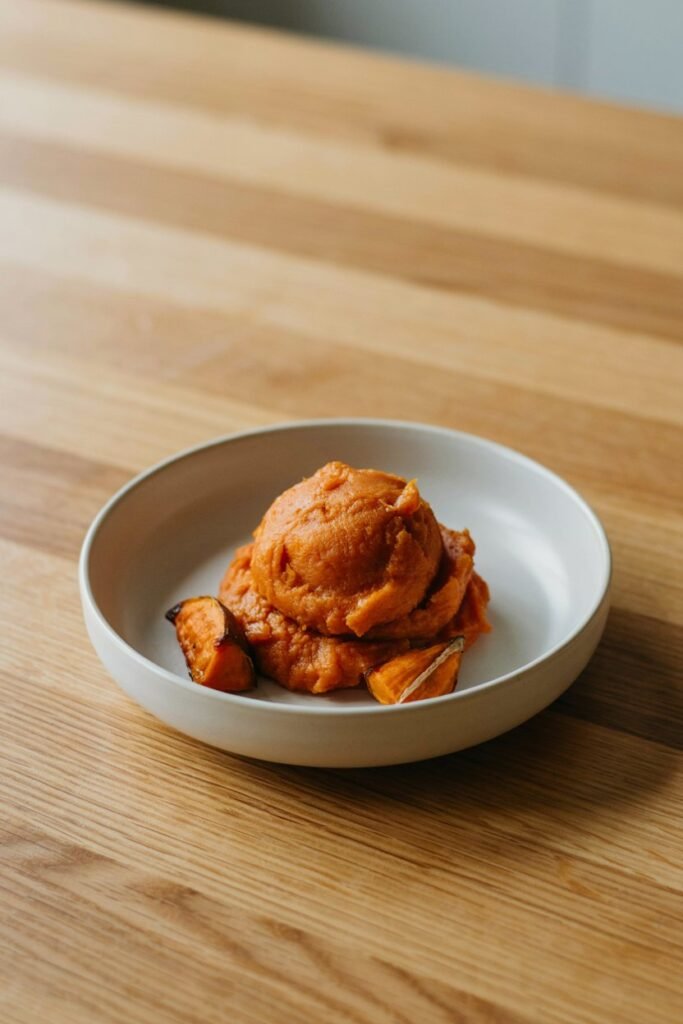
Yes, cooked sweet potato is safe for the vast majority of dogs when prepared plainly and given in appropriate amounts. It is not toxic, and it is one of the more digestible carbohydrate sources you can offer.
That said, safety depends on preparation and portion size. Sweet potato should always be cooked, served without added seasoning, butter, sugar, or salt, and offered in moderation rather than as a large part of every meal.
Dogs with diabetes, obesity, or a sensitivity to carbohydrates may need smaller amounts or should avoid it altogether, so check with your veterinarian if your dog has any of these conditions.
How to Prepare Sweet Potato for Dogs
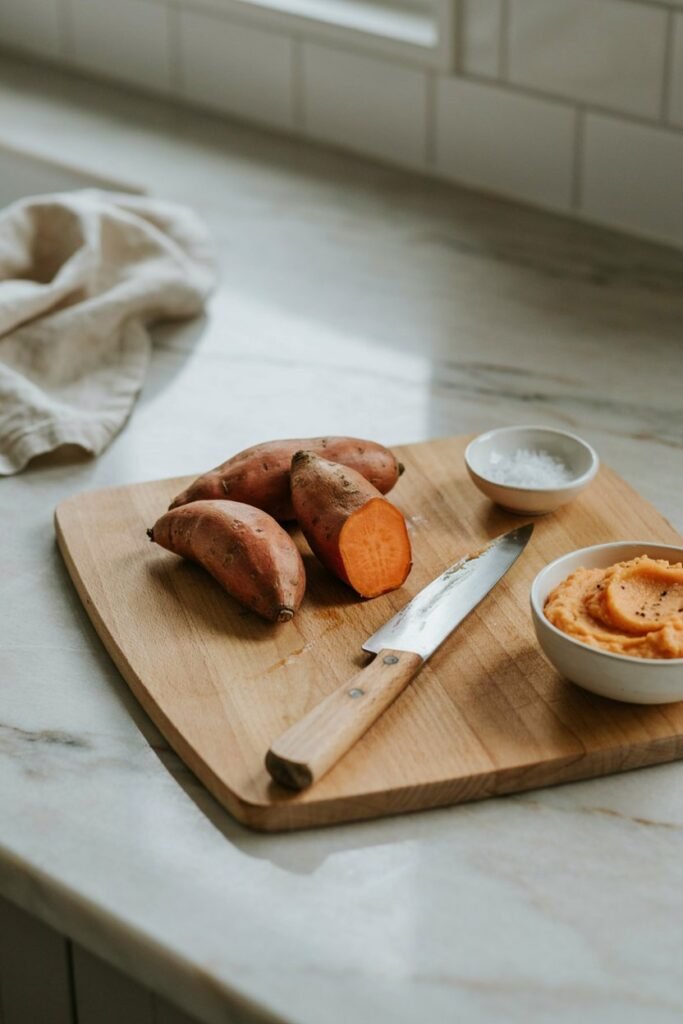
Preparation matters more than most people expect.
Cooking method. Sweet potato should always be cooked before serving. Baking, boiling, or steaming are the best methods. Boiling or steaming until fork tender is the quickest option for meal prep, while baking brings out a bit more natural sweetness.
Raw sweet potato. Raw sweet potato is hard, difficult to digest, and can be a choking hazard or cause an upset stomach. It should be avoided entirely.
Skin on or off. The skin itself is not toxic, but it can be tough to digest and is often where dirt, wax, or residue collects. For homemade meals, it is simplest and safest to peel the sweet potato before cooking, especially for puppies or dogs with sensitive stomachs.
Seasoning. Never add butter, salt, sugar, cinnamon blends, or seasoning packets. Dogs do not need these, and some seasoning blends contain ingredients such as onion or garlic powder that are dangerous for them.
Mashing or cubing. Once cooked, sweet potato can be mashed for easier digestion or left in soft cubes, depending on your dog’s preference and chewing ability.
10 Homemade Dog Meals With Sweet Potato
Each recipe below is a complete meal idea, not just a recipe for sweet potato alone. Rotate through different proteins so your dog gets a variety of nutrients rather than eating the exact same combination every day.
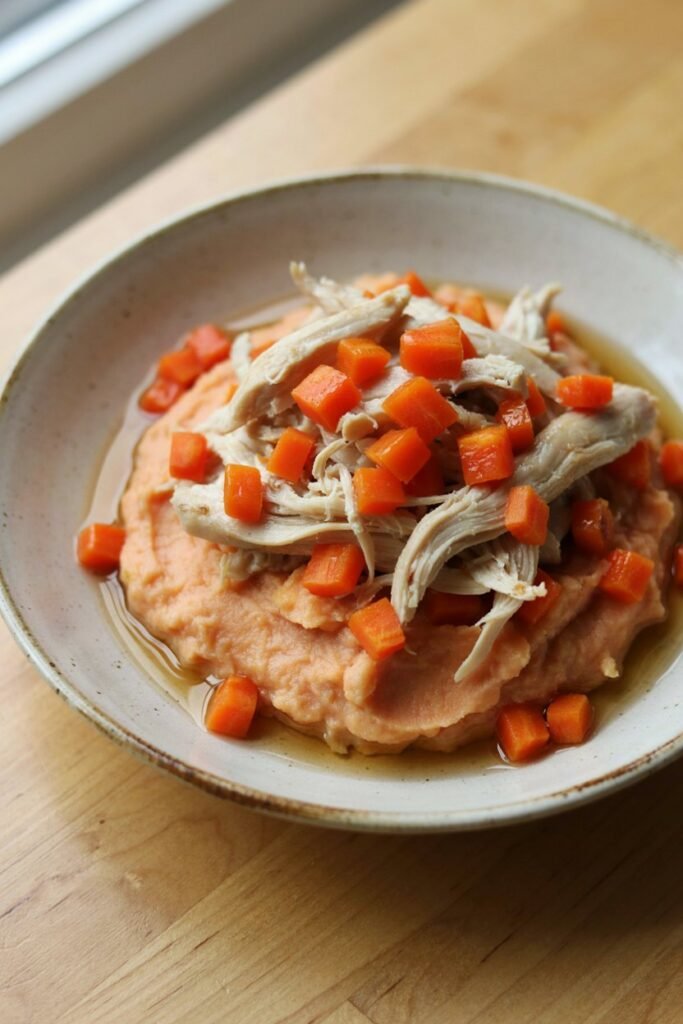
1. Chicken and Sweet Potato Bowl
Ingredients
- Boneless, skinless chicken breast: Lean, fully cooked chicken provides a simple source of high quality protein.
- Sweet potato: Cooked and mashed or diced into small, bite sized pieces for easy digestion.
- Steamed carrots: A small amount of plain, soft cooked carrots adds natural flavor and nutrients.
- Plain, low sodium chicken broth: A small splash adds moisture and flavor. Choose broth without onions, garlic, or other ingredients that are unsafe for dogs.
Use plain, unseasoned ingredients and avoid adding salt, butter, oil, garlic, onion, or seasoning blends.
Preparation and cooking: boil or bake the chicken until fully cooked with no pink remaining, then shred or dice it into bite sized pieces. Boil or steam the sweet potato and carrots until soft, then mash or chop them to match your dog’s preferred texture. Combine everything and stir in a small splash of broth to moisten the mixture.
Portion guidance: for most adult dogs, aim for a ratio of roughly half protein and half vegetables and carbohydrate, adjusted to your dog’s size and calorie needs.
Storage: refrigerate for up to three to four days or freeze individual portions for up to three months.
Serving: serve at room temperature or slightly warmed, never hot.
Substitutions: turkey breast can replace chicken if your dog needs variety.
Safety note: always check chicken for small bones before serving.
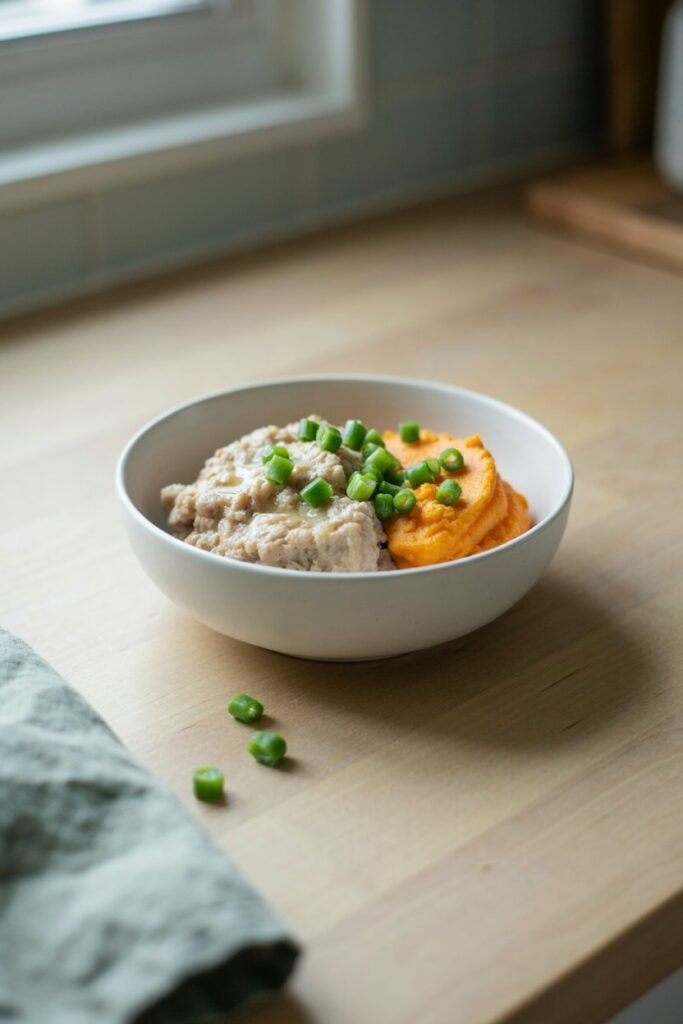
2. Turkey and Sweet Potato Dinner
Ingredients
- Ground turkey: Choose lean ground turkey and cook it thoroughly without added salt, oil, butter, or seasonings.
- Sweet potato: Use cooked sweet potato, peeled and mashed or cut into small, soft pieces for easier eating and digestion.
- Steamed green beans: Add a small amount of plain, tender green beans for extra texture and variety. Avoid canned green beans with added salt or seasonings.
Keep all ingredients plain and unseasoned, and avoid adding onion, garlic, seasoning blends, or sauces, as these can be unsafe for dogs.
Preparation and cooking: brown the ground turkey in a pan with no oil, salt, or seasoning until fully cooked, draining any excess fat. Boil or steam the sweet potato until soft and mash it. Steam the green beans until tender and chop into small pieces.
Portion guidance: small dogs typically need a few tablespoons per meal, medium dogs around half a cup to one cup, and large dogs one to two cups, depending on activity level and overall diet.
Storage: keeps refrigerated for three to four days, or freeze in flat portions for easy thawing.
Serving: mix thoroughly before serving so each bite has a balance of protein and carbohydrate.
Substitutions: lean ground chicken works well in place of turkey.
Safety note: avoid turkey with skin or seasoning, as pre seasoned turkey often contains garlic or onion powder.
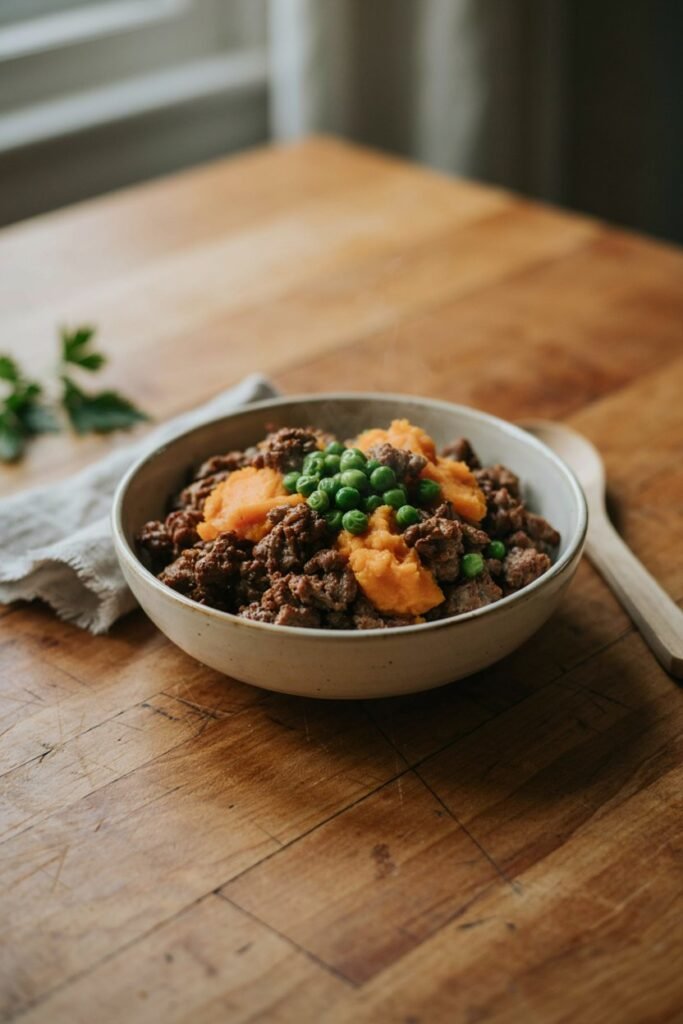
3. Beef and Sweet Potato Meal
Ingredients
- Lean ground beef: Use a lean cut of ground beef and cook it thoroughly, draining excess fat before serving. Keep it plain and avoid salt, butter, oil, or seasonings.
- Sweet potato: Use fully cooked sweet potato, peeled and mashed or cut into small, soft pieces for easy eating.
- Steamed peas: Add a small amount of plain, cooked peas for extra variety and texture. Fresh or frozen peas are suitable when prepared without added salt or seasoning.
Keep the ingredients plain and simply prepared. Avoid onion, garlic, sauces, seasoning blends, and other ingredients that may be harmful to dogs.
Preparation and cooking: cook the ground beef thoroughly and drain the fat well, since beef fat can be heavy for some dogs’ digestion. Boil the sweet potato until soft and mash or cube it. Steam the peas briefly.
Portion guidance: because beef is richer than chicken or turkey, keep portions slightly smaller and monitor your dog’s stool for any signs of an upset stomach when introducing it.
Storage: refrigerate up to three days or freeze in portioned containers.
Serving: serve cooled to room temperature.
Substitutions: lean ground bison is a good alternative if your dog tolerates beef poorly.
Safety note: always drain excess fat, as high fat content can contribute to digestive upset or pancreatitis risk over time.
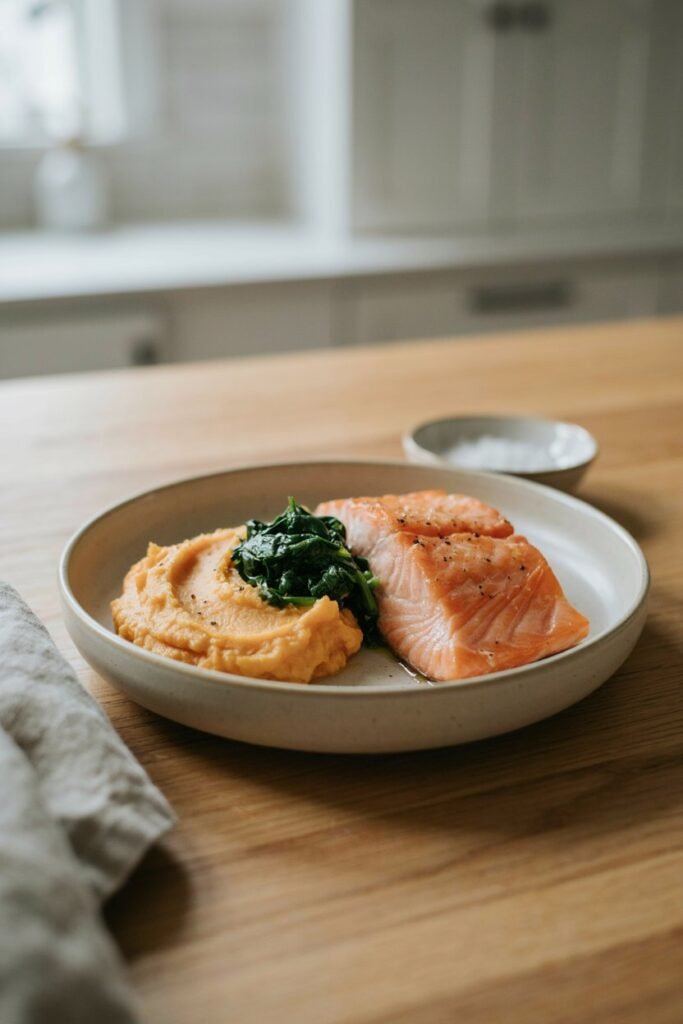
4. Salmon and Sweet Potato Bowl
Ingredients
- Cooked salmon: Use fully cooked, plain salmon with the skin and all bones carefully removed. Avoid smoked, salted, seasoned, or heavily processed salmon.
- Sweet potato: Use cooked sweet potato, peeled and mashed or cut into small, soft pieces for easier eating and digestion.
- Steamed spinach: Add a small amount of plain, lightly steamed spinach for variety. Do not add salt, butter, oil, garlic, onion, or seasonings.
Keep every ingredient plain and simply prepared, and carefully check the salmon for small bones before serving.
Preparation and cooking: bake or poach the salmon plainly with no seasoning until fully cooked and flaky, then check carefully for bones. Boil or steam the sweet potato until soft. Lightly steam the spinach and chop finely.
Portion guidance: salmon is rich in omega three fatty acids, so it works well as an occasional protein rather than a daily staple, generally once or twice a week as part of a rotation.
Storage: refrigerate for up to two days only, since fish spoils faster than other proteins, or freeze immediately after cooling.
Serving: flake the salmon well so there is no risk of bone fragments.
Substitutions: canned salmon packed in water, with bones removed and rinsed, can work in a pinch.
Safety note: never serve raw or smoked salmon, as it can carry parasites and is often heavily salted.
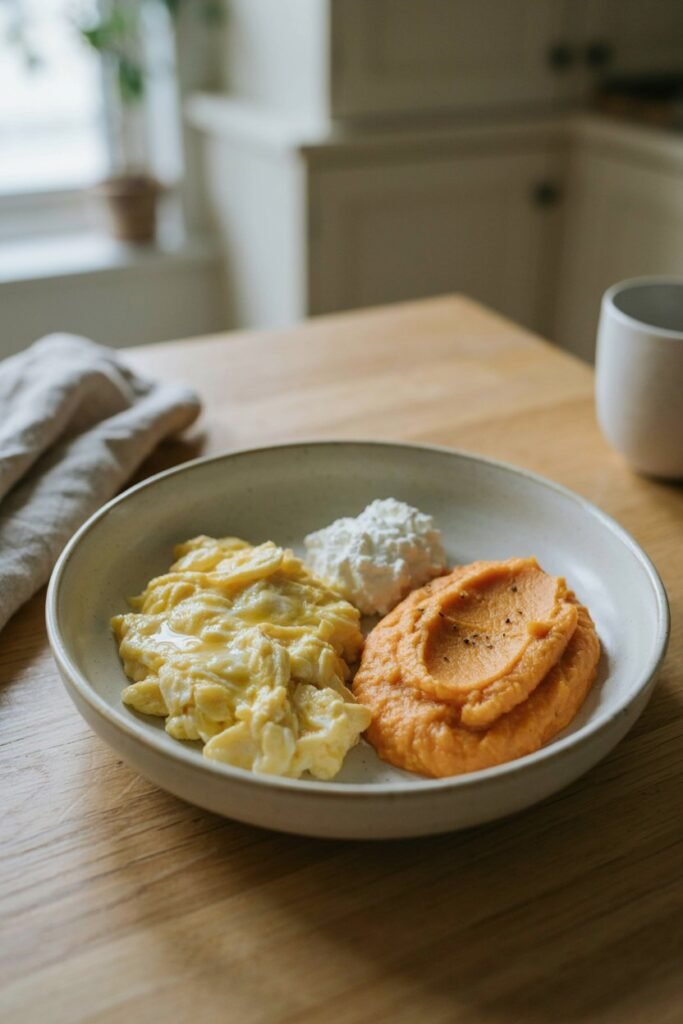
5. Egg and Sweet Potato Breakfast Bowl
Ingredients
- Eggs: Use plain scrambled or hard boiled eggs that are fully cooked. Avoid adding salt, butter, oil, milk, or seasonings.
- Sweet potato: Use fully cooked sweet potato, peeled and mashed or cut into small, soft pieces for easier eating.
- Plain cottage cheese: Add a small amount of plain, low sodium cottage cheese if your dog tolerates dairy well. Choose a simple variety without added herbs, flavors, or sweeteners.
Keep the ingredients plain and minimally processed. If your dog has not had dairy before, introduce cottage cheese gradually and watch for signs of digestive upset.
Preparation and cooking: scramble the eggs with no butter, oil, salt, or seasoning, or hard boil and chop them. Boil the sweet potato until soft and mash it. Mix in a small spoonful of plain cottage cheese if your dog tolerates dairy well.
Portion guidance: eggs are calorie dense, so this works best as a smaller breakfast portion or occasional meal rather than a full daily serving for larger dogs.
Storage: refrigerate for up to three days; freezing is not recommended for egg based meals since the texture changes.
Serving: serve slightly warm or at room temperature.
Substitutions: plain unsweetened yogurt can replace cottage cheese.
Safety note: skip the cottage cheese entirely if your dog is sensitive to dairy.
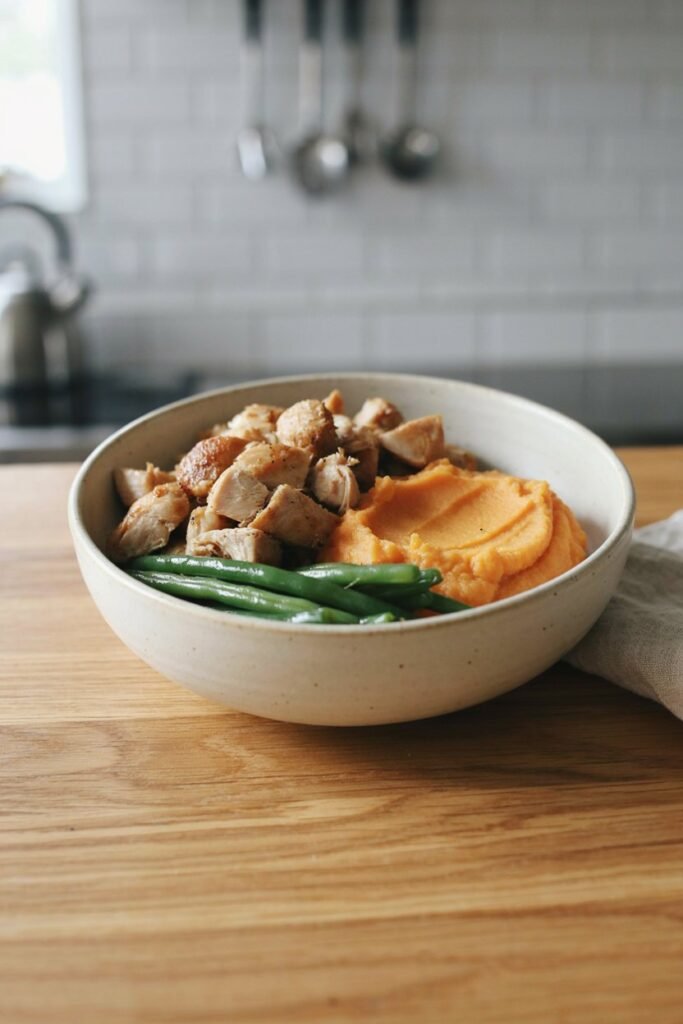
6. Chicken, Sweet Potato and Green Bean Dinner
Ingredients
- Boneless, skinless chicken thighs: Trim away the skin and visible excess fat, then cook the chicken thoroughly without salt, oil, butter, or seasonings.
- Sweet potato: Use fully cooked sweet potato, peeled and mashed or cut into small, soft pieces for easier eating.
- Fresh green beans: Steam the green beans until tender, then cut them into small, manageable pieces before serving. Use them plain, without salt, butter, sauces, or seasoning.
Keep all ingredients plain and simply prepared, and make sure the chicken is fully cooked before serving. For long term feeding, homemade meals should be appropriately balanced for your dog’s nutritional needs rather than relying on a few ingredients alone.
Preparation and cooking: boil or bake the chicken thighs until fully cooked, then dice into small pieces. Boil the sweet potato until soft. Steam the green beans until tender and chop into bite sized pieces.
Portion guidance: follow the general guideline of roughly equal parts protein and vegetable and carbohydrate, adjusted for your dog’s size.
Storage: refrigerate for up to four days or freeze in individual portions.
Serving: mix well so your dog gets a bit of everything in each bite.
Substitutions: chicken breast can replace thighs for a leaner option.
Safety note: always remove chicken skin, since it adds unnecessary fat.
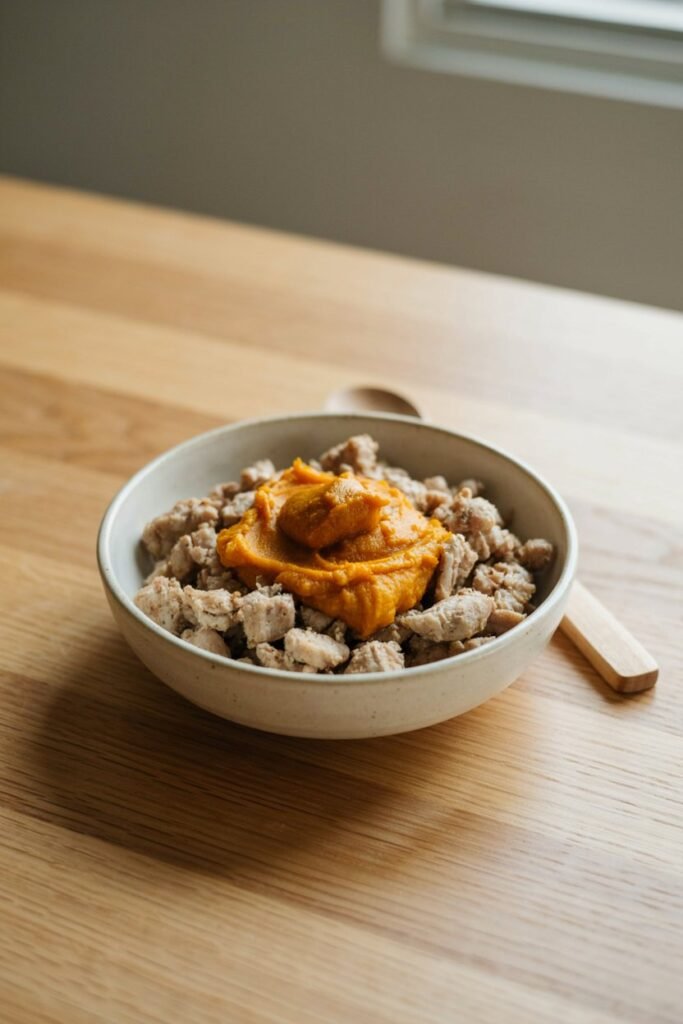
7. Turkey, Pumpkin and Sweet Potato Bowl
Ingredients
- Lean ground turkey: Use plain ground turkey and cook it thoroughly without adding salt, oil, butter, garlic, onion, or seasoning. Drain any excess fat before serving.
- Sweet potato: Use fully cooked sweet potato, peeled and mashed or cut into small, soft pieces for easier eating and digestion.
- Plain pumpkin puree: Choose 100% pure canned pumpkin with no added sugar, spices, salt, or other ingredients. Avoid canned pumpkin pie filling, which can contain ingredients that are not appropriate for dogs.
Keep all ingredients plain and simply prepared. Introduce new ingredients gradually, especially if your dog has a sensitive stomach, and adjust portions based on your dog’s individual nutritional needs.
Preparation and cooking: cook the ground turkey thoroughly and drain any fat. Boil the sweet potato until soft and mash. Stir in a spoonful of plain pumpkin puree.
Portion guidance: pumpkin is added here in small amounts mainly for fiber and digestive support, not as a primary calorie source, so a tablespoon or two per meal is usually enough depending on dog size.
Storage: refrigerate up to four days or freeze in portions.
Serving: the combination of pumpkin and sweet potato creates a naturally smooth, easy to eat texture that works well for dogs recovering from digestive upset.
Substitutions: butternut squash can replace pumpkin.
Safety note: confirm the canned pumpkin is plain puree, not pumpkin pie filling, which contains added sugar and spices.
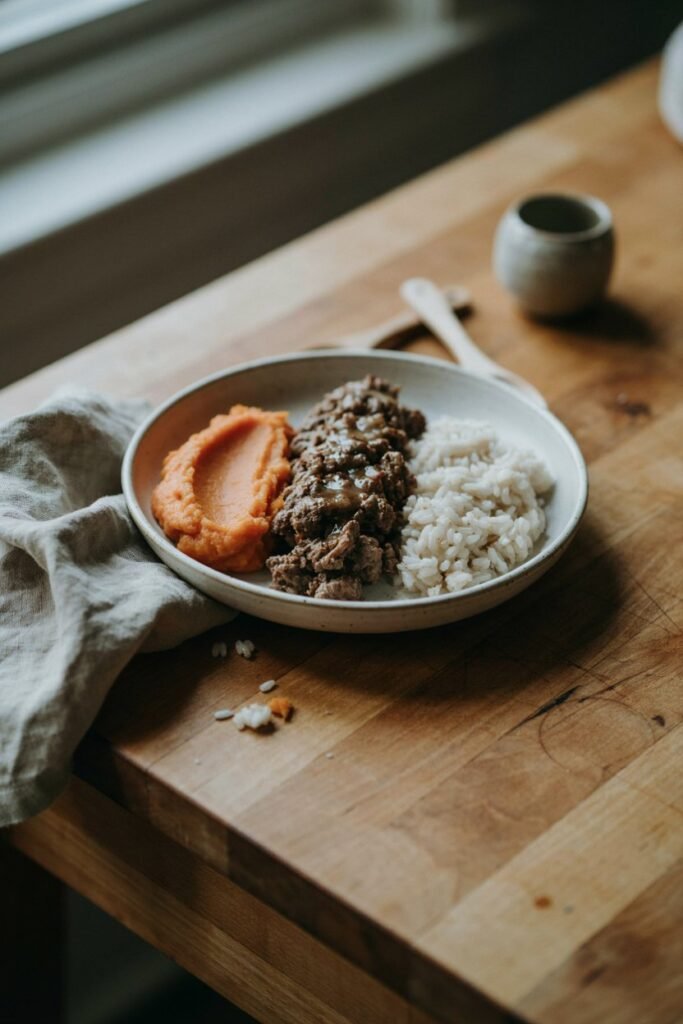
8. Beef, Rice and Sweet Potato Meal
Ingredients
- Lean ground beef: Choose lean ground beef and cook it thoroughly without salt, oil, butter, garlic, onion, or seasonings. Drain excess fat before serving.
- Sweet potato: Use fully cooked sweet potato, peeled and mashed or cut into small, soft pieces for easier eating and digestion.
- Plain white rice: Add a small amount of fully cooked white rice prepared without salt, butter, oil, or seasoning. Allow it to cool before mixing with the other ingredients.
Keep the ingredients plain and simply prepared. This combination can provide variety in a dog’s meals, but homemade recipes containing only a few ingredients should not be treated as a complete, balanced diet for long term feeding unless properly formulated for your dog’s nutritional needs.
Preparation and cooking: cook the beef thoroughly and drain the fat. Boil the sweet potato until soft. Cook the rice plainly with no butter or salt.
Portion guidance: because this meal includes two carbohydrate sources, keep portions moderate and treat rice as a smaller addition rather than an equal third of the bowl.
Storage: refrigerate up to three days or freeze in flat portions for quicker thawing.
Serving: combine all ingredients thoroughly before serving.
Substitutions: brown rice can replace white rice for dogs who tolerate it well, though it is slightly harder to digest.
Safety note: rice should always be plain and unseasoned.
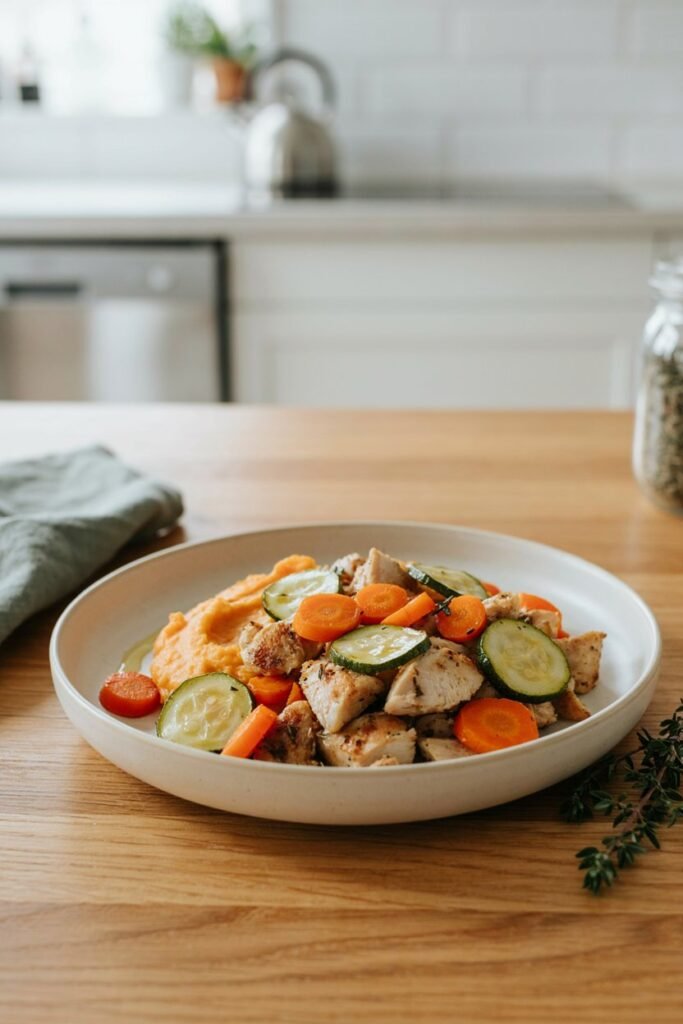
9. Chicken and Vegetable Sweet Potato Dinner
Ingredients
- Boneless, skinless chicken breast: Use fully cooked chicken breast prepared without salt, oil, butter, garlic, onion, or other seasonings. Cut or shred the chicken into small, manageable pieces.
- Sweet potato: Use fully cooked sweet potato, peeled and mashed or cut into small, soft pieces for easy eating and digestion.
- Steamed carrots and zucchini: Add a small amount of plain, gently steamed carrots and zucchini. Cook the vegetables until tender and cut them into appropriately sized pieces before mixing them into the meal.
Keep all ingredients plain and simply prepared, without sauces, seasoning blends, or added salt. Allow the meal to cool to a safe temperature before serving.
Preparation and cooking: boil or bake the chicken until fully cooked and dice it. Boil the sweet potato until soft. Steam the carrots and zucchini until tender and chop into small pieces.
Portion guidance: this meal is a good option for dogs who need extra fiber and variety, following the same general half protein, half vegetable and carbohydrate guideline.
Storage: refrigerate up to four days or freeze in portions.
Serving: mix thoroughly so every bite includes a bit of each ingredient.
Substitutions: steamed broccoli in small amounts can replace zucchini.
Safety note: introduce new vegetables one at a time to watch for any digestive sensitivity.
10. Homemade Turkey and Sweet Potato Patties
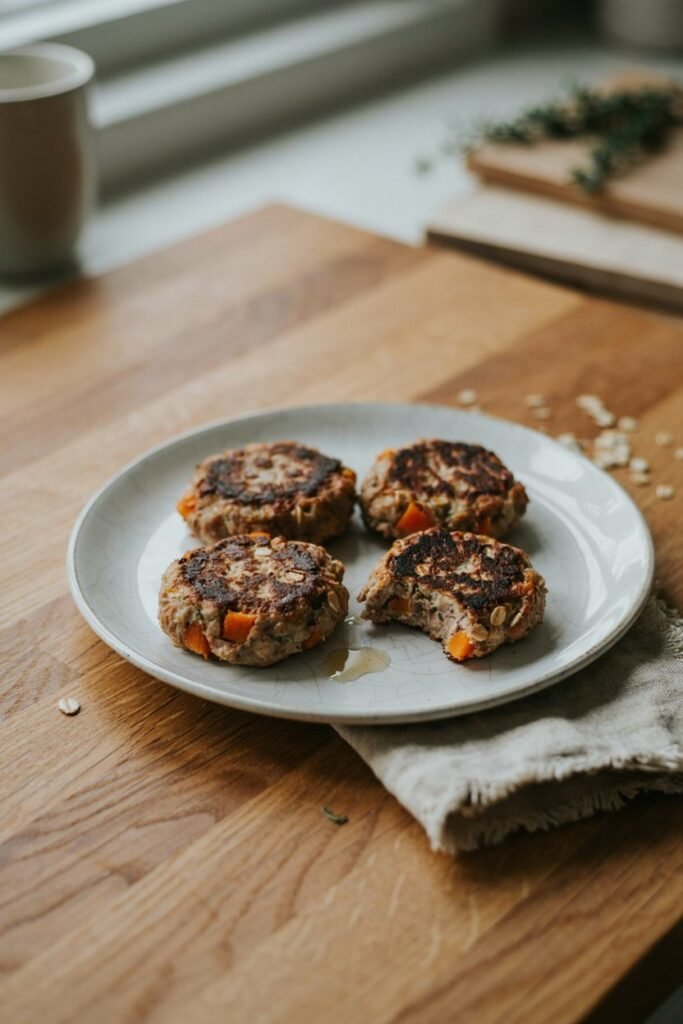
Ingredients
- Lean ground turkey: Use plain ground turkey and cook it thoroughly without salt, oil, butter, garlic, onion, or seasonings. Drain any excess fat before combining.
- Mashed sweet potato: Use fully cooked, peeled sweet potato and mash it until smooth. It helps provide moisture and naturally binds the ingredients together.
- Plain oats: Add a small amount of plain, fully cooked oats as a simple binder. Choose unflavored oats without added sugar, salt, spices, or sweeteners.
Keep all ingredients plain and simply prepared. Avoid flavored oatmeal or instant oat products containing added ingredients, and allow the patties to cool completely before serving.
Preparation and cooking: combine raw ground turkey, mashed cooked sweet potato, and a spoonful of plain oats in a bowl. Form into small patties and bake or pan cook with no oil until fully cooked through with no pink remaining.
Portion guidance: patties are useful for portion control since you can size them based on your dog’s weight, generally one to three patties per meal depending on size.
Storage: refrigerate for up to three days or freeze cooked patties individually so you can thaw only what you need.
Serving: cool completely before serving and break into smaller pieces for small dogs or puppies.
Substitutions: ground chicken can replace turkey.
Safety note: make sure patties are cooked all the way through, since raw ground poultry is not safe for dogs.
If your dog enjoys the flavor of sweet potato in treat form as well, our easy homemade sweet potato dog chews recipe is a simple follow up project.
How Much Sweet Potato Can Dogs Eat?
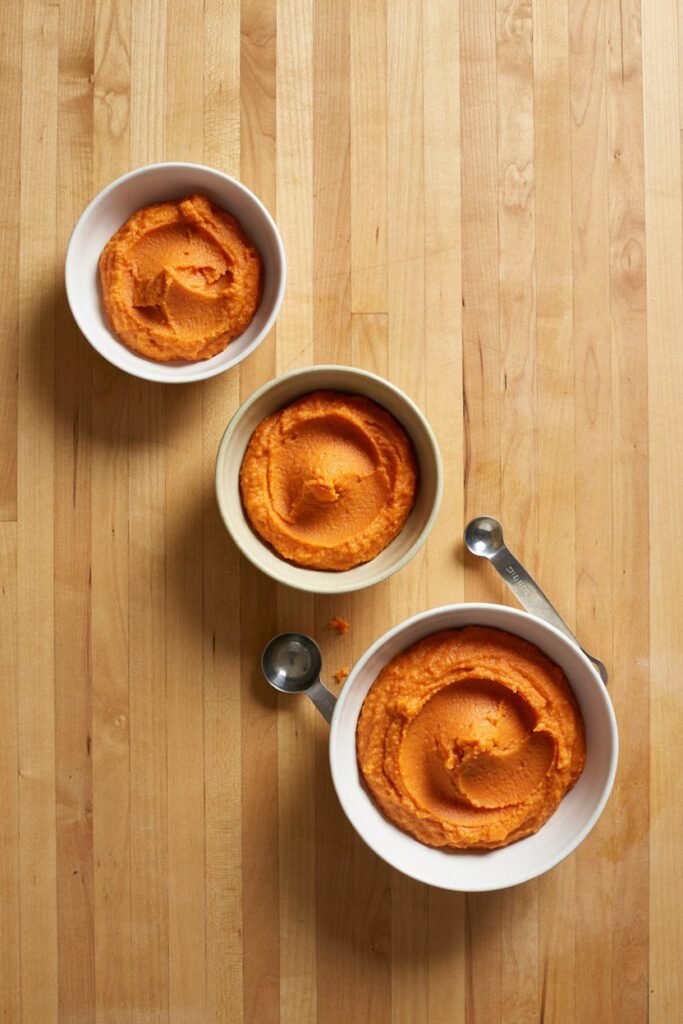
Portion needs vary based on your dog’s size, weight, activity level, age, and overall health, so treat the following as a general starting point rather than a fixed rule.
Small dogs under about twenty pounds generally do well with one to two tablespoons of cooked sweet potato per meal when it is part of a balanced bowl.
Medium dogs between twenty and fifty pounds typically tolerate roughly a quarter to half a cup of cooked sweet potato per meal.
Large dogs over fifty pounds can usually have around half a cup to a full cup per meal, depending on their total calorie needs.
Sweet potato should never make up the entire meal on its own. It works best as one component alongside protein and other vegetables. If your dog is overweight, diabetic, or has been told by a veterinarian to limit carbohydrates, talk to your vet before making sweet potato a regular part of their diet.
How to Make Homemade Dog Meals More Balanced
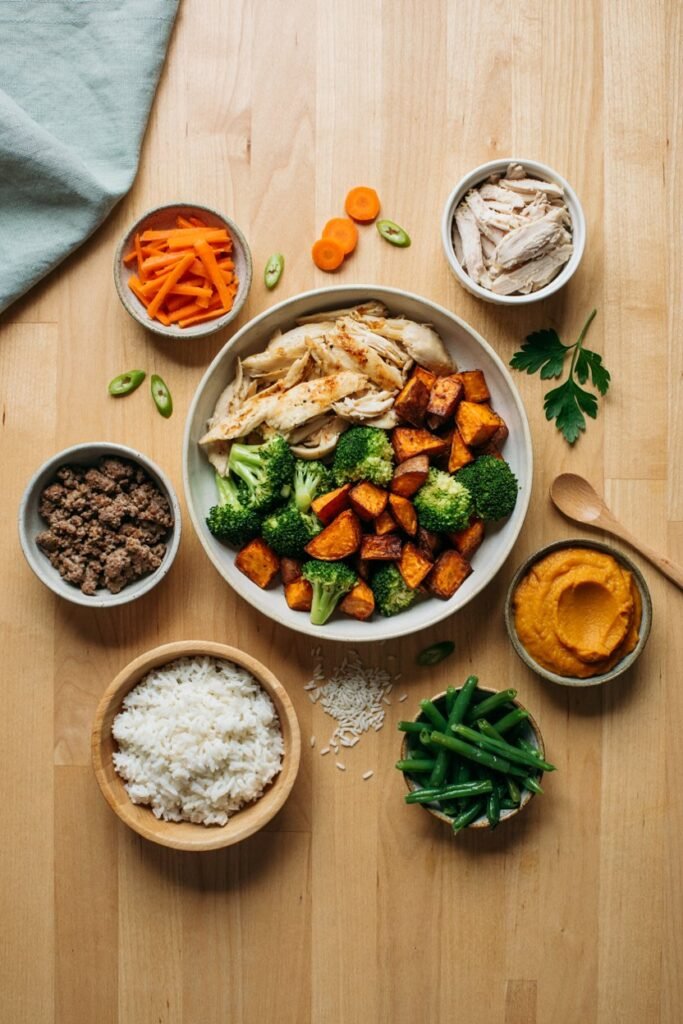
This is one of the most important sections for anyone cooking for their dog regularly, and it is often left out of recipe articles entirely.
Sweet potato alone, or even sweet potato combined with a single protein, is not a nutritionally complete diet for dogs. Dogs need a consistent balance of protein, fat, carbohydrates, vitamins, and minerals, including specific nutrients like calcium, which are easy to miss in homemade cooking.
If you plan to feed homemade meals occasionally, as a topper, or as a treat alongside a complete commercial diet, the recipes above work well without much additional planning.
If you want to feed homemade meals as your dog’s primary or sole diet long term, it is important to work with a veterinarian or a board certified veterinary nutritionist to formulate a recipe that meets your dog’s complete nutritional needs, including any necessary supplements such as calcium or a multivitamin.
For more general guidance on balancing homemade meals, our article on the healthiest homemade dog foods and our DIY farmer style dog food recipe both go into more detail on building complete meals at home.
Ingredients to Avoid in Homemade Dog Meals
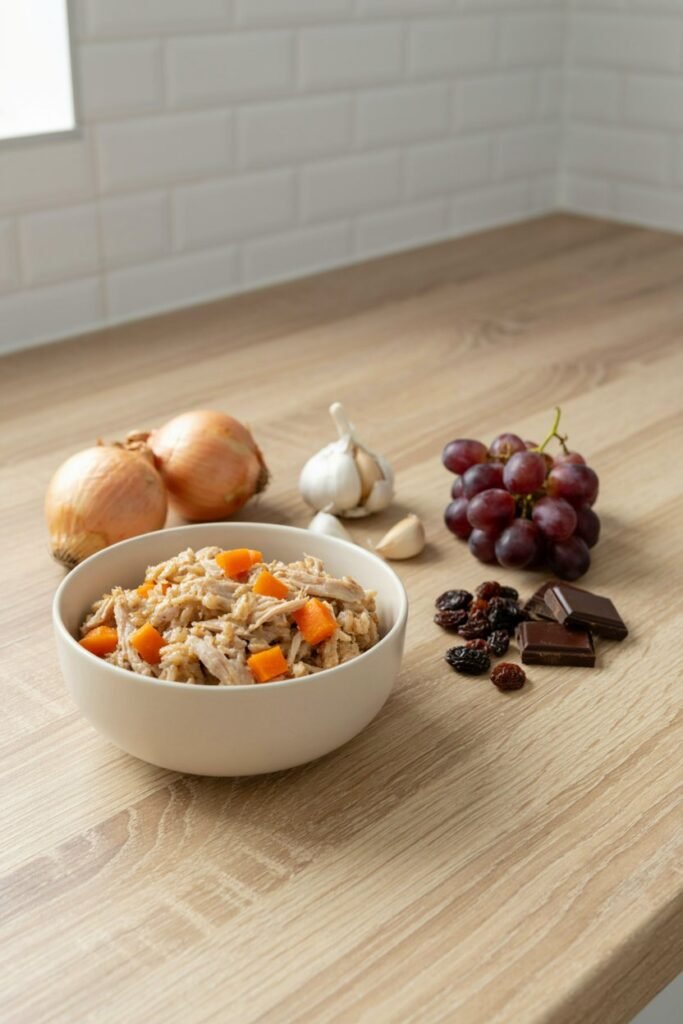
Even when a recipe is built around safe ingredients like sweet potato and lean protein, it is easy to accidentally introduce something harmful, especially if you are cooking a version for your own family at the same time. Keep the following out of any meal intended for your dog.
Onions, garlic, and chives, in any form including powder, are toxic to dogs and can damage red blood cells. Grapes and raisins can cause acute kidney failure even in small amounts. Chocolate contains compounds dogs cannot metabolize safely.
Xylitol, a sugar substitute found in some peanut butters, baked goods, and gum, can cause a rapid and dangerous drop in blood sugar. Excessive salt can lead to sodium ion poisoning in large amounts.
Seasoning blends, bouillon cubes, and pre made broths often contain onion or garlic powder, so always check labels or make your own plain broth at home.
When in doubt, the safest approach is to cook your dog’s portion completely separately, with nothing added beyond the ingredients listed in the recipe.
How to Store and Freeze Homemade Dog Meals
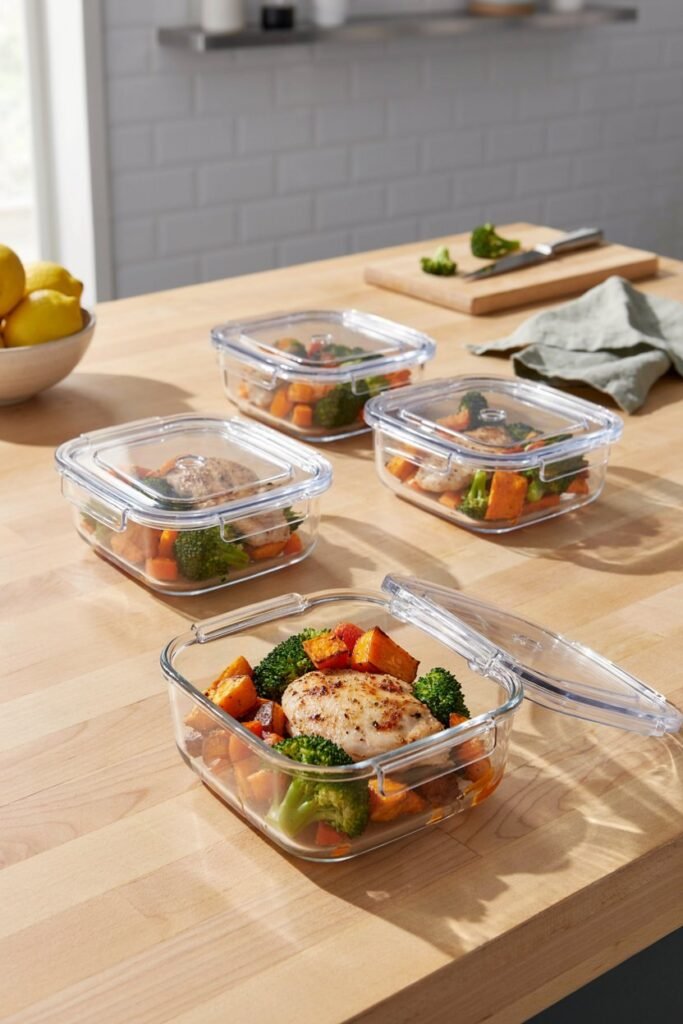
Batch cooking is one of the best ways to make homemade dog food realistic for a busy schedule, and sweet potato based meals freeze particularly well.
Refrigeration. Most cooked meals with lean protein and sweet potato stay safe in the refrigerator for three to four days. Fish based meals should be used within two days due to faster spoilage.
Freezing. Portion meals into individual containers or freezer bags before freezing so you can thaw only what you need. Most homemade dog meals freeze well for up to three months without a significant loss in quality.
Thawing. Thaw portions in the refrigerator overnight rather than at room temperature, which helps reduce the risk of bacterial growth.
Containers. Individual portion containers or a muffin tin used to freeze single servings make mealtime much faster, since you can simply pop out one portion at a time.
Reheating. Warm gently to room temperature or slightly above; food that is too hot can burn your dog’s mouth, and food should never be served straight from the freezer.
Reheating limits. Avoid repeatedly reheating and cooling the same portion multiple times, since this increases the risk of bacterial growth. Reheat only the amount you plan to serve.
If you like the idea of batch cooking for your dog, our simple five ingredient crockpot meals for dogs on a budget is another great option for stress free meal prep.
Easy Ingredient Substitutions
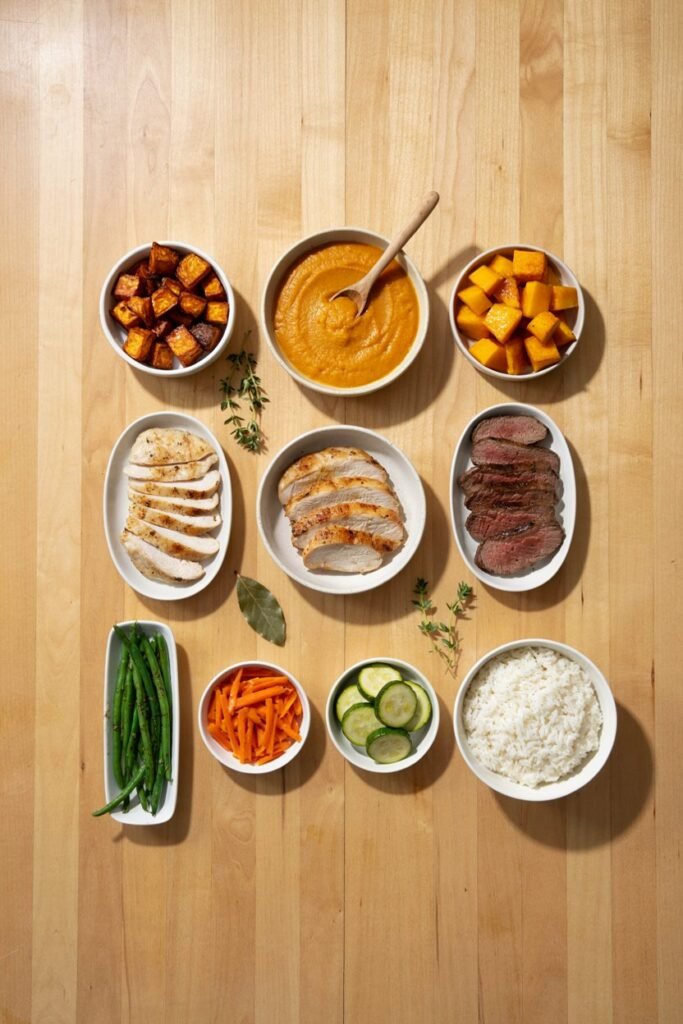
If your dog has an allergy, sensitivity, or you simply want variety, these swaps generally work well within the recipes above.
Butternut squash or pumpkin can replace sweet potato in a pinch, though the fiber and nutrient content differ slightly. Turkey, chicken, beef, and salmon can generally be swapped for one another based on what your dog tolerates best.
Steamed green beans, carrots, peas, spinach, and zucchini can be used interchangeably as the vegetable component. Plain oats can replace rice as a carbohydrate binder in recipes like the turkey patties.
Always introduce a new ingredient gradually and watch for any signs of an upset stomach, loose stool, or itching before making it a regular part of your dog’s rotation.
Frequently Asked Questions
Can dogs eat sweet potato every day? In small, appropriate amounts as part of a balanced diet, most healthy dogs can have sweet potato regularly. It should not be the only carbohydrate source in every single meal, and dogs with diabetes or weight concerns should have their intake guided by a veterinarian.
Is sweet potato better than white potato for dogs? Sweet potato is generally considered a better option because it has a lower glycemic impact and higher fiber and nutrient content when compared to white potato. White potato must always be fully cooked as well, since raw potato contains compounds that are harmful to dogs.
Can I feed my dog sweet potato skin? The skin is not toxic, but it is tougher to digest and can be a source of dirt or residue. For homemade dog meals, peeling the sweet potato before cooking is the simpler and safer choice.
Can puppies eat sweet potato? Yes, cooked, plain, mashed sweet potato is generally fine for puppies in small amounts. Because puppies have specific nutritional needs for growth, always check with your veterinarian about appropriate portions and how sweet potato fits into a balanced puppy diet.
Can dogs eat raw sweet potato? No. Raw sweet potato is hard, difficult to digest, and can pose a choking risk. Always cook it fully before serving.
How much sweet potato can I give my dog? This depends on your dog’s size, but a general range is one to two tablespoons for small dogs, a quarter to half a cup for medium dogs, and half a cup to a full cup for large dogs, as part of a balanced meal rather than on its own.
Can I freeze homemade dog meals? Yes. Most of the meals in this article freeze well for up to three months when stored in individual portions and thawed in the refrigerator before serving.
Are homemade dog meals nutritionally complete? Not automatically. Homemade meals need the right balance of protein, fat, vitamins, and minerals to be complete. If you plan to feed homemade food as your dog’s main diet long term, work with a veterinarian or veterinary nutritionist to formulate a recipe that meets all of your dog’s needs.
Final Thoughts
Sweet potato is an easy, affordable, and genuinely useful ingredient to build homemade dog meals around, but the best results come from treating it as one part of a balanced bowl rather than the whole meal.
Rotate proteins, keep portions appropriate for your dog’s size, avoid the ingredients on the unsafe list, and lean on your veterinarian if you plan to make homemade food a regular or full time part of your dog’s diet.
If you are looking for more homemade recipes to add to the rotation, take a look at our healthy homemade beef and apple stew for dogs, our homemade beef bone broth gummies, or our collection of simple carrot based dog treat recipes for beginners for your next batch cooking day.