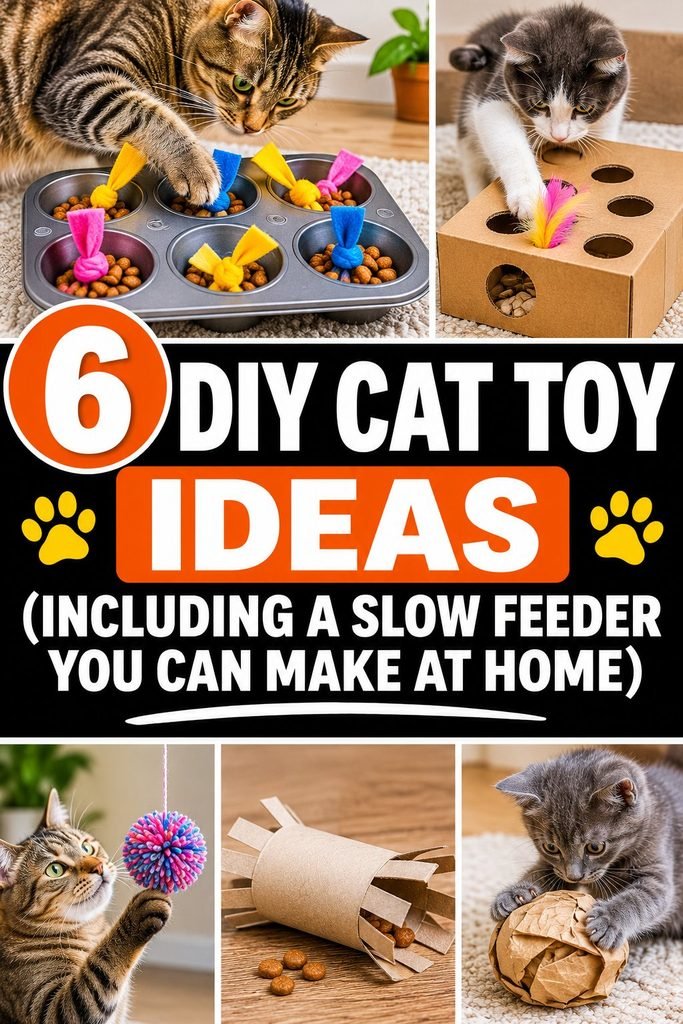
6 DIY Cat Toy Ideas (Including a Slow Feeder You Can Make at Home)
Cats have a reputation for ignoring expensive toys and falling in love with a cardboard box. The good news is that this works in your favor.
Some of the best cat toys cost almost nothing, and most of the supplies are already in your recycling bin or junk drawer.
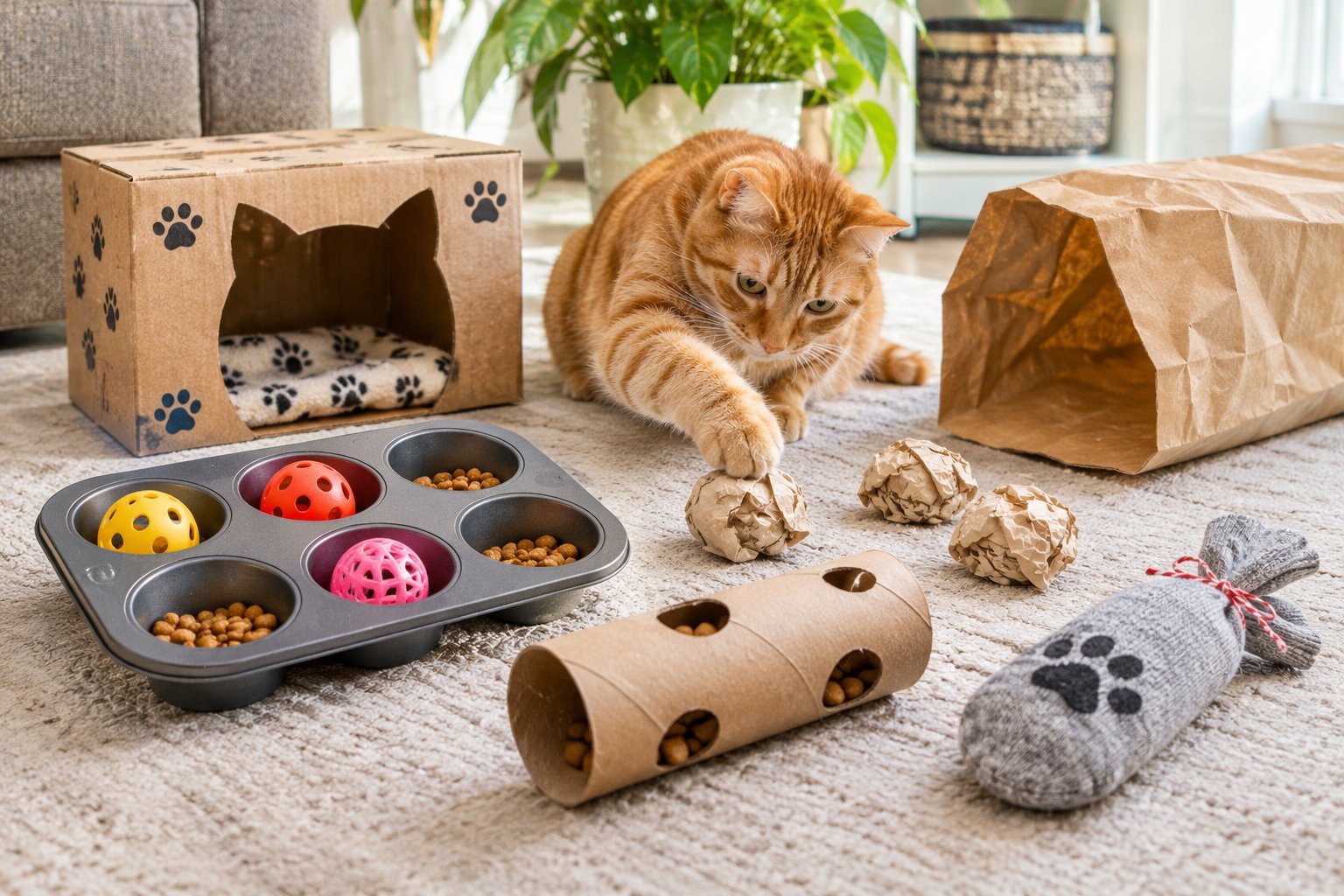
This guide covers six simple DIY cat toys, including a muffin tin slow feeder that turns mealtime into a puzzle.
They encourage natural hunting behavior, burn off energy, and keep indoor cats mentally stimulated.
I’ve also included the safety rules that matter most, since a few common craft materials are genuinely dangerous for cats.
Why DIY Cat Toys Are Worth Making
A few reasons to craft instead of buy.
Cheap or free. Most projects use recycled materials.
Good for indoor cats. Cats need to stalk, chase, pounce, and forage.
Customizable. You can match toys to your cat’s favorite textures and sizes.
Easy to rotate. Fresh toys keep your cat interested.
Fun to make. Most projects take ten minutes or less.
Cat Toy Safety Rules
Cats are curious and can swallow things that seem harmless. Keep these rules in mind.
Avoid string, yarn, thread, ribbon, and rubber bands. Cats can swallow them, and long, thin strands can cause serious and sometimes life threatening intestinal blockages. Never leave string toys out unsupervised.
Skip small parts. Buttons, beads, bells, googly eyes, and glued on pieces can be swallowed.
Avoid toxic materials. Don’t use toxic glue, paint, or markers, and avoid foil or plastic that can be chewed and swallowed.
Remove paper handles and tape. Cut handles off paper bags, and avoid adhesive tape where a cat could ingest it.
Supervise play. Take toys away when you can’t watch, especially wand toys.
Inspect and replace. Throw away any toy that’s frayed, torn, or coming apart.
Watch for pica. If your cat eats non food items, talk to your veterinarian.
Ask about kittens. Kittens chew and swallow more, so supervise closely.
Toy One: Muffin Tin Slow Feeder
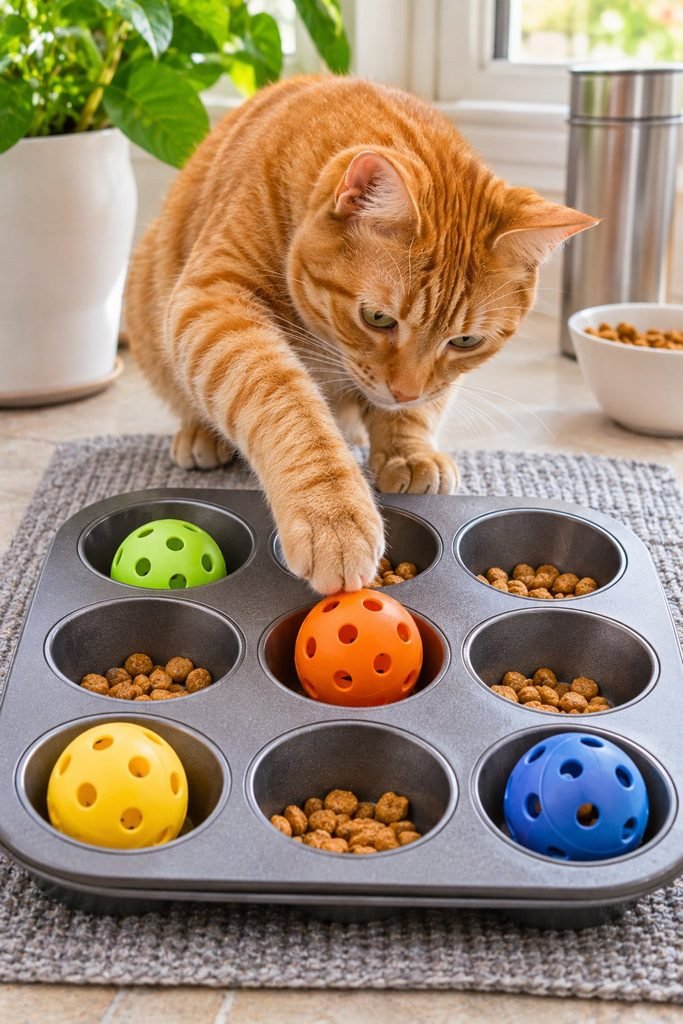
This is the star of the list. A slow feeder makes cats work for their food, which slows fast eaters and adds mental enrichment.
What you need. A standard muffin tin, plus several ping pong balls or clean golf balls that are too large to swallow, and your cat’s dry food or small treats.
How to make it.
- Wash the muffin tin thoroughly and dry it.
- Place a ping pong ball or golf ball in about half of the cups. Make sure the balls are too big for your cat to swallow.
- Sprinkle a small amount of dry food into each cup, around the ball.
- Set the tin on a non slip mat so it doesn’t slide.
- Let your cat paw the kibble out from around the balls.
Why it works. The balls make it harder to gobble food, and the cups encourage foraging.
Tips. Start with easy cups and add more balls as your cat gets the hang of it. Don’t use this for wet food. If your cat vomits regularly after eating, or eats very quickly because of a medical problem, see your veterinarian.
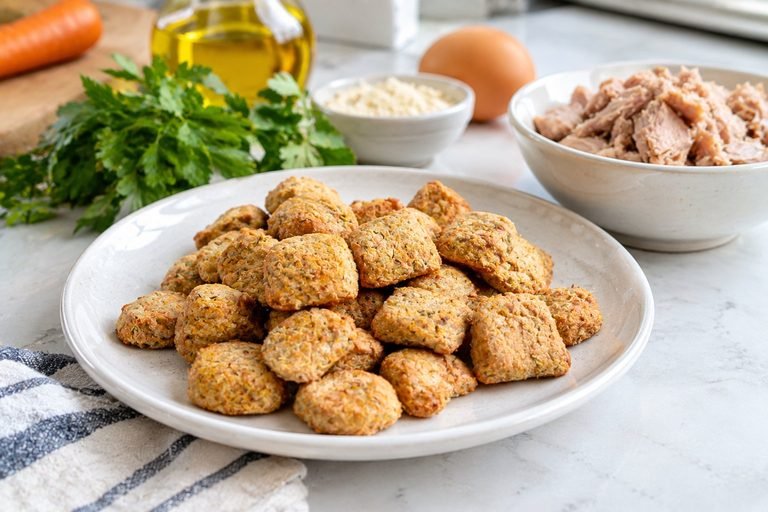
For high value treats to hide in the cups, try my Easy Homemade Cat Treats with Pumpkin or my Healthy Homemade Cat Treat.
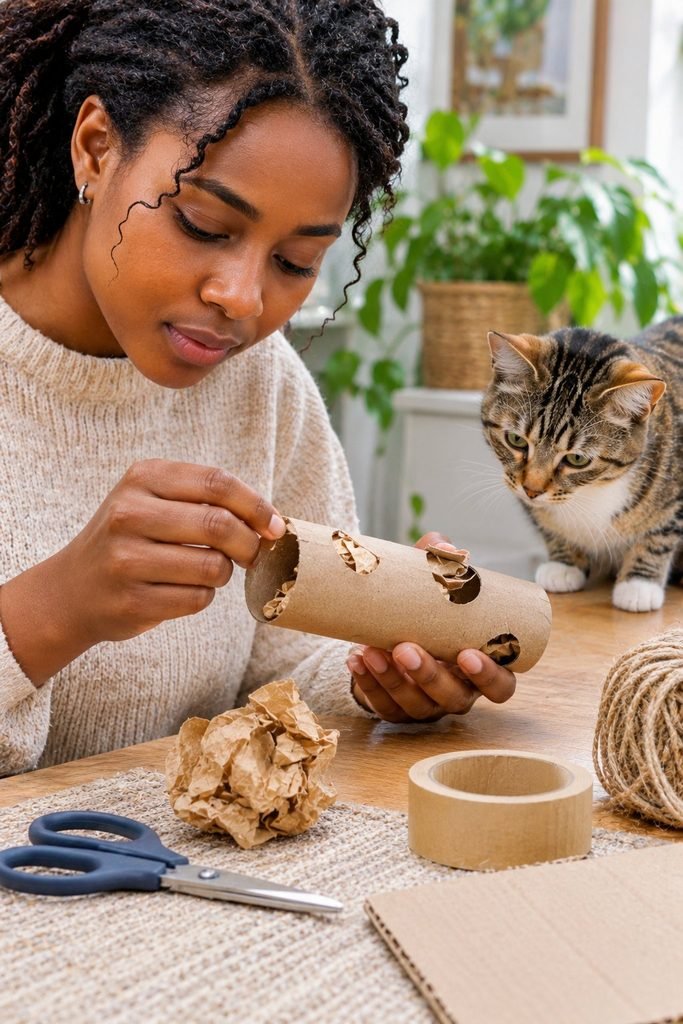
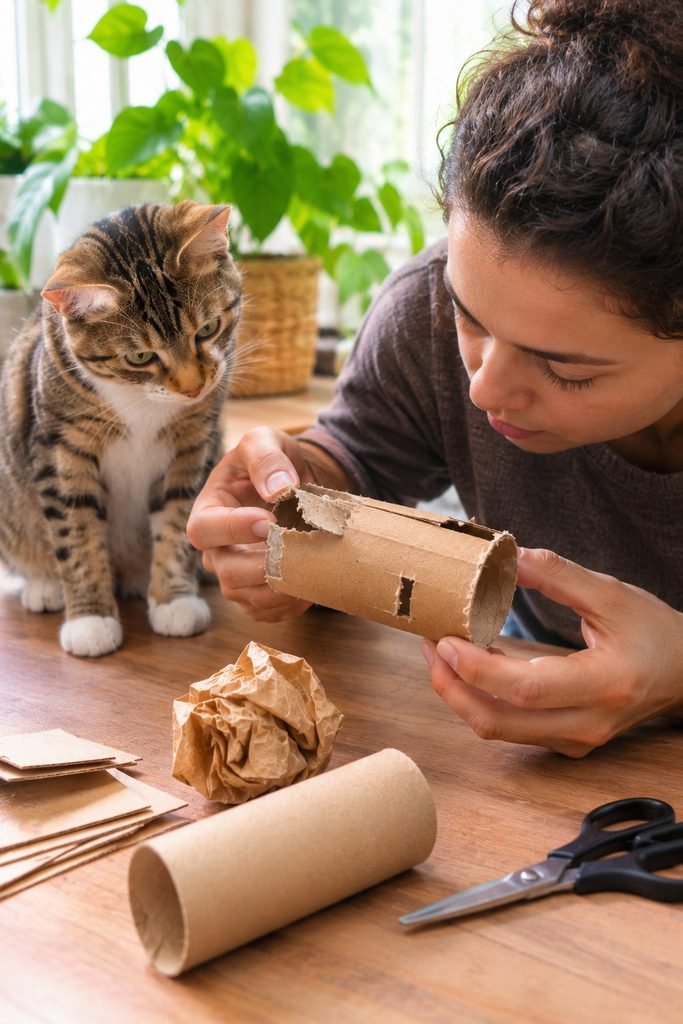
Toy Two: Toilet Paper Tube Treat Puzzle
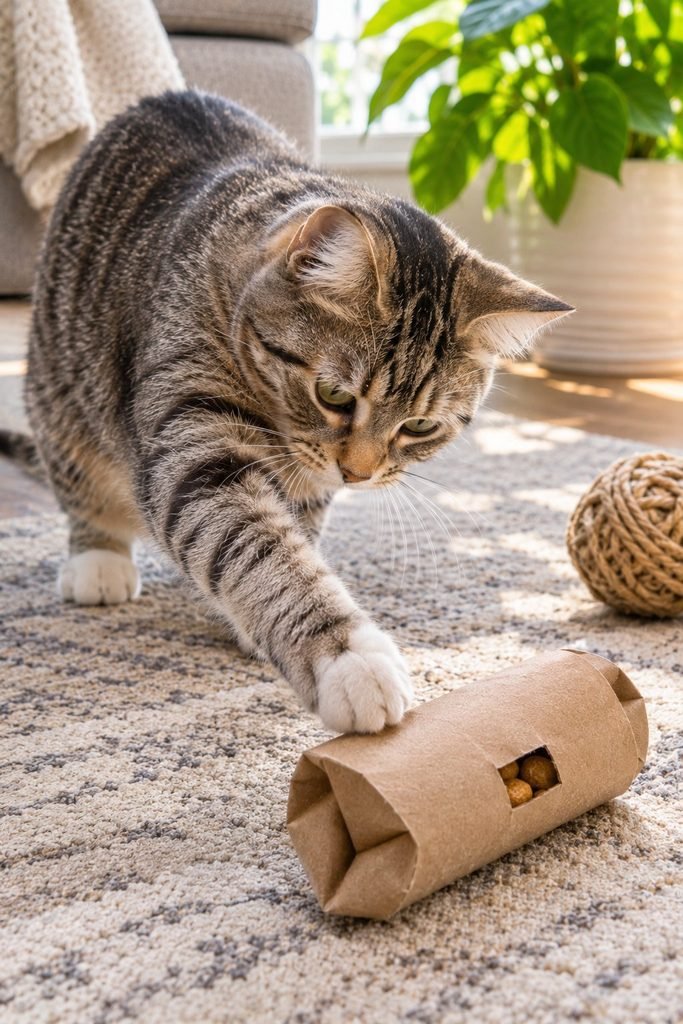
A classic that takes about two minutes.
What you need. An empty toilet paper tube and a handful of small treats or kibble.
How to make it.
- Fold one end of the tube closed by pressing the edges in.
- Drop a few treats inside.
- Fold the other end closed.
- Let your cat bat and shake the tube until the treats fall out.
Why it works. It encourages pawing and problem solving.
Tips. Use only a few treats, and throw the tube away once it’s soggy or chewed.
Toy Three: Paper Crinkle Balls
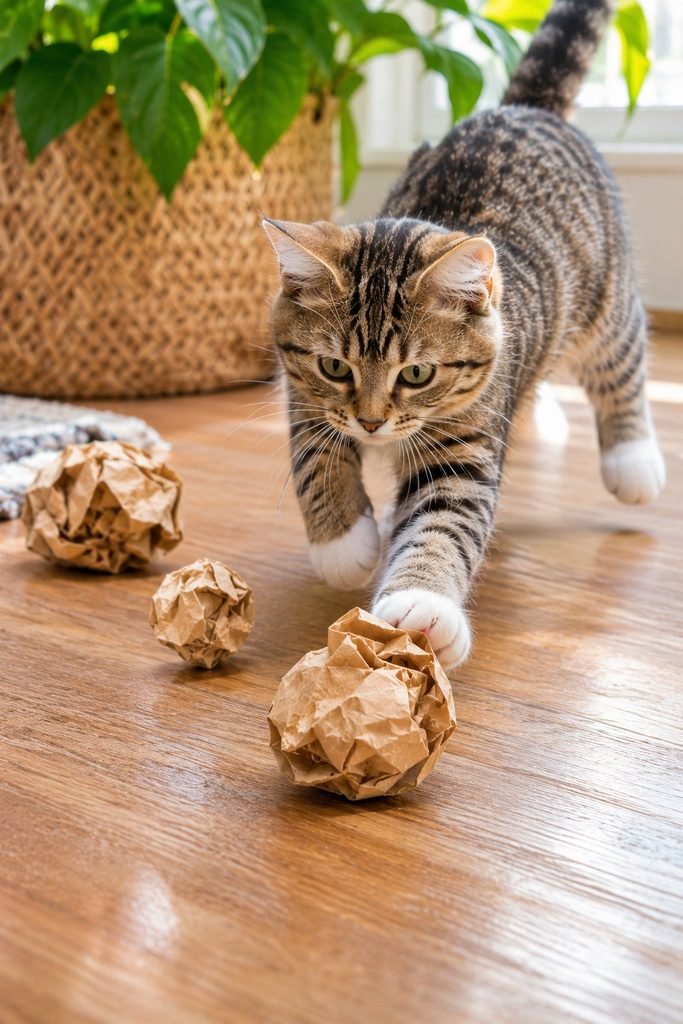
Cats love the sound and the feel.
What you need. Plain sheets of paper, such as printer paper or kraft paper.
How to make them.
- Crumple a sheet of paper into a tight ball, about the size of a golf ball or larger.
- Make several in different sizes.
- Toss one across the floor and let your cat chase it.
Why it works. The crinkle sound mimics prey, and the light weight makes it easy to bat around.
Tips. Avoid paper with ink, glossy coatings, or glitter. Replace balls once your cat starts to shred them.
Toy Four: Catnip Sock Kick Toy
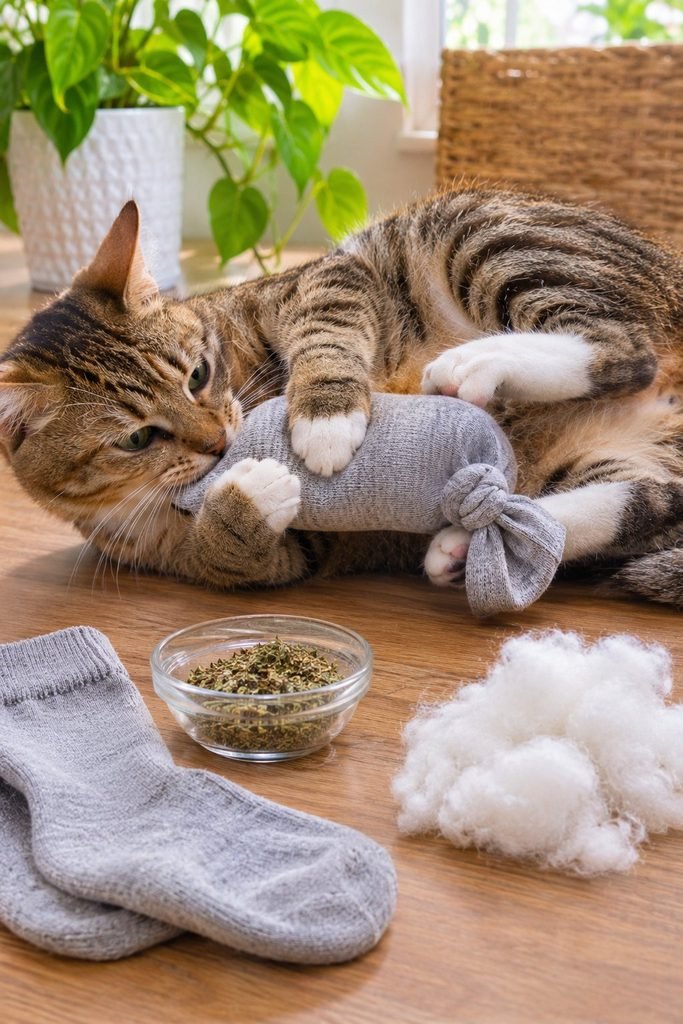
A soft, kickable toy for cats who love to bunny kick.
What you need. A clean, plain cotton sock, a handful of clean cotton stuffing or fabric scraps, and dried catnip.
How to make it.
- Fill the toe of the sock with stuffing and a pinch of catnip.
- Tie a tight, firm knot in the sock just above the filling.
- Trim any extra fabric above the knot, leaving a short tail.
- Give it a firm pull to test the knot.
Why it works. The catnip attracts many cats, and the long shape lets them wrap their paws around it.
Tips. Not every cat responds to catnip, and kittens under about 6 months often don’t. Replace the toy if the sock tears or the stuffing leaks.
Toy Five: Cardboard Box Hideaway and Scratcher
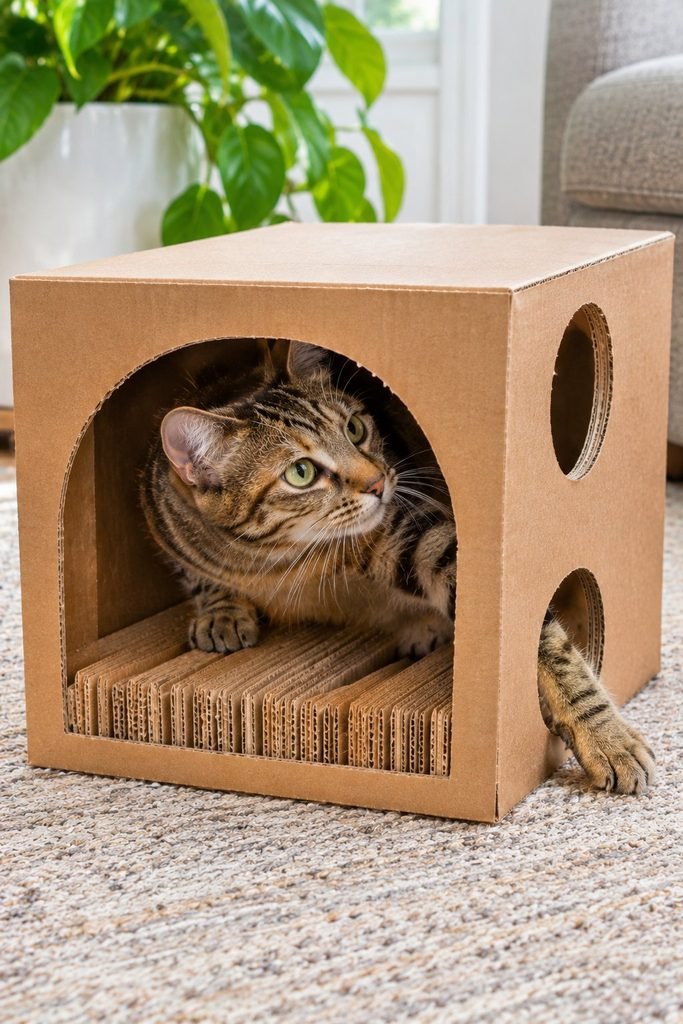
The cheapest and most popular option.
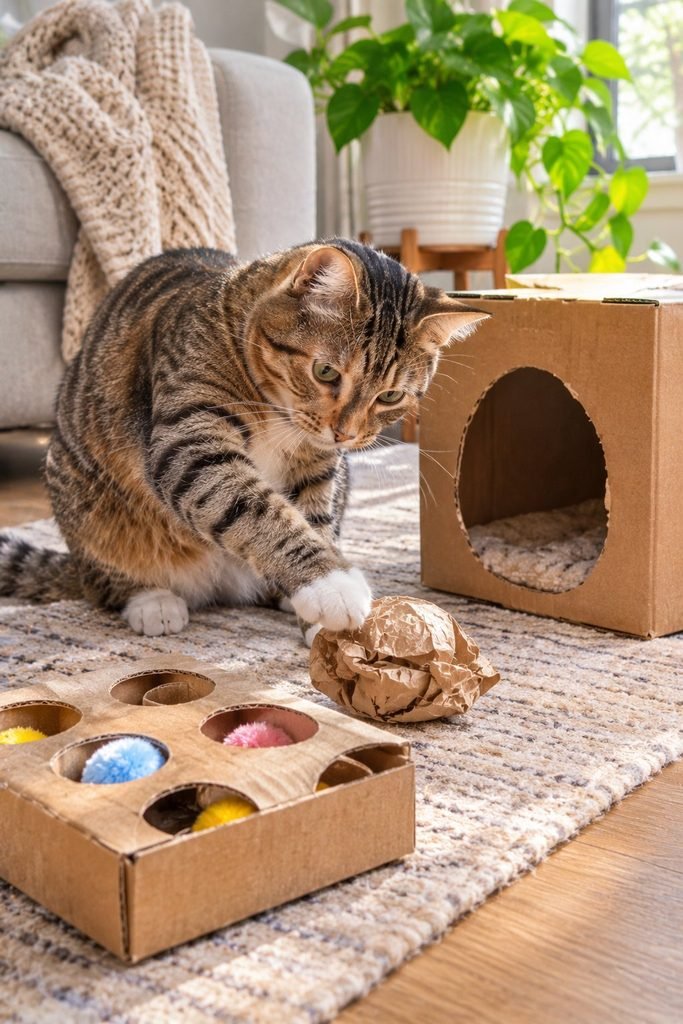
What you need. A sturdy cardboard box, scissors, and a few cardboard scraps.
How to make it.
- Cut an opening, about 6 inches wide, in the side of the box.
- Cut a couple of smaller holes in the sides for peeking and pawing.
- Remove any tape, staples, or labels.
- Cut leftover cardboard into strips and stand them upright inside the box, so cats can scratch them.
- Place the box in a quiet spot.
Why it works. Cats love to hide, perch, and scratch.
Tips. Always remove tape, staples, and plastic. Replace the box when it’s worn out.
Toy Six: Paper Bag Tunnel
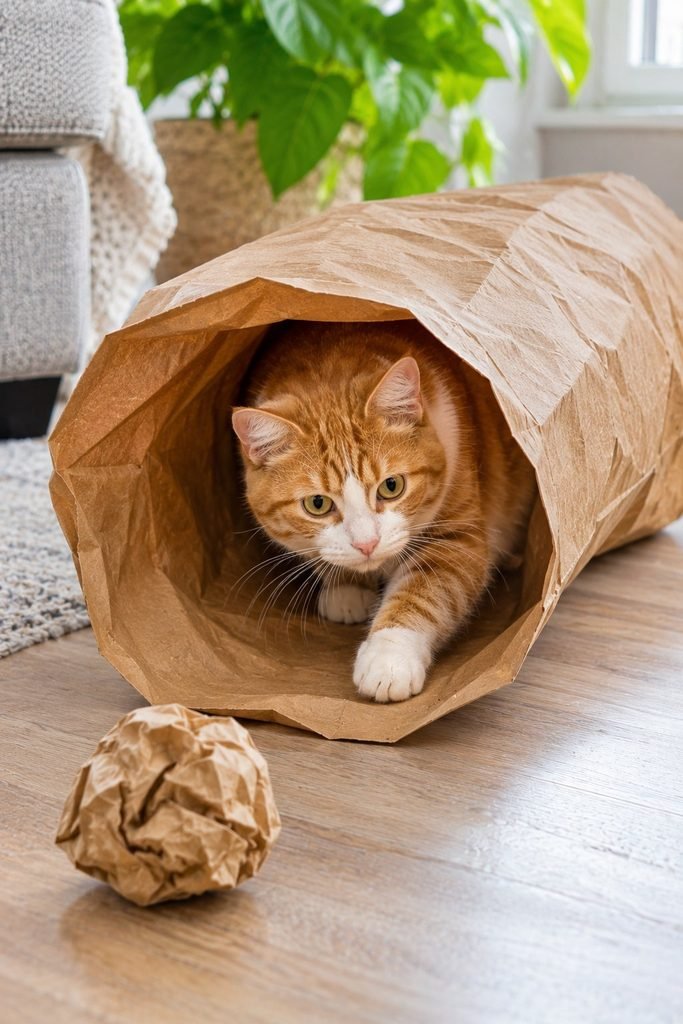
A rustling tunnel that’s perfect for stalking and pouncing.
What you need. A large, plain paper bag.
How to make it.
- Cut the handles off the bag completely, since cats can get caught in them.
- Cut off the bottom of the bag, making a tunnel.
- Fold the open edges over once to make them sturdier.
- Lay the tunnel on its side, and toss a treat or a paper ball inside.
Why it works. Cats enjoy hiding in tight spaces and ambushing toys.
Tips. Never use plastic bags, which are a suffocation risk. Always remove handles. Use only plain paper, not bags with ink, glitter, or coatings.
How to Keep Your Cat Interested
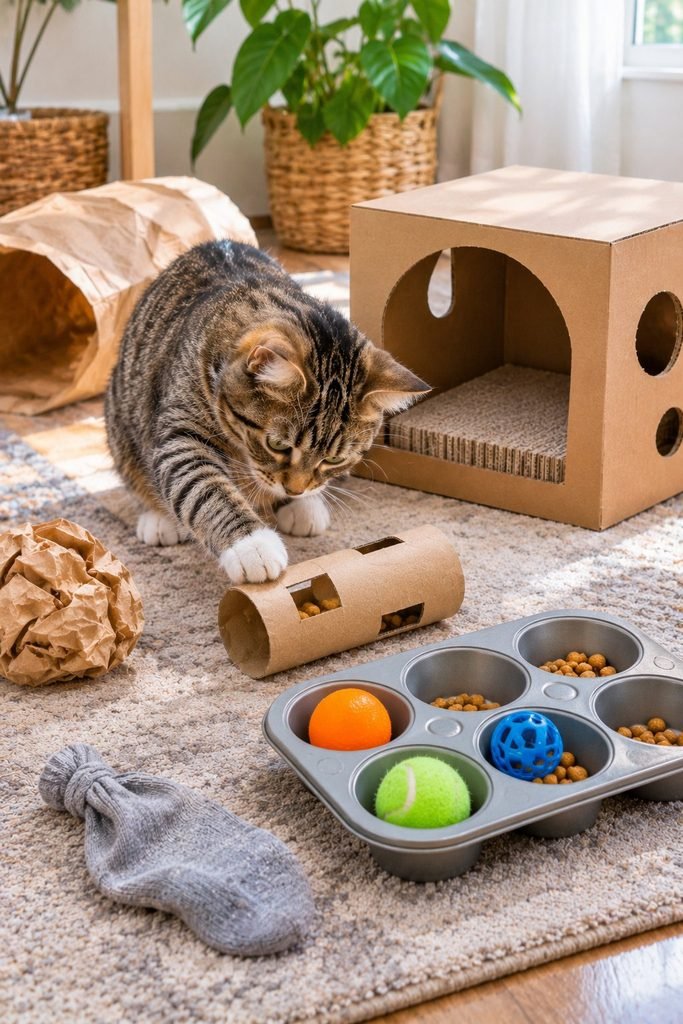
Rotate toys. Put some away and bring them back out a week later.
Schedule play. Short, regular play sessions mimic hunting and help burn energy.
Match the toy to your cat. Some cats love chasing, others love kicking, and others prefer puzzles.
Give treats after play. Cats feel more satisfied if play ends with a small reward, which mimics a successful hunt.
Make food a game. Use slow feeders and puzzle toys instead of a plain bowl.
Common Mistakes to Avoid
Using string, yarn, or ribbon. These are the biggest hazards.
Leaving toys out unsupervised. Put away anything with strands or small parts.
Using toys that are too small. Anything small enough to swallow is risky.
Using plastic bags. They can suffocate.
Ignoring wear and tear. Replace damaged toys right away.
Using food as the only reward. Mix food, play, and affection.
More Homemade Cat Ideas
- Easy Homemade Cat Treats with Pumpkin
- Healthy Homemade Cat Treat
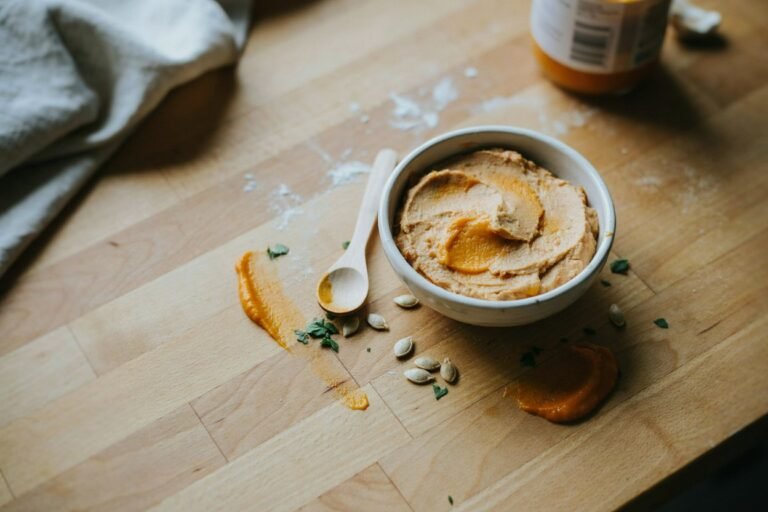
- Homemade Lickable Cat Treats
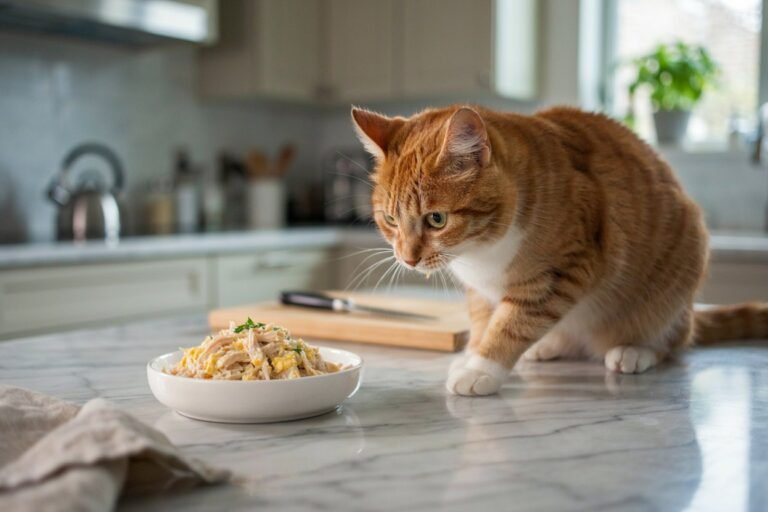
- How to Make Cat Gravy
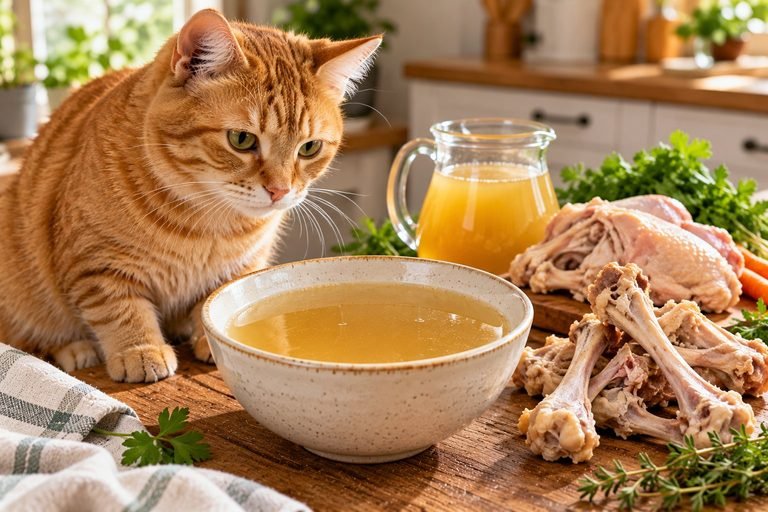
- Bone Broth Recipe for Cats
Frequently Asked Questions
Is it safe to make cat toys at home? Yes, if you use safe materials, avoid string and small parts, and supervise play.
What can I use as a slow feeder for cats? A muffin tin with balls, a clean egg carton, or a shallow dish with obstacles all work, as long as nothing can be swallowed.
Is catnip safe? Yes, catnip is generally safe for cats. Some cats don’t respond to it at all.
Why does my cat eat so fast? Fast eating can come from habit, competition with other pets, or a medical issue. A slow feeder can help, but see your veterinarian if your cat vomits often.
Can I use a slow feeder for wet food? Muffin tin feeders work best for dry food and treats. For wet food, use a slow feeding mat or shallow dish designed for it.
How often should I replace homemade toys? Whenever they’re damaged, soggy, or shredded.
Are wand toys safe? They can be, but only when you use and store them yourself. Never leave a wand toy with a string where your cat can reach it.
A Final Note on Making Cat Toys
The best toy is often the one that makes your cat feel like a hunter. Keep it simple, keep it safe, and watch what your cat enjoys. For something tasty to hide in the slow feeder, take a look at my Bone Broth Recipe for Cats, How to Make Cat Gravy, or Homemade Lickable Cat Treats.