10 Signs Your Cat Is Totally Obsessed With You
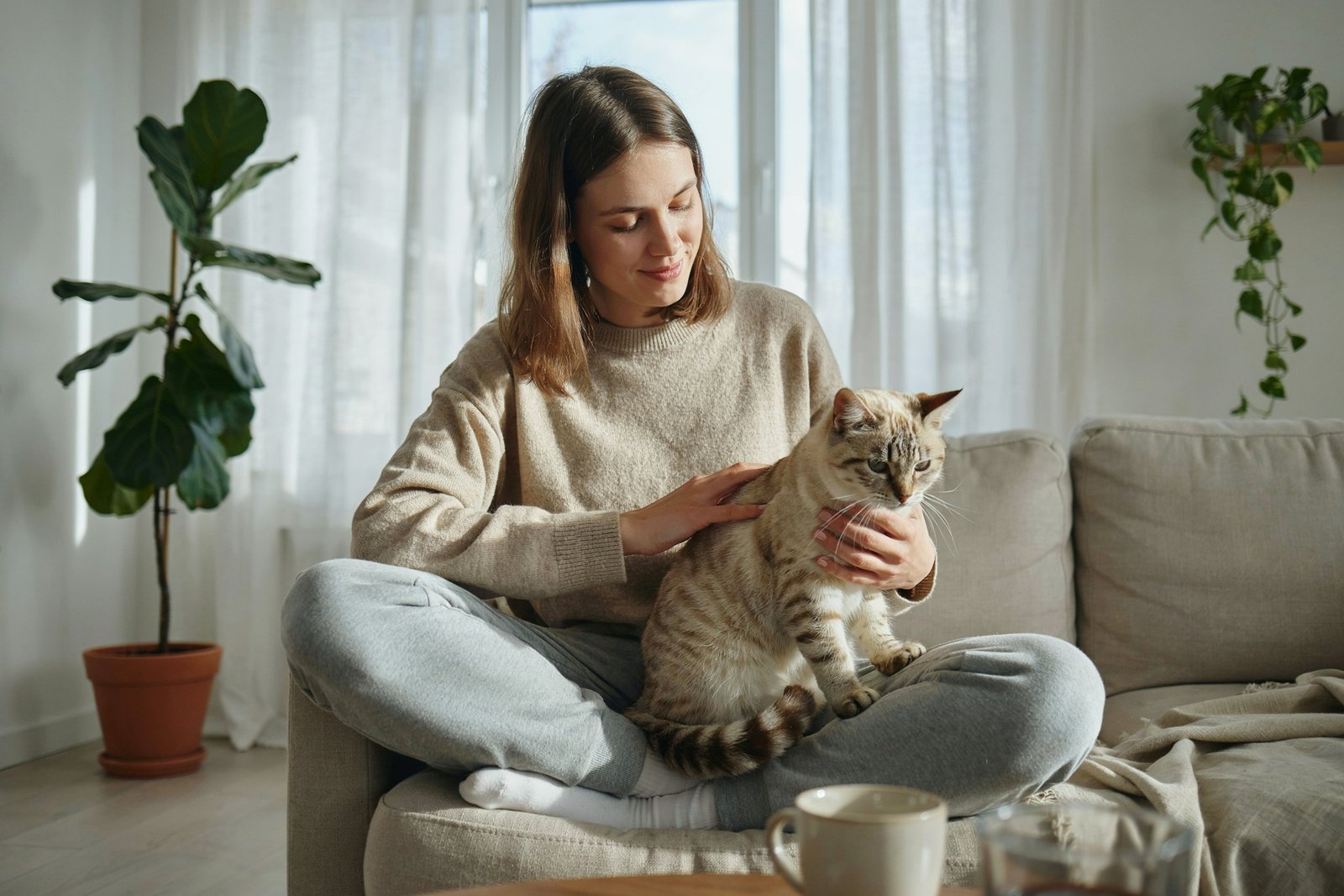
I’ve always believed that cats have their own quiet way of saying, “I love you.”
They may not greet you with endless excitement like a dog, but if you’ve ever caught your cat following you around the house, curling up beside you, or giving you that slow, sleepy blink, you’ve probably wondered what it all means.
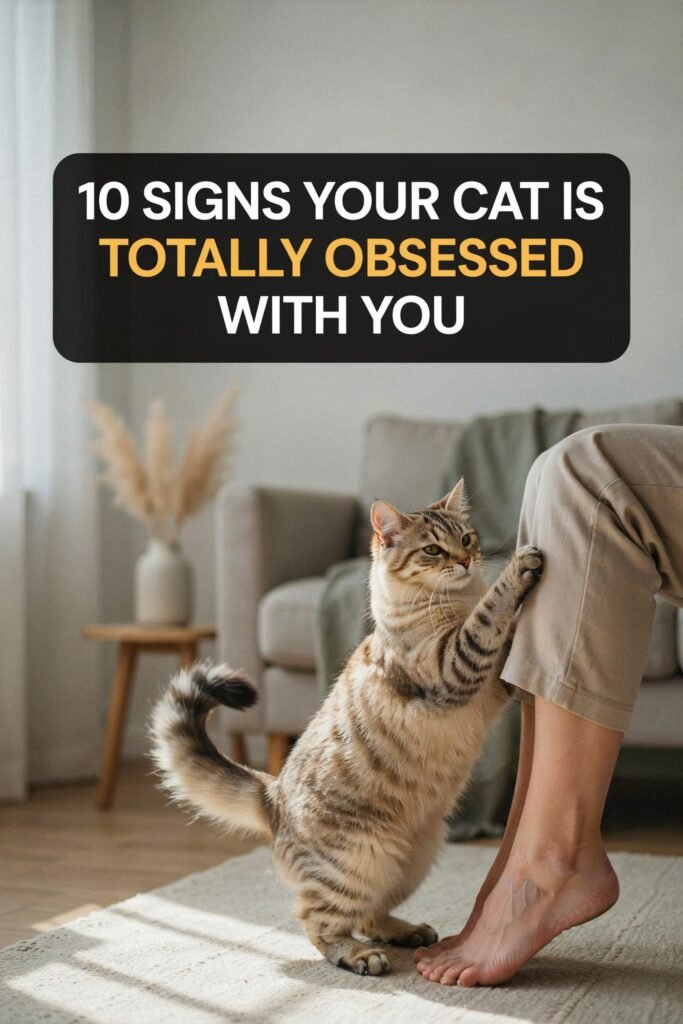
The truth is, cats show their affection in subtle but meaningful ways.
In this guide, I’ll share the biggest signs your cat is totally obsessed with you, so you can better understand the little moments that make your bond so special.
Why Cats Show Love Differently Than Dogs
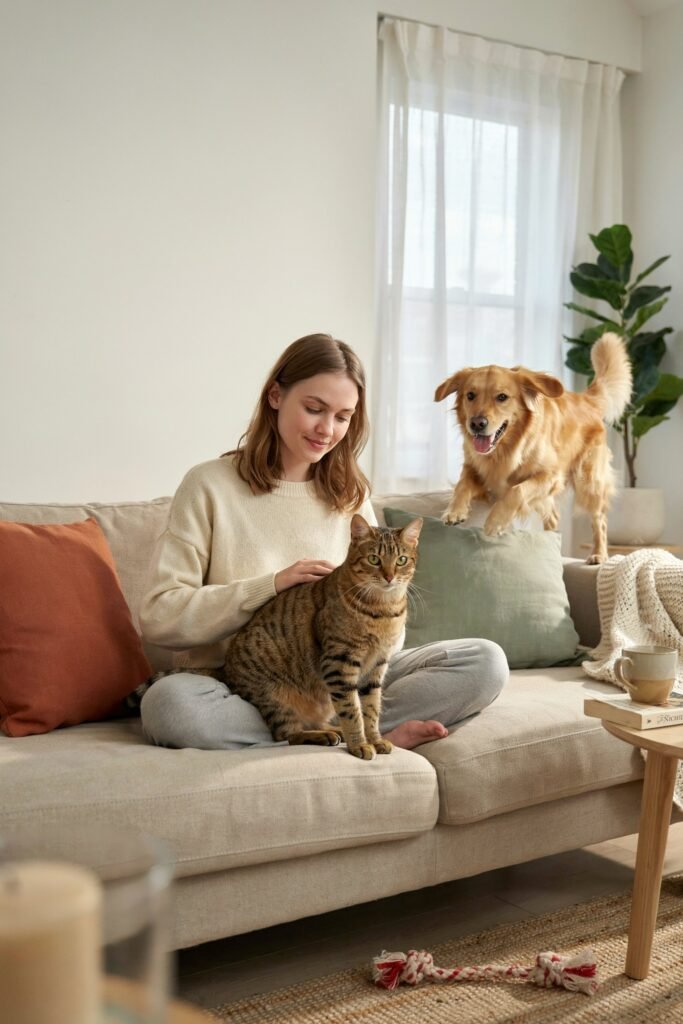
Cats and dogs both form strong bonds with the people they love, but they express that love in very different ways.
While dogs are often outgoing and easy to read, cats tend to show affection through quiet, subtle behaviors that can be easy to miss.
Once I learned to pay attention to those little moments, I realized my cat was showing me love every single day.
Understanding these differences helps you appreciate your cat’s unique personality and recognize the special ways they choose to say, “I trust you.”
1. Your Cat Follows You Everywhere
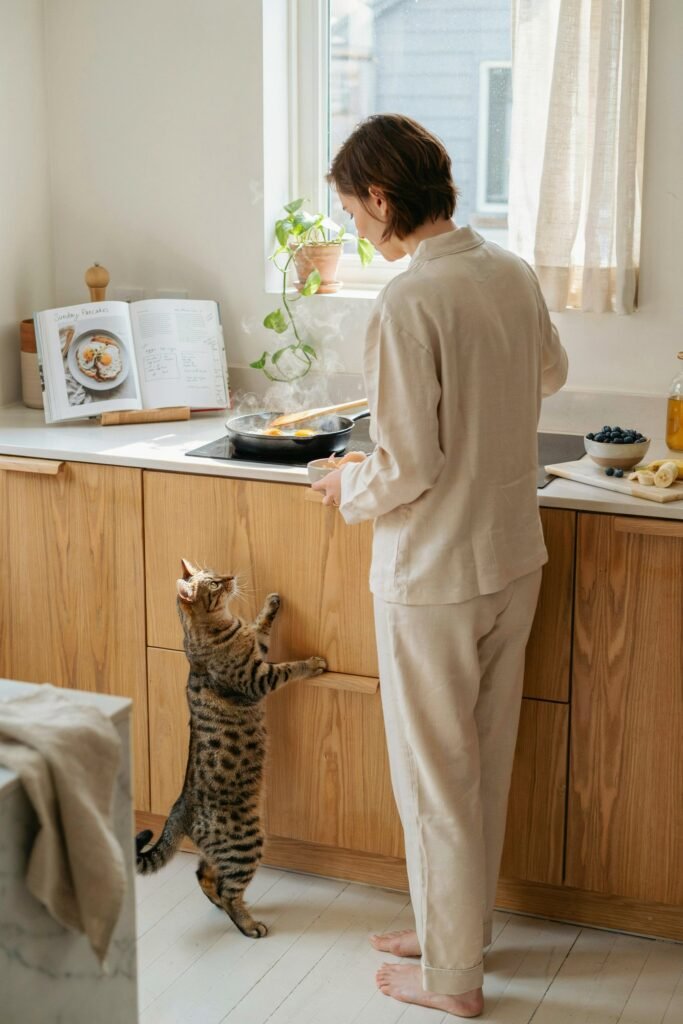
If it feels like you have a tiny furry shadow following your every move, take it as a compliment.
One of the clearest signs your cat is obsessed with you is that they simply want to be wherever you are.
My cat isn’t always interested in being held, but she somehow manages to appear in nearly every room I walk into.
If I’m cooking dinner, she’s sitting nearby watching every move.
When I work at my desk, she’s curled up beside the chair.
Even something as simple as folding laundry somehow turns into a shared activity.
Cats don’t waste energy following people they don’t trust.
When your cat chooses to trail behind you throughout the day, they’re showing that they enjoy your company and feel secure around you.
Some cats will quietly sit nearby without asking for attention, while others will weave around your legs or meow until you acknowledge them.
Every cat has a different personality, but the message is usually the same: they want to be close to their favorite person.
Of course, if your cat suddenly becomes unusually clingy after always being independent, it’s worth paying attention.
Changes in behavior can sometimes point to stress, anxiety, or an underlying health issue, so it’s always a good idea to monitor any dramatic changes.
For most happy, healthy cats, though, following you around the house is simply their way of saying, “I like being with you.”
2. They Give You Slow Blinks
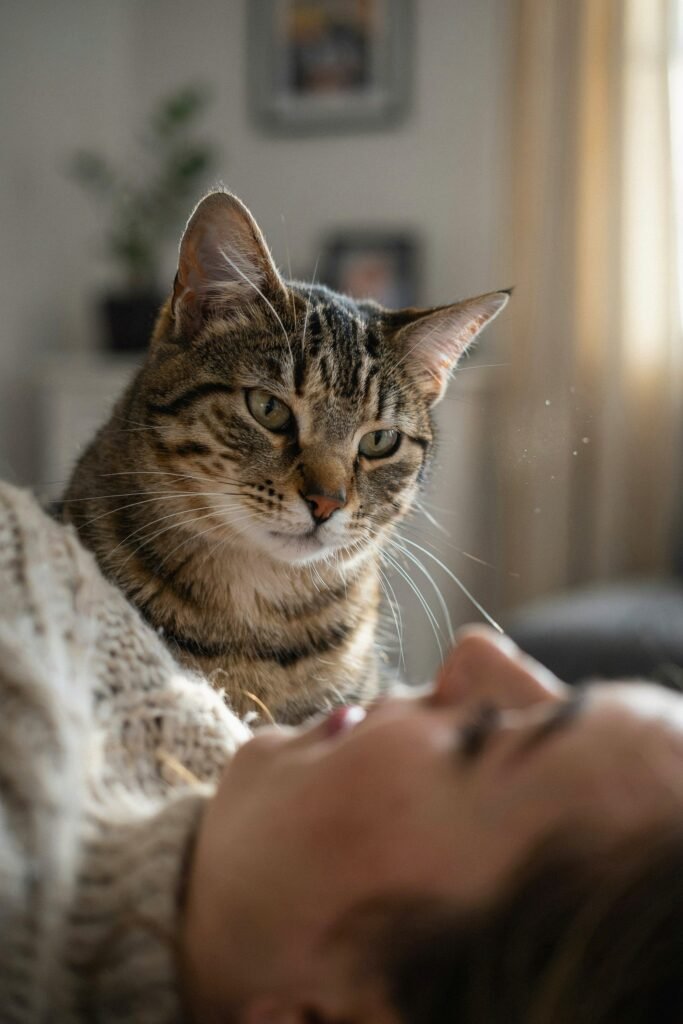
If you’ve ever caught your cat looking at you before slowly closing and opening their eyes, you’ve witnessed one of the sweetest signs of feline affection.
Many cat lovers even call it a “cat kiss,” and once you know what it means, it’s hard not to smile every time it happens.
I remember noticing this with my own cat one quiet afternoon while I was reading on the couch.
She hopped onto the armrest, looked directly at me, and slowly blinked before settling down for a nap.
At first, I thought she was simply getting sleepy.
After learning more about cat behavior, I realized she was actually showing complete trust.
Cats don’t close their eyes around someone they consider a threat.
In the animal world, shutting your eyes even for a moment leaves you vulnerable.
When your cat slowly blinks at you, they’re essentially saying they feel safe enough to let their guard down.
The best part is that you can return the gesture.
Try looking at your cat with relaxed eyes and giving them a slow blink back.
Many cats will respond by blinking again or calmly approaching you.
It’s a simple but meaningful way to communicate in a language they naturally understand.
Some cats do this often, while others reserve it for quiet moments when they’re feeling especially content.
Either way, it’s a beautiful reminder that love doesn’t always have to be loud to be genuine.
What it means
A slow blink usually means your cat trusts you completely, feels relaxed in your presence, and sees you as someone who brings comfort rather than stress.
3. They Sleep Right Next to You
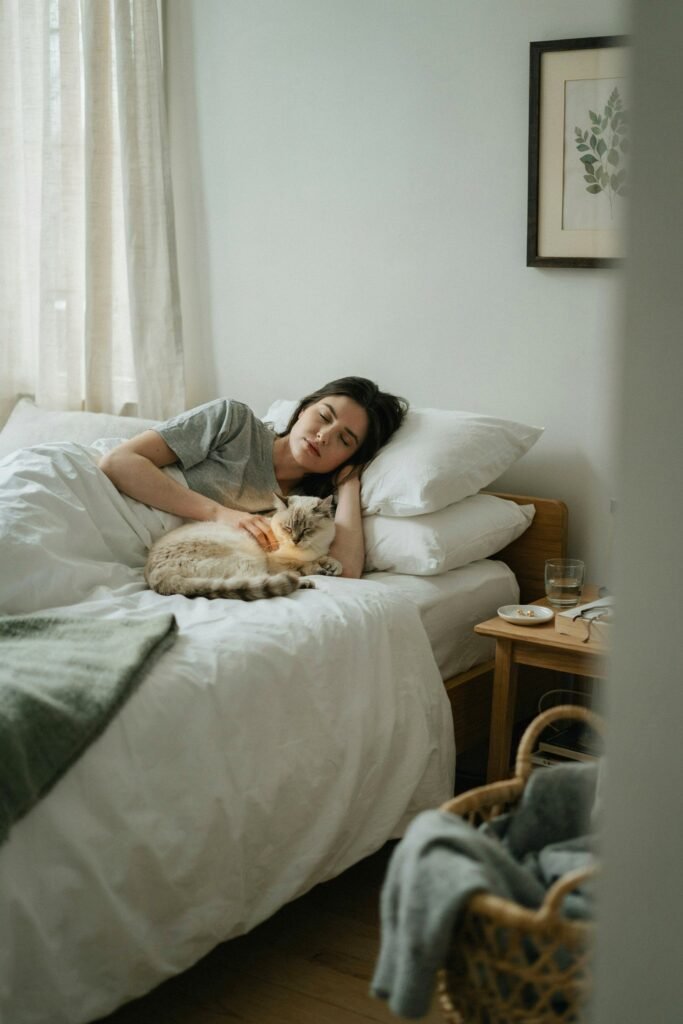
Cats spend a huge part of their lives sleeping.
Depending on their age and personality, they can sleep anywhere from 12 to 18 hours a day.
Because sleep leaves them at their most vulnerable, they’re very careful about where they choose to rest.
That’s why it feels so special when your cat decides your lap, your bed, or the pillow beside your head is the perfect place for a nap.
My cat has dozens of cozy spots around the house, yet she still chooses to curl up beside me most evenings while I watch television.
She doesn’t always want attention.
Sometimes she simply wants to be close, and I think those quiet moments say more than constant cuddling ever could.
Sleeping beside you tells your cat that you’re part of their safe space.
They trust you to protect them while they’re resting, which is one of the highest compliments a cat can give.
Some cats like to sleep against your legs, while others claim your pillow or stretch across your chest.
Every cat has their favorite spot, but the message is usually the same—they’re choosing comfort, warmth, and security with you.
Of course, not every affectionate cat enjoys sleeping in bed.
Some prefer nearby chairs, blankets, or cat trees where they can still keep an eye on you. The important thing isn’t the exact location.
It’s the fact that they intentionally choose to rest close to you whenever they can.
What it means
A cat that regularly sleeps near you feels protected, comfortable, and emotionally secure in your presence.
4. They Greet You When You Come Home
One of my favorite parts of the day is walking through the front door and seeing my cat waiting nearby.
Sometimes she’s already sitting by the entrance.
Other days I hear a cheerful little meow before I even set my keys down.
It’s a small routine, but it never fails to make me smile.
Many people assume only dogs greet their owners, but plenty of cats develop this habit too.
If your cat comes to meet you after you’ve been away, they’re showing genuine excitement that you’ve returned.
Your cat has probably spent part of the day sleeping, exploring the house, watching birds from the window, or simply waiting for life to become interesting again.
When they hear your footsteps, recognize your voice, or notice the sound of your keys, they know their favorite person is finally home.
Some cats greet you with loud meows, while others quietly rub against your legs, raise their tails, or walk alongside you as you settle in.
Every greeting looks a little different, but they all have one thing in common—they’re directed at someone your cat genuinely enjoys seeing.
I’ve noticed that even on my busiest days, taking just a few minutes to greet my cat back makes a big difference.
A little petting, a calm conversation, or a quick play session seems to reassure her that I’m happy to see her too.
Those few minutes help strengthen the bond we share, and they remind me that affection often grows through simple daily routines rather than grand gestures.
What it means
Greeting you at the door is a strong sign that your cat recognizes you as an important part of their daily life and genuinely enjoys your company.
5. They Head-Butt You and Rub Against You
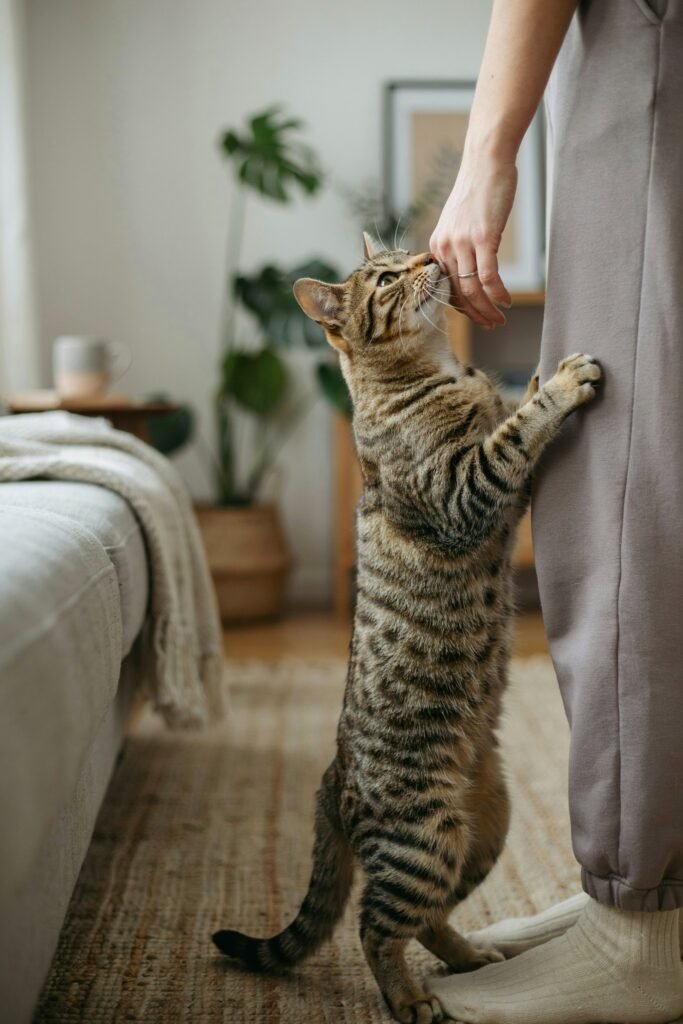
One of the sweetest ways my cat shows affection is by gently bumping her head against my hand or rubbing her face along my legs as I walk by.
It may seem like a simple habit, but it’s actually one of the strongest signs that your cat feels a deep connection with you.
Cats have scent glands on their cheeks, forehead, chin, and around the base of their tails.
When they rub against you or gently press their forehead into you, they’re leaving behind their scent.
This behavior is called bunting, and it’s your cat’s way of saying, “You’re part of my family.”
I always smile when my cat greets me this way because I know it’s more than just asking for attention.
She’s marking me as someone she trusts and feels safe with.
It’s a behavior cats usually reserve for the people, animals, and objects they consider important.
Some cats will weave between your legs while rubbing against you, while others prefer gentle head bumps as you’re sitting on the couch or working at your desk.
However they choose to do it, it’s their way of strengthening the bond they share with you.
If your cat does this often, enjoy the moment. A gentle stroke on their cheeks or behind their ears is usually all it takes to let them know the feeling is mutual.
What it means
Head-butting and rubbing are signs of trust, affection, and acceptance.
Your cat considers you part of their safe and familiar world.
6. They Knead You With Their Paws
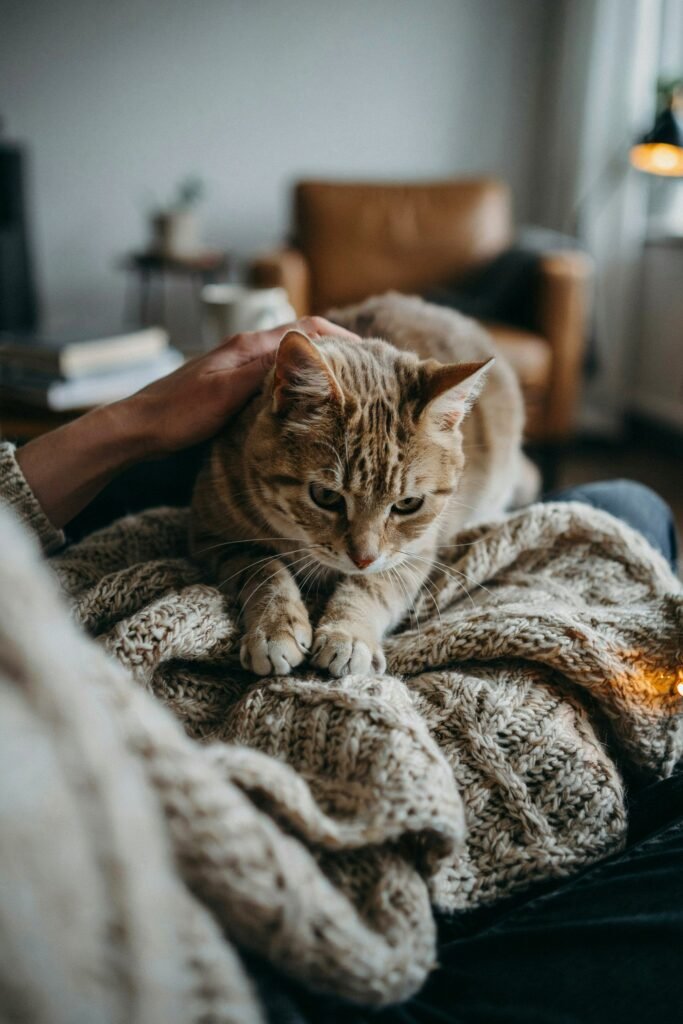
If your cat has ever climbed onto your lap and started rhythmically pushing their front paws into your legs or blanket, you’ve experienced a behavior many cat owners lovingly call “making biscuits.”
I’ll admit, those little paws can be surprisingly sharp, especially when tiny claws make an appearance.
Even so, I never have the heart to stop my cat because I know she’s doing it out of pure comfort and happiness.
Kneading begins when kittens are nursing.
They press their paws against their mother’s belly to help stimulate milk flow while feeding.
As they grow older, many cats continue this behavior whenever they feel relaxed, secure, and deeply content.
When your adult cat kneads your lap, they’re returning to one of the happiest memories from kittenhood.
In other words, your presence gives them that same feeling of safety and comfort they experienced with their mother.
Some cats purr while kneading, close their eyes, or even fall asleep shortly afterward.
These extra behaviors are wonderful signs that they’re completely at ease around you.
If the kneading becomes uncomfortable, simply place a soft blanket or cushion over your lap instead of pushing your cat away.
That way, both of you can enjoy the cuddle session.
What it means
Kneading is a comforting behavior that usually means your cat feels completely safe, relaxed, and emotionally attached to you.
7. They Bring You “Gifts”
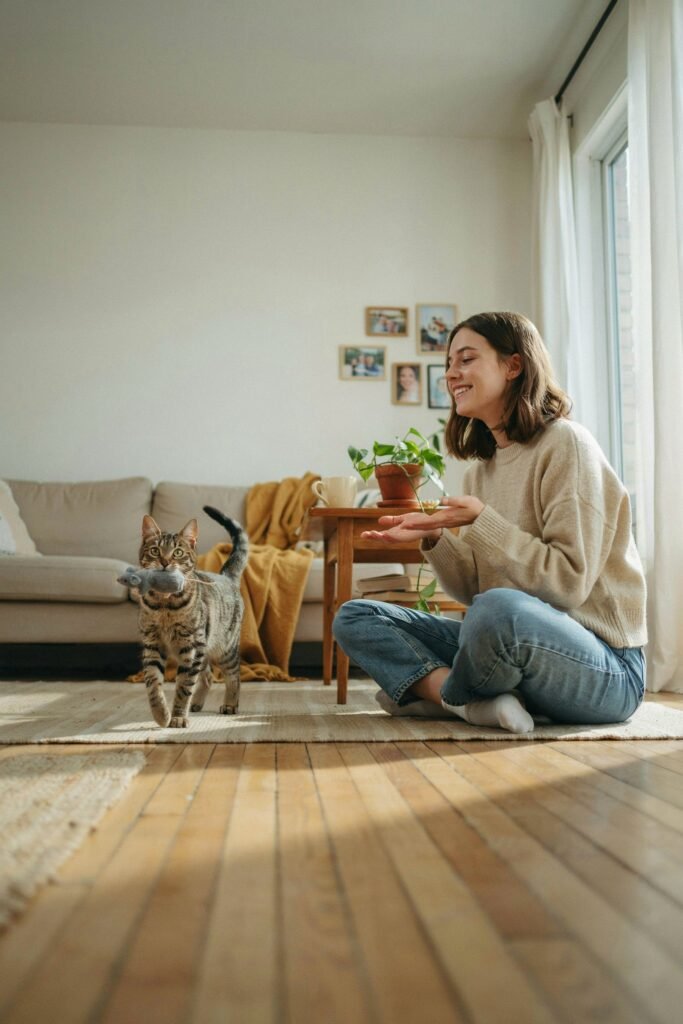
This might be the one sign of affection that leaves most cat owners feeling both touched and slightly horrified.
Whether it’s a toy mouse, a feather, a sock they stole from the laundry, or—if your cat spends time outdoors—a real mouse or bird, your cat may proudly place their “gift” right at your feet.
The first time my cat carried one of her favorite toy mice into the living room and dropped it beside me, I laughed because she looked incredibly proud of herself.
She sat there waiting, almost as if she expected me to congratulate her.
As strange as this behavior may seem, it often comes from a place of affection.
Cats are natural hunters. In the wild, experienced cats sometimes bring prey back to their family group or teach younger cats how to hunt.
While indoor cats don’t always have real prey to catch, many transfer that instinct to toys instead.
If your cat brings you their favorite toy, they’re often trying to share something valuable with you or invite you to play.
It’s a surprisingly thoughtful gesture in cat language.
Outdoor cats that bring home prey aren’t trying to upset you either.
They’re simply following instincts that have been part of feline behavior for thousands of years.
Instead of scolding your cat, calmly remove the gift if necessary and reward the positive intention with praise or a short play session.
What it means
Bringing you toys—or even less welcome surprises—is often your cat’s way of sharing something important with someone they trust.
It’s one of the clearest signs that they’ve formed a strong bond with you.
8. They Purr When They’re Around You
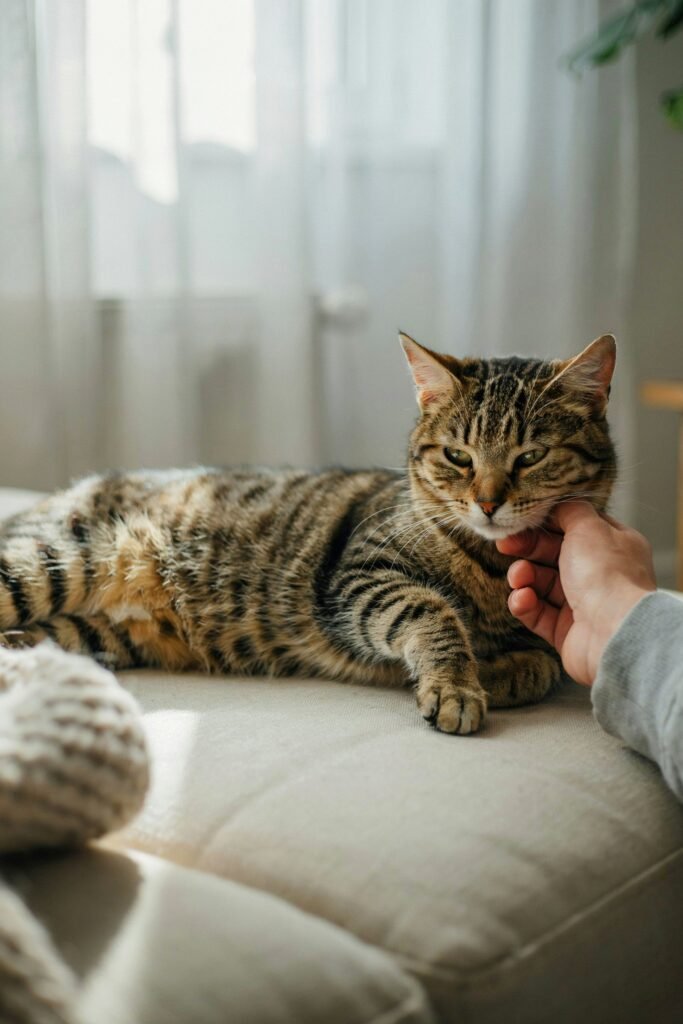
A cat’s purr is one of the most comforting sounds in the world. Whenever my cat curls up beside me and starts purring, I know she’s happy just being there.
Those quiet moments have become some of my favorite parts of the day because they remind me that companionship doesn’t always need words.
Many people assume that purring always means a cat is happy, and while that’s often true, cats can also purr when they’re feeling stressed or trying to comfort themselves.
The key is to look at the whole picture.
If your cat is lying comfortably beside you, blinking slowly, kneading a blanket, or asking for gentle pets while purring, it’s a strong sign they’re relaxed and enjoying your company.
They’re choosing to spend time with someone who makes them feel safe.
Some cats are naturally louder than others.
One cat might purr so loudly you can hear them across the room, while another barely makes a sound.
Both are perfectly normal. Every cat has its own way of expressing affection.
I’ve also noticed that my cat has different kinds of purrs.
There’s a soft, sleepy purr when she’s settling in for a nap and a louder one when she’s especially excited about cuddles.
Over time, you’ll probably learn to recognize your own cat’s little differences too.
What it means
A relaxed cat that purrs while spending time with you is usually expressing comfort, trust, and happiness.
9. They Show You Their Belly
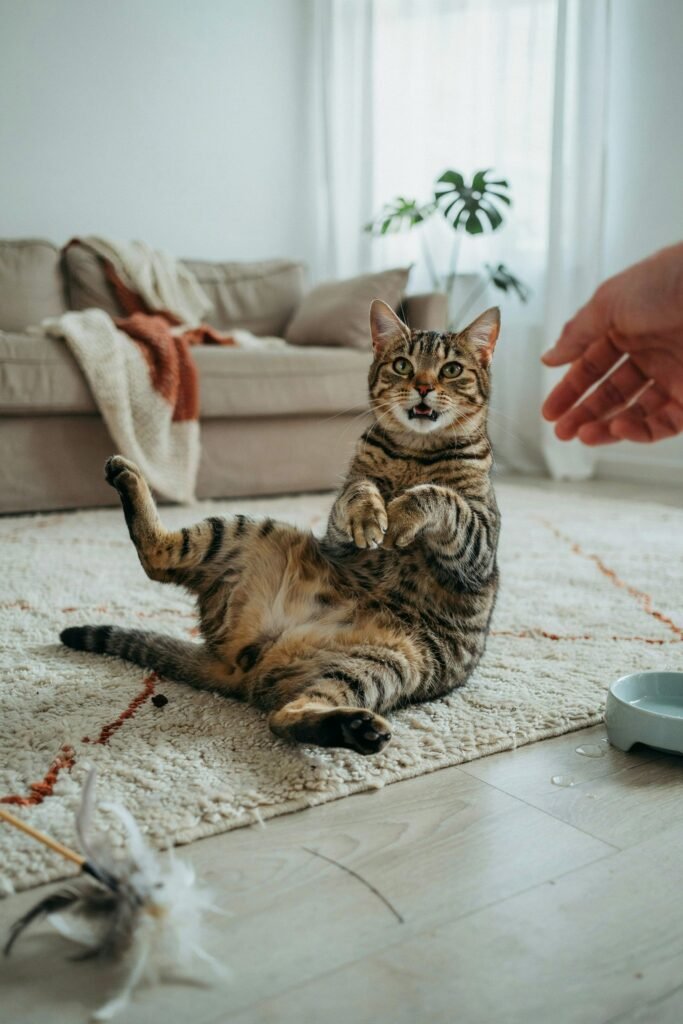
When a cat rolls onto their back and reveals their belly, it often catches people by surprise.
It’s one of the most vulnerable positions a cat can be in, so choosing to expose their stomach is usually a huge sign of trust.
My cat does this almost every evening when I sit down after work.
She’ll stretch out on the floor, roll onto her back, and look at me as if she’s saying, “I’m completely comfortable around you.”
The funny part is that showing the belly isn’t always an invitation for a belly rub.
Many cats enjoy having their chest, chin, or cheeks scratched, but their stomach remains a sensitive area.
If you immediately reach for a belly rub, don’t be surprised if your cat gently grabs your hand with all four paws or gives you a playful kick.
That doesn’t mean they’ve stopped loving you—it simply means you misunderstood the invitation.
Instead, appreciate the fact that your cat feels secure enough to let their guard down around you.
If they genuinely enjoy belly rubs, they’ll let you know through relaxed body language and by staying comfortable while you pet them.
Learning to respect your cat’s boundaries is one of the best ways to strengthen your relationship.
What it means
Showing their belly is a sign that your cat feels incredibly safe around you, even if they don’t necessarily want their tummy touched.
10. They Choose to Spend Time With You
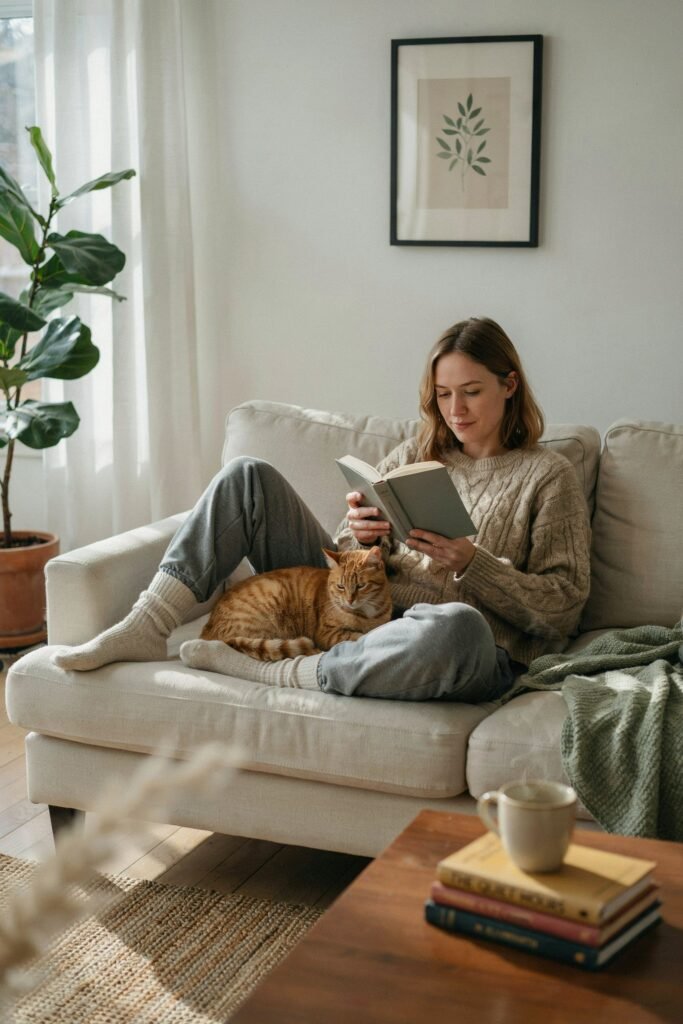
Perhaps the biggest sign that your cat is obsessed with you isn’t one dramatic behavior.
It’s the countless little choices they make every single day.
Cats are independent animals. They don’t usually spend time with people because they feel obligated to.
They spend time with people because they genuinely want to.
If your cat chooses your lap over an empty chair, sleeps beside your bed instead of another room, watches birds from the same window you’re standing at, or simply follows you from room to room without asking for anything, those small moments add up to something special.
I’ve learned that some of the happiest memories with my cat aren’t exciting at all.
They’re the quiet mornings when she’s sitting beside me while I drink coffee or the peaceful evenings when she’s sleeping nearby as I read a book.
Those ordinary routines have become our way of enjoying each other’s company.
Your cat doesn’t need to be climbing all over you every minute of the day to prove they love you.
Simply choosing to be near you, again and again, speaks volumes about the bond you’ve built together.
At the end of the day, love isn’t always about grand gestures.
Sometimes it’s just about showing up, and cats have a beautiful way of doing exactly that.
What it means
When your cat consistently chooses your company over being alone, it’s one of the strongest signs that you’ve become their favorite person.
What If Your Cat Doesn’t Show These Signs?
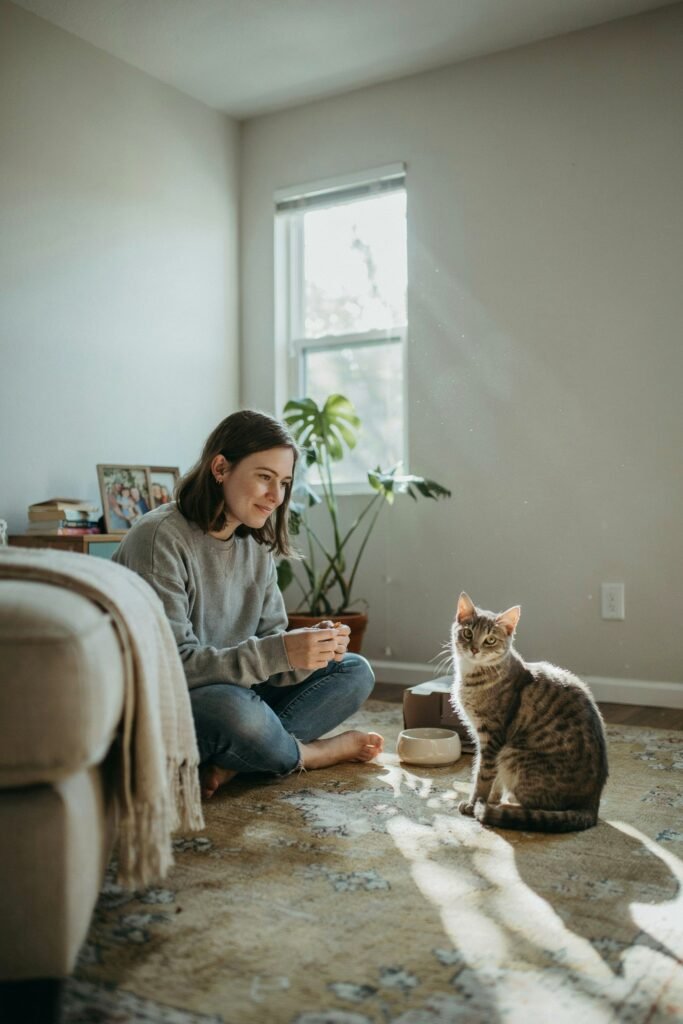
Every cat has a unique personality, so don’t worry if your furry friend doesn’t check every box on this list.
Some cats are naturally affectionate and love being held, while others prefer showing their love from a comfortable distance.
I’ve met cats that happily greet everyone who walks through the door and others that quietly observe from across the room before deciding whether to join in.
Age, breed, past experiences, and even early socialization can all influence how a cat expresses affection.
A rescued cat, for example, may need months before feeling completely comfortable around people, while a kitten raised in a loving home may become attached much more quickly.
The important thing is to focus on your cat’s own personality rather than comparing them to other pets online.
A shy cat that quietly sits beside you every evening may be showing just as much love as a cat that wants constant cuddles.
Building trust takes patience, consistency, and respect.
The more your cat learns that they can rely on you, the more comfortable they’ll become showing affection in their own way.
Simple Ways to Strengthen Your Bond With Your Cat
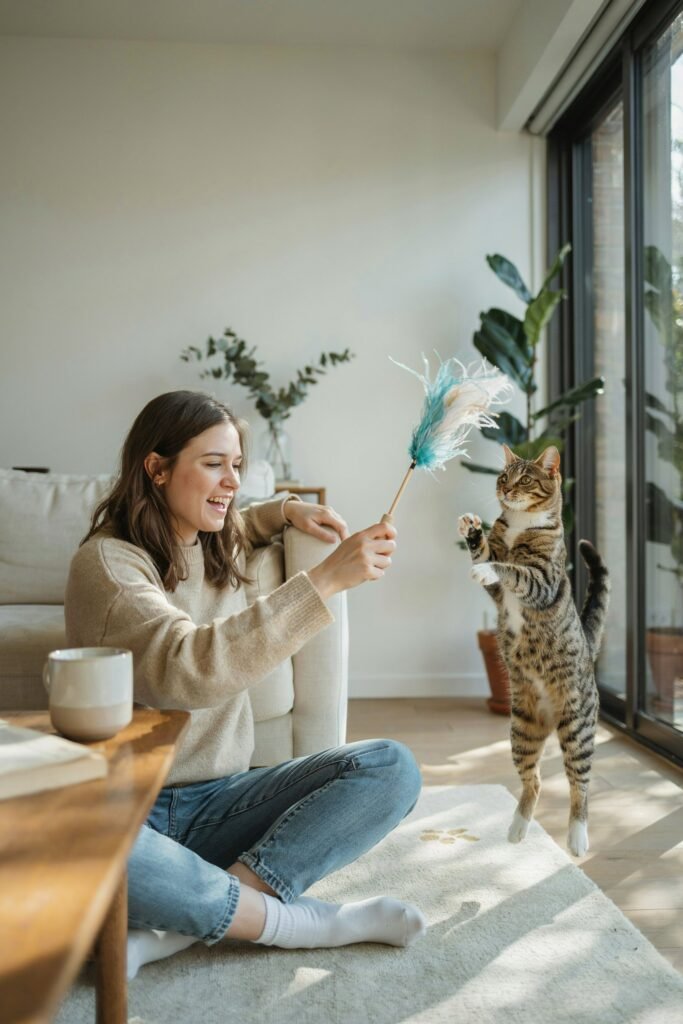
A strong relationship doesn’t happen overnight, but a few small habits can make a big difference over time.
Spend a few minutes playing with your cat every day using toys that encourage their natural hunting instincts.
Interactive play helps keep them mentally stimulated while creating positive experiences with you.
Stick to a consistent routine whenever possible.
Cats appreciate knowing when it’s time for meals, play, and quiet relaxation.
Predictability helps them feel secure.
Let your cat decide when they want affection.
Instead of forcing cuddles, allow them to approach you first.
Respecting their boundaries builds trust much faster than trying to rush the relationship.
Talk to your cat throughout the day.
They may not understand every word, but they quickly learn the sound of your voice and often find it comforting.
Most importantly, enjoy the little moments.
Some of the strongest bonds are built during ordinary days filled with quiet companionship rather than constant excitement.
Frequently Asked Questions
Can cats really become attached to one person?
Yes. Many cats develop a particularly strong bond with one person who consistently feeds them, plays with them, respects their boundaries, and makes them feel safe.
While they may enjoy the company of the whole family, they often have one favorite human.
Do cats miss their owners when they’re away?
Many do. Cats thrive on routine, and your absence can disrupt that routine.
Some cats may wait by the door, sleep in your favorite chair, or become extra affectionate when you return home.
Why does my cat follow me but doesn’t like being held?
Following you is often your cat’s way of wanting to be near you without necessarily wanting physical contact.
Many affectionate cats prefer companionship over being picked up or cuddled.
Is my cat obsessed with me or just hungry?
If your cat only approaches you at mealtimes, food may be their main motivation.
However, if they seek you out throughout the day for naps, playtime, slow blinks, or simply to sit nearby, it’s likely they’re enjoying your company—not just waiting for dinner.
Final Thoughts
Living with a cat has taught me that love isn’t always loud or obvious.
Sometimes it’s hidden in a slow blink across the room, a gentle head bump as you walk past, or a quiet nap beside you after a long day.
The more time you spend with your cat, the easier it becomes to recognize these small but meaningful gestures.
They may not say “I love you” the way people do, but they have countless ways of showing it through trust, comfort, and the simple choice to stay close.
If your cat does even a few of the things we’ve talked about, there’s a good chance you’ve earned something incredibly special—their complete trust.
And in the world of cats, that’s one of the greatest compliments you can receive.
So the next time your furry companion follows you into the kitchen, greets you at the door, or settles beside you for an afternoon nap, take a moment to appreciate it.
Those little everyday moments are often your cat’s way of saying, “You’re my favorite person.”