
Learn How To Make Cat Gravy – 4 Delicious Recipes for Your Feline
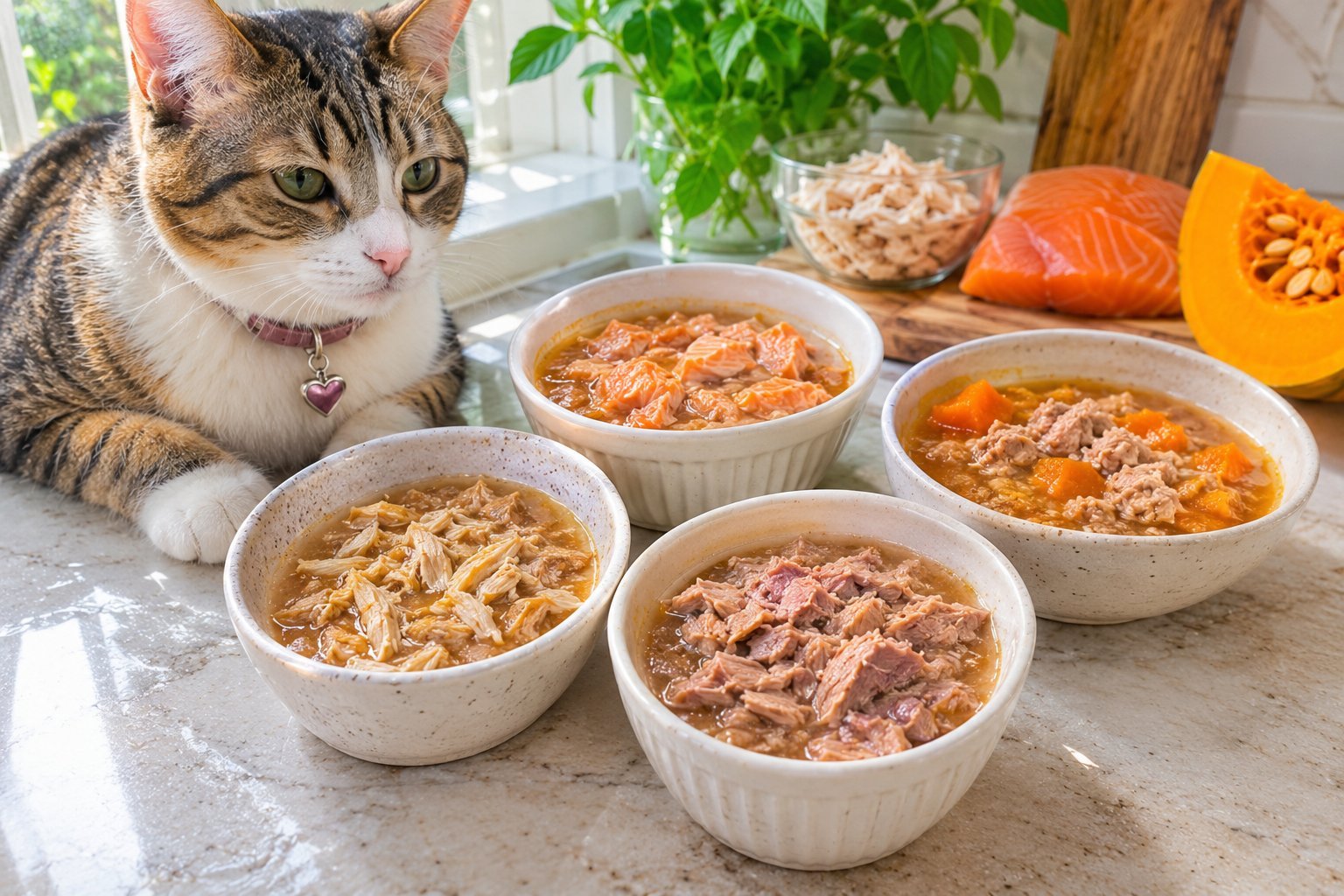
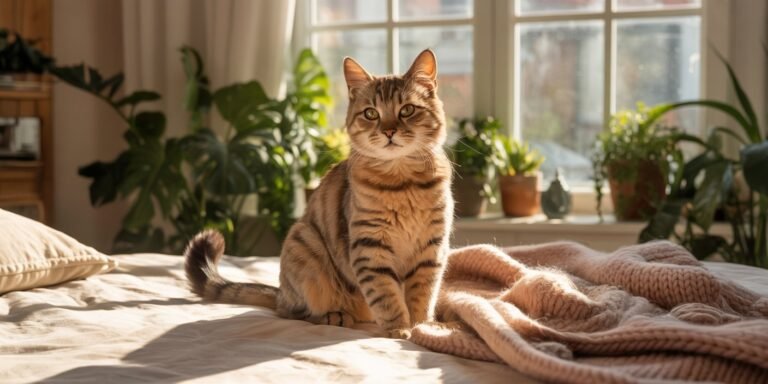
If your cat sometimes walks away from a perfectly good bowl of food, you are probably familiar with the frustration of trying to make mealtime more appealing.
Some cats are naturally picky eaters, while others become less interested in their regular food as they get older or become accustomed to certain flavors and textures.
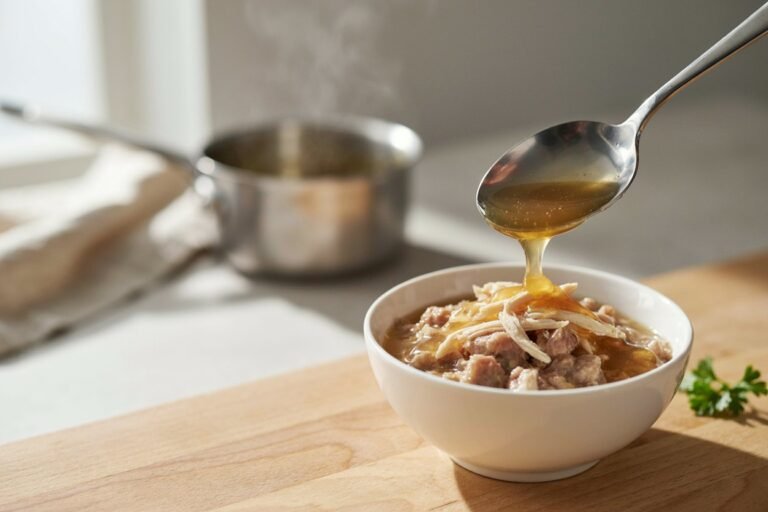
One simple way to make an ordinary meal more tempting is to add a little homemade cat gravy.
It gives food a softer texture, adds moisture, and releases the savory smell that many cats find appealing.
It is also an easy way to add variety without completely changing the food your cat already enjoys.

The best part is that you do not need complicated ingredients or expensive equipment.
You can prepare homemade cat gravy using plain cooked chicken, turkey, salmon, or a small amount of tuna, together with water or an appropriate broth.
In this guide, I am sharing four easy homemade cat gravy recipes, including a classic chicken gravy, tuna water gravy, salmon gravy, and turkey and pumpkin gravy.
I will also explain which ingredients are safe, how to get the right consistency, how much gravy to serve, and how to store leftovers properly.
If you want to explore more ways to add moisture and flavor to your cat’s meals, my Homemade Cat Gravy Chicken Broth Recipes and Homemade Cat Gravy Cubes are useful companion guides.
Disclaimer
This post may contain affiliate links. As an Amazon Associate, I earn from qualifying purchases at no additional cost to you. I only recommend cat products and kitchen tools that I genuinely believe make preparing homemade cat food easier and more enjoyable. The information in this article is for general informational purposes only. Always use cat safe ingredients and consult your veterinarian before making changes to your cat’s diet.
Shop on Amazon With 50% Discount
- Stainless Steel Cat Food Bowl (Set of 2)
Perfect for serving homemade gravy safely and hygienically
BUY NOW ON AMAZON - Small Non-Stick Saucepan
Ideal for gently cooking cat gravy without sticking
BUY NOW ON AMAZON - Mini Whisk or Silicone Spoon
Mix ingredients smoothly to create a silky gravy texture
BUY NOW ON AMAZON - Measuring Cups & Spoons Set
Accurate measurements for consistent recipes
BUY NOW ON AMAZON - Airtight Food Storage Container (Small)
Keeps homemade cat gravy fresh for multiple servings
BUY NOW ON AMAZON
Why You’ll Love Homemade Cat Gravy
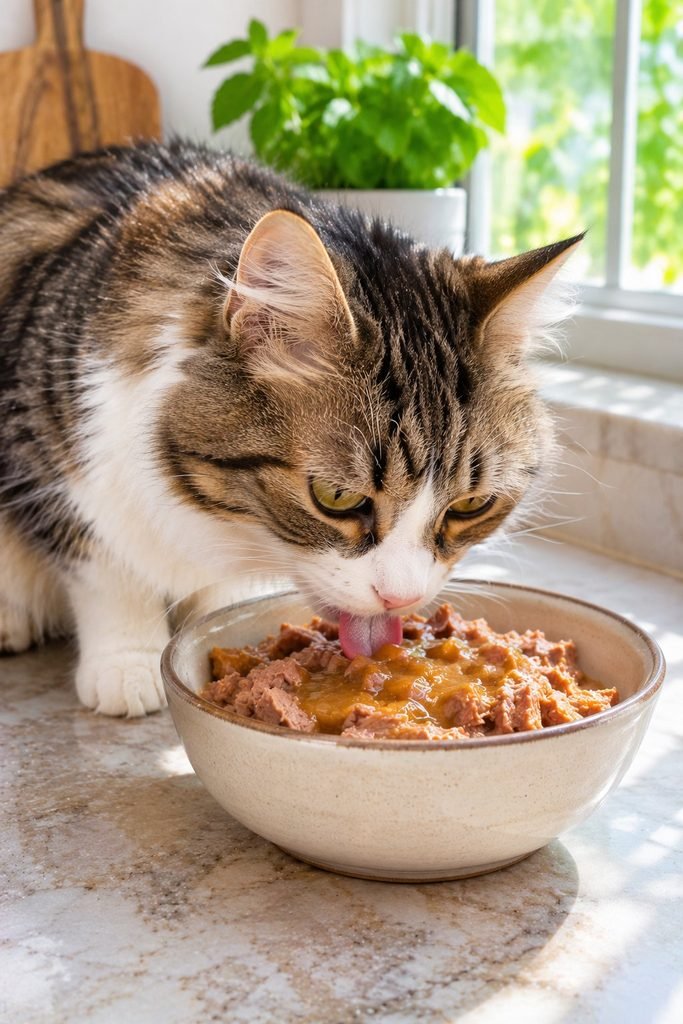
Homemade cat gravy is a simple addition to your cat’s regular feeding routine. You can prepare a small batch, adjust the consistency, and use different protein sources depending on what your cat enjoys.
Here are some reasons I like the idea of making it at home.
1. Simple, everyday ingredients
You do not need a long shopping list. Plain cooked chicken, turkey, salmon, and water are enough to create several different gravy options. You can also use a suitable low-sodium broth if its ingredients are safe for cats.
2. Makes regular food more appealing
Some cats are more interested in food when it has a stronger aroma and a softer texture. A little warm gravy mixed into their regular wet food or poured over kibble can make the meal more interesting.
3. Adds extra moisture
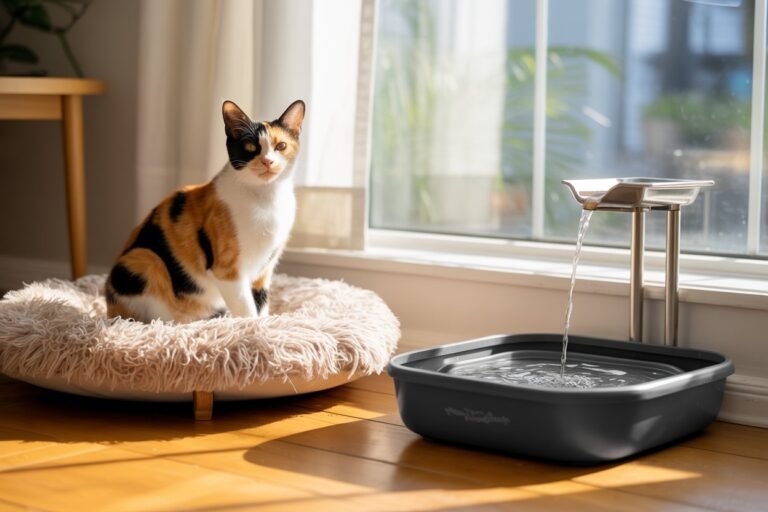
Cats do not always drink as much water as their owners would like. Adding a little water-based gravy to their regular food can provide additional moisture. However, gravy should never replace fresh drinking water.
4. Gives you control over the ingredients
One of the biggest advantages of making gravy at home is knowing exactly what goes into it. You can avoid unnecessary salt, onion, garlic, artificial flavorings, and other ingredients commonly found in human gravies.
5. Easy to prepare in small batches
You can make just enough for one or two meals instead of preparing a large quantity. This helps reduce waste and makes it easier to introduce new flavors gradually.
6. Convenient to freeze
You can divide cooled gravy into small portions using an ice cube tray. This makes serving easier because you only need to thaw the amount you plan to use.
Is Gravy Safe for Cats?
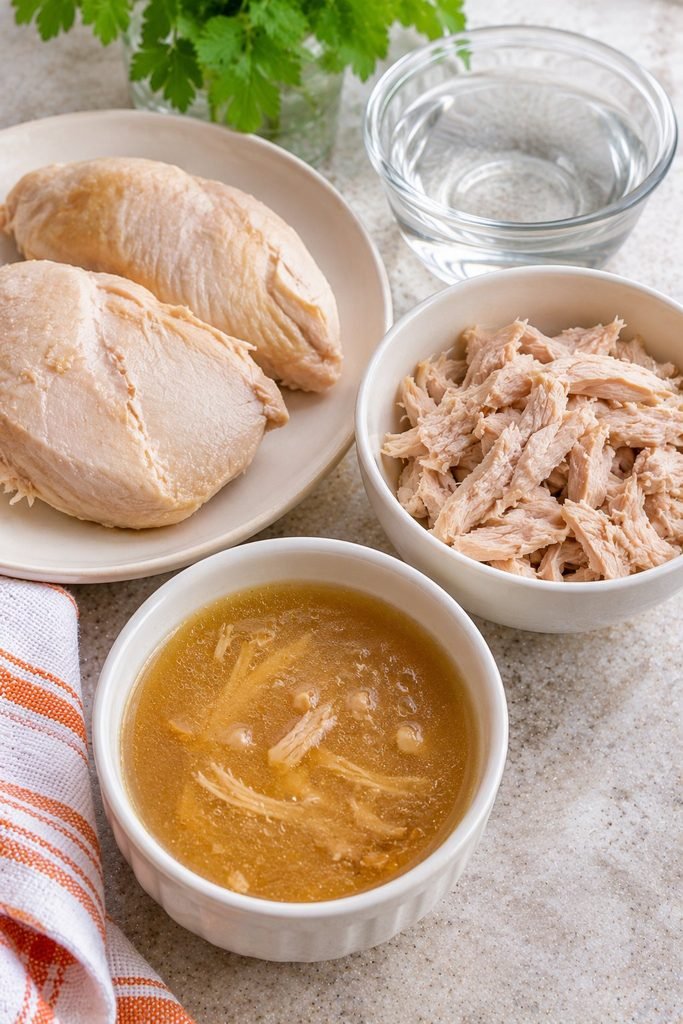
Yes, plain homemade gravy can be suitable as an occasional food topper for many healthy adult cats. The important thing is choosing appropriate ingredients and keeping the recipe simple.
Cats are obligate carnivores, meaning their nutritional needs are different from ours. They require specific nutrients, including taurine, that must come from an appropriately balanced diet.
A homemade gravy made from chicken, fish, or turkey is not nutritionally complete. Even if your cat loves it, it should not replace a complete and balanced commercial cat food or a veterinarian-formulated diet.
Before preparing any recipe, keep these safety rules in mind.
Avoid onion and garlic completely.
Onions, garlic, chives, leeks, and related ingredients are dangerous to cats. They can damage red blood cells and cause serious illness. This includes powdered and dried forms, so avoid seasoning mixes, stock cubes, soup bases, and broths containing these ingredients.
Do not add salt.
Cats have different nutritional requirements from people. There is no reason to add table salt to homemade gravy. Choose plain water or an appropriate low-sodium broth instead.
Remove every bone.
Fish and poultry must be completely boneless before blending or serving. Cooked bones can splinter and create choking or digestive problems.
Avoid butter, cream, and milk.
These ingredients are unnecessary for making cat gravy. Many cats also have difficulty digesting lactose, so dairy products can cause digestive upset.
Cook meat and fish thoroughly.
Use fully cooked chicken, turkey, and salmon. Avoid raw meat and raw fish because they can carry harmful bacteria or parasites.
Keep gravy as a topper.
The recipes below are complementary foods, not complete meals. Your cat should continue receiving nutritionally balanced food as their main diet.
Consider your cat’s medical history.
Cats with kidney disease, heart disease, urinary problems, food allergies, or other medical conditions may require specific nutritional restrictions. Ask your veterinarian before introducing homemade gravy if your cat follows a prescription diet.
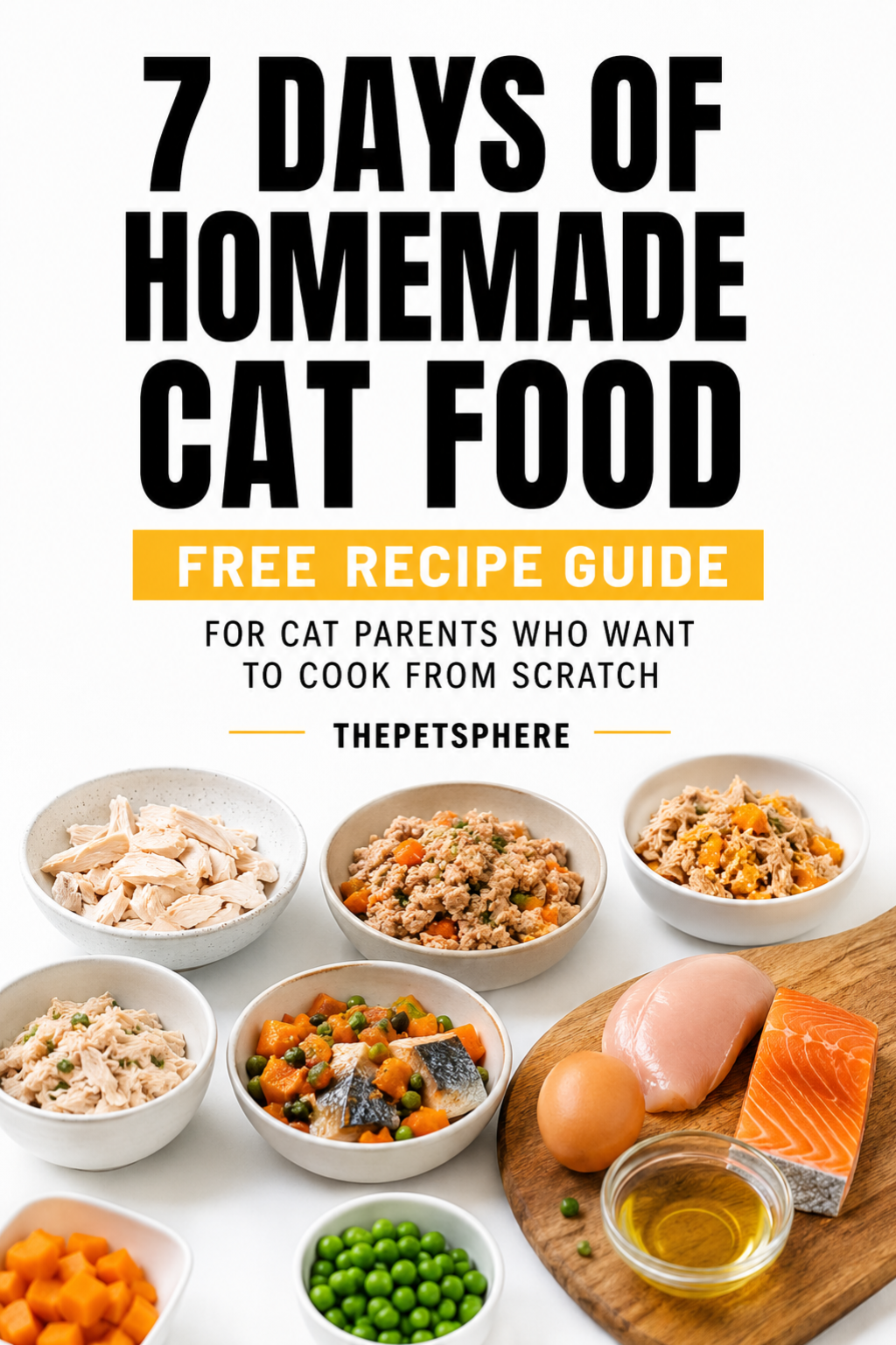
What You’ll Need to Make Homemade Cat Gravy
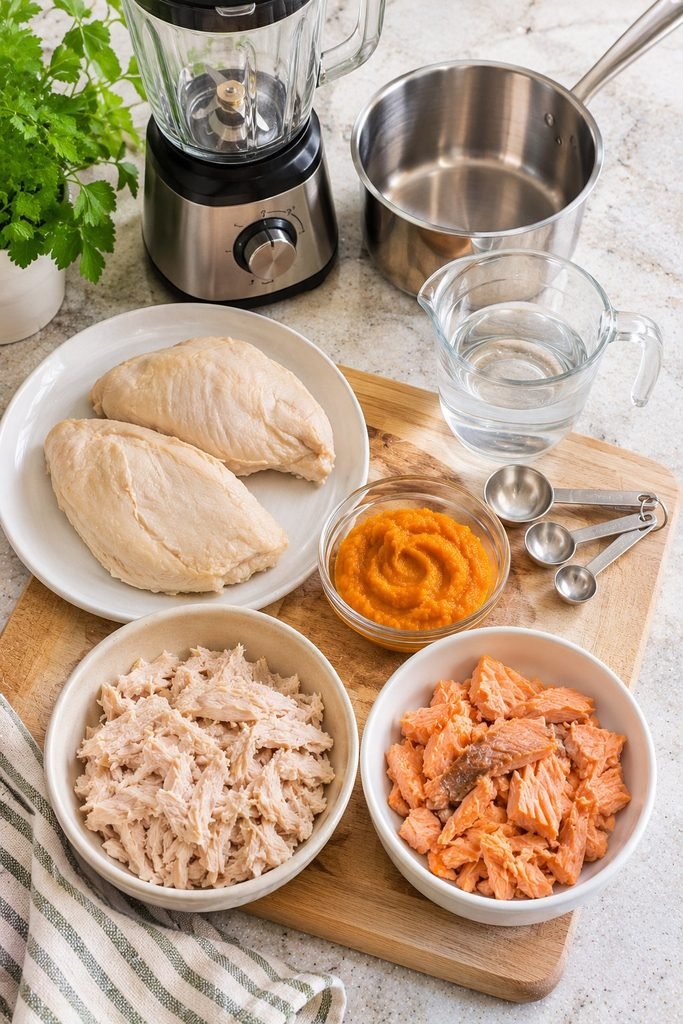
You probably already have most of the basic equipment in your kitchen. The ingredients will vary slightly depending on which recipe you choose, but the preparation method is straightforward.
Ingredients
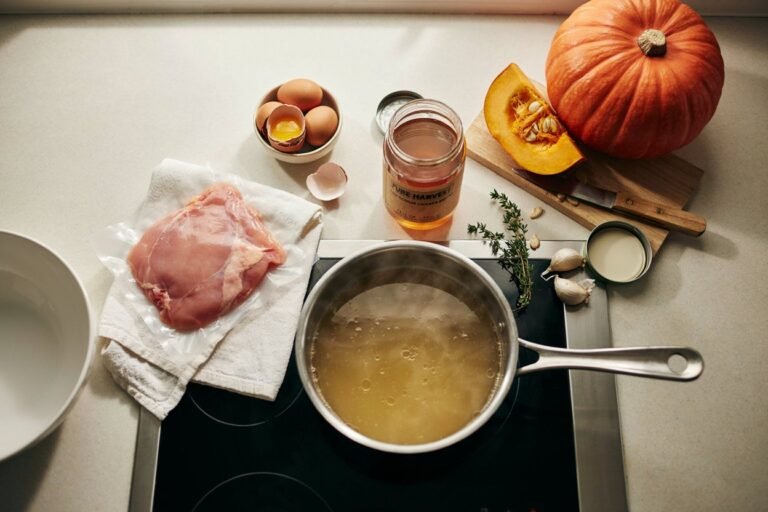
Plain cooked protein: Chicken breast, turkey, salmon, or a small amount of suitable tuna. Always remove bones, skin, and unwanted fatty pieces.
Water: Plain drinking water is an excellent starting point. It allows you to control the consistency without adding unnecessary ingredients.
Suitable low-sodium broth: Chicken or turkey broth can add flavor, provided it contains no onion, garlic, or other unsuitable seasonings.
Plain pumpkin puree: This is used in the turkey and pumpkin recipe. Choose 100% pumpkin without added sugar, spices, or pie-filling ingredients.
Optional thickener: A very small amount of cornstarch or arrowroot can help create a thicker texture. However, thickening is not necessary, and many cats prefer a thinner gravy.
Kitchen Equipment, Shop on Amazon With 50% Discount
- Small saucepan
- Measuring cups and spoons
- Blender or food processor
- Whisk
- Fork for shredding meat
- Airtight storage container
- Ice cube tray for freezing portions
A blender is particularly useful if your cat prefers smooth gravy without noticeable pieces of meat. If your cat likes texture, you can simply mash or shred the cooked protein and stir it into the liquid.
Recipe One: Classic Chicken Cat Gravy
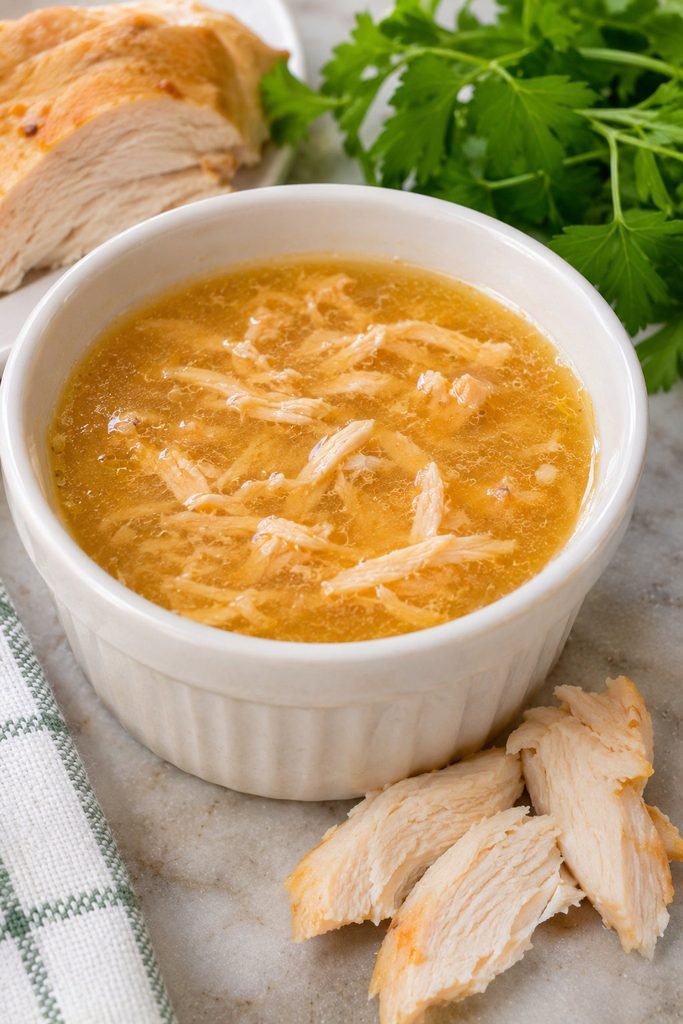
This is the first recipe I would suggest trying if you are making homemade cat gravy for the first time.
Chicken has a familiar savory smell, is easy to prepare, and works well with either a smooth or slightly chunky consistency. It is also a convenient way to use a small amount of plain cooked chicken.
The recipe makes approximately one cup of gravy, depending on how much liquid you use.
Ingredients
- 1 cup plain water or suitable low-sodium chicken broth with no onion or garlic
- 1/4 cup finely shredded cooked chicken breast
- 1 teaspoon cornstarch, optional
- 1 tablespoon cold water, if using cornstarch
Instructions
- Cook the chicken breast thoroughly without salt, oil, butter, garlic, onion, or seasoning.
- Allow it to cool slightly before shredding it into small pieces.
- Pour the water or suitable broth into a small saucepan.
- Warm it gently over medium-low heat. Avoid bringing it to a vigorous boil.
- If you want a slightly thicker consistency, mix the cornstarch with one tablespoon of cold water until smooth.
- Stir the mixture into the warm liquid and simmer briefly until it thickens.
- Add the shredded chicken and stir until everything is evenly combined.
- Transfer the mixture to a blender if you prefer a smoother texture.
- Allow the gravy to cool completely before checking the temperature and serving it lukewarm.
Tips for Making Chicken Gravy
The most important thing is not to make the gravy too thick. Your cat should be able to lap it up easily or enjoy it mixed into regular food.
If you are using a blender, add a little more water if the mixture becomes too thick. You can also leave a few small pieces of chicken for texture.
For a richer homemade liquid base, you can also explore my Bone Broth Recipe for Cats.
Recipe Two: Tuna Water Gravy
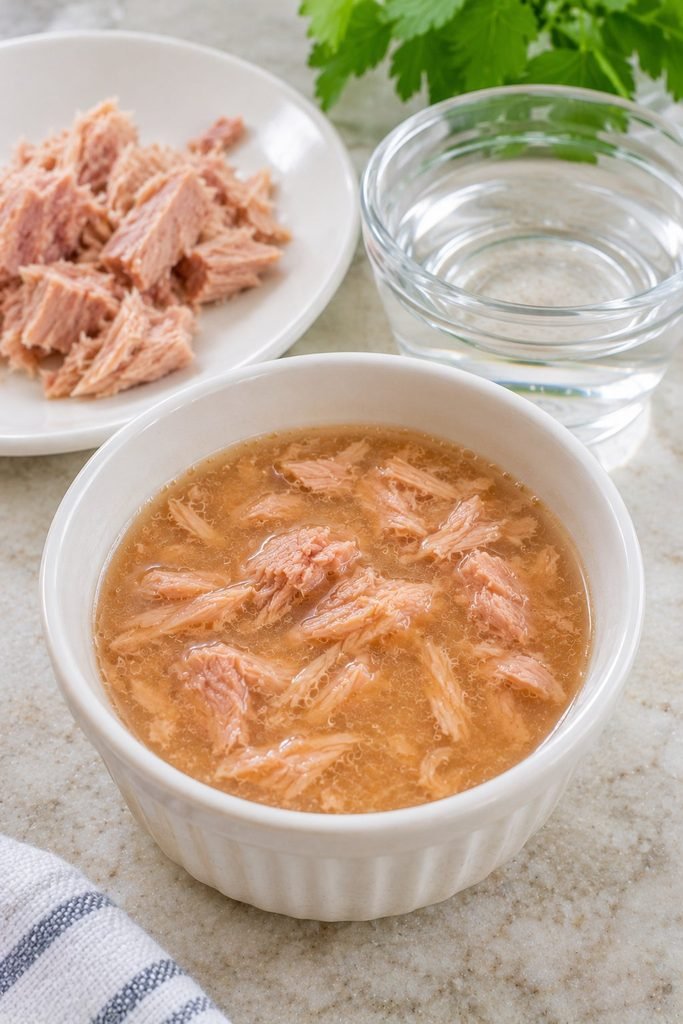
If your cat enjoys the smell of fish, tuna water gravy may be an appealing option.
Fish has a noticeable aroma, which can make this recipe particularly interesting to cats that enjoy seafood flavors. However, tuna should be used sparingly rather than becoming a regular ingredient in your cat’s diet.
For this recipe, choose plain tuna packed in water without added salt, flavorings, or seasonings.
Ingredients
- 1 small amount of plain tuna packed in water, without added salt
- 3/4 cup plain drinking water
Instructions
- Check the tuna label carefully to make sure it does not contain added salt, onion, garlic, or flavorings.
- Drain a small amount of the liquid into a saucepan.
- Add the plain drinking water.
- Warm the mixture gently for one or two minutes.
- Add approximately one tablespoon of flaked tuna.
- Stir until the tuna is distributed throughout the liquid.
- Blend the mixture if your cat prefers smooth gravy.
- Allow it to cool before serving a small portion.
Important Tuna Safety Tips
Although many cats enjoy tuna, it should not become their main source of protein.
Human canned tuna is not formulated to meet a cat’s complete nutritional needs. Depending on the species and product, tuna can also contribute to excessive mercury exposure when fed frequently.
I recommend keeping this recipe occasional and using a very small amount. Plain chicken or turkey gravy is a better everyday alternative when you want to prepare a simple meat-based topper.
Also, do not assume that every can of tuna is suitable. Some products contain salt, oil, seasonings, or other ingredients that you should avoid.
Shop on Amazon With 50% Discount
1. Stainless Steel Saucepan – I use this to gently cook fish, chicken, or other cat-safe ingredients when preparing homemade gravy. It is durable and easy to clean.
2. Digital Kitchen Scale – I use this to measure ingredients accurately so each gravy recipe has consistent portions.
3. Silicone Whisk – I use this to blend the ingredients smoothly and break up small lumps when preparing homemade gravy for cats.
Recipe Three: Salmon Gravy
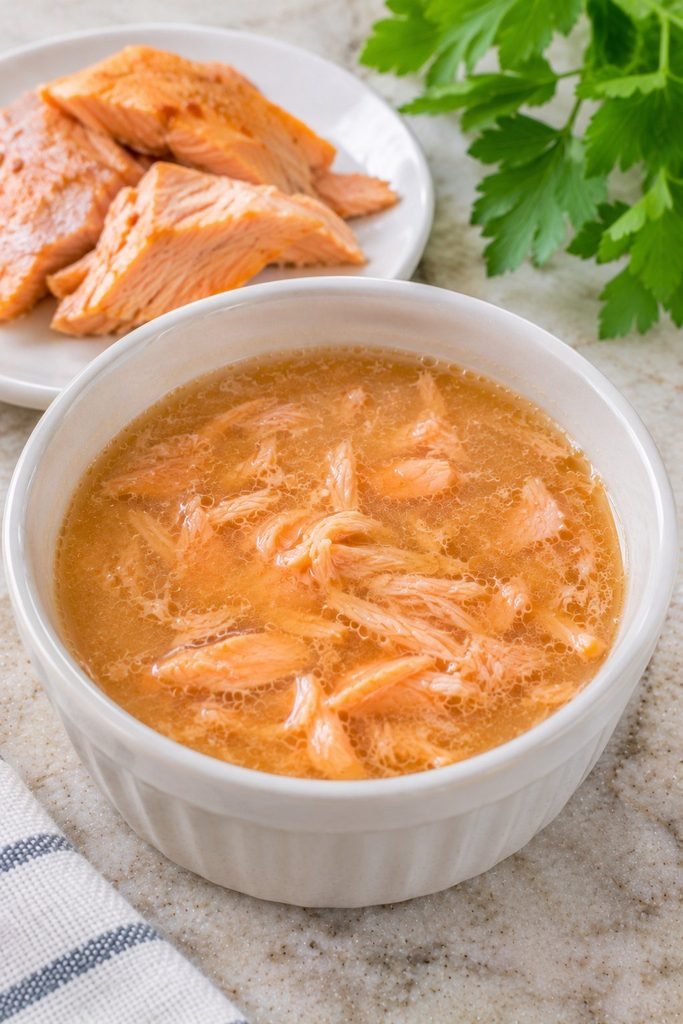
Salmon gravy is another option for cats that enjoy fish-based flavors.
When prepared properly, cooked salmon can be used as an occasional treat ingredient. It provides a different taste and texture from chicken or turkey, making it useful when you want to offer some variety.
The key is to use plain, fully cooked salmon without bones, skin, seasoning, or added oils.
Ingredients
- 1/4 cup cooked, plain, boneless salmon
- 1 cup plain drinking water or suitable low-sodium broth without onion or garlic
- 1 teaspoon cornstarch or arrowroot, optional
- 1 tablespoon cold water, if using a thickener
Instructions
- Cook the salmon thoroughly using a method that does not require seasoning or added sauces.
- Check the fish carefully and remove every bone.
- Allow the salmon to cool slightly.
- Warm the water or suitable broth in a small saucepan.
- If you want thicker gravy, mix the cornstarch or arrowroot with cold water until smooth.
- Stir the thickener into the warm liquid and simmer briefly.
- Add the cooked salmon.
- Mash with a fork or blend until the gravy reaches your preferred consistency.
- Allow the gravy to cool completely before serving.
Tips for Making Salmon Gravy
Salmon can have a stronger smell than chicken, so you may want to begin with a smaller portion when introducing it to your cat.
Do not use raw salmon, smoked salmon, salted salmon, or salmon prepared with sauces and spices.
I also recommend keeping fish-based recipes occasional and rotating them with plain poultry-based options rather than feeding fish gravy every day.
Recipe Four: Turkey and Pumpkin Gravy
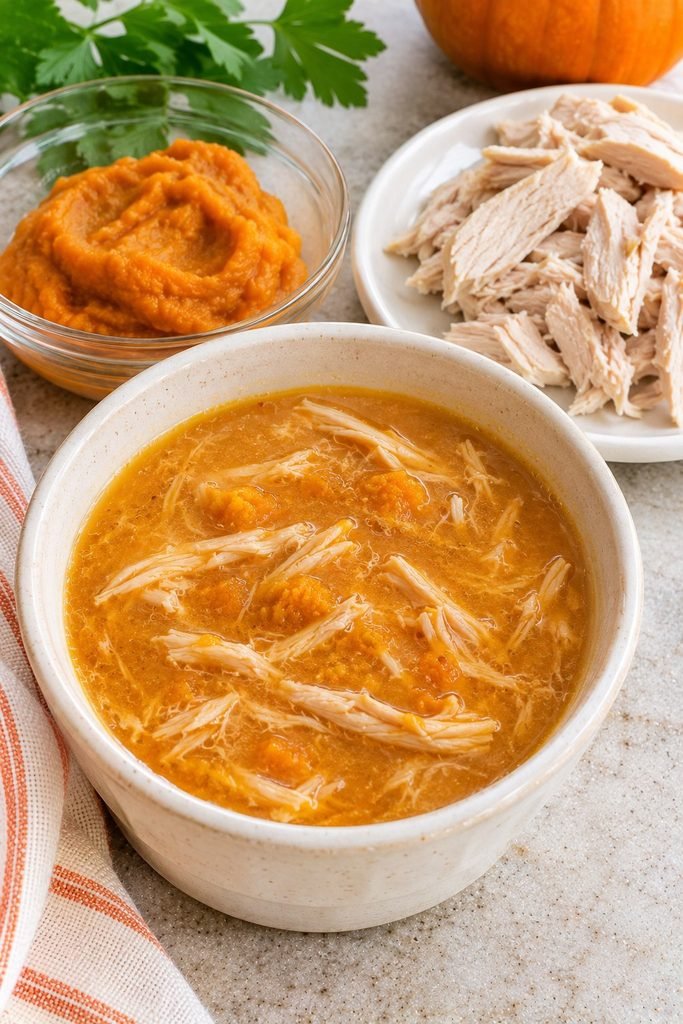
If you want something slightly different from the traditional chicken and fish recipes, this turkey and pumpkin combination is worth considering.
Turkey provides the protein, while plain pumpkin puree adds a soft texture and a little dietary fiber.
The pumpkin should only be used in a small amount. Cats are carnivores, so it should complement the recipe rather than become its main ingredient.
Ingredients
- 1 cup plain water or suitable low-sodium turkey or chicken broth without onion or garlic
- 1/4 cup finely shredded cooked turkey
- 2 tablespoons plain pumpkin puree, 100% pumpkin
Instructions
- Cook the turkey thoroughly without salt, oil, butter, onion, garlic, or seasoning.
- Remove all bones, skin, and excess fat.
- Shred the turkey into small pieces.
- Pour the water or suitable broth into a small saucepan.
- Warm gently over medium-low heat.
- Add the pumpkin puree and stir until evenly combined.
- Add the shredded turkey.
- Continue stirring for one or two minutes until everything is warmed through.
- Blend if you want a completely smooth gravy.
- Allow the mixture to cool before serving a small portion.
Choosing the Right Pumpkin
Always use plain pumpkin puree rather than pumpkin pie filling.
Pie filling can contain sugar, spices, and other ingredients that are unnecessary for cats.
For more pumpkin-based ideas, see my Easy Homemade Cat Treats with Pumpkin.
Getting the Right Cat Gravy Consistency
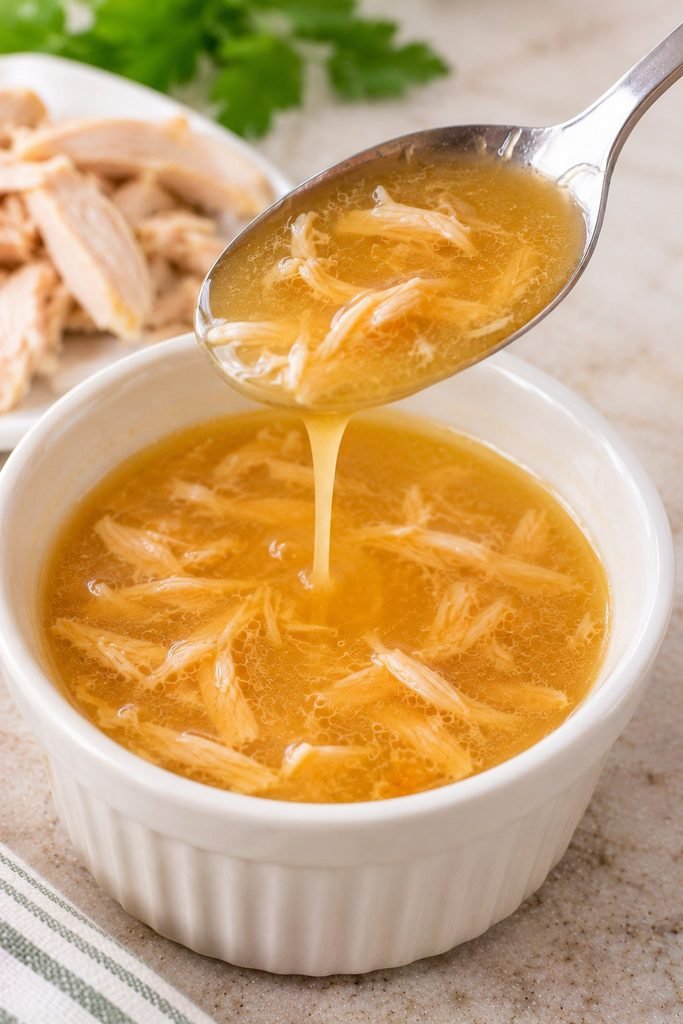
Consistency is one of the most important parts of making homemade cat gravy.
Some cats enjoy a thin liquid that they can easily lap up, while others prefer a thicker texture that sticks to their regular food.
There is no single consistency that every cat will enjoy. The best approach is to start with a thinner mixture and adjust it gradually.
If Your Gravy Is Too Thin
If the gravy looks more like flavored water than a sauce, you can:
- Add a little more finely shredded cooked chicken or turkey.
- Blend the protein with the liquid.
- Simmer the mixture briefly to reduce some of the excess water.
- Use a very small amount of properly diluted cornstarch if necessary.
If Your Gravy Is Too Thick
If the gravy looks more like mashed food than a pourable sauce:
- Add one tablespoon of warm water at a time.
- Stir or blend after each addition.
- Continue until it pours easily.
- Avoid adding milk, cream, or butter to loosen the mixture.
How Warm Should Cat Gravy Be?
Serve the gravy at room temperature or slightly warm, never hot.
If you have refrigerated or frozen the gravy, warm it gently and stir thoroughly before serving. Check the temperature with a clean finger or spoon before giving it to your cat.
Hot spots can remain in food that has been warmed unevenly, particularly in a microwave.
How to Serve Homemade Cat Gravy
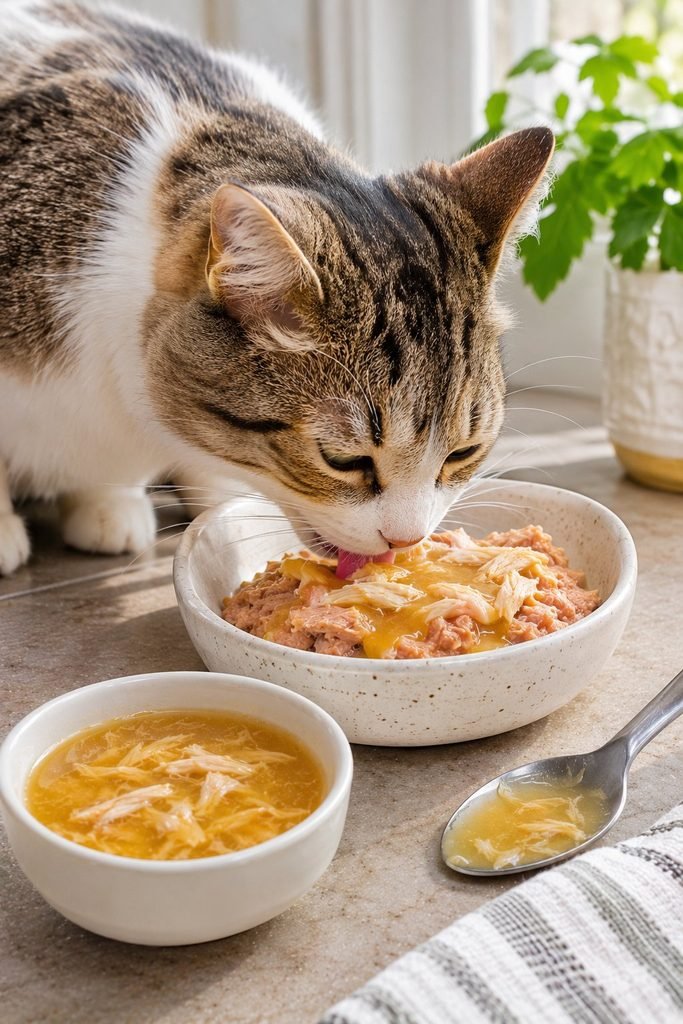
Once your gravy is ready, there are several simple ways to introduce it into your cat’s feeding routine.
I recommend starting with a small amount rather than immediately pouring a large serving over your cat’s food.
1. Pour It Over Wet Cat Food
This is one of the easiest ways to use homemade gravy.
Add a small spoonful over your cat’s usual wet food and mix gently. The liquid can make the food softer and help distribute the aroma throughout the meal.
2. Mix It With Dry Kibble
If your cat normally eats dry food, a little gravy can soften the kibble and make it more appealing.
Start with a small amount and avoid leaving moistened kibble sitting out for extended periods. Discard uneaten food promptly according to safe food-handling practices.
3. Serve It as a Small Lickable Treat
You can serve a little smooth gravy in a separate shallow bowl.
This works particularly well when the mixture has been blended until there are no noticeable chunks.
For another texture option, explore my Homemade Lickable Cat Treats.
4. Use It as a Food Topper
You do not have to use gravy at every meal.
A small amount occasionally can add variety without completely changing your cat’s usual feeding routine.
5. Offer It in a Separate Small Bowl
Some cats prefer to lick gravy separately instead of having it mixed into their food.
You can offer a small amount in a clean, shallow dish and see which presentation your cat prefers.
Always provide fresh drinking water separately.
Common Mistakes to Avoid When Making Cat Gravy
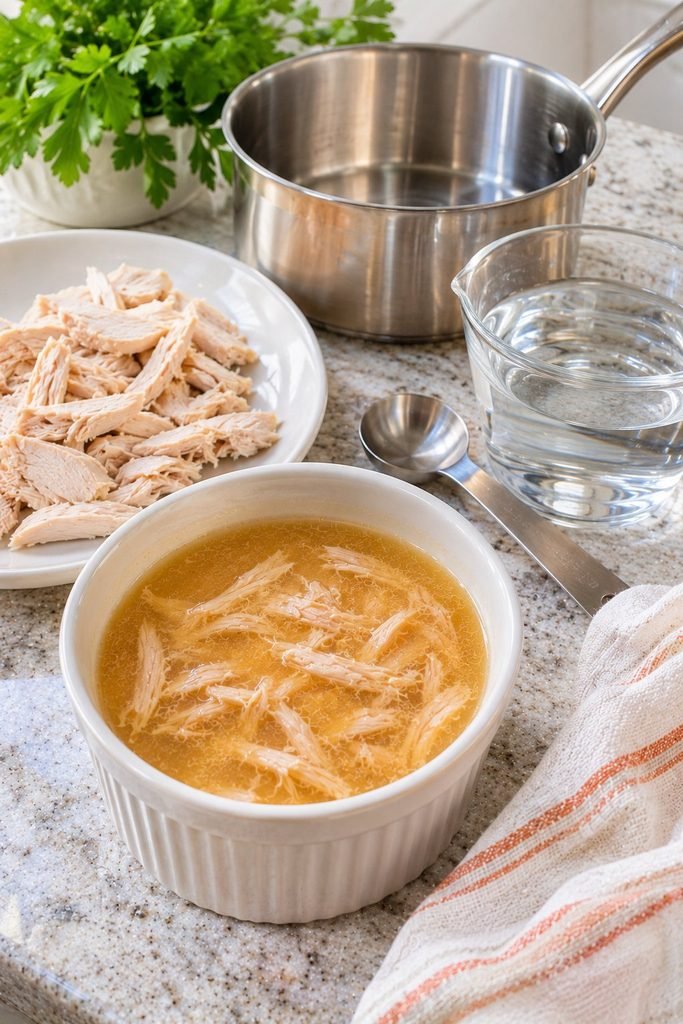
Homemade cat gravy is relatively simple, but a few common mistakes can make it unsuitable for your pet.
Here are the things I would pay particular attention to.
1. Using regular human gravy
Human gravy often contains salt, onion, garlic, butter, stock cubes, and seasonings. These ingredients make it unsuitable for cats.
2. Adding garlic or onion powder
Powdered ingredients are not safer than fresh ones. Avoid all forms of onion, garlic, chives, and leeks.
3. Leaving bones in the meat or fish
Always inspect the cooked protein carefully. Never blend bones into homemade gravy.
4. Adding too much thickener
Cats do not need thick gravy. You can usually achieve a suitable consistency by adjusting the water and protein.
5. Serving it straight from the stove
Allow the gravy to cool before serving. Food that feels warm to your hand can still be too hot for your cat’s mouth.
6. Making tuna a regular ingredient
Tuna is not a complete cat food and should not become a daily protein source in these recipes.
7. Giving too much at once
Start with a small amount and observe how your cat responds. A sudden change in food can cause digestive upset in some cats.
8. Replacing balanced cat food
Homemade gravy does not provide all the nutrients your cat needs. Keep it as an occasional addition to a complete and balanced diet.
How Much Gravy Can a Cat Have?
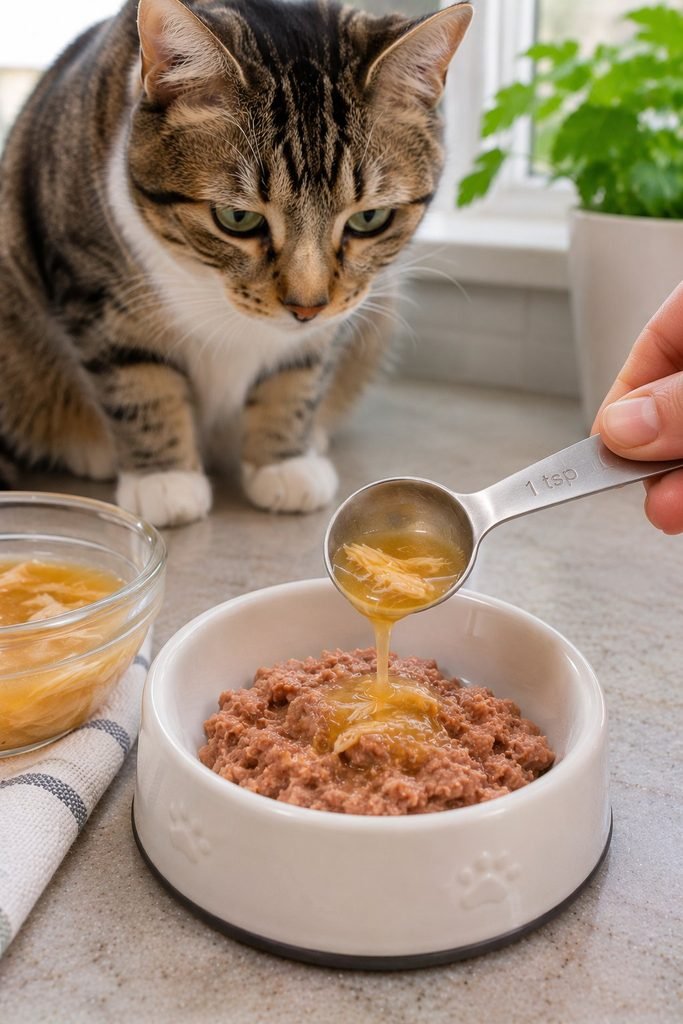
Portion size depends on your cat’s weight, age, activity level, health, and overall daily calorie requirements.
For a healthy adult cat, you can start by offering approximately one teaspoon of plain gravy as a topper and see how your cat responds.
If your cat tolerates it well, you may be able to offer a little more, depending on the ingredients and calorie content.
However, avoid treating one or two tablespoons as a universal serving recommendation. Even small additions count toward your cat’s daily food intake.
The World Small Animal Veterinary Association recommends that treats make up no more than 10% of a cat’s daily calories. Keeping extra foods within this limit helps prevent them from displacing nutritionally complete meals.
If your cat is overweight, has a sensitive stomach, or follows a veterinary-prescribed diet, ask your veterinarian about an appropriate amount.
How to Store Homemade Cat Gravy
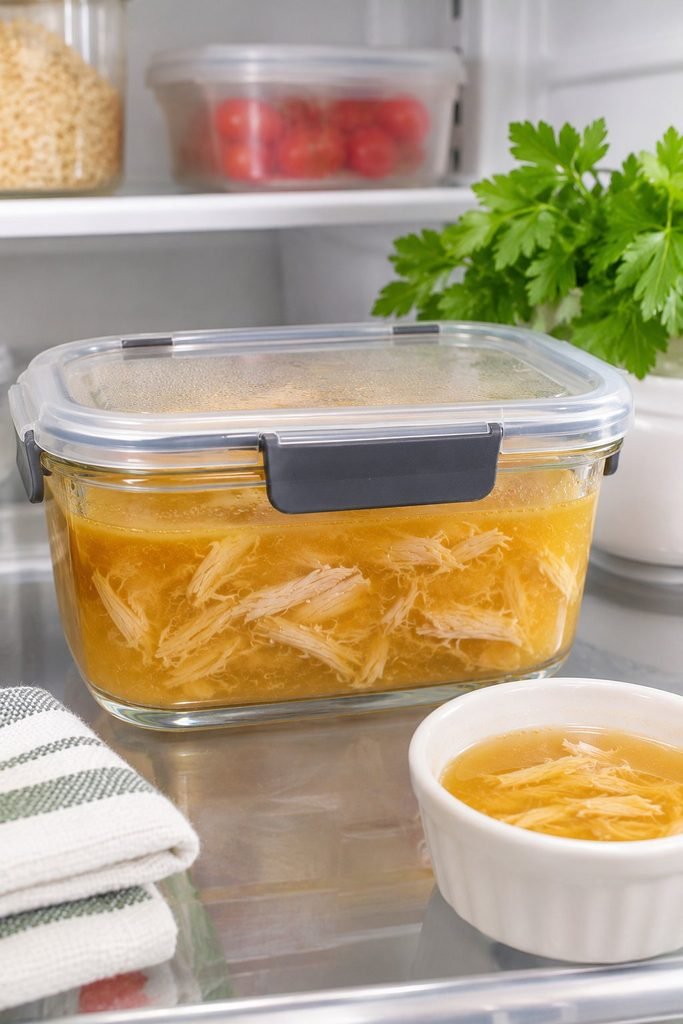
Proper storage is important because homemade gravy contains cooked meat or fish and does not have the preservatives found in some commercial products.
I recommend making small batches so that you can use them while they are fresh.
Refrigerating Cat Gravy
Follow these storage steps:
- Allow the gravy to cool promptly.
- Transfer it into a clean, airtight container.
- Refrigerate it within two hours of preparation.
- Keep the container covered and separate from raw meat.
- Use the gravy within two to three days.
- Discard any portion that smells unusual or shows signs of spoilage.
Do not repeatedly leave the same container on the counter and return it to the refrigerator.
It is better to remove only the amount you need for each serving.
Freezing Cat Gravy
Freezing is useful if you want to prepare a larger batch and divide it into convenient portions.
Here is how I would do it:
- Prepare the gravy and allow it to cool.
- Pour it into a clean ice cube tray.
- Divide it into small portions.
- Place the tray in the freezer until the cubes are solid.
- Transfer the frozen portions into a labeled, freezer-safe container or bag.
- Write the preparation date on the container.
- Use within approximately two months for best quality.
Always thaw frozen gravy in the refrigerator rather than leaving it on the kitchen counter.
Can You Freeze Cat Gravy?
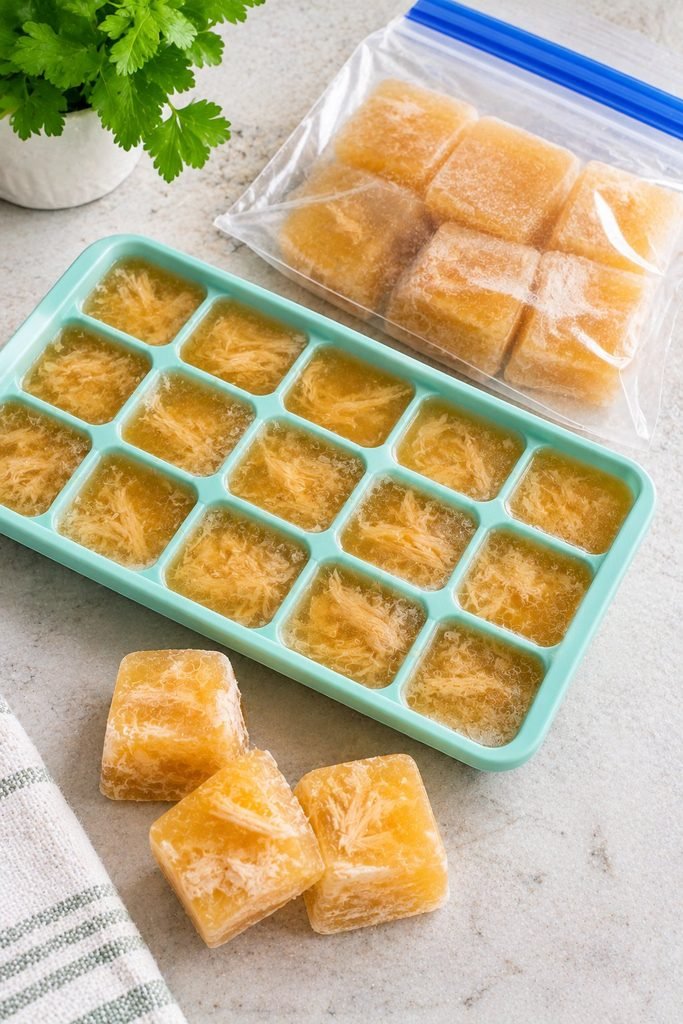
Yes. Freezing is one of the easiest ways to make homemade gravy more convenient.
Instead of preparing a fresh batch every time your cat wants a little food topper, you can freeze small portions and thaw only what you need.
How to Freeze Cat Gravy in Ice Cube Trays
Step 1: Prepare the gravy.
Choose one of the four recipes and prepare it without unsafe seasonings or unnecessary ingredients.
Step 2: Cool it completely.
Do not put hot gravy directly into your freezer containers.
Step 3: Portion it.
Pour the mixture into clean ice cube trays. Smaller portions make it easier to control how much you serve.
Step 4: Freeze until solid.
Place the tray in the freezer for approximately three to four hours, or until the portions are frozen.
Step 5: Transfer to freezer storage.
Remove the cubes and place them in a labeled freezer-safe bag or container.
Step 6: Thaw when needed.
Move one portion into the refrigerator and allow it to thaw safely.
Step 7: Warm and serve.
If desired, warm it gently and check the temperature before serving.
Never refreeze gravy that has already been thawed and served. Discard any leftover portion that has been sitting in your cat’s bowl.
For more detailed portioning ideas, see my Homemade Cat Gravy Cubes.
More Homemade Cat Ideas
If you enjoy preparing simple homemade recipes for your feline, here are a few more guides to explore:
- Homemade Cat Gravy Chicken Broth Recipes
- Homemade Cat Gravy Cubes
- Bone Broth Recipe for Cats
- Homemade Lickable Cat Treats
- Easy Homemade Cat Treats with Pumpkin
Frequently Asked Questions About Homemade Cat Gravy
Can cats eat homemade gravy?
Yes, many healthy adult cats can enjoy small amounts of plain homemade gravy as an occasional food topper. It should be made without onion, garlic, excessive sodium, or unsuitable seasonings. It must not replace complete and balanced cat food.
Can I use store-bought chicken broth for cat gravy?
You can use a suitable low-sodium broth if the ingredient list contains no onion, garlic, chives, leeks, or other unsuitable ingredients. However, plain water is often the simplest option because you have complete control over what goes into the recipe.
Do I need cornstarch to make cat gravy?
No. Cornstarch is optional. You can blend cooked chicken, turkey, or salmon with water to create a naturally thicker mixture. A thin gravy is perfectly suitable for many cats.
Can cats drink chicken broth?
Cats can have small amounts of appropriately prepared, plain chicken broth. Make sure it contains no onion, garlic, added salt, or seasoning. It should be an occasional addition rather than a replacement for drinking water.
Is tuna water safe for cats?
A small amount of plain water from tuna packed in water may be offered occasionally, provided it has no added salt or flavorings. However, tuna should not become a regular dietary staple. Plain chicken or turkey gravy is a more practical option for frequent use.
Can kittens have homemade cat gravy?
Kittens have specific nutritional requirements because they are still growing. Their main diet should be a complete and balanced kitten food. Speak with your veterinarian before introducing homemade gravy or other additional foods.
Can I make cat gravy without meat?
You can make a simple water-based liquid to moisten your cat’s food, but it will not provide the protein or nutrients found in meat-based gravy. For a flavored topper, plain cooked chicken or turkey is a more suitable starting point.
Can cats eat pumpkin gravy?
A small amount of plain pumpkin puree can be included in a simple homemade gravy for many healthy cats. Use 100% pumpkin without sugar, spices, or pie-filling ingredients. Introduce it gradually and ask your veterinarian if your cat has digestive or medical problems.
How long does homemade cat gravy last?
For this recipe collection, refrigerate homemade gravy in an airtight container and use it within two to three days. You can also freeze small portions for approximately two months for best quality.
Can I give my cat gravy every day?
It is better to keep homemade gravy as a small occasional addition unless your veterinarian has approved a particular recipe and feeding routine. Remember that additional foods should not displace your cat’s complete and balanced diet.
What should I do if my cat refuses homemade gravy?
Do not force your cat to eat it. Try offering a smaller amount mixed into familiar food, or try a different plain protein. Some cats simply prefer their food without additional liquids.
If your cat suddenly stops eating or consistently refuses food, do not assume it is just pickiness. Contact your veterinarian promptly.
Recipe Card: Classic Chicken Cat Gravy
Recipe Name: Classic Chicken Cat Gravy
Description: A simple homemade chicken gravy made with plain cooked chicken and water or suitable low-sodium broth. Perfect as an occasional topper for your cat’s regular food.
Servings: Approximately 1 cup
Preparation Time: 5 minutes
Cooking Time: 5 minutes
Total Time: 10 minutes
Estimated Cost: Budget friendly
Course: Cat food topper
Cuisine: Homemade pet food
Keywords: cat gravy, how to make cat gravy, homemade cat gravy, cat food topper, cat gravy recipes
Equipment:
- Small saucepan
- Measuring cup
- Whisk
- Blender
- Airtight storage container
Ingredients:
- 1 cup plain water or suitable low-sodium chicken broth without onion or garlic
- 1/4 cup finely shredded cooked chicken breast
- 1 teaspoon cornstarch, optional
- 1 tablespoon cold water, if using cornstarch
Instructions:
- Cook the chicken thoroughly without seasoning.
- Shred the chicken into small pieces.
- Warm the water or suitable broth in a saucepan.
- Mix the cornstarch with cold water if using.
- Stir the mixture into the warm liquid and simmer briefly.
- Add the shredded chicken.
- Blend until smooth if desired.
- Allow the gravy to cool completely before serving a small portion.
Storage: Refrigerate in an airtight container for two to three days or freeze in small portions for approximately two months.
Important: This recipe is an occasional topper, not a complete and balanced cat food.
A Final Note on Making Gravy for Your Cat
Making homemade cat gravy does not have to be complicated. With a few simple ingredients, you can prepare different flavors and give your cat a little variety at mealtime.
My recommendation is to start with the classic chicken recipe because it is straightforward and uses familiar ingredients. Once you know your cat enjoys the texture, you can occasionally try the salmon or turkey and pumpkin options.
Always keep the ingredients plain, avoid unsafe seasonings, and serve small portions alongside your cat’s normal balanced food.
Most importantly, remember that every cat is different. What one cat enjoys may not appeal to another, so introduce new recipes slowly and pay attention to how your cat responds.
2 Comments