Easy 5 Minute Catnip Toy (3 Quick Ways to Make One, No Sewing Required)
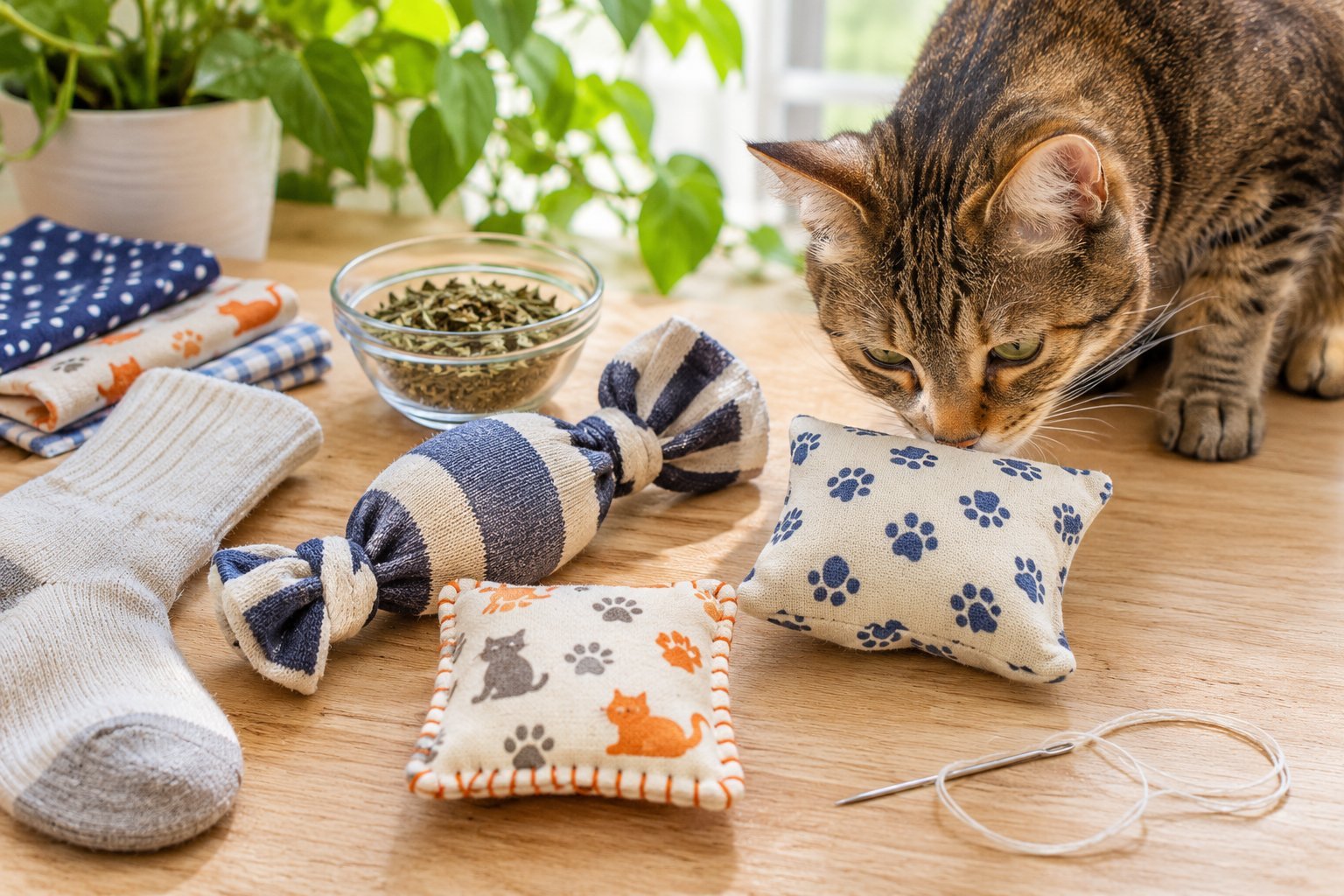
Most cats go a little wild for catnip, and a fresh catnip toy is one of the quickest ways to turn a bored afternoon into a play session.
The good news is that you don’t need a sewing machine, a craft store trip, or an hour of free time.
With a scrap of fabric, a pinch of catnip, and about five minutes, you can make a toy that’s just as good as anything on the pet store shelf, and you can make a new one whenever the old one gets tired.
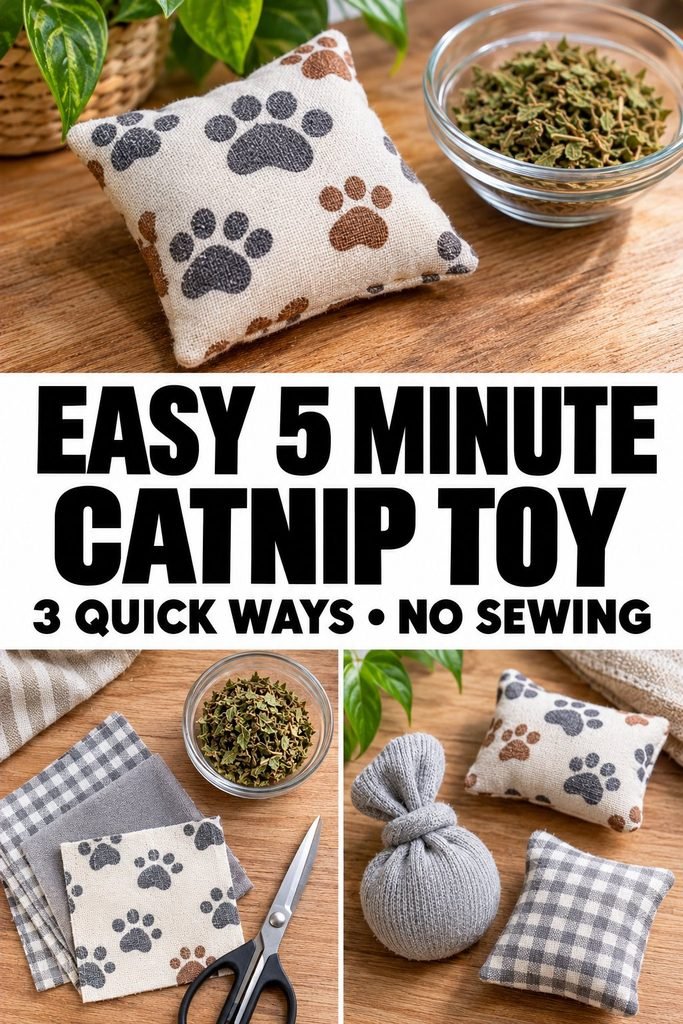
This guide gives you three quick methods: a sock knot toy, a no sew fabric pillow, and a hand stitched pillow.
All three are free of strings, bells, buttons, and loose parts. I’ll also share how catnip works, how much to use, and how to keep it fresh.
If you want more handmade ideas, see my How to Make a Cat Kicker Toy and 11 Easy DIY Cat Toys You Can Make for Your Kitty Today.
A Quick Word on Catnip
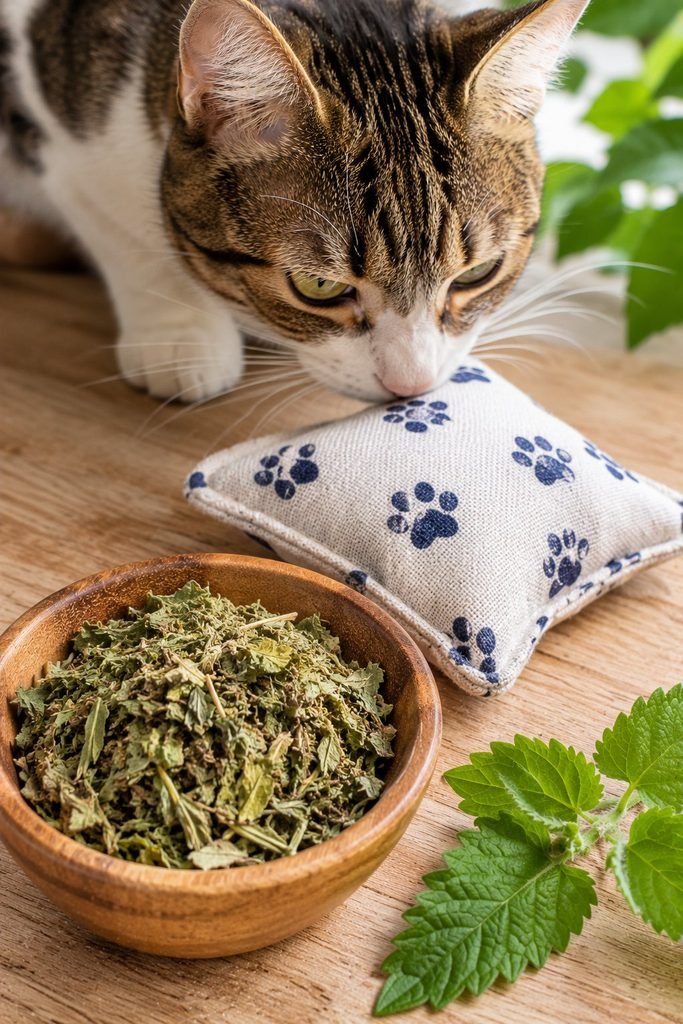
What it is. Catnip is a plant in the mint family. A compound in it triggers a playful, excited reaction in many cats.
Is it safe? Plain, dried catnip is considered safe for most cats.
It isn’t addictive, and cats can’t overdose on it in the way people imagine, though eating a large amount can upset the stomach.
Not every cat reacts. A good portion of cats don’t respond to catnip at all, and the reaction is inherited. If your cat ignores it, they aren’t broken.
Ask your veterinarian about alternatives such as silvervine, which some cats prefer.
Kittens often don’t react. Many kittens don’t respond until they’re several months old.
How long does the effect last? Usually about 10 to 15 minutes, after which your cat may ignore catnip for a while.
Use it in moderation. A little goes a long way, and using it too often can dull the response.
Quality matters. Fresh, fragrant, dried catnip works best. If it doesn’t smell strong, it won’t be very exciting.
Safety First
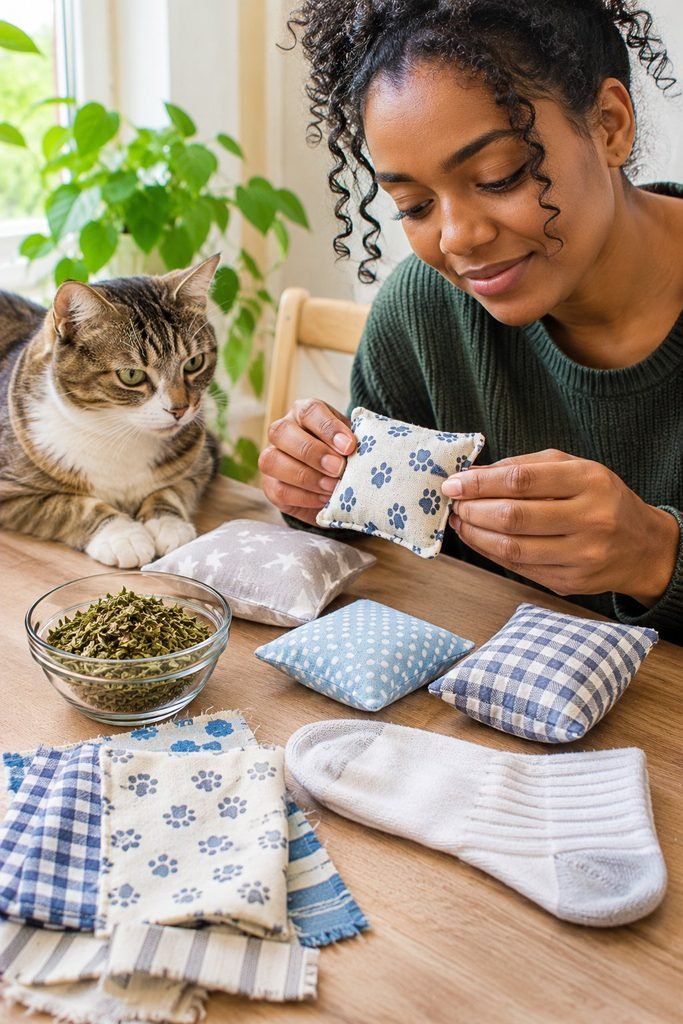
A toy is only good when it’s safe.
No string, yarn, ribbon, or elastic. Cats can swallow linear materials, which can cause serious, life threatening problems. Don’t add a tail, tassel, or dangling trim.
No small parts. Skip buttons, beads, bells, googly eyes, and glitter.
Use tightly woven fabric. Cotton, flannel, and felt are good choices. Avoid loosely woven fabric that unravels.
Choose a clean, plain sock. No rubber grippers, sequins, or holes.
Supervise play. Especially with new toys, and put the toy away when you can’t watch.
Inspect after every use. Throw it away if a seam opens, the fabric is chewed through, or filling is showing.
Use plain catnip only. Skip scented sprays and essential oils, which can be harmful to cats.
Skip it for cats who eat toys. If your cat chews and swallows fabric, ask your veterinarian about safer options.
If your cat swallows part of a toy, or vomits, stops eating, or seems unwell, call your veterinarian right away.
Method One: Sock Knot Catnip Toy (About 2 Minutes)
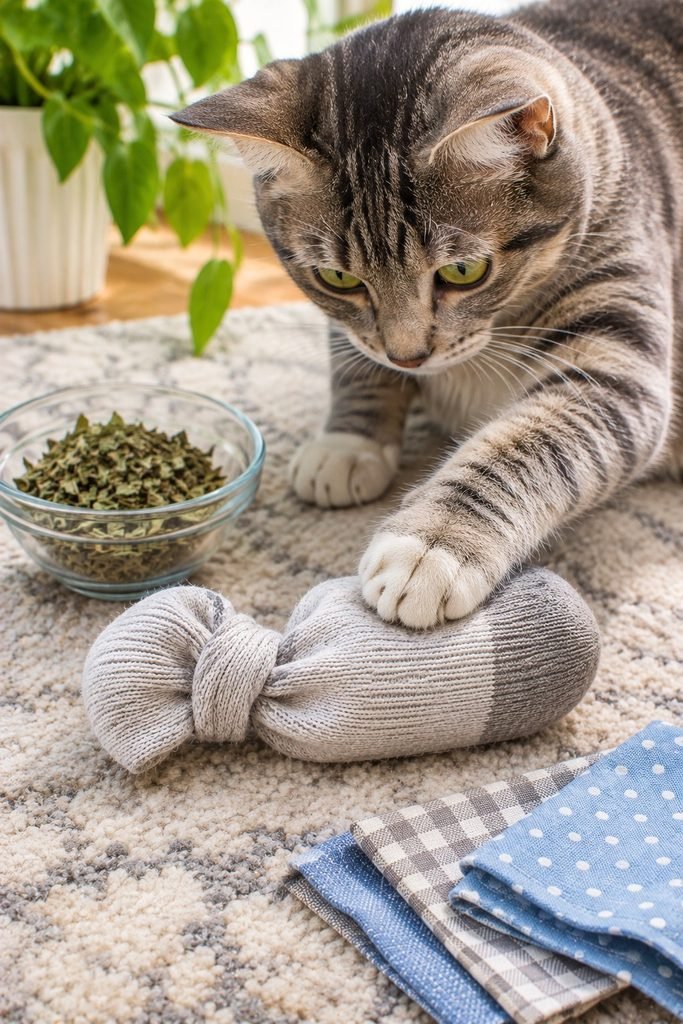
The fastest option, made from one clean, tightly knit cotton sock.
What You’ll Need
- A clean, thick, tightly knit sock with no holes
- 1 to 2 teaspoons plain, dried catnip
- A little stuffing, such as clean fabric scraps or cotton batting, optional
How to Make It
- Choose the sock. Pick a sock with no holes, no rubber grippers, and no loose threads.
- Add the catnip. Drop the catnip into the toe.
- Add a little filling. Pack a handful of soft fabric scraps in behind it, so the catnip stays in the center.
- Tie a firm knot. Knot the sock tightly, right behind the filling, and trim off any extra fabric so no tail is left.
- Test it. Tug on the knot and squeeze the toy. If it loosens, retie it.
Best for. A very quick toy for kicking and carrying. Sock toys don’t last as long as sewn ones, so check them often.
Method Two: No Sew Fabric Pillow (About 5 Minutes)
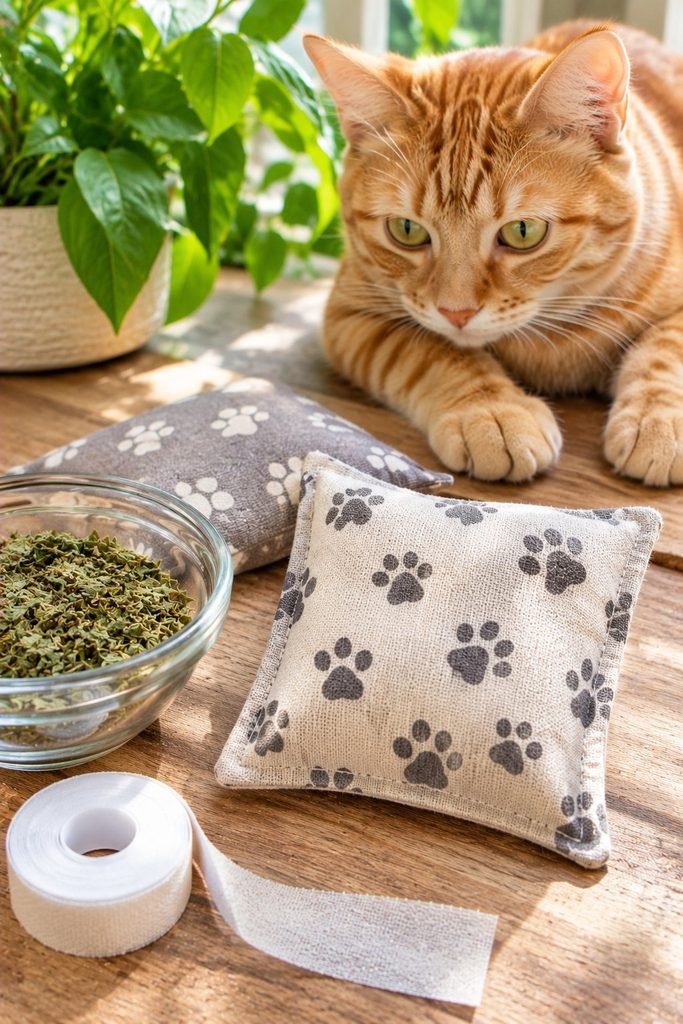
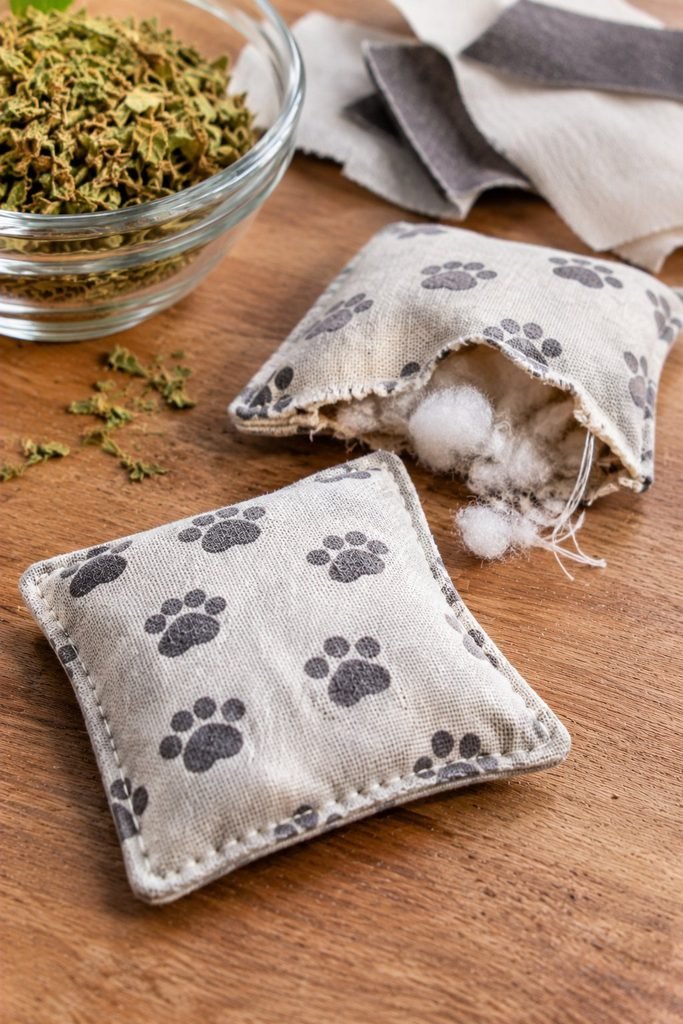
A flat, kickable pillow, made with iron on hem tape instead of thread.
What You’ll Need
- Two squares of tightly woven cotton or flannel, each about 4 inches wide
- Iron on hem tape (fusible web), a narrow strip
- 1 to 2 teaspoons plain, dried catnip
- A little fabric scrap filling, optional
- An iron and a flat surface
How to Make It
- Cut the fabric. Cut two matching squares, about 4 inches each.
- Add the tape. Place a strip of hem tape along three edges of one square.
- Press. Lay the second square on top, with the pretty sides facing out, and press with a hot iron according to the tape’s directions, for about 10 to 15 seconds per section.
- Fill. Drop the catnip and a pinch of filling into the open side.
- Seal. Add tape along the last edge, and press it closed.
- Reinforce. Press each edge again, and let the toy cool completely.
- Test. Tug on the seams firmly. If any peel, press them again.
Best for. A quick, flat toy. Fusible tape isn’t as strong as stitching, so check the seams often, and throw the toy away if they open.
Method Three: Quick Hand Stitched Pillow (About 5 to 8 Minutes)
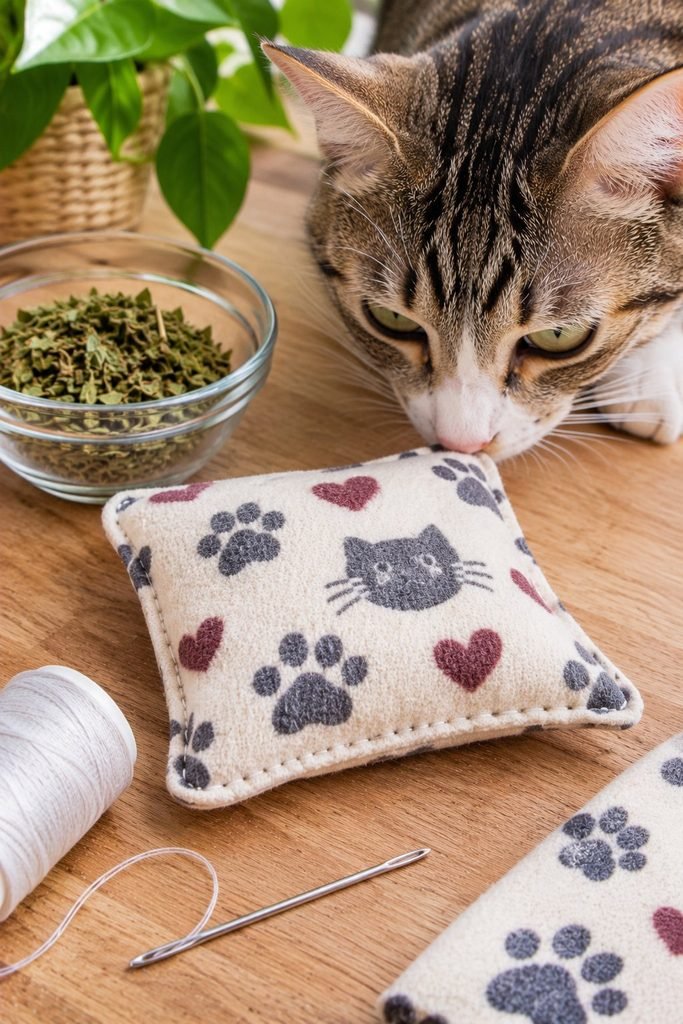
The sturdiest option, with a few simple stitches.
What You’ll Need
- Two squares of tightly woven cotton or flannel, each about 4 inches wide
- Strong thread and a needle
- 1 to 2 teaspoons plain, dried catnip
- A little cotton batting or fabric scrap filling
How to Make It
- Place the squares together. Put the squares with right sides facing, and pin or hold them.
- Sew three sides. Stitch around three sides with small, tight stitches, about 1/4 inch from the edge. Backstitch at the start and end.
- Turn right side out. Push out the corners gently.
- Fill. Add the catnip and a small amount of filling.
- Close the opening. Fold the raw edges in, and stitch the opening shut with small, tight stitches, going over it twice.
- Trim. Trim all thread tails short.
- Test. Tug and squeeze the toy to check the seams.
Best for. The most durable homemade toy. Retire it when seams loosen.
How Much Catnip Should I Use?
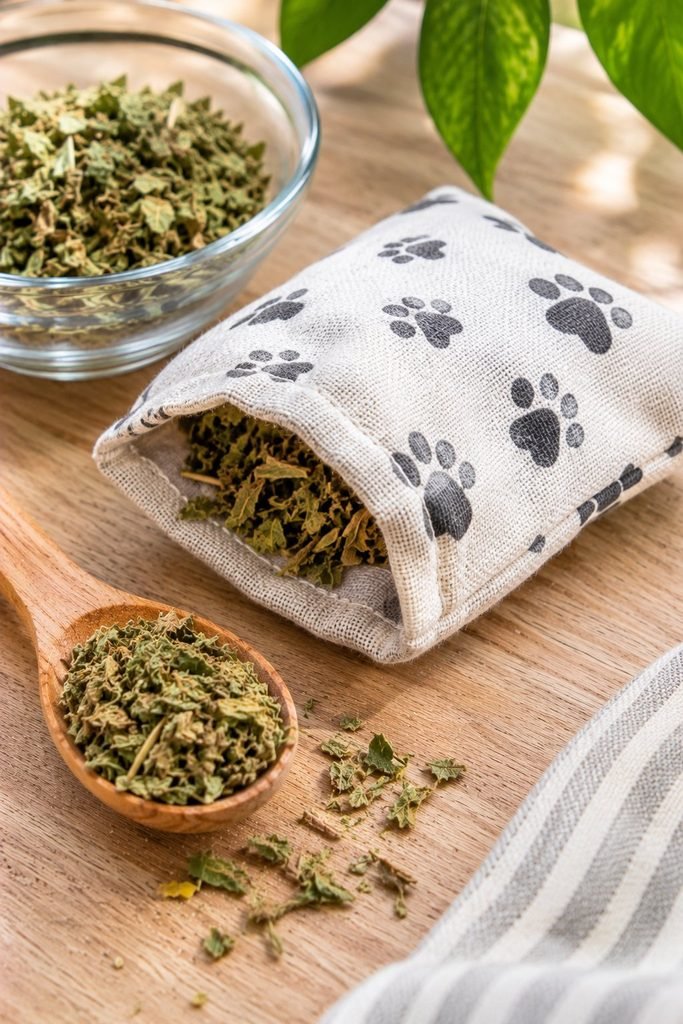
A teaspoon or two. That’s plenty for a small toy.
Mix it with the filling. It spreads the scent evenly.
Don’t overpack. Too much catnip makes the toy lumpy and hard to kick.
Refresh as needed. When the scent fades, replace the toy or add fresh catnip to a new one.
Keeping Catnip Fresh
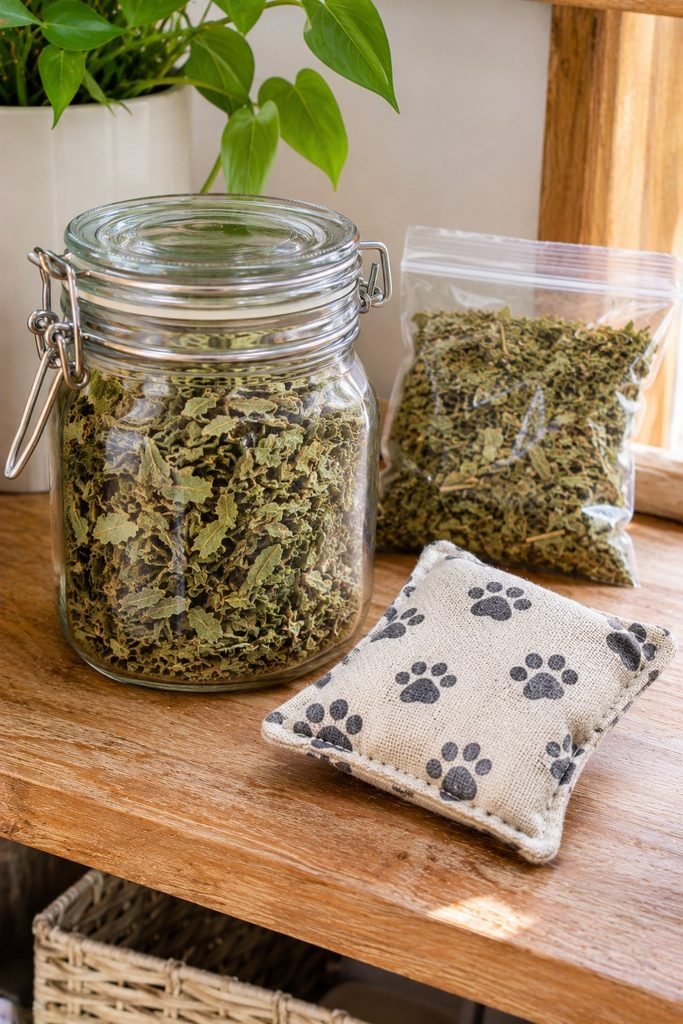
Store airtight. Use a sealed jar or zip bag, in a cool, dark place.
Freeze it. Freezing keeps catnip potent longer.
Crush it gently. Rolling dried catnip between your fingers releases the oils.
Check the smell. If it smells like nothing, replace it.
Tips for Great Catnip Toys
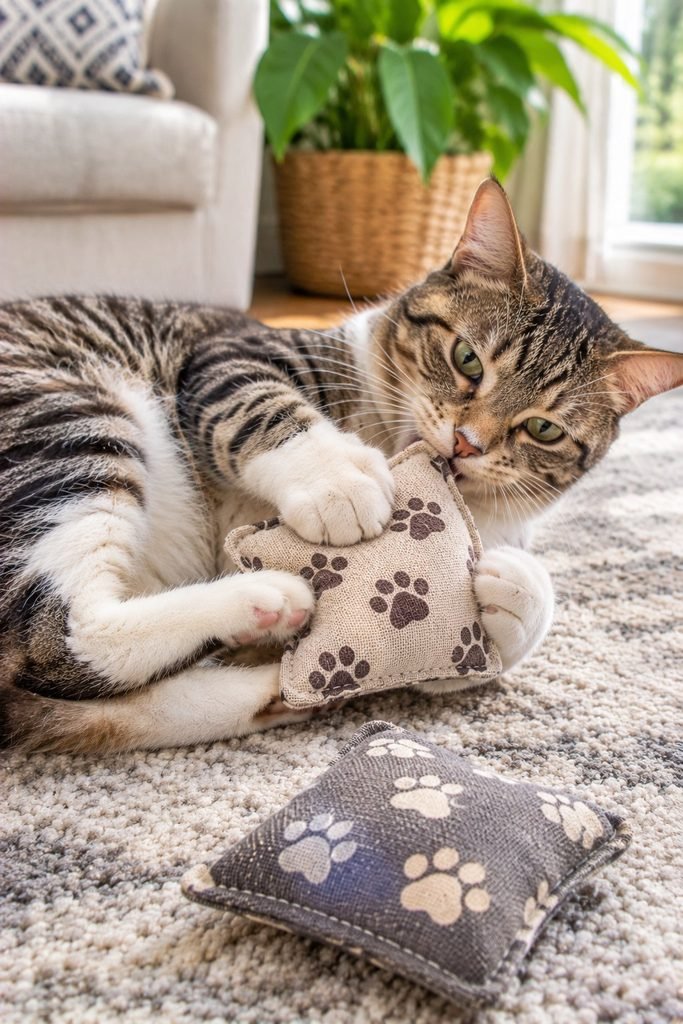
Make it the right size. About the length of your cat’s body for kickers, or smaller for a toy to carry. It should never be small enough to swallow.
Choose soft fabric. Cats like textures they can grip.
Make a few. Rotate toys, which keeps them interesting.
Play together. Interactive play strengthens your bond.
Put it away after play. Store the toy in a sealed container, so the scent lasts.
Don’t use it near bedtime. Catnip can energize cats.
Common Mistakes to Avoid
Adding string, tails, or ribbon. These are swallowing risks.
Using small parts. Skip buttons and bells.
Leaving the toy out unsupervised. Put it away when you can’t watch.
Using too much catnip. It’s wasteful and doesn’t improve the toy.
Using old catnip. It loses its power.
Making the toy too small. Your cat shouldn’t be able to swallow it.
Keeping a damaged toy. Throw it away.
More Cat Ideas to Try
- How to Make a Cat Kicker Toy
- 11 Easy DIY Cat Toys You Can Make for Your Kitty Today
- 6 DIY Cat Toy Ideas Including a Slow Feeder You Can Make at Home
- Sewing Projects for Pets
- Healthy Homemade Cat Treats
For more ideas, browse my Homemade Cat Treats.
Frequently Asked Questions
Is catnip safe for cats? Plain, dried catnip is considered safe for most cats. Use it in moderation, and ask your veterinarian if you have concerns.
Why doesn’t my cat react to catnip? Many cats don’t respond. The reaction is inherited, and kittens often don’t react until they’re older.
Can kittens have catnip toys? Yes, with supervision. Many kittens won’t respond, but the toy is still fun. See my Essential Supplies for Bringing Home a New Kitten.
How often can I give my cat catnip? Occasionally. Overuse can dull the response.
What if my cat eats the toy? Take it away. If your cat swallowed fabric or filling, call your veterinarian.
Can I use fresh catnip from my garden? Yes, though dried is easier for toys. Dry the leaves completely first.
Can I wash the toy? Yes, though washing removes some of the scent. Replace the catnip afterward.
Is catnip safe for dogs? It isn’t toxic, but it doesn’t have the same effect, and it isn’t meant for dogs. Ask your veterinarian.
Easy 5 Minute Catnip Toy Recipe Card (Sock Knot Method)
Prep time: 2 minutes
Yield: 1 toy
Materials
- 1 clean, thick, tightly knit sock with no holes
- 1 to 2 teaspoons plain, dried catnip
- A little soft fabric scrap or batting filling, optional
Instructions
- Drop the catnip into the toe of the sock.
- Add a little filling behind it.
- Tie a tight knot right behind the filling.
- Trim any extra fabric short.
- Tug on the knot to test it before offering it to your cat.
Notes
Use only plain catnip, no strings or small parts, and supervise play. Throw the toy away if it’s damaged. Ask your veterinarian about kittens, and about cats who chew toys.
A Final Note on Catnip Toys
A homemade catnip toy costs almost nothing, takes minutes, and gives your cat a burst of fun. Keep the materials safe, supervise play, and replace the toy when it wears out.
And if your cat doesn’t care for catnip, there are plenty of other toys to try. For a tasty reward after playtime, check out my Healthy Homemade Cat Treats.