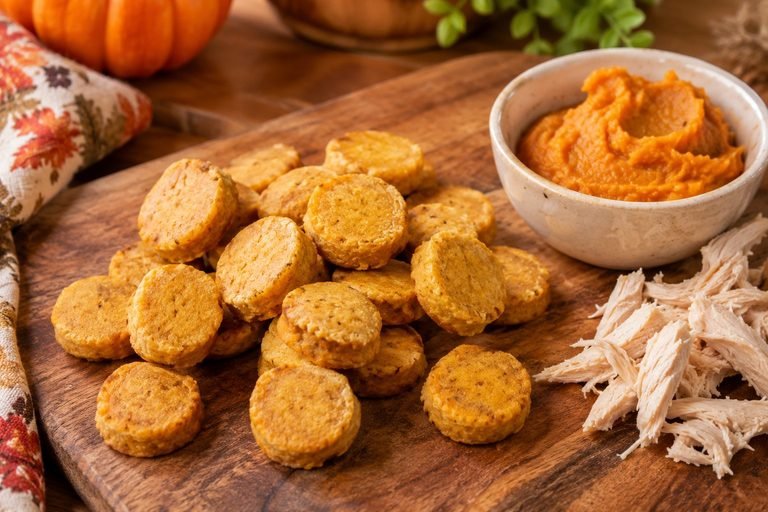
10 Easy Homemade Cat Treats You Can Make at Home
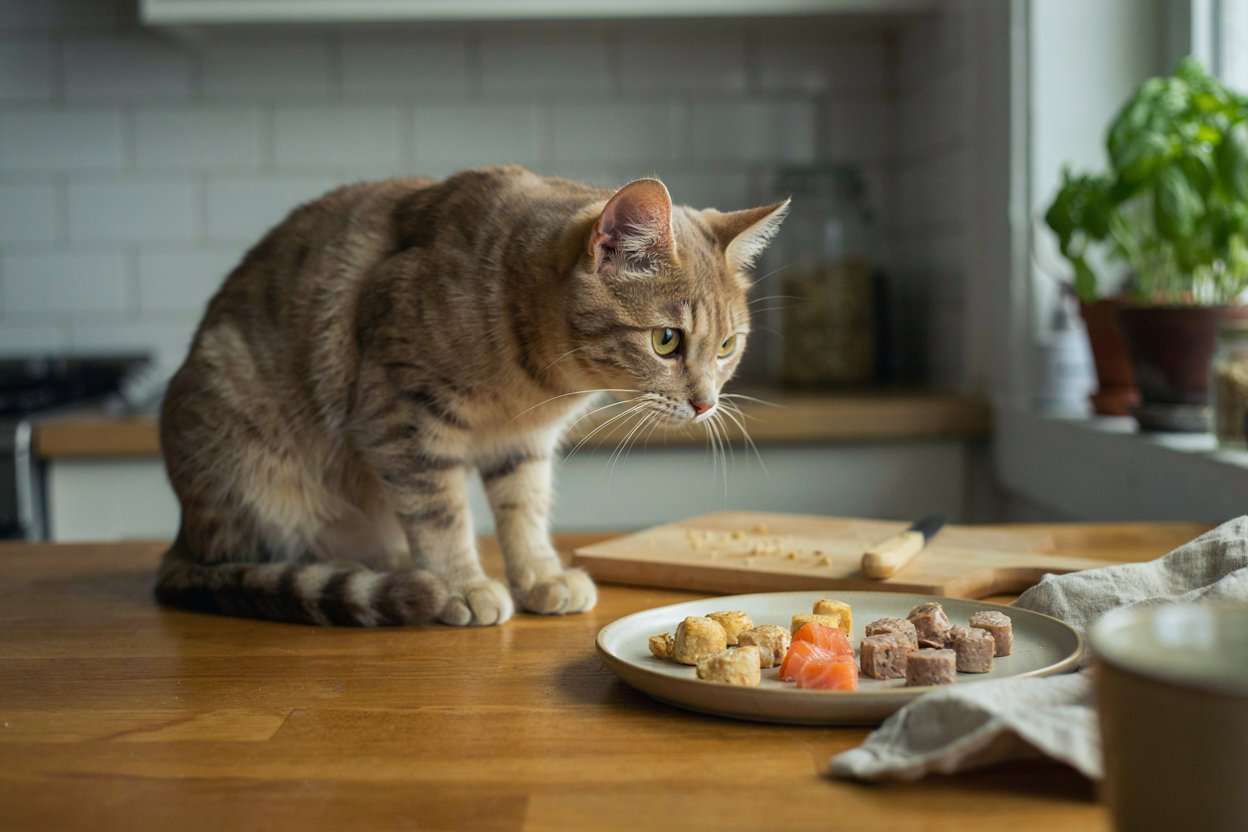
Keeping treats small has become something of a rule in our house, mostly because I noticed early on that my cat gets just as excited about a tiny sliver of chicken as she would about something twice the size.
That discovery shaped most of what’s in this guide. Homemade treats don’t need to be elaborate, and they definitely don’t need to be large, to genuinely earn a reaction.
What they do need is simple, appropriate ingredients, a texture your cat actually likes, and a little bit of restraint, since these recipes are designed for occasional treats, not as a replacement for a complete and balanced cat food.
If you want to build out a wider homemade routine beyond just treats, a few related guides are worth having open alongside this one.
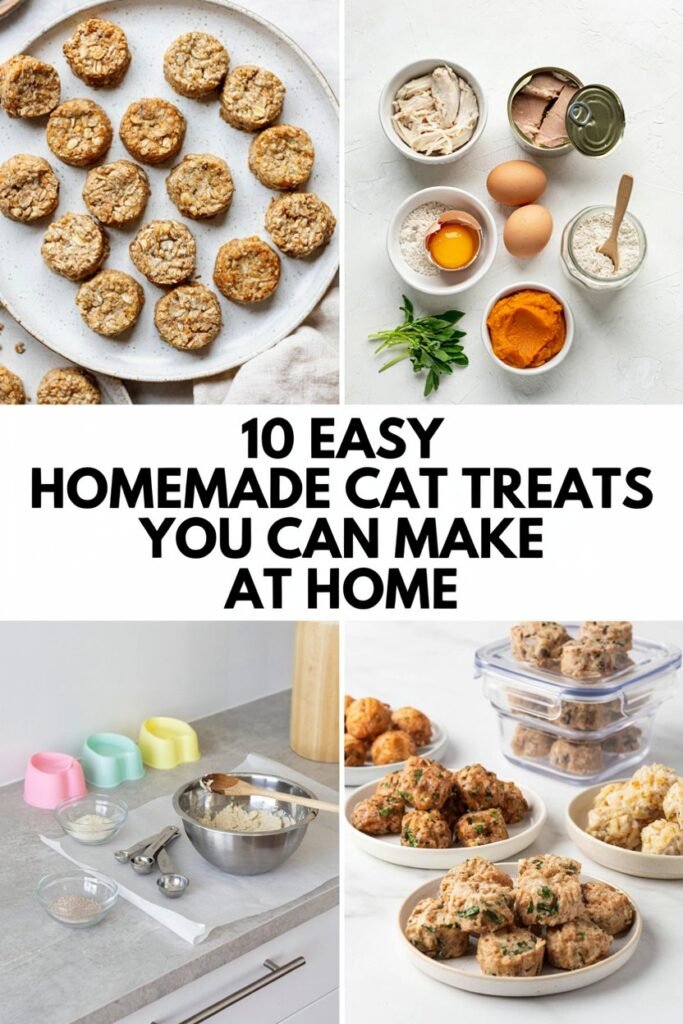
Homemade chicken cat food recipe walks through turning chicken into an actual balanced meal rather than a treat, chicken and catnip homemade treats for cats is a good companion recipe if catnip is a hit in your house, easy chicken based homemade cat recipes and beginner friendly raw inspired cat food ideas offer more variety for full meals, healthy homemade cat gravy toppers for picky eaters is worth a look if your cat is more selective than most, cat weight gain meals covers calorie considerations if your cat needs to put on weight, and daily cat care routine and happy healthy cat tips round out the broader care picture beyond treat time.
Disclaimer
This post may contain affiliate links. As an Amazon Associate, I earn from qualifying purchases at no additional cost to you. I only recommend cat products and kitchen tools that I genuinely believe make homemade treats easier and more enjoyable. The information in this article is for general informational purposes only. Always use cat safe ingredients and consult your veterinarian before introducing new treats.
Amazon Shopping List You Need
- Silicone Cat Treat Molds – I use these to make cute, bite sized treats.
- Digital Kitchen Scale – I always use one for accurate portions.
- Stainless Steel Mixing Bowls – I use these whenever I make homemade treats.
- Silicone Baking Mat – I love how easy it makes cleanup.
- Airtight Treat Storage Container – I use this to keep homemade treats fresh.
- Food Processor – I use it to quickly blend and prepare ingredients.
- Stainless Steel Cat Bowls – I always serve treats in clean, easy to wash bowls.
Why I Like Making Homemade Cat Treats
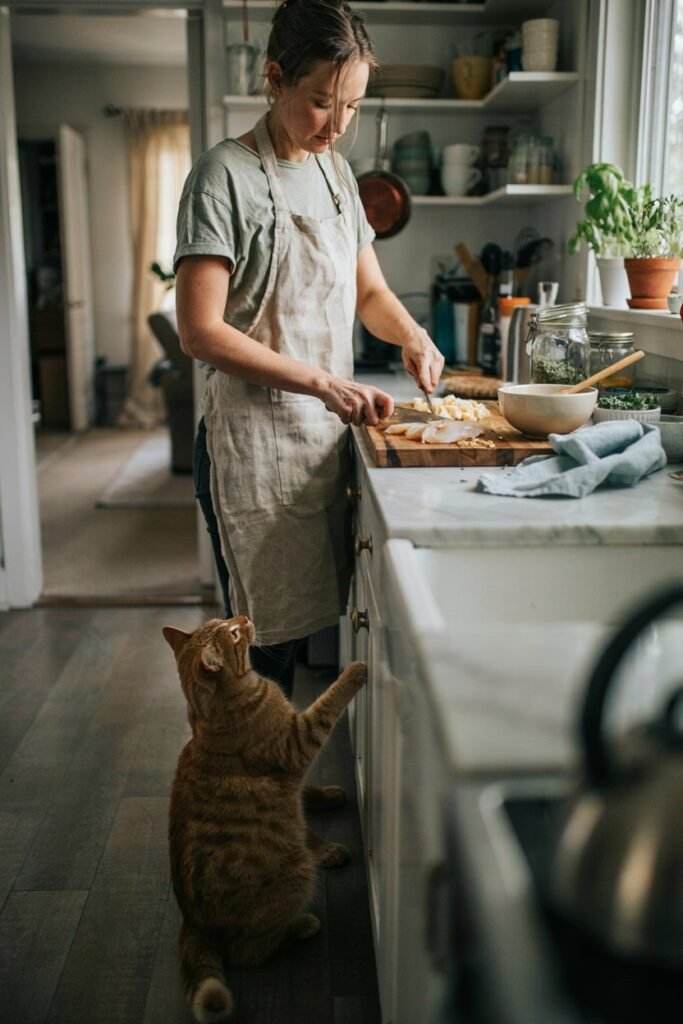
I like homemade cat treats because I can keep the ingredients simple.
When I am preparing food for my cat, I do not want to add unnecessary ingredients just because they happen to be sitting in the kitchen.
Cats also have very different preferences. One cat may go crazy for chicken while another may completely ignore it and become interested the moment fish is involved.
I have learned that making small batches is much more practical than preparing a large container of treats that my cat may eventually decide she does not want.
Another thing I appreciate is being able to control the size.
I prefer making homemade treats quite small because treats are meant to be an occasional addition to a cat’s regular diet.
There is no reason to make a huge biscuit when a tiny bite can be just as exciting.
Homemade treats can also be useful when you want to know exactly what your cat is eating.
You can choose plain ingredients, avoid unnecessary seasoning, and adjust the texture depending on what your cat prefers.
That said, homemade treats are still treats. I do not use them as a replacement for a complete and balanced cat food.
What Makes a Good Homemade Cat Treat?
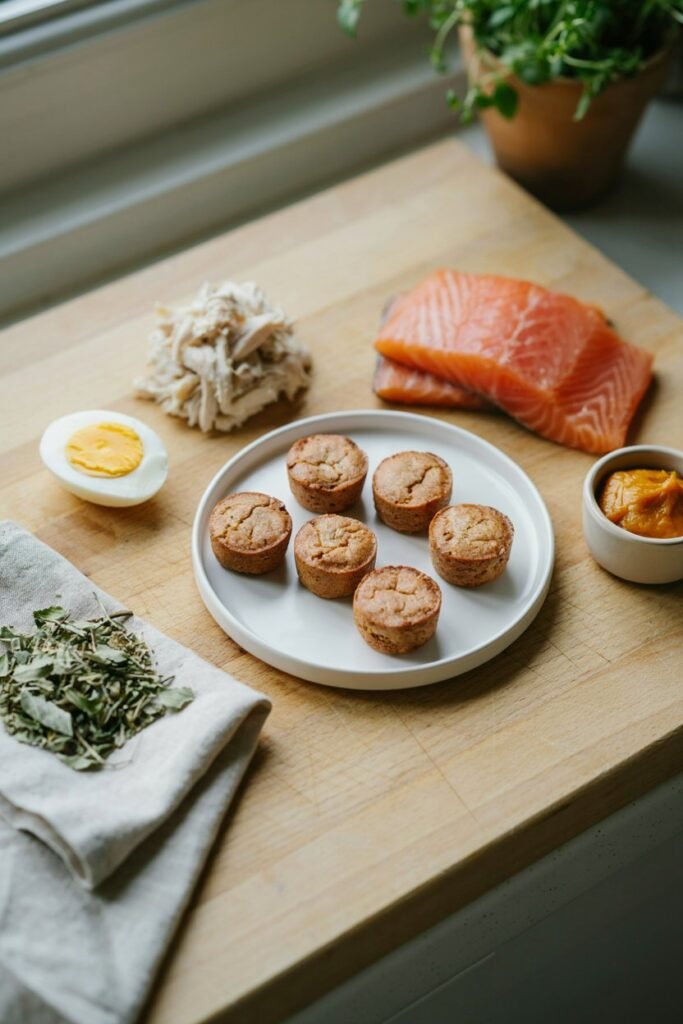
The best homemade cat treats do not need a long ingredient list.
I usually look for a few simple things when preparing treats at home.
Simple ingredients
Plain cooked animal protein is often a good starting point. Chicken, turkey, salmon, and cooked egg can all be used in appropriate amounts.
No unnecessary seasoning
Cats do not need the same seasonings that make human food taste better.
I keep homemade cat treats plain and avoid adding ingredients such as garlic, onion, heavy salt, sauces, or spicy seasonings.
Small portions
A homemade treat should be small enough that it does not turn into a significant part of your cat’s daily food intake.
Appropriate texture
Some cats prefer crunchy treats, while others seem much happier with something soft.
I pay attention to what my cat actually eats rather than assuming that one texture will work for every cat.
Fresh ingredients
When I make meat based treats, I treat them like any other cooked food.
I allow them to cool properly and store them in the refrigerator or freezer rather than leaving them sitting around for long periods.
Ingredients I Keep on Hand for Homemade Cat Treats

You do not need a special shopping list to make simple cat treats at home.
Some of the ingredients I would consider for these recipes include:
- Plain cooked chicken
- Plain cooked turkey
- Cooked salmon
- Tuna in appropriate amounts
- Fully cooked egg
- Plain pumpkin
- Catnip
- Small amounts of cat safe flour when a recipe needs it
The important thing is not to throw several ingredients together simply because they are available.
When I am making a new treat, I prefer keeping the recipe simple.
That makes it easier to see whether my cat actually likes it, and it also makes it easier to identify an ingredient if the treat does not agree with her.
Ingredients You Should Never Add to Homemade Cat Treats
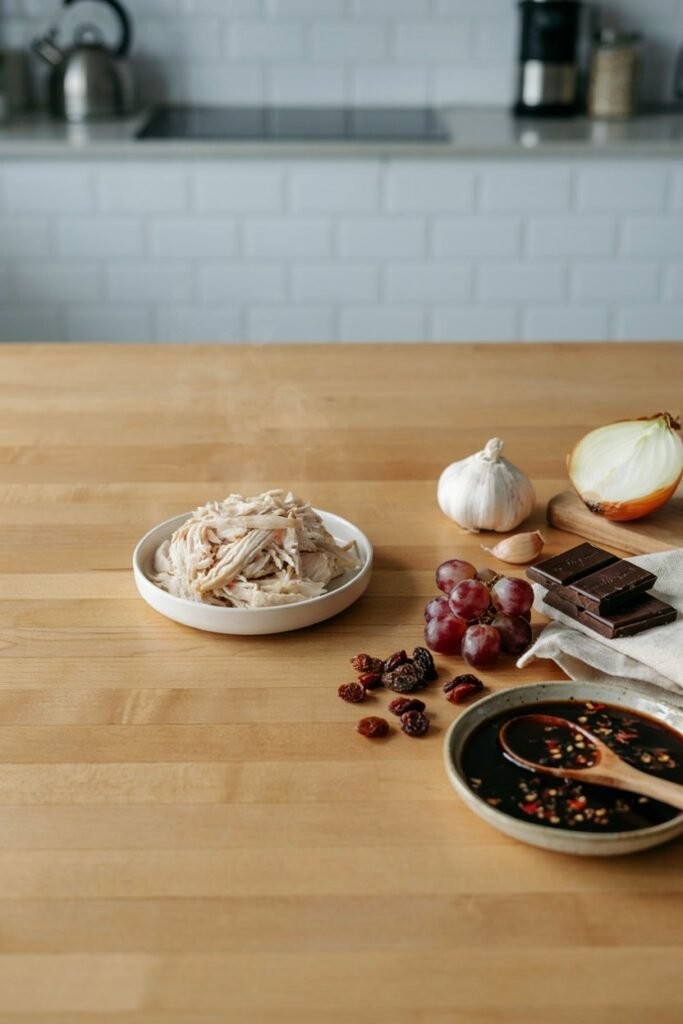
This is one area where I would rather be overly careful.
Some ingredients commonly used in human cooking are not appropriate for cats.
Homemade treats should never contain ingredients such as onion, garlic, chives, chocolate, xylitol, alcohol, or heavily seasoned sauces.
I also avoid giving my cat cooked bones. Bones can create serious problems, particularly when they splinter.
Another mistake is using seasoned meat from your own dinner.
Plain chicken may be suitable as an occasional treat, but chicken cooked with garlic, onion, a salty sauce, or heavy seasoning is a completely different situation.
If you are ever unsure whether an ingredient is safe for your cat, it is better to leave it out and check with your veterinarian.
1. Easy Homemade Chicken Cat Treats
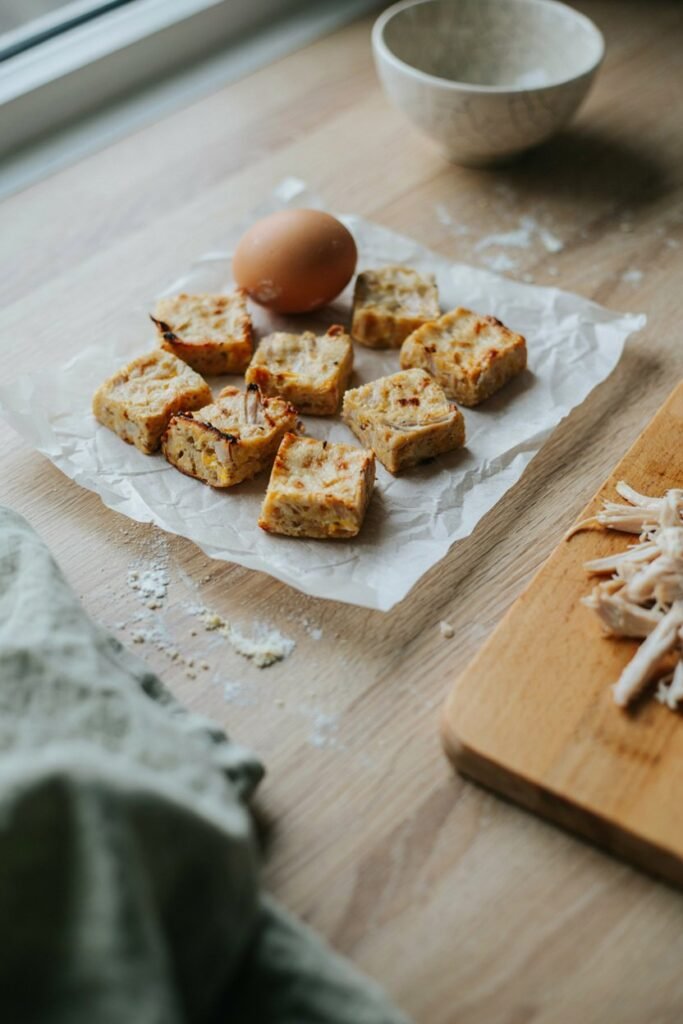
Chicken is one of the easiest ingredients to start with when making homemade cat treats.
It is simple, easy to prepare, and gives you a good base for a small batch of treats without needing many additional ingredients.
I particularly like this recipe when I want something uncomplicated.
There is also something nice about being able to see exactly what goes into the treat rather than relying on a long ingredient list.
Ingredients
- 1 cup plain cooked chicken
- 1 egg
- 2 tablespoons of a suitable flour if needed for consistency
Make sure the chicken is fully cooked, boneless, and completely free from onion, garlic, sauces, and heavy seasoning.
How to Make Chicken Cat Treats
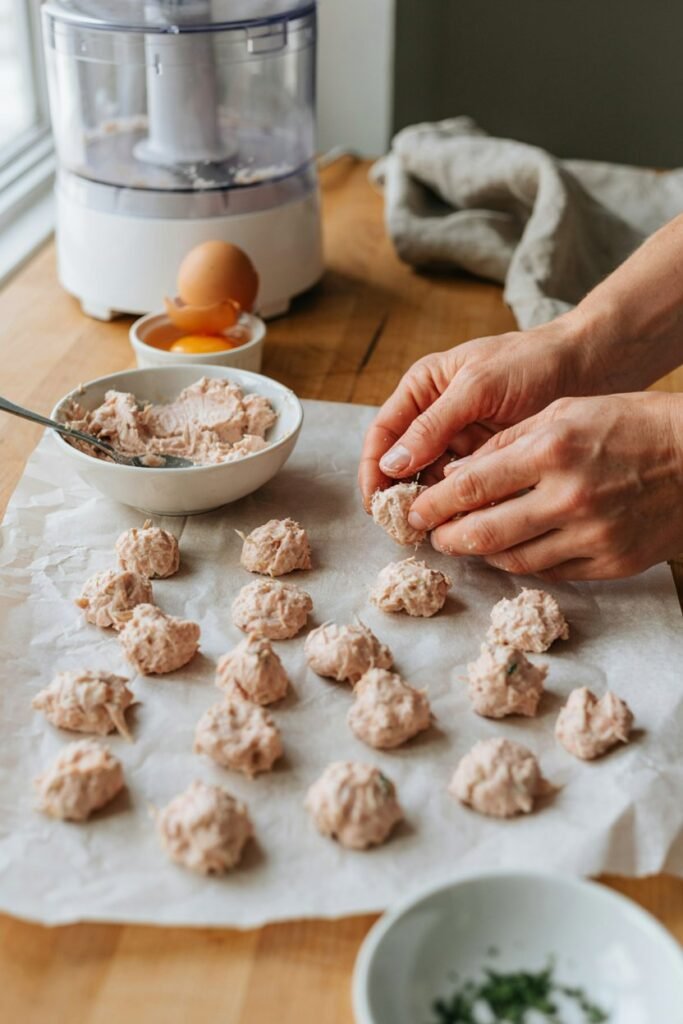
Preheat your oven to 350°F.
Place the cooked chicken into a food processor and pulse until it becomes very finely chopped.
Add the egg and continue processing until the mixture becomes fairly smooth.
Add the flour gradually until the mixture becomes firm enough to handle. You may need slightly more or less depending on how moist your chicken is.
Scoop small portions of the mixture onto a baking sheet lined with parchment paper.
Flatten each portion slightly with the back of a spoon.
Keep the treats small. I prefer making them bite sized because it makes portioning much easier later.
Bake until the treats are cooked through and firm.
Allow them to cool completely before giving one to your cat.
My Tip for Chicken Cat Treats
I would not make these too thick.
Thicker treats can remain soft in the center, while smaller flattened pieces are easier to cook evenly. I also recommend making a small test batch before preparing a large quantity.
Cats can be surprisingly particular, and there is no point filling your freezer with treats your cat refuses to eat.
2. Simple Salmon Cat Treats

Salmon can be a great option when chicken does not get much attention from your cat.
The smell alone can make these treats much more appealing to some cats, although I have found that individual preferences matter more than anything else.
One cat may immediately go for salmon while another may still choose chicken.
For this recipe, use plain cooked salmon and remove all bones carefully.
Ingredients
- 1 cup cooked salmon
- 1 egg
- 2 tablespoons of suitable flour if needed
Do not add salt, garlic, onion, butter based sauces, or seasoning.
How to Make Salmon Cat Treats
Preheat your oven to 350°F.
Break the cooked salmon into small pieces and check carefully for bones.
Place the salmon into a food processor.
Add the egg and blend until the mixture becomes fairly smooth.
Add the flour gradually until you have a mixture that can be shaped.
Place small portions onto a parchment lined baking sheet.
Flatten each piece gently.
Bake until the treats are cooked through and firm enough to handle.
Let them cool completely before serving.
My Tip for Salmon Treats
Salmon has a stronger smell than chicken, so I like making these in a small batch.
If your cat loves fish, you may find these disappear much faster than expected.
Keep the treats small and remember that they are meant to supplement your cat’s normal meals rather than replace them.
3. Homemade Chicken and Egg Cat Treats
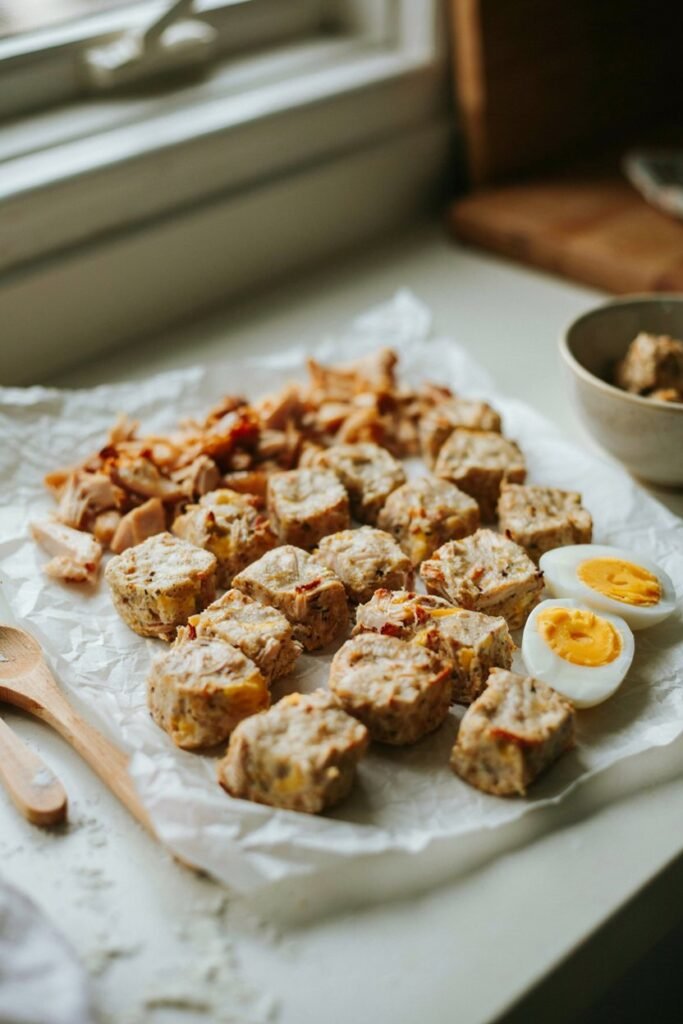
Chicken and egg make a simple combination when you want a softer homemade treat.
This recipe is also useful when your cat prefers softer textures instead of very crunchy treats.
Ingredients
- 3/4 cup cooked chicken
- 1 fully cooked egg
- A small amount of suitable flour if needed
How to Make Them
Finely chop or process the cooked chicken.
Add the cooked egg and blend until the mixture is combined.
If the mixture is too wet to shape, add a small amount of flour gradually.
Form tiny pieces and place them on a lined baking sheet.
Bake at 350°F until firm and fully cooked.
Allow them to cool before serving.
My Tip for This Recipe
I would make these smaller than traditional homemade cookies.
The goal is not to give your cat a large snack.
A tiny homemade treat can be enough, particularly when you are using it as a reward during grooming, training, or simply because you want to give your cat something special.
A Quick Reminder About Treat Portions
One thing I pay attention to when giving my cat homemade treats is how quickly small extras can add up.
A treat may look tiny to us, but several treats throughout the day can contribute a meaningful number of calories.
Treats should generally remain a small part of a cat’s overall diet.
If your cat is overweight, has a medical condition, has food allergies, or eats a prescription diet, it is worth speaking with your veterinarian before introducing homemade treats.
For everyday use, I find it easier to make very small treats and give them occasionally rather than making large treats and trying to cut them down afterward.
Absolutely. I’ll continue with the same clean, personal style and keep the recipes practical rather than repetitive.
4. Simple Homemade Tuna Cat Treats
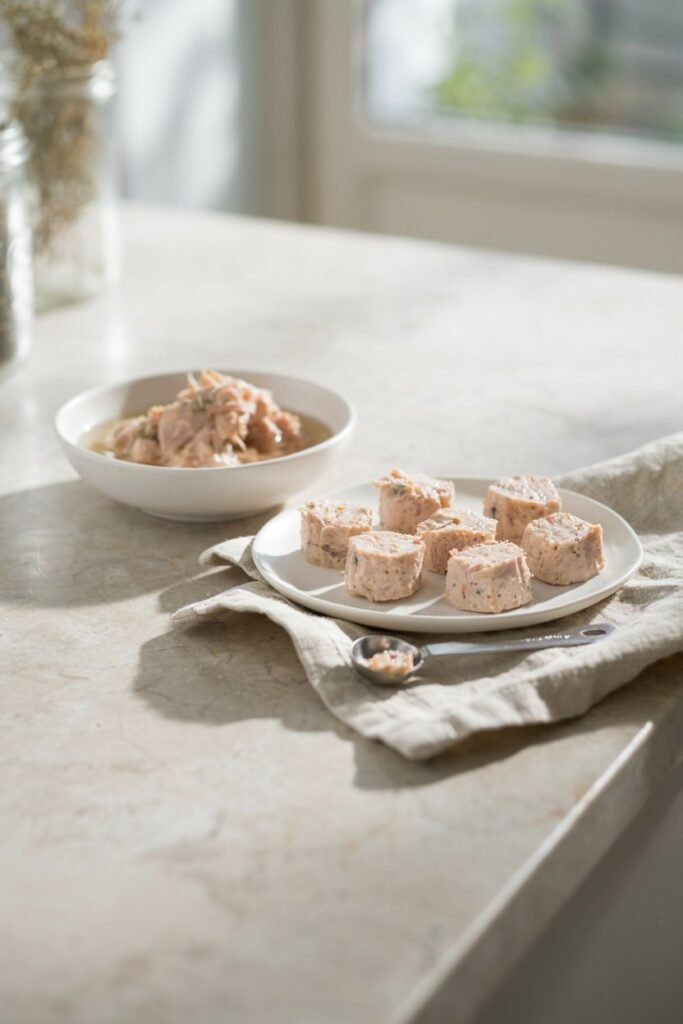
Tuna is one of those ingredients that can get a cat’s attention almost immediately.
I like using it when I want to make a treat with a stronger smell, especially for a cat that is not particularly interested in milder flavors.
For this recipe, keep the tuna plain and use it as an occasional treat rather than something you give your cat every day.
I also prefer tuna packed in water rather than heavily seasoned or flavored varieties.
Ingredients
- 1 small can of tuna packed in water, drained
- 1 egg
- 2 tablespoons of suitable flour if needed
How to Make Tuna Cat Treats
Preheat your oven to 350°F.
Drain the tuna well and place it into a food processor.
Add the egg and blend until the mixture is combined.
Add a small amount of flour if the mixture is too wet to shape.
Scoop tiny portions onto a parchment lined baking sheet.
Flatten each piece gently with a spoon.
Bake until the treats are cooked through and firm.
Allow them to cool completely before giving one to your cat.
My Tip for Tuna Treats
I would make these especially small.
Tuna has a strong smell, so you do not need a large piece to make it appealing.
I also would not prepare a huge batch unless you already know your cat enjoys tuna treats.
Keep the finished treats refrigerated and use them within an appropriate period, or freeze portions for later.
5. Homemade Pumpkin and Chicken Cat Treats
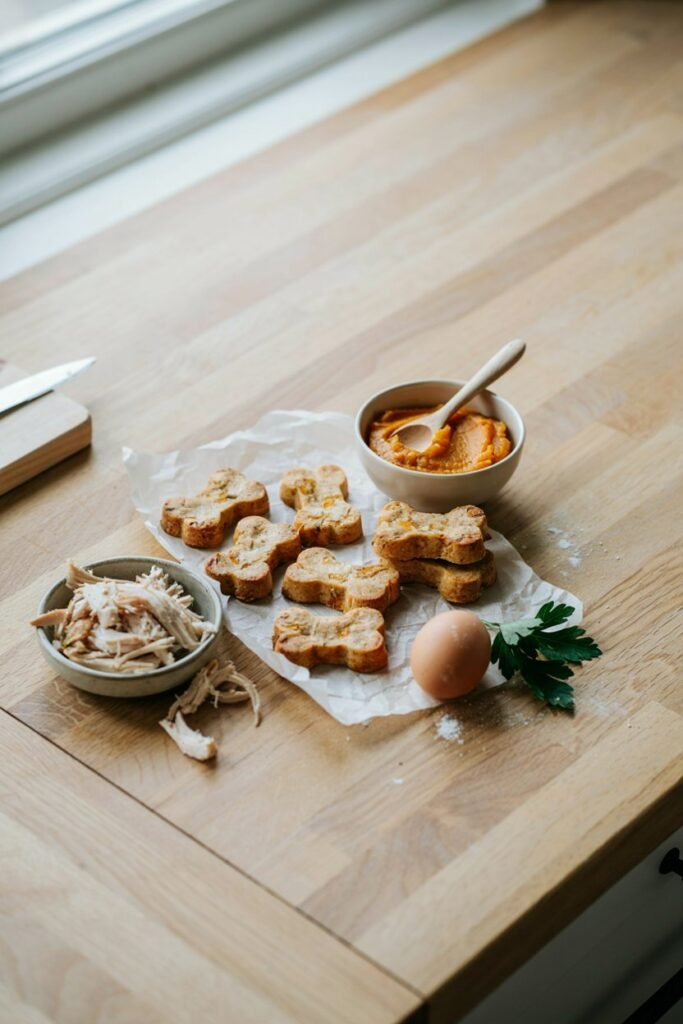
Pumpkin can be useful in small amounts as an ingredient in homemade cat treats, but I never think of pumpkin as the main ingredient.
Cats have different nutritional needs from humans, and a cat treat should still be centered around appropriate animal protein.
This recipe combines a small amount of plain pumpkin with chicken for a soft and flavorful treat.
Ingredients
- 3/4 cup cooked chicken
- 1 tablespoon plain pumpkin puree
- 1 egg
- 2 tablespoons suitable flour if needed
Make sure you use plain pumpkin puree rather than pumpkin pie filling. Pumpkin pie filling can contain ingredients that are not appropriate for cats.
How to Make Pumpkin and Chicken Treats
Preheat your oven to 350°F.
Finely process the cooked chicken.
Add the pumpkin and egg.
Blend until the mixture is evenly combined.
Add a little flour if the mixture needs more structure.
Place tiny portions onto a parchment lined baking sheet.
Flatten them gently.
Bake until fully cooked and firm enough to handle.
Allow the treats to cool completely before serving.
My Tip for This Recipe
Do not add a large amount of pumpkin simply because it is available.
I like keeping the recipe centered around chicken and using pumpkin as a small supporting ingredient. This also helps keep the texture from becoming too soft.
6. Homemade Catnip Chicken Treats
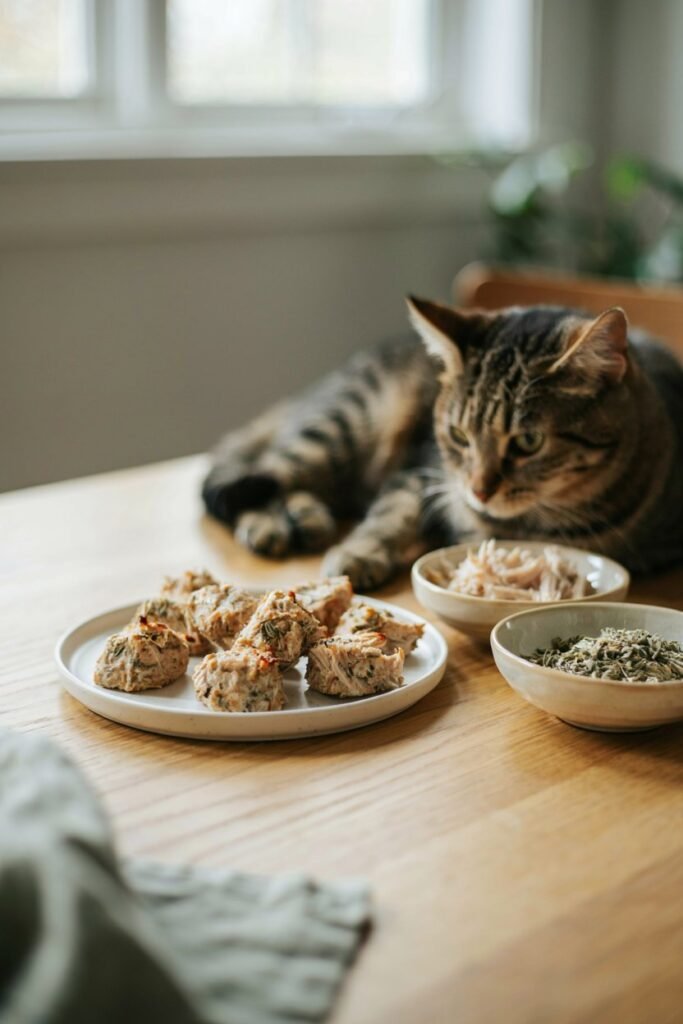
Catnip can make an ordinary homemade treat a little more interesting for cats that enjoy it.
I like this recipe because the catnip is only a small addition. The chicken remains the main ingredient, which keeps the recipe simple.
Ingredients
- 1 cup cooked chicken
- 1 egg
- 1/2 teaspoon dried catnip
- 2 tablespoons suitable flour if needed
How to Make Catnip Chicken Treats
Preheat your oven to 350°F.
Process the cooked chicken until finely chopped.
Add the egg and catnip.
Blend everything together.
Add the flour gradually until the mixture becomes easy to shape.
Form tiny pieces and place them onto a lined baking sheet.
Flatten each piece slightly.
Bake until cooked through.
Allow the treats to cool completely.
My Tip for Catnip Treats
Not every cat responds to catnip.
That is completely normal.
If your cat ignores catnip toys or does not seem interested in catnip generally, there is no reason to add it to every homemade treat recipe.
You can simply leave it out and make the chicken version instead.
7. Soft Homemade Chicken Treats
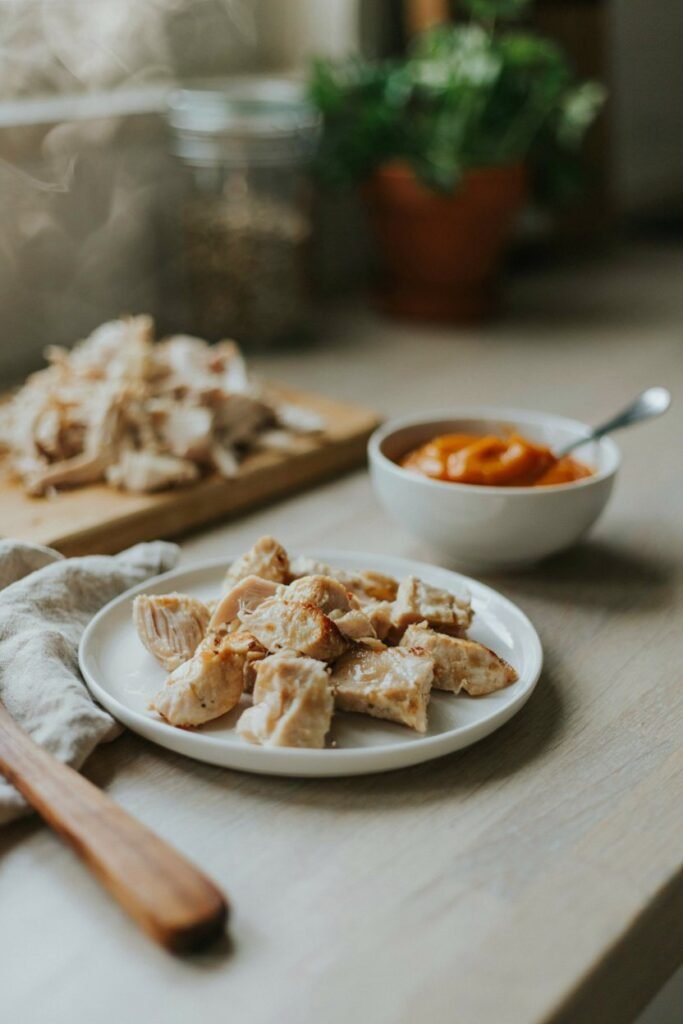
Some cats prefer soft treats over crunchy ones. I have noticed that texture can matter just as much as flavor, so I like having at least one softer option available.
These treats are particularly convenient when you want something that can be broken into very small pieces.
Ingredients
- 1 cup cooked chicken
- 1 egg
- 1 tablespoon plain pumpkin puree
- A small amount of suitable flour if necessary
How to Make Soft Chicken Treats
Preheat the oven to 325°F.
Process the cooked chicken until it is finely minced.
Add the egg and pumpkin.
Mix until the ingredients are evenly combined.
Add only enough flour to make the mixture manageable.
Spoon very small portions onto a lined baking sheet.
Flatten them slightly.
Bake until cooked through but do not intentionally bake them until they become extremely hard.
Allow them to cool completely before serving.
My Tip for Softer Treats
Keep an eye on them toward the end of baking.
The difference between a soft treat and a crunchy treat can come down to baking time and thickness.
I would rather make a small test batch first than accidentally make the entire batch harder than my cat prefers.
8. Homemade Salmon and Egg Cat Treats
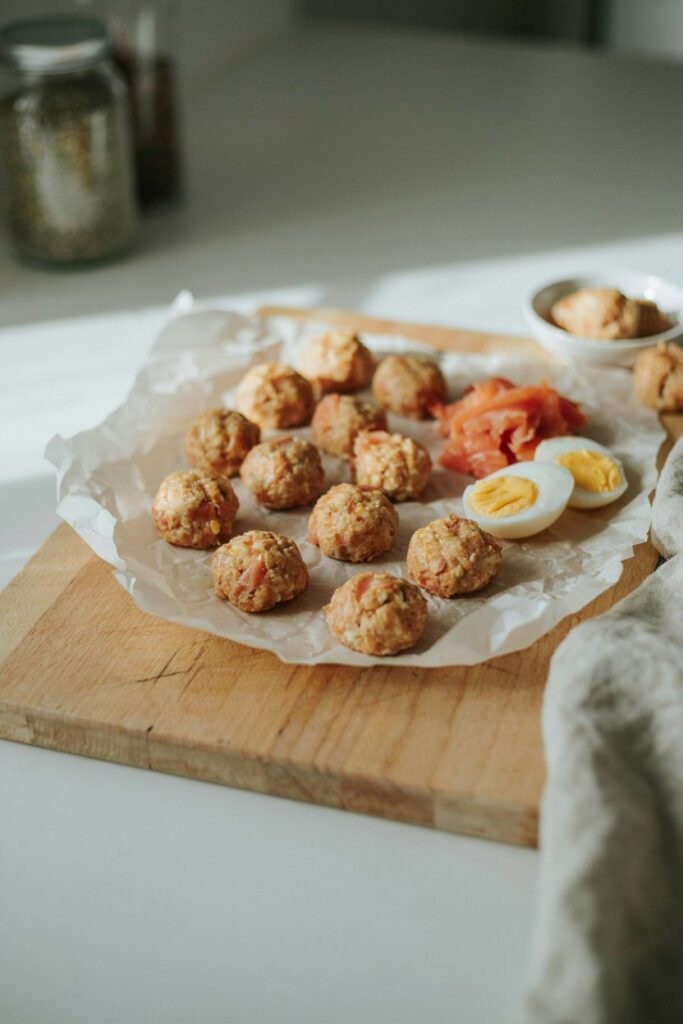
If your cat likes fish, salmon and egg make another simple combination.
I like having different recipes available because cats can change their minds quickly.
A treat that gets a lot of attention one week may suddenly become less exciting later.
Ingredients
- 3/4 cup cooked salmon
- 1 cooked egg
- 1 to 2 tablespoons suitable flour if needed
How to Make Salmon and Egg Treats
Preheat your oven to 350°F.
Check the salmon carefully for bones.
Place the salmon and cooked egg into a food processor.
Process until the mixture is well combined.
Add a small amount of flour if necessary.
Shape the mixture into tiny pieces.
Place them onto a parchment lined baking sheet.
Bake until completely cooked and firm.
Cool before serving.
My Tip for Salmon and Egg Treats
I recommend letting these cool completely before judging the texture.
They can become firmer as they cool, so you do not want to overbake them simply because they seem soft immediately after coming out of the oven.
9. One Ingredient Chicken Cat Treats
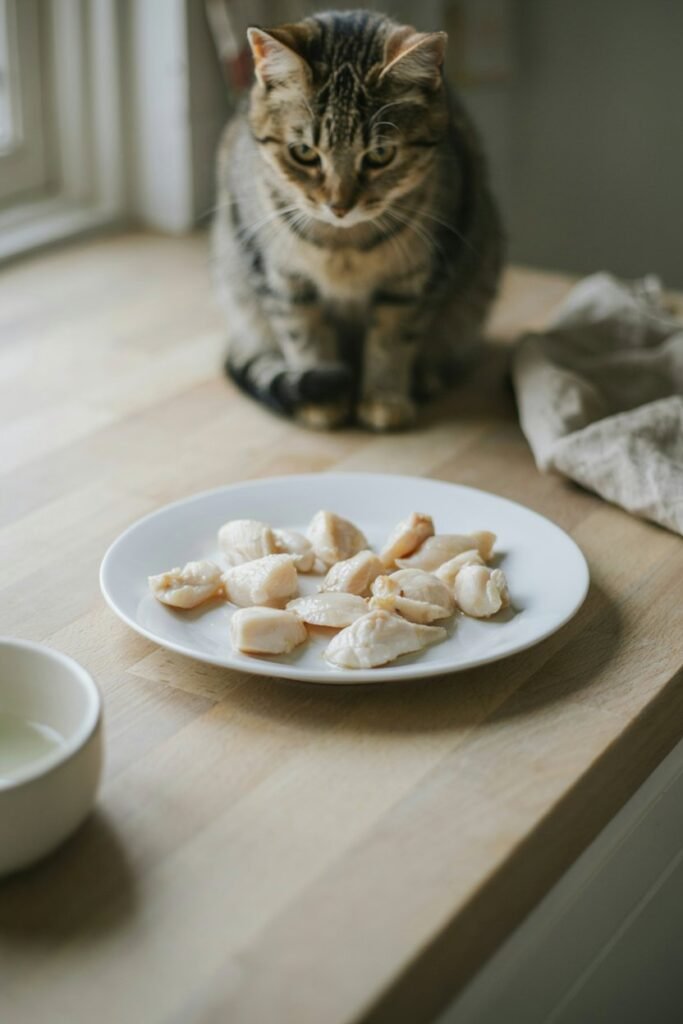
If you want the simplest possible homemade cat treat, this is the one I would start with.
You do not always need to turn chicken into a complicated recipe.
Plain cooked chicken can be cut into tiny pieces and used as an occasional treat.
Ingredients
- Plain cooked chicken
That is all you need.
How to Prepare It
Cook the chicken thoroughly without adding salt, onion, garlic, butter, sauce, or seasoning.
Allow it to cool.
Remove any skin, bones, and unwanted fatty pieces.
Cut the chicken into very small pieces.
Store the pieces appropriately in the refrigerator or freezer.
My Tip for One Ingredient Treats
This is probably the easiest option for testing whether your cat actually enjoys homemade treats.
I like starting with something this simple before buying several ingredients for a recipe.
If your cat happily eats tiny pieces of plain chicken, you already know that you have a useful homemade treat option.
It can also be easier to monitor ingredients when you are trying to figure out what your cat likes.
10. Homemade Turkey Cat Treats
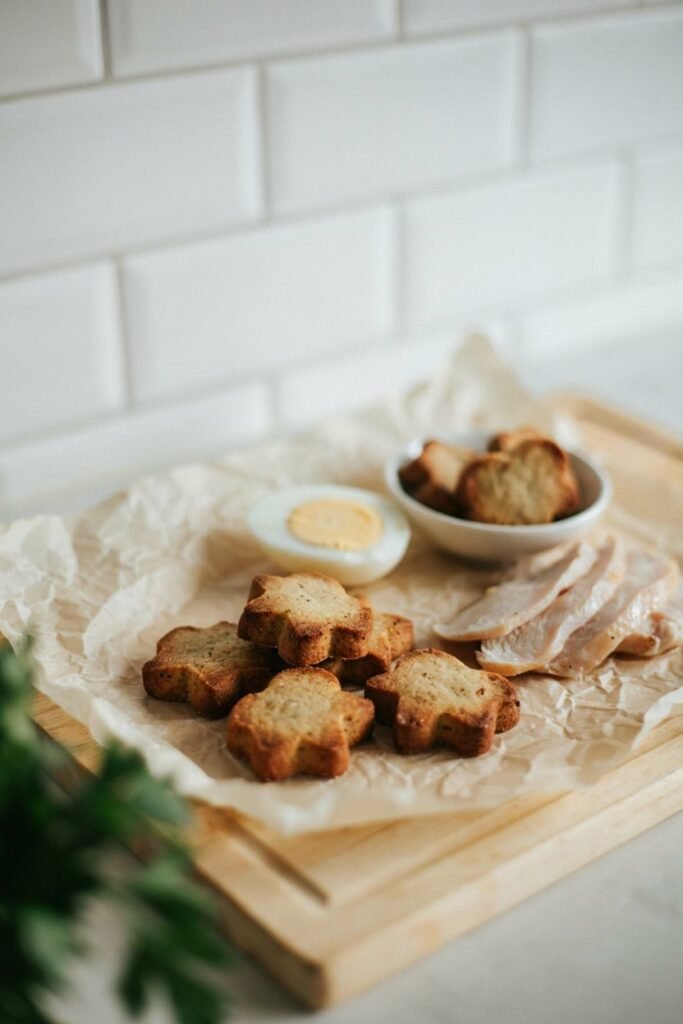
Turkey gives you another protein option if your cat enjoys poultry but you want something different from chicken.
As with the other recipes, the turkey should be completely plain and thoroughly cooked.
Ingredients
- 1 cup cooked turkey
- 1 egg
- 1 to 2 tablespoons suitable flour if needed
How to Make Turkey Cat Treats
Preheat your oven to 350°F.
Finely process the cooked turkey.
Add the egg and blend until combined.
Add the flour gradually until you can form small pieces.
Place the treats on a lined baking sheet.
Flatten each piece.
Bake until completely cooked.
Allow them to cool before giving one to your cat.
My Tip for Turkey Treats
Be careful with leftover holiday turkey.
Human holiday meals often contain salt, butter, gravy, onion, garlic, sauces, and other ingredients that are not appropriate for cats.
If I am making turkey specifically for my cat, I keep it plain from the beginning. That makes it much easier to know exactly what she is getting.
How I Decide Which Homemade Treat to Make
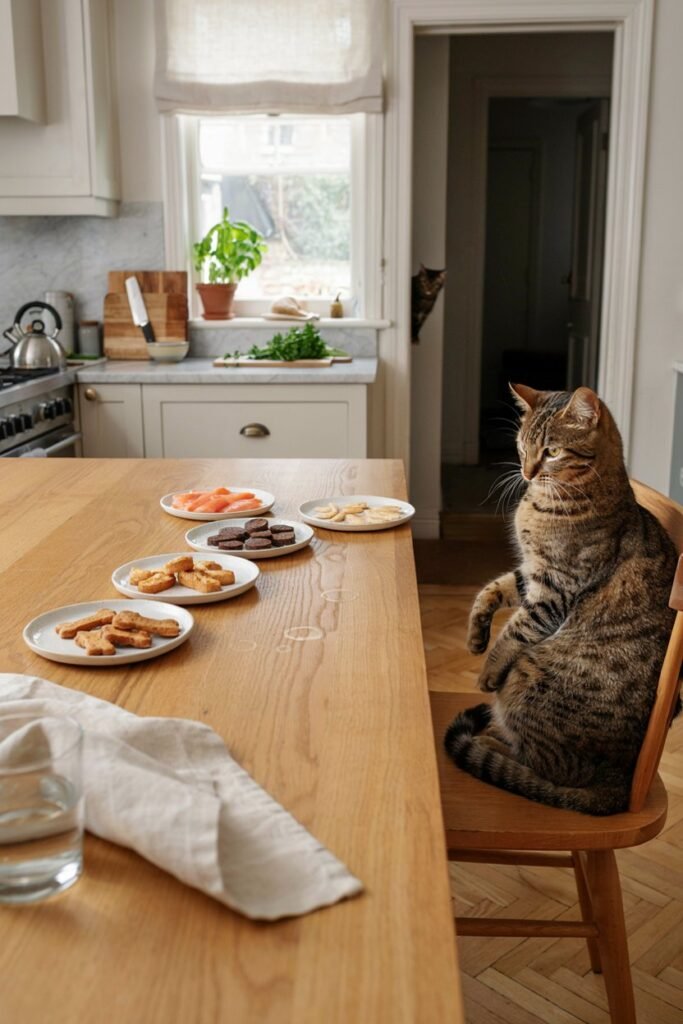
I do not make every recipe at the same time.
I usually think about what my cat has been enjoying lately and choose a small batch based on that.
If chicken is getting the most attention, I make chicken treats.
If fish is getting more excitement, I might prepare a small salmon batch.
If I am trying a new recipe, I start with a very small amount.
There is no reason to spend time preparing a large batch before knowing whether my cat actually likes it.
I also pay attention to texture.
Some days a cat may happily eat a crunchy treat but ignore a softer one. Another cat may do the exact opposite.
That is why I think homemade treats work best when you treat the recipes as starting points rather than strict formulas.
How to Make Homemade Cat Treats Smaller
One of the easiest mistakes to make is preparing treats that are too large.
Cats do not need human sized cookies.
When I prepare homemade treats, I usually make the pieces very small. This makes them easier to portion and gives me more flexibility throughout the day.
Small treats are especially useful when you are using them as rewards.
For example, if you are trying to encourage your cat during grooming or another activity, you may want to give several tiny rewards rather than one large treat.
The total amount still matters, so keep track of how many treats your cat receives.
What I Do When My Cat Does Not Like a New Treat
I do not assume that a recipe has failed just because my cat ignores it.
Cats can be incredibly selective.
Sometimes the problem is the texture. Sometimes the smell is not appealing.
Sometimes the treat is simply different from what the cat expected.
If a new treat is rejected, I would try a simpler version rather than immediately adding more ingredients.
For example, if a chicken and pumpkin recipe is ignored, I might go back to plain chicken.
This gives you useful information about what your cat actually prefers.
I also would not pressure a cat to eat a new treat. There are plenty of simple options to try.
The Most Important Thing to Remember
Homemade treats should complement your cat’s normal food, not replace it.
A cat needs a complete and balanced diet that meets its nutritional requirements. Homemade treats are best treated as occasional extras.
This is especially important if your cat has a medical condition, food allergy, weight management needs, or is eating a prescription diet.
In those situations, I would speak with a veterinarian before introducing homemade treats or changing the ingredients your cat regularly receives.
Keeping Homemade Cat Treats Fresh
Because most of these recipes contain cooked animal protein, proper storage matters.
I never treat homemade meat based treats like dry commercial biscuits that can simply sit in a cupboard.
Once the treats have cooled completely, place them in a clean airtight container and refrigerate them.
If you have made more than your cat can reasonably eat within a short period, freezing is a much better option than keeping a large container in the refrigerator indefinitely.
For freezing, arrange the treats in a single layer first so they do not freeze into one large block. Once firm, transfer them to a freezer safe container or bag and label it with the date.
When you need more treats, remove only the amount you plan to use.
This makes homemade treats much easier to manage and helps prevent unnecessary food waste.
How Many Homemade Treats Can a Cat Have?
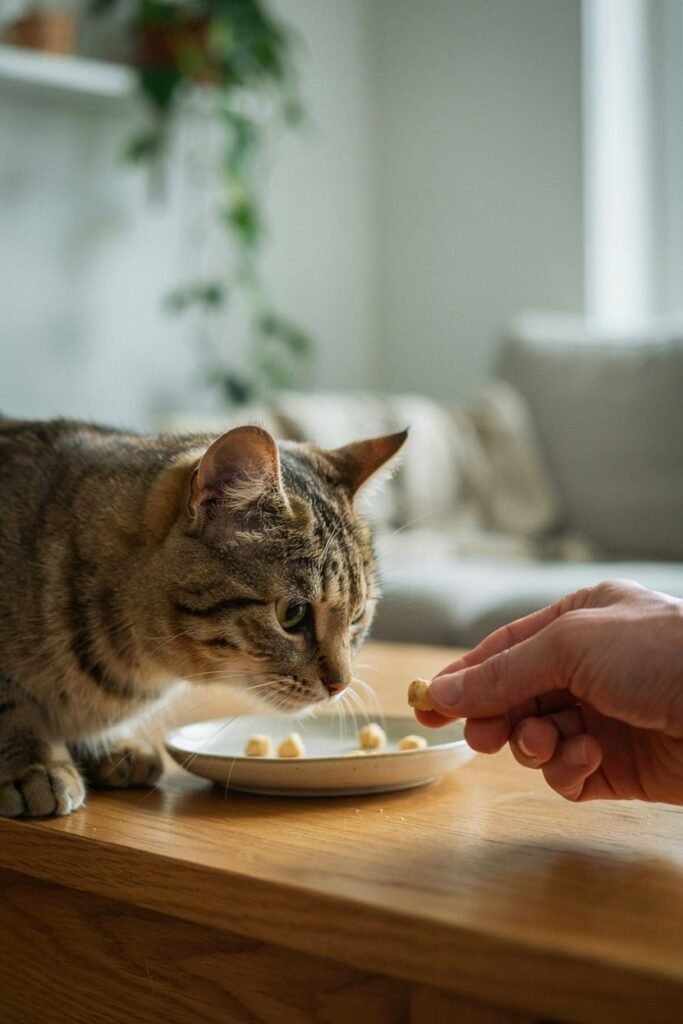
One of the easiest things to overlook when making homemade cat treats is portion size.
Because these treats are made at home, it can be tempting to think they do not count in the same way as commercial treats.
They still contain calories, though, and those calories can add up when a cat receives several treats throughout the day.
I prefer keeping homemade treats small and using them as occasional rewards rather than automatically giving my cat a treat every time she asks for one.
The right amount will depend on your cat’s size, age, activity level, regular food, and overall health.
A commonly used guideline is to keep treats to no more than about 10 percent of a cat’s daily calorie intake, with the rest coming from a complete and balanced diet.
If your cat is overweight, has diabetes, has food allergies, has another health condition, or is eating a prescription diet, talk with your veterinarian before adding homemade treats.
I also find that tiny treats are much easier to manage. My cat does not need a large piece to know that she is getting something special.
Can You Give Homemade Treats to Kittens?
Kittens have different nutritional needs from adult cats, so I would not treat homemade snacks as a replacement for kitten food.
A growing kitten needs a complete and balanced diet designed for growth. Treats should remain occasional and should not interfere with normal meals.
If you are making treats for a kitten, it is particularly important to keep portions tiny and avoid experimenting with lots of unfamiliar ingredients at once.
When in doubt, I would check with your veterinarian before introducing homemade treats to a very young kitten.
Safe Ingredients I Like for Homemade Cat Treats
When I make treats at home, I prefer ingredients that are simple and easy to understand.
Plain cooked chicken
Chicken is one of the easiest choices because it can be prepared without seasoning and cut into tiny pieces.
Plain cooked turkey
Turkey can be another useful poultry option when prepared without sauces, onion, garlic, or heavy seasoning.
Fully cooked salmon
Salmon can make a strongly scented treat for cats that enjoy fish. Make sure it is cooked thoroughly and carefully checked for bones.
Cooked egg
Plain fully cooked egg can be used in some homemade treat recipes.
Plain pumpkin
A small amount of plain pumpkin can be included in certain recipes. Make sure you are using plain pumpkin puree rather than pumpkin pie filling.
Catnip
Catnip can be included in small amounts for cats that enjoy it. Not every cat responds to catnip, so it is completely optional.
The important thing is that these ingredients should be used appropriately and should not turn homemade treats into a substitute for a complete feline diet.
Foods I Would Never Put in Homemade Cat Treats
This is the part of homemade cat treat making where I would rather be cautious than creative.
There are plenty of ingredients that are perfectly normal in human recipes but should not be included in cat treats.
Avoid ingredients such as:
- Onion
- Garlic
- Chives
- Chocolate
- Xylitol
- Alcohol
- Caffeinated ingredients
- Grapes
- Raisins
- Raw yeast dough
- Heavily salted foods
- Spicy seasonings
- Sauces containing unsafe ingredients
- Cooked bones that can splinter
I also avoid using leftovers from heavily seasoned family meals.
For example, plain cooked chicken and seasoned chicken from dinner may look similar, but they are not interchangeable when you are preparing food for a cat.
Keeping the recipe simple makes it much easier to control what your cat is eating.
Can Homemade Cat Treats Be Frozen?
Yes, freezing can be a very convenient way to store homemade cat treats.
I actually prefer making smaller batches and freezing some of them rather than keeping a large container of treats in the refrigerator.
Once the treats have completely cooled, arrange them in a single layer on a tray and freeze them until firm.
Then transfer them to a freezer safe container or bag.
Label the container with the date so you know when you prepared them.
When you want to give your cat a treat, remove only what you need and thaw it appropriately.
Do not repeatedly thaw and refreeze the entire batch.
For the best quality, I would also make reasonable sized batches rather than preparing enough treats to last for a very long time.
How Long Do Homemade Cat Treats Last?
The answer depends on the ingredients, moisture level, preparation method, and storage conditions.
Meat based homemade treats are perishable, so I treat them more like cooked food than shelf stable commercial cat biscuits.
Once cooled, refrigerate them promptly in an airtight container.
If you are unsure how long a particular recipe can safely be stored, the safest approach is to make a smaller batch and use it within a short period or freeze the excess.
Always inspect homemade treats before giving them to your cat.
If they develop an unusual smell, visible mold, discoloration, or a texture that seems wrong, throw them away.
I would much rather waste a few treats than take a chance with food that may have spoiled.
How to Make Homemade Cat Treats for a Picky Cat
Having a picky cat can make homemade treats interesting because what works beautifully for one cat may receive absolutely no attention from another.
My approach is to start with an ingredient I already know the cat likes.
If chicken is usually a favorite, I start with plain chicken.
If fish gets a stronger reaction, I might try salmon.
I would not introduce five new ingredients at once because that makes it difficult to figure out what actually worked.
Texture is also worth experimenting with.
Try making one batch softer and another slightly crunchier. You may discover that your cat has a very specific preference.
Another thing I have learned is not to assume that a more complicated recipe will be more appealing.
Sometimes the simplest option wins.
A tiny piece of plain cooked chicken can be more exciting to a cat than a homemade treat containing several different ingredients.
Common Mistakes When Making Homemade Cat Treats
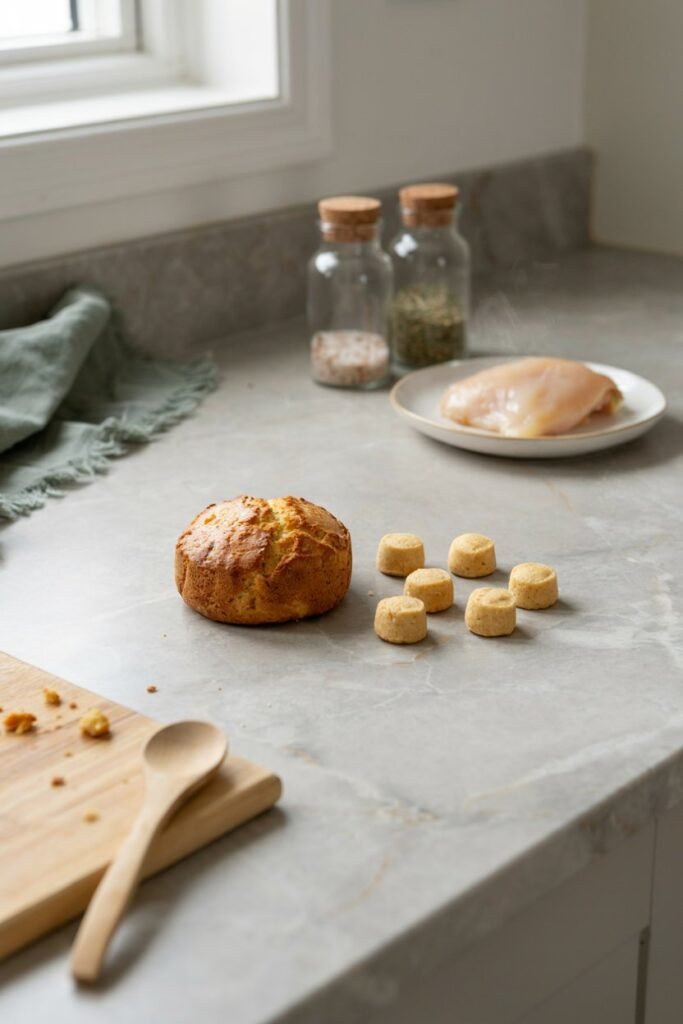
Making the treats too large
Cats do not need large portions of treats.
Making them small helps with calorie control and makes it easier to use them as rewards.
Adding human seasonings
Garlic, onion, salty sauces, and spicy seasonings have no place in homemade cat treats.
Keep the recipe plain.
Making too many at once
I prefer starting with a small batch.
If your cat does not like the recipe, you have not wasted a large amount of food or ingredients.
Assuming homemade means nutritionally complete
Homemade treats are still treats.
They should not replace a complete and balanced cat food unless a veterinary nutrition professional has specifically formulated a diet for your cat.
Ignoring storage
Meat based treats need appropriate food storage.
Do not leave them sitting at room temperature for long periods.
Giving treats without considering the rest of the diet
If your cat already receives commercial treats, dental treats, food rewards, or table scraps, homemade treats are additional calories.
The entire day’s intake matters.
Introducing too many ingredients at once
Keeping recipes simple makes it easier to identify what your cat likes and can also make it easier to notice if something does not agree with them.
Homemade Cat Treats Versus Store Bought Treats
I do not think homemade treats have to completely replace commercial treats.
Both options can have a place.
One advantage of homemade treats is that you have direct control over the ingredients.
You can choose plain chicken, turkey, salmon, or another suitable ingredient and prepare it yourself.
Homemade treats can also be useful if your cat has specific ingredient preferences.
Store bought treats, however, are much more convenient. They are portioned, packaged, labeled, and designed to be easy to store.
Some commercial treats also have specific purposes, such as dental care.
For me, homemade treats are more about simplicity and control than trying to prove that homemade is automatically better.
I would rather make a small batch of something my cat genuinely enjoys than prepare a complicated recipe simply because it sounds healthier.
What I Would Do If My Cat Refused the Treats
I would not keep pushing the same recipe.
Cats have strong preferences, and refusing a particular treat does not necessarily mean there is anything wrong with the recipe.
I would go back to a simple ingredient my cat already enjoys.
For example, plain cooked chicken can tell you a lot. If your cat happily eats that but refuses a chicken and pumpkin recipe, the additional ingredients or texture may be the issue.
You can also experiment with size.
Sometimes cutting a treat into a much smaller piece makes it easier for a cat to accept.
I also prefer giving a new treat when my cat is relaxed rather than trying to introduce something unfamiliar when she is already distracted.
Frequently Asked Questions
Are homemade cat treats healthy?
Homemade cat treats can be a simple occasional addition to a cat’s diet when they are prepared with appropriate ingredients and given in moderation. They should not replace a complete and balanced cat food.
What is the easiest homemade cat treat?
Plain cooked chicken cut into very small pieces is one of the simplest options. It does not require a complicated recipe and lets you control exactly what your cat receives.
Can cats eat homemade chicken treats?
Plain, fully cooked, boneless chicken can be used as an occasional treat for many cats. Avoid seasoning it with onion, garlic, sauces, or excessive salt.
Can cats have tuna treats?
Tuna can be used as an occasional treat, but it should not become a major part of a cat’s regular diet. Keep portions small and use plain tuna without added seasonings.
Can cats eat eggs?
Fully cooked plain egg can be suitable as an occasional treat for many cats. Avoid adding salt, butter, seasoning, onion, garlic, or other unsafe ingredients.
Can I freeze homemade cat treats?
Many homemade meat based treats can be frozen. Cool them completely first, freeze them in manageable portions, and store them in an appropriate freezer safe container.
How many homemade treats should I give my cat?
There is no single number that works for every cat. Consider your cat’s size, health, normal food intake, and the calories in the treats. Treats should generally remain a small portion of daily calories.
Can kittens eat homemade cat treats?
Kittens have specific nutritional requirements for growth. Treats should remain occasional and should not replace complete kitten food. Ask your veterinarian if you are unsure whether a particular treat is appropriate.
What should I do if my cat has a food allergy?
Do not introduce random ingredients if your cat has a known food allergy. Check the ingredients carefully and speak with your veterinarian before trying homemade recipes.
Can homemade treats replace cat food?
No. Homemade treats should not replace a complete and balanced cat food unless a veterinarian or qualified veterinary nutrition professional has specifically created a complete diet for your cat.
Final Thoughts
Making homemade cat treats does not have to become a complicated kitchen project.
Some of the best options are also the simplest.
Plain cooked chicken, turkey, salmon, or another appropriate ingredient can be turned into tiny treats without adding unnecessary seasonings or complicated ingredients.
I have found that keeping recipes simple also makes it easier to understand what my cat actually enjoys.
The biggest thing I would remember is that homemade treats are meant to be an occasional extra.
They should complement your cat’s regular complete and balanced food rather than replace it.
I also recommend starting with a very small batch. You may discover that your cat loves one recipe and completely ignores another.
That is part of the fun of making treats at home.
Once you find a recipe your cat enjoys, you can make a small batch, portion it into tiny pieces, and store some for later.
For me, that is what makes homemade cat treats worthwhile.
I know what went into them, I can control the portions, and I can make something simple that gives my cat a little extra excitement without turning treats into a major part of her diet.