
12 Secrets to Raising a Friendly and Loving Cat

Anyone who has spent time around cats knows that some are natural cuddle bugs while others seem to prefer their own company.
If you have ever wondered why your neighbor’s cat greets every visitor with a headbutt while yours disappears the moment someone knocks, the answer usually comes down to a combination of genetics, early experiences, and how consistently the cat has been handled over time.
Here is the encouraging part. Feline affection is not fixed.

Cats are far more trainable and emotionally responsive than most people realize.
With the right approach, even a naturally reserved cat can become noticeably warmer, more relaxed, and more bonded to its family.
Below are twelve research backed strategies, along with practical tips you can start using today, to help you raise a cat that is genuinely happy, confident, and affectionate.
Why Some Cats Are More Affectionate Than Others
Before diving into the strategies, it helps to understand what actually drives feline personality.
Studies on domestic cat behavior point to three major influences.
The first is genetics. Kittens can inherit a tendency toward boldness or shyness from their parents, particularly the father, even without ever meeting him.
The second is early life experience, especially the socialization window between two and seven weeks of age.
The third, and the one you have the most control over, is ongoing environment and handling throughout the cat’s life.
This means that while you cannot rewrite your cat’s genetic code, you have significant influence over the other two factors.
That influence is where these twelve secrets come in.
1. Start Socialization Early

The two to seven week window is the single most important period for shaping how a kitten relates to humans and other animals for the rest of its life.
During this stage, a kitten’s brain is highly receptive to new experiences.
If you are raising a kitten, gently expose it to a variety of calm people, different sounds like the vacuum or doorbell at a low volume, and safe handling from multiple family members.
Kittens who are handled by several gentle people during this window typically grow into adults who are comfortable with strangers, vet visits, and new environments.
If you adopted an older cat that missed this window, do not be discouraged.
Adult cats retain a surprising amount of behavioral flexibility.
It will simply take a slower, more deliberate approach built on trust rather than early exposure.
2. Handle Your Cat Gently and Often
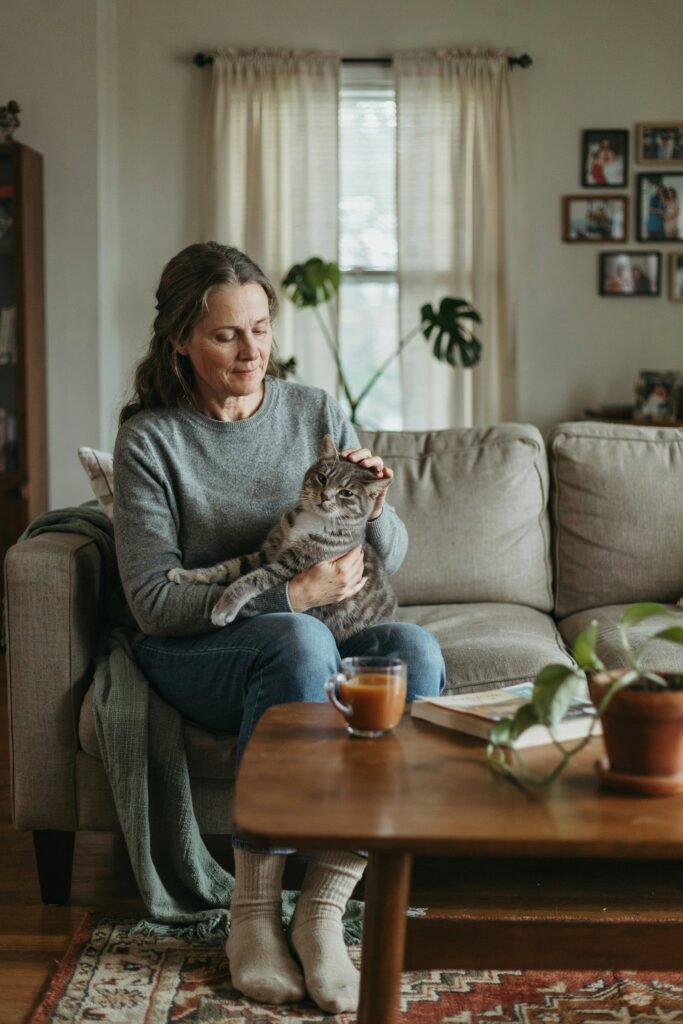
Touch is one of the primary ways cats build trust with the people around them, but only when it happens on their terms.
Spend a few minutes each day offering gentle petting focused on areas most cats enjoy, including the cheeks, chin, base of the ears, and the base of the tail.
Watch your cat’s body language closely.
Flattened ears, a tail that begins to lash, or skin that ripples along the back are all signs your cat has had enough.
Stopping at the first sign of discomfort, rather than pushing through it, teaches your cat that you listen to its signals.
That predictability is the foundation of trust.
3. Respect Their Boundaries
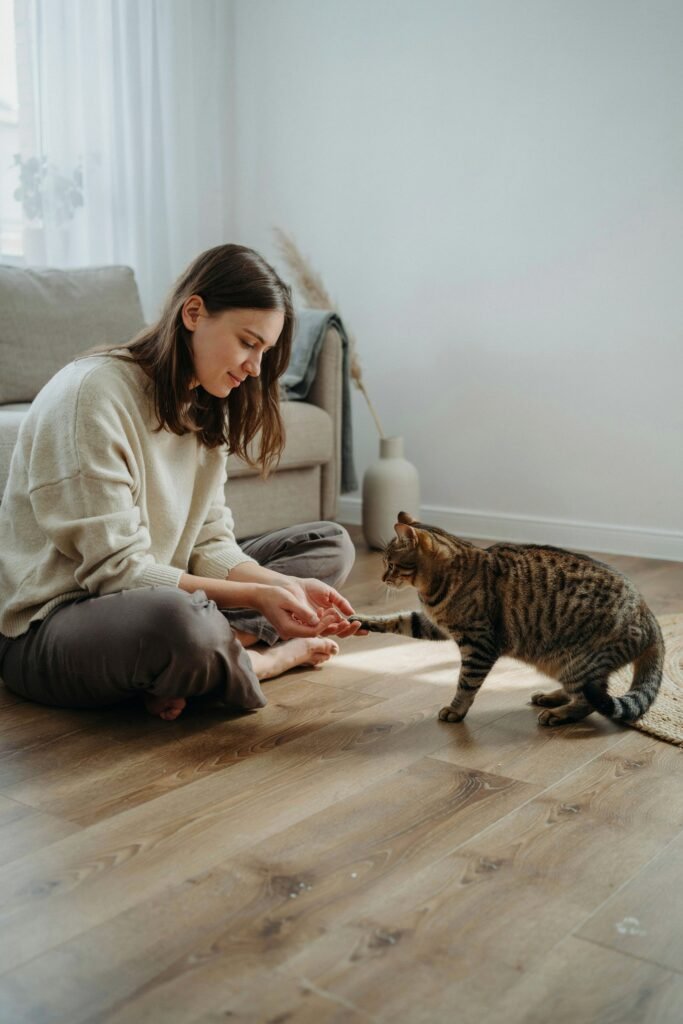
It may seem counterintuitive that giving your cat more freedom leads to more affection, but this is one of the most well documented principles in feline behavior.
Cats that are allowed to approach and disengage on their own schedule feel a greater sense of control over their environment, which lowers baseline stress.
Avoid cornering your cat for cuddles, forcing it out from hiding spots, or picking it up when it clearly wants to be left alone.
Instead, sit nearby, remain calm, and let curiosity do the work.
Cats that are given this kind of autonomy often become the ones who later choose to sleep on your chest or follow you from room to room.
4. Use Positive Reinforcement Consistently

Reward calm, social behavior the moment it happens.
If your cat approaches, sits near you, or tolerates a gentle pet, mark that moment with a small treat, a soft verbal cue, or a few seconds of play.
This teaches your cat, through repetition, that being close to you leads to good outcomes.
Avoid any form of punishment, including yelling, spray bottles, or physical correction.
These methods do not teach cats what to do instead.
They only teach a cat to associate you with unpredictability and fear, which directly undermines the trust you are trying to build.
If your cat is scratching furniture or biting during play, redirect the behavior toward an appropriate outlet, such as a scratching post or a wand toy, rather than correcting the cat directly.
5. Create a Predictable Daily Routine

Cats are creatures of habit, and unpredictability is one of the most common hidden sources of stress in a cat’s life.
A consistent routine for feeding times, play sessions, and quiet periods gives your cat a reliable framework for the day.
Try feeding at roughly the same times each morning and evening, keep the litter box in a consistent, accessible location, and set aside regular windows for interactive play.
When a cat’s basic needs are met predictably, it has more emotional capacity available for social bonding rather than vigilance or anxiety.
6. Make Playtime a Daily Non Negotiable
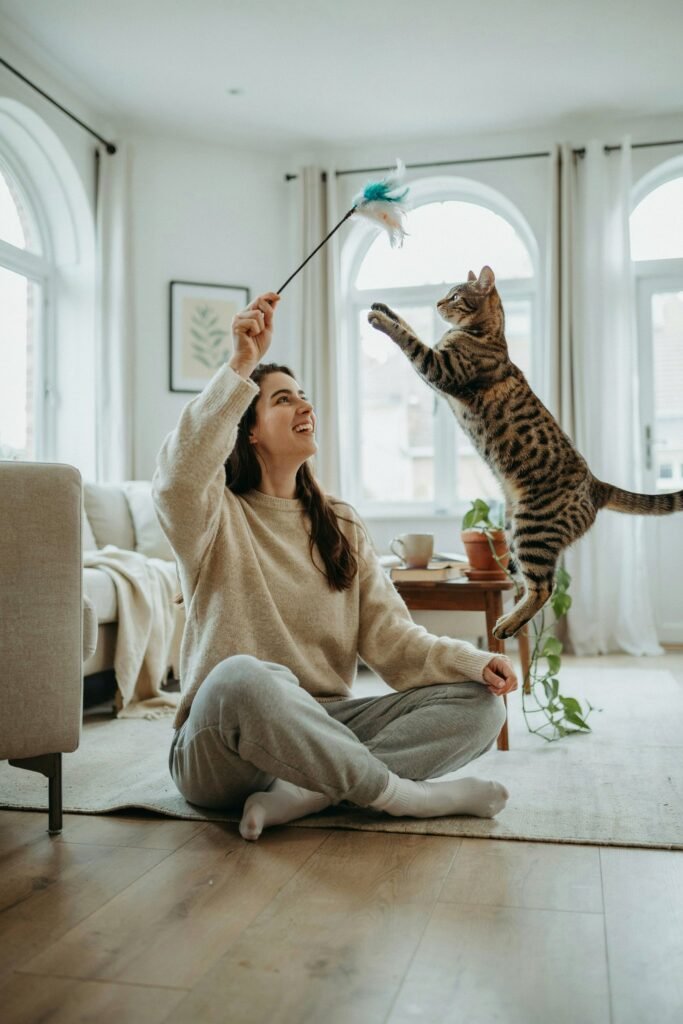
Interactive play is one of the fastest and most reliable ways to build a positive association between you and your cat.
Wand toys, feather teasers, and crinkle balls tap into natural predatory instincts, allowing your cat to stalk, chase, and pounce in a safe, structured way.
Aim for two sessions of ten to fifteen minutes each day, ideally ending with a small treat or meal to mimic the natural hunt, eat, groom, sleep cycle.
Regular play not only strengthens your bond, it also reduces the boredom and pent up energy that often show up as destructive behavior or irritability.
7. Learn to Read Feline Body Language

Cats communicate constantly through subtle physical cues, and learning to read them allows you to respond in ways that build rather than erode trust.
A relaxed, content cat typically shows soft, half closed eyes, a loosely curled or still tail, and forward facing ears.
A stressed cat may show dilated pupils, a low crouched posture, a tucked tail, or ears rotated sideways or backward.
Slow blinking is particularly worth understanding.
When a cat looks at you and slowly closes and opens its eyes, this is widely regarded as a feline expression of trust and affection, sometimes called a cat kiss.
Practicing slow blinks back at your cat during calm moments can genuinely strengthen your bond over time.
8. Provide a Safe and Enriched Environment
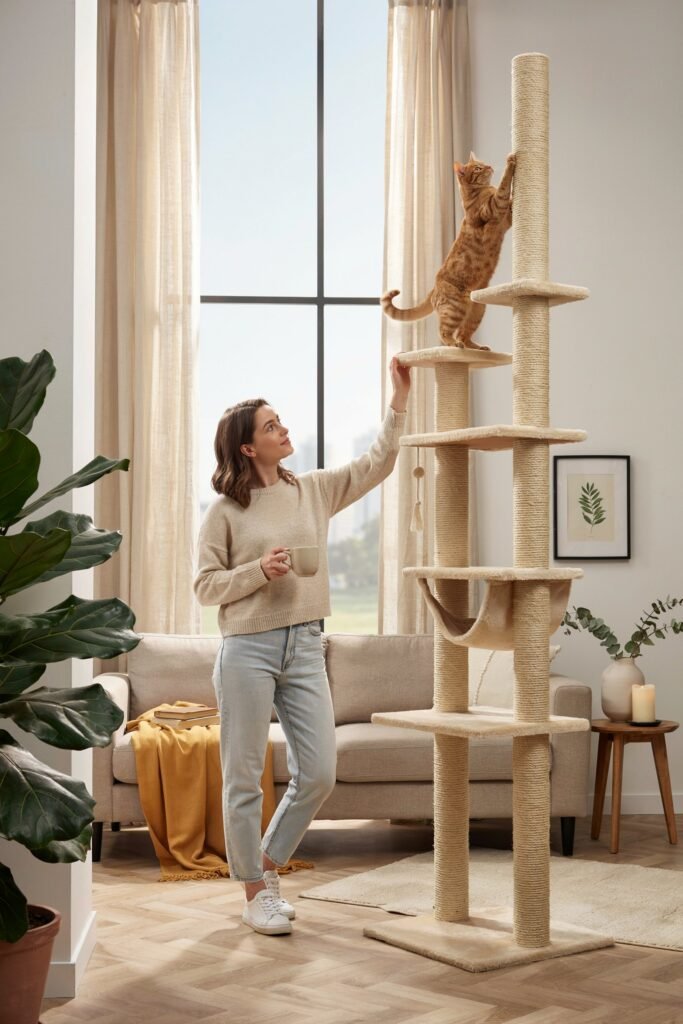
A cat that feels physically secure in its home is far more likely to display relaxed, social behavior.
Vertical space is especially important, since cats naturally feel safer when they can observe their surroundings from an elevated position.
Cat trees, wall mounted shelves, and window perches all serve this purpose well.
Beyond vertical space, provide multiple scratching surfaces, at least one quiet hiding spot per cat in the household, and access to natural light.
In multi cat homes, the general guideline is one litter box per cat plus one extra, placed in separate low traffic locations to reduce competition and stress.
9. Introduce New People and Situations Slowly
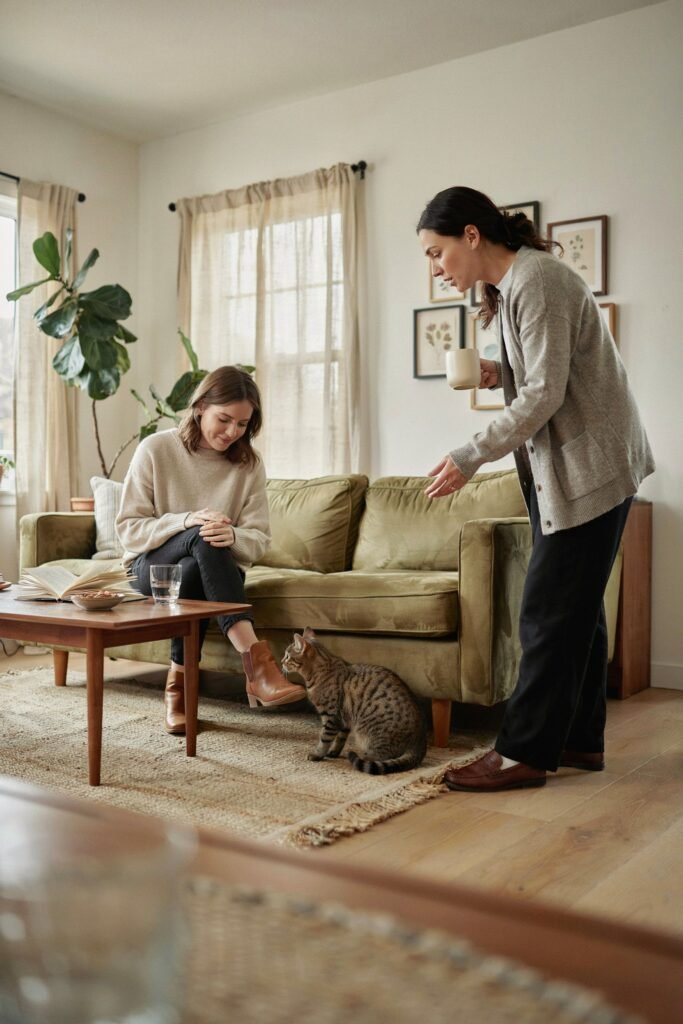
Whether you are welcoming a new kitten, a returning guest, or a new pet into the household, gradual exposure consistently outperforms rushed introductions.
Allow your cat to observe new people or animals from a comfortable distance before any direct contact occurs.
Scatter small treats near the new person or situation, without insisting on physical interaction, so your cat begins to build a positive association at its own pace.
For introducing a new pet, a slow process involving scent swapping and supervised, short visits over one to two weeks tends to produce far better long term relationships than immediate face to face meetings.
10. Talk to Your Cat Often
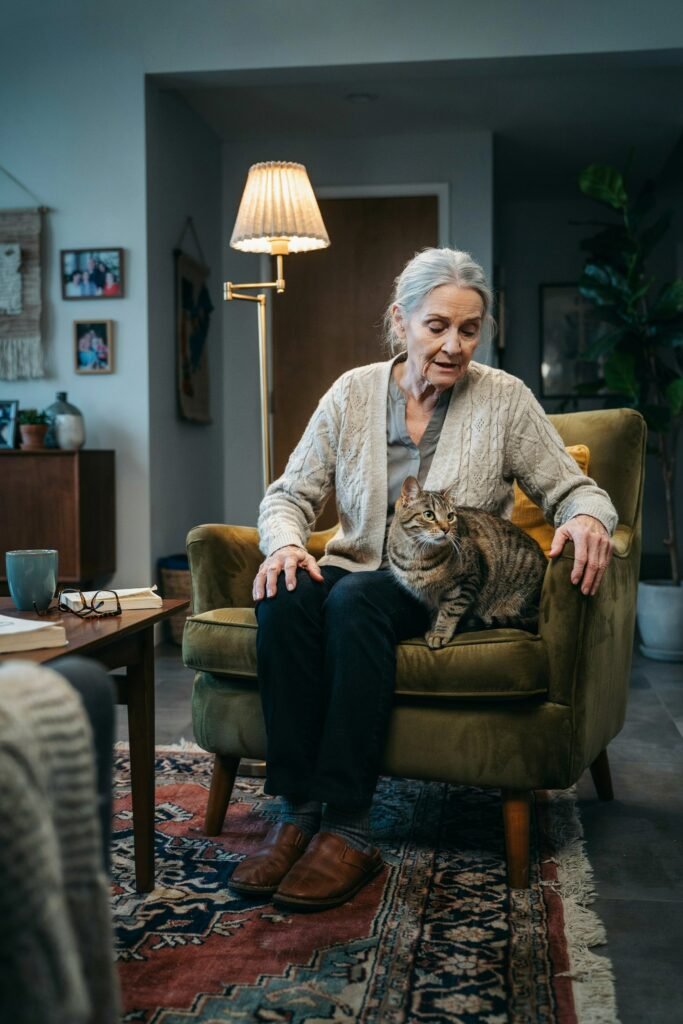
Cats are remarkably attentive to the tone, pitch, and rhythm of human speech, even without understanding specific words.
Speaking to your cat in a calm, warm voice throughout the day, whether during feeding, grooming, or simply passing through a room, reinforces a sense of familiarity and safety.
Many cats learn to recognize their own name and respond specifically to their owner’s voice among others.
This ongoing verbal connection, though easy to overlook, is a meaningful contributor to the emotional bond between cat and owner.
11. Groom Your Cat Regularly
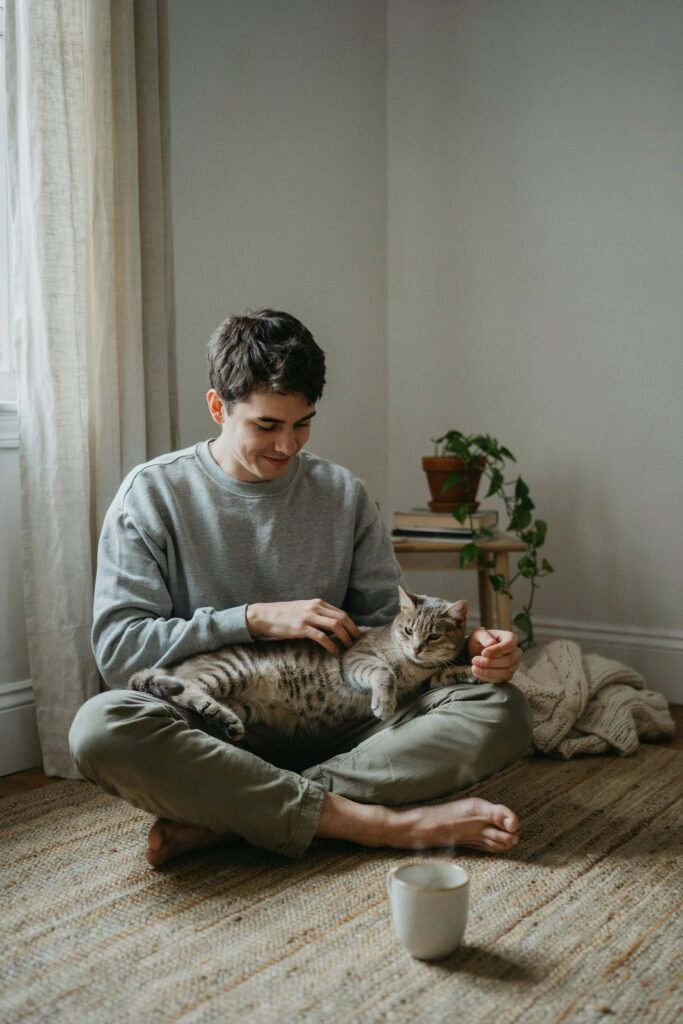
Gentle brushing mimics the social grooming, known as allogrooming, that cats naturally perform with trusted companions.
Regular grooming sessions, even for short haired cats, offer a low pressure way to spend focused, calm time together while also giving you a chance to check for mats, parasites, or skin issues early.
Start slowly if your cat is unfamiliar with grooming, keeping the first few sessions under a minute and rewarding calm behavior afterward.
Over time, most cats come to associate grooming with comfort and closeness rather than tolerating it as a chore.
12. Be Patient and Consistent Over Time

The final and most important secret is patience.
Some cats warm up within days of a routine change, while others may take several months to feel fully secure, particularly rescues with an unknown history.
Consistency in your tone, handling, and daily routine matters far more than any single technique on this list.
Avoid comparing your cat’s timeline to others you see online.
Progress often looks small at first, such as a cat choosing to nap in the same room as you or offering a slow blink from across the house.
These moments are genuine milestones and worth recognizing as real progress.
Common Mistakes That Push Cats Away
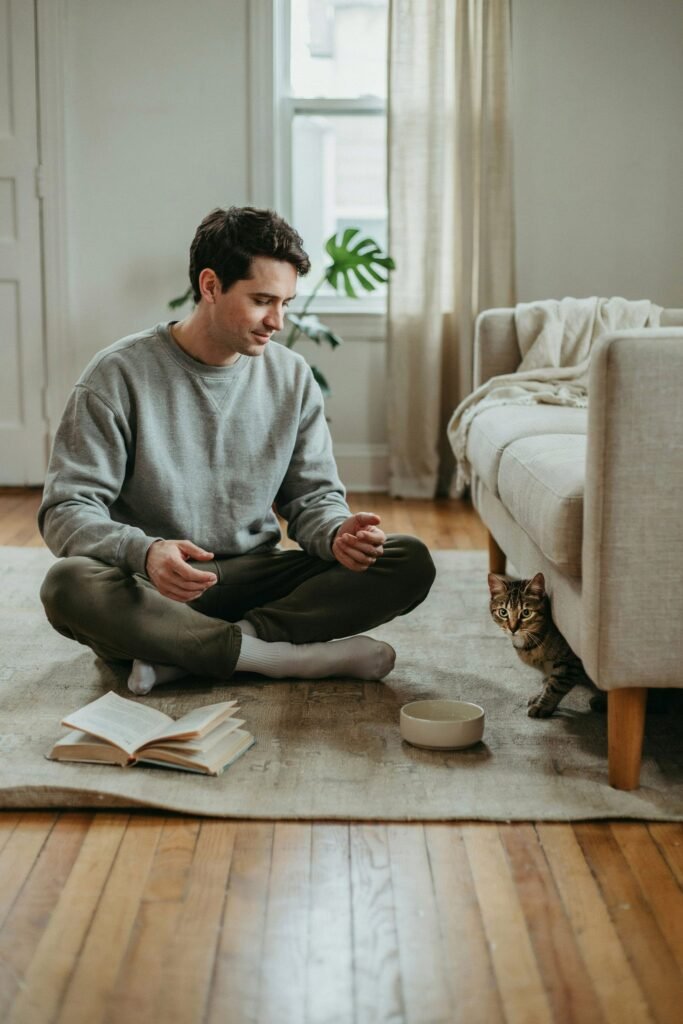
Even well meaning owners sometimes unintentionally damage trust.
Being aware of these common missteps can help you avoid setbacks.
Forcing physical affection, such as holding a cat that is trying to leave, is one of the most frequent mistakes and often the biggest setback to building trust.
Using punishment for normal feline behaviors like scratching, hissing, or hiding also tends to increase fear rather than correct the behavior.
Inconsistent routines, sudden environmental changes without a gradual transition, and skipping daily play are other common factors that quietly erode a cat’s sense of security.
Loud, high energy households without any quiet retreat space can also be genuinely stressful for more sensitive cats, so ensuring at least one calm, low traffic area is available at all times makes a meaningful difference.
Signs Your Cat Trusts and Loves You

Progress is not always obvious, so it helps to know what to look for.
A cat that trusts you may show its belly while relaxed, though this is often a sign of comfort rather than an invitation to touch it there.
Kneading with the paws, a behavior left over from nursing as a kitten, is another strong sign of contentment and security.
Slow blinking, following you from room to room, sleeping near or on you, and bringing toys to you are all meaningful indicators of a strong bond.
Even a cat that simply chooses to sit in the same room as you, without demanding attention, is expressing a quiet form of trust.
Frequently Asked Questions
Can an unfriendly adult cat still become more affectionate? Yes. While early socialization plays a major role, adult cats retain significant behavioral flexibility.
With consistent, patient handling, many cats that start out shy or standoffish become noticeably warmer within a few months.
How long does it typically take to build trust with a new cat? This varies widely depending on the cat’s history and personality.
Some cats settle in within a week or two, while rescues with limited early socialization may take three to six months, or occasionally longer, to feel fully secure.
Do certain breeds tend to be more affectionate? Breed can influence general tendencies.
Breeds such as Ragdolls, Siamese, and Maine Coons are often described as more social, while breeds like the Russian Blue or British Shorthair tend to be more independent.
That said, individual personality and upbringing usually matter more than breed alone.
Is it bad if my cat does not like to be held? Not at all. Many affectionate cats simply prefer to show love through proximity, slow blinking, or sitting nearby rather than being physically restrained.
Forcing holding can actually reduce trust, so it is best to let your cat set the terms of physical contact.
Should I get a second cat to help my current cat become friendlier? This depends entirely on the individual cat’s personality.
Some cats become more relaxed and playful with feline companionship, while naturally solitary or anxious cats may become more stressed.
A slow, well managed introduction gives the best chance of a positive outcome either way.
Final Thoughts
Raising a friendly, loving cat is less about any single trick and more about consistently offering safety, predictability, and positive experiences over time.
Starting socialization early when possible, respecting your cat’s boundaries, relying on positive reinforcement, and dedicating time each day to play, grooming, and calm interaction all work together to build lasting trust.
Every cat, regardless of age or background, is capable of forming a genuine bond with the people who care for it.
With patience and the strategies outlined above, you can help your cat feel secure enough to show its most affectionate side, turning your home into a place where both of you feel truly connected.