
Instant Pot Turkey Dog Food Recipe
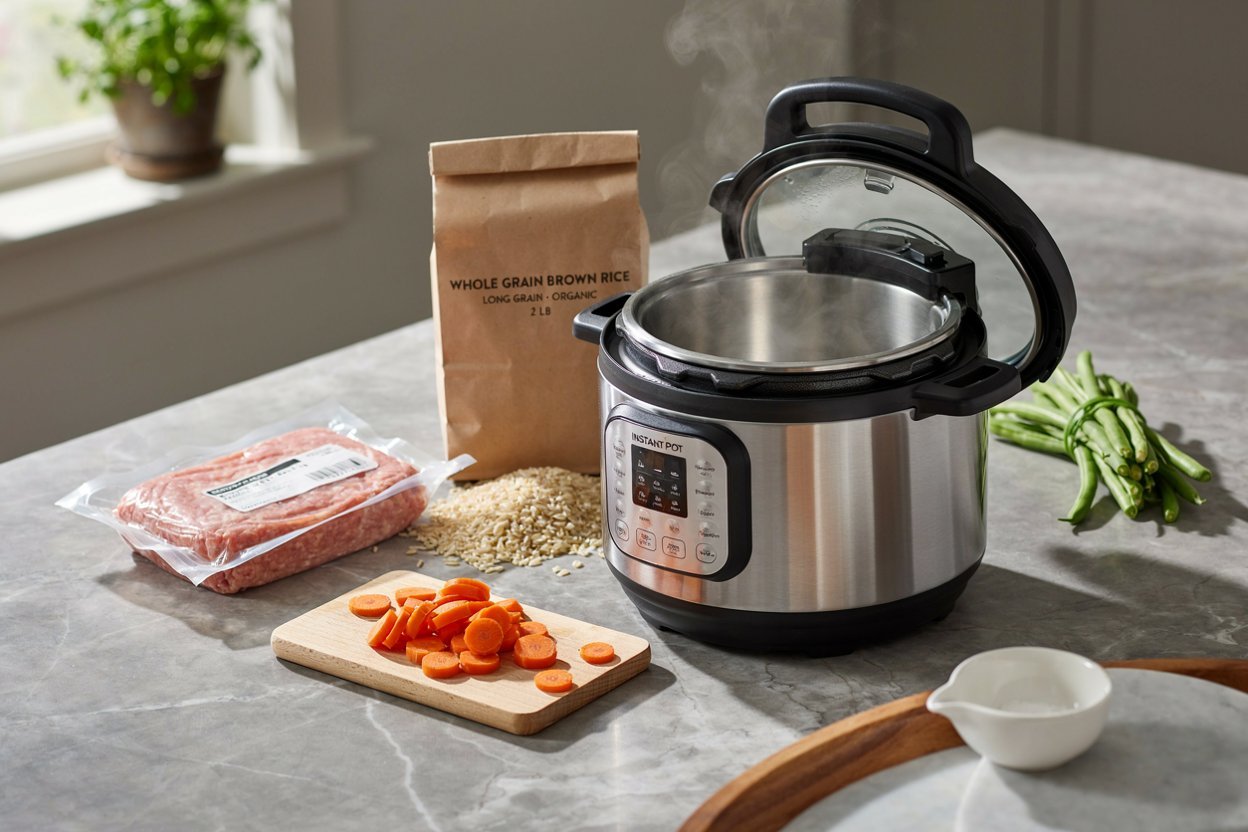
The Instant Pot has become one of the most useful tools in my kitchen for cooking dog food, mostly because it takes almost all the babysitting out of the process.
Instead of standing over a pot watching turkey brown and rice simmer separately, I can load everything in, set the timer, and walk away entirely until it’s done.
For anyone who wants to cook fresh meals for their dog without carving out a big block of active kitchen time, that difference matters more than it sounds like it should.
This guide walks through a full Instant Pot turkey dog food recipe from start to finish, along with four variations to keep things interesting, a real explanation of why each ingredient earns its place, and everything else you need to actually use this recipe well, from portioning to storage to troubleshooting a pot that isn’t behaving the way you expected.
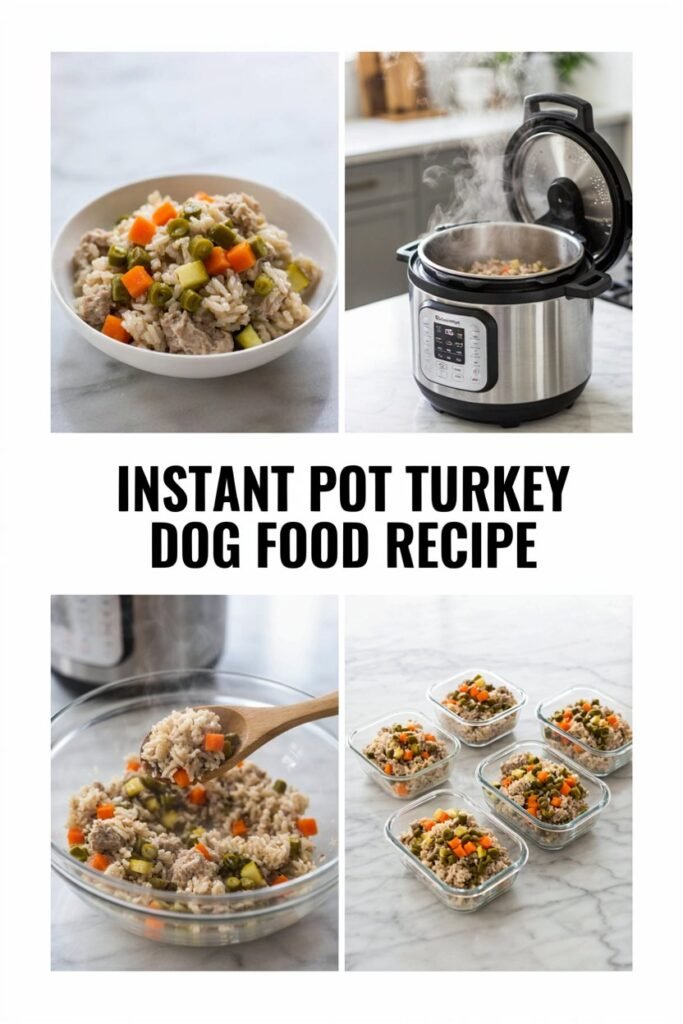
If you want to keep building your homemade cooking rotation beyond this one, a few related guides are worth having open alongside this one.
Homemade dog food with vet approved ingredients covers what a fully balanced diet needs beyond just picking good ingredients, ground turkey dog food recipe for beginners offers a simpler stovetop version if you don’t have an Instant Pot handy, 7 high protein homemade dog food recipes and high protein chicken meals for dogs give you plenty of room to expand your rotation with other proteins, 3 simple farmer’s dog food recipes, fresh dog food recipes that dogs love, and 3 ingredient cooked dog food round out the broader picture, 10 homemade dog meals with sweet potato pairs especially well with one of the variations below, and human foods dogs can safely eat is worth a look if you’re also curious about what’s safe to share from your own kitchen.
Disclaimer
This post may contain affiliate links. As an Amazon Associate, I earn from qualifying purchases at no additional cost to you. The information in this article is for general informational purposes only. Always use dog safe ingredients and consult your veterinarian before making homemade dog food a regular part of your dog’s diet.
Amazon Shopping List You Need
- Instant Pot Pressure Cooker – I use mine to make homemade dog meals quickly.
- Digital Kitchen Scale – I always use one for accurate portions.
- Stainless Steel Mixing Bowls – I use these when prepping ingredients.
- Food Processor – I like this for quickly chopping vegetables.
- Glass Meal Prep Containers – I use these to portion and refrigerate meals.
- Silicone Freezer Trays – I love these for freezing individual servings.
- Stainless Steel Dog Bowls – I always serve homemade meals in these.
Why Use an Instant Pot for Homemade Dog Food?
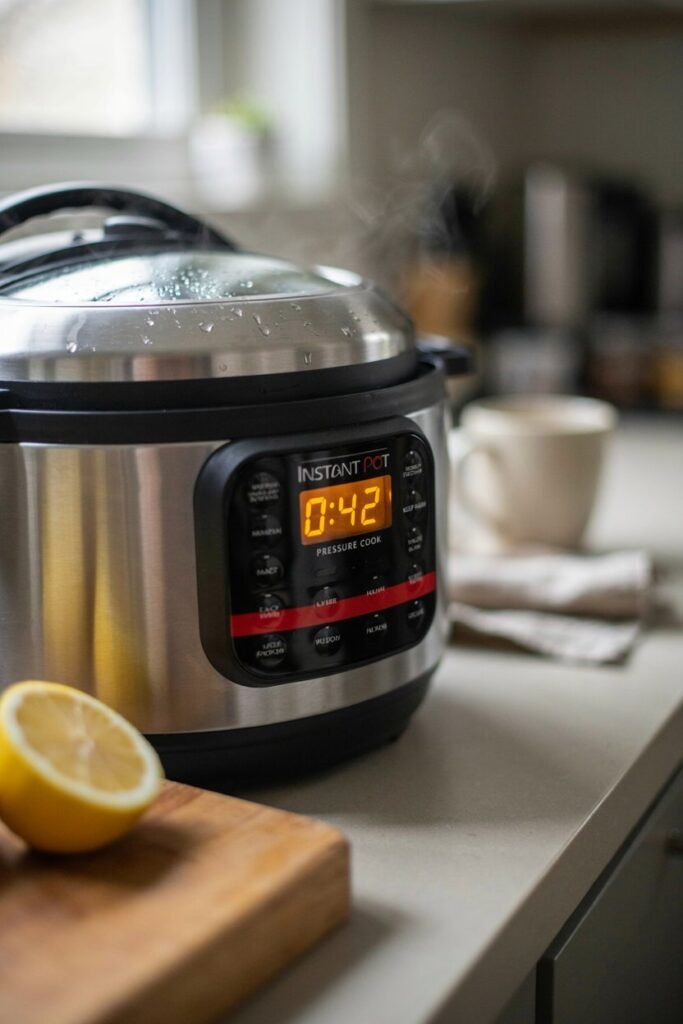
Pressure cooking genuinely changes the calculus of homemade dog food in a few concrete ways. It cooks turkey, rice, and vegetables all in roughly the same amount of time it would take to just cook the protein alone on the stovetop, which means a full batch comes together in under an hour with only a few minutes of actual hands on work.
It also cooks everything more evenly, since the sealed, pressurized environment surrounds the food with heat from every direction rather than relying on a pan bottom to transfer heat upward.
And because the pot is sealed during cooking, there’s less risk of the kitchen filling with cooking smells for an hour, which matters more than people expect once you’re making a big batch every week or two.
None of that makes an Instant Pot strictly necessary. Every recipe in this guide can be adapted to a stovetop with a bit more attention and a bit more time.
But if you already own one, or you’re deciding whether it’s worth adding to your kitchen specifically for cooking dog food, the time savings alone make a genuine difference for anyone doing this regularly.
How Pressure Cooking Actually Changes the Result
Beyond just saving time, pressure cooking changes the texture of the finished meal in ways worth understanding before you start. The sealed environment traps steam, which raises the internal cooking temperature above what’s achievable in an open pot on the stovetop.
That higher temperature, combined with the moist environment, breaks down tougher connective tissue in meat more thoroughly than a quick stovetop sear would, which is part of why ground turkey comes out of the Instant Pot noticeably tender rather than occasionally dry or slightly chewy the way it can with a rushed stovetop batch.
Rice and root vegetables benefit similarly, softening evenly throughout rather than potentially staying firm in the center while the outside overcooks, which is a more common problem than people expect when trying to cook rice and dense vegetables together in the same standard pot on a burner.
There’s also a food safety angle worth mentioning. Because the Instant Pot maintains a consistent, elevated internal temperature throughout the entire cook cycle, it’s genuinely effective at fully cooking ground meat all the way through, including the center of larger clumps that might otherwise be harder to fully cook using stovetop methods without a lot of active stirring and breaking apart.
Before You Start
As with any homemade recipe, it’s worth being upfront that this recipe, cooked in an Instant Pot or otherwise, isn’t automatically a complete and balanced diet suitable for feeding as your dog’s sole food over the long term just because it uses fresh, whole ingredients. Dogs need more than protein, carbohydrate, and vegetables to thrive day after day.
A properly formulated diet intended for daily feeding accounts for protein, fat, carbohydrates, calcium, phosphorus, essential fatty acids, vitamins, minerals, and a range of trace nutrients, all in specific proportions.
Used as an occasional meal, a topper, or a starting point while you build out a rotation, this recipe is genuinely useful.
Used as the only thing your dog eats every day indefinitely, it needs more planning, ideally with input from a veterinarian or a board certified veterinary nutritionist, particularly around calcium, which whole food ingredients alone typically don’t provide in sufficient amounts.
Understanding the Ingredients
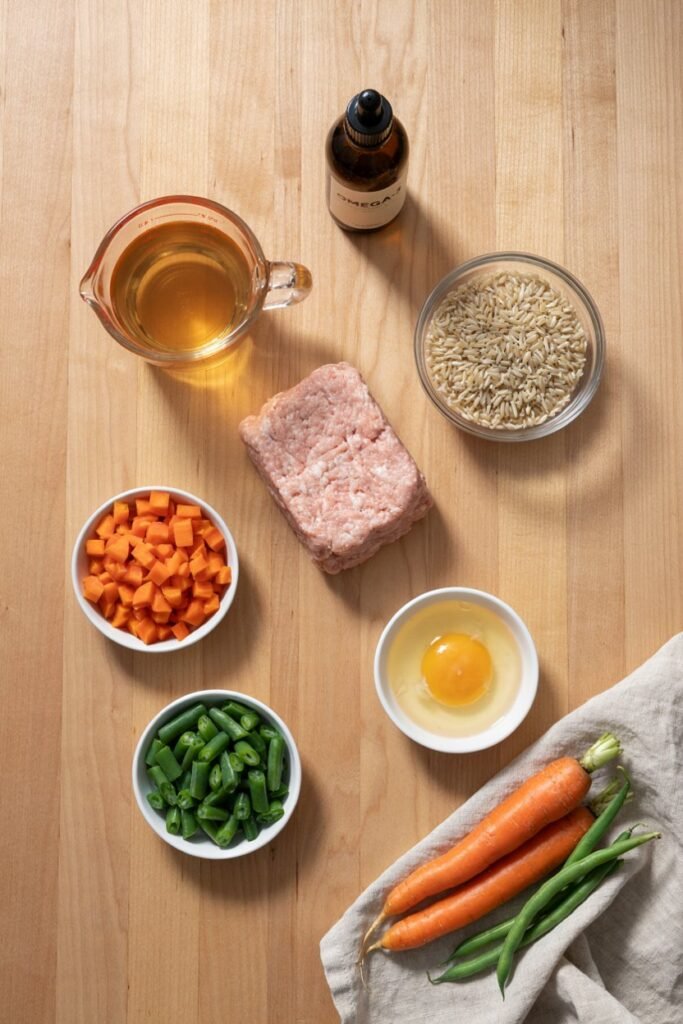
Ground turkey. Turkey is one of the leanest common proteins available, gentle on digestion and mild enough that most dogs take to it without hesitation.
It holds up especially well to pressure cooking, staying moist and tender rather than drying out the way it sometimes can with prolonged stovetop cooking.
Brown rice. Rice provides a reliably tolerated carbohydrate base, and brown rice specifically adds a bit more fiber than white rice while still cooking down soft and easy to digest under pressure.
It absorbs flavor from the turkey and broth as everything cooks together in the same pot.
Carrots. Carrots contribute fiber, beta carotene, and a bit of natural sweetness, and their firm texture holds up reasonably well through pressure cooking without turning to mush the way some more delicate vegetables can.
Green beans. Green beans add volume and fiber without contributing many extra calories, and they cook down tender enough to be easily digestible by the time the pressure cooking cycle finishes.
Low sodium chicken or turkey broth. Broth replaces plain water as the cooking liquid, adding flavor and a bit of extra moisture to the finished dish.
It’s essential that whatever broth you use is free of onion, garlic, and excessive salt, since these are common flavoring agents in broth made for human consumption but are unsafe for dogs.
Egg, added after cooking. A single egg, scrambled separately and stirred in once the main mixture has cooled, boosts the protein content of the finished meal without needing to go through the pressure cooking cycle itself.
Fish oil, optional. Added at the very end once everything has cooled, fish oil contributes omega fatty acids that support skin and coat health, rounding out the nutritional profile of an otherwise turkey and carbohydrate heavy meal.
Ingredients I Avoid
Onion, garlic, chives, excessive salt, seasoning blends, rich sauces, xylitol, grapes, raisins, chocolate, and cooked bones have no place in this recipe or any variation of it.
It’s worth checking the broth label specifically before using it in the Instant Pot, since a surprising number of otherwise plain sounding broths include onion or garlic for flavor, even ones marketed toward health conscious human shoppers.
Instant Pot Turkey Dog Food Recipe
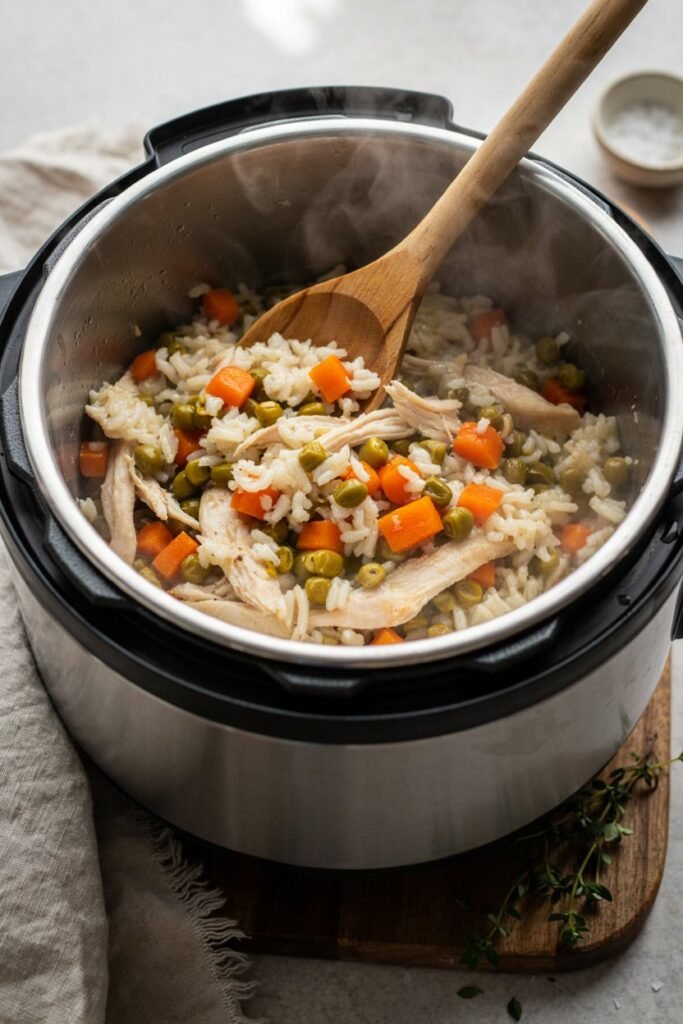
Yield: About 8 to 10 servings, depending on your dog’s size Prep Time: 10 minutes Cook Time: 25 minutes, plus pressure release time Total Time: About 45 minutes Storage: Refrigerate up to 4 days, freeze up to 3 months
Ingredients
- 2 pounds ground turkey. Turkey provides the main protein in this meal, and pressure cooking keeps it noticeably moist compared to some stovetop methods.
- 1.5 cups brown rice, uncooked. Rice cooks directly in the pot alongside the turkey, absorbing flavor from the broth as everything pressure cooks together.
- 1 cup carrots, chopped. Carrots add fiber and a bit of natural sweetness, holding their shape reasonably well through the cooking process.
- 1 cup green beans, chopped. Green beans add volume and fiber, cooking down tender by the time the pressure releases.
- 3 cups low sodium chicken or turkey broth, onion and garlic free. Broth serves as the cooking liquid for the entire recipe, adding flavor and moisture throughout.
- 1 egg, scrambled separately. Added after the main mixture has cooled, the egg boosts the protein content of the finished meal.
- 1 teaspoon fish oil, optional. Stirred in once everything has cooled, fish oil adds omega fatty acids the rest of the recipe doesn’t provide much of.
How to Make It
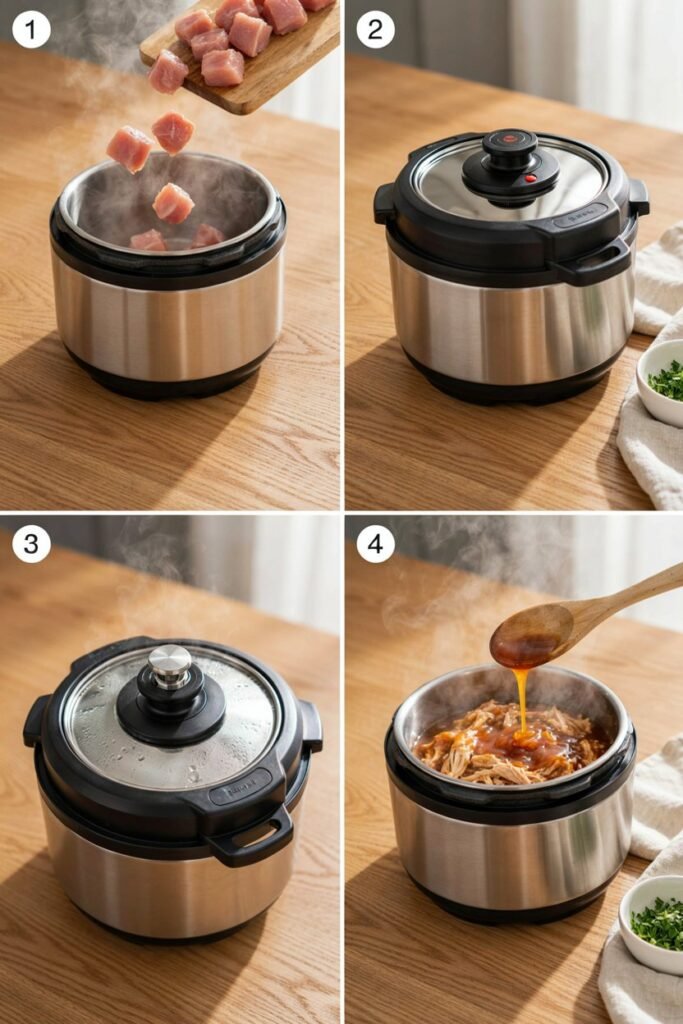
- Add the ground turkey directly to the Instant Pot insert, breaking it up slightly with a spoon.
- Add the uncooked rice, chopped carrots, and chopped green beans on top of the turkey.
- Pour in the broth, making sure the rice is fully submerged.
- Seal the lid and set the valve to sealing.
- Cook on high pressure for 12 minutes.
- Allow a natural pressure release for 10 minutes, then carefully release any remaining pressure manually.
- Open the lid and stir the mixture thoroughly, breaking up any large clumps of turkey.
- Let the mixture cool to room temperature.
- Scramble the egg separately in a small pan, then stir it into the cooled mixture along with the fish oil, if using.
- Portion into individual servings before refrigerating or freezing.
How Much Should You Serve?
There’s no single serving size that works for every dog, and feeding amounts depend on your dog’s weight, age, activity level, body condition, and the rest of their diet.
As a general starting point, most adult dogs eat somewhere between 2 and 3 percent of their body weight in food per day, split across two meals, though this shifts for puppies, seniors, or dogs with specific health conditions.
Working with your veterinarian to calculate a more precise calorie target is the most reliable way to get portions right, rather than relying on a generic estimate.
Storage
Refrigerator. Store in a clean, airtight container and use within about 4 days.
Freezer. Portion the mixture into individual servings before freezing, which makes future meals far more convenient since you’re only thawing what you actually need. Most portions hold their quality for up to 3 months in the freezer.
Thawing. Thaw frozen portions in the refrigerator overnight rather than leaving them out at room temperature.
Reheating. Warm gently if desired, and always check that the food isn’t too hot before serving it.
4 Ways to Customize This Instant Pot Recipe
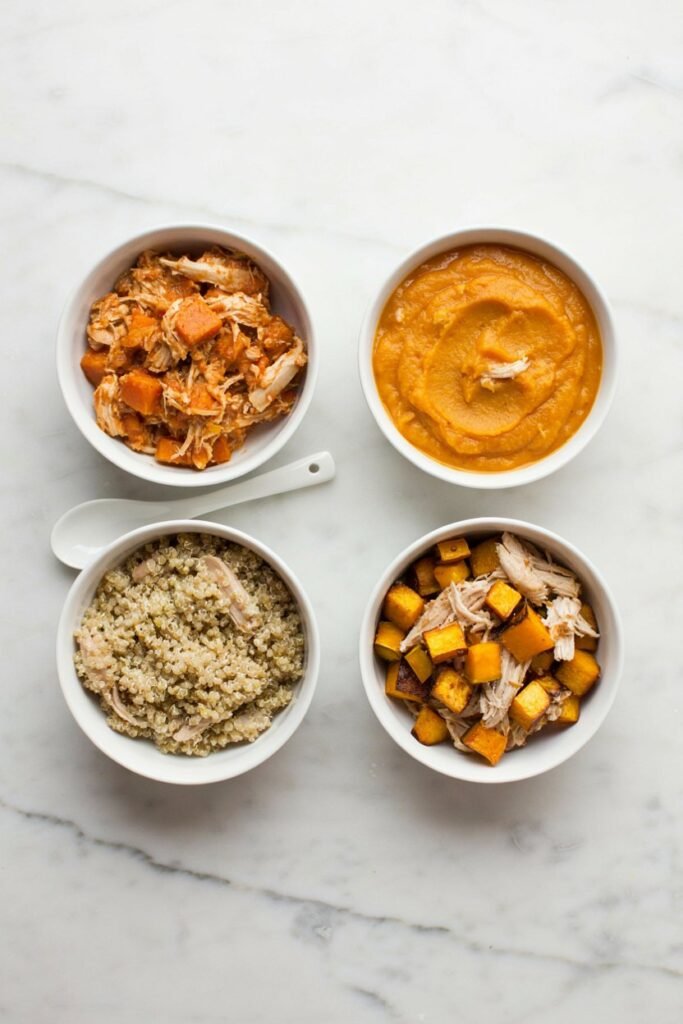
Turkey and Sweet Potato Variation
Replace the brown rice with 2 cups of sweet potato, peeled and cut into chunks.
Sweet potato cooks down soft under pressure and pairs naturally with turkey’s mild flavor, adding fiber and a bit of natural sweetness in place of rice’s more neutral profile.
Follow the same cooking time and process as the main recipe, adding the sweet potato chunks alongside the turkey and vegetables before sealing the lid.
Turkey and Pumpkin Variation
Skip the rice entirely and stir in 1 cup of plain pumpkin puree after the pressure cooking cycle finishes and the mixture has cooled slightly.
Since pumpkin puree is already soft and doesn’t need pressure cooking, adding it after the main cook keeps its texture and fiber content intact rather than breaking down further under pressure.
This variation results in a softer, more digestion friendly meal, useful for a dog with a sensitive stomach.
Turkey and Quinoa Variation
Replace the brown rice with 1.5 cups of quinoa, rinsed thoroughly before adding to the pot.
Quinoa cooks in a similar amount of time to rice under pressure and contributes its own complete protein on top of the turkey, making this variation the highest protein option among the four.
Reduce the broth slightly, to about 2.5 cups, since quinoa absorbs less liquid than rice does.
Turkey and Butternut Squash Variation
Replace the carrots and green beans with 2 cups of butternut squash, peeled and cut into chunks.
Squash cooks down soft and naturally sweet under pressure, giving this variation a noticeably different flavor profile from the original recipe while keeping the same basic turkey and carbohydrate structure.
This is a good seasonal option and tends to photograph beautifully if you’re sharing your homemade cooking process with anyone else.
Instant Pot Tips for Cooking Dog Food
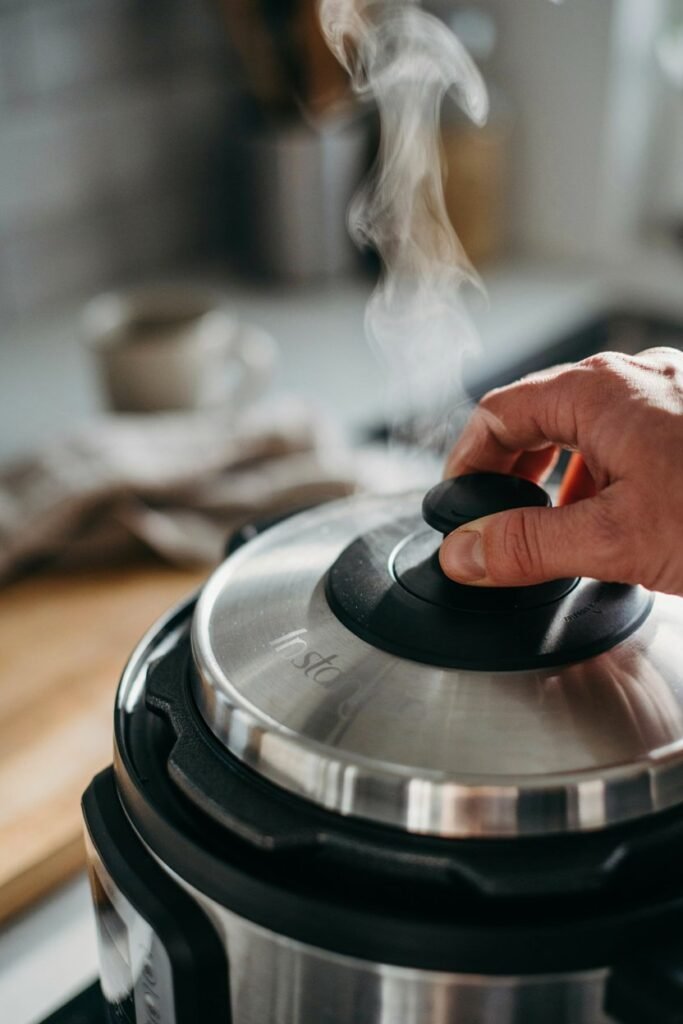
Don’t skip the natural release. Releasing pressure too quickly right after cooking can cause the rice and liquid mixture to sputter out of the valve, creating a mess and potentially undercooking the rice slightly. A partial natural release, even just 10 minutes, prevents most of this.
Break up the turkey before sealing the lid. Ground turkey tends to clump together in the pot, and breaking it into smaller pieces before cooking helps it cook more evenly rather than leaving dense, undercooked clumps in the center.
Don’t overfill the pot. Instant Pots need enough headspace to build and release pressure properly. If you’re doubling this recipe, check your specific pot’s maximum fill line rather than assuming a larger batch will fit the same way a smaller one does.
Let the mixture cool before adding egg or fish oil. Both ingredients are meant to be added after the main cooking process, once the mixture has cooled enough that it won’t partially cook the egg unevenly or degrade the fish oil with residual heat.
Clean the sealing ring regularly. The rubber sealing ring on an Instant Pot can retain odors over time, and running it through a normal dishwasher cycle or hand washing it after each dog food batch keeps flavors from carrying over into your own cooking.
How to Transition Your Dog to This Recipe
Don’t replace your dog’s regular food with this recipe all at once. A gradual transition over about a week gives their digestive system time to adjust without triggering an upset stomach.
Days 1 to 2. Mostly current food, with a small amount of the turkey recipe mixed in.
Days 3 to 4. Increase the homemade portion while continuing to reduce the old food.
Days 5 to 6. Continue increasing the homemade portion if stools remain normal throughout.
Day 7. Complete the switch, or continue further, if your dog has tolerated the process well.
Watch for loose stool, vomiting, excessive gas, or reduced appetite throughout the transition. If symptoms are significant or persistent, slow the process down or contact your veterinarian rather than pushing through.
How to Meal Prep This Recipe for the Week
The whole appeal of cooking this recipe in an Instant Pot is how well it lends itself to batch cooking. I generally double the recipe on a weekend, which the pot handles without much extra effort beyond a slightly longer time to come up to pressure at the start.
Once everything is cooked and cooled, I divide it directly into individual meal containers, label each with the date, and keep about four days’ worth in the fridge with the rest going straight into the freezer.
That one step turns a single cooking session into most of two weeks of ready meals, which has made homemade feeding feel far more sustainable on busy weeks than it did when I was cooking smaller batches more frequently on the stovetop.
Easy Ingredient Substitutions
Turkey to chicken. Ground chicken works as a direct substitute in the same quantity and cooks similarly well under pressure.
Brown rice to white rice. White rice is gentler on a sensitive stomach and cooks slightly faster, so reduce the cook time to about 8 minutes if making this swap.
Carrots to zucchini. Zucchini cooks down softer than carrot under pressure, so add it in slightly larger pieces to prevent it from breaking down too much.
Green beans to peas. Peas work as a direct swap in the same quantity and require no adjustment to cook time.
Substitutions can shift the overall calorie and nutrient composition of the recipe, so it’s worth keeping that in mind if you’re using this meal regularly rather than as an occasional addition.
Ingredients You Should Never Add
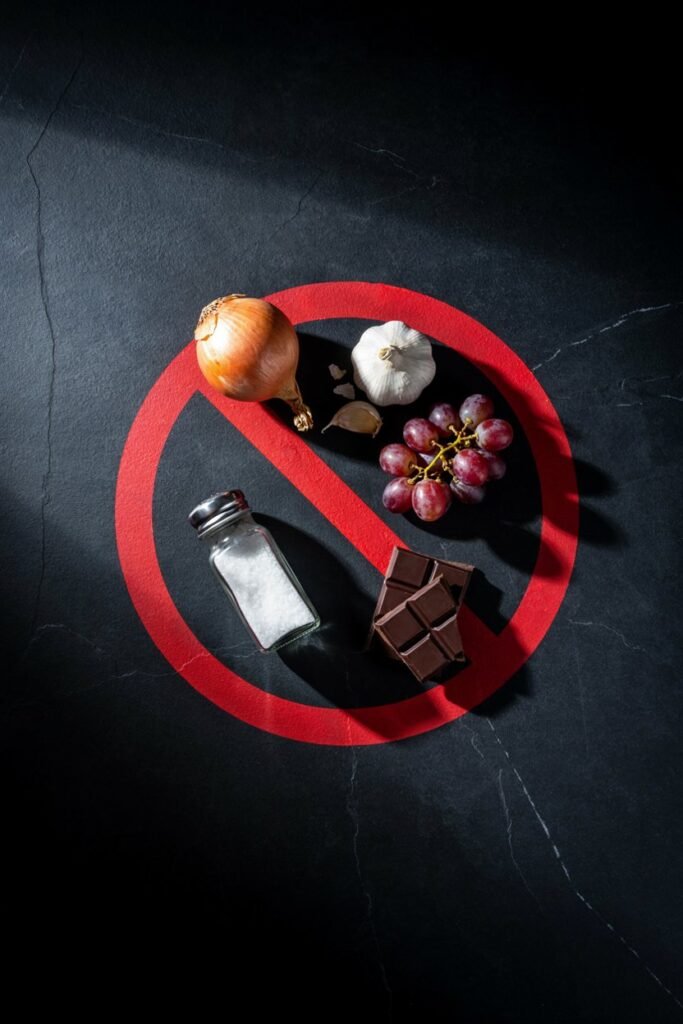
- Onion, garlic, and chives damage red blood cells and can cause anemia, even in small amounts.
- Excess salt and seasoning blends offer no benefit to a dog and can be genuinely harmful in larger quantities.
- Rich sauces or gravies often hide salt, onion, or garlic even when the main ingredient looks harmless.
- Xylitol containing products cause a dangerous, rapid drop in blood sugar.
- Grapes and raisins can cause serious kidney problems, with no reliably safe amount.
- Chocolate is toxic even in modest amounts, depending on the type and your dog’s size.
- Cooked bones can splinter and cause internal injury, and should never go into the Instant Pot with this recipe.
Good Ingredients to Look For When Cooking for Your Dog
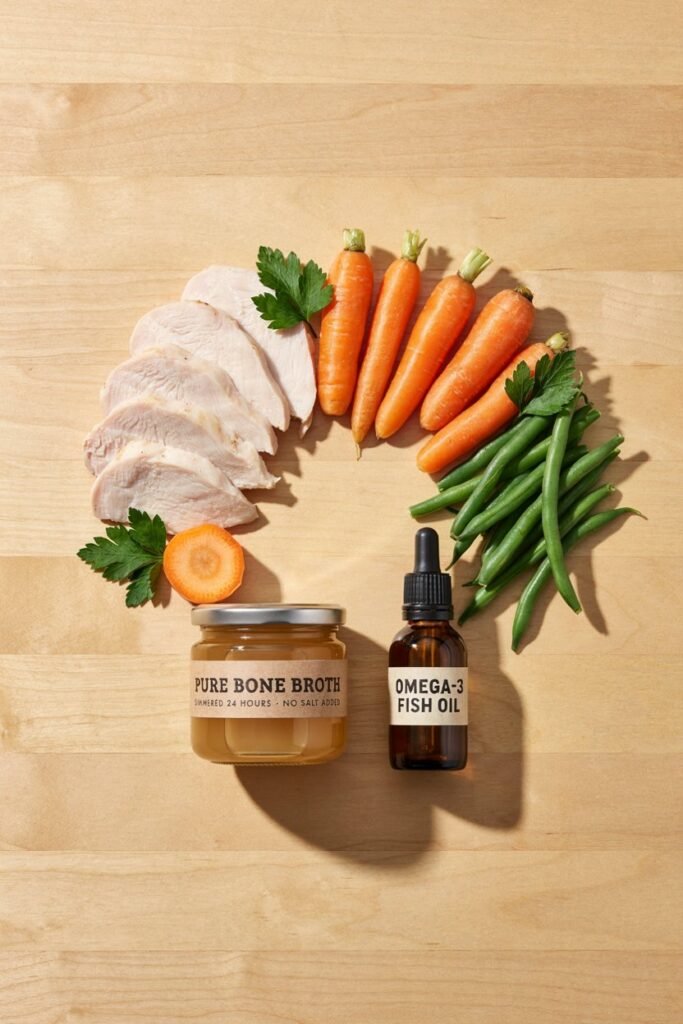
Named animal proteins. Turkey, chicken, beef, and salmon all tell you exactly what’s going into the pot, which is always preferable to a vague or unspecified protein source.
Fiber rich vegetables. Carrots, green beans, peas, zucchini, and squash add volume, vitamins, and digestive support without excessive calories, and most hold up reasonably well to pressure cooking.
Digestible carbohydrates. Rice, quinoa, and sweet potato provide steady energy and are generally gentle on a dog’s stomach compared to heavier or more processed carbohydrate sources.
Plain, onion and garlic free broth. A good broth adds real flavor and moisture without introducing anything unsafe, as long as the label is checked carefully every time.
Healthy fats added after cooking. Fish oil, added once the meal has cooled, supports skin and coat health without being exposed to the heat and pressure of the main cooking cycle.
Common Mistakes to Avoid
Releasing pressure too quickly. This is the single most common Instant Pot specific mistake with this recipe, and it can create a genuine mess as liquid sputters out through the valve.
Adding egg or fish oil before cooking. Both ingredients are meant to be stirred in after the mixture has cooled, not cooked under pressure alongside everything else.
Not checking the broth label. This is worth repeating, since it’s the most common way an otherwise careful recipe accidentally ends up with onion or garlic in it.
Overfilling the pot when doubling the recipe. Check your specific Instant Pot’s maximum fill line before assuming a larger batch will cook the same way a standard batch does.
Skipping the transition period. Switching too quickly from a dog’s regular food to this recipe is one of the most common causes of digestive upset when starting homemade feeding for the first time.
Frequently Asked Questions
Can I use a different size Instant Pot for this recipe? Yes, as long as the ingredients fit below the maximum fill line for your specific pot. A 6 quart pot handles this recipe well, and an 8 quart pot has enough room to comfortably double it.
Do I need to brown the turkey before pressure cooking? No, this recipe is designed to cook the raw turkey directly under pressure, which saves a step compared to browning it separately on the stovetop first.
Can I use frozen ground turkey? It’s best to thaw the turkey first for even cooking, though a partially frozen block can work with a slightly longer cook time if you’re in a pinch.
Is pressure cooking safe for cooking dog food? Yes, pressure cooking is a safe method for thoroughly cooking meat, and it often results in more even cooking than stovetop methods, as long as you follow standard Instant Pot safety practices like proper venting.
Can I feed this recipe every day? As an occasional meal or topper, yes, without much concern. As a sole, long term diet, it should be reviewed and properly formulated with a veterinarian’s input first, particularly around calcium supplementation.
How long does this recipe last in the refrigerator? Generally about 4 days when stored in a clean, airtight container.
Can I freeze this recipe? Yes, portioning it into individual servings before freezing makes future meals much easier to manage, and it holds up well for up to 3 months frozen.
Can puppies eat this recipe? Puppies have different nutritional requirements because they’re actively growing, so this recipe shouldn’t become a puppy’s regular diet without a veterinarian reviewing it first.
Do I need to add a calcium supplement? If you’re using this recipe as an occasional meal or topper, generally not. If you’re planning to feed it regularly as your dog’s primary diet, a vet recommended calcium supplement is usually necessary, since muscle meat alone doesn’t provide enough on its own.
Can I make this recipe without an Instant Pot? Yes, it adapts well to the stovetop. Cook the turkey thoroughly in a large pot, cook the rice and vegetables separately, then combine everything once cooled, following the same portioning and storage guidance in this guide.
Choosing the Right Instant Pot Size for Dog Food Batches
If you’re deciding which size to buy specifically for cooking dog food, or wondering whether your existing pot will handle these recipes well, it helps to think in terms of batch size rather than just going with whatever’s popular for human cooking.
A 6 quart pot comfortably handles the base recipe as written, with enough headspace left over for the pot to build and release pressure properly.
An 8 quart pot gives you enough room to double the recipe in one go, which is worth considering if you’re feeding a larger dog, multiple dogs, or simply want to cook every two weeks instead of every week.
A smaller 3 quart pot can technically work for a half batch, but the reduced capacity makes it a less practical choice if batch cooking and meal prep are part of why you’re using an Instant Pot for this in the first place.
| Pot Size | Best For |
|---|---|
| 3 quart | Half batches, single small dog, limited kitchen storage |
| 6 quart | The standard recipe as written, most households |
| 8 quart | Doubled batches, multiple dogs, larger breeds |
A Note on Portion Size and Body Condition
Rather than relying only on a weight based percentage, it’s worth periodically checking your dog’s body condition directly, since calorie needs can shift over time even without a change in the amount you’re feeding.
Running your hands along your dog’s sides, you should be able to feel their ribs without significant pressure, but not see them prominently.
Looking down from above, there should be a visible waist behind the ribs, and viewed from the side, the belly should tuck up somewhat behind the ribcage rather than hanging level with the chest.
If your dog starts looking heavier or leaner than usual after switching to this recipe, that’s a sign to adjust the portion size accordingly rather than sticking rigidly to whatever amount you started with, since homemade meals can end up more or less calorie dense than a dog’s previous food depending on the specific recipe and ingredients used.
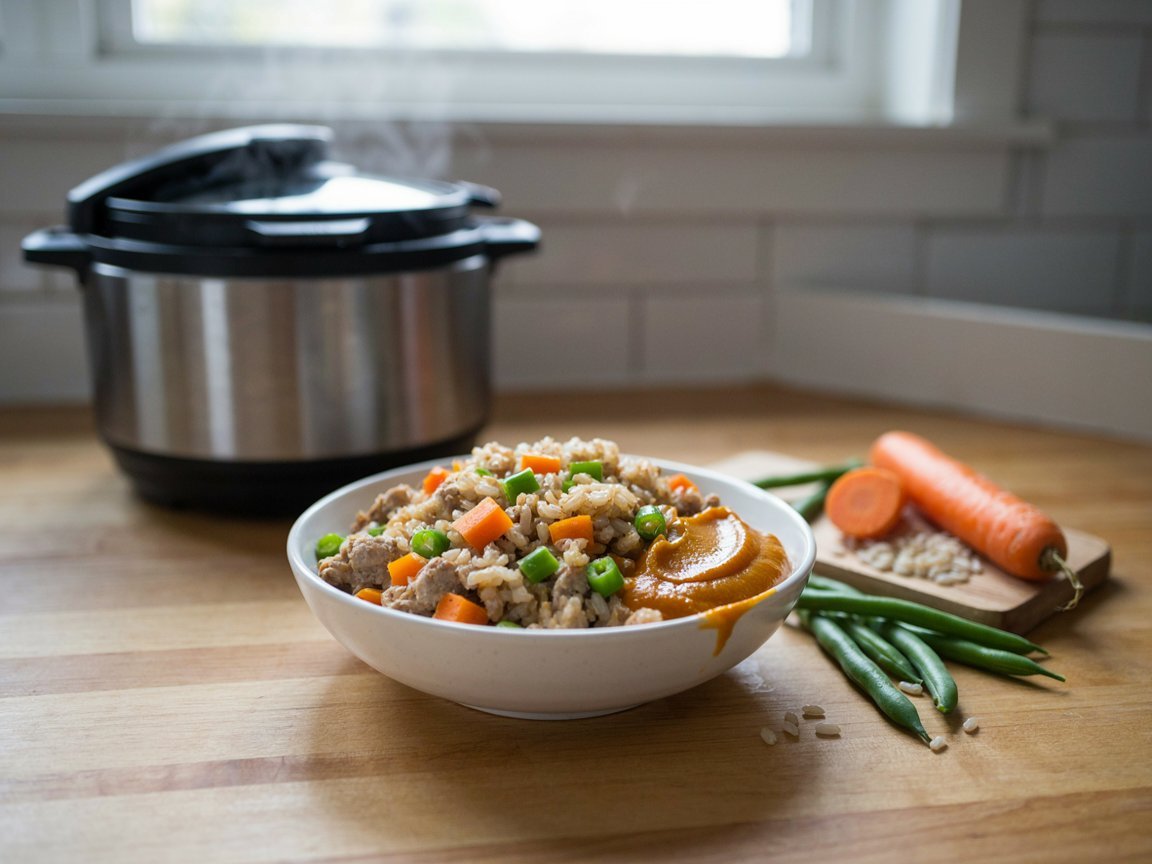
Instant Pot Turkey Dog Food
Ingredients
Equipment
Method
- Add the ground turkey to the Instant Pot and break it into smaller pieces.
- Add the brown rice, chopped carrots, green beans, pumpkin puree, and water.
- Stir the ingredients gently until they are evenly distributed.
- Secure the Instant Pot lid and cook according to the pressure cooking settings specified in your recipe.
- Allow the pressure to release naturally for about 10 minutes before carefully releasing any remaining pressure.
- Open the lid and stir the mixture thoroughly.
- Allow the food to cool completely before serving.
- Use plain, unseasoned ground turkey and avoid onion, garlic, salt, seasoning blends, and other ingredients that can be harmful to dogs.
- This recipe should not automatically be considered a complete and balanced long term diet. If you plan to feed homemade food regularly, have the recipe properly formulated to meet your dog’s individual nutritional requirements.
Final Thoughts
The Instant Pot has genuinely changed how often I cook fresh meals for my dog, mostly by removing the biggest barrier, the time and attention a stovetop version usually demands.
Loading everything into the pot, walking away for half an hour, and coming back to a finished meal makes homemade feeding feel far more realistic on a regular basis than it did when every batch required standing over multiple pans at once.
Start with the base turkey recipe, try one of the four variations once you’re comfortable with the process, and build a rotation that fits into your actual week rather than the one you’d need in an ideal world with unlimited kitchen time.


3 Comments