High Protein Chicken Meals for Dogs
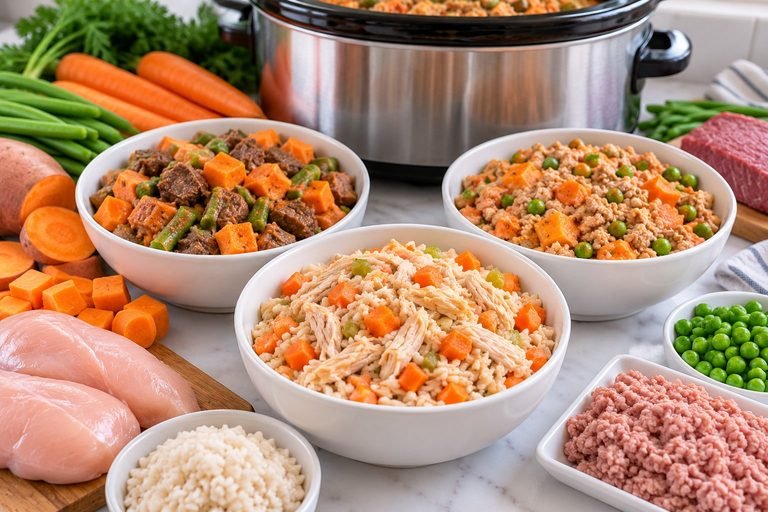
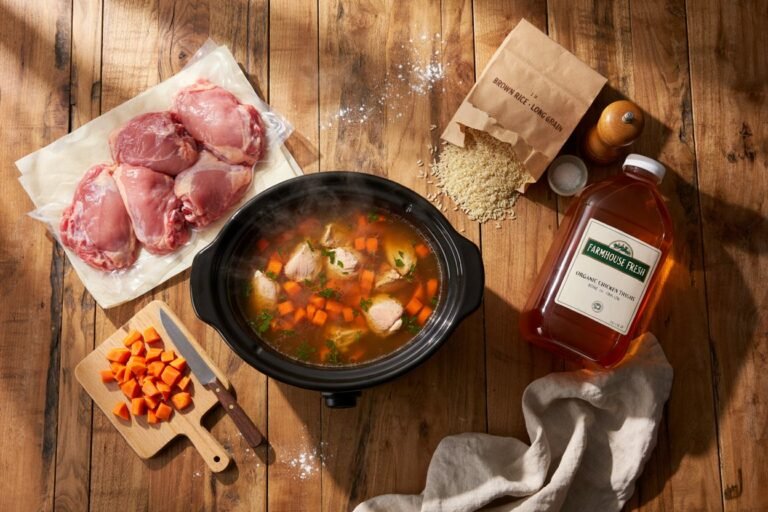
Chicken has become the default starting point for most homemade dog cooking, and for good reason. It’s affordable, widely available, mild enough that almost every dog takes to it immediately, and lean enough to build a genuinely high protein meal without piling on excess fat.
What surprised me most once I started cooking for my own dog regularly wasn’t that chicken worked well. It was how many genuinely different meals I could build around it just by changing the supporting ingredients, the protein boosters, and the overall ratio of chicken to everything else in the bowl.
This guide covers eight distinct high protein chicken meals, along with the reasoning behind every ingredient, real portion guidance, storage information, and the safety details that turn a basic recipe into something you can actually rely on.
If you’re active with your dog, dealing with a working breed that burns through calories fast, or simply want meals with a stronger protein backbone than a typical chicken and rice bowl, this is built specifically for that.
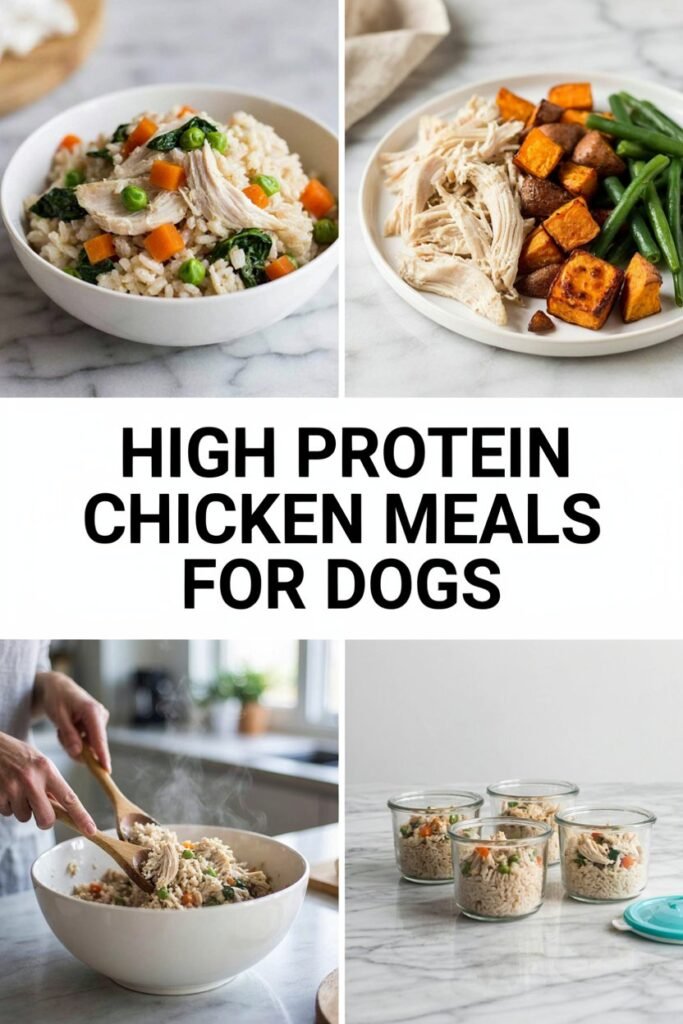
If you want to keep building your homemade cooking rotation beyond these eight meals, a few related guides are worth having open alongside this one.
Homemade dog food with vet approved ingredients covers what a fully balanced diet needs beyond just picking protein rich ingredients, 7 high protein homemade dog food recipes offers even more variety if chicken alone doesn’t cover everything you’re looking for, ground turkey dog food recipe for beginners and simple homemade dog food recipes for beginners are good starting points if this is new territory for you, 3 simple farmer’s dog food recipes, 3 ingredient cooked dog food, and fresh dog food recipes that dogs love round out the broader rotation, 10 homemade dog meals with sweet potato pairs especially well with a few of the recipes below, and human foods dogs can safely eat is worth a look if you’re also curious about what’s safe to share from your own kitchen.
Why High Protein Meals Matter for Some Dogs
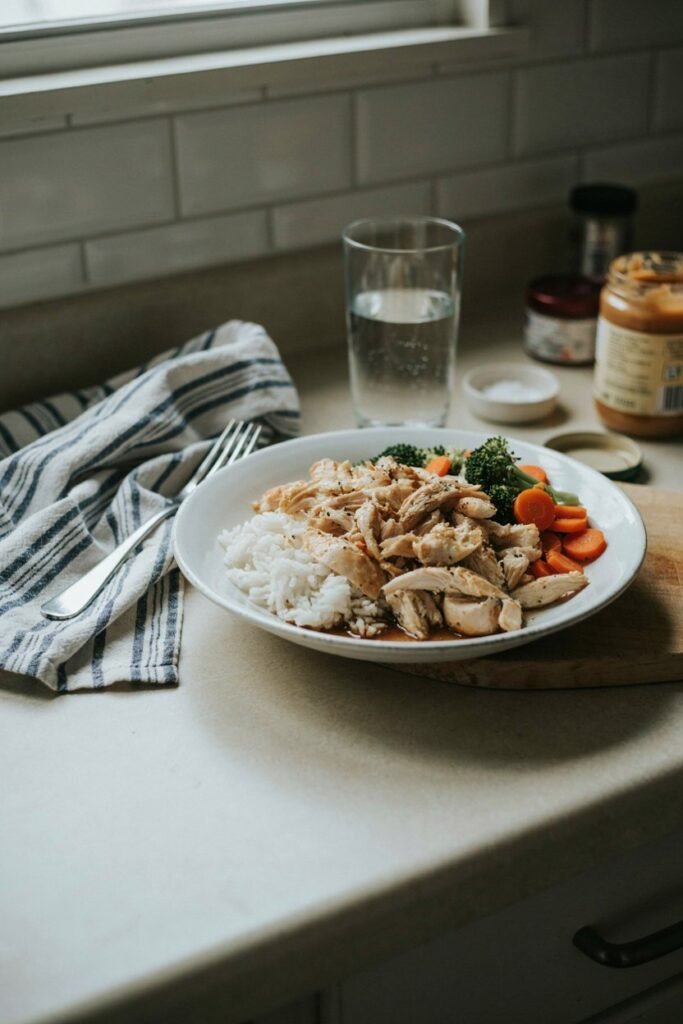
Protein plays a central role in muscle maintenance, tissue repair, coat health, and overall energy, and dogs generally need more of it relative to their body weight than most people assume.
Active dogs, working breeds, dogs recovering from an injury or surgery, and dogs with a naturally lean, muscular build often do well with meals that lean more heavily on protein than a standard homemade recipe provides. That said, higher protein doesn’t automatically mean better for every dog.
Dogs with certain kidney conditions, for instance, often need protein intake managed carefully under veterinary guidance rather than maximized, which is one of several reasons it’s worth discussing any significant dietary shift with your vet, especially if your dog has an existing health condition.
For a healthy, active adult dog without any diagnosed condition affecting protein metabolism, a meal built around a strong protein backbone, like the ones in this guide, is a genuinely reasonable choice, whether you’re using it as a regular meal, a post exercise recovery bowl, or an occasional addition to their usual diet.
Before You Start
As with any homemade recipe, it’s worth being upfront that a high protein chicken meal isn’t automatically a complete, nutritionally balanced diet suitable for daily, long term feeding just because it’s high in protein.
Dogs need appropriate amounts of fat, carbohydrates, calcium, phosphorus, essential fatty acids, vitamins, minerals, and a range of trace nutrients, all in the right proportions relative to each other, not just a high protein number on a label.
These meals work well as regular additions, occasional full meals, or a foundation you build on with proper supplementation.
If you’re planning to replace your dog’s complete commercial diet entirely, working with a veterinarian or a board certified veterinary nutritionist is the most reliable way to make sure the final recipe is genuinely balanced for daily use.
Understanding the Ingredients
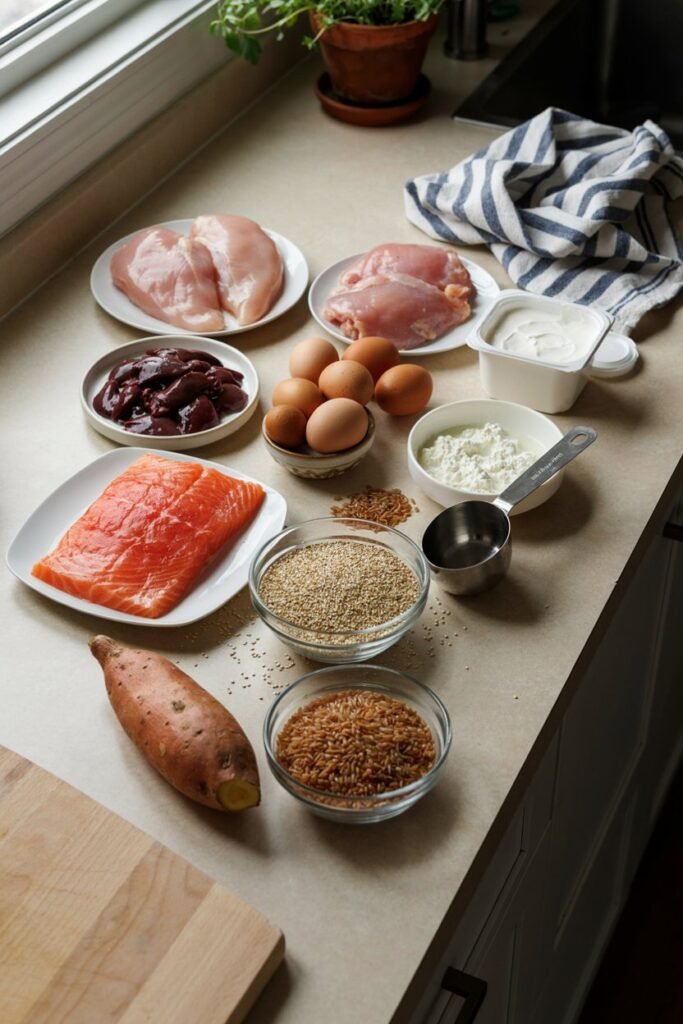
Chicken Breast
Chicken breast is the leanest cut available and the backbone of most of the recipes below. It’s high in protein relative to its calorie content, mild in flavor, and easy to portion once cooked. The tradeoff for its leanness is that it can turn dry if overcooked, so keeping an eye on cook time matters more with breast meat than with fattier cuts.
Chicken Thigh
Chicken thigh carries more fat and a richer flavor than breast meat, which some dogs respond to more enthusiastically, especially picky eaters. It’s still a lean protein overall, just less lean than breast, and it holds up a bit better during longer cooking times without drying out.
Chicken Liver
Used in small amounts, chicken liver is remarkably nutrient dense, offering concentrated vitamin A, iron, and B vitamins that muscle meat alone doesn’t provide in the same quantity. It should stay a small addition rather than a primary ingredient, since overfeeding organ meat, particularly liver, can lead to an excess of certain nutrients over time.
Eggs
A whole egg adds complete protein along with healthy fat, and it’s one of the easiest ways to boost the overall protein content of a meal without adding another separate cooking step beyond a quick scramble or boil.
Greek Yogurt
Plain, unsweetened Greek yogurt is notably higher in protein than regular yogurt, thanks to the straining process used to make it, and it adds a cooling, creamy texture that works particularly well in a post exercise recovery meal. As with any dairy, it’s worth introducing in a small amount first, since not every dog tolerates it equally well.
Cottage Cheese
Cottage cheese offers a similar protein boost to Greek yogurt with a different texture, and plain, low sodium cottage cheese works well mixed into a meal that already has a firmer protein base like shredded chicken.
Salmon
Combined with chicken, salmon adds a different amino acid profile along with omega fatty acids that support skin and coat health, something chicken alone doesn’t provide much of. It must always be fully cooked and completely deboned before serving.
Quinoa
Quinoa is a complete protein in its own right, meaning it contains all the essential amino acids, which makes it a genuinely useful carbohydrate choice when you’re specifically building a higher protein meal rather than a purely energy dense one. Rinsing it thoroughly before cooking removes its natural bitter coating.
Brown Rice
Brown rice contributes fewer grams of protein than quinoa but remains one of the most reliably tolerated carbohydrates across a wide range of dogs, including those with sensitive stomachs, which makes it a dependable base ingredient even in a protein focused recipe.
Sweet Potato
Sweet potato adds fiber and a naturally sweet flavor dogs enjoy, along with vitamin A, and it pairs particularly well with the richer, higher protein combinations below since its mild sweetness balances out a heavier meal.
Ingredients I Avoid
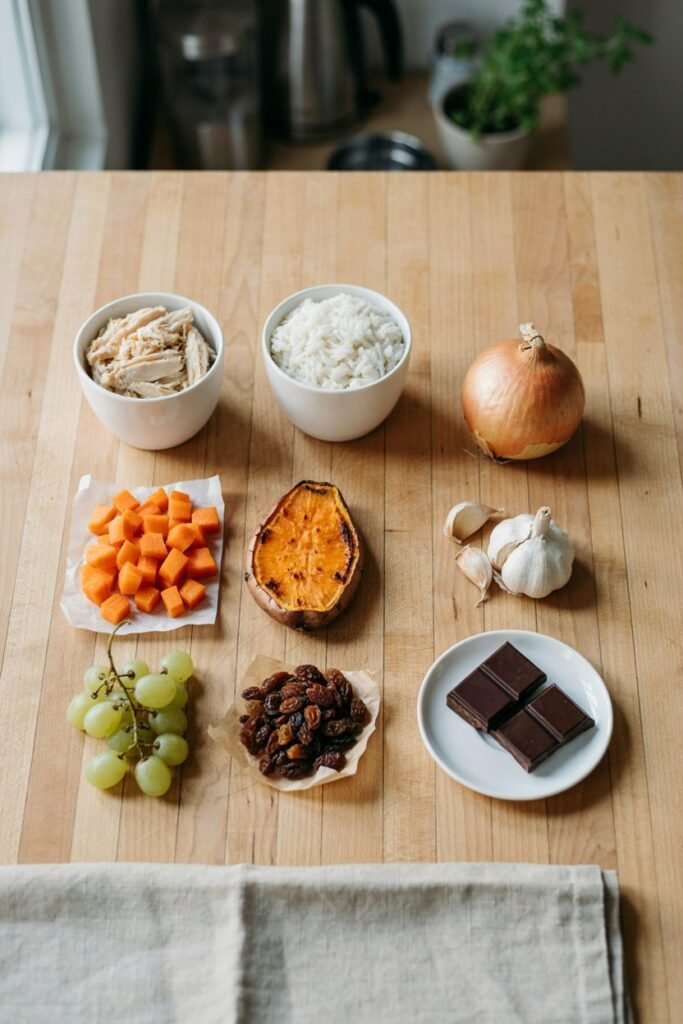
Onion, garlic, chives, excessive salt, seasoning blends, rich sauces, xylitol, grapes, raisins, chocolate, and cooked bones have no place in any of these recipes, regardless of how small the amount or how confident you are that your dog has handled something similar before.
It’s also worth checking any packaged ingredient you’re adding, like broth or peanut butter, for hidden xylitol or onion powder, since both show up in products that otherwise look completely plain on the front of the package.
8 High Protein Chicken Meals for Dogs
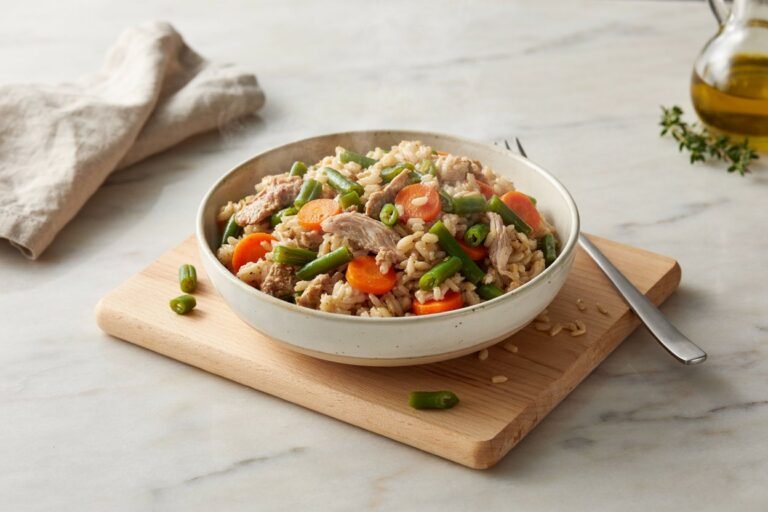
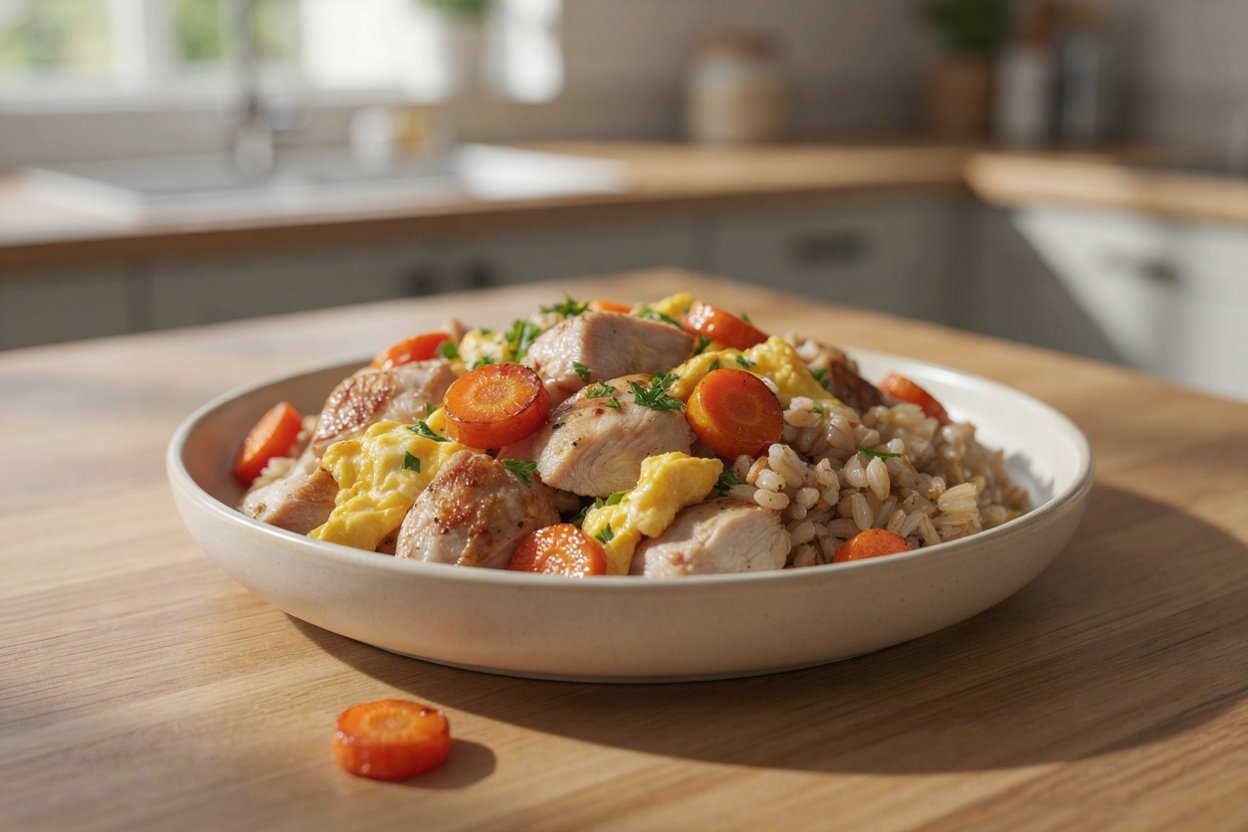
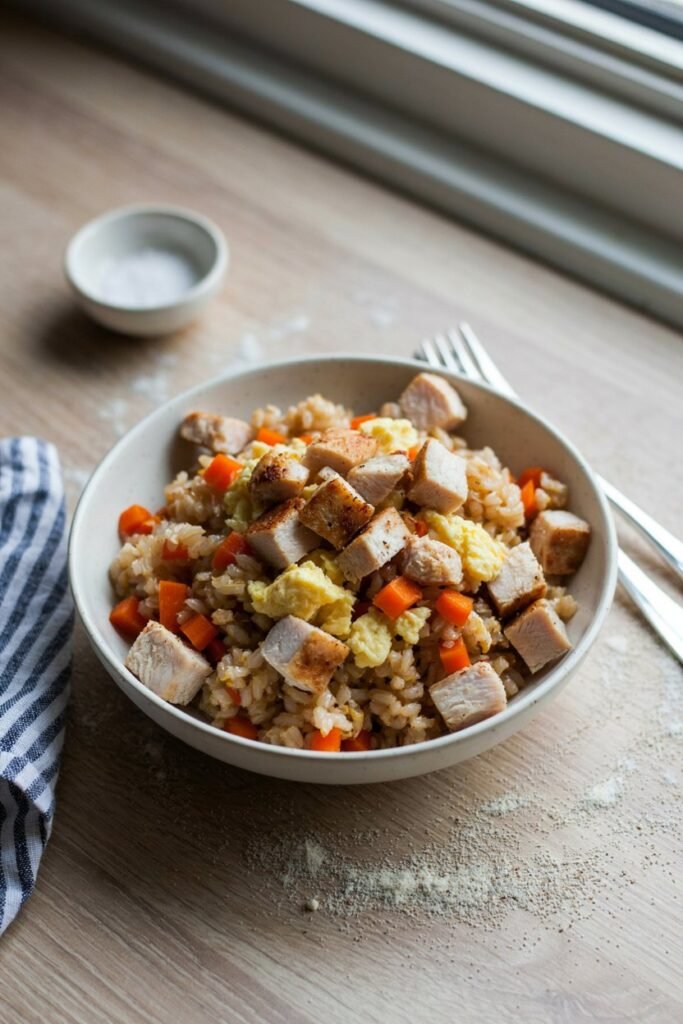
1. Chicken and Brown Rice Power Bowl
Ingredients
- 2 pounds chicken breast, cooked and diced. Chicken breast forms the lean protein foundation of this bowl, delivering the highest protein to calorie ratio of any cut used in this guide.
- 1 cup cooked brown rice. Rice adds a reliably tolerated carbohydrate base that most dogs digest easily, rounding out the meal without diluting its protein focus too much.
- 1 cup carrots, chopped. Carrots contribute fiber and a bit of natural sweetness, along with color and texture variation.
- 1 egg, scrambled. The egg boosts the overall protein content further while adding a small amount of healthy fat.
Instructions
- Cook the chicken breast thoroughly with nothing added, then dice into small pieces.
- Cook the rice separately according to package instructions.
- Steam the carrots until tender, then chop.
- Scramble the egg in a separate pan until fully cooked.
- Combine everything once cooled to room temperature.
How Much to Serve Adjust based on your dog’s weight and activity level. This is a solid everyday portion for an active adult dog at their usual meal size.
Storage Refrigerate for up to 4 days, or freeze individual portions for up to 3 months.
My Tip I make a bigger batch of rice than this recipe needs and freeze the extra separately, which shaves a real amount of time off the next time I make this one.
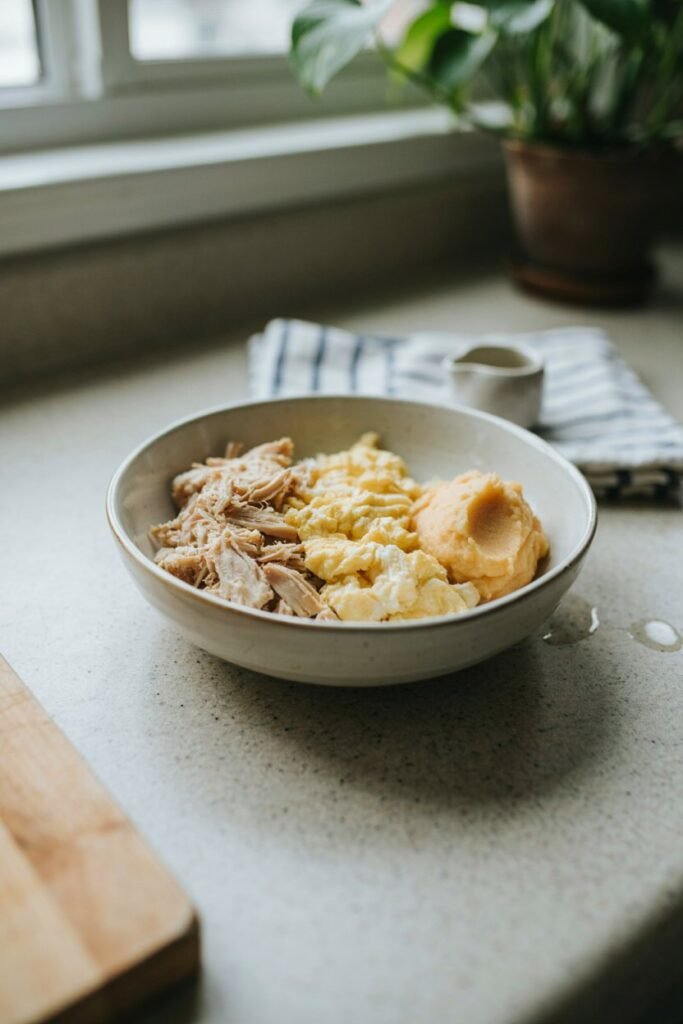
2. Chicken, Egg and Sweet Potato Bowl
Ingredients
- 2 pounds chicken breast, cooked and shredded. Shredded chicken gives this bowl an easy to eat texture that works well for dogs of any size.
- 2 eggs, scrambled. Two eggs meaningfully increase the protein density of this meal compared to a single egg, making it one of the higher protein options in this guide.
- 1.5 cups sweet potato, cooked and mashed. Sweet potato adds fiber and a naturally sweet flavor that balances out the richness of the extra egg.
Instructions
- Cook the chicken thoroughly, then shred once cooled slightly.
- Scramble both eggs fully in a separate pan.
- Boil the sweet potato until soft, then mash.
- Combine all three components once cooled.
How Much to Serve Given the extra egg, this is a slightly richer meal, so consider a modest portion adjustment if your dog is prone to a sensitive stomach.
Storage Refrigerate for up to 3 days, since the higher egg content makes this one slightly less freezer stable than some other recipes here.
My Tip I keep this one in the regular rotation specifically for days my dog has had more exercise than usual, since it feels like a genuinely substantial meal.
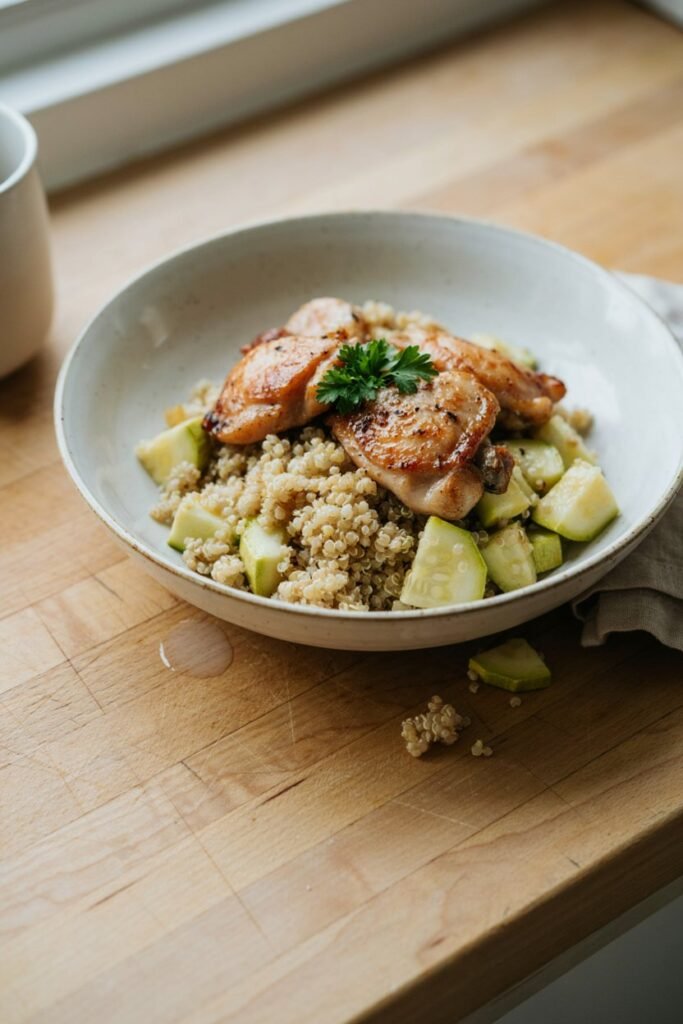
3. Chicken and Quinoa High Protein Meal
Ingredients
- 2 pounds chicken thigh, cooked and diced. Chicken thigh brings a richer flavor and slightly higher fat content than breast meat, which pairs well with the nutty flavor of quinoa.
- 1 cup cooked quinoa, rinsed thoroughly before cooking. Quinoa is a complete protein on its own, which makes this recipe one of the highest protein combinations in the entire guide relative to its other ingredients.
- 1 cup zucchini, chopped. Zucchini adds volume and a mild flavor that doesn’t compete with the quinoa or chicken.
Instructions
- Cook the chicken thigh thoroughly, then dice into small pieces.
- Rinse the quinoa well, then cook according to package instructions.
- Steam the zucchini until tender.
- Combine everything once cooled.
How Much to Serve Quinoa is more calorie dense than rice, so a slightly smaller portion than the rice based recipes in this guide is often appropriate.
Storage Refrigerate for up to 4 days, or freeze for up to 3 months.
My Tip Rinsing the quinoa thoroughly before cooking makes a real difference in flavor, since it removes the naturally bitter coating that can otherwise come through in the finished meal.
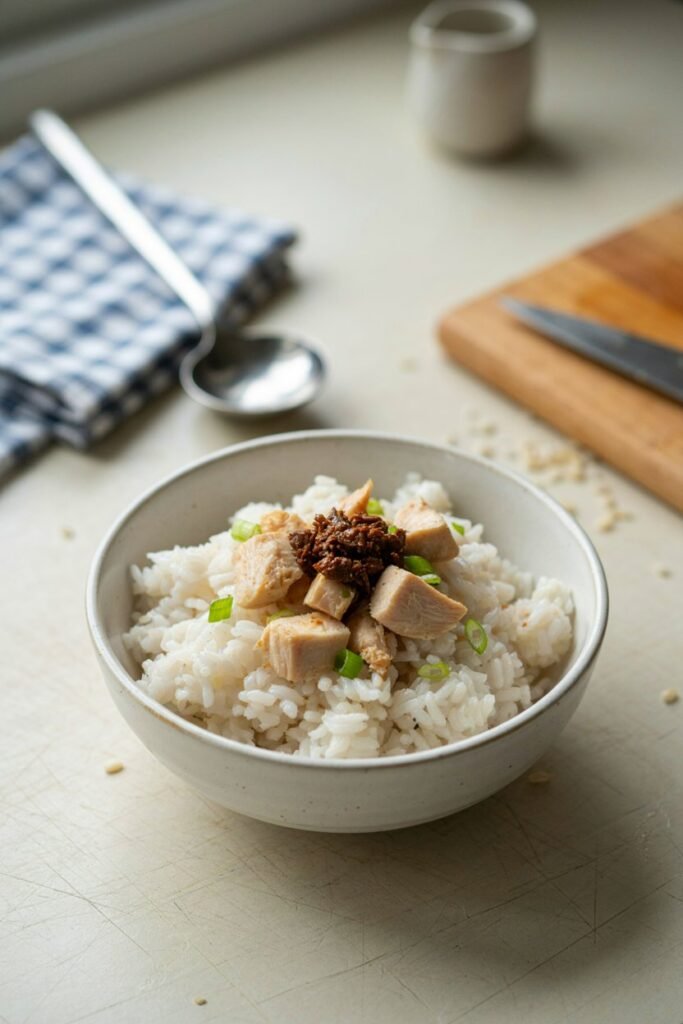
4. Chicken and Liver Boost Bowl
Ingredients
- 2 pounds chicken breast, cooked and diced. This forms the primary protein base, with the liver added specifically as a nutrient booster rather than a main component.
- 2 ounces chicken liver, cooked and finely chopped. Liver adds a concentrated dose of vitamin A, iron, and B vitamins that muscle meat alone doesn’t provide in the same amount, though it should stay a small addition rather than a large portion of the meal.
- 1 cup cooked white rice. A gentle, easily digestible carbohydrate base that balances out the richness of the liver.
Instructions
- Cook the chicken breast thoroughly, then dice.
- Cook the liver separately, since it cooks much faster than breast meat, then chop finely once cooled.
- Cook the rice according to package instructions.
- Combine all three components once cooled, keeping the liver portion modest relative to the chicken.
How Much to Serve Because liver is nutrient dense, this meal doesn’t need to be served in a larger portion than usual to provide real nutritional benefit.
Storage Refrigerate for up to 3 days, since liver has a shorter shelf life than muscle meat.
My Tip I only make this one every week or two rather than as a daily meal, specifically because liver is meant to be a booster rather than a primary ingredient.
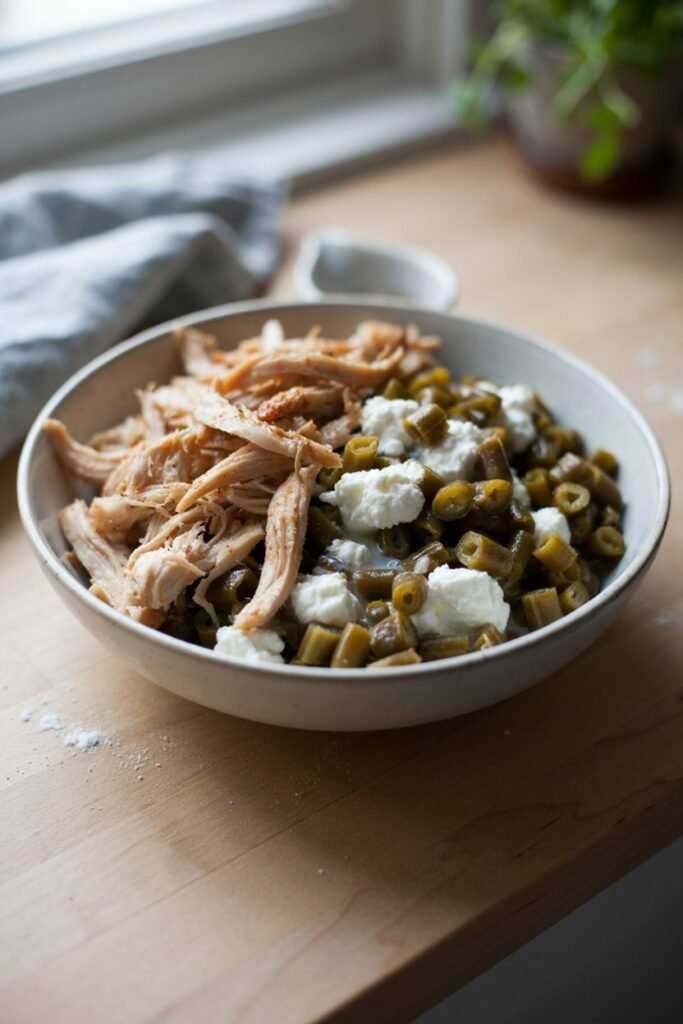
5. Chicken and Cottage Cheese Bowl
Ingredients
- 2 pounds chicken breast, cooked and shredded. Shredded chicken blends easily with the cottage cheese, creating a softer overall texture than some of the diced chicken recipes above.
- 1 cup plain, low sodium cottage cheese. Cottage cheese adds another meaningful protein source along with a creamy texture, though it should be introduced carefully the first time given how dogs vary in dairy tolerance.
- 1 cup green beans, chopped. Green beans add fiber and volume without much additional calorie load.
Instructions
- Cook the chicken thoroughly, then shred once cooled.
- Steam the green beans until tender.
- Combine the shredded chicken, cottage cheese, and green beans once everything has cooled.
How Much to Serve Start with a smaller portion the first time you make this one specifically to see how your dog tolerates the cottage cheese before making it a regular meal.
Storage Refrigerate for up to 3 days, given the dairy content.
My Tip I stir the cottage cheese in last, right before serving a portion, rather than mixing the entire batch with it in advance, which keeps the texture better through several days of storage.
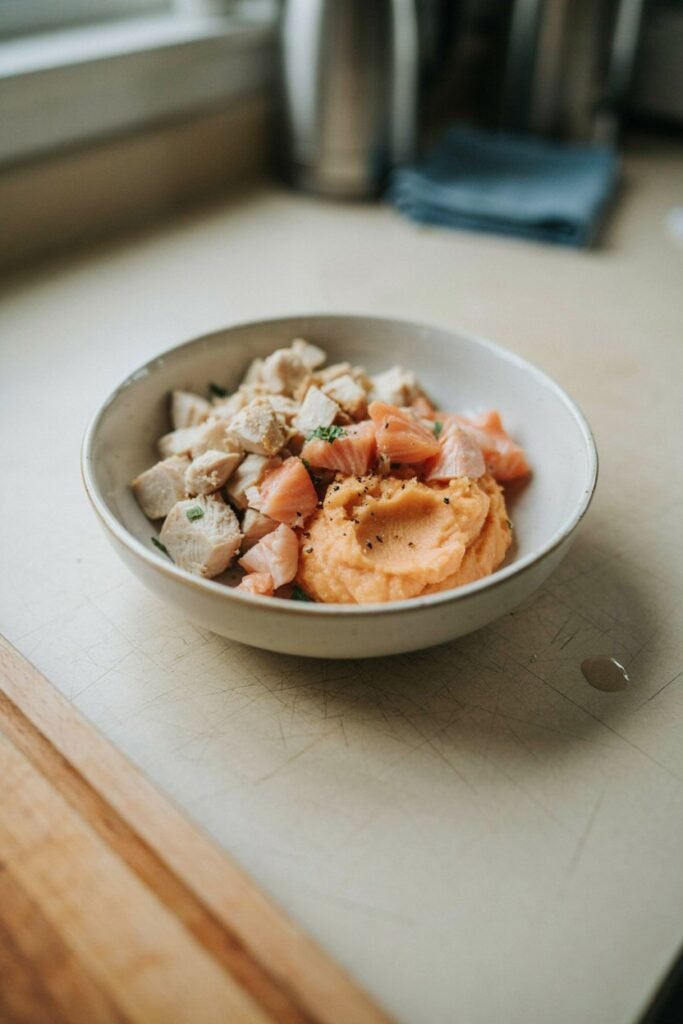
6. Chicken and Salmon Combo Bowl
Ingredients
- 1.5 pounds chicken breast, cooked and diced. Chicken forms the larger portion of the protein base in this combination.
- 0.5 pound salmon, fully cooked and deboned. Salmon adds omega fatty acids that chicken alone doesn’t provide, along with a different amino acid profile that rounds out the meal’s protein diversity.
- 1 cup sweet potato, cooked and mashed. Sweet potato ties the two proteins together with a naturally sweet, cooling texture.
Instructions
- Cook the chicken thoroughly, then dice into small pieces.
- Bake or poach the salmon fully, then remove every bone carefully before flaking.
- Boil the sweet potato until soft, then mash.
- Combine all three components once cooled.
How Much to Serve This combination meal works well as a rotation option once or twice a week rather than a daily staple, given the added variety in protein sources.
Storage Refrigerate for up to 3 days, since the salmon component has a shorter shelf life than chicken alone.
My Tip Deboning the salmon thoroughly takes a bit more patience than the rest of this recipe, but it’s worth doing slowly and carefully rather than rushing through it.
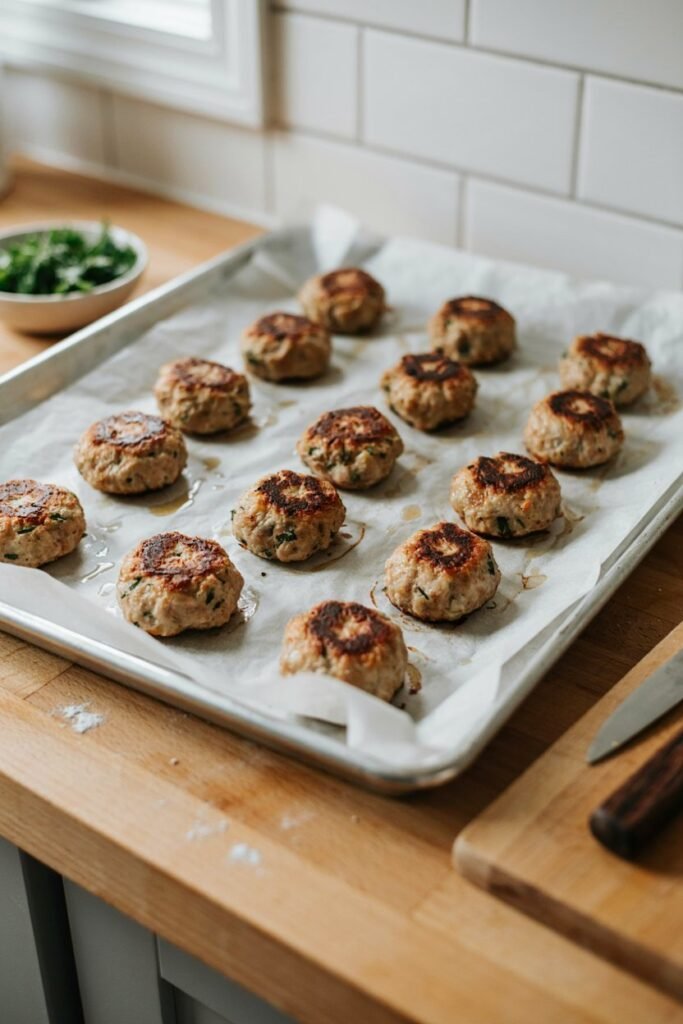
7. Chicken Meatballs for Meal Prep
Ingredients
- 2 pounds ground chicken. Ground chicken shapes easily into meatballs and cooks evenly, making this recipe especially well suited for batch freezing.
- 1 egg. The egg helps bind the mixture together so the meatballs hold their shape through cooking and reheating.
- 1/2 cup oat flour. Oat flour gives the mixture enough structure to form into meatballs without needing breadcrumbs or any seasoning.
Instructions
- Combine the raw ground chicken, egg, and oat flour in a bowl until evenly mixed.
- Shape into small, evenly sized meatballs.
- Bake at 375°F (190°C) for about 20 minutes, until fully cooked through with no pink remaining.
- Let cool completely before serving or storing.
How Much to Serve A few meatballs make a full meal for most dogs, adjusted for size, and they also work well as a higher protein topper over a smaller portion of regular food.
Storage Refrigerate for up to 4 days, or freeze cooked meatballs for up to 3 months.
My Tip I bake a double batch whenever I make these specifically because they freeze and reheat so well, which makes them one of the most convenient recipes in this entire guide for busy weeks.
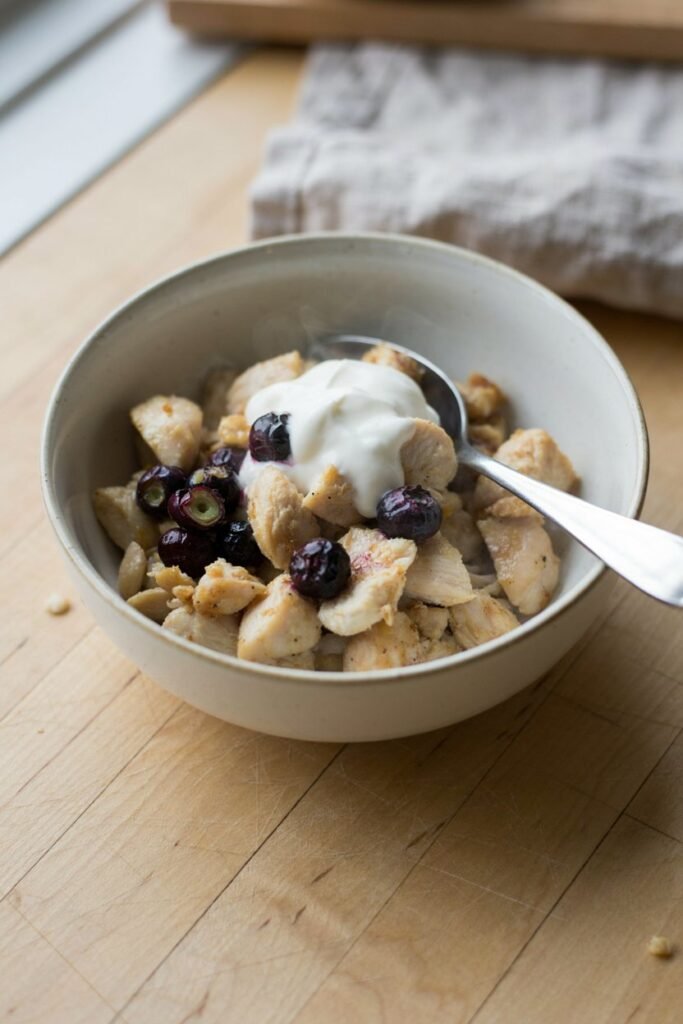
8. Chicken and Greek Yogurt Recovery Bowl
Ingredients
- 2 pounds chicken breast, cooked and diced. Chicken remains the primary protein source, with the Greek yogurt layered on as an additional protein and cooling element, which makes this a good option after a long, active day.
- 1/2 cup plain Greek yogurt. Greek yogurt is notably higher in protein than regular yogurt due to how it’s strained, and it adds a cooling texture that works well as a post exercise meal.
- 1 cup blueberries, lightly mashed. Blueberries add antioxidants and a bit of natural sweetness that pairs well with the tang of the yogurt.
Instructions
- Cook the chicken thoroughly, then dice into small pieces.
- Lightly mash the blueberries.
- Combine the chicken, Greek yogurt, and blueberries once the chicken has cooled.
How Much to Serve This works particularly well as a smaller, lighter meal after a long walk, hike, or active day, rather than a standard everyday dinner portion.
Storage Refrigerate for up to 3 days, given the dairy and fruit content.
My Tip I keep this one specifically for after longer outdoor days, since the cooling texture and lighter feel seem to suit my dog better than a heavier meal right after exercise.
Recipe Comparison at a Glance
| Recipe | Protein Highlight | Best For | Storage |
|---|---|---|---|
| Chicken and Brown Rice Power Bowl | Chicken breast and egg | Everyday balanced meal | 4 days fridge, 3 months frozen |
| Chicken, Egg and Sweet Potato Bowl | Double egg boost | Active or growing dogs | 3 days fridge |
| Chicken and Quinoa High Protein Meal | Chicken and complete protein quinoa | Highest protein density | 4 days fridge, 3 months frozen |
| Chicken and Liver Boost Bowl | Liver nutrient density | Occasional nutrient booster | 3 days fridge |
| Chicken and Cottage Cheese Bowl | Chicken and dairy protein | Dogs who tolerate dairy well | 3 days fridge |
| Chicken and Salmon Combo Bowl | Dual protein and omega fats | Coat and skin support | 3 days fridge |
| Chicken Meatballs for Meal Prep | Easy portioned protein | Batch cooking and freezing | 4 days fridge, 3 months frozen |
| Chicken and Greek Yogurt Recovery Bowl | Chicken and Greek yogurt | Post exercise recovery | 3 days fridge |
How Much Protein Does My Dog Actually Need?
There’s no single number that applies to every dog, and it depends heavily on weight, age, activity level, and overall health. Highly active dogs, working breeds, and dogs recovering from injury generally benefit from a higher proportion of protein relative to their total diet than a sedentary, average sized companion dog.
Rather than chasing a specific percentage, it’s more useful to think in terms of appropriate, high quality protein sources making up a meaningful portion of each meal, paired with enough fat, carbohydrate, and micronutrients to round things out.
If your dog has any kidney, liver, or metabolic condition, protein needs may actually be more restricted than average, which makes a conversation with your veterinarian especially important before leaning heavily into any of these recipes as a daily staple.
Good Ingredients to Look For in High Protein Dog Meals
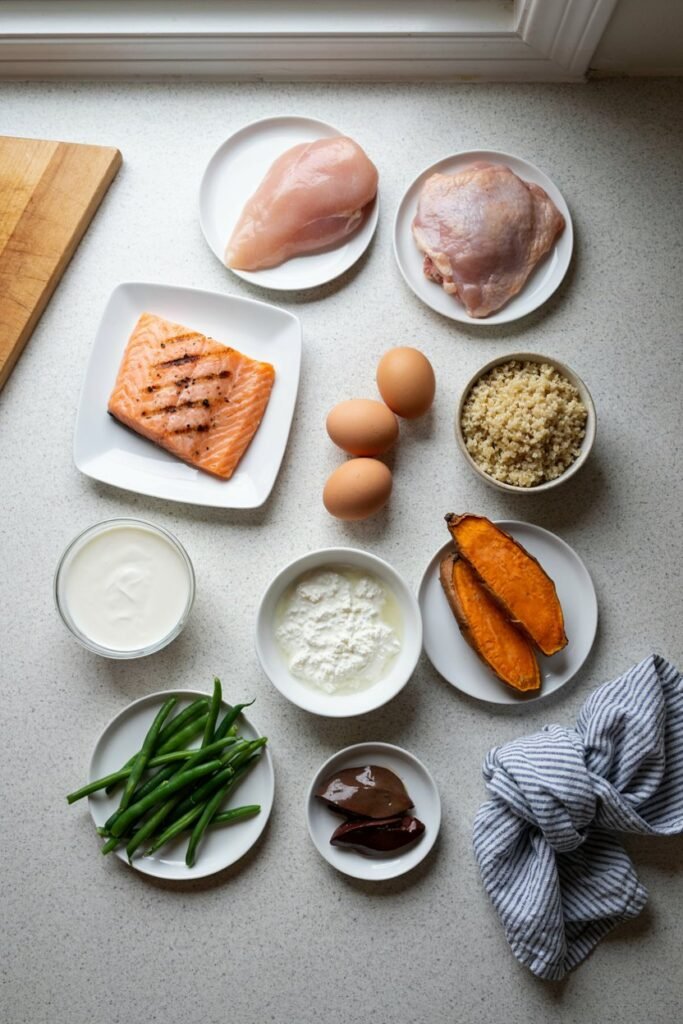
Named, specific animal proteins. Chicken breast, chicken thigh, salmon, and eggs all tell you exactly what’s going into the bowl, which is always preferable to a vague protein source.
Complete protein carbohydrates. Quinoa stands out here specifically because it contributes meaningful protein on top of its role as a carbohydrate, which isn’t true of rice or oats.
Modest organ meat additions. Liver in small amounts adds real nutritional value, as long as it stays a supporting ingredient rather than a primary one.
Plain dairy in moderation. Greek yogurt and cottage cheese both add protein and texture variety, though they’re worth introducing carefully given how much dogs vary in dairy tolerance.
Omega rich additions. Salmon and fish oil bring fatty acids that a chicken only diet doesn’t provide much of, rounding out the nutritional picture nicely.
Common Mistakes When Building High Protein Meals
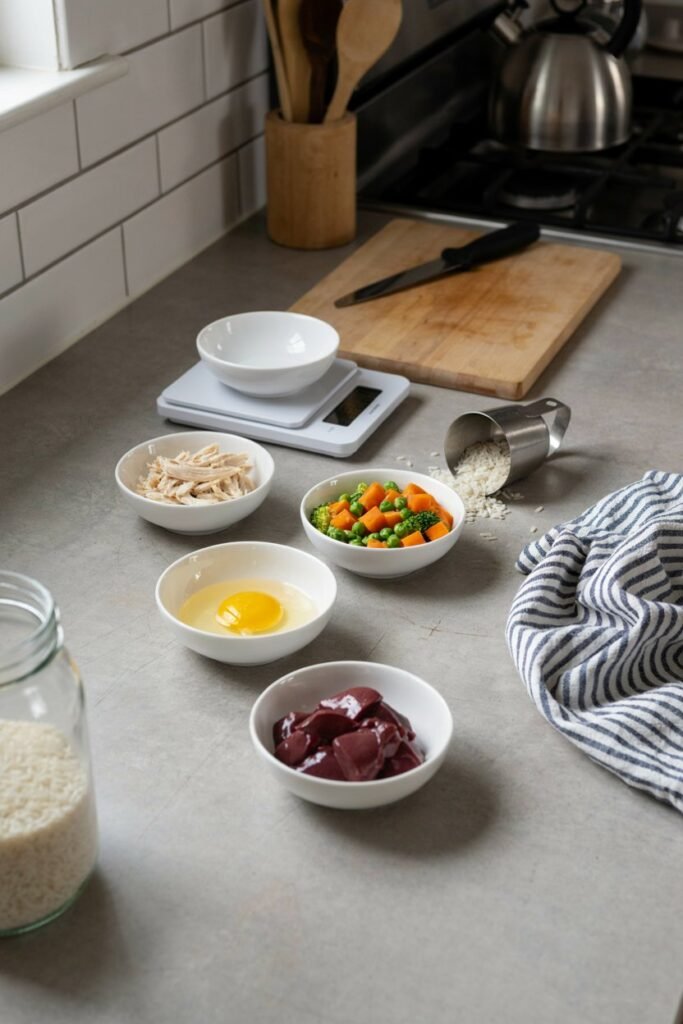
Overdoing organ meat. Liver and other organ meats are nutrient dense for a reason, and treating them as a primary ingredient rather than a small addition can lead to an excess of certain nutrients over time.
Assuming higher protein is automatically better for every dog. Some dogs, particularly those with certain kidney conditions, need protein managed carefully rather than maximized, which makes a vet conversation important before making a significant shift.
Skipping fat and carbohydrates entirely. A meal that’s almost all protein isn’t automatically more balanced. Dogs still need adequate fat and carbohydrate to meet their full energy and nutritional needs.
Introducing dairy without testing tolerance first. Not every dog handles yogurt or cottage cheese well, so a smaller first portion is worth the extra caution.
Skipping the transition period when switching from a lower protein diet. A sudden increase in protein and richness can cause digestive upset if introduced too quickly.
Frequently Asked Questions
Is a high protein diet good for all dogs? Not automatically. Active, healthy dogs generally do well with higher protein meals, but dogs with certain kidney or metabolic conditions may need protein managed more carefully, which is worth discussing with your veterinarian.
Can I feed these recipes every day? As occasional or rotating meals, yes. As a sole, long term diet, they should be reviewed and properly formulated with veterinary guidance to ensure full nutritional completeness.
Is chicken breast or chicken thigh better for a high protein meal? Chicken breast has a slightly higher protein to calorie ratio, while chicken thigh offers more flavor and a bit more fat. Both work well depending on what you’re looking for in a specific recipe.
Can I add more than one protein source to a single meal? Yes, combining chicken with salmon, egg, or a dairy source like cottage cheese is a common way to increase both the protein content and the nutritional variety of a meal.
How much liver is too much? Liver should stay a small addition relative to the rest of the meal, generally just a couple of ounces mixed into a larger batch, since overfeeding organ meat can lead to an excess of certain vitamins over time.
Can puppies eat high protein chicken meals? Puppies do need a good amount of protein for growth, but their overall nutritional needs are more specific than an adult dog’s, so any recipe intended as a puppy’s regular diet should be reviewed by a veterinarian first.
Are these recipes good for weight loss? Lean, high protein meals can support weight management well, since protein tends to be satisfying relative to its calorie content, though overall portion size still matters more than protein content alone.
Can I freeze all of these recipes? Most freeze well for up to 3 months, though the dairy and salmon based recipes are better suited to shorter refrigerator storage of about 3 days rather than long term freezing.
Do I need to add a calcium supplement to these meals? If you’re using these as occasional meals or toppers, generally not. If you’re using them as a regular, long term diet, a vet recommended calcium supplement is usually necessary, since muscle meat alone doesn’t provide enough on its own.
Which recipe is best for an active dog after exercise? The chicken and Greek yogurt recovery bowl is built specifically with that in mind, offering a lighter, cooling meal with a strong protein base for after a long walk or active day.
Final Thoughts
Building a rotation of high protein chicken meals doesn’t have to mean cooking the same bowl of chicken and rice on repeat.
Swapping in quinoa instead of rice, adding a small amount of liver every so often, layering in Greek yogurt after an active day, or combining chicken with salmon for a bit of variety all keep things interesting for your dog while genuinely boosting the nutritional profile of each meal.
Start with whichever recipe matches what you already have in the kitchen, pay attention to how your dog responds to each one, and build your rotation from there.