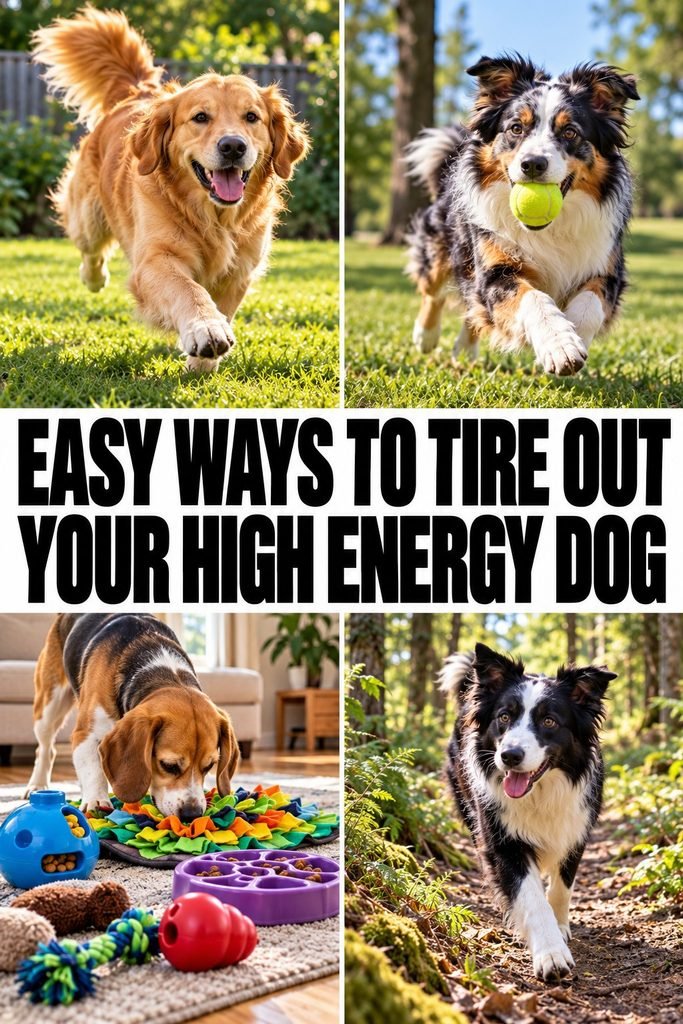
Easy Ways to Tire Out Your High Energy Dog
Living with a high energy dog can be fun, but it can also be exhausting when your dog seems ready to play just as you are settling down.
Some dogs need more than a quick walk around the neighborhood to feel satisfied, especially working breeds and young dogs that enjoy having a job to do.
Without enough physical activity and mental stimulation, they may start chewing furniture, barking excessively, digging, or following you around looking for something interesting to do.
The good news is that tiring out an energetic dog does not always require hours of exercise or expensive toys.
A combination of sniffing games, short training sessions, interactive play, and appropriate outdoor activities can help your dog use energy in more productive ways.
I find it helpful to think beyond exercise alone because a dog that has worked its brain can feel more settled, too.
Whether you have a playful puppy, an active adult dog, or a lively companion who never seems to slow down, these easy ways to tire out your high energy dog can help you build a more enjoyable daily routine.
1. Take Your Dog on a Sniff Walk
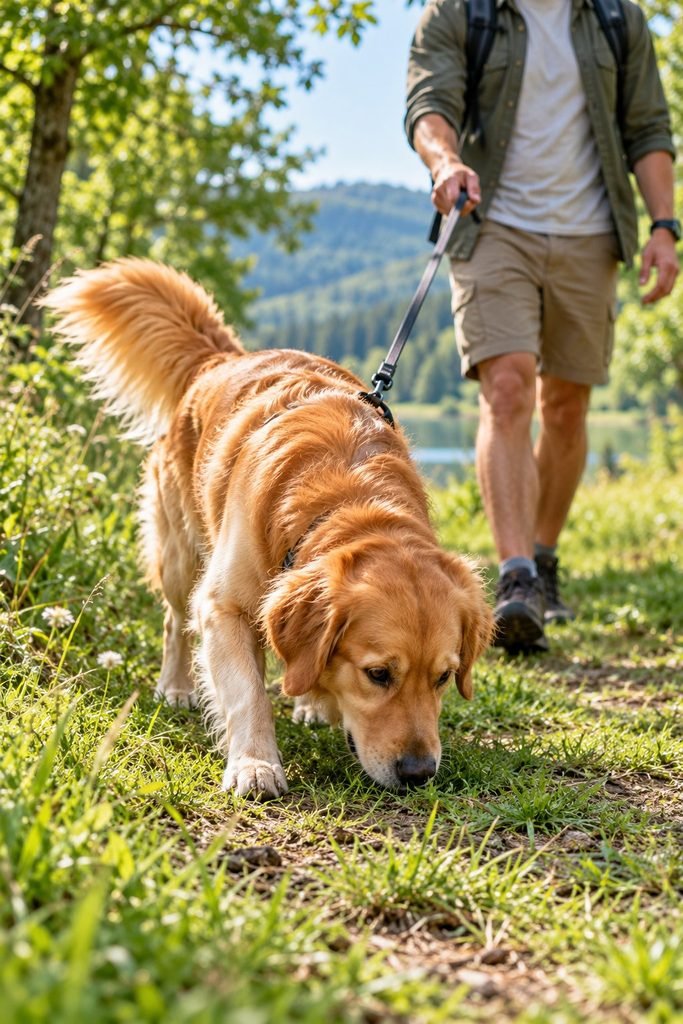
A regular walk is important, but letting your dog stop and investigate interesting smells can make the experience much more mentally engaging.
Dogs explore a large part of their world through scent, and sniffing allows them to gather information about other animals, people, and their surroundings.
Instead of rushing through the same route every day, try allowing your dog to explore safe areas at a comfortable pace.
You can choose a quiet street, a grassy path, or another dog friendly location where your pet can sniff without being exposed to traffic or other hazards.
The goal is not to make every walk longer. It is to give your dog opportunities to explore rather than focusing entirely on distance or speed.
How to make sniff walks more effective
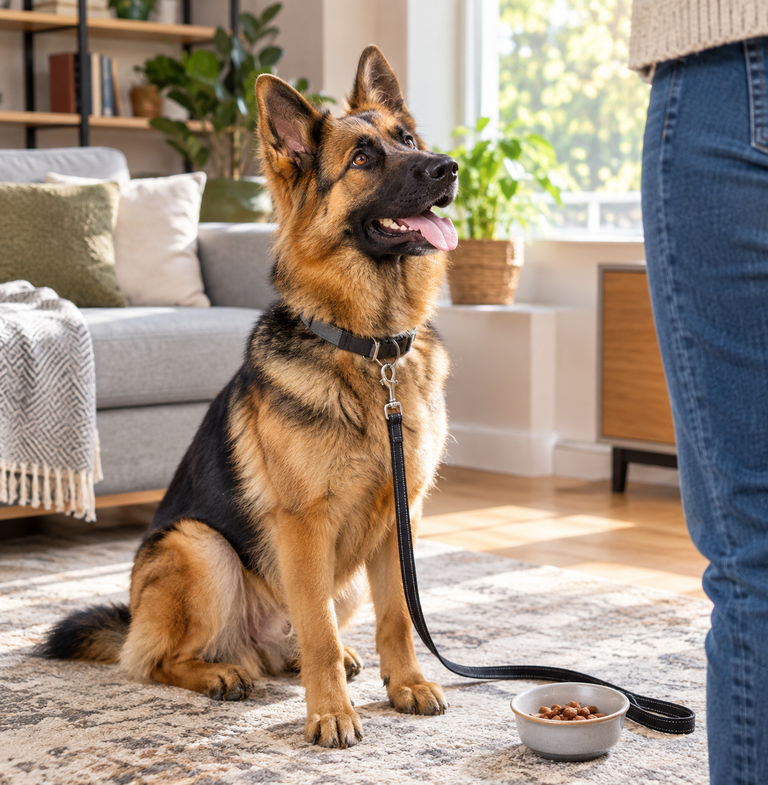
Choose a well fitting harness or collar and a secure leash that gives you control while allowing your dog some freedom to investigate.
Let your dog pause at suitable spots, change direction occasionally, and explore different safe environments when possible.
You can also use a simple cue such as “go sniff” to signal that your dog has time to investigate, followed by a familiar cue when you need to continue walking.
For dogs that become overly excited outdoors, start in quieter places with fewer distractions. Reward calm behavior and avoid forcing your dog to approach unfamiliar dogs or people.
Why it helps: Sniffing provides mental enrichment, encourages natural canine behavior, and makes walks more interesting. It can contribute to a satisfying routine without relying entirely on intense physical exercise.
Best for: Curious dogs, scent loving breeds, and energetic pets that become bored with repetitive walks.
2. Play Hide and Seek With Your Dog
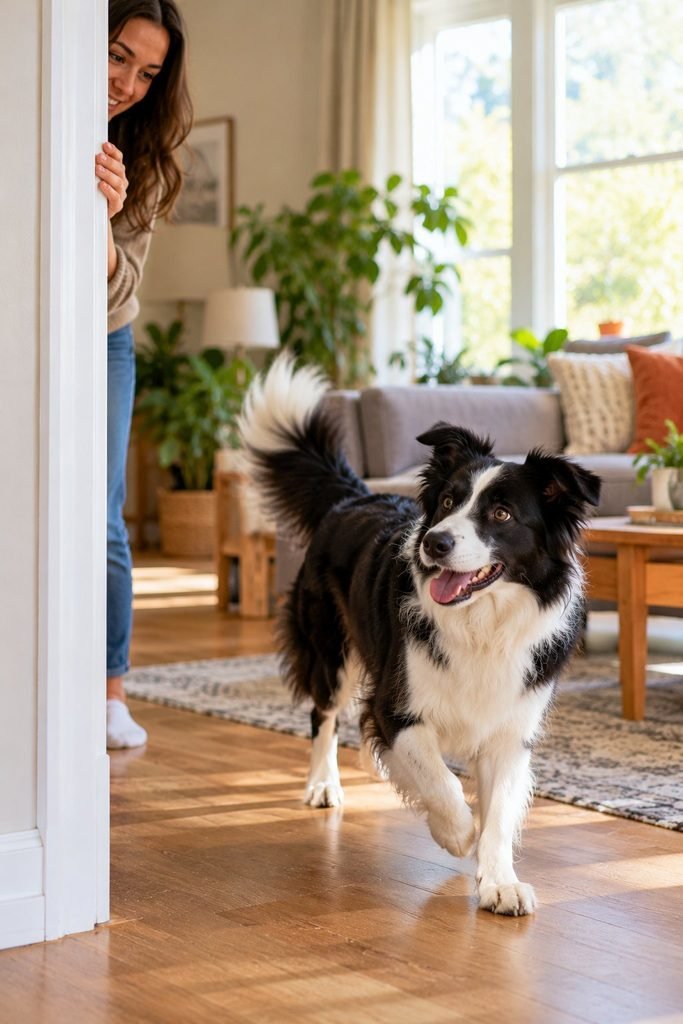
Hide and seek is a simple indoor game that combines movement, attention, and problem solving. It is especially useful when the weather makes outdoor exercise difficult or when you need an activity that does not require a large backyard.
The game is easy to adapt to your dog’s abilities. You can hide yourself, ask your dog to find a favorite toy, or hide a few treats in safe places around one room.
I like this type of activity because it gives dogs something specific to work toward instead of leaving them to invent their own entertainment. It can also strengthen the relationship between you and your pet through positive interaction.
How to play hide and seek
Begin in a familiar room with few distractions. Ask your dog to wait with a family member or use a simple stay cue if your dog already understands it.
Move a short distance away and hide behind a doorway, a sofa, or another safe location. Call your dog once and allow it to search for you. When your dog finds you, offer praise and a small treat or a brief play session.
If your dog is unfamiliar with the game, start with easy hiding places. Gradually make the search more challenging as your pet learns what to do.
You can also hide a favorite toy under a blanket or behind a sturdy cushion, making sure your dog does not chew or swallow any part of the setup.
Tips for keeping the game safe
Keep hiding places accessible and avoid areas where your dog could become trapped or knock over furniture. Use small treats that fit comfortably into your dog’s daily food allowance, and supervise the game closely.
Short rounds are usually better than allowing excitement to build until your dog becomes difficult to redirect. Finish with a calm activity, such as settling on a bed or chewing an appropriate dog toy.
Why it helps: Searching encourages your dog to use its nose, pay attention to cues, and solve a simple problem. It provides mental enrichment while adding some movement to the day.
Best for: Dogs that enjoy searching, indoor play, and owners who want a low cost activity for rainy days.
3. Use Puzzle Feeders at Mealtimes
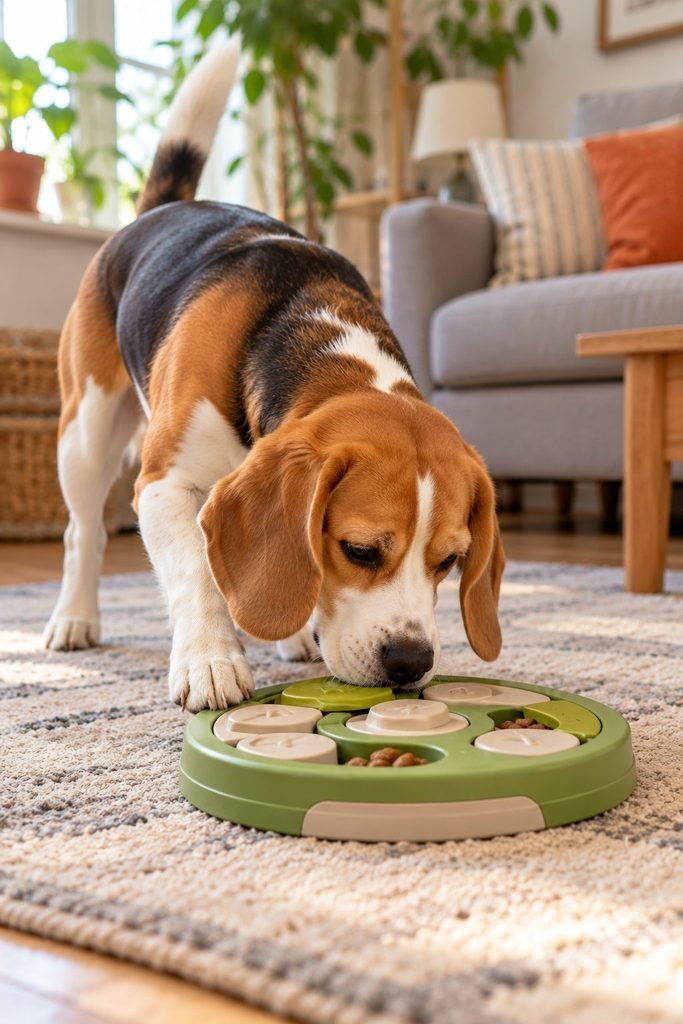
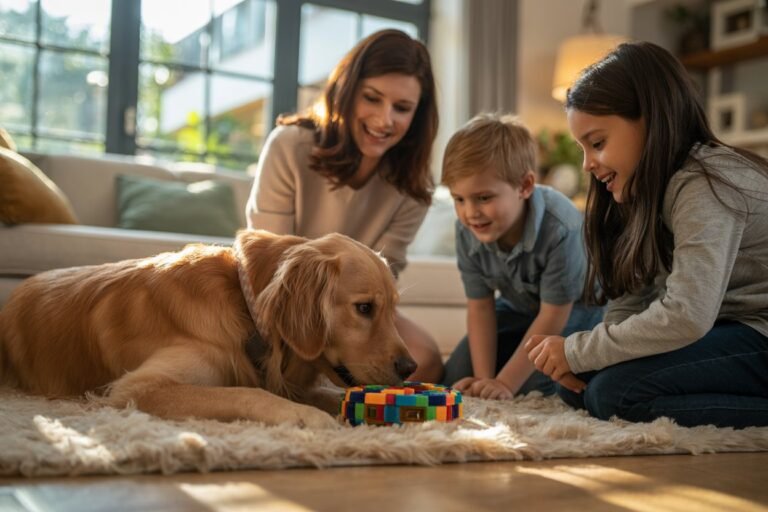
If your dog eats its food in a few seconds and immediately starts looking for something else to do, a puzzle feeder can make mealtime more engaging.
Instead of receiving every piece of food from a regular bowl, your dog has to work out how to access some or all of its meal.
Puzzle feeders come in different forms, including slow feeding bowls, treat dispensing toys, and simple food searching mats.
The best option depends on your dog’s experience, chewing habits, and ability to solve the puzzle without becoming frustrated.
You do not need to purchase the most complicated design. A beginner friendly puzzle that encourages your dog to sniff, nudge, or move a component can be a useful starting point.
How to introduce a puzzle feeder
Start by using a portion of your dog’s normal kibble rather than adding lots of extra treats. Choose a puzzle that is appropriate for your dog’s size and chewing strength, and demonstrate how it works if necessary.
For a beginner, make the food easy to reach so the dog learns that interacting with the toy produces a reward. Once your dog understands the activity, you can gradually introduce slightly more challenging designs.
Supervise your pet during use, especially if it tends to chew or destroy toys. Remove the feeder if it becomes damaged, and clean it regularly according to the manufacturer’s instructions.
You can also rotate between different food enrichment activities to prevent the same puzzle from becoming predictable.
Why it helps: Puzzle feeding encourages problem solving and can make meals last longer. It gives your dog an opportunity to engage in natural foraging behavior rather than eating without much interaction.
Best for: Fast eaters, food motivated dogs, and energetic pets that benefit from additional mental stimulation.
4. Teach Your Dog New Tricks
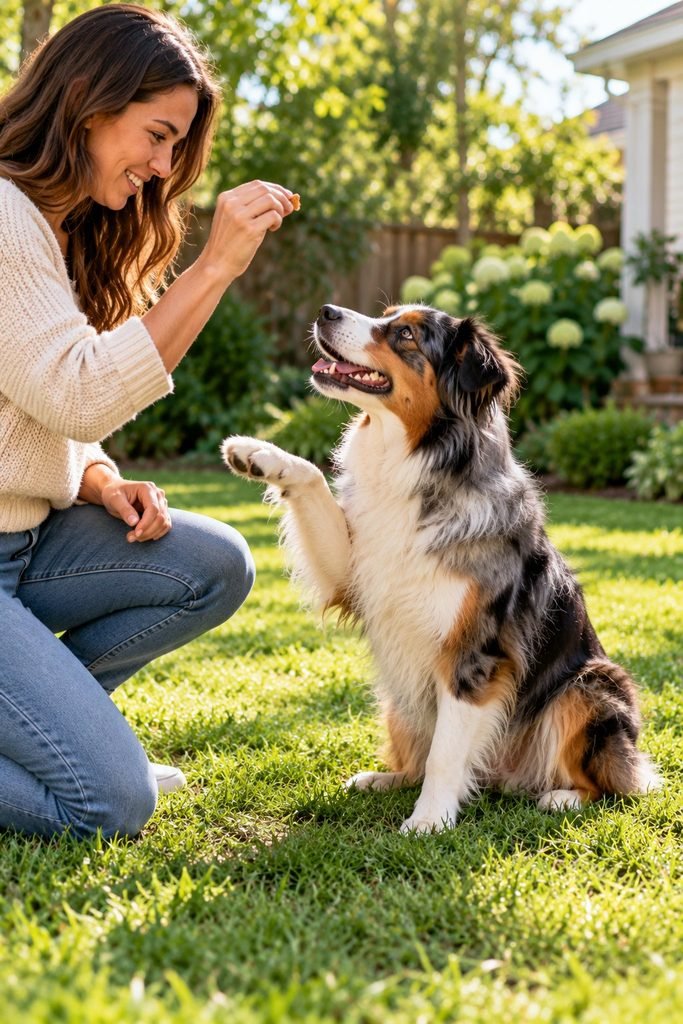
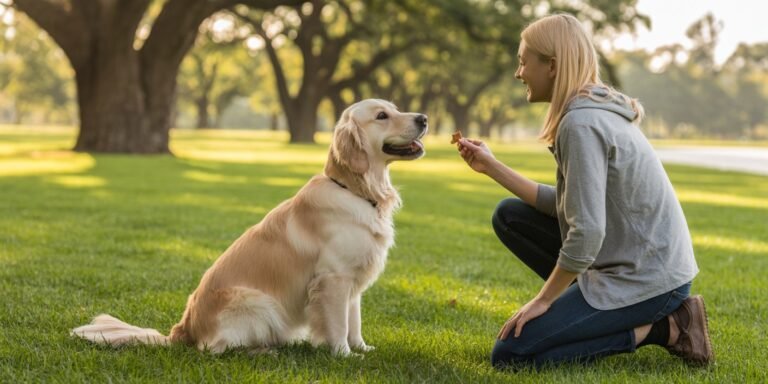
Training is more than a way to teach obedience. It is also an opportunity to give your dog a focused activity that involves listening, thinking, and working with you.
High energy dogs often benefit from having something constructive to do, and short training sessions can fit easily into a busy day.
You do not need to teach complicated tricks or spend an hour practicing commands. Even a few minutes of positive training can add variety to your dog’s routine.
If your dog already knows basic cues such as sit, stay, and come, you can build on those skills by introducing a new behavior or improving an existing one.
Easy tricks to teach at home
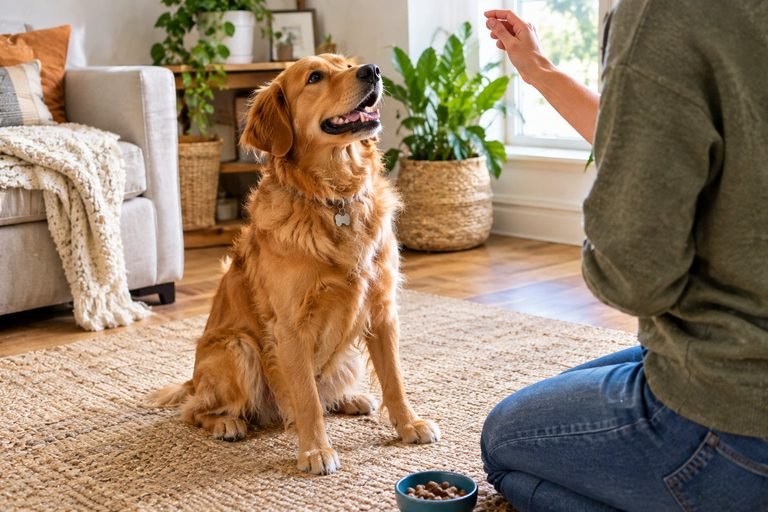
Touch: Hold your hand a short distance from your dog’s nose. When your dog moves toward it and touches your palm, mark the behavior with a word such as “yes” and offer a small reward.
Spin: Use a treat to guide your dog through a gentle circle. Reward the movement and gradually introduce a verbal cue when your dog begins to understand the action.
Find it: Hide a treat in an easy to locate place and encourage your dog to search for it. Start with visible treats before making the activity more challenging.
Go to your bed: Reward your dog for moving onto a designated mat or bed, then gradually encourage it to settle there for short periods.
Keep sessions short and positive. If your dog starts losing interest, becomes frustrated, or struggles to concentrate, simplify the task or take a break.
Make training part of your everyday routine
You can practice a few cues before meals, ask for a calm sit before opening the door, or spend several minutes learning a trick during a break from work.
Use rewards that your dog enjoys, including small food treats, praise, or access to a favorite toy. Avoid harsh corrections, and remember that different dogs learn at different speeds.
Why it helps: Training provides mental engagement, strengthens communication, and helps your dog practice useful everyday behaviors. It is not a substitute for physical activity, but it can be an important part of a balanced routine.
Best for: Intelligent dogs, eager learners, and owners who want to combine enrichment with useful life skills.
5. Play a Structured Game of Fetch
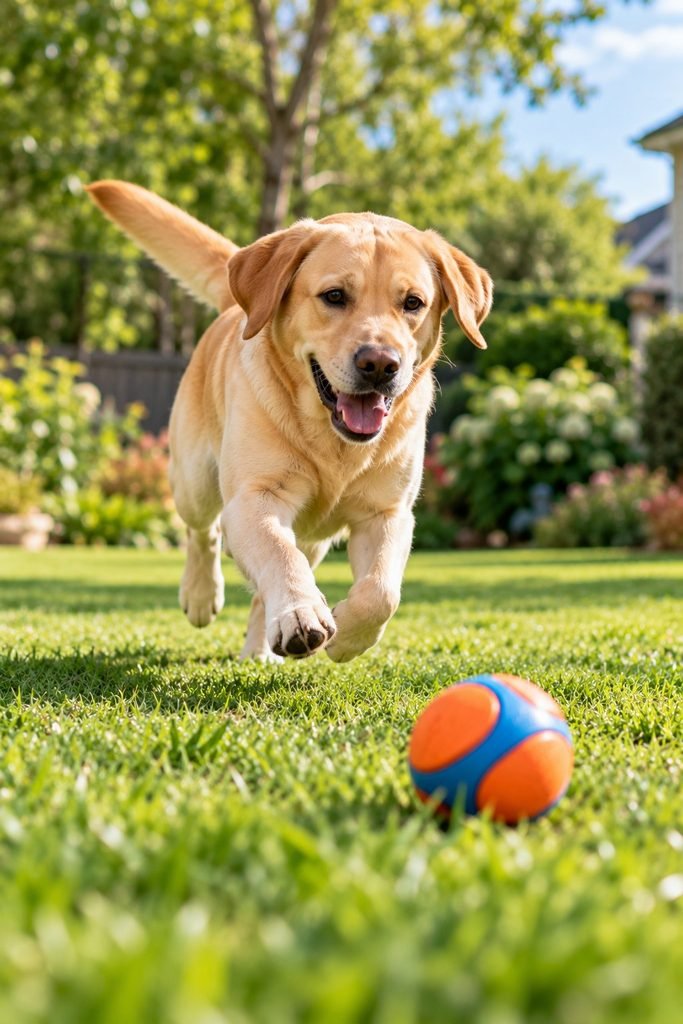
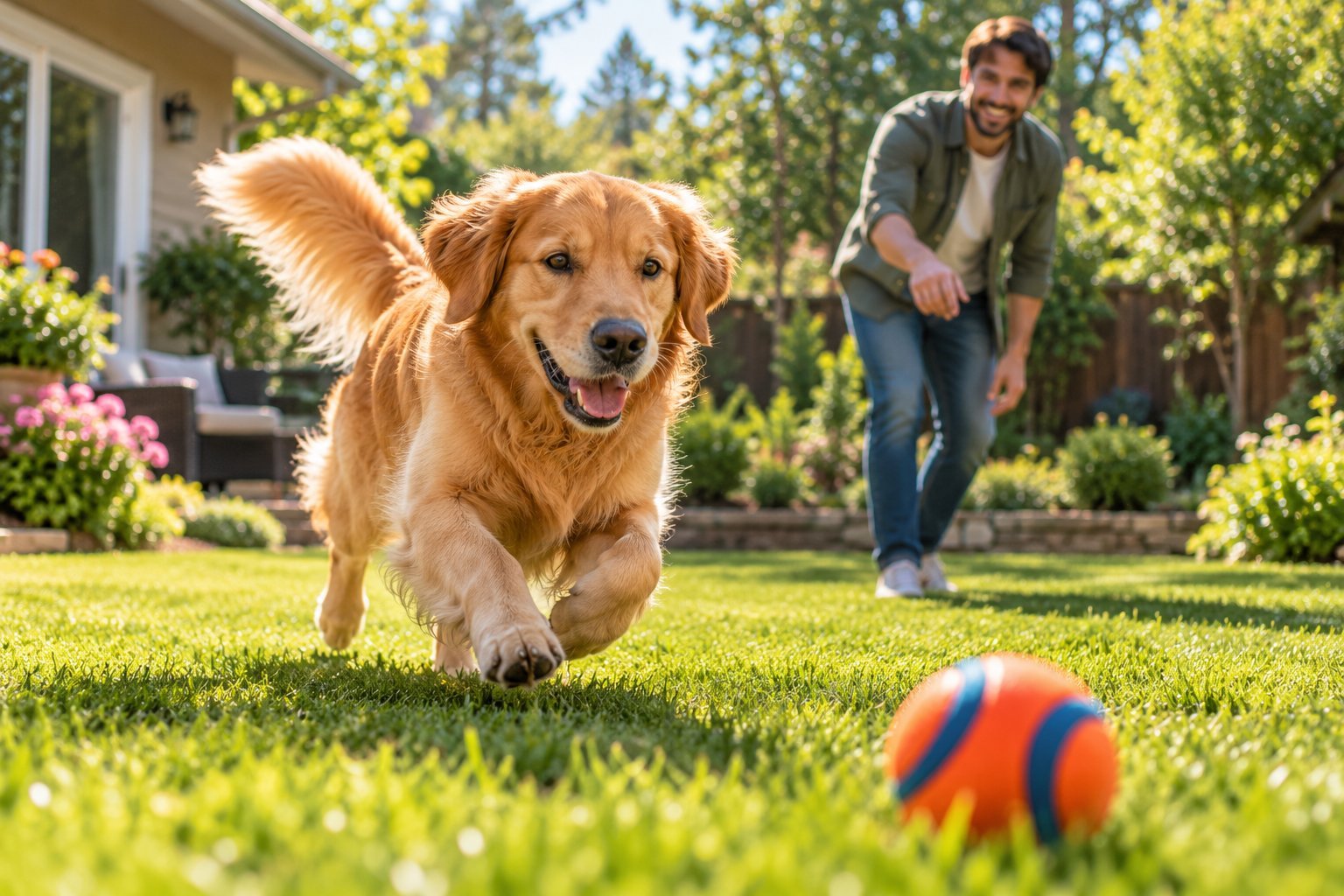
Fetch is a familiar activity for a reason. It allows many dogs to run, chase, retrieve, and interact with their owners. For dogs that enjoy retrieving, a short structured game can be a useful way to add movement to the day.
However, more throwing is not always better. Repeated high speed running, sudden stops, and sharp turns can place stress on joints, especially in dogs that are still growing, older dogs, or pets with existing mobility problems.
The aim is to choose an appropriate level of activity for your individual dog rather than trying to exhaust it through endless repetitions.
How to make fetch more rewarding
Choose a secure area with enough space for your dog to move without running into obstacles. Use a suitable ball or retrieval toy that is large enough to avoid accidental swallowing.
Begin with a gentle warm up, then throw the toy a short distance. Reward your dog for bringing it back, and practice a release cue so you can retrieve the toy without turning the game into a tugging contest.
Keep the session appropriate for your dog’s age, fitness, and health. If your pet is new to fetch, start with short rounds and gradually adjust the activity as you learn what it can comfortably manage.
You can make the game more mentally engaging by asking your dog to wait briefly before you throw the toy, practice a recall, or retrieve the toy from a safe and clearly visible location.
Avoid throwing balls down steep hills or encouraging repeated jumping and abrupt turns on slippery ground.
Why it helps: Fetch combines movement, attention, and interaction. When adjusted to your dog’s abilities, it can be a useful component of a varied exercise routine.
Best for: Dogs that naturally enjoy retrieving toys, active adult dogs, and owners with access to a safe playing area.
More Fun Activities to Keep an Energetic Dog Busy
6. Try a Flirt Pole Game
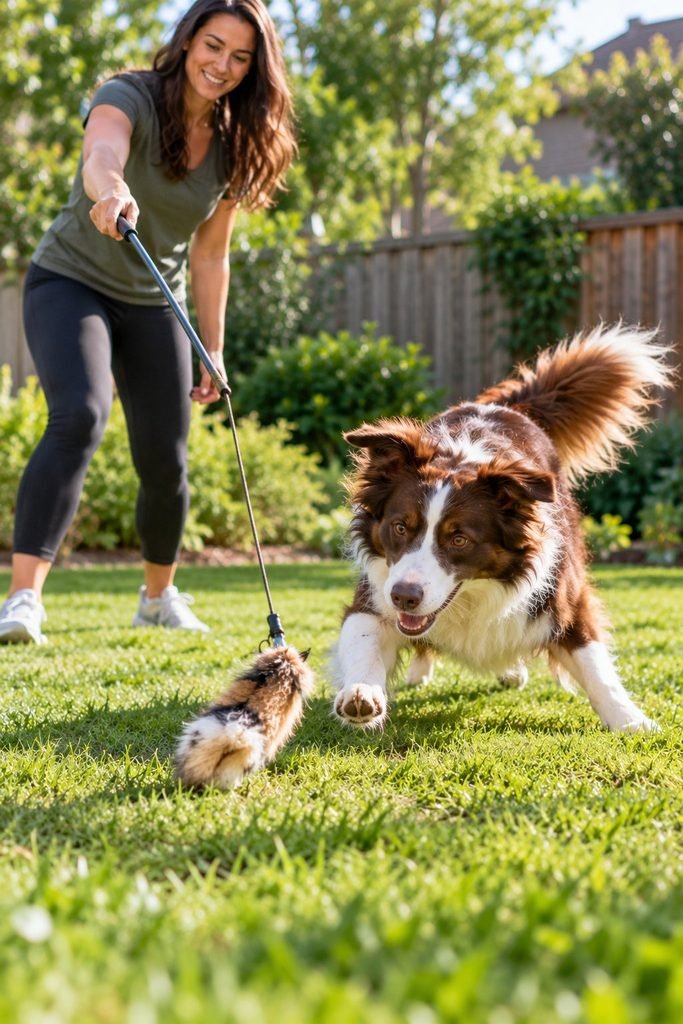
If your dog loves chasing moving toys, a flirt pole can provide an engaging way to combine movement, attention, and impulse control.
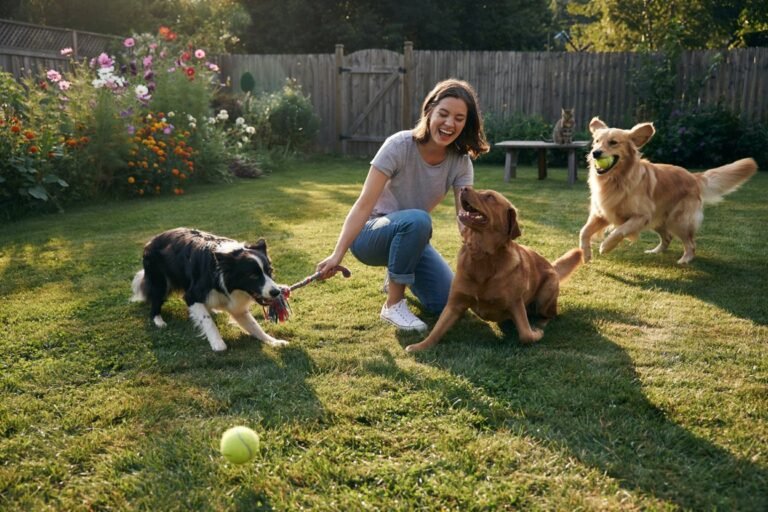
It is similar to a fishing rod, with a toy attached to a cord that you move along the ground to encourage your dog to chase it.
This activity can be particularly appealing to dogs that enjoy chasing, tugging, or pursuing moving objects.
Instead of running continuously, your dog follows the toy, changes direction, and practices responding to your movements.
A flirt pole does not need to be complicated, but it should be sturdy, appropriate for your dog’s size, and designed for supervised play. Avoid using a fragile stick or a cord that could easily break.
How to play safely with a flirt pole
Choose an open area with a nonslip surface and enough room for your dog to move comfortably. Move the toy along the ground in short, controlled motions rather than swinging it high into the air.
Allow your dog to catch the toy occasionally. You can then ask for a simple cue, such as sit or drop, before restarting the game. This teaches your dog that play involves both excitement and moments of self control.
Keep the sessions short, particularly if your dog is new to the activity. Repeated sharp turns, sudden stops, and jumping can strain joints, so avoid making the game too intense.
Puppies that are still growing, older dogs, and pets with joint or mobility problems may need a gentler alternative. If your dog shows signs of discomfort, stop the activity.
Make the game more mentally engaging
You can practice a brief wait before moving the toy, reward your dog for releasing it, or pause between rounds to encourage calm behavior.
The goal is not to make your dog chase until it is completely exhausted. It is to provide an enjoyable activity that combines movement with learning.
Why it helps: A flirt pole can encourage controlled movement, toy chasing, and interaction with you. When used appropriately, it offers another way to add variety to your dog’s daily enrichment.
Best for: Healthy dogs that enjoy chasing toys and owners who want a supervised, interactive play activity.
7. Create DIY Scent Games Around Your Home
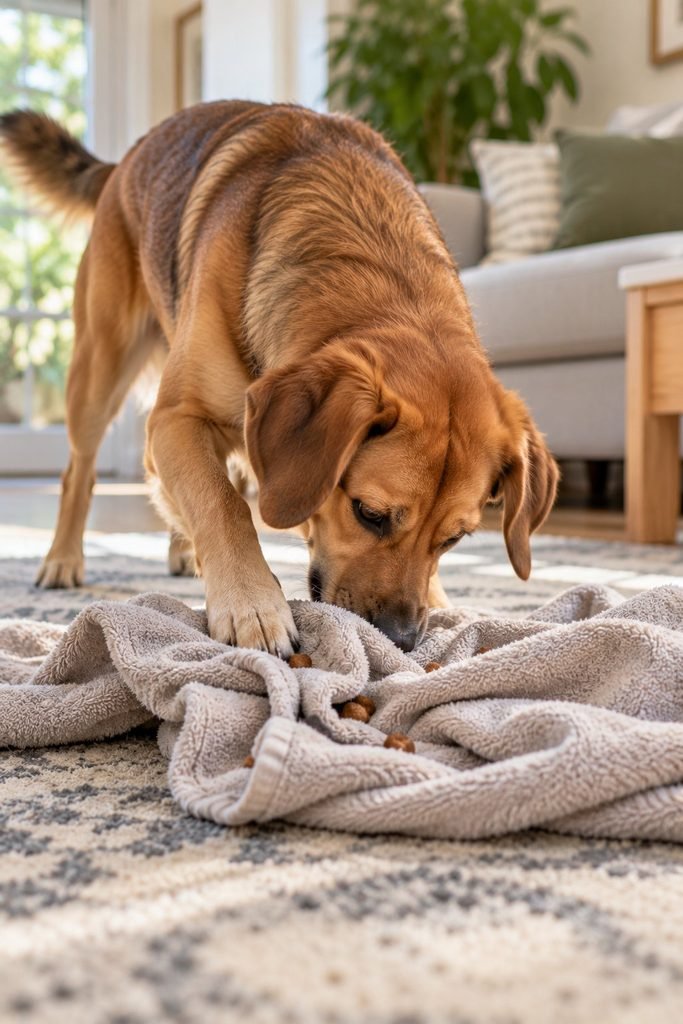
Dogs do not need elaborate equipment to enjoy a useful mental challenge. A few treats, some safe household items, and a little creativity can turn an ordinary room into a scent exploration activity.
Scent games encourage dogs to use their noses to locate food or familiar objects. They are especially helpful when you cannot go outside for a long walk or when you want to introduce a calmer activity after more energetic play.
I would start with simple searches before making the game more challenging. When dogs understand what they are looking for, they can gradually learn to investigate new hiding places and work more independently.
Easy scent games to try
The treat trail
Place a few small treats along a short, safe route on the floor. Let your dog follow the trail and discover the rewards. Begin with treats that are easy to find, then gradually spread them out as your dog understands the activity.
The hidden treat game
Ask your dog to wait briefly while you place a treat in an accessible location. Release your dog with a cue such as “find it” and let it search. Start with visible hiding places before using locations that require more investigation.
The towel search
Spread a clean towel on the floor and place a few pieces of your dog’s normal kibble across it.
You can loosely fold sections of the towel to make the food slightly harder to find. Supervise the activity to make sure your dog does not chew or swallow the fabric.
The box investigation
Place a few treats in one open cardboard box among several empty boxes. Let your dog investigate and discover which box contains the food.
Use clean, sturdy boxes without staples, tape, or loose materials that your dog might swallow.
Keep scent games safe and rewarding
Use small portions of food and account for treats in your dog’s daily diet. Choose a familiar room with enough space to explore without knocking over furniture.
If your dog becomes frustrated, make the search easier. If your dog is highly excitable, begin with a short activity and finish with a calm reward.
Avoid hiding food near cleaning products, electrical equipment, hot appliances, or anything your dog should not investigate. Do not use small objects that could become choking hazards.
Why it helps: Scent work encourages natural searching behavior and gives dogs an opportunity to concentrate. It can be an excellent addition to a balanced routine, particularly for dogs that enjoy exploring their surroundings.
Best for: Curious dogs, scent oriented breeds, rainy days, and owners looking for affordable enrichment activities.
8. Set Up a Simple Dog Friendly Obstacle Course
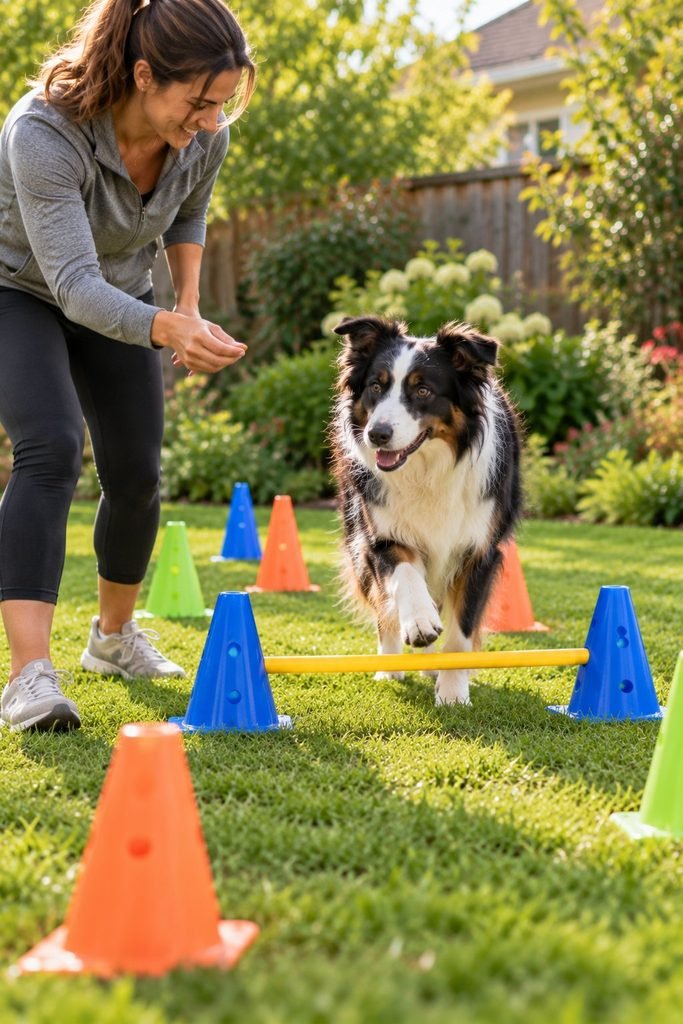
An obstacle course can turn an ordinary play session into a more interesting activity.
Rather than simply running around, your dog follows your guidance through a series of easy movements, such as walking around cones, stepping over low obstacles, or moving between markers.
You do not need a large backyard or expensive agility equipment. A few soft household items and enough clear floor space may be sufficient for a basic indoor course.
The most important consideration is safety. The aim is to encourage coordination, confidence, and engagement without asking your dog to perform movements that are too difficult or physically demanding.
How to build an obstacle course at home
Start with a few simple stations.
Walk around objects: Place two or three sturdy markers with enough space between them. Guide your dog around each one using a treat or a familiar cue.
Step over a low obstacle: Use a soft, stable object that is low enough for your dog to step over naturally. Avoid making your dog jump over furniture or objects that could slip.
Move through a wide opening: Arrange two stable objects to create a broad passage. Encourage your dog to walk through it at a comfortable pace.
Practice a mat target: Place a nonslip mat on the floor and reward your dog for stepping onto it. You can then use the mat as a starting or finishing point for the course.
Follow a simple route: Guide your dog around a chair or through a clear hallway, rewarding calm attention and successful movement.
Introduce one obstacle at a time before combining the activities into a short sequence.
Keep the course appropriate for your dog
Make sure the floor is not slippery and that all objects remain stable when touched. Leave enough room for your dog to turn without colliding with furniture.
Avoid high jumps, narrow unstable platforms, steep ramps, and repeated sharp turns. Puppies, senior dogs, and pets with mobility concerns may need a course made entirely of easy walking and low impact movements.
You can also use the course as an opportunity to practice familiar cues such as come, wait, touch, and go to your mat.
Keep the activity short and reward your dog for calm participation. If your pet starts slipping, limping, panting excessively, or losing interest, end the session and allow it to rest.
Why it helps: A simple obstacle course encourages your dog to pay attention, follow cues, explore its surroundings, and move in different ways. It combines mental engagement with light physical activity.
Best for: Playful dogs, confident learners, and owners who want to make indoor or backyard play more interesting.
More Ways to Help Your Dog Burn Energy and Settle Down
9. Use a Stuffed Kong or Frozen Dog Treat
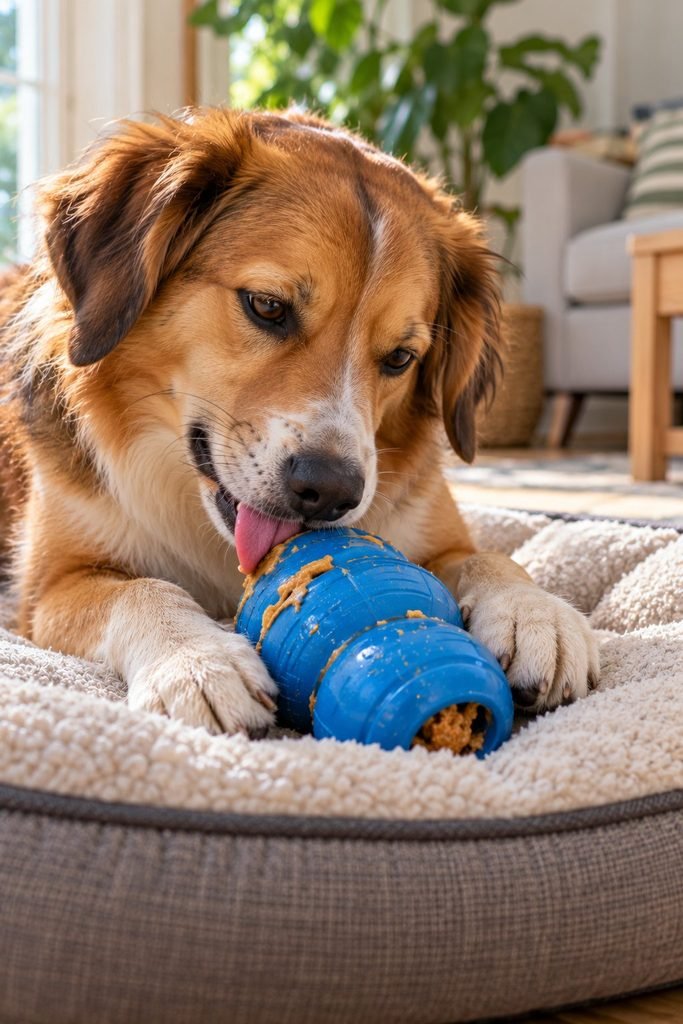
Sometimes, the easiest way to keep an energetic dog occupied is to give it an appropriate activity that encourages licking, chewing, and problem solving.
A stuffed food toy can be particularly useful when you need to prepare a meal, finish some work, or enjoy a quiet moment at home.
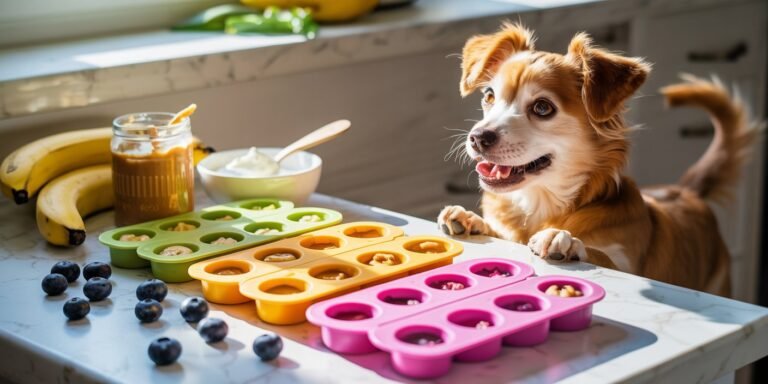
Rather than giving your dog an ordinary treat that disappears in seconds, you can fill a suitable rubber food toy with part of its regular meal or a small amount of dog safe food.
Freezing the filled toy can make the food last longer, although the actual duration will depend on the ingredients and your dog’s eating habits.
This activity is not a replacement for walks or interactive play, but it can provide a useful change of pace when your dog needs something engaging to do.
How to prepare a stuffed dog toy
Choose a food dispensing toy designed for your dog’s size and chewing strength. Add some of your dog’s regular kibble, moistened food, or a small amount of plain, unsweetened yogurt if your dog tolerates dairy.
You can also use plain pumpkin puree without added sugar or spices, provided the product contains only dog safe ingredients. Avoid pumpkin pie filling, which can contain ingredients unsuitable for dogs.
For an easy frozen option, follow these steps:
- Place a small portion of your dog’s regular food inside the toy.
- Add a little water or another suitable ingredient to help hold the mixture together.
- Freeze the toy if the manufacturer says it is suitable for freezing.
- Offer it to your dog while supervising the activity.
- Wash the toy thoroughly after use.
Introduce the toy gradually if your dog has never used one before. Starting with food that is easy to reach can prevent frustration.
Choose ingredients carefully
Avoid chocolate, grapes, raisins, onions, garlic, macadamia nuts, and anything containing xylitol, which is highly toxic to dogs. Peanut butter should be free of xylitol and given in moderation because it can be high in fat.
Use only ingredients your dog can safely tolerate, and count the food toward its daily intake to avoid unnecessary extra calories.
If your dog has food allergies, digestive problems, or a medical condition requiring a special diet, check with your veterinarian before introducing unfamiliar ingredients.
Why it helps: Licking, chewing, and working for food can provide mental engagement and encourage calmer activity. A stuffed toy can also give your dog an appropriate alternative to chewing household items.
Best for: Food motivated dogs, dogs that enjoy licking and chewing, and owners who need a supervised enrichment activity at home.
10. Play Tug of War With Clear Rules
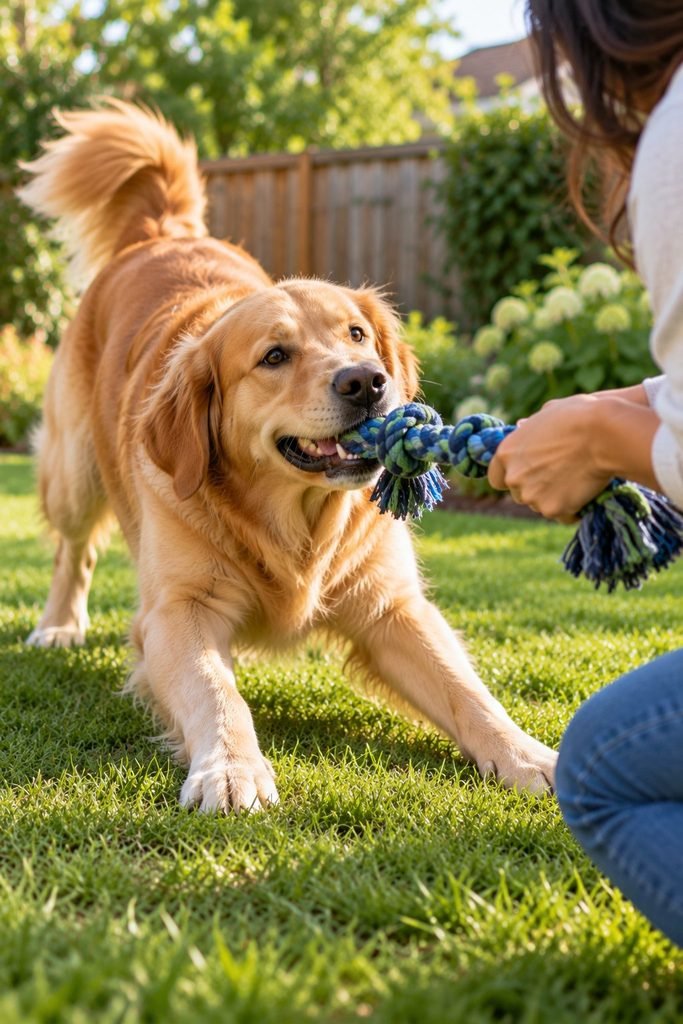
Tug of war is a convenient way to interact with a dog that enjoys gripping and pulling toys. It requires very little space, making it useful for indoor play when outdoor exercise is not practical.
Despite some common misconceptions, tug does not automatically make a dog aggressive.
When the game is appropriate for the individual dog and played with clear boundaries, it can be an enjoyable activity that encourages cooperation and engagement.
The key is to keep the game controlled rather than allowing excitement to become overwhelming.
How to play tug safely
Choose a sturdy dog toy that is long enough to keep your hands away from your dog’s mouth. Begin with gentle pulling and let your dog grip the toy comfortably.
Keep the toy relatively low and avoid lifting your dog off the ground, twisting its neck, or pulling sharply from side to side. Strong jerking movements can cause injuries, especially in small dogs or pets with existing dental, neck, or joint problems.
You can introduce a release cue such as “drop it.” Pause the game, reward your dog for releasing the toy, and restart when it is calm enough to continue.
If your dog becomes overly excited, starts grabbing clothing, or cannot respond to familiar cues, stop the game and give it time to settle. Avoid using your hands as the tug toy.
Make tug more than a physical game
You can incorporate simple training into each round. Ask your dog to sit before starting, practice releasing the toy, or briefly pause to encourage calm behavior.
Keep sessions short and adapt the intensity to your dog’s age, fitness, and preferences. Some dogs love tug, while others prefer searching games or retrieving toys. There is no need to force an activity that your dog does not enjoy.
Why it helps: Tug combines movement, interaction, and opportunities to practice self control. It can be a useful addition to your dog’s routine when played safely and in moderation.
Best for: Dogs that enjoy pulling toys, owners with limited outdoor space, and pets that respond well to interactive games.
11. Combine Short Training Sessions With Calm Time
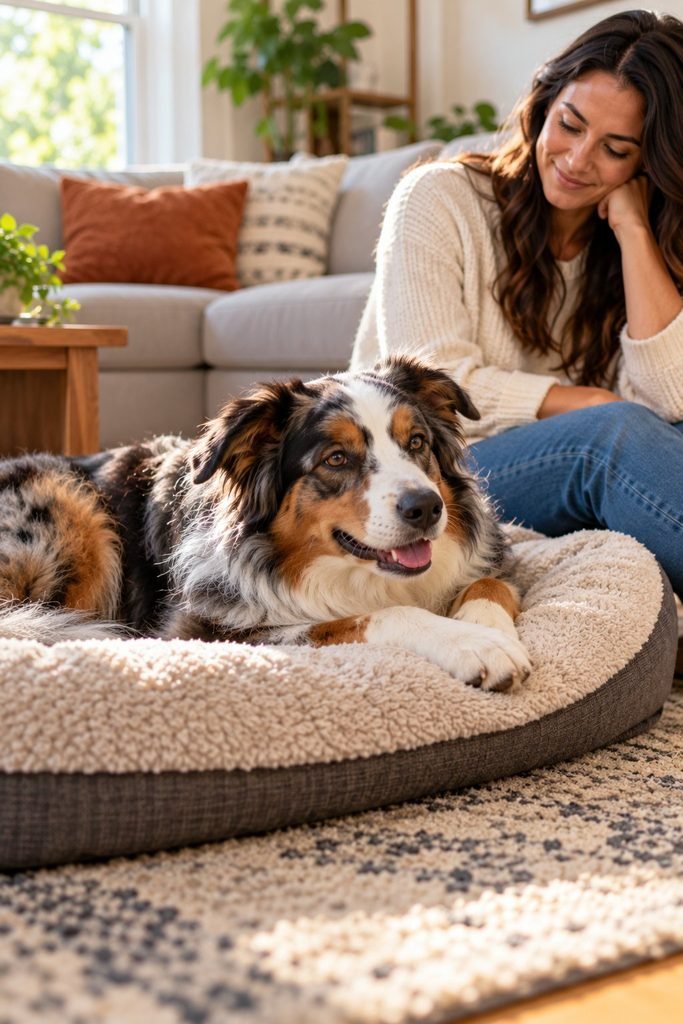
One of the most useful ways to manage a high energy dog is to combine activity with opportunities to rest. Exercise and play are important, but dogs also need to learn how to settle when nothing exciting is happening.
Some dogs continue seeking attention because they have not learned a predictable routine for relaxing. Others may be overtired, overstimulated, or struggling to settle in a busy household. Adding more intense exercise is not always the answer.
Short training sessions followed by a quiet activity can help create a more balanced day.
How to build a simple activity and rest routine
Begin with a suitable activity such as a sniff walk, a short training session, or a gentle game of fetch. When the activity finishes, bring your dog into a calm environment and offer access to fresh water.
You can then encourage your dog to settle on a comfortable bed or mat. Reward relaxed behavior when your dog chooses to lie down quietly, rather than waiting until it starts barking or demanding attention.
If your dog finds it difficult to remain settled, make the environment less stimulating. Reduce noise, move away from busy areas, and keep the first practice sessions brief.
Avoid repeatedly telling your dog to lie down if it is frightened, uncomfortable, or unable to relax. Look for signs that something else may be affecting its behavior.
Teach your dog to relax on a mat
Place a comfortable mat in a quiet location. When your dog steps onto it or lies down naturally, offer a small reward.
Gradually reward longer periods of relaxed behavior, keeping the exercise easy enough for your dog to succeed. You can also provide an appropriate chew or stuffed food toy if it helps your pet settle.
Practice at different times of the day so that relaxing becomes a normal part of the routine rather than something that only happens after exhausting exercise.
Why it helps: Learning to settle gives dogs a useful alternative to constant activity and attention seeking. Combining enrichment with rest can help create a more predictable routine.
Best for: Dogs that struggle to settle after play, busy households, and owners who want a better balance between activity and relaxation.
How Much Exercise Does a High Energy Dog Need?
There is no single exercise schedule that suits every energetic dog. The right amount depends on age, breed, health, fitness, temperament, and the types of activities your dog enjoys.
A young working breed may need a different routine from a senior companion dog, even if both appear energetic. Some dogs benefit from several shorter activities spread throughout the day, while others enjoy longer walks combined with training and enrichment.
Instead of trying to exhaust your dog every day, aim to provide a balanced combination of appropriate physical activity, mental stimulation, social interaction, and rest.
Example of a Daily Routine for an Energetic Adult Dog
The following is a flexible example, not a prescription for every dog. Adjust the duration and intensity to your dog’s needs.
| Time | Activity |
|---|---|
| Morning | A sniff walk at a comfortable pace |
| After breakfast | A short training session or puzzle feeder |
| Midday | A brief scent game or food enrichment activity |
| Afternoon | Interactive play, such as fetch or tug |
| Evening | Another suitable walk or calm outdoor exploration |
| Before bed | Quiet companionship and an opportunity to settle |
You do not need to complete every activity every day. Choose a few that suit your dog’s abilities and rotate them to keep the routine interesting.
Puppies need frequent rest and age appropriate play rather than forced endurance exercise.
Older dogs may benefit from gentle walks, scent activities, and low impact games. If your dog has a medical condition or mobility problem, ask your veterinarian to recommend an appropriate activity plan.
Signs Your Dog Needs More Than Exercise
An energetic dog is not necessarily an under exercised dog. Persistent restlessness, destructive behavior, or excessive vocalization can have several causes, including boredom, anxiety, inadequate sleep, discomfort, or changes in the home environment.
Pay attention to what happens before and after the behavior. Your dog might become restless at a particular time of day, react to noises outside, or struggle to settle when left alone.
Consider the following possibilities:
Your dog is bored. It may repeatedly seek attention, investigate cupboards, or chew inappropriate objects. Introduce suitable enrichment, training, and interactive play.
Your dog is overstimulated. It may become increasingly frantic after intense games or busy outings. Try shorter activities with quiet breaks between them.
Your dog is not getting enough rest. Puppies and adult dogs need adequate sleep and downtime. Create a comfortable resting area and avoid interrupting your dog whenever it lies down.
Your dog may be uncomfortable or unwell. A sudden change in energy, unusual restlessness, excessive panting, or difficulty settling can indicate a medical problem. Contact your veterinarian if the behavior is new, persistent, or accompanied by other concerning signs.
If your dog becomes destructive or distressed specifically when left alone, consider speaking with a qualified behavior professional. Simply adding more exercise may not resolve separation related distress.
Common Mistakes to Avoid When Tiring Out a High Energy Dog
Trying to Exhaust Your Dog Every Day
The goal is not to push your dog until it can barely move. Excessive exercise can cause injuries and may be unsuitable for growing puppies, senior dogs, or pets with certain health conditions.
Choose activities that match your dog’s abilities and give it time to recover between sessions.
Relying Only on Long Walks
Walking is valuable, but it is only one part of a balanced routine. Training, scent work, food puzzles, and appropriate social interaction provide different kinds of enrichment.
Rotating activities can help prevent the daily routine from becoming repetitive.
Ignoring the Weather
Hot weather can increase the risk of overheating, particularly during vigorous exercise. Choose cooler times of day, provide fresh water, and avoid strenuous activity in extreme heat.
Stop exercising if your dog shows signs of distress, including heavy panting that does not settle, weakness, or loss of coordination. Heatstroke is an emergency and requires immediate veterinary attention.
Using Exercise to Solve Every Behavior Problem
A dog that barks, chews, or struggles when left alone may need training, environmental changes, or professional help rather than simply more exercise.
Look for the reason behind the behavior before changing the activity schedule.
Forgetting Mental Stimulation
A dog can have plenty of opportunities to run and still benefit from activities that encourage thinking and exploration.
Short training sessions, safe scent games, and interactive feeding can make the day more engaging without requiring constant physical exertion.
Frequently Asked Questions
What is the fastest way to tire out a high energy dog?
A combination of an appropriate walk, a short training session, and a scent or food enrichment game can be effective for many dogs. The best combination depends on your dog’s fitness, age, and preferences. Avoid pushing your dog into exhaustion.
How can I tire out my dog indoors?
Try hide and seek, treat searches, puzzle feeders, trick training, a stuffed food toy, or a gentle game of tug. Make sure the floor is nonslip and the space is free of hazards. Short activities with breaks are usually easier to manage than one long, intense session.
Do mental games tire dogs out?
Mental activities can provide meaningful stimulation and help some dogs settle after a satisfying activity. They complement physical exercise rather than replacing every need for movement, social interaction, and outdoor exploration.
Why is my dog still energetic after a long walk?
Your dog may need a different type of enrichment, a more varied routine, or help learning to settle.
Some dogs become more excited after vigorous activity, and some need time to calm down. If restlessness is persistent or unusual, consider whether stress, discomfort, or another problem could be contributing.
Can I tire out my puppy with long walks?
Puppies need play, exploration, training, and plenty of rest, but their exercise should be appropriate for their stage of development.
Avoid forced long distance exercise and repeated high impact jumping. Ask your veterinarian for advice tailored to your puppy’s breed, age, health, and vaccination status.
Is fetch enough exercise for a high energy dog?
Fetch can be a useful part of an exercise routine, but it does not meet every dog’s needs on its own.
Combine appropriate physical activity with training, sniffing opportunities, enrichment, and rest. Avoid repeated high speed chasing if your dog has joint problems or struggles with sudden turns.
How do I calm my dog down at night?
Offer a predictable evening routine with an appropriate walk or gentle activity, a chance to relieve itself, and a comfortable resting area.
Keep the final part of the evening relatively quiet. If your dog suddenly becomes restless at night or cannot settle despite a consistent routine, consult your veterinarian.
Final Thoughts
Living with a high energy dog becomes easier when you have several activities you can use throughout the day. You do not need to rely on long walks or expensive equipment to keep your pet engaged.
Simple activities such as sniff walks, hide and seek, puzzle feeding, training, and interactive play can provide useful variety.
My recommendation is to start with two or three activities your dog genuinely enjoys and build them into a predictable routine.
Pay attention to how your pet responds, make adjustments when necessary, and remember that rest is just as important as activity.
Every dog is different. A routine that works beautifully for one pet may be too demanding or insufficient for another.
Focus on age appropriate exercise, safe mental enrichment, and opportunities to relax.
With patience and consistency, you can help your dog use its energy constructively while creating a happier and more manageable daily life for both of you.