Sweet Potato Dog Ice Cream
On a warm afternoon, my dog will hover around the freezer as though he knows a special treat is waiting inside.
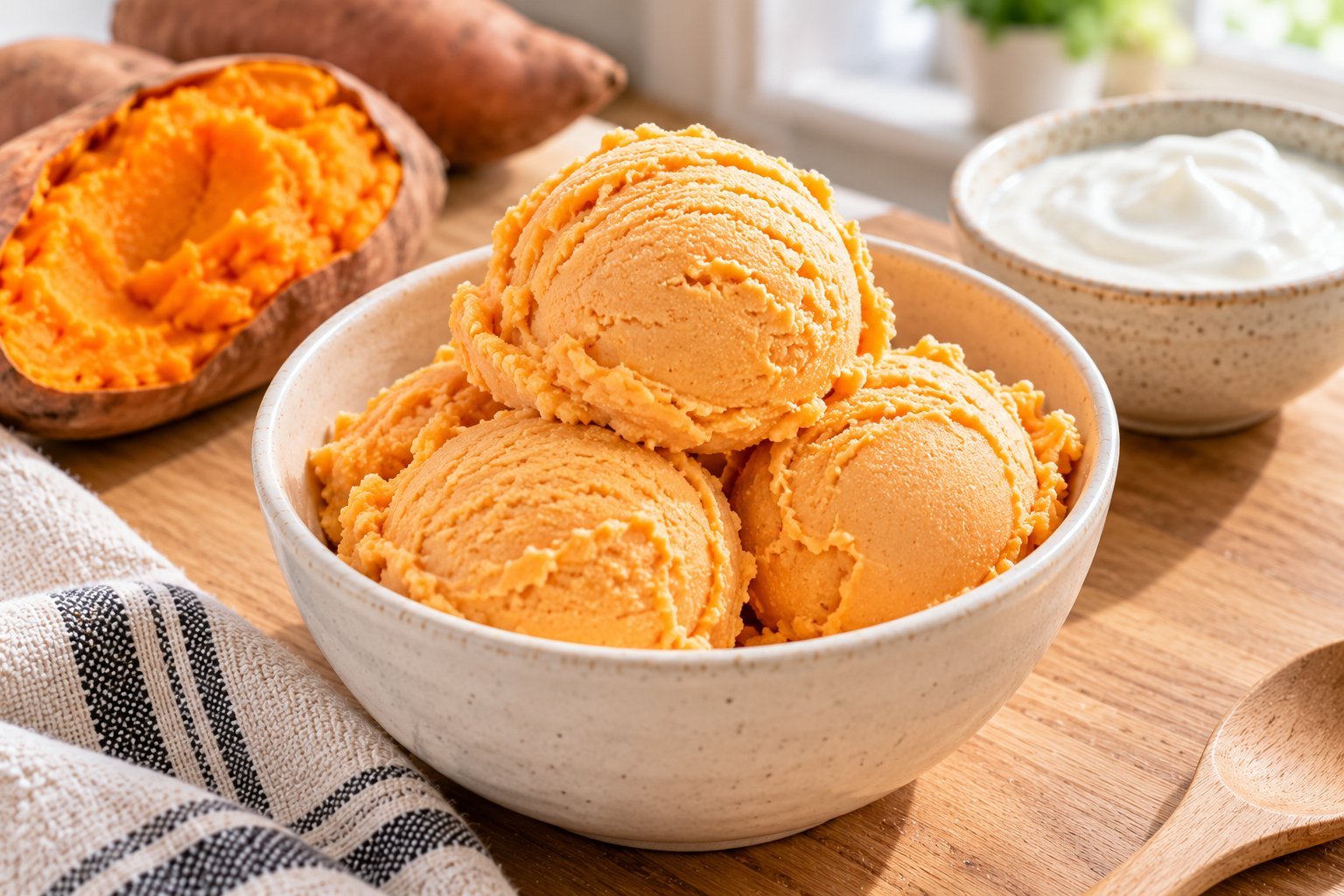
This sweet potato dog ice cream is one of my favorite ways to turn a few simple ingredients into something cool, creamy, and satisfying.
Made with cooked sweet potato, plain yogurt, and a little optional peanut butter, it delivers plenty of flavor without added sugar, heavy cream, or artificial colors.
The recipe is easy to prepare at home, even if you’ve never made frozen dog treats before. You don’t need an ice cream machine, complicated equipment, or a long list of ingredients.
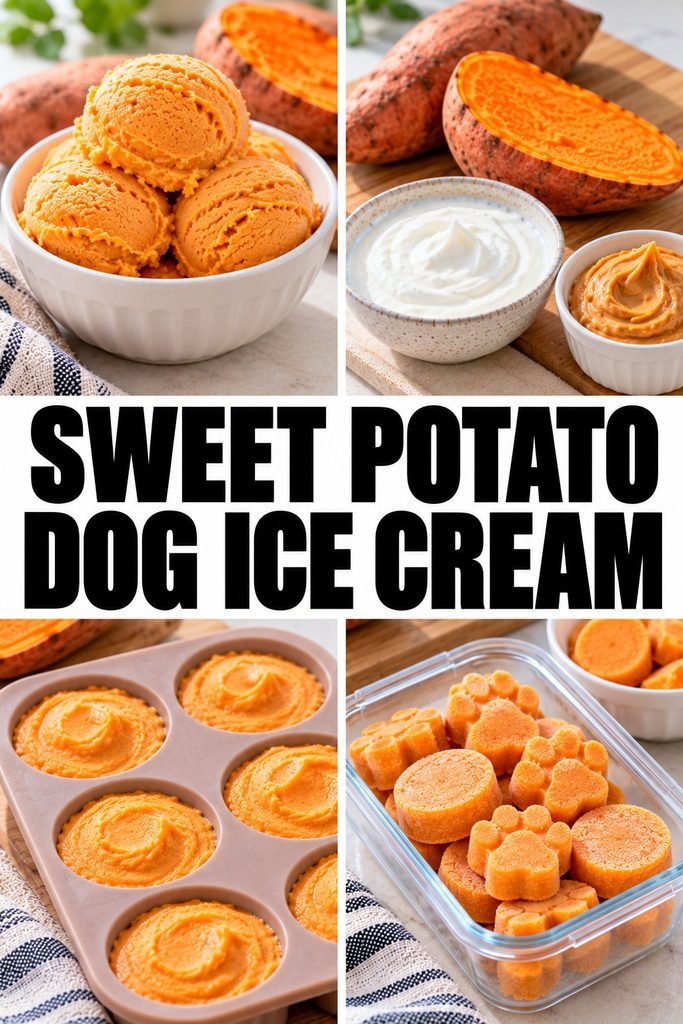
Mash the sweet potato, mix everything until smooth, portion it into molds, and let the freezer do the rest.
It’s a cousin to my Peanut Butter Popsicles for Dogs and my Easy Frozen Coconut Dog Treats for Summer, but with a softer, scoopable texture that feels like real ice cream.
If your dog already loves the earthy sweetness of my Easy Homemade Sweet Potato Dog Chews, this frozen version offers another way to serve a familiar ingredient.
Whether you’re preparing a summer reward, looking for a simple enrichment activity, or making a small batch of homemade treats to keep in the freezer, this recipe is easy to adapt to your dog’s preferences.
Just remember that even nutritious homemade treats should complement a complete, balanced diet rather than replace regular meals.
Why You’ll Love This Sweet Potato Dog Ice Cream
A few reasons make this recipe worth keeping in your homemade dog treat collection.
Only a few ingredients. Cooked sweet potato and plain yogurt create the base, while a little xylitol-free peanut butter adds extra richness if your dog tolerates it.
No added sugar. The naturally sweet flavor comes from the sweet potato itself. You don’t need honey, syrup, or other sweeteners to make a tasty frozen treat.
Creamy and scoopable. Blending the ingredients creates a smooth mixture that can be served in a small bowl or frozen in individual portions.
Easy to prepare. Mash, mix, portion, and freeze. A blender or food processor helps create a smoother texture, but a fork and mixing bowl work perfectly well.
Useful for warm weather. A small frozen treat can be a refreshing reward after a walk or play session. Allow your dog to cool down and drink water first rather than relying on a treat to cool an overheated dog.
Easy to customize. You can leave out the peanut butter, use an appropriate dairy-free yogurt, or try a small variation once you know your dog tolerates the basic recipe.
Simple to portion. Silicone molds and ice cube trays make it easy to prepare small servings. You can also freeze the mixture in a shallow container and scoop out a little at a time.
Is Ice Cream Safe for Dogs?
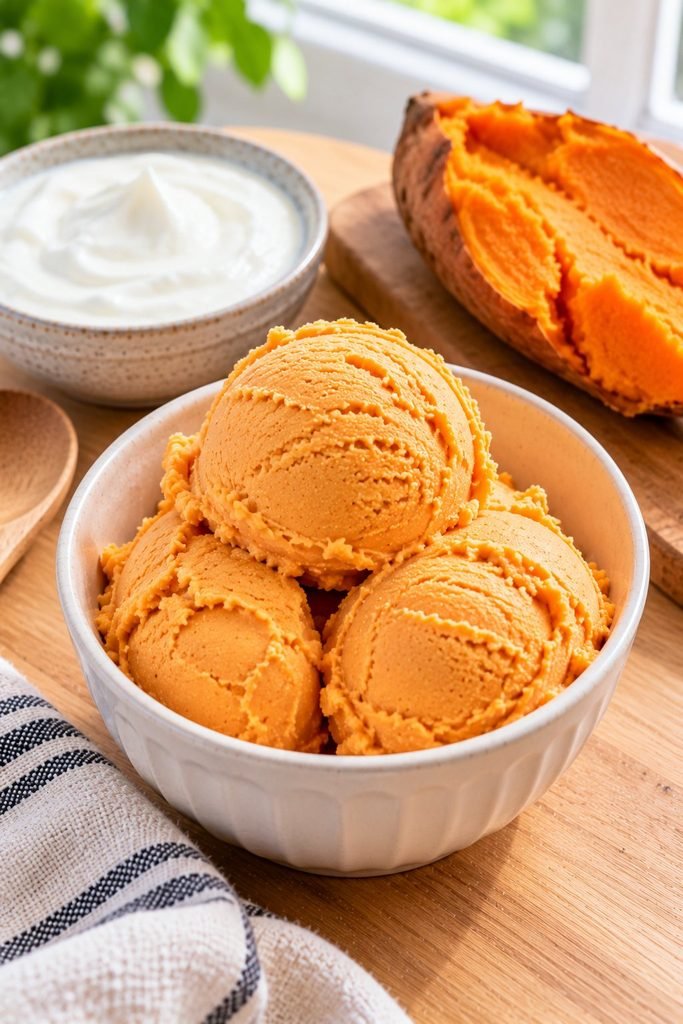
Traditional ice cream isn’t an ideal treat for dogs. Many commercial varieties contain substantial amounts of sugar and fat, and certain flavors or mix-ins contain ingredients that are dangerous to dogs.
Chocolate, macadamia nuts, and products containing xylitol are examples of ingredients to avoid.
A homemade frozen treat made with dog-appropriate ingredients can be a better option, but the ingredients and serving size still matter. Homemade doesn’t automatically mean suitable for every dog.
Choose plain, unsweetened yogurt. Read the ingredient label before using yogurt. Avoid varieties containing added sugars, sweeteners, chocolate, or other unsuitable additions. Plain Greek yogurt can work, provided your dog tolerates dairy.
Consider lactose sensitivity. Some dogs develop gas, loose stools, or digestive discomfort after eating dairy products.
If your dog has a known dairy sensitivity, skip the regular yogurt and consider a plain, unsweetened alternative that contains no harmful ingredients.
Coconut-based yogurt can be an option, but check its fat content and label carefully.
Check your peanut butter. Only use peanut butter that is confirmed to be free of xylitol. This sweetener is highly toxic to dogs and can cause a dangerous drop in blood sugar and liver injury.
Choose a simple product without chocolate, added sweeteners, or unnecessary extras. For more ideas using suitable peanut butter, take a look at my 3 Ingredient Peanut Butter Dog Gummies.
Cook the sweet potato thoroughly. Raw sweet potato is firm and difficult to digest. Cook it until soft, remove the skin, and mash it without adding butter, salt, sugar, or seasoning.
Keep portions small. Frozen treats are an occasional snack, not a replacement for your dog’s regular food. Treats should generally account for no more than 10% of daily calories, with the remaining calories coming from a complete and balanced diet.
Supervise your dog. Allow the frozen mixture to soften slightly before serving, especially for dogs that gulp their food. Offer a manageable portion and watch your dog while eating.
Dogs with diabetes, pancreatitis, food allergies, chronic digestive problems, or a prescribed diet may need different ingredients or portion sizes. Check with your veterinarian before adding this treat to their routine.
Ingredients You’ll Need
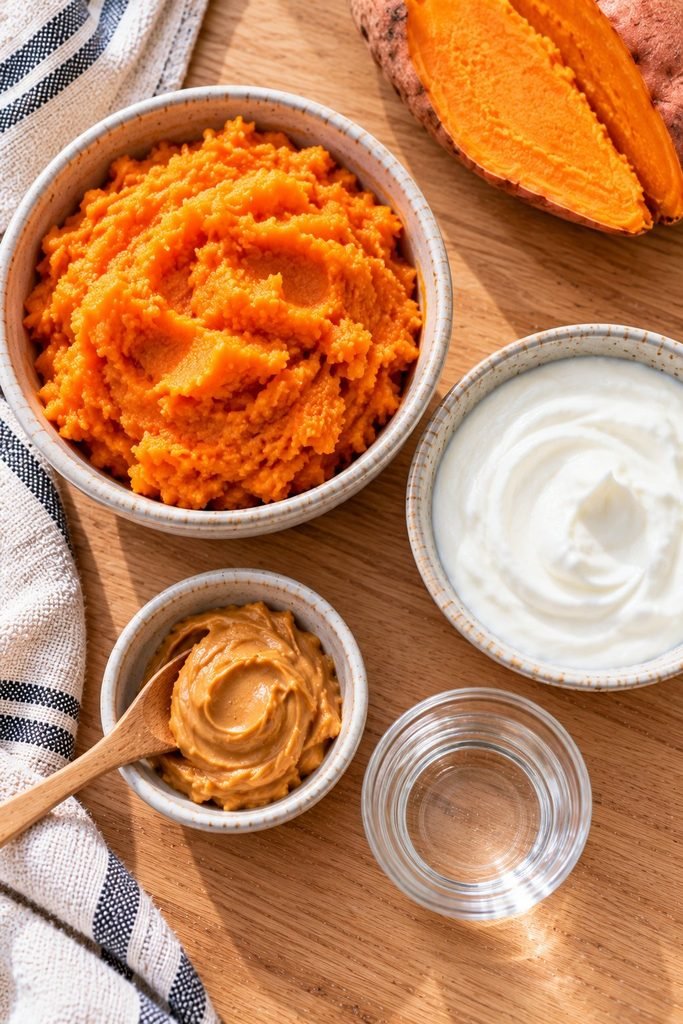
This recipe relies on a short ingredient list, so each ingredient should be chosen carefully.
Cooked sweet potato provides the main flavor and a naturally creamy texture once mashed. It also contains fiber and beta carotene. Use plain, thoroughly cooked sweet potato without seasoning, oil, or added sugar.
Plain, unsweetened yogurt gives the mixture its creamy consistency and a mild tang. Greek yogurt is a convenient choice because it is thick, but regular plain yogurt also works. Choose a product your dog can tolerate.
Xylitol-free peanut butter, optional adds richness and a nutty flavor. A small amount is enough. Peanut butter is calorie-dense, so leaving it out is a sensible choice for dogs that need to watch their weight.
Water, if needed helps loosen a thick mixture before freezing. Add it gradually rather than pouring it all in at once. Too much water can make the finished ice cream icier.
Ingredient List
- 1 cup cooked, mashed sweet potato, cooled
- 1 cup plain, unsweetened yogurt with no xylitol or added sugar
- 1 tablespoon xylitol-free peanut butter, optional
- 1 to 2 tablespoons water, only if needed
How to Choose the Best Sweet Potato
Choose a fresh sweet potato that feels firm and has no soft, wet, or moldy areas. Orange-fleshed sweet potatoes work particularly well because they give the ice cream its appealing color.
Bake, steam, or boil the sweet potato until a fork slides easily through the center. Baking can produce a more concentrated flavor, while steaming or boiling is convenient when you want to prepare the ingredient quickly.
After cooking, remove the skin and let the flesh cool completely before mixing it with the yogurt. Warm sweet potato can change the texture of the mixture and may make it harder to portion consistently.
Avoid canned sweet potato products containing syrup, sugar, spices, or other additions. Plain canned sweet potato may be suitable if the ingredient label confirms that it contains nothing unnecessary.
How to Make Sweet Potato Dog Ice Cream
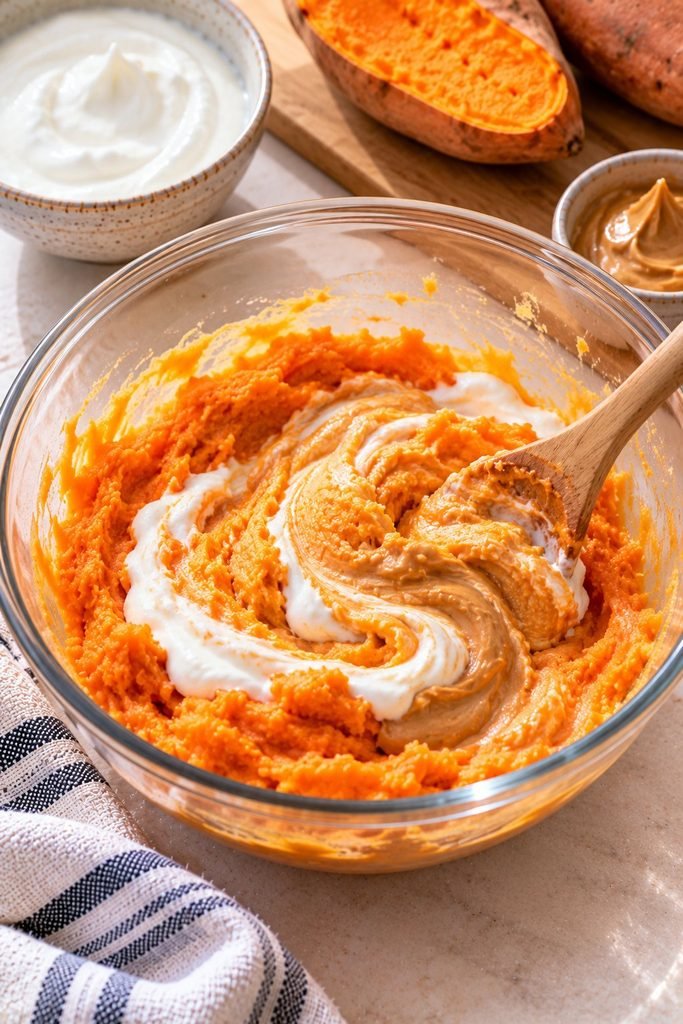
This recipe comes together with basic kitchen equipment. For the smoothest result, use a blender or food processor, although hand mixing works well if the sweet potato is soft and thoroughly mashed.
Step 1: Cook and Mash the Sweet Potato
Bake, steam, or boil a sweet potato until it is very soft. Remove the skin, transfer the flesh to a bowl, and mash it with a fork until most lumps have disappeared.
Let the mashed sweet potato cool completely. This step matters because adding warm ingredients to yogurt can change the consistency of the mixture.
Step 2: Combine the Ingredients
Add the cooled sweet potato and plain yogurt to a mixing bowl. Stir in the optional peanut butter if you’re using it.
Mix thoroughly until the yogurt is evenly distributed and the color looks consistent. If you’re preparing a larger batch, a food processor or blender can save time and help eliminate lumps.
Step 3: Adjust the Consistency
Check the mixture before freezing. It should be thick but easy to spoon into molds.
If it feels too stiff to mix, add water a teaspoon at a time. Blend or stir after each addition so you can stop once the consistency is right.
Avoid adding extra water simply to make the mixture pourable. A thicker base generally produces a less icy result.
Step 4: Fill the Molds
Spoon the mixture into silicone molds, an ice cube tray, or small freezer-safe containers. Leave a little room at the top if your containers are filled close to the rim.
For small dogs, miniature molds make portion control easier. Larger molds may be more convenient for bigger dogs, but you can always break or portion the finished treat into smaller amounts.
If you don’t have molds, spread the mixture into a shallow freezer-safe container. You’ll be able to scoop it out once it has frozen.
Step 5: Freeze Until Firm
Place the molds on a flat surface in the freezer and freeze for approximately 3 to 4 hours, or until the mixture is firm throughout.
Freezing time depends on the size and depth of your portions and the temperature of your freezer. Larger containers may need additional time.
Step 6: Soften Slightly Before Serving
Remove one small portion and let it sit at room temperature for a few minutes. The outside should soften enough to make it easier to lick or bite.
Serve it in a clean bowl or on a suitable treat mat, and supervise your dog while eating. Return the remaining portions to the freezer promptly.
Getting the Right Texture
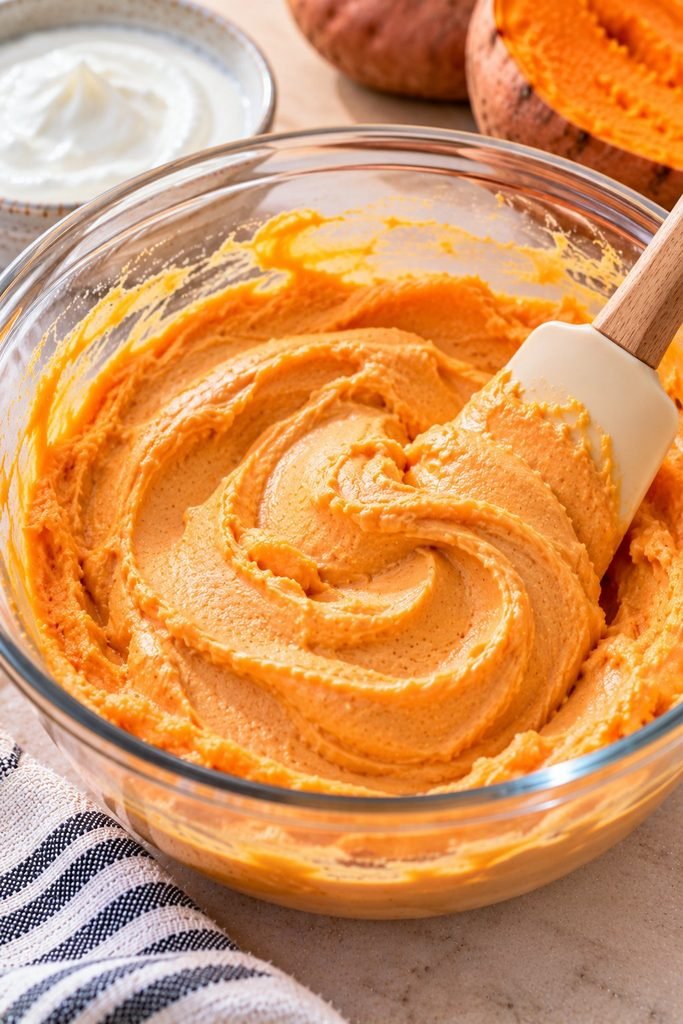
The texture of homemade dog ice cream depends on the moisture in the sweet potato, the thickness of the yogurt, and how much water you add.
For a smooth, creamy result, blend the cooled sweet potato and yogurt until no obvious lumps remain. Thick plain Greek yogurt can help create a richer consistency.
For a softer mixture, add a little water if the ingredients are too stiff to combine. Use small amounts because excess water can create more ice crystals during freezing.
For a less icy texture, make sure the sweet potato is well mashed and avoid diluting the mixture unnecessarily. The natural consistency of the ingredients helps give the finished treat its creamy feel.
For easier scooping, freeze the mixture in a shallow container rather than individual deep molds. Remove it briefly from the freezer before scooping, then return the container promptly.
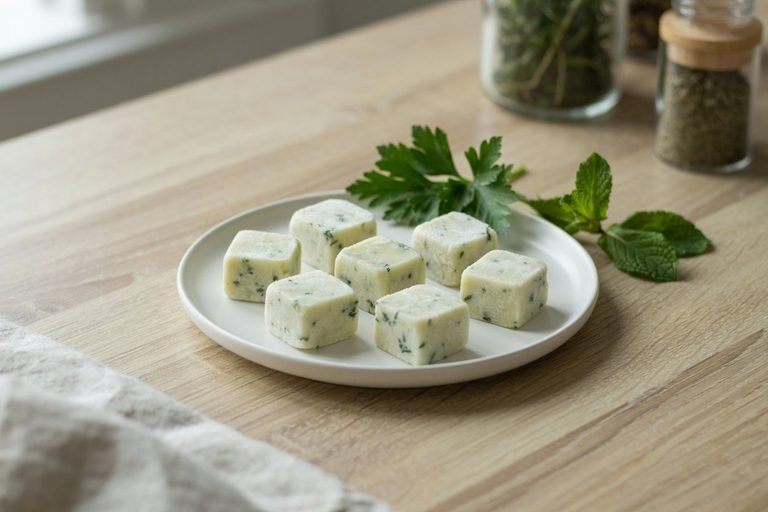
For small, firm portions, use a silicone mold or ice cube tray. The individual pieces are easy to remove and store, and you can choose a portion size that suits your dog.
Keep in mind that this homemade recipe doesn’t contain the stabilizers or fat levels found in many commercial ice creams. It will freeze more firmly than traditional ice cream, so a short softening period before serving is normal.
Recipe Variations
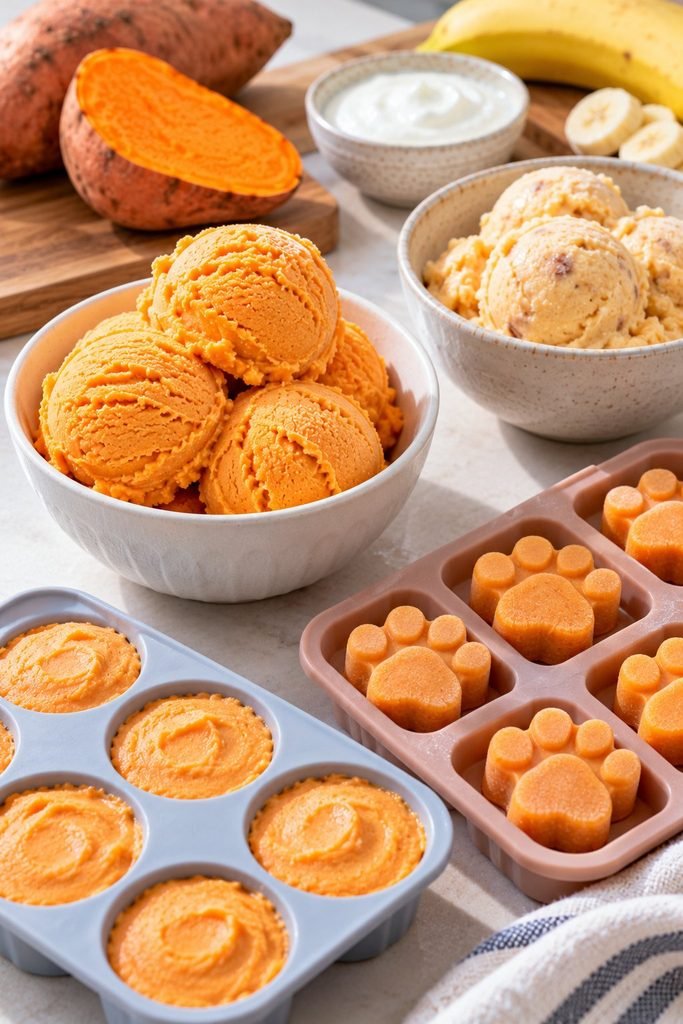
Once you’ve made the basic recipe and confirmed that your dog tolerates its ingredients, try one of these simple variations. Introduce new ingredients in small quantities and keep the finished treat appropriate for your dog’s diet.
Banana swirl. Mash a small amount of ripe banana into the mixture for a different flavor. Banana adds natural sweetness and calories, so use it sparingly. For another combination, try my Yogurt Banana Dog Treats Recipe.
Pumpkin sweet potato. Replace a portion of the sweet potato with plain pumpkin puree. Choose plain pumpkin rather than pumpkin pie filling, which may contain sugar and spices. This variation is inspired by my Homemade Pumpkin Dog Treats.
Coconut version. Use plain, unsweetened coconut yogurt instead of dairy yogurt if your dog doesn’t tolerate dairy. Check the label for added sweeteners and other unsuitable ingredients.
Coconut products can be high in fat, so use a modest amount and avoid them if your veterinarian has recommended a low-fat diet.
Fresh breath version. Add a very small pinch of finely chopped fresh parsley if appropriate for your dog.
Avoid using this as a substitute for dental care, and skip herbs if your dog has a medical condition or takes medication that could make them unsuitable. You can also explore my Homemade Frozen Fresh Breath Dog Treats.
Peanut butter-free version. Leave out the peanut butter entirely. The sweet potato and yogurt still provide plenty of flavor and a creamy base. This is a useful option if your dog has a sensitivity to peanuts or you want to keep the calorie content lower.
Mini ice cream cups. Divide the mixture among miniature silicone molds or small freezer-safe cups. Smaller portions are especially useful for toy breeds and for dogs that should receive only a limited number of extra calories.
Two-ingredient version. Mix cooked, mashed sweet potato with plain yogurt and leave out the peanut butter and water unless necessary. This keeps the recipe simple while preserving its creamy texture.
Common Mistakes to Avoid
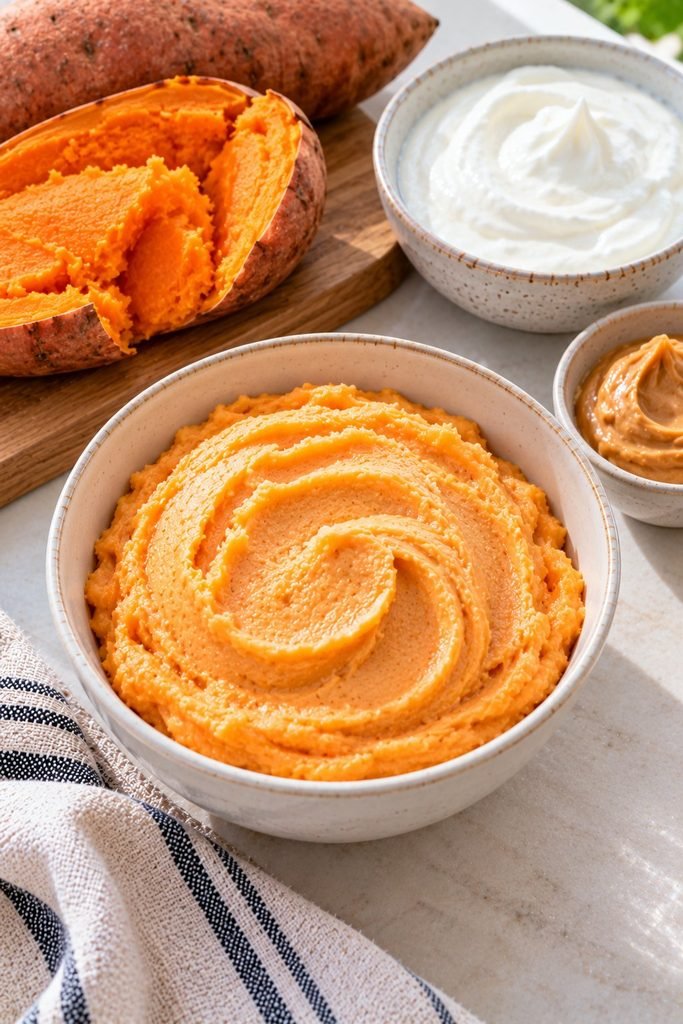
A few small preparation choices can make a noticeable difference in the finished treats.
Using flavored or sweetened yogurt. Fruit-flavored yogurt may contain added sugar or other ingredients your dog doesn’t need. Plain, unsweetened yogurt is the better starting point.
Overlooking the peanut butter label. Never assume that a peanut butter product is safe just because it is marketed as natural or reduced sugar. Check for xylitol every time you choose a product.
Adding butter, salt, or spices. Sweet potato already has a naturally pleasant flavor. Cook it plain rather than adding seasonings intended for human meals.
Mixing warm sweet potato with yogurt. Let the cooked sweet potato cool completely before combining the ingredients. This makes the mixture easier to work with.
Adding too much water. Excess water can make the frozen treats harder and icier. Adjust the mixture gradually and stop once it is easy to portion.
Freezing portions that are too large. A large frozen block may be difficult for a dog to manage. Use appropriately sized molds and let the treat soften before serving.
Giving too much at once. Even ingredients that are generally suitable for dogs can cause digestive upset when introduced in large amounts. Start with a small serving and observe your dog’s response.
Ignoring dietary restrictions. Sweet potato, yogurt, and peanut butter are not appropriate for every dog in every situation. Consider allergies, calorie needs, fat restrictions, and veterinary feeding instructions before serving.
How Much Ice Cream Can a Dog Have?
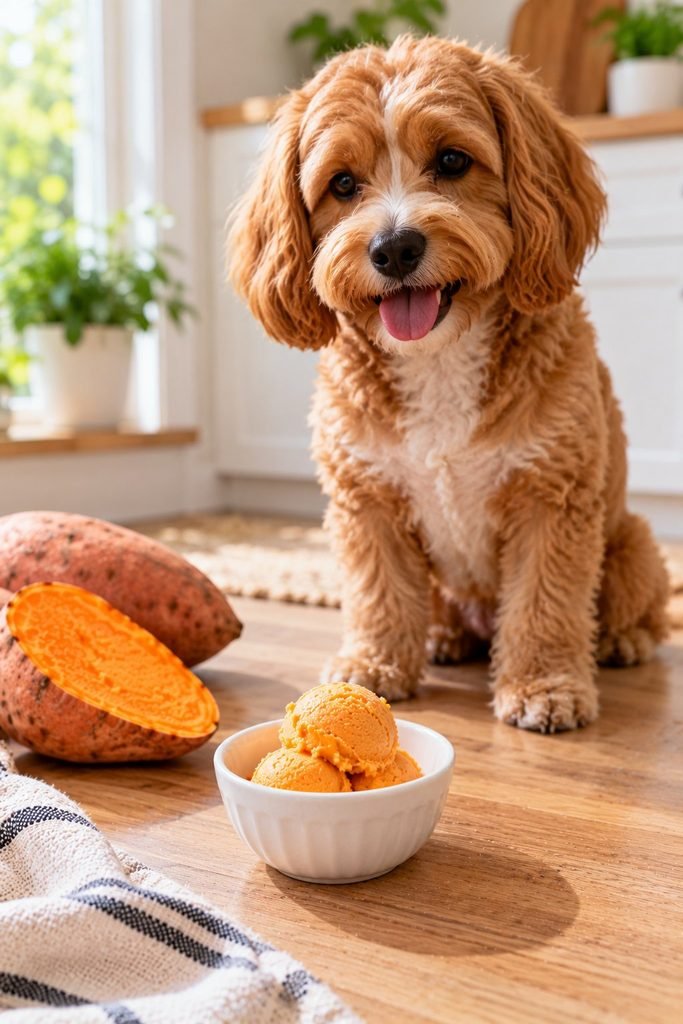
The right portion depends on your dog’s size, activity level, usual diet, and overall health. A tiny dog will need much less than a large dog, and a dog on a weight-management plan may need a different approach altogether.
As a general starting point, offer a small taste rather than a full-sized serving. For a small dog, a teaspoon or tablespoon may be enough to see how they tolerate the recipe. A larger dog may be able to enjoy a little more, but size alone doesn’t determine the ideal portion.
Keep the calories from treats in mind. Veterinary nutrition guidance commonly recommends keeping treats and other extras to around 10% or less of a dog’s daily calorie intake, with complete and balanced food providing the rest.
Because the calorie content varies with the yogurt and peanut butter you choose, the recipe shouldn’t be treated as calorie-free simply because it contains familiar ingredients.
When introducing this recipe, start with a small amount and watch for vomiting, loose stools, gas, or itching. Stop feeding it if you notice a reaction.
Ask your veterinarian for portion guidance if your dog has diabetes, pancreatitis, food allergies, a sensitive digestive system, or a prescribed diet. Dogs with these conditions may need to avoid particular ingredients or limit treats more strictly.
How to Store Sweet Potato Dog Ice Cream
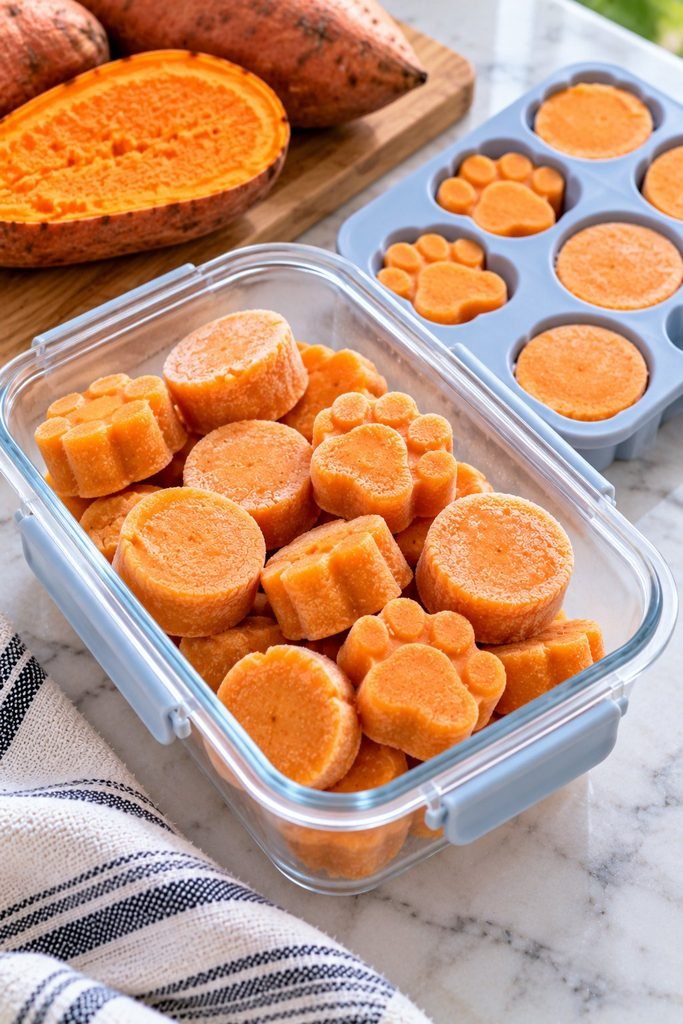
Proper storage helps preserve the texture and quality of your homemade treats.
Freezer: Store the frozen portions in a sealed, freezer-safe container or bag. For best quality, use them within about 2 months. Label the container with the preparation date so you can keep track of the batch.
Refrigerator: Refrigeration isn’t suitable for keeping the treats frozen. They will soften and eventually melt, so keep the main batch in the freezer and remove only the portion you’re ready to serve.
Once the treats have frozen solid in a tray, transfer them to a freezer bag or airtight container if you need the tray for another batch. Removing as much excess air as practical helps reduce freezer burn.
Keep the treats separate from raw meat and other foods that could contaminate them. Use clean utensils when handling the portions, and don’t return a partially eaten treat to the main storage container.
Discard treats that have been left out for an extended period, become contaminated, or develop an unusual smell or appearance. When in doubt, make a fresh batch.
Can You Freeze Sweet Potato Dog Ice Cream?
Yes. Freezing is what gives this recipe its ice cream-like texture and makes it convenient to prepare ahead.
- Prepare the mixture using cooled sweet potato, plain yogurt, and optional peanut butter.
- Spoon the mixture into clean silicone molds, an ice cube tray, or a shallow freezer-safe container.
- Freeze for 3 to 4 hours, or until firm throughout.
- Remove the frozen portions from the molds once they are solid.
- Transfer them to a labeled, sealed freezer container or bag.
- Take out one portion at a time and allow it to soften slightly before serving.
The mixture may become firm in the freezer because it doesn’t contain the same ingredients used to keep commercial ice cream soft.
That’s normal. Let a portion sit briefly at room temperature rather than trying to force your dog to chew a rock-hard treat.
Can You Make Sweet Potato Dog Ice Cream Without Peanut Butter?
Absolutely. Peanut butter is optional, so you can leave it out without replacing it with anything.
The sweet potato provides the main flavor, while the yogurt helps bind the ingredients and create a creamy consistency. If the mixture is too thick, add a little water until it’s easy to spoon into molds.
Leaving out the peanut butter can also reduce the calorie and fat content of the recipe, although the exact difference depends on the product and portion size. It’s a practical adjustment for dogs that don’t like peanut butter or need to limit extra fat.
If you’re leaving it out because of a suspected food allergy, check the rest of the ingredients carefully and consult your veterinarian about suitable alternatives.
Can Puppies Eat Sweet Potato Dog Ice Cream?
Some puppies may tolerate a small amount of this recipe, but age, digestive sensitivity, and individual dietary needs matter. Puppies need a complete, balanced diet formulated for growth, and treats should remain a small part of what they eat.
If your veterinarian is comfortable with the ingredients, offer a tiny taste rather than a full frozen portion. Make sure the treat has softened enough to lick easily, and supervise your puppy throughout.
Avoid introducing several new foods at the same time. If your puppy develops diarrhea, vomiting, itching, or another unusual symptom, stop offering the treat and contact your veterinarian when appropriate.
Very young puppies or puppies with medical or dietary concerns should have treats approved by their veterinarian first.
More Homemade Treat Ideas
For more easy homemade dog treat recipes, try these ideas:
- Peanut Butter Popsicles for Dogs
- Easy Frozen Coconut Dog Treats for Summer
- Homemade Frozen Fresh Breath Dog Treats
- Easy Homemade Sweet Potato Dog Chews
- Yogurt Banana Dog Treats Recipe
For a wider look at feeding your dog well, check out 7 Healthiest Homemade Dog Foods.
Frequently Asked Questions
Is sweet potato good for dogs?
Plain, cooked sweet potato can be a suitable ingredient for many dogs when served in reasonable amounts. It provides fiber and nutrients, but it should be cooked thoroughly and served without butter, salt, sugar, or seasoning.
Can dogs eat yogurt?
Many dogs tolerate small amounts of plain, unsweetened yogurt, but others experience digestive upset because of lactose sensitivity. If your dog doesn’t tolerate dairy, ask your veterinarian about a suitable alternative.
Can I use canned sweet potato?
Yes, provided it is plain and contains no added sugar, syrup, spices, or other unsuitable ingredients. Check the label carefully before using it.
Can I skip the peanut butter?
Yes. Peanut butter is optional, and the recipe still works with sweet potato and yogurt alone. Add a little water only if necessary to make the mixture easy to stir.
Can I use dairy-free yogurt?
You can use a plain, unsweetened alternative if its ingredients are suitable for dogs. Check the label for xylitol and added sugar, and consider the product’s fat content.
How long does sweet potato dog ice cream last?
For best quality, keep it sealed in the freezer and aim to use it within about 2 months. Store the main batch frozen and remove individual portions as needed.
Can puppies have this ice cream?
Some puppies may tolerate a tiny amount, but their age, health, and diet should be considered. Check with your veterinarian before introducing it, especially for very young puppies.
Can I serve it every day?
It’s best treated as an occasional snack. If you want to offer it regularly, account for the calories and make sure treats remain a small part of your dog’s diet.
Why did my dog ice cream freeze too hard?
Homemade treats without commercial stabilizers can become quite firm. Let a portion soften briefly at room temperature before serving, and avoid giving your dog a hard frozen block to chew.
Can I use a blender instead of mashing by hand?
Yes. A blender or food processor creates a smoother mixture, especially when the sweet potato has lumps. Make sure the sweet potato is completely cool before blending it with the yogurt.
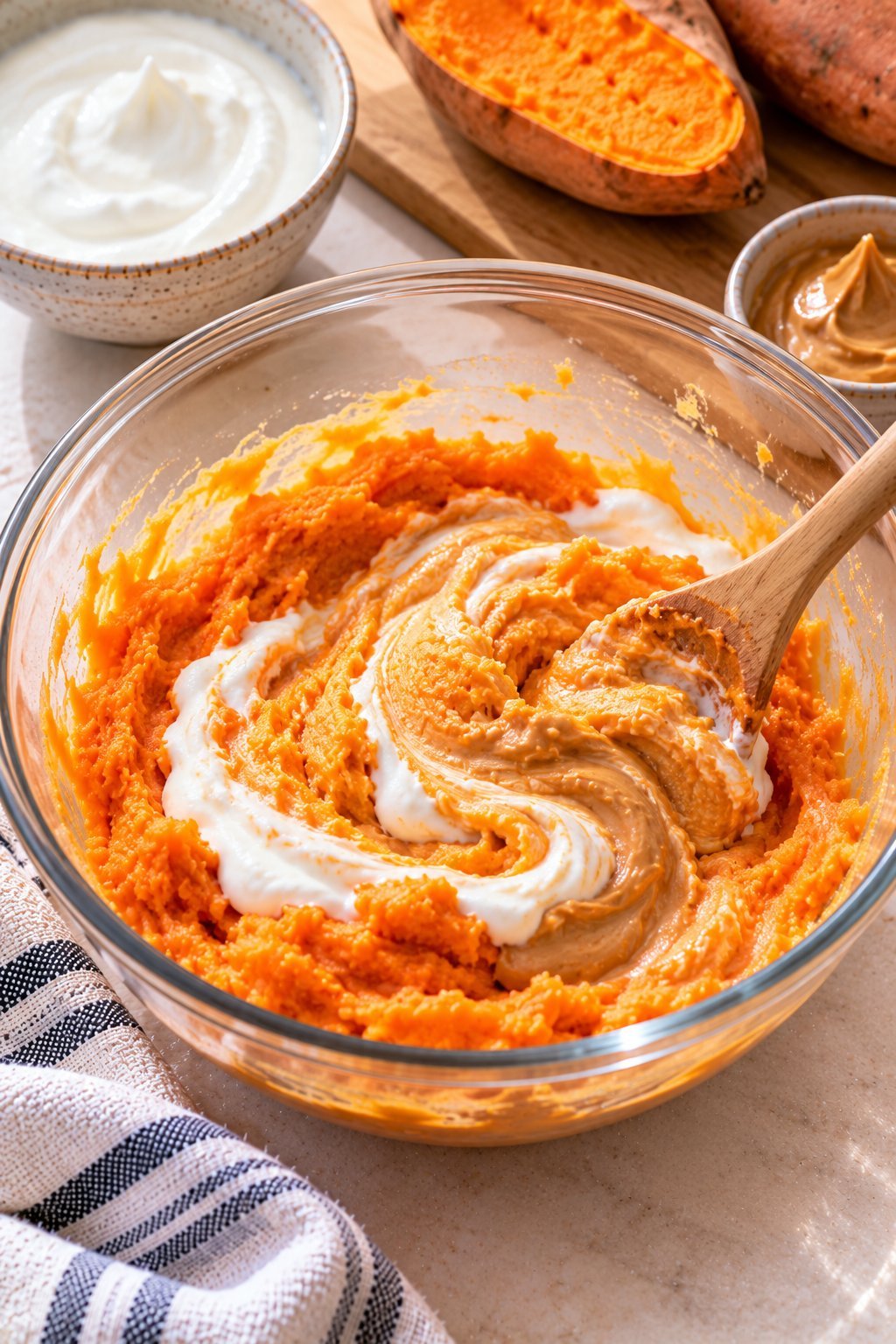
Sweet Potato Dog Ice Cream
Ingredients
Equipment
Method
- Cook the sweet potato. Peel the sweet potato and cut it into small cubes. Boil or steam for about 10–15 minutes, or until a fork slides through easily. Drain and allow it to cool completely.
- Mash the sweet potato. Mash the cooked sweet potato until smooth. Remove any firm pieces so the frozen treat has an even texture.
- Blend the ingredients. Add the mashed sweet potato, plain yogurt, and peanut butter to a blender or food processor. Blend until creamy. Add one tablespoon of water if the mixture is too thick to blend.
- Check the consistency. The mixture should be thick but easy to spoon into molds. Add a little more water only if necessary.
- Fill the molds. Spoon the mixture into a silicone mold or ice cube tray. Make small portions appropriate for your dog’s size.
- Freeze until firm. Place the molds on a level freezer shelf and freeze for at least 3 hours, or until the portions are completely solid.
- Remove and store. Once frozen, pop the treats out of the molds and transfer them to an airtight freezer-safe container.
- Serve safely. Offer one small portion at a time. Let it soften slightly if it is too firm, and supervise your dog while eating.
- Choose safe yogurt: I use plain, unsweetened yogurt without xylitol or other sweeteners. Some dogs have difficulty digesting lactose, so start with a small amount and discontinue if it causes digestive upset.
- Check the peanut butter label: Always confirm that the peanut butter is xylitol-free. Avoid products containing chocolate or other ingredients unsafe for dogs.
- Cook the sweet potato thoroughly: Raw sweet potato can be difficult for dogs to chew and digest. Cooking it until tender makes it easier to mash and blend.
- Storage: Keep the treats frozen in an airtight container and use within about 2 months for best quality. Thaw only the portion you plan to serve, and discard any treat that has been contaminated or left out too long.
- Common mistake to avoid: Freezing the mixture before blending it smoothly can leave hard chunks in the finished treat. Mash the sweet potato well and blend everything before filling the molds.
- Serving tip: These treats are intended for occasional enjoyment, not as a meal replacement. Start with a small serving, especially if your dog has not tried yogurt or peanut butter before.
- Dietary considerations: Sweet potato contains carbohydrates, and peanut butter adds fat and calories. Keep portions small, particularly for dogs on weight-management diets or those with a history of pancreatitis. Ask your veterinarian whether these ingredients suit your dog’s individual needs.
A Final Note on Making Ice Cream for Your Dog
Watching my dog lick the last bit out of a little cup of this is one of the simplest joys of summer, and it works just as well after a chilly fall walk.
Keeping a small batch in the freezer means a cool, creamy reward is ready without needing to prepare a fresh treat every time.
The best part is how easy the recipe is to adjust. Leave out the peanut butter if your dog doesn’t need it, choose a suitable yogurt, and use small molds to make portioning easier.
Always introduce new treats gradually and pay attention to how your dog responds.
Homemade treats can add variety and enjoyment to your dog’s routine, but they work best alongside a complete, balanced diet and appropriate veterinary care.