
Easy Homemade Sweet Potato Dog Chews Recipe: A Healthy and Affordable Treat Your Dog Will Love
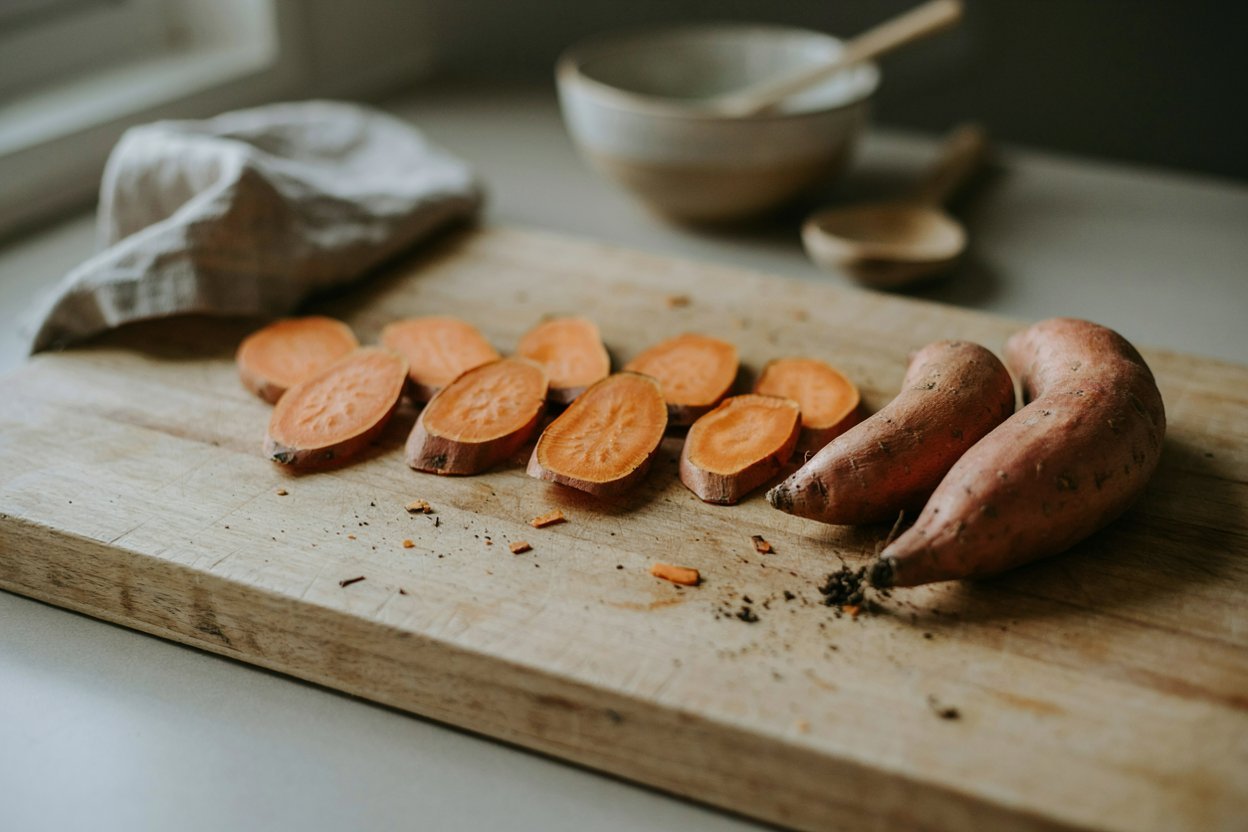
Homemade dog treats can be surprisingly expensive, especially when you are trying to choose simple ingredients you feel comfortable giving your dog.
These sweet potato dog chews are one of my favorite homemade options because they require just one main ingredient, are easy to prepare, and can be made without added sugar, salt, or preservatives.

If you have never made dehydrated dog treats before, this recipe is a great place to start. It only takes one trip to the grocery store, a baking sheet, and a little patience while the oven does the work.
By the end of this guide, you will know exactly how thick to slice your sweet potatoes, how to tell when they are done, how to store them safely, and what to do if your first batch does not turn out quite right.
Why Sweet Potato Works So Well for Homemade Dog Treats

Sweet potatoes are a popular base for homemade dog treats for good reason.
They are naturally sweet, which most dogs enjoy without needing any added sugar or flavoring.
They also hold their shape well when sliced and dried, which makes them forgiving for beginners.
Nutritionally, sweet potatoes offer dietary fiber, vitamin A, and other nutrients that can support digestion when given in appropriate amounts.
Homemade treats like this one also give you full control over what goes into your dog’s snack, since you are not relying on packaged ingredients, fillers, or preservatives.
That control is one of the main reasons pet owners move away from heavily processed store bought treats toward simple recipes like this one.
That said, it is worth being clear that these chews are a treat, not a meal replacement, and moderation matters.
If you are also looking at your dog’s everyday diet and not just treats, our guide to simple homemade dog food recipes is a helpful next read, along with our roundup of the healthiest homemade dog foods if you want to compare a few different approaches.
Recipe at a Glance
Prep time: about 10 minutes Baking or drying time: 2 to 3 hours, depending on slice thickness Total time: roughly 2.5 to 3.5 hours Ingredients: one, sweet potatoes Difficulty: beginner friendly Approximate yield: varies by potato size, typically 20 to 30 chews per medium sweet potato Storage: airtight container, refrigerator, or freezer Best for: dogs of all sizes, as an occasional treat or training reward
Ingredients and Substitutions
Ingredients
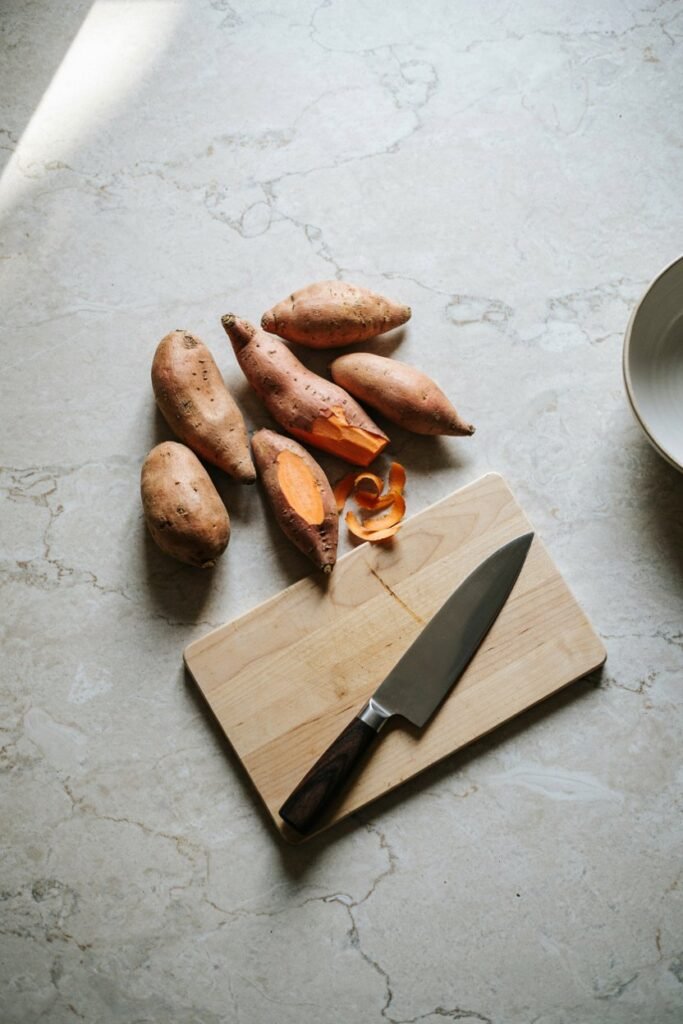
Sweet potatoes
That is genuinely the entire ingredient list. You do not need oil, salt, sugar, honey, cinnamon, garlic, onion powder, or any other seasoning for this particular treat. Keeping the recipe this simple is intentional.
It makes the chews easier on your dog’s digestive system and easier for you to trust exactly what you are feeding.
When shopping, look for firm sweet potatoes without soft spots, sprouting, or bruising. Organic is not required, but if you prefer to leave the skin on, giving the potato a thorough scrub beforehand is a good habit.
Medium sized sweet potatoes tend to be the easiest to slice evenly, since very large ones can be awkward to cut into consistent pieces.
How to Prepare the Sweet Potatoes
Before jumping into numbered steps, a few decisions will shape how your chews turn out.
Should you peel them? Both options work. Leaving the skin on adds a bit more texture and fiber, while peeling gives a smoother, softer chew.
Neither is wrong, so this really comes down to preference.
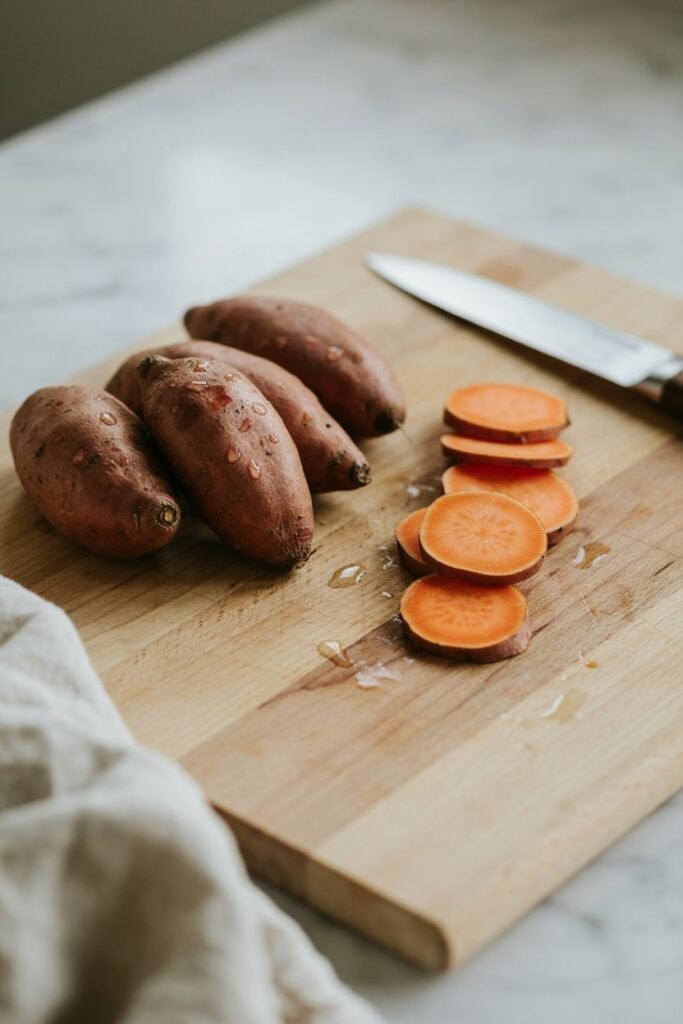
How thick should the slices be? Thickness is the single biggest factor in how your chews turn out.
Thin slices, around a quarter inch, will dry into a crispier, more dehydrated chew and take less time in the oven.
Thicker slices, closer to half an inch, will stay softer and more flexible but need considerably longer to dry through.
Should they end up soft or crunchy? That is entirely up to your dog’s preference and chewing style.
Older dogs or dogs with dental sensitivity often do better with a softer, more flexible chew, while dogs that enjoy a longer lasting treat may prefer the crunchier, thinner version.
Step by Step Instructions
Step 1: Wash and prepare the sweet potatoes. Scrub the skins thoroughly under running water, even if you plan to peel them, to remove any dirt or residue.
Step 2: Slice them evenly. Using a sharp knife or a mandoline slicer for consistency, cut the sweet potato into slices of your chosen thickness.
Try to keep every slice as close to the same thickness as possible, since uneven pieces will finish drying at different times.
Step 3: Arrange them on the baking sheet. Line a baking sheet with parchment paper and lay the slices flat in a single layer, leaving a small gap between each piece so air can circulate.
Step 4: Bake at a low temperature. Set your oven to around 225 to 250 degrees Fahrenheit.
The goal here is to slowly remove moisture from the sweet potato rather than roast it, so resist the urge to raise the temperature to speed things up.
Step 5: Flip and continue drying. About halfway through the total baking time, flip each slice over.
This helps them dry evenly on both sides. Keep an eye on texture rather than relying strictly on a timer, since oven performance and slice thickness can both shift the actual time needed.
Step 6: Cool completely. Once the chews look and feel done, turn off the oven and let them sit on the baking sheet until fully cooled.
The texture will continue to firm up as they cool, which is an important detail for beginners who might otherwise pull them too early.
How to Know They Are Done
Rather than watching the clock, watch the chew itself. Here is what to look for.
The surface should be dry to the touch, not tacky or damp. The center should have reached the chewiness or crispness you are aiming for.
The chews should not appear wet or be releasing steam when removed from the oven.
They will feel noticeably firmer once they have cooled, so slightly soft while warm is normal.
Thicker pieces will almost always need more time than thin ones, so check them separately if your batch has mixed sizes.
Soft Versus Crunchy Texture Guide
| Texture | Slice Thickness | Result |
|---|---|---|
| Soft and chewy | Thicker | Flexible treat |
| Chewy | Medium | Good everyday texture |
| Firm and crisp | Thin | More fully dehydrated |
Use this as a starting point and adjust based on what your dog seems to enjoy most.
Important Dog Safety Information
Can dogs eat sweet potatoes? Plain, fully cooked sweet potato is generally considered a safe treat for many dogs when given in appropriate portions. As with any new food, it is worth introducing it gradually and watching how your dog responds.
A few additional safety points to keep in mind. Treats should always make up a small portion of your dog’s overall diet, not a meal substitute.
Introduce any new food slowly, starting with a small piece, to watch for digestive upset.
Cut chews to a size appropriate for your dog to reduce choking risk, especially for small breeds or dogs that tend to gulp their food.
Dogs with certain health conditions, including diabetes or those on a restricted diet, may need to avoid or limit sweet potato treats entirely.
If your dog has any ongoing health concerns, checking with your veterinarian before introducing a new treat is always the safer choice.
Most importantly, keep these chews plain. Do not add sugar, salt, seasoning blends, or ingredients like garlic or onion powder, which can be harmful to dogs.
How Many Sweet Potato Chews Can My Dog Have
There is no single universal number here, since the right amount depends on your dog’s size, activity level, current diet, and any health considerations. As a general framework:
Small dogs typically do well starting with just a small piece. Medium dogs may be able to handle a few small pieces.
Large dogs can often tolerate larger portions, though treats should still remain a minor part of their overall diet.
Treats, including these chews, should never replace a complete and balanced dog food.
If you are building out a broader treat rotation, our homemade banana dog treat recipes and carrot based dog treat recipes for beginners are two more single or few ingredient options that pair well with this one.
Storage Instructions
Because these chews contain natural moisture, storing them properly matters more than it might for a fully dry, shelf stable treat.
At room temperature, chews are generally best used within a few days when kept in an airtight container in a cool, dry spot.
In the refrigerator, storing them in a sealed container will extend freshness considerably, typically up to a week or so.
In the freezer, chews can be frozen for longer term storage, and simply thawed in small batches as needed.
Always let chews cool completely before sealing them in a container, since trapped warmth and steam can encourage moisture buildup and spoilage.
If you notice any off smell, unusual softness, or visible mold, discard the batch rather than risk it.
If you like the idea of frozen or chilled treats, especially for warmer months, our guides to frozen coconut dog treats for summer and cooling dog treats for summer days are worth a look.
Troubleshooting
Why are my sweet potato chews too soft? This usually comes down to one of a few things.
The slices may have been cut too thick, the sweet potato itself may have had higher natural moisture content, the chews may simply need more time in the oven, or they were stored before cooling completely, which trapped extra moisture.
Why are my sweet potato chews too hard? Thinner slices combined with a longer drying time will naturally produce a harder, more brittle result.
If your chews came out tougher than expected, try slightly thicker slices or a shorter drying time next round.
Small adjustments based on these notes will get you to your ideal texture within a batch or two.
Variations to Try
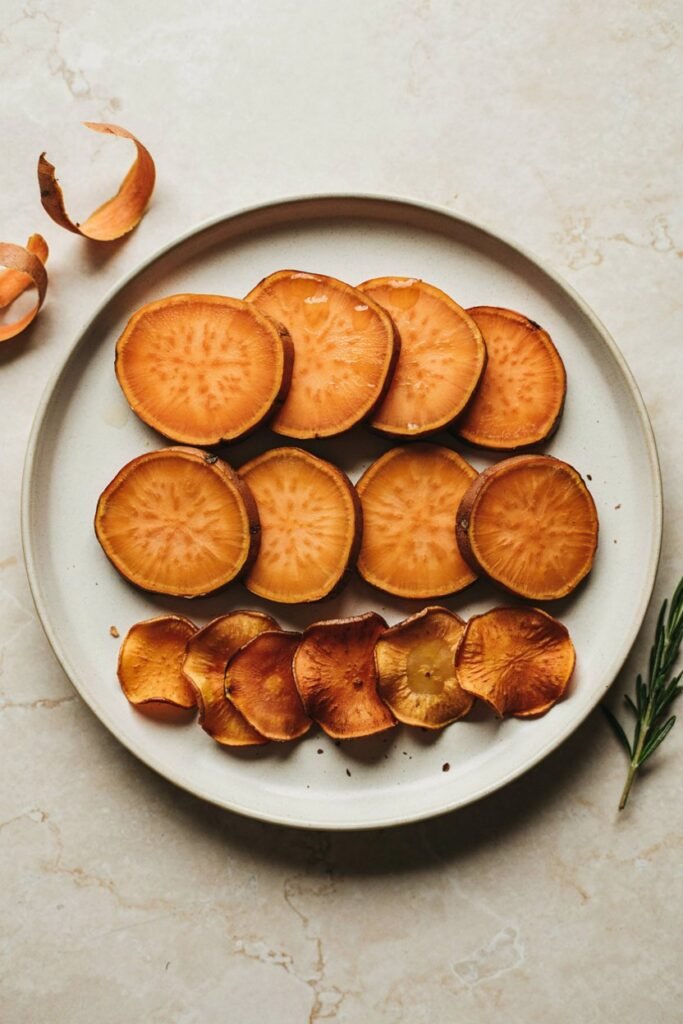
Once you have the basic sweet potato chew recipe down, you can easily adjust the thickness and size to create different textures and uses.
Since sweet potatoes already have a naturally sweet flavor, there is no need to add extra ingredients to make these treats more appealing.
Thicker Chewy Sweet Potato Slices
For a softer, more flexible treat, cut the sweet potatoes into thicker slices.
These pieces take longer to dry because they contain more moisture, but the finished texture is softer and easier to chew.
Thicker slices can be a nice option when you want a more substantial treat. Just make sure they are completely cooked and dried through before storing them, and always choose a size that is appropriate for your dog.
Thin Crispy Sweet Potato Treats
If your dog prefers a firmer, crunchier texture, slice the sweet potatoes more thinly.
Thin pieces lose moisture more quickly and tend to become crisp around the edges as they finish drying.
Keep a close eye on these during the final stage of baking because thin slices can go from nicely crisp to overly hard fairly quickly.
Allow them to cool completely before deciding whether they have reached the texture you want.
Bite Sized Training Treats
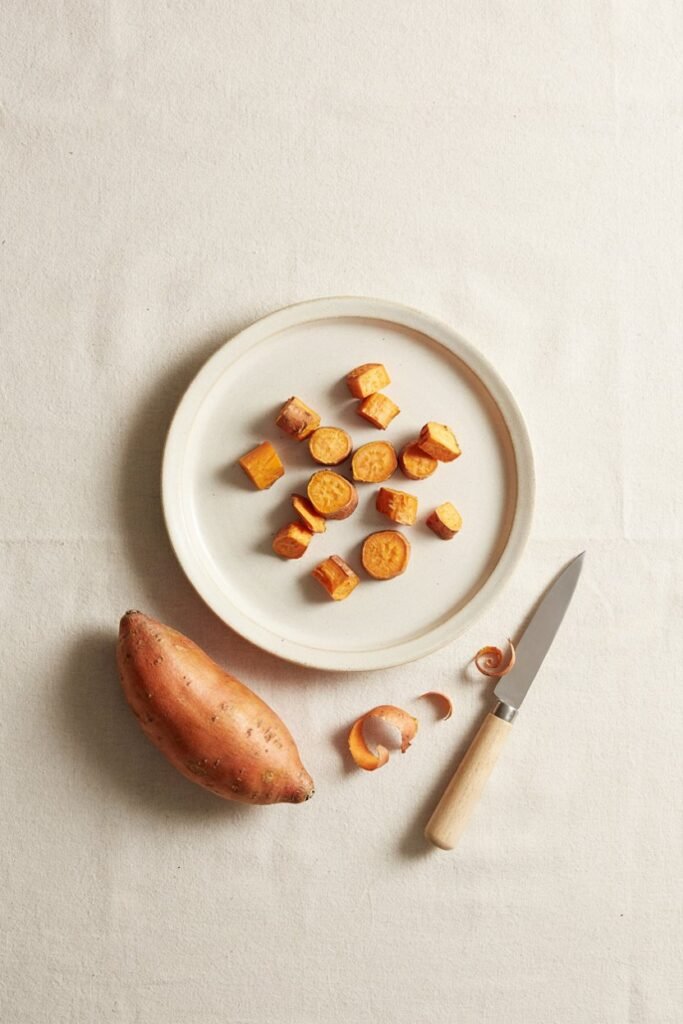
Sweet potato chews can also be made into smaller pieces specifically for training. Instead of serving large slices, cut the sweet potato into small, consistent pieces before drying.
Small treats are particularly convenient when you need to reward your dog repeatedly during a training session without giving a large amount of food at once.
Even with smaller pieces, remember that treats should still fit within your dog’s overall daily diet.
Keep the Ingredients Simple
It can be tempting to add peanut butter, honey, cinnamon, or other ingredients to make homemade dog treats seem more exciting.
With this recipe, however, keeping things simple is one of its biggest advantages.
Plain sweet potato gives you an easy way to make a homemade treat without unnecessary sugar, salt, oils, or seasonings.
It also makes the recipe easier to prepare and gives you complete control over what goes into your dog’s snack.
If you want to experiment, start by changing the thickness and size rather than the ingredients. A small adjustment in slicing can give you a completely different texture while keeping the recipe simple and straightforward.
If you want to branch out into other simple treats, our three ingredient peanut butter dog gummies and homemade beef bone broth gummies for dogs are both good next recipes if you enjoyed how straightforward this one was.
Can I Use an Air Fryer or Dehydrator
Yes, both are common alternatives to the oven method.
In an air fryer, set the temperature low, similar to the oven range, and check frequently, since air fryers can vary significantly between models and tend to circulate heat more aggressively than a standard oven.
In a food dehydrator, this is arguably the most consistent method, since dehydrators are built specifically to remove moisture evenly.
Follow your dehydrator’s general guidance for vegetables and monitor texture rather than relying on an exact time.
Regardless of method, slice thickness will always affect how long the chews take to finish, so treat any suggested time as a starting point rather than a fixed rule, and judge doneness by texture and moisture, not the clock.
Frequently Asked Questions
Are sweet potato chews good for dogs? Plain, properly prepared sweet potato chews can be a reasonable occasional treat for many dogs, offering fiber and nutrients without added sugar or preservatives.
Can puppies eat sweet potato chews? In small, appropriately sized portions, many puppies can have sweet potato, though it is worth checking with your veterinarian first, especially if your puppy is very young or has a sensitive stomach.
Can I leave the skin on? Yes, the skin is generally fine to leave on for added texture and fiber, as long as the potato has been thoroughly washed first.
How thick should sweet potato dog chews be? Thinner slices, around a quarter inch, produce a crispier chew, while thicker slices closer to half an inch stay softer and more flexible.
How long do homemade sweet potato chews last? A few days at room temperature, up to about a week refrigerated, and considerably longer if frozen, as long as they were fully cooled before storage.
Can I freeze homemade dog treats? Yes, freezing is one of the most reliable ways to extend the life of these chews well beyond room temperature or refrigerator storage.
Can I make these in a dehydrator? Yes, a dehydrator is a very consistent option for this recipe, since it is designed specifically for slow, even moisture removal.
Can I make them without oil? Yes, this recipe does not use oil at all, which keeps things simple and reduces the fat content of the finished treat.
How many sweet potato treats can my dog have? It depends on your dog’s size and diet, but treats overall should remain a small portion of their daily food intake.
Are homemade sweet potato chews safe for every dog? Not necessarily. Dogs with certain health conditions, such as diabetes, or dogs on a restricted diet, may need to avoid them, so checking with your veterinarian is the safest approach if you are unsure.
Final Thoughts
What I like most about these sweet potato chews is that they do not require a complicated ingredient list or special baking skills.
Once you get the thickness and drying time right for your oven, you can make a full batch and keep a few on hand for training sessions, walks, or an occasional treat between meals.
They are simple, inexpensive, and give you far more control over what goes into your dog’s snack than most packaged options on the shelf.
Just remember to keep portions modest, store the chews properly once cooled, and check with your veterinarian if your dog has any health conditions that might affect how they handle a new treat.
If you are looking to round out your dog’s treat rotation even further, our recipe for homemade peanut butter banana gummies for dogs and our healthy homemade beef and apple stew for dogs are both worth trying next.
5 Comments