11 Easy DIY Cat Toys You Can Make for Your Kitty Today
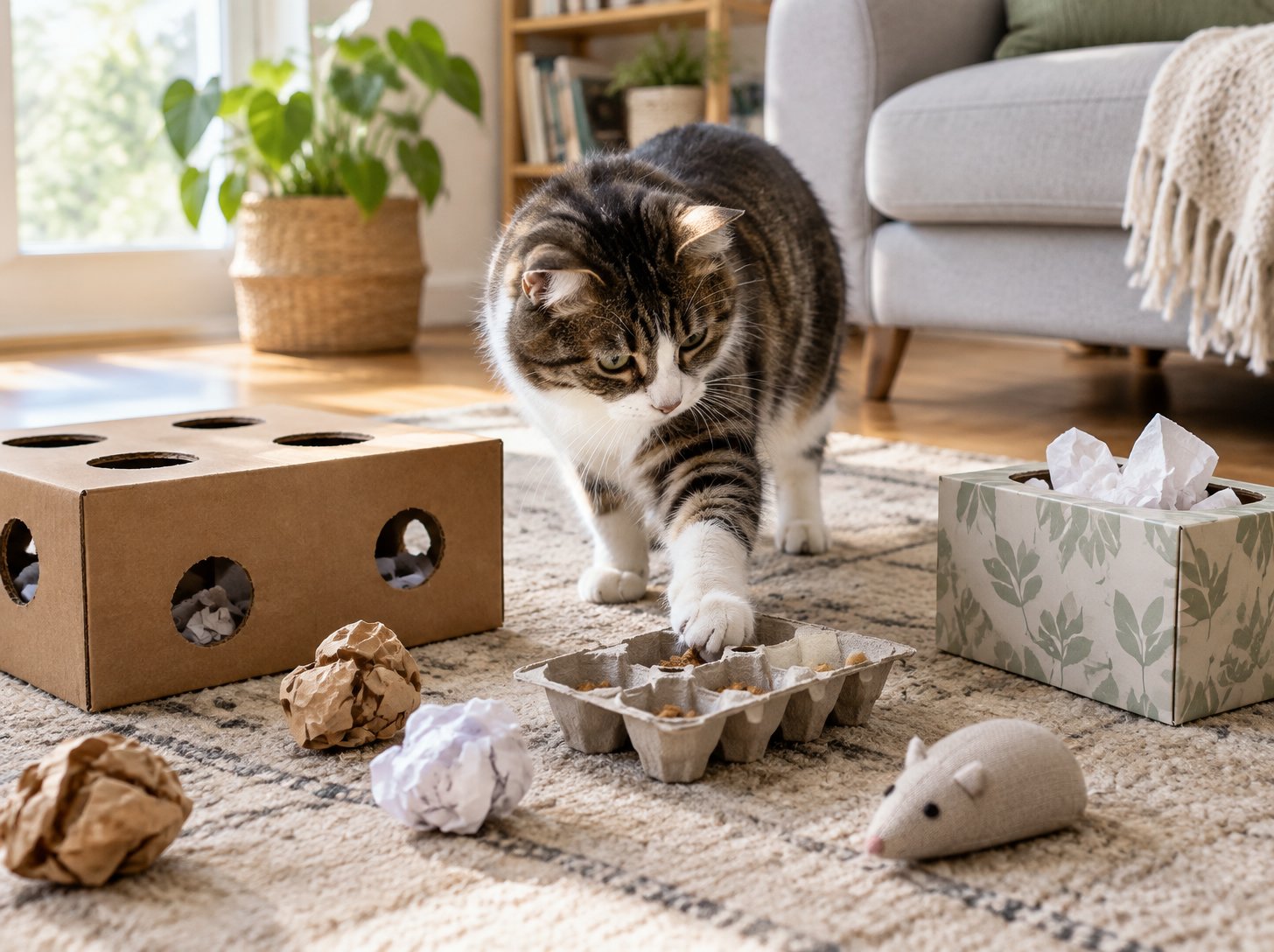
Cats don’t care how much a toy costs. A crinkly paper ball, a cardboard box with a few holes, or a handful of treats hidden in an egg carton can keep them just as busy as anything from the pet aisle.
Better still, most of these toys come from things already in your recycling bin, they take minutes to make, and many of them double as brain games that burn off energy and boredom.
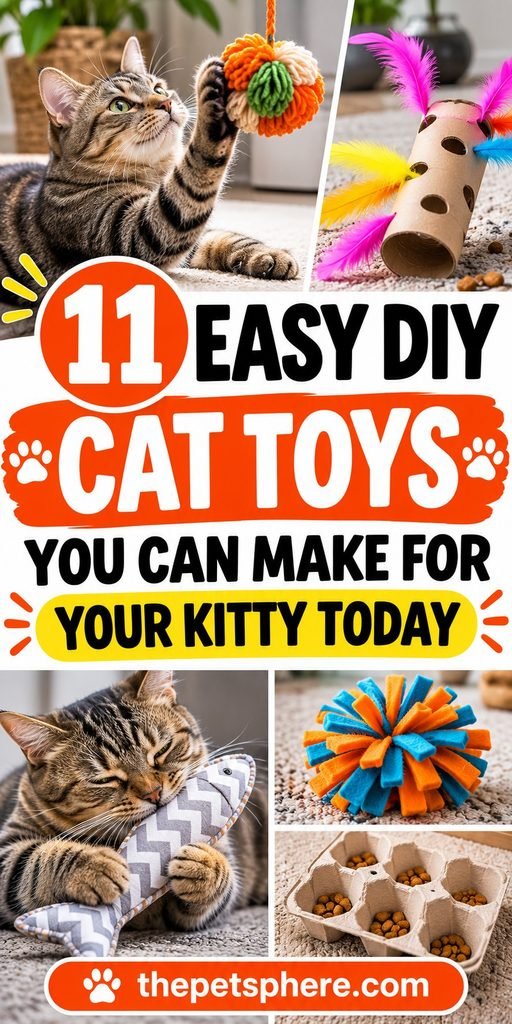
This list gives you 11 easy ideas, each with materials, steps, and safety notes. Every cat is different, so try a few and see which your cat loves.
If you want even more ideas, my 6 DIY Cat Toy Ideas Including a Slow Feeder You Can Make at Home and How to Make a Cat Kicker Toy cover different projects, so none of these repeat them.
Cat Toy Safety Rules
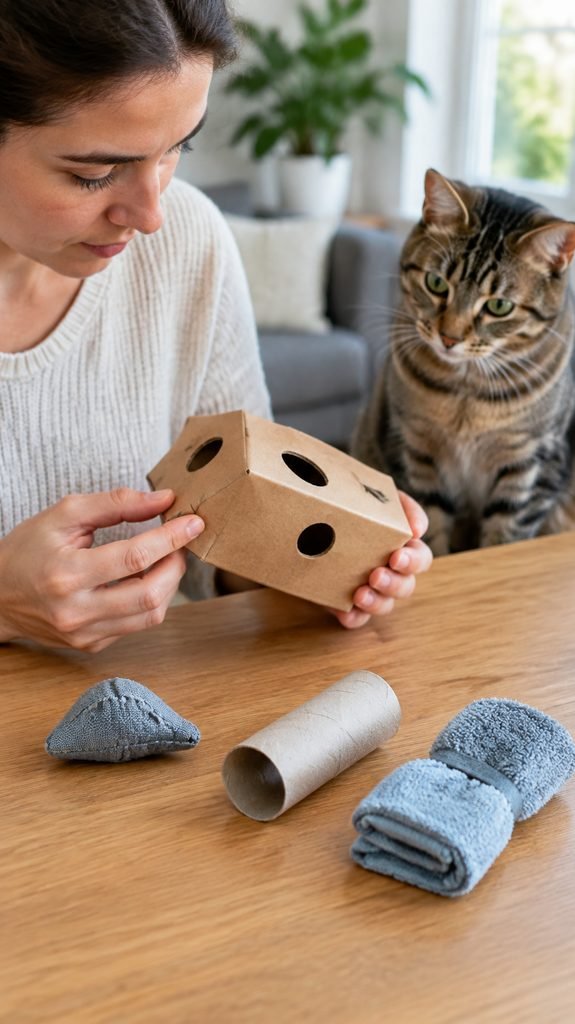
A toy is only good when it’s safe. Read these first.
No string, yarn, ribbon, rubber bands, or elastic. Cats can swallow linear materials, which can cause serious, life threatening problems.
No small parts. Skip buttons, beads, bells, googly eyes, and glued on decorations.
Smooth every edge. Sand or tape any cut cardboard or plastic so there are no sharp edges.
Avoid toxic materials. Use non toxic glue and plain, unprinted cardboard where you can. Skip glitter, paint, and anything scented.
Supervise play. Especially with new toys, and put toys away when you can’t watch.
Inspect often. Throw away any toy that is torn, chewed through, or coming apart.
Skip the toy if your cat eats it. If your cat chews and swallows paper, plastic, or fabric, ask your veterinarian about safer options.
If your cat swallows part of a toy, or vomits, stops eating, or seems unwell, call your veterinarian right away.
1. Egg Carton Treat Puzzle
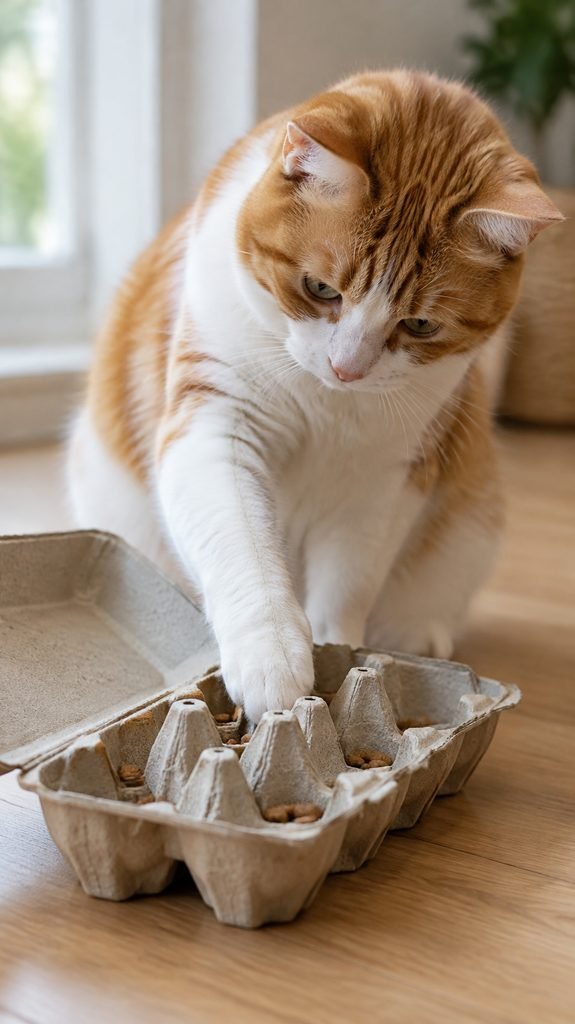
You’ll need. A cardboard egg carton and a few cat treats or dry kibble.
How to make it.
- Cut off the lid, or leave it on for a harder puzzle.
- Drop a few treats into some of the cups.
- Set it on the floor and let your cat paw out the treats.
Make it harder. Close the lid, and cut a few small holes in it, smooth edged and big enough for a paw.
Safety. Use plain cardboard, not foam cartons, and discard it once soggy or chewed.
2. Tissue Box Foraging Toy
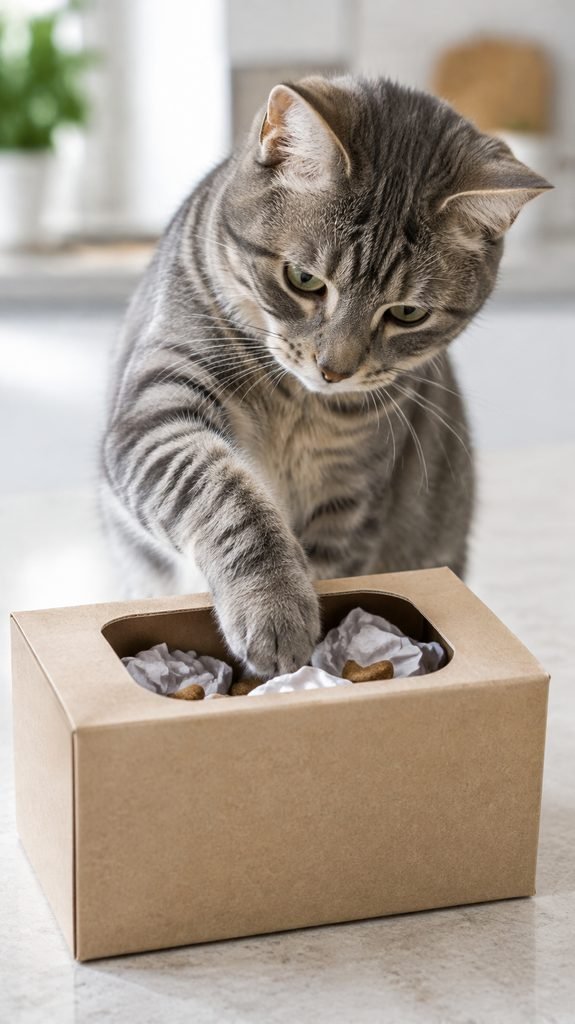
You’ll need. An empty tissue box with the plastic film removed, and a handful of crumpled paper or treats.
How to make it.
- Remove all plastic film from the opening, since it can be swallowed.
- Stuff the box loosely with scrunched paper balls and a few treats.
- Let your cat reach in and pull the items out.
Safety. Remove every bit of plastic film, and discard the box when it starts to tear.
3. Cardboard Box Ball Maze
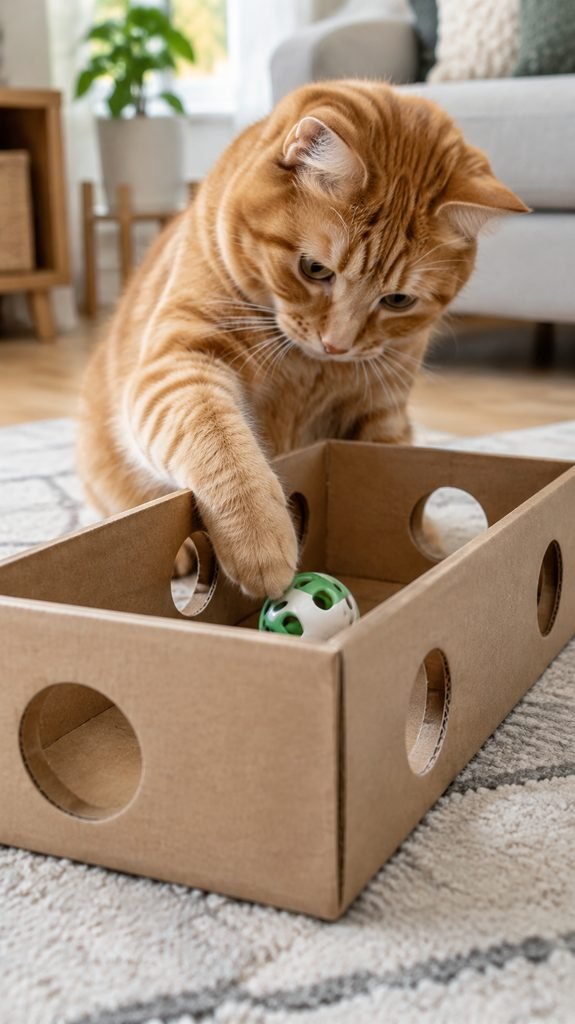
You’ll need. A shallow cardboard box, a craft knife (adult only), tape, and a few ping pong balls or lightweight cat balls.
How to make it.
- Cut several holes along the sides of the box, large enough for a paw but too small for your cat to squeeze through.
- Tape any rough edges smooth.
- Place a ball inside and let your cat chase it through the openings.
Safety. Use balls too large to swallow, and supervise. Skip this one if your cat chews hard plastic.
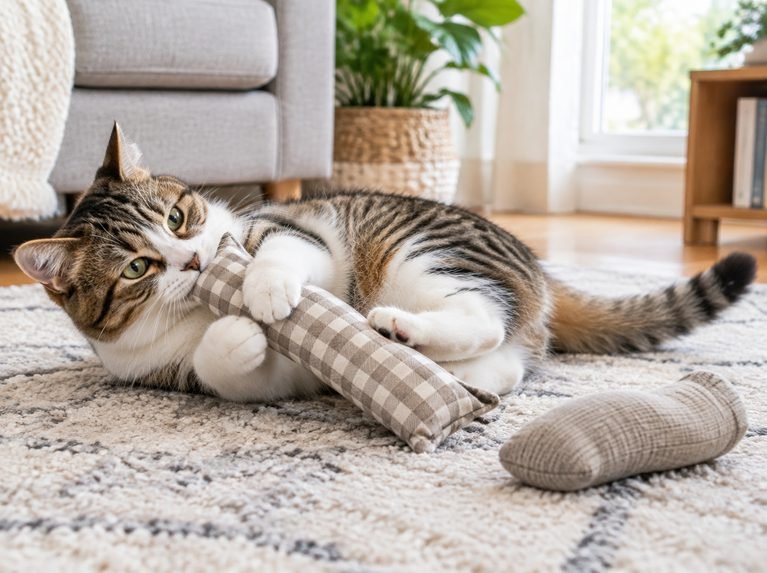
4. Sewn Catnip Mouse (No Tail)
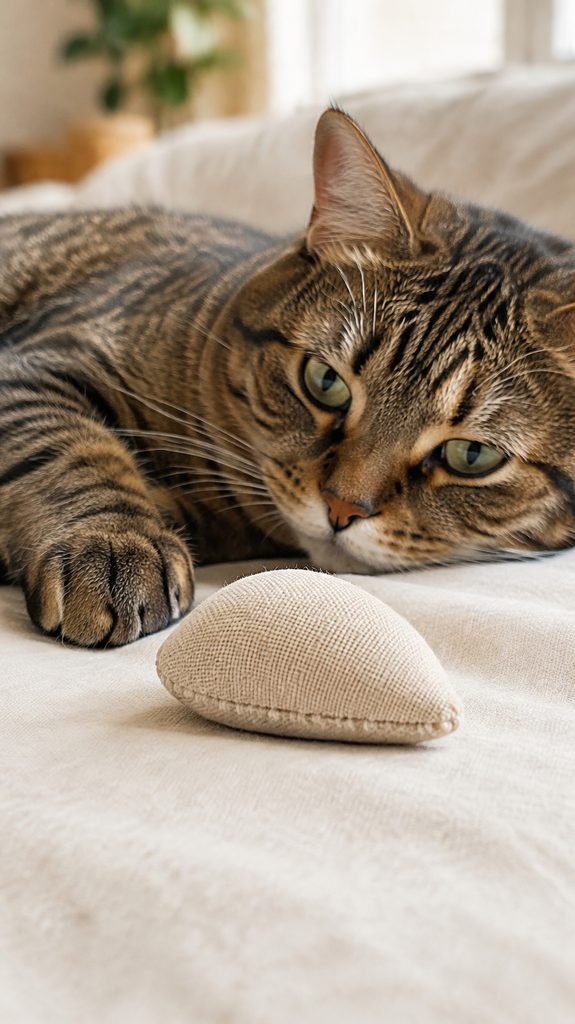
You’ll need. Tightly woven cotton fabric scraps, strong thread, a needle, stuffing or batting, and a pinch of plain, dried catnip.
How to make it.
- Cut two oval shapes about 4 inches long.
- Sew them together with small, tight stitches, leaving a gap.
- Stuff firmly, add the catnip, and sew the gap closed securely.
- Backstitch and trim all thread tails short.
Safety. Leave off the tail, whiskers, and eyes, since these become loose parts and swallowing hazards. Retire the toy at the first sign of loose seams. Plain catnip is safe for most cats, but some don’t respond, and kittens often don’t until they’re older.
5. Snuffle Towel Roll
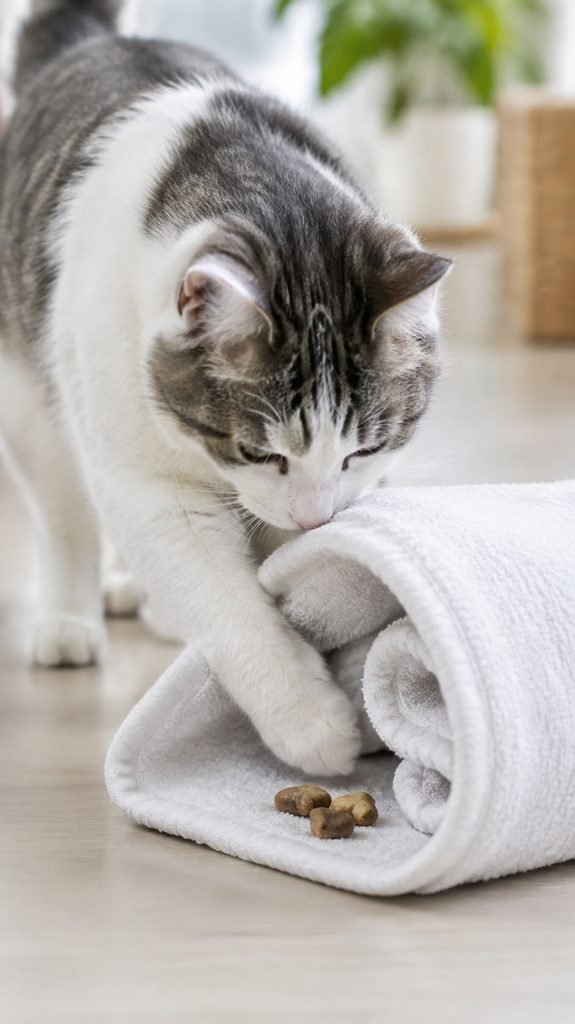
You’ll need. A small, clean, thick towel and a few treats.
How to make it.
- Lay the towel flat and scatter a few treats along it.
- Roll it up loosely, like a sleeping bag, or tie the roll into a knot with the towel itself.
- Let your cat unroll it and search for treats.
Safety. Use a towel with no loose threads or tassels, and don’t use a towel with a hole. Remove it when your cat starts chewing.
6. Plastic Bottle Treat Roller
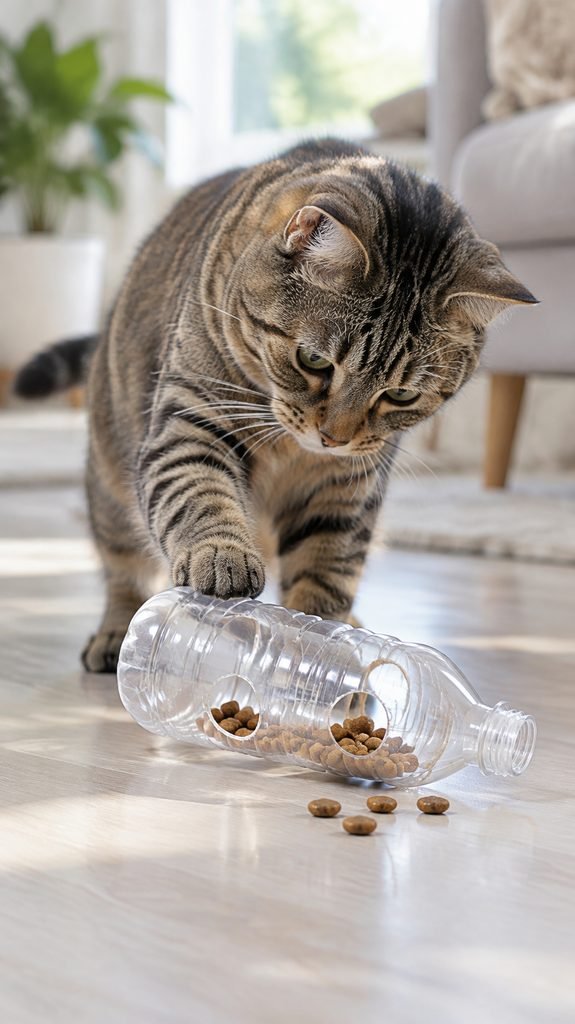
You’ll need. A clean, empty plastic bottle with the cap removed and discarded, plus dry kibble or treats.
How to make it.
- Cut two or three holes in the sides, slightly larger than your cat’s treats, using a craft knife (adults only).
- Smooth the edges with sandpaper or cover with tape.
- Add a few kibbles and let your cat roll the bottle to make them fall out.
Safety. Discard the cap, since it’s a swallowing hazard, and throw the bottle away if it cracks or splits. Supervise, and skip this one if your cat likes to chew plastic.
7. Cup Shuffle Treat Game
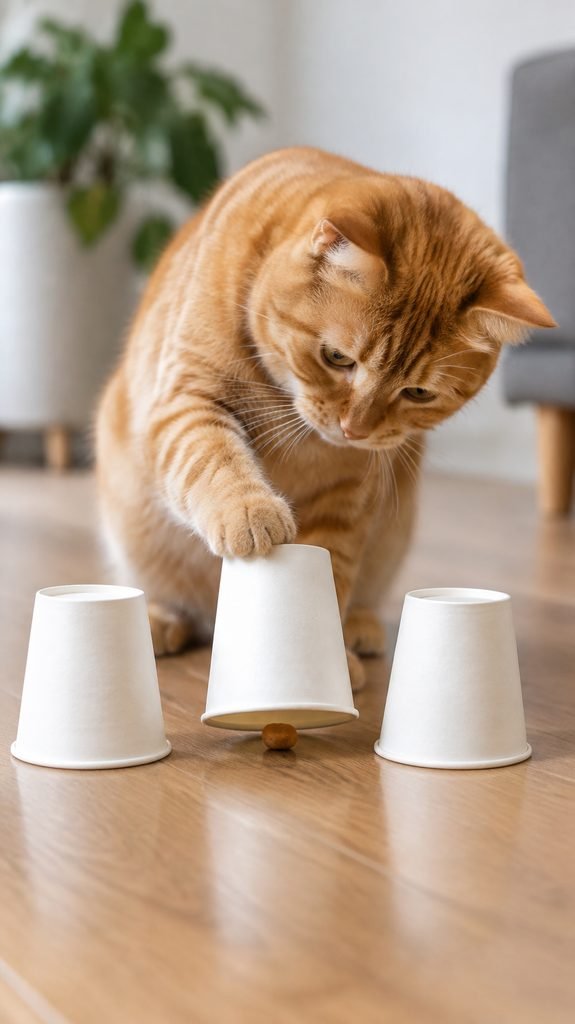
You’ll need. Three lightweight paper cups, or small cardboard tubes, and a few treats.
How to make it.
- Place the cups upside down in a row.
- Hide a treat under one while your cat watches.
- Let your cat nudge the cups and find the treat.
Make it harder. Shuffle the cups slowly, or hide treats under two.
Safety. Use plain paper cups with no wax or lining chips, and discard them when chewed.
8. Paper Tube Forest
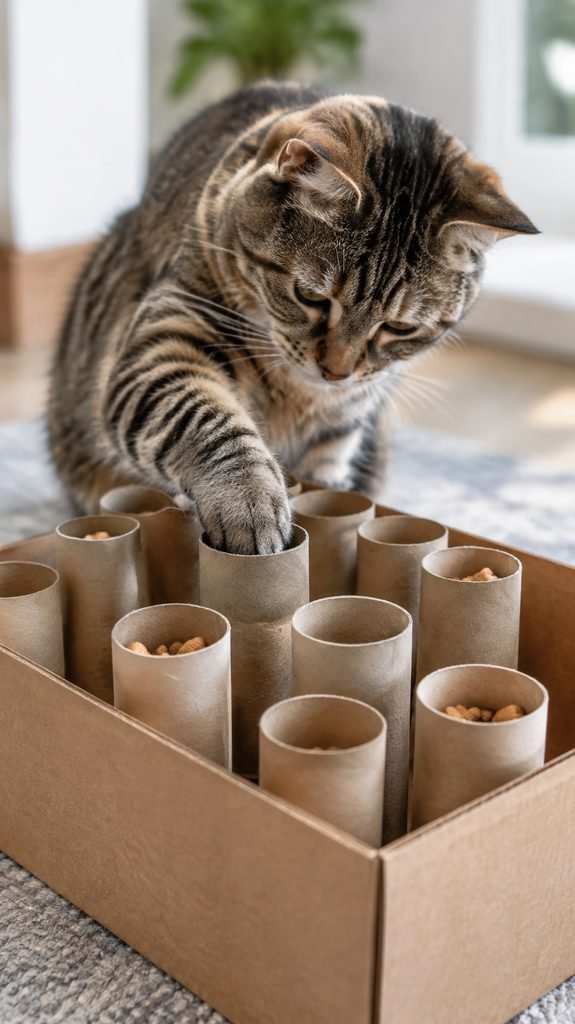
You’ll need. A sturdy box, several empty paper towel or toilet paper tubes, and tape or non toxic glue.
How to make it.
- Stand the tubes upright, close together, inside the box.
- Secure them with tape or glue so they don’t tip.
- Drop treats or a few kibbles into some of the tubes and let your cat fish them out.
Safety. Use non toxic glue, let it dry completely, and replace the tubes when bent or chewed.
9. Cat Grass Planter
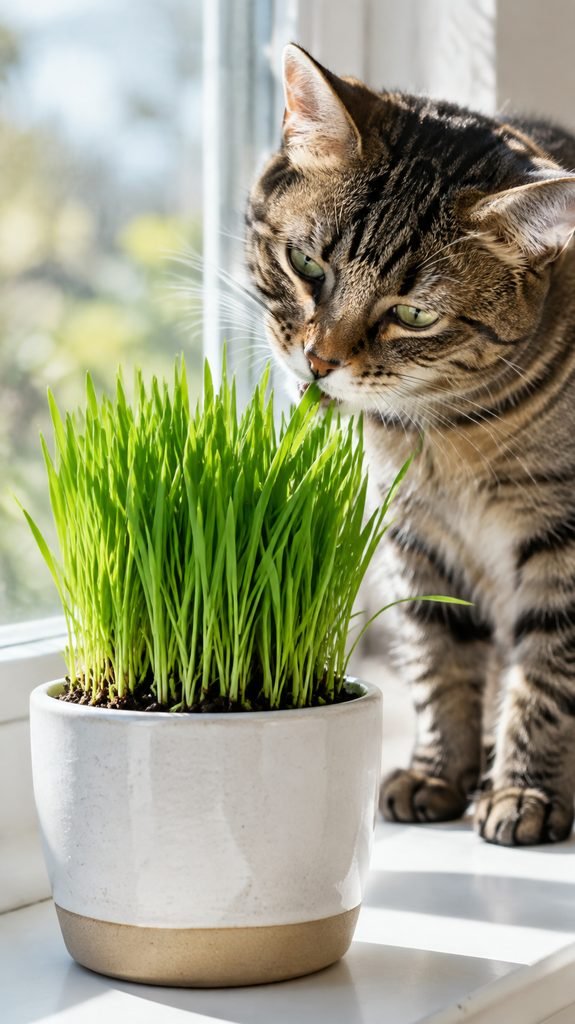
You’ll need. A small pot with drainage, potting soil, and cat grass seeds, such as wheat, oat, or barley grass, labeled safe for pets.
How to make it.
- Fill the pot with soil and sprinkle the seeds on top.
- Cover lightly with soil and water gently.
- Keep it moist and in light, and your cat can nibble the grass in about a week.
Safety. Use pet safe seed with no pesticides. Cat grass is safe for most cats, but many other houseplants are toxic, including lilies, which are especially dangerous.
Check any plant before keeping it, and ask your veterinarian. If your cat vomits often after eating grass, check with your veterinarian.
10. Frozen Broth Lick Treat
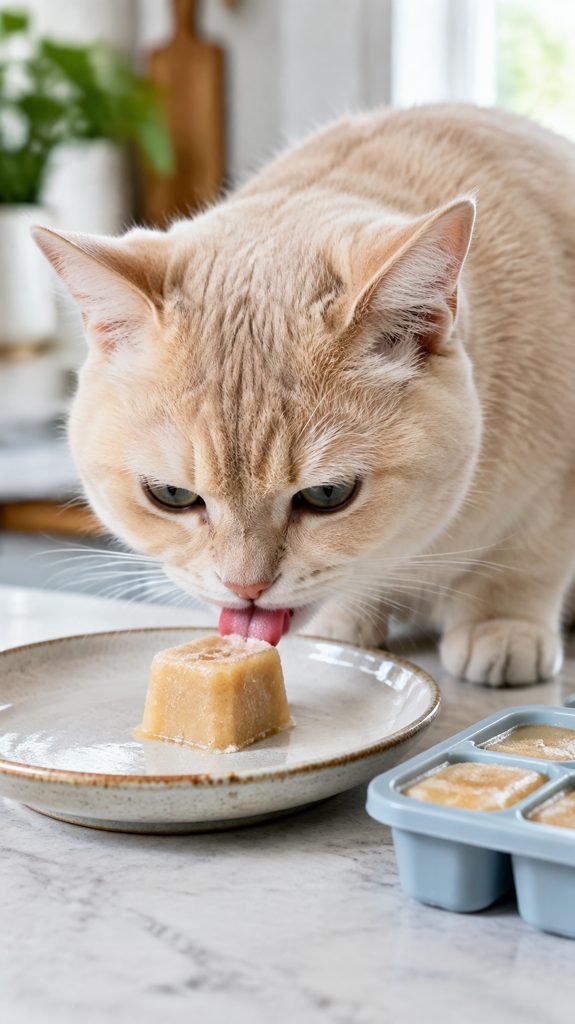
You’ll need. Plain, unsalted broth with no onion or garlic, and a small silicone mold or ice cube tray.
How to make it.
- Pour the cooled broth into the mold.
- Freeze until solid.
- Offer one small cube on a plate or in a shallow dish, under supervision.
Why it’s fun. Cats enjoy licking and batting the cube around, and it adds a bit of extra moisture on hot days. My Bone Broth Recipe for Cats shows a safe homemade version.
Safety. Make sure the broth has no onion, garlic, or salt, and treat it as an occasional snack. Ask your veterinarian about cats with kidney disease or other health conditions.
11. Peekaboo Box Wall
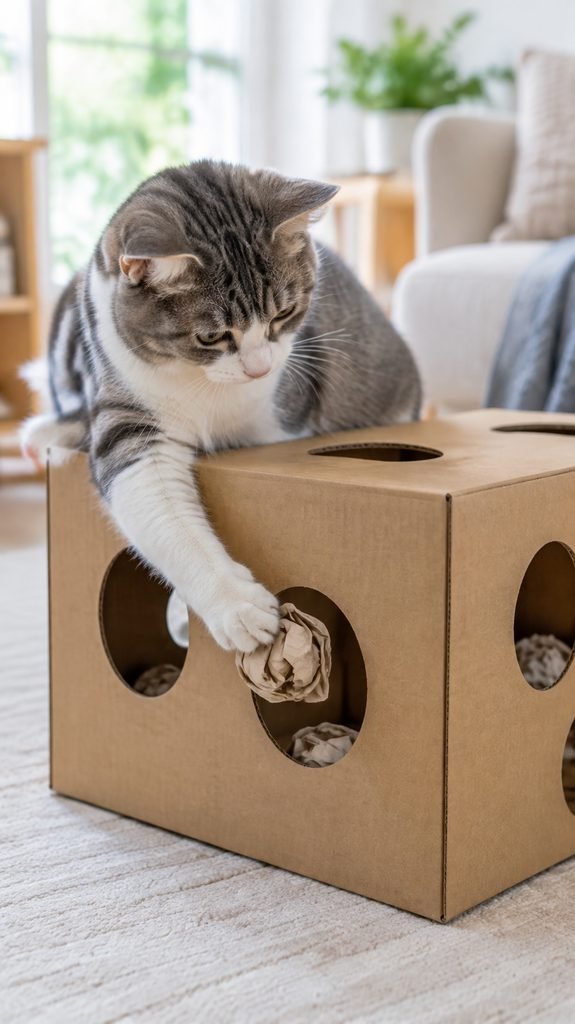
You’ll need. A sturdy cardboard box, a craft knife (adult only), and a few crumpled paper balls.
How to make it.
- Cut three or four paw sized holes along one side of the box, at different heights.
- Smooth every edge with tape.
- Toss paper balls inside, then let your cat reach through the holes to hook them.
Make it extra fun. Wiggle a crinkle ball near a hole, or hide treats inside.
Safety. Keep the holes small enough that your cat can’t get stuck, and make sure the box stays sturdy.
How to Keep Your Cat Interested
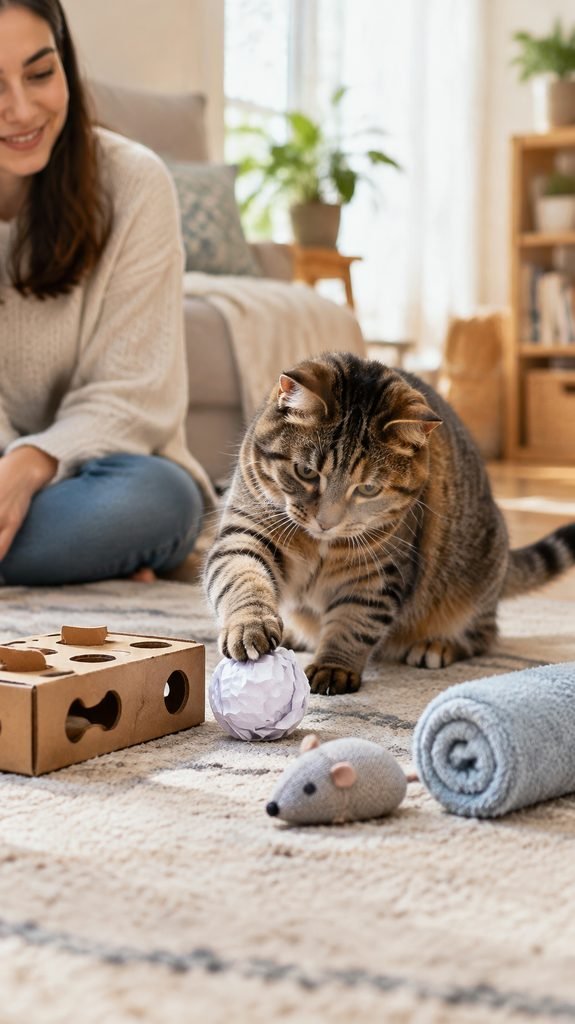
Rotate toys. Put a few away and swap them out weekly, which makes old toys feel new.
Play at the right time. Many cats are most active in the morning and evening.
Use short sessions. Several 5 to 10 minute play sessions work better than one long one.
Match the toy to your cat. Hunters love chase toys, thinkers love puzzles, and shy cats love hideaways.
End with a reward. A treat or meal after play satisfies the hunt. For ideas, see my Healthy Homemade Cat Treats.
Don’t force it. If your cat ignores a toy, try a different one.
Common Mistakes to Avoid
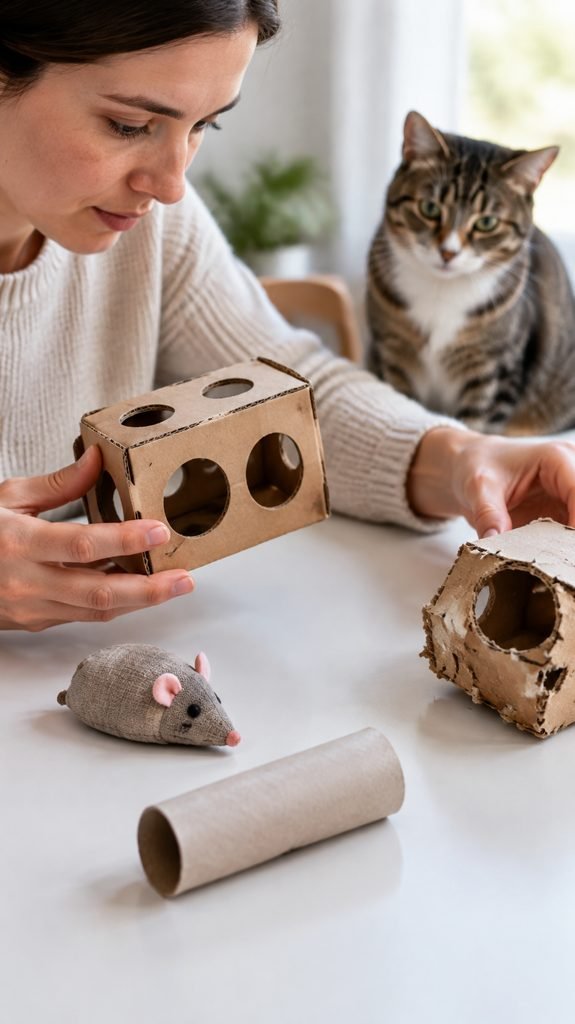
Using string, yarn, or ribbon. These are a serious swallowing risk.
Leaving small parts on toys. Skip buttons, eyes, and bells.
Leaving sharp edges. Smooth and tape every cut.
Leaving toys out unsupervised. Put them away when you can’t watch.
Keeping damaged toys. Throw them away when worn.
Using toxic materials. Choose non toxic glue and plain cardboard.
Making toys too small. Your cat shouldn’t be able to swallow any part.
More Helpful Reads
- 6 DIY Cat Toy Ideas Including a Slow Feeder You Can Make at Home
- How to Make a Cat Kicker Toy
- Essential Supplies for Bringing Home a New Kitten
- Healthy Homemade Cat Treats
- Homemade Lickable Cat Treats
For more ideas, browse my Homemade Cat Treats.
Frequently Asked Questions
What household items make safe cat toys? Plain cardboard boxes, paper bags with handles removed, paper tubes, crumpled paper, and clean towels are common, safe choices when used under supervision.
Is catnip safe for cats? Plain, dried catnip is considered safe for most cats, though not all cats react to it. Use it in moderation.
Can kittens play with these toys? Yes, with supervision and appropriately sized toys. For more kitten basics, see my Essential Supplies for Bringing Home a New Kitten.
How often should I replace homemade toys? Whenever they show wear, tearing, or chewing.
Are puzzle toys good for cats? Yes. They provide mental stimulation and can slow down fast eaters, but ask your veterinarian if your cat’s diet needs a plan.
What if my cat ignores homemade toys? Try a different type, play with the toy yourself, or add a pinch of plain catnip.
Can I use essential oils or scents? No. Many essential oils are harmful to cats.
My cat chews cardboard and paper. Is that a problem? Small amounts may pass, but regular eating of non food items can cause problems. Ask your veterinarian.
A Final Note on DIY Cat Toys
You don’t need much to keep a cat happy. A few safe materials, a little imagination, and a few minutes of play can make a big difference to your cat’s mood and health.
Start with one or two ideas today, and see which your cat loves most. Remember to supervise, inspect, and replace toys regularly.