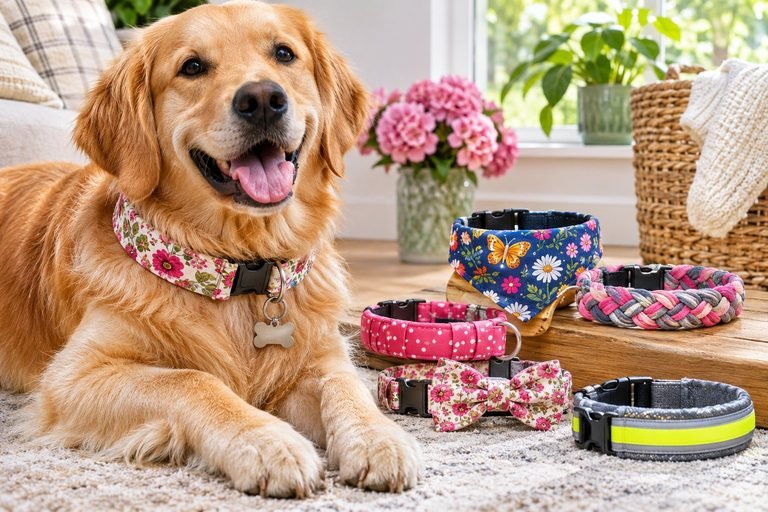
How To Start A Dog Bandana Business
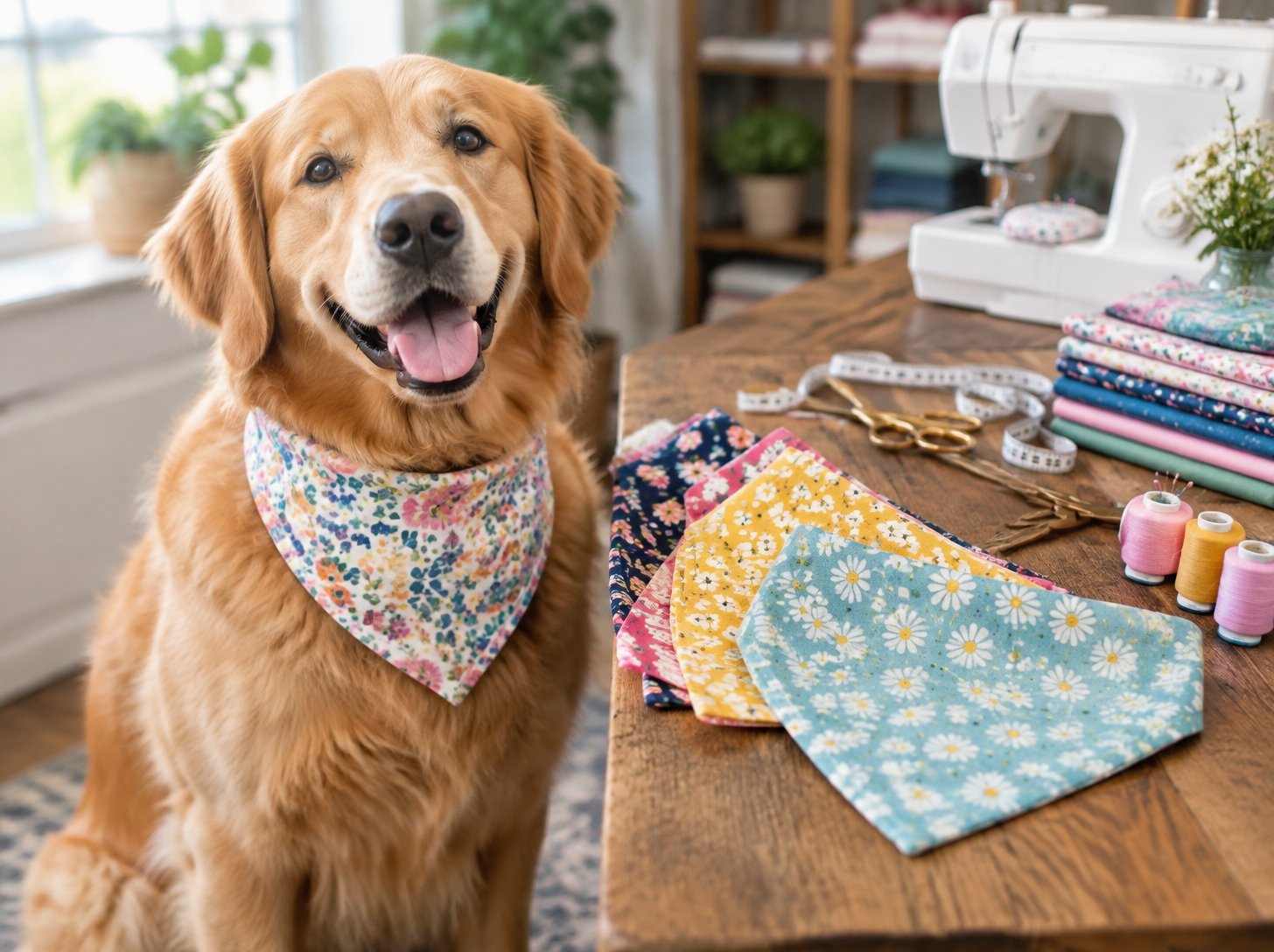
It started with a single bandana I sewed for my dog out of leftover fabric from a pillowcase project.
I took him to the park wearing it, and within ten minutes, three different people had asked where I bought it.
I told them the truth, that I’d made it at my kitchen table the night before, and two of them asked if I could make one for their dog too.
That was the moment I realized a dog bandana is one of the lowest-risk, lowest-cost products you can sell in the pet space, since it needs almost no equipment, uses very little fabric, and every dog owner already understands what it is the second they see one.
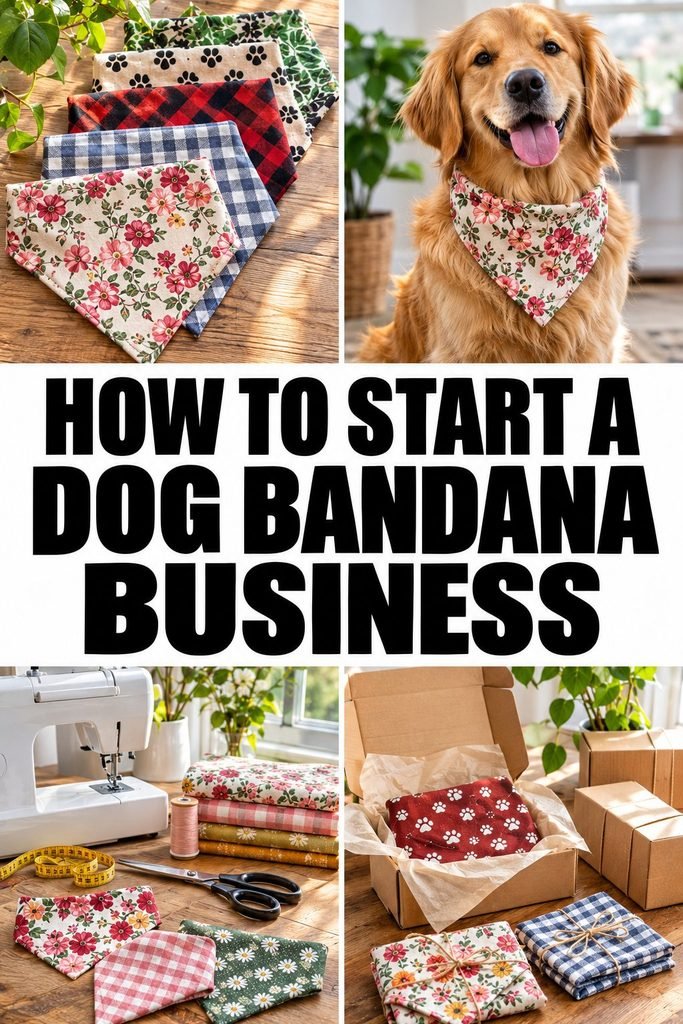
Since then I’ve helped a few friends turn the same idea into small side businesses, and the process is almost always the same: start tiny, get the product right before worrying about branding, and build from there.
This guide walks through every step, from choosing a niche and sourcing fabric to pricing, safety, and your first sales.
If you’re the type who likes to build a complete pet brand rather than a single product, selling treats alongside your bandanas is a natural pairing, and homemade dog treats is a good place to see what a simple, giftable treat lineup could look like.
And if you want to know which ingredients are safe before you ever put a treat in a gift bundle, human foods dogs can safely eat is worth keeping open as a reference.
Why a Dog Bandana Business Works as a Starting Point
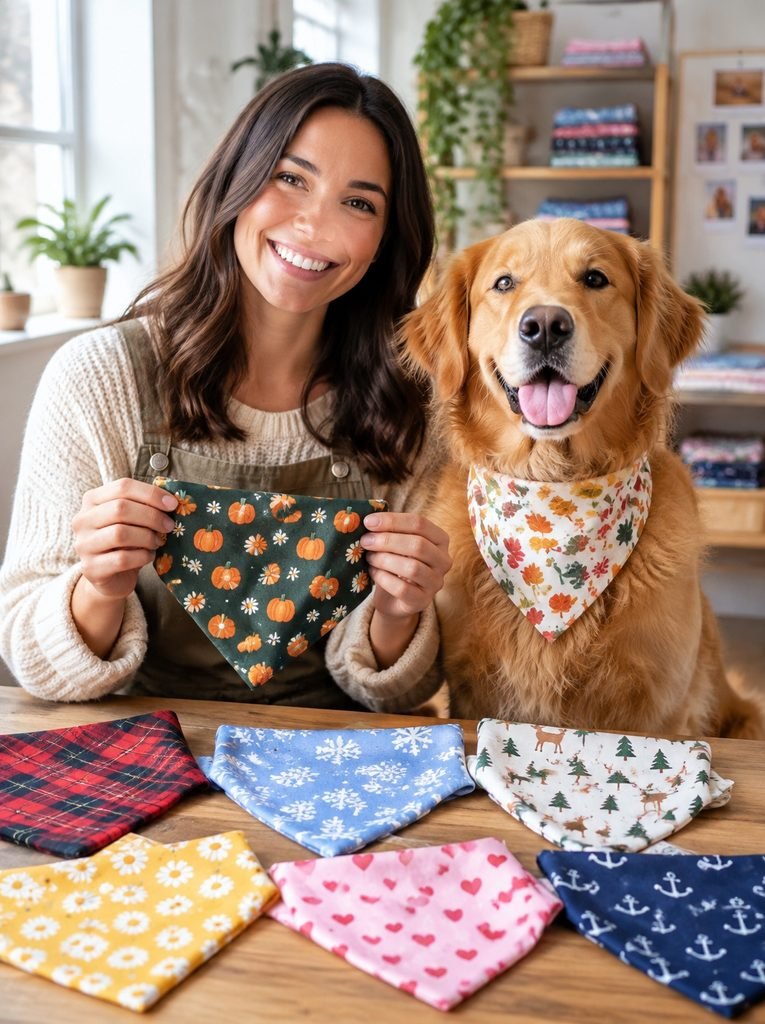
Most product businesses ask for a big upfront investment before you know whether anyone wants what you’re making. Bandanas are the opposite.
A single yard of cotton fabric yields several bandanas, the basic sewing is simple enough to learn in an afternoon, and the product ships flat, which keeps postage cheap and packaging easy.
The market is also broad. Dog owners buy bandanas for seasonal photos, birthdays, adoption days, holidays, and everyday style, which means you’re not relying on a single buying occasion.
Personalization (a dog’s name or a custom fabric) lets you charge more without spending much more, and a good-looking product practically markets itself every time a customer walks their dog down the street.
What You Need to Get Started
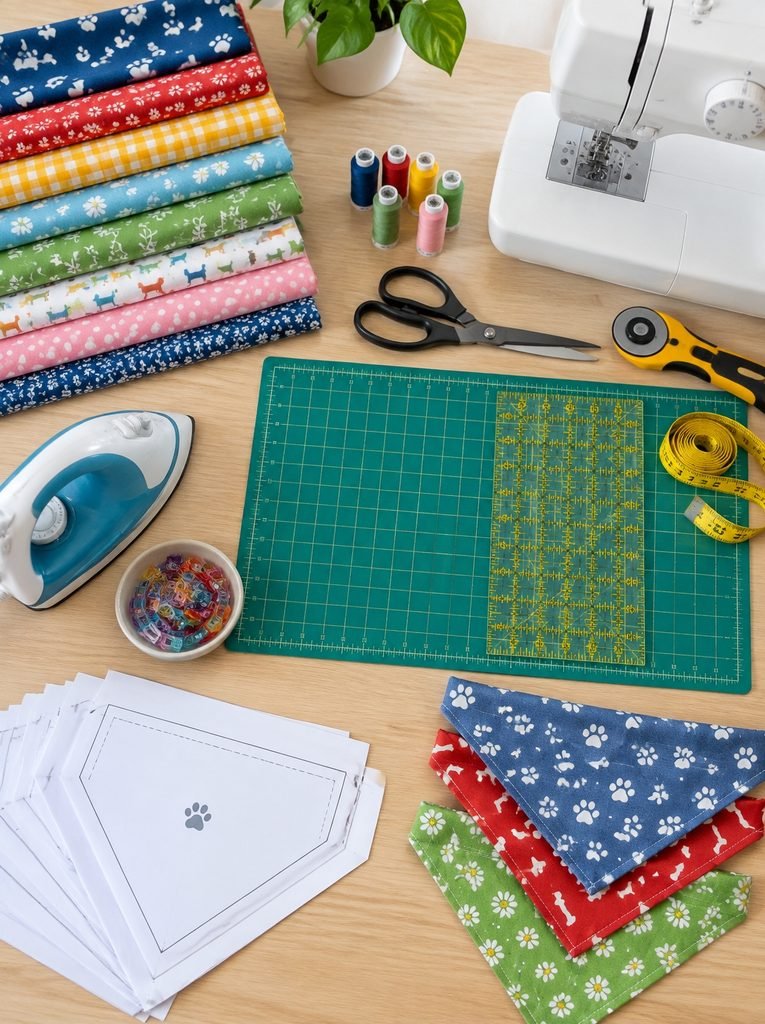
A sewing machine, or a no-sew method to begin with. A basic home sewing machine is enough. If you’d rather test demand first, you can make no-sew versions with fabric glue or iron-on hem tape, though machine-sewn hems look more professional and hold up much better through washing.
100% cotton fabric. Cotton is breathable, easy to sew, washes well, and is gentle on most dogs’ skin. Quilting cotton in fun prints is the easiest starting point, and it’s widely available in seasonal and novelty designs.
Basic tools. Fabric scissors or a rotary cutter, a cutting mat, a clear ruler, pins or clips, an iron, and matching thread. These are the only real equipment costs, and you may already own most of them.
A paper or cardboard pattern. Cut one pattern per size so every bandana in a size comes out identical. This is the single biggest time-saver once you start making more than a handful.
A simple way to take orders. An online marketplace shop, your own website, or even an Instagram page with a payment link can work. Start with whichever you can set up fastest.
For ideas on bundling a bandana with a small treat for gift-ready packages, homemade dog treats shows how simple a giftable treat can be, and the frozen options in 11 vet-friendly frozen dog treat recipes are a good fit for seasonal summer bundles.
What to Avoid When Starting Out
The most common mistakes are avoidable. Skip anything with small, detachable parts such as beads, buttons, or loose charms, since dogs chew, and those pieces are a choking hazard. Avoid scratchy, stiff, or heavily treated fabrics, which can irritate skin.
Don’t launch with ten sizes and thirty prints at once, because holding that much inventory ties up money and makes it hard to see what actually sells.
And don’t skip the labeling and safety wording on your product pages, since customers expect clear guidance on supervised wear and proper fit.
How to Start a Dog Bandana Business, Step by Step
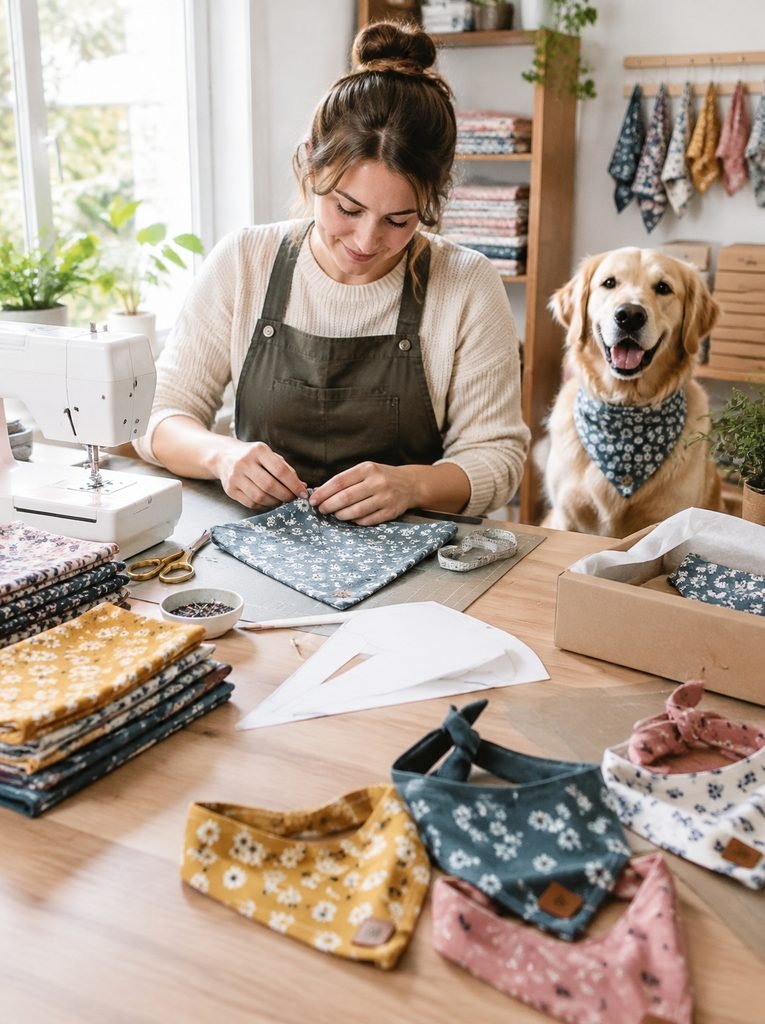
This is the process I walk friends through, in the order that tends to save the most time and money.
What You’ll Need
- Cotton fabric (about 1 yard to start)
- Sewing machine, thread, scissors or rotary cutter, ruler, iron, pins or clips
- Paper or cardboard for patterns
- A way to take payments and ship orders
Steps
- Choose a niche before you buy any fabric. “Dog bandanas” is a crowded search, but “holiday dog bandanas,” “personalized adoption bandanas,” “wedding dog bandanas,” or “breed-specific prints” are focused enough to stand out. Pick one theme you can build a small collection around, and make sure you’d genuinely enjoy sewing it fifty times in a row. A narrow niche also makes your product photos and listings feel more cohesive.
- Research what’s already selling. Spend an hour browsing marketplace listings and boutique shops in your niche. Note the price ranges, the sizes offered, how many photos each listing has, and what customers say in reviews. Pay particular attention to complaints, since a recurring complaint such as “ran too small” or “faded after one wash” is a gap you can fill.
- Decide on your sizes and make a pattern for each. Most shops offer three to four sizes, usually based on neck circumference. A common approach is small, medium, and large, with an extra-large added later once you’ve seen demand. Measure a few real dogs if you can, then draft each pattern on paper or cardboard, label it clearly, and test it on a friend’s dog before you commit to a full run. A bandana that’s too small is uncomfortable, and one that’s too large slips around and looks sloppy, so the pattern is worth getting right.
- Choose a style: tie-on, over-the-collar, or snap-on. Tie-on bandanas are the simplest to make but need to be knotted by the owner. Over-the-collar versions have a sleeve that slides onto the collar, which many owners prefer because it stays put. Snap-on styles are neat but require extra hardware. For a first product, tie-on or over-the-collar is the easiest to master.
- Buy a small amount of fabric and make a handful of samples. Resist the urge to buy bolts of fabric. Pick two or three prints, buy a yard or two of each, and sew a few samples in every size. Wash and dry each sample once or twice before you sell anything, to see whether the fabric shrinks, fades, or frays, and adjust your fabric choice or hem technique if it does.
- Perfect your construction. Use a double-folded hem so no raw edges are exposed, press every seam with an iron, and backstitch at the start and end of each seam so nothing unravels. Check that stitching is straight and consistent, since customers notice sloppy hems quickly. Time yourself on a sample run so you know how many bandanas you can realistically make per hour, which you’ll need for pricing later.
- Take clean, bright product photos. Photograph the bandana on a real dog if possible, and add a flat-lay shot on a plain background so customers can see the print clearly. Natural window light works better than a flash. Include at least one photo showing the size chart or a measurement guide, and one detail shot of the stitching.
- Set up your shop and write clear listings. Include the size chart, fabric details, care instructions, and a short note recommending supervised wear. Use your niche keywords naturally in titles and descriptions so people searching for exactly that style can find you. Keep descriptions honest about colors and prints, since fabric can look slightly different on different screens.
- Price your product to cover your time, not just your materials. Add up fabric, thread, packaging, and marketplace or payment fees, then add the value of your time based on the per-hour speed you measured in step six. Many new sellers underprice and burn out, so build in a margin that you can sustain. Personalization and limited-edition prints are an easy way to justify a higher price.
- Handle the business basics. Depending on where you live, you may need to register your business, collect sales tax, or hold a general business license, and requirements differ widely, so confirm them locally. Keep simple records of every sale and expense from day one. If you plan to scale, product liability insurance is worth looking into.
- Launch small and collect feedback. Start with friends, family, and local dog owners, and ask for honest reviews and photos. Early customer photos make excellent marketing content, and early feedback will tell you what to adjust before you invest in more inventory.
- Grow deliberately. Once a design sells steadily, add a second colorway, a seasonal variation, or matching accessories like collars or bow ties. Reinvest your first profits into better fabric and packaging before expanding into entirely new product lines.
How Much to Charge Pricing varies by market, fabric, and personalization, so treat any number as a starting point. As a rough illustration, if materials and packaging for one bandana cost a few dollars, a retail price in the low-to-mid teens at the entry level, with higher prices for personalized or limited designs, is a common range among small shops. Check current comparable listings in your niche and price accordingly.
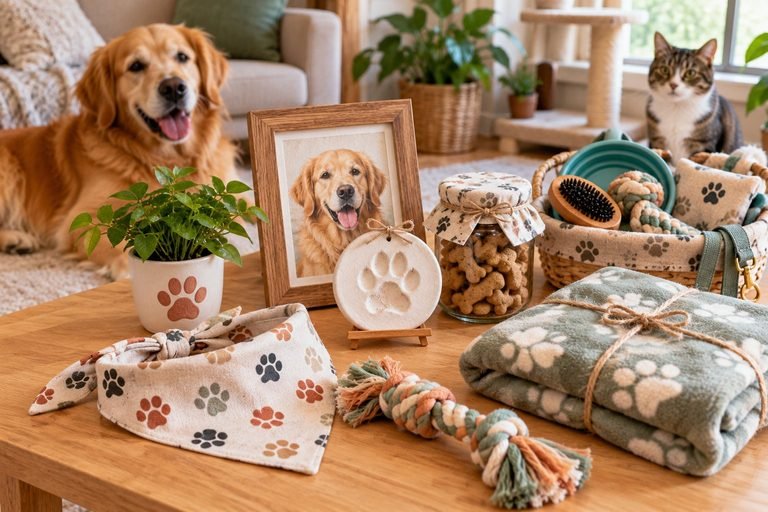
Shipping and Packaging Bandanas are light and flat, so a padded mailer or small box usually keeps shipping affordable. Fold each one neatly, add a small thank-you card and care instructions, and tie it with twine or tissue for a gift-ready feel. Neat packaging costs very little and noticeably lifts perceived value.
My Tip I keep a small batch of “ready to ship” bandanas in the most popular size and print, and sew the rest to order. That way, fast orders go out the same day, but I’m never stuck holding a pile of a size nobody buys.
Signs This Business Might Not Be the Right Fit
- You dislike repetitive sewing or detail work, since every bandana is the same process repeated
- You can’t commit time for photos, listings, and customer messages in addition to sewing
- You’re hoping for fast, large income with no ramp-up period, since most small shops grow gradually
- You’re not comfortable researching local registration and tax rules for your area
None of these are dealbreakers, but they’re worth being honest about before you buy supplies.
Common Problems When Starting Out
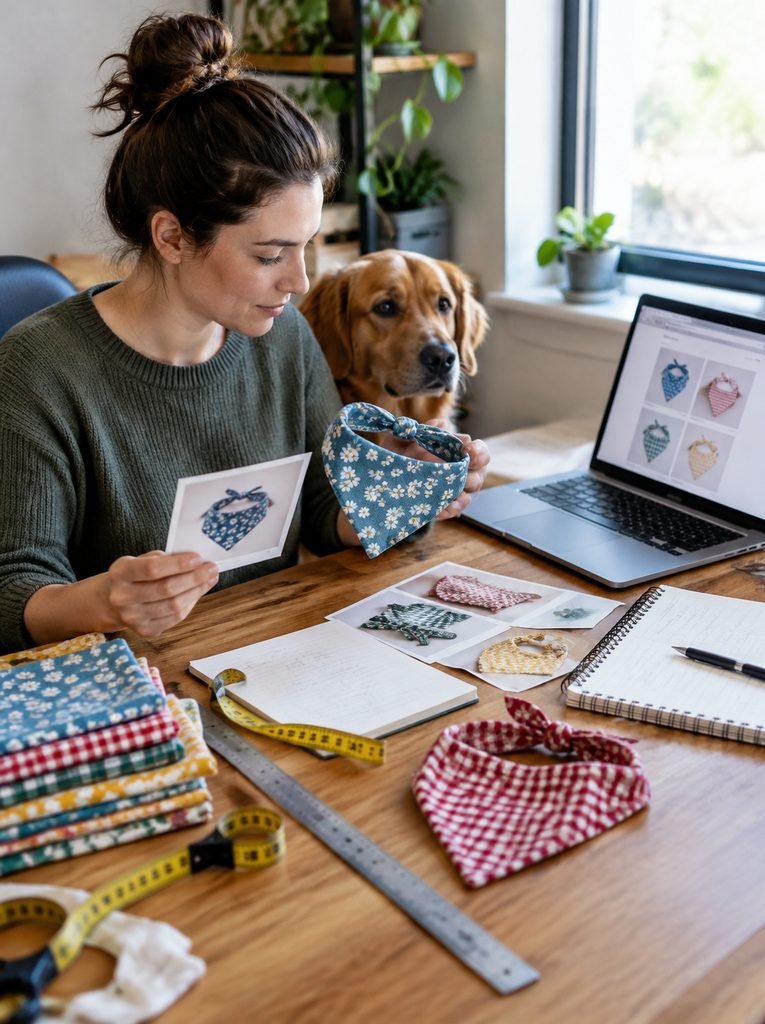
Why aren’t my listings getting views? This is usually a keyword and photo problem. Make sure your titles include the specific terms people would actually search for, and that your first photo clearly shows the bandana on a dog or on a clean, bright background.
How do I stop my fabric from fraying at the edges? Use a double-folded hem and sew close to the folded edge, then press it flat. Pre-washing your fabric before cutting also helps reduce shrinkage and fraying later.
What if a customer says the size is wrong? Include a clear measurement guide on every listing, and consider offering an exchange policy for fit issues. Most sizing problems come from owners guessing instead of measuring, so a short “how to measure your dog” image goes a long way.
Should I sell on a marketplace or build my own site? Marketplaces give you built-in traffic and are easier to start with, while your own site gives you control over branding and fees. Many sellers begin on a marketplace and add their own site once they have steady sales.
How do I know when to expand my product line? When one design has sold consistently for a few weeks and customers are asking for variations, it’s time to try a second color, a seasonal print, or a matching accessory.
More From The Pet Sphere
- Homemade Dog Treats
- Human Foods Dogs Can Safely Eat
- 11 Vet-Friendly Frozen Dog Treat Recipes You Can Trust
- 9 Easy Frozen Dog Snacks for First-Time Dog Owners
- Homemade Banana Dog Treat Recipes
- 3 Ingredient Peanut Butter Dog Gummies
- Homemade Dog Food With Vet Approved Ingredients
Final Thoughts
A dog bandana business works because it’s simple enough to begin with almost nothing and flexible enough to grow into something much bigger if you want it to.
Start with one niche, get the fit and stitching right, price for your time, and let real customers tell you where to go next. The first order is the hardest, and after that, the process mostly repeats.
Quick-Start Card
How To Start A Dog Bandana Business
A beginner-friendly overview of launching a small dog bandana shop, from niche selection to first sales.
| Estimated Setup Time | 1–2 weeks to first listing |
| Estimated Startup Cost | Low (fabric, thread, basic sewing tools, packaging) |
| Skill Level | Beginner |
| Category | Pet Business, Handmade Products |
| Best For | Crafters, side-hustlers, dog lovers |
What You’ll Need
- 100% cotton fabric
- Sewing machine, thread, scissors or rotary cutter, ruler, iron, pins or clips
- Paper or cardboard patterns for each size
- Payment and shipping setup
Steps
- Choose a focused niche.
- Research competing listings, prices, and reviews.
- Draft and test patterns for each size.
- Pick a style: tie-on or over-the-collar.
- Sew and wash-test samples.
- Perfect hems and construction.
- Photograph on a dog and flat-lay.
- Create clear, keyword-rich listings.
- Price for materials and your time.
- Handle registration, tax, and records.
- Launch small and gather feedback.
- Grow with new prints and accessories.
Notes
- Use cotton and avoid small detachable parts.
- Recommend supervised wear on every listing.
- Confirm local business and tax rules before selling.