
Frozen Pumpkin Peanut Butter Dog Treats

Pumpkin and peanut butter work just as well cold as they do baked, and freezing this combination instead of baking it turns it into something genuinely different, cooling, smooth, and ready in minutes of active prep rather than a full oven session.
This guide walks through one simple frozen version of the pairing, along with why the frozen format suits this combination so well and how to adjust the texture and flavor to fit your dog.
If you want to build out your treat rotation beyond this one recipe, a few related guides are worth having open alongside this one.

Pumpkin peanut butter dog cookies covers a baked version of this same flavor pairing if you’d rather go that direction, watermelon pupsicles and cucumber frozen dog treats offer other frozen options in a similar spirit, 3 ingredient peanut butter dog gummies gives you a gelatin set alternative, cooling dog treats for summer days and vet friendly frozen dog treat recipes round out your frozen treat rotation, homemade pumpkin and oatmeal dog snack sticks is worth a look if you’d rather bake, and human foods dogs can safely eat rounds out the bigger picture of safe food sharing.
Disclaimer
This post may contain affiliate links. As an Amazon Associate, I earn from qualifying purchases at no additional cost to you. I only recommend dog-safe ingredients and kitchen tools that I genuinely find useful for making homemade dog treats. Always use plain pumpkin and xylitol-free peanut butter, avoid added sugar and unsafe ingredients, and consult your veterinarian before introducing new treats.
Amazon Shopping List You Need
- Plain Pumpkin Puree – I use plain pumpkin puree to give these frozen treats a smooth texture and naturally mild flavor.
- Xylitol-Free Peanut Butter – I use dog-safe peanut butter to add a creamy texture and a flavor dogs love.
- Silicone Dog Treat Molds – I love using these to make evenly sized frozen treats that are easy to portion.
- Silicone Ice Cube Tray – I use one when I want smaller individual treats that are simple to freeze and serve.
- Food Processor – I use a food processor to blend the pumpkin and peanut butter into a smooth mixture.
- Stainless Steel Mixing Bowls – I use these whenever I prepare homemade dog treat mixtures because they are sturdy and easy to clean.
- Silicone Spatula – I use a flexible spatula to scrape the mixture from the bowl and fill the molds without wasting any.
Why the Frozen Version Works So Well

Pumpkin and peanut butter already blend into a smooth, cohesive mixture without much effort, which makes them naturally suited to a frozen treat format that doesn’t require baking to hold together.
Freezing also plays to pumpkin’s strengths in a different way than baking does, keeping its fiber content and moisture intact rather than concentrating it through a long, slow bake.
The result is a treat that’s genuinely cooling on a warm day, easier to make in a hurry than a baked recipe, and just as appealing to most dogs given how strongly peanut butter’s aroma comes through even cold.
Before You Start
A few ground rules apply here as with any homemade treat.
Use only plain pumpkin puree, never pumpkin pie filling, and check your peanut butter label every time you buy a new jar, since xylitol, an artificial sweetener extremely dangerous to dogs even in small amounts, has appeared in some peanut butter products without much warning.
Introduce this treat gradually the first time, watching for any signs of digestive upset.
Understanding the Ingredients

Plain pumpkin puree. The primary base of this recipe, contributing fiber, moisture, and a naturally appealing flavor that freezes into a smooth, easy to eat texture.
Natural peanut butter, xylitol free. Adds richness and the flavor most dogs respond to enthusiastically, blending easily into the pumpkin without any extra preparation.
Plain, unsweetened yogurt, optional. Adding yogurt lightens the texture and adds a bit of protein, producing a creamier, less dense final treat than pumpkin and peanut butter alone.
Water, as needed. Used to loosen the mixture if it seems too thick to pour easily into a mold.
Ingredients I Avoid
Pumpkin pie filling, flavored or sweetened yogurt, and peanut butter containing xylitol or added sugar all have no place in this recipe.
It’s worth double checking canned pumpkin specifically, since pie filling is often shelved right next to the plain version and the difference isn’t always obvious at a glance.
Frozen Pumpkin Peanut Butter Dog Treats

Yield: About 12 to 16 small treats, depending on mold size Prep Time: 10 minutes Freeze Time: At least 4 hours Storage: Freeze up to 2 to 3 months
Ingredients
- 1 cup plain pumpkin puree. The base of the recipe, providing fiber, moisture, and flavor.
- 3 tablespoons natural peanut butter, xylitol free. Adds richness and the flavor that makes this treat especially appealing.
- 1/4 cup plain, unsweetened yogurt, optional. Lightens the texture and adds a bit of protein.
- 1 to 2 tablespoons water, as needed. Loosens the mixture to a pourable consistency.
How to Make It

- In a mixing bowl, combine the pumpkin puree and peanut butter, stirring until smooth.
- If using yogurt, stir it in until fully incorporated.
- Check the consistency. It should be pourable but not watery. If it’s too thick, add water a tablespoon at a time, stirring after each addition, until it loosens up.
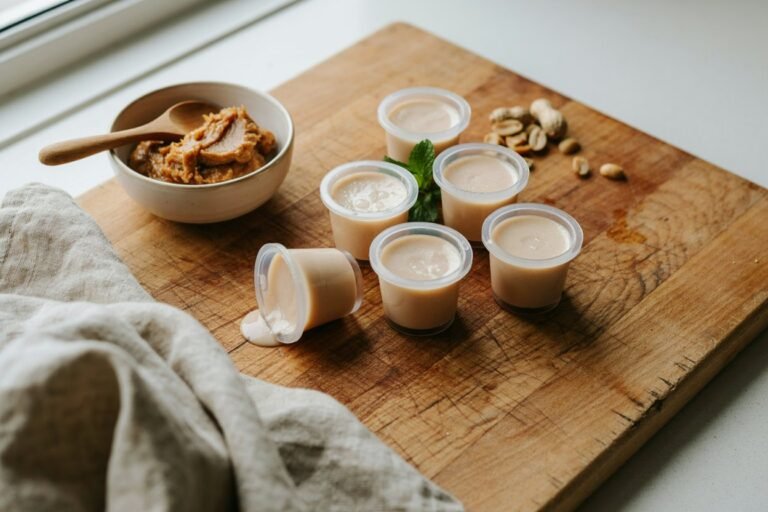
- Pour or spoon the mixture into small silicone molds or an ice cube tray, filling each cavity about three quarters full to leave room for expansion.
- Freeze for at least 4 hours, until completely solid.
- Pop the treats out of the mold and serve, or transfer to a freezer safe container for later.
How to Adjust This Recipe
For a lighter, lower calorie version. Reduce the peanut butter to 1 to 2 tablespoons and let the pumpkin and yogurt carry more of the flavor and texture.
For a richer, more indulgent treat. Increase the peanut butter slightly, keeping in mind this also raises the calorie density, so smaller portions become more important.
For a firmer, longer lasting treat. Skip the yogurt and water entirely, relying only on pumpkin and peanut butter, which produces a denser mixture that holds its shape a bit longer once out of the freezer.
For a training sized treat. Use a smaller mold, like a mini ice cube tray, to portion the mixture into bite sized pieces appropriate for repeated rewards.
How Many Treats Can a Dog Have?
Treats should stay a small part of your dog’s overall diet, generally no more than about 10 percent of their total daily calories.
One or two small treats make a reasonable serving for most dogs, adjusted for their size, and given how calorie dense peanut butter is relative to pumpkin alone, it’s worth keeping portions modest rather than offering several at once.
Storage
Freezer. Store in an airtight container or freezer safe bag for up to 2 to 3 months.
Serving. Offer straight from the freezer, or let a treat sit for a minute or two if your dog prefers a slightly softer texture.
Common Problems When Making These Treats
Why is my mixture too thick to pour? Pumpkin varies a bit in thickness depending on the brand. Add water a tablespoon at a time until it loosens enough to pour smoothly into a mold.
Why won’t the treats release from the mold? Let the mold sit at room temperature for a minute, or run the outside briefly under lukewarm water to loosen the treats without melting them entirely.
Why does my dog seem uninterested in this treat? Some dogs prefer a treat that’s been out for a minute or two and has softened slightly, rather than one served rock solid straight from the freezer.
Can I use canned pumpkin straight from the can without draining it? Yes, canned pumpkin puree doesn’t typically need draining, though if it seems unusually watery, letting it sit in a strainer for a few minutes first can help thicken the final mixture.
Good Ingredients to Look For
Plain pumpkin puree. Nothing but pumpkin on the label, never pie filling.
Plain, single ingredient peanut butter. Just peanuts, and maybe a touch of salt, with nothing else on the label.
Plain, unsweetened yogurt, if adding. Nothing but yogurt and live cultures, no added sugar or artificial sweeteners.
Nothing artificial. No added sugar, sweeteners, or seasoning belong in a treat meant to be simple and safe.
Common Mistakes to Avoid

Using pumpkin pie filling by mistake. Worth double checking every time, since the two products often sit right next to each other on the shelf.
Skipping the peanut butter label check. Worth repeating across every recipe that uses peanut butter, since it’s a genuinely important safety step.
Making the treats too large. Dogs don’t need cookie sized treats, and smaller pieces make portion control far easier to manage.
Using flavored or sweetened yogurt if adding it. This introduces added sugar that has no place in a dog’s treat, even a frozen one.
Storing at room temperature for too long. Given the high moisture content, this treat isn’t shelf stable outside the freezer and should be kept there between servings.
Frequently Asked Questions
Can dogs eat pumpkin and peanut butter together? Yes, both are commonly used dog safe ingredients, and they combine well in a simple frozen treat like this one.
Is a frozen version better than a baked one? Neither is inherently better. A frozen version is quicker to make and more cooling, useful for warm weather, while a baked version produces a firmer, more portable treat, so it really comes down to what texture and season fits best.
Can puppies have these frozen treats? In small amounts, generally yes, though very hard, fully frozen treats may be too much for young teeth, so letting one soften slightly first is often a better choice for puppies.
How long do these treats last in the freezer? Generally 2 to 3 months when stored in an airtight container or freezer safe bag.
Can I make this recipe without yogurt? Yes, the recipe works fine without it, producing a denser, richer texture relying only on pumpkin and peanut butter.
Can I add other flavors to this recipe? A small amount of mashed banana or a few blueberries can be blended in for variety, though it’s worth keeping additions modest and sticking to ingredients you already know are safe for dogs.
Why does my mixture separate slightly after freezing? This can happen if the pumpkin and peanut butter weren’t fully blended before freezing. Stirring thoroughly until completely smooth before pouring into the mold helps prevent this.
Is this treat good for a dog with a sensitive stomach? Pumpkin is commonly used to support digestion, which makes this a reasonably gentle option, though any dog with an ongoing digestive issue should have their diet reviewed by a veterinarian rather than relying on a treat alone.
Can I use a blender to mix this instead of stirring by hand? Yes, a blender or food processor produces an even smoother, more consistent texture than hand mixing, particularly useful if you’re adding yogurt or fruit.
What’s the best mold to use for this recipe? Small silicone molds work particularly well, since they flex enough to release the treats cleanly without needing to pry them out the way a standard ice cube tray sometimes requires.
Final Thoughts
Freezing pumpkin and peanut butter together gives you nearly all the appeal of the baked version with a fraction of the effort, no oven, no dough, just a quick mix and a few hours in the freezer.
Start with the standard recipe, adjust the peanut butter up or down depending on how rich you want it, and keep a batch on hand for whenever your dog needs something cold and genuinely appealing.
4 Comments