What Cat Eyes Mean: How to Understand Your Cat’s Eye Language
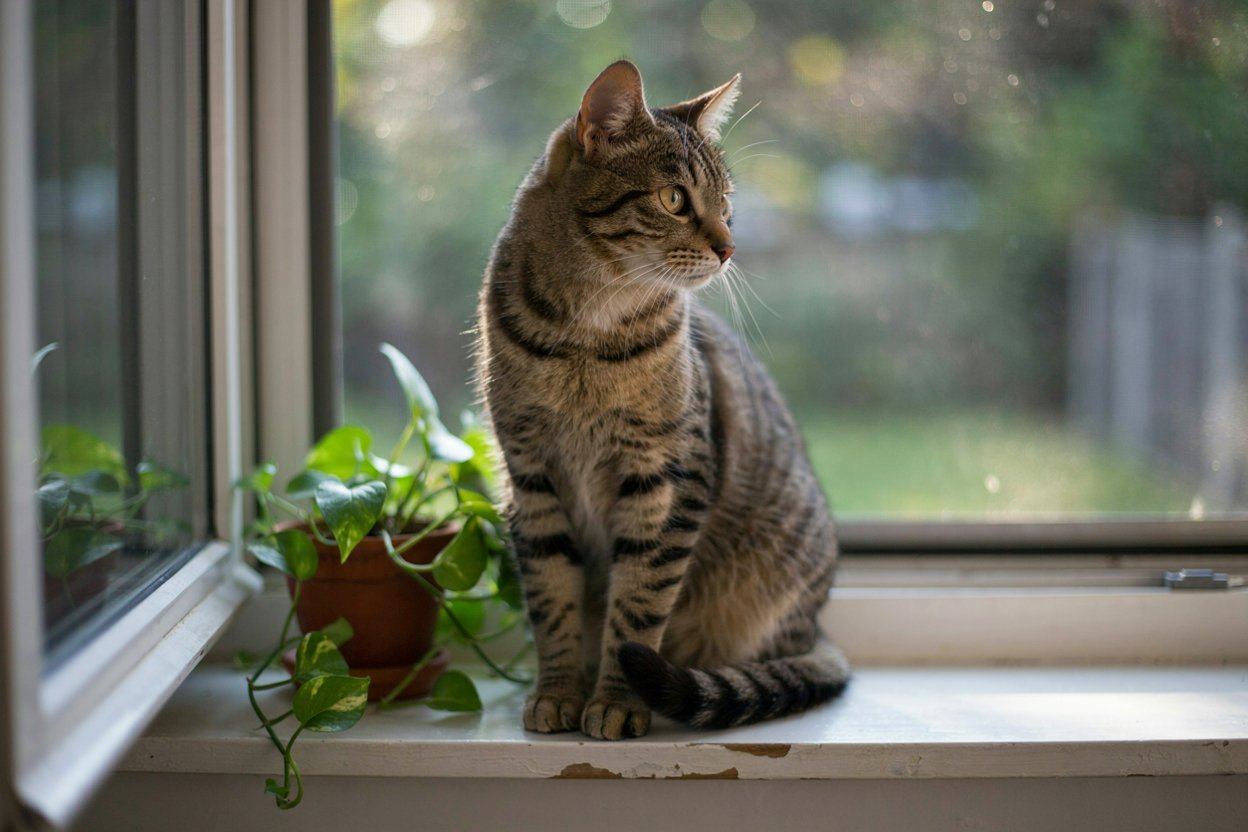
There’s a specific moment I keep coming back to. My cat sitting across the room, watching me from the arm of the couch, pupils shifting slightly as I move around the kitchen, then slowly closing and reopening her eyes when I finally sit down nearby.
It took me a while to realize that moment was actually full of information, not just a cat staring blankly into space. Her eyes were doing a lot of the talking, and once I started paying attention, I couldn’t stop noticing it in almost every interaction we have.
Cat eyes aren’t just beautiful to look at. Their position, pupil size, blinking pattern, gaze direction, and the surrounding facial expression all provide real clues about what a cat is feeling in the moment, from relaxed trust to alertness to occasional discomfort.
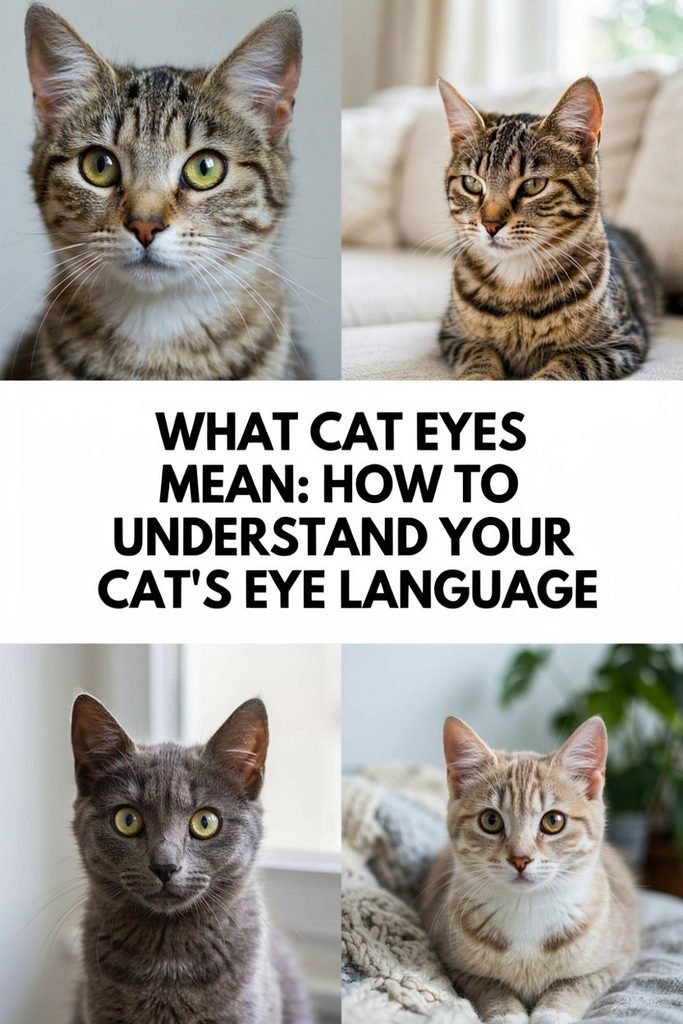
This guide walks through what those signals actually mean, how to tell a normal expression from one that deserves closer attention, and why you should never read a cat’s eyes completely on their own.
Their ears, tail, body posture, vocalizations, and the situation around them all provide context that changes what a given eye expression actually means.
If you want to build out your understanding of cat care and behavior beyond eye language specifically, a few related guides are worth having open alongside this one.
Daily cat care routine and happy healthy cat tips cover the broader picture of keeping a cat comfortable and well, and homemade cat food for senior cats is worth a look if you’re noticing eye or behavior changes in an older cat alongside other signs of aging.
Disclaimer
This post may contain affiliate links. As an Amazon Associate, I earn from qualifying purchases at no additional cost to you. I only recommend cat-safe products and useful pet supplies that I genuinely find helpful. Cat body language can vary between individual cats, and changes in eye appearance or behavior can sometimes indicate a health issue. Consult your veterinarian if you notice sudden or unusual changes in your cat’s eyes.
Shop on Amazon With 50% Discount On Your Orders
- Interactive Cat Toy – I use interactive toys to encourage play and give cats a fun way to engage with their surroundings.
- Cozy Cat Bed – I use a comfortable cat bed to give cats a quiet, familiar place where they can relax and feel secure.
- Cat Scratching Post – I use a scratching post to provide an appropriate outlet for scratching, stretching, and everyday enrichment.
Why Cat Eyes Can Tell You So Much
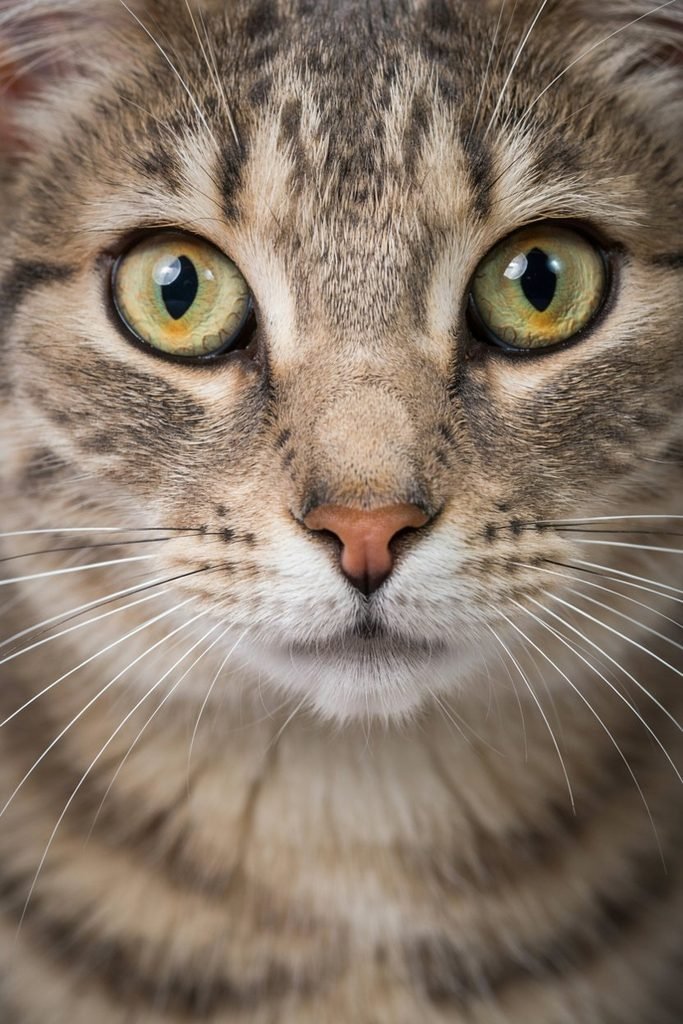
Cats communicate through a combination of eye contact, blinking, pupil size, gaze direction, squinting, and subtle shifts in their overall facial expression, all working together with the rest of their body language.
Unlike a lot of vocal communication, which cats mostly reserve for interactions with people rather than other cats, eye signals are constant and often involuntary, which makes them a genuinely reliable, if sometimes subtle, source of information once you know what to watch for.
The eyes rarely tell the whole story alone though. They’re one piece of a larger picture that includes the ears, tail, whiskers, posture, and whatever is actually happening in the room at that moment.
What Slow Blinking Means
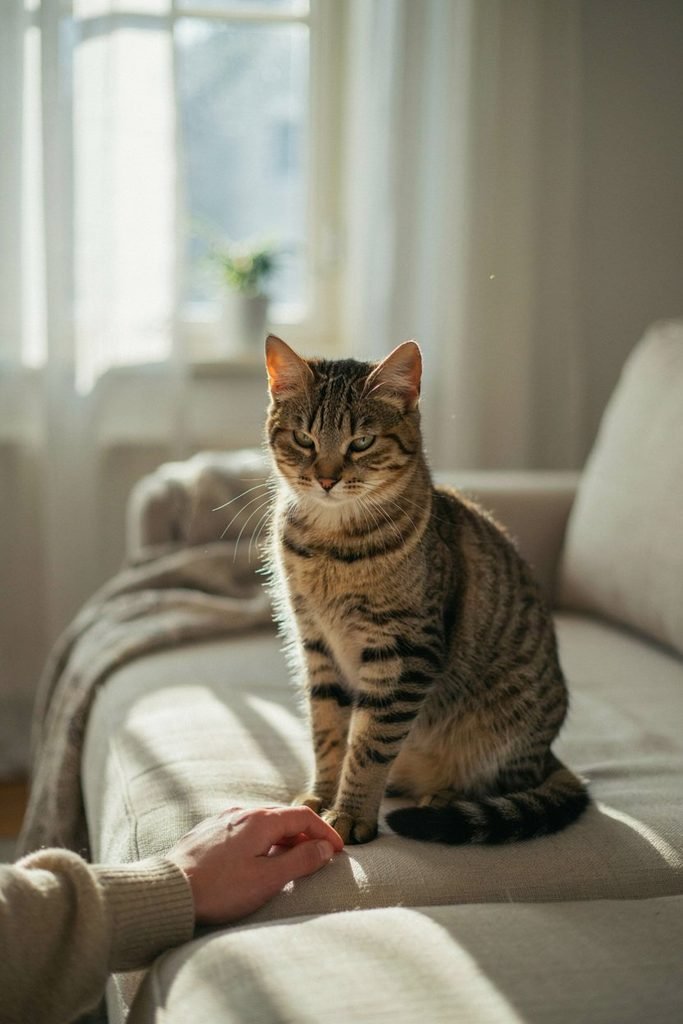
This is probably the single most recognizable piece of cat eye communication, and it’s the one I’ve come to appreciate the most personally.
A slow blink, where a cat looks directly at you and deliberately closes and reopens their eyes in a slow, unhurried motion, is widely associated with relaxation, trust, and social comfort.
It’s often described as a kind of feline smile, a way of signaling that they feel safe enough around you to close their eyes, even briefly.
What should you actually do when your cat slow blinks at you? The simplest response is to calmly return it. Look toward your cat, soften your gaze, and slowly close and reopen your own eyes rather than staring intensely back at them.
A lot of cats respond well to this, sometimes repeating the slow blink again, and it’s become a small, quiet ritual between me and my own cat, especially in the evenings when she’s settled nearby.
What Wide Open Cat Eyes Mean
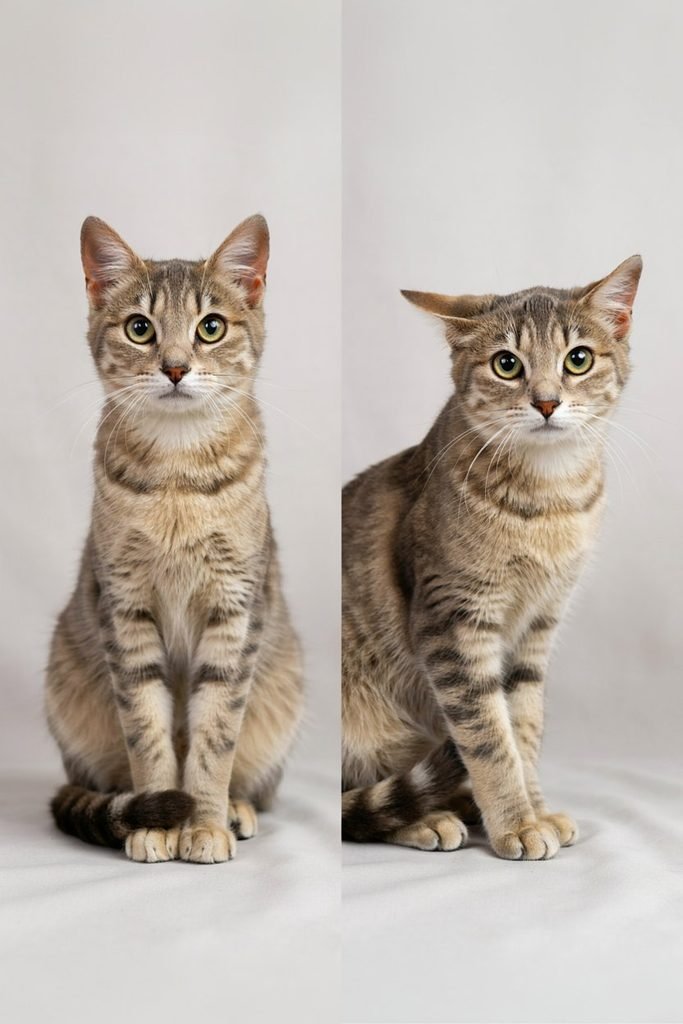
Wide eyes don’t automatically mean happiness, and they don’t automatically mean fear either.
Depending on the situation, wide open eyes can indicate excitement, curiosity, alertness, fear, surprise, or general high arousal, and figuring out which one requires looking at the rest of the cat’s body.
A cat with wide eyes, forward facing ears, and a relaxed, loose body is telling a very different story than a cat with wide eyes, flattened ears, a crouched posture, and a puffed up tail.
The first combination usually points toward excitement or curiosity, something has caught their attention and they’re genuinely interested.
The second combination points toward fear or stress, and that’s a cat who probably needs space rather than more direct interaction in that moment.
What Dilated Pupils Mean
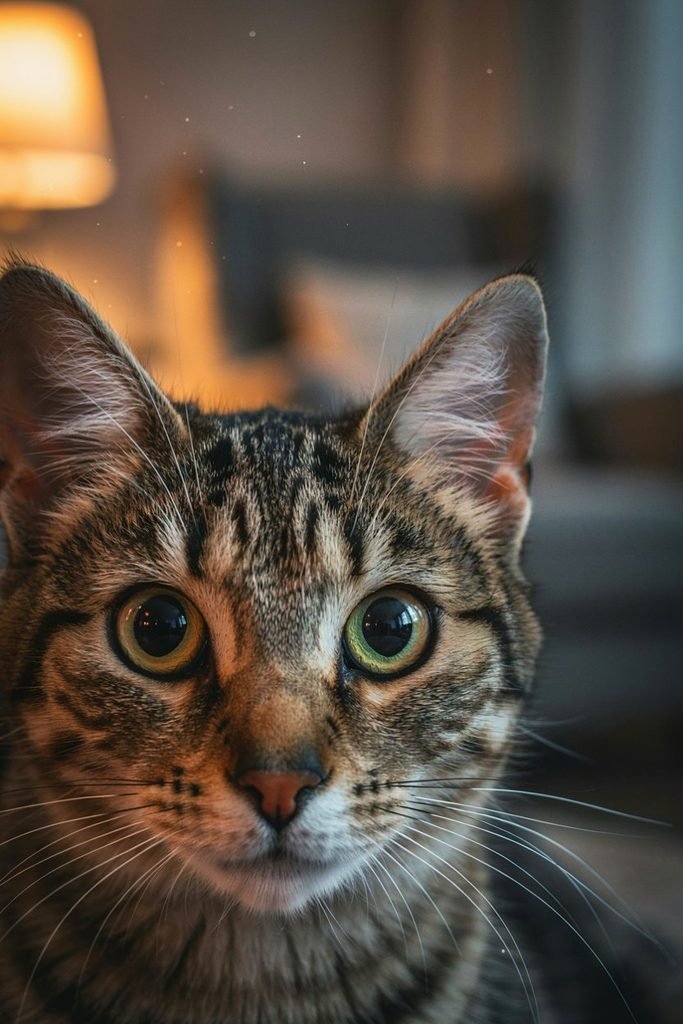
Large, dilated pupils come up constantly in cat behavior questions, and for good reason, since they show up in so many different emotional states.
Pupils can dilate due to low light, excitement, play, fear, stress, or general strong emotional arousal, and in some circumstances, pain or illness.
Pupil dilation on its own genuinely isn’t enough to determine a cat’s mood or health status.
A few quick comparisons help make sense of this. Large pupils paired with a playful, loose body usually point toward excitement, the kind you’d see mid-chase after a toy.
Large pupils paired with flattened ears and a crouching posture point more toward possible fear or stress.
And large pupils paired with any unusual behavior, or other symptoms like lethargy or reduced appetite, are worth paying closer attention to rather than dismissing as just mood.
What Narrow or Slit Like Pupils Mean
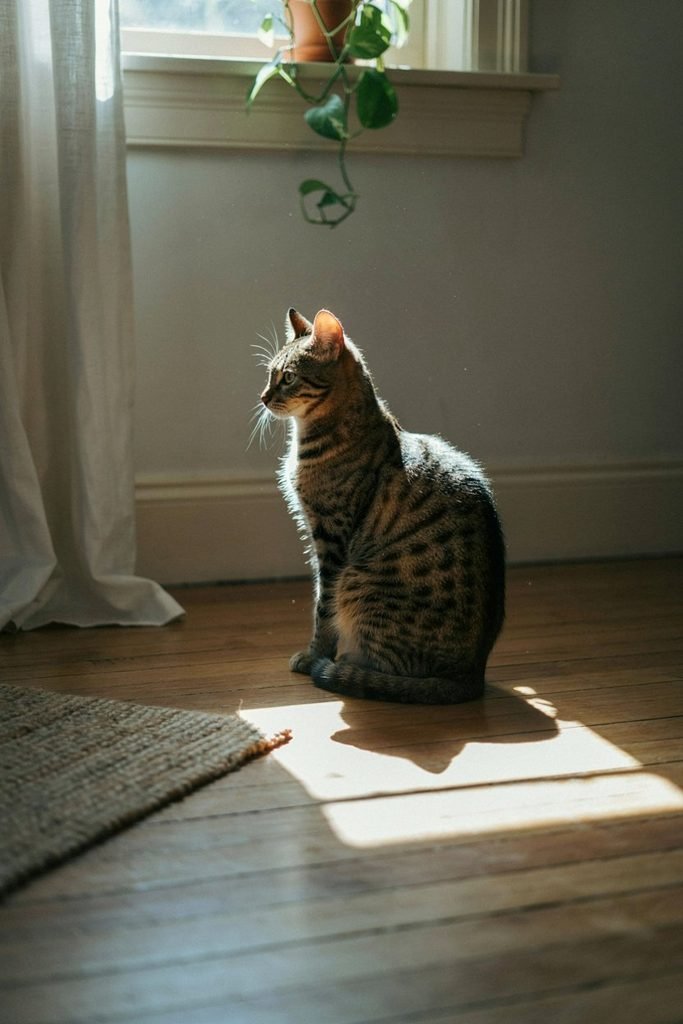
Cats naturally have vertically shaped pupils, which narrow into thin slits in bright light and open into a nearly round shape in dim conditions.
This is simply how their eyes are built, and it’s different from some other animals whose pupils stay round regardless of lighting.
Narrow, slit like pupils in a brightly lit room are almost always just a normal reaction to the light itself, nothing to be concerned about.
Narrow pupils can also show up during intense focus or concentration, like a cat locked onto a bird outside the window.
Lighting dramatically affects how a cat’s pupils appear, so it’s worth checking the room’s brightness before reading too much into a narrow eyed expression.
Why Cats Stare at You
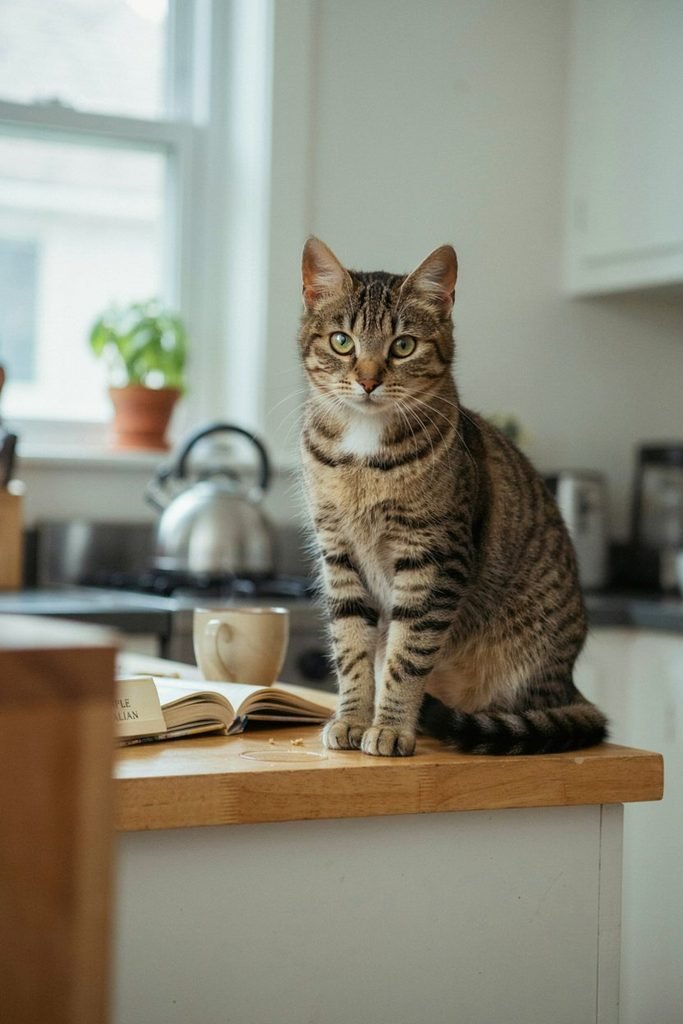
Staring gets a bit of an unfair reputation, since it can mean a lot of different things depending on context.
A cat might stare because they want something, because they’re curious about what you’re doing, because they’re watching your movements out of habit, because they’re waiting for food, because they’re seeking interaction, or simply because they’re comfortable observing you from a distance.
Staring is also just part of how cats communicate through body language generally.
The real distinction worth learning is the difference between a relaxed gaze and an intense stare. A relaxed gaze tends to come with soft, half open eyes, an easy body, and no particular tension anywhere else.
An intense stare tends to come with a fully alert, stiff posture, and sometimes a twitching tail tip. The first is casual observation.
The second is heightened attention, and depending on the rest of the body language, it can range from focused curiosity to genuine tension.
What It Means When Your Cat Looks Away
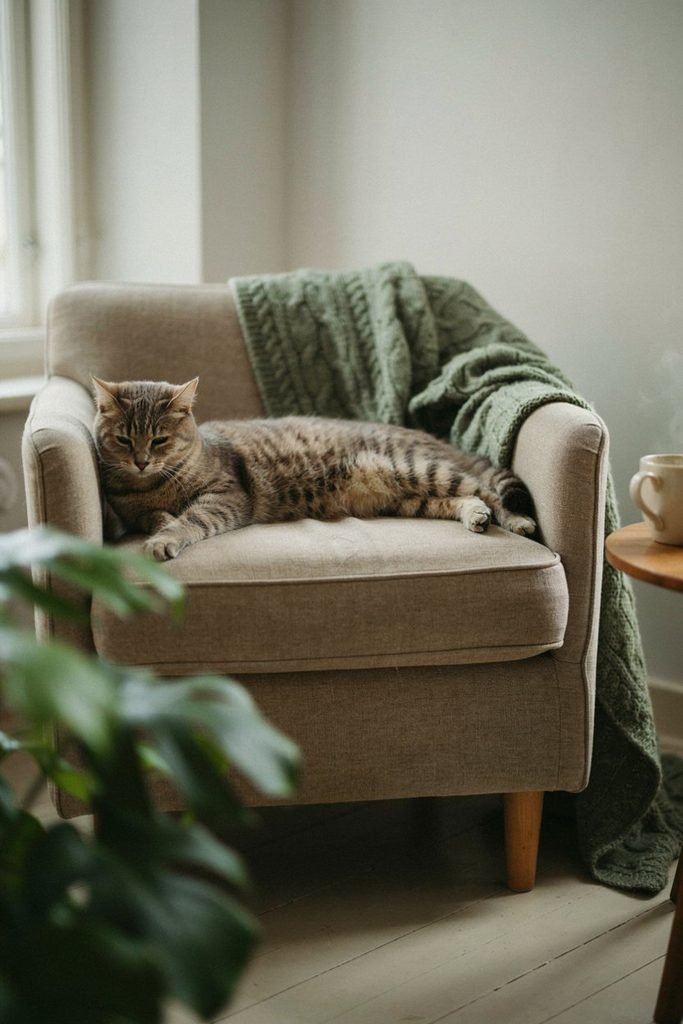
This is a section a lot of cat content skips over, but it’s genuinely useful. Looking away isn’t necessarily rejection, and it’s often part of completely normal feline communication.
Cats look away to avoid confrontation, to signal relaxation, out of simple disinterest, as a form of social communication with another cat or person, or just because their attention has naturally shifted somewhere else.
In cat body language specifically, looking away, especially paired with a relaxed body, can actually be a peaceful, nonconfrontational gesture rather than something negative.
Context still matters here just as much as everywhere else, since a cat looking away while tense and crouched is telling a different story than a cat looking away while sprawled out comfortably.
What Squinting Means
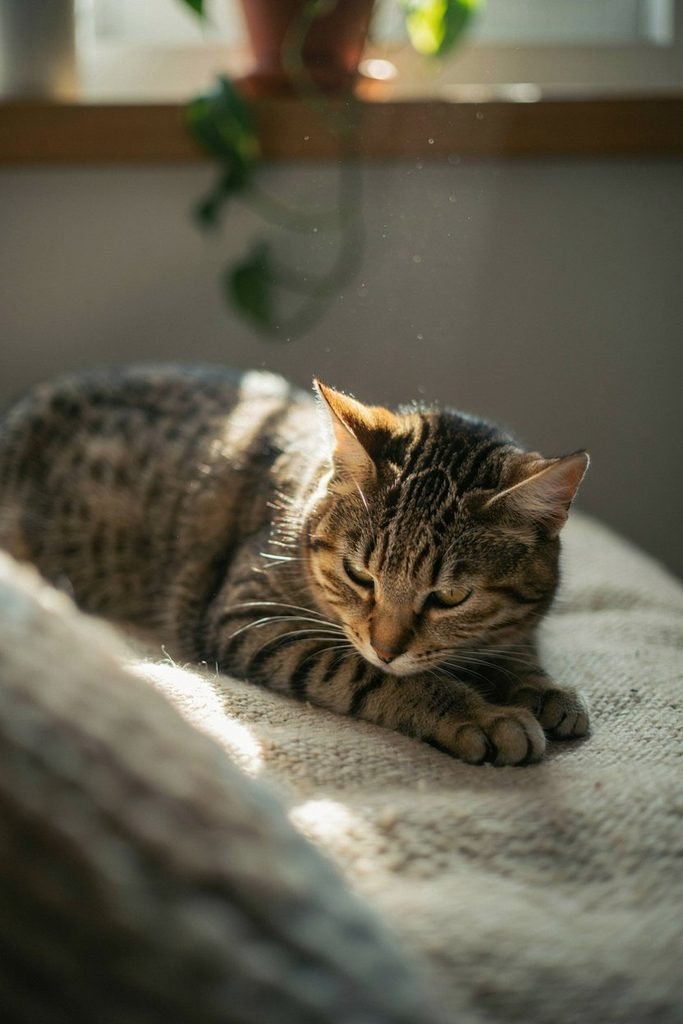
Squinting sits right at the intersection of behavior and health, which makes it worth extra attention.
A relaxed, comfortable cat may partially close their eyes the same way they would during a slow blink, and that kind of squinting is nothing to worry about.
Persistent squinting is a different story, and it can indicate genuine eye discomfort.
Pay attention to whether squinting occurs alongside redness, discharge, swelling, excessive tearing, pawing at the eye, cloudiness, sensitivity to light, or one eye being kept noticeably more closed than the other.
Any of those combinations shift squinting from a relaxed expression into something worth mentioning to your veterinarian.
What It Means When Your Cat’s Pupils Are Different Sizes
This deserves its own space because it’s genuinely different from the other signals covered here.
Noticeably unequal pupils, particularly when the difference is persistent or shows up alongside other symptoms, shouldn’t simply be interpreted as body language or mood.
Unlike dilation or narrowing, which shift together in both eyes based on lighting and emotion, one pupil being consistently larger or smaller than the other isn’t a normal expressive variation.
It’s the kind of change that can point toward an eye or neurological issue and genuinely warrants a veterinary visit rather than a wait and see approach.
Quick Reference: What Different Cat Eye Expressions Can Mean
| What You See | Possible Meaning |
|---|---|
| Slow blinking | Relaxation or social trust |
| Soft, relaxed eyes | Comfort |
| Wide pupils | Excitement, fear, low light, or arousal |
| Narrow pupils | Bright light or focused attention |
| Intense stare | Attention, curiosity, or arousal |
| Looking away | Relaxation or avoiding confrontation |
| Squinting | Relaxation, but sometimes discomfort |
| One eye kept closed | Possible irritation or pain |
| Unequal pupils | Possible eye or neurological problem |
These are clues, not guaranteed translations. The same expression can mean different things depending entirely on what else is going on with your cat in that moment.
Don’t Read the Eyes Alone
This might be the single most important idea in this entire guide. A cat’s eyes are one piece of a much larger picture, and reading them in isolation will get you the wrong answer at least some of the time.
Ears. Forward facing ears generally indicate interest or alertness, while flattened or pinned back ears can signal fear, stress, or defensiveness.
Tail. A relaxed, loosely held tail communicates something very different from a rapidly flicking tail or a puffed up one, both of which usually point toward agitation or overstimulation.
Body. A loose, soft, comfortable body suggests calm, while crouching, tense muscles, or a lowered stance suggest the opposite.
Whiskers. Whiskers pushed forward often accompany curiosity or focus, while whiskers pulled back tight against the face often accompany fear or stress.
Vocalizations. Meowing, purring, hissing, growling, and chirping all add another layer of information that, combined with the eyes, ears, tail, and body, gives you a genuinely complete picture rather than a partial guess.
Cat Eye Colors and What They Mean
Eye color itself generally doesn’t tell you anything about what a cat is feeling, though it’s a common enough search that it’s worth covering here.
Common cat eye colors include green, gold, yellow, copper, blue, and hazel, and the specific shade largely comes down to genetics rather than personality or mood.
Blue eyes in particular tend to show up in cats with certain genetic backgrounds, including some purebred lines and cats affected by specific pigmentation genes.
Kittens are also often born with blue eyes that shift to their adult color over the first several weeks of life as pigment develops.
None of this connects to temperament, however tempting it is to associate a certain eye color with a certain personality based on a specific cat you’ve known.
Why Cats’ Eyes Glow in the Dark
The eerie glow you sometimes catch in photos or under a flashlight comes from a structure called the tapetum lucidum, a reflective layer located behind the retina.
It works by bouncing light that’s already passed through the retina back through it a second time, which helps cats make significantly better use of whatever light is available in a dim environment.
That reflection is also what creates the glowing effect you see in photographs or under headlights, and it’s a completely normal part of feline eye anatomy rather than anything unusual or concerning.
When a Change in Your Cat’s Eyes Could Be a Problem
A handful of signs genuinely deserve more attention than ordinary body language, and it’s worth knowing them without trying to diagnose anything yourself.
Persistent redness, eye discharge, cloudiness, swelling, frequent squinting, repeated rubbing or pawing at the eye, a sudden change in pupil size, unequal pupils, a visibly raised third eyelid, apparent difficulty seeing, sudden changes in behavior, or keeping one eye closed are all reasons to contact your veterinarian, particularly if the sign is persistent, sudden, severe, or accompanied by obvious discomfort or a broader behavior change.
How to Read Your Cat’s Eyes in Everyday Situations
Your cat looks at you and slowly blinks. Likely relaxed and comfortable, and a good moment to return the gesture.
Your cat stares at the kitchen counter with huge pupils. Could be highly interested or excited about something up there, real or imagined.
Your cat has huge pupils and flattened ears. Could indicate fear or stress, and probably a good time to give them a bit of space.
Your cat squints while relaxing beside you. Likely just relaxed, though persistent squinting outside of a calm moment like this should be treated differently.
Your cat suddenly has one noticeably different pupil. Not something to interpret simply as mood. This one deserves a call to your vet rather than a body language guess.
Frequently Asked Questions
What does it mean when a cat slow blinks at you? It’s widely considered a sign of trust, relaxation, and friendly social communication, and something you can return by slow blinking back.
Do cats blink to show affection? The slow blink specifically is closely associated with affection and comfort, though a regular, quick blink is just a normal reflex rather than a communicative gesture.
Why does my cat stare at me? It could mean they want something, are curious, are watching your movements, or are simply comfortable observing you. The rest of their body language usually clarifies which one applies.
What do big pupils mean in cats? Large pupils can indicate excitement, fear, low light, play, or general emotional arousal, and the surrounding body language is what actually determines which one it is.
Why are my cat’s pupils so small? Narrow, slit like pupils are most commonly a normal reaction to bright light, though they can also show up during intense focus or concentration.
Why does my cat look away from me? Looking away is often a relaxed or nonconfrontational gesture rather than rejection, and it’s a normal part of feline communication.
Can you tell a cat’s mood from its eyes? To an extent, yes, but the eyes work best as one part of a larger picture that includes the ears, tail, whiskers, and overall body posture.
Why does my cat squint at me? Squinting during a relaxed moment is usually just comfort, similar to a slow blink. Persistent squinting outside of a calm context can indicate eye discomfort and is worth monitoring.
Why are my cat’s pupils different sizes? Unequal pupil size isn’t a normal expressive variation the way dilation or narrowing is, and it’s worth having checked by a veterinarian, especially if it persists.
What eye changes should concern cat owners? Persistent redness, discharge, cloudiness, swelling, frequent squinting, pawing at the eye, sudden pupil changes, and keeping one eye closed are all worth a veterinary visit.
Do cat eye colors mean anything about personality? No, eye color comes down to genetics, not temperament, however tempting it can be to associate a specific color with a personality you’ve noticed in one particular cat.
Why do cats’ eyes glow at night? A reflective structure called the tapetum lucidum bounces light back through the retina a second time, improving night vision and creating the glowing effect you see in photos or under a flashlight.
Final Thoughts
A cat’s eyes give you real clues, but they’ve never told me the whole story on their own.
The moments I’ve understood my own cat best have always come from reading her eyes alongside her ears, her tail, and whatever else was happening in the room at the time, not from treating any single expression like a guaranteed translation.
Learning that combination is really what makes cat body language make sense, and once you start noticing it, it’s genuinely hard to stop seeing it in almost every interaction.