Easy Cheeseburger Dog Biscuits

Every dog seems to know exactly what a cheeseburger smells like, and there’s a reason that particular combination of beef and cheese gets such an enthusiastic reaction.
This recipe captures that same flavor in a genuinely dog safe biscuit, using plain lean beef and a modest amount of cheese baked into a firm, savory treat, without any of the parts of an actual cheeseburger that would cause real problems.
If you want to build out your treat rotation beyond this one recipe, a few related guides are worth having open alongside this one.
Best DIY dog biscuits that last for weeks covers a similar low moisture baking approach, pumpkin peanut butter dog cookies and easy homemade dog chew sticks with peanut butter offer other savory or firm baked options, homemade pumpkin and oatmeal dog snack sticks and naturally sweet blueberry peanut butter twists round out your baked treat rotation, creamy dog cheesecake made with safe ingredients and spoiled dog cake recipe are worth a look for a special occasion, and human foods dogs can safely eat rounds out the bigger picture of safe food sharing.
What Makes This Version Actually Safe
A real cheeseburger is built on several ingredients that have no place in a dog’s treat. The bun contributes little nutritional value and often includes sugar, the onions are genuinely toxic to dogs, and ketchup, mustard, and pickles all bring salt, sugar, or spices that don’t belong anywhere near a dog’s bowl.
This recipe strips the concept down to just the two ingredients that actually made the original appealing in the first place, plain beef and a modest amount of cheese, then rebuilds it into a firm, baked biscuit using oat flour instead of a bun.
The result captures the flavor without carrying over any of the parts that made the original inappropriate.
Before You Start
A few things are worth keeping in mind here. Cheese, even a small amount, is calorie dense and higher in fat than most treat ingredients, and not every dog tolerates dairy equally well, so it’s worth introducing this recipe in a small amount the first time.
Ground beef should be genuinely lean, since excess fat both affects the biscuit’s texture and adds unnecessary richness to what’s already meant to be an occasional, flavor forward treat rather than an everyday one.
Understanding the Ingredients
Lean ground beef, cooked plain. Provides the primary flavor this recipe is built around. Cooking it thoroughly with nothing added, no salt, onion, or seasoning, and draining any excess fat afterward keeps both the flavor and the fat content appropriate for a dog’s treat.
Plain, mild cheese, finely shredded. A small amount of cheese, such as plain cheddar or mozzarella, adds the second half of the classic flavor pairing this recipe is named for. Used in a modest quantity, it contributes real flavor without turning the biscuit into something excessively rich.
Oat flour. Forms the structure of the biscuit, offering a gentle, easily digestible base that most dogs tolerate well, standing in for the bun in the original inspiration without any of the concerns that would come with actual bread.
Egg. Helps bind the dough together and gives the biscuit enough structure to hold its shape through baking.
Water, as needed. Used to adjust the final dough consistency.
Ingredients I Avoid
Onion, garlic, salt, seasoning blends, ketchup, mustard, pickles, and any bun or bread product have no place in this recipe. Onion deserves particular emphasis here, since it’s a genuinely dangerous ingredient commonly found in real burger seasoning and should never make its way into this version under any circumstances.
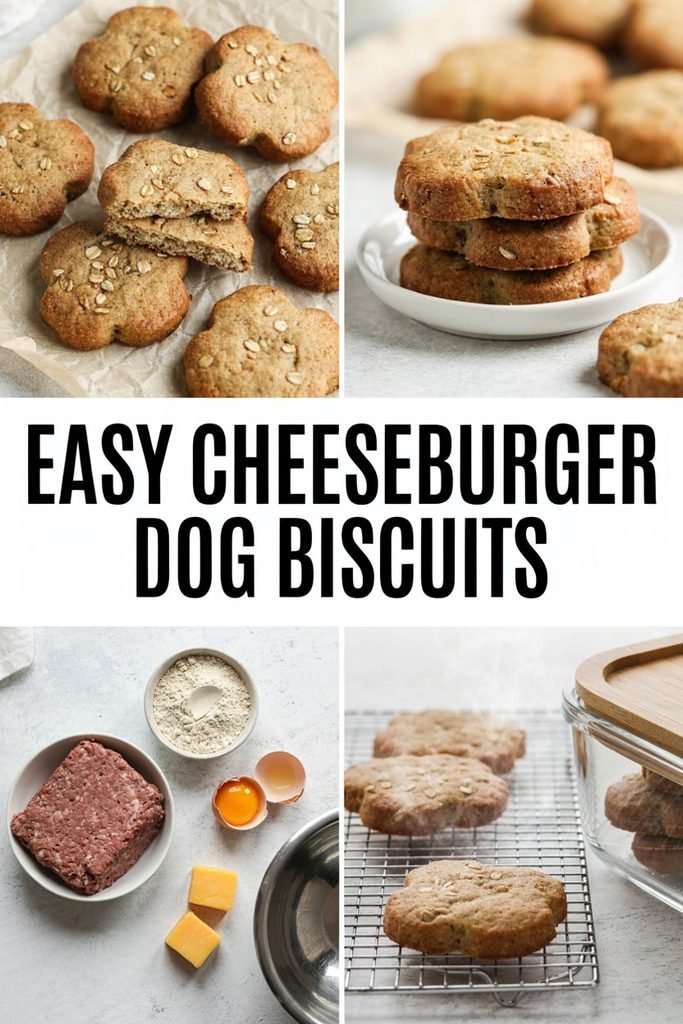
Easy Cheeseburger Dog Biscuits
Yield: About 18 to 20 small biscuits, depending on cutter size Prep Time: 15 minutes Cook Time: 20 to 25 minutes Total Time: About 40 minutes Storage: Refrigerate up to a week, freeze up to 3 months
Ingredients
- 1/2 pound lean ground beef, cooked plain and drained. Provides the main flavor this recipe is built around, with excess fat drained thoroughly after cooking.
- 1/4 cup plain, mild cheese, finely shredded. Adds the second half of the classic flavor combination in a modest amount.
- 2 cups oat flour, plus more as needed. Forms the structure of the biscuit dough.
- 1 egg. Helps bind the dough together.
- 2 to 4 tablespoons water, as needed. Adjusts the final dough consistency.
How to Make It
- Preheat your oven to 350°F (175°C) and line a baking sheet with parchment paper.
- Cook the ground beef thoroughly in a skillet with nothing added, breaking it into very small crumbles as it cooks.
- Drain the cooked beef well, pressing out excess fat with a paper towel if needed, then let it cool slightly.
- In a mixing bowl, combine the oat flour, cooled beef, and shredded cheese.
- Whisk the egg separately, then add it to the mixture, stirring until it starts to come together.
- Add water a tablespoon at a time, mixing after each addition, until the dough forms a firm, workable ball.
- Turn the dough out onto a lightly floured surface and roll to about a quarter inch thickness.
- Cut into shapes using a cookie cutter or a knife, and place them on the lined baking sheet, leaving space between each piece.
- Bake for 20 to 25 minutes, until firm and lightly golden.
- Let the biscuits cool completely on the baking sheet before handling or storing, since they firm up further as they cool.
How to Adjust This Recipe
For a softer biscuit. Bake for closer to 16 to 18 minutes, which produces a chewier texture suited to a dog with dental sensitivity or a senior dog who prefers something easier to eat.
For a firmer, longer lasting biscuit. Bake for the full 25 minutes, or slightly longer, checking that the biscuits feel firm throughout, which produces a texture that holds up longer in storage.
For a leaner version. Reduce the cheese slightly, or use a lower fat cheese option, which lowers the overall calorie density while still keeping the core flavor combination intact.
For a smaller training treat. Roll the dough thinner and cut into very small shapes, reducing the bake time slightly to prevent the smaller pieces from drying out too much.
How Many Biscuits Can a Dog Have?
Given the beef and cheese content here, this is a richer treat than something built around fruit or vegetables, so moderation matters more than usual.
One or two small biscuits make a reasonable serving for most dogs, adjusted for their size, and treats overall should stay a small part of your dog’s daily diet, generally no more than about 10 percent of total calories.
Storage
Refrigerator. Store in an airtight container for up to a week.
Freezer. Freeze in a single layer first, then transfer to a freezer safe container or bag, where they’ll hold their quality for up to 3 months.
Room temperature. The firmer version can be stored at room temperature in an airtight container for a few days given its lower moisture content, though refrigeration remains the safer default given the cheese and beef content.
Common Problems When Making These Biscuits
Why is my dough too greasy or oily? This usually means the beef wasn’t drained thoroughly enough after cooking. Press it firmly with a paper towel to remove as much excess fat as possible before mixing it into the dough.
Why did my biscuits turn out too hard? This usually means they baked a bit longer than intended, or your oven runs slightly hot. Checking a batch a few minutes before the suggested time helps prevent this on the next attempt.
Why is my cheese melting out during baking instead of staying incorporated? This can happen if the cheese wasn’t shredded finely enough or if too much was used relative to the rest of the dough. Using a finer shred and sticking to the recommended amount helps keep it distributed evenly.
Can I use a different meat instead of beef? Yes, lean ground turkey or chicken can work as a substitute, though the flavor will shift away from the classic cheeseburger profile this recipe is built around.
Good Ingredients to Look For
Lean ground beef. Choosing a leaner cut and draining thoroughly keeps the fat content reasonable for a treat.
Plain, mild cheese. Cheddar or mozzarella in a small amount work well, as long as nothing else is added to the cheese itself.
Plain oat flour. A gentle, recognizable source of structure that most dogs tolerate well.
Nothing artificial. No salt, seasoning blends, or condiments belong in a treat meant for your dog, however tempting it might be to add something that would season an actual burger.
Common Mistakes to Avoid
Adding onion or garlic to the beef out of habit. This is genuinely dangerous for dogs and should never be included, however common it might be in a real burger recipe.
Using too much cheese. A modest amount is plenty to carry the flavor, and overdoing it adds unnecessary fat and calories to what’s meant to be an occasional treat.
Not draining the beef thoroughly. Excess fat affects both the dough’s texture and the biscuit’s overall richness, so take the extra minute to drain it well.
Making the biscuits too large. Smaller pieces make portion control easier and are more appropriate for a treat than something sized like a full snack.
Storing a warm batch. Let the biscuits cool completely before sealing them into a container, since trapped warmth and moisture can shorten shelf life.
Frequently Asked Questions
Can dogs eat cheeseburgers? Not a real one, which typically includes a bun, onions, and various condiments that aren’t appropriate for dogs. A dog specific version built from plain beef and a small amount of cheese, like this one, works well as an occasional treat.
Is cheese safe for dogs? In small amounts, generally yes, though not every dog tolerates dairy equally well, and cheese is calorie dense enough that it shouldn’t be a large or frequent part of a dog’s diet.
Can I use a different type of cheese? Yes, plain mozzarella, cheddar, or a similar mild cheese all work well, as long as nothing else is added to it.
Why is onion so dangerous for dogs specifically in this recipe? Onion damages red blood cells and can cause anemia in dogs, even in small amounts, which is exactly why it’s excluded here despite being a common ingredient in real burger seasoning.
Can puppies eat these biscuits? In small amounts, generally yes, though the softer texture version is likely a better fit for young teeth than the firmer, longer baked one.
How long do these biscuits last? About a week refrigerated, or a few days at room temperature for the firmer version, and up to 3 months if frozen.
Can I skip the cheese entirely? Yes, the recipe still works without it, though you’ll lose half of the flavor combination this recipe is specifically built around.
Are these biscuits high in fat? More so than a fruit or vegetable based treat, given the beef and cheese content, so it’s worth keeping portions modest rather than treating these as an everyday snack.
Can I add a small amount of plain tomato to mimic the flavor further? A very small, well drained amount of plain tomato could technically work, though it’s not necessary for the recipe and adds extra moisture that could affect the dough’s texture.
Is this a good treat for training? The strong beef and cheese aroma tends to make these genuinely exciting for a lot of dogs, which can work well for training, though smaller pieces are worth cutting specifically for that purpose.
Final Thoughts
Capturing a cheeseburger’s appeal for a dog really just comes down to the two ingredients that made it appealing in the first place, plain beef and a bit of cheese, without any of the parts that would actually cause a problem. Bake a batch, keep the portions modest given the richness, and you’ll have a treat that gets the same excited reaction as the real thing without any of the concerns that would come with it.