
Homemade Chicken Cat Food Recipe: How to Make It Safely for Your Cat
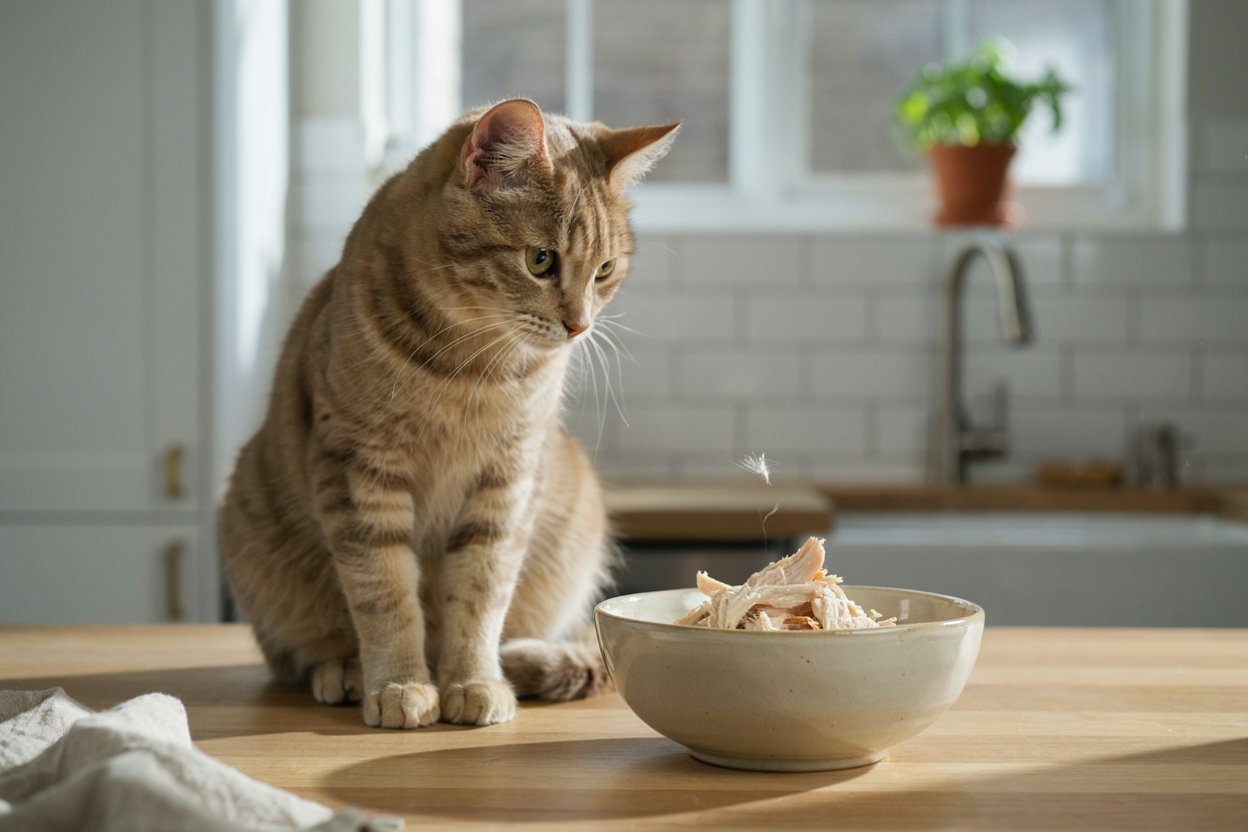
Chicken is a familiar protein for many cats, and it’s one of the most common ingredients owners reach for when they start thinking about cooking at home.
But homemade cat food deserves more thought than simply boiling up some meat and calling it dinner.
Cats have specific, non negotiable nutritional needs, and plain cooked chicken by itself is not a complete and balanced diet, even though it can be a genuinely useful part of one.
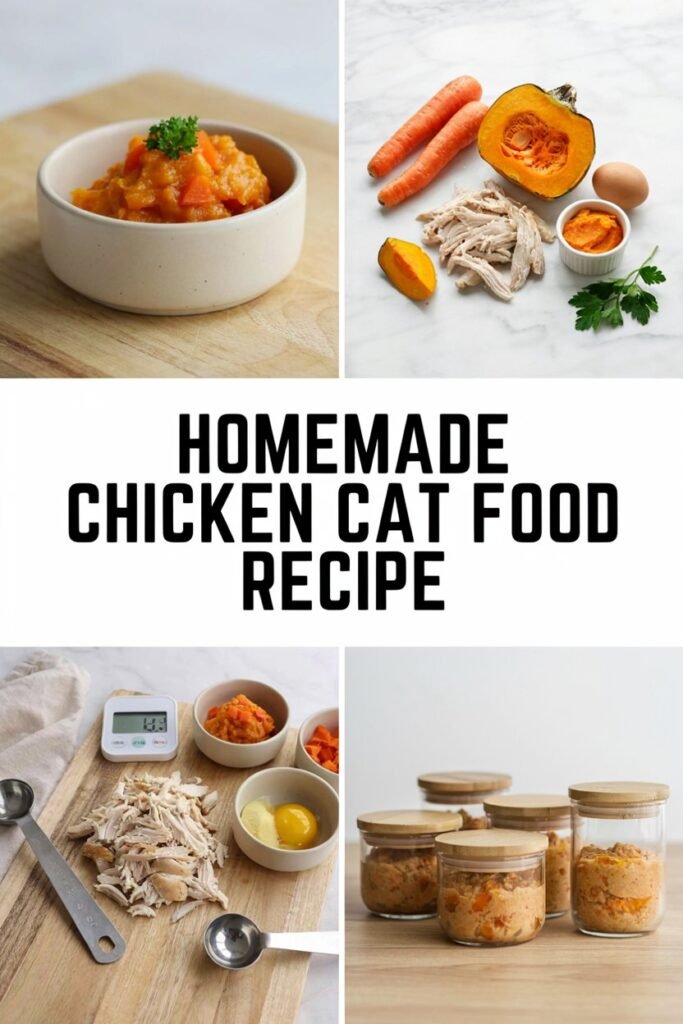
This guide walks through everything: whether chicken is safe for cats, how to prepare it correctly, what to add, what to never add, how much to feed, how to store it, and when homemade food should stay occasional rather than becoming a full time replacement for a professionally formulated diet.
Disclaimer
This post may contain affiliate links. As an Amazon Associate, I earn from qualifying purchases at no additional cost to you. I only recommend cat products and kitchen tools that I genuinely believe make preparing homemade meals easier and safer. The information in this article is for general informational purposes only. Always use cat safe ingredients and consult your veterinarian before making homemade cat food a regular part of your cat’s diet.
Amazon Shopping List You Need
- Digital Kitchen Scale – I always use one for accurate portions.
- Food Processor – I use this to prepare chicken and other ingredients quickly.
- Stainless Steel Mixing Bowls – I always reach for these during meal prep.
- Glass Meal Prep Containers – I use these to portion and store homemade meals.
- Silicone Freezer Trays – I love these for freezing convenient meal portions.
- Stainless Steel Cat Food Bowls – I always serve homemade meals in these.
- Immersion Blender – I use this when I want a smoother food texture.
Recipe at a Glance
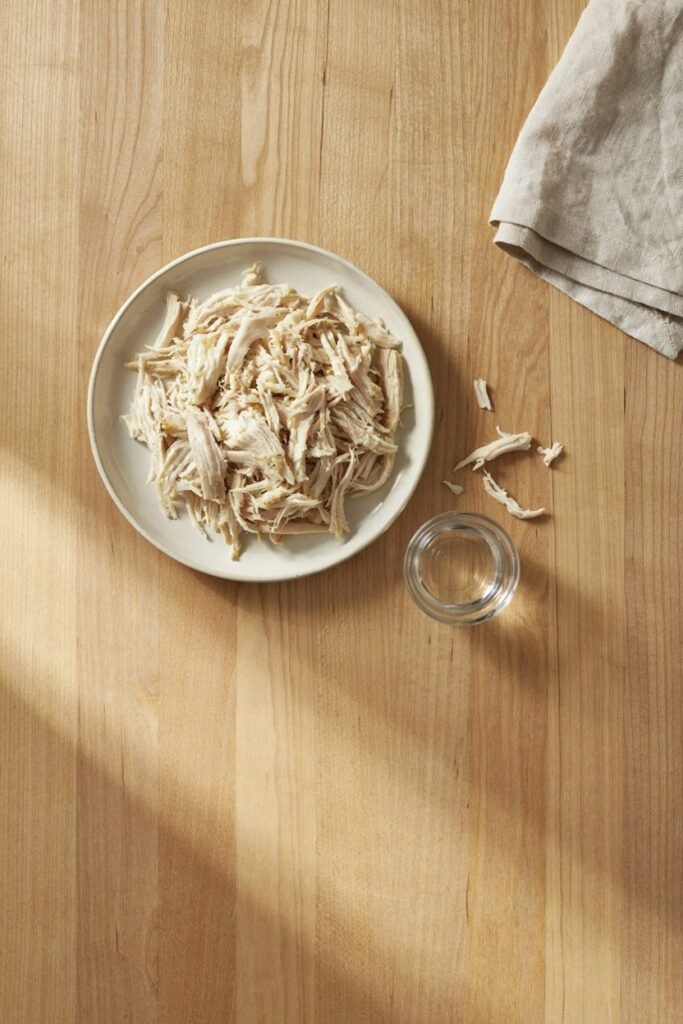
Homemade Chicken Cat Food Prep: 10 minutes Cook: 15 to 20 minutes
Total: About 25 to 30 minutes
Cuisine: Homemade Pet Food
Protein: Chicken
Best for: Occasional supplemental feeding, unless professionally formulated as a complete diet
What You’ll Learn
- How to safely prepare chicken for cats
- Which ingredients are safe to add
- Which ingredients should never be added
- Why chicken alone isn’t nutritionally complete
- How to portion homemade food
- How to store and freeze it
- How to introduce it gradually
- When to talk with your veterinarian
Can Cats Eat Homemade Chicken?
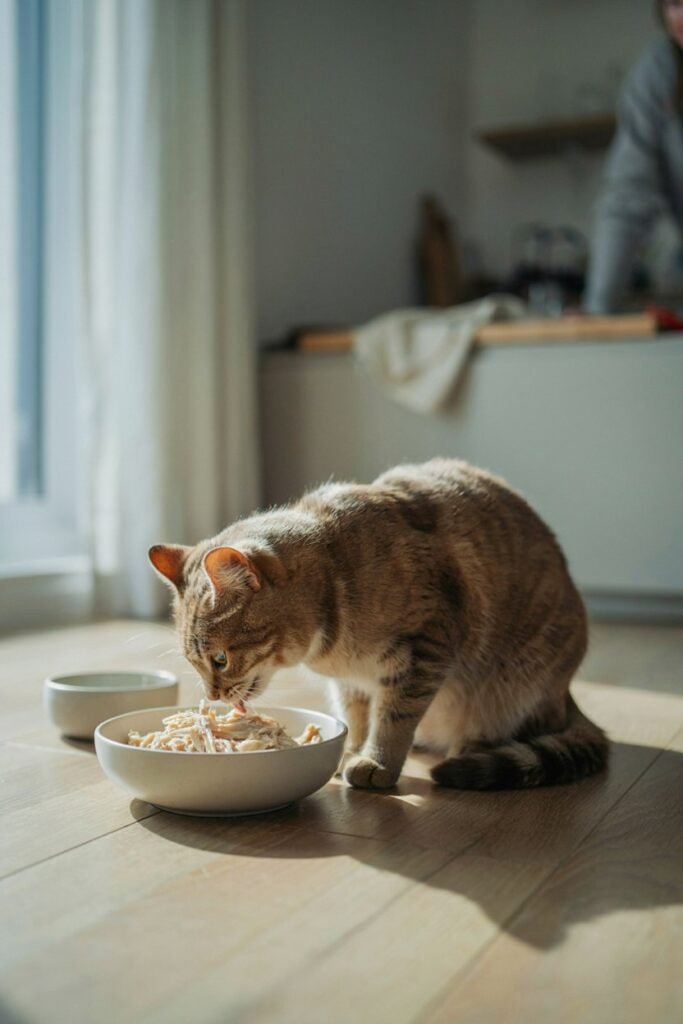
Yes, cooked, plain chicken can absolutely be appropriate for cats, with a few important rules attached.
The chicken needs to be thoroughly cooked all the way through, with all bones removed.
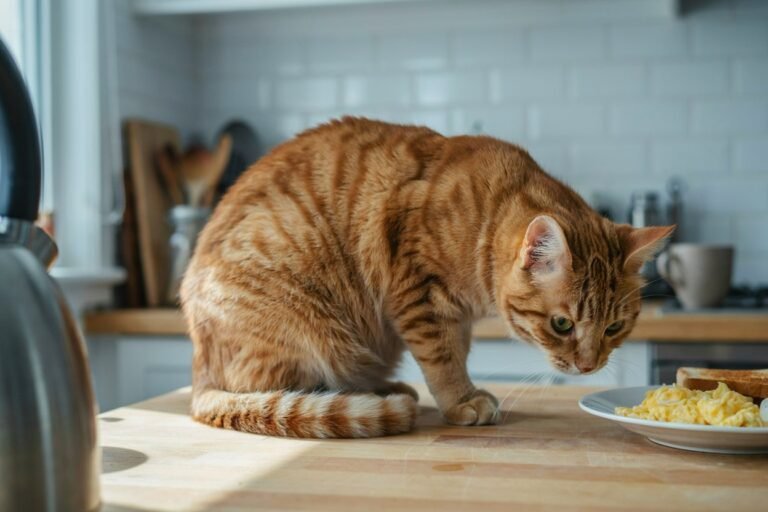
Never add seasoning of any kind, and stay away from onions, garlic, sauces, marinades, or anything salty.
What surprises a lot of new homemade feeders is that last part: chicken by itself, even prepared perfectly, does not provide everything a cat needs nutritionally. It’s a strong foundation, not a finished meal.
Is Homemade Chicken Cat Food Healthy?
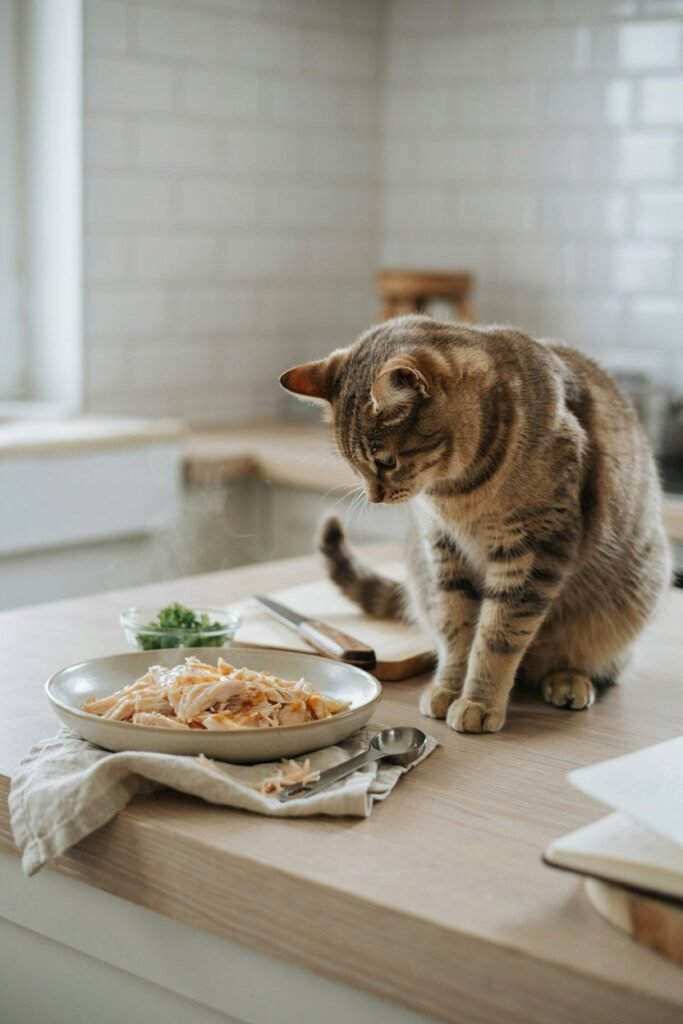
This is where a homemade chicken meal goes from being a recipe blog post to something genuinely useful.
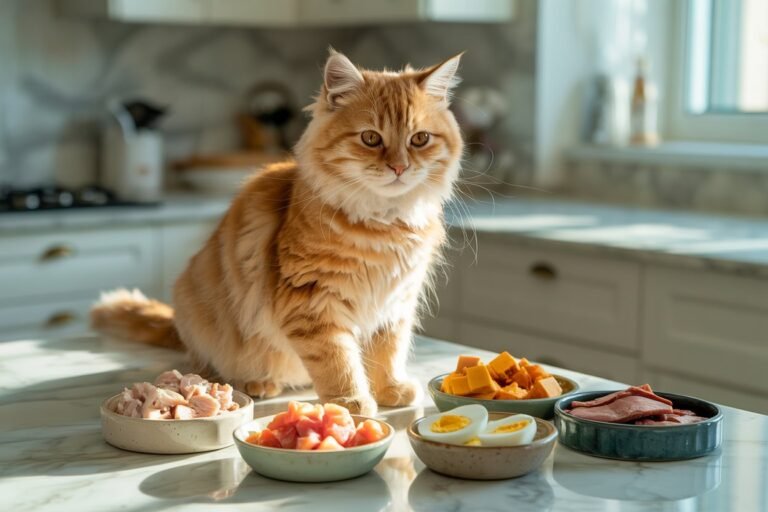
High quality protein. Cats are obligate carnivores, meaning they rely almost entirely on animal based nutrients to function properly, and chicken delivers exactly that kind of protein.
Simple ingredients. Cooking at home means you know precisely what went into the bowl, without needing to decode an ingredient list.
Useful for variety. A properly formulated homemade meal can sometimes be worked into a cat’s regular feeding routine alongside commercial food.
But homemade does not automatically mean complete. This is the part that matters most. Cats need more than protein alone.
Their diet has to supply adequate amounts of taurine, calcium, essential fatty acids, vitamins, minerals, and enough total calories to support their size and activity level.
Skipping any of these over the long term can lead to real health problems, which is exactly why this distinction gets repeated throughout this guide.
Important Note Before Feeding Homemade Cat Food
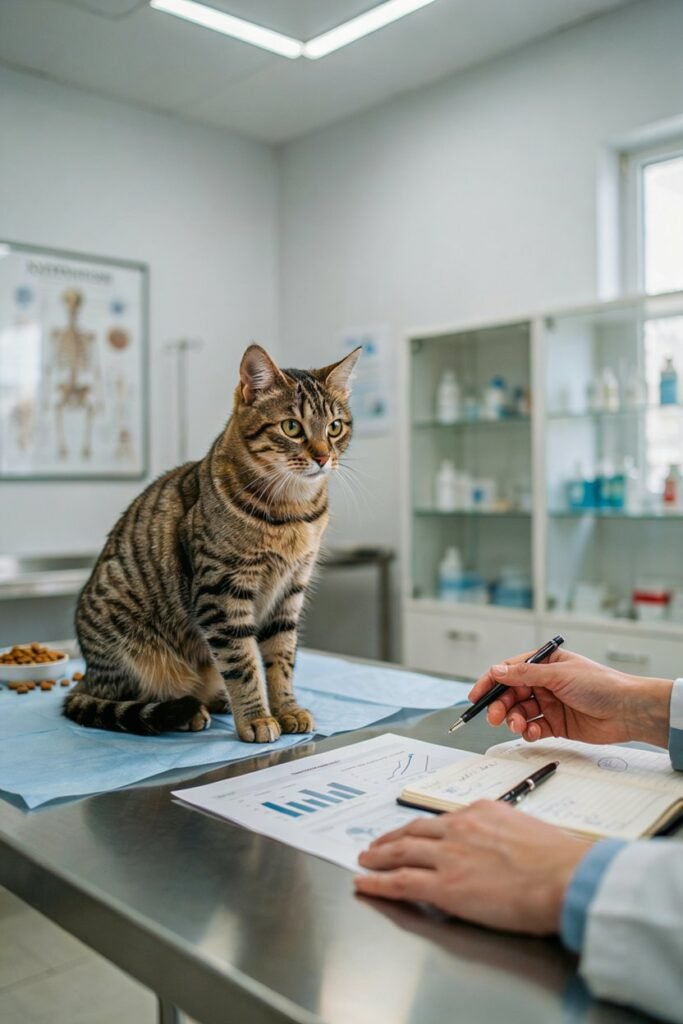
This recipe should not automatically be considered a complete and balanced replacement for commercial cat food.
If you want to feed homemade food as your cat’s primary diet, work with a veterinarian or a board certified veterinary nutritionist to formulate a nutritionally complete recipe tailored to your individual cat.
Treating chicken plus a few household ingredients as automatically complete is one of the most common and avoidable mistakes in homemade pet feeding.
Homemade Chicken Cat Food Ingredients

| Ingredient | Purpose |
|---|---|
| Cooked chicken | Main animal protein |
| Water or appropriate cooking liquid | Moisture |
| Vet recommended supplement | Helps provide required nutrients |
| Other ingredients | Only when included in a properly formulated recipe |
It’s worth being upfront here: there’s no casual, invented supplement blend that magically makes this a “complete” diet.
There’s a real difference between a simple chicken meal meant for occasional feeding and a complete homemade diet formulated by a professional, and those two things shouldn’t be confused with each other.
What Type of Chicken Should You Use?
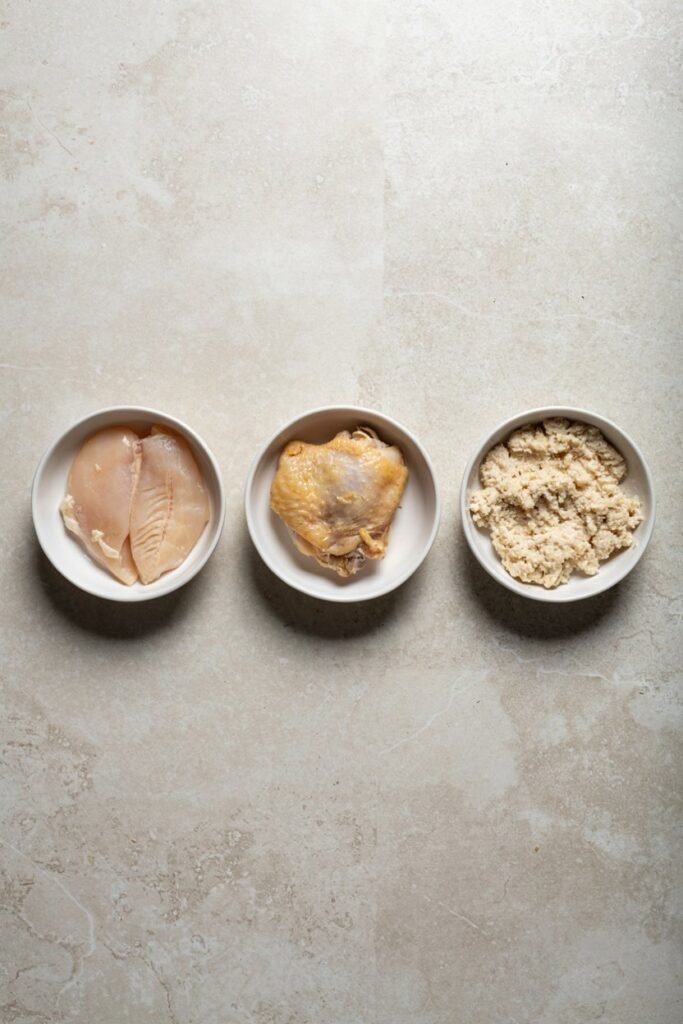
Chicken breast is lean and convenient, and it’s usually the go to choice for a straightforward homemade meal.
Chicken thighs carry more flavor and generally more fat, which some cats respond to more enthusiastically.
Ground chicken is easy to cook evenly and simple to portion out afterward.
Chicken liver can offer valuable nutrients in small amounts, but more is not automatically better.
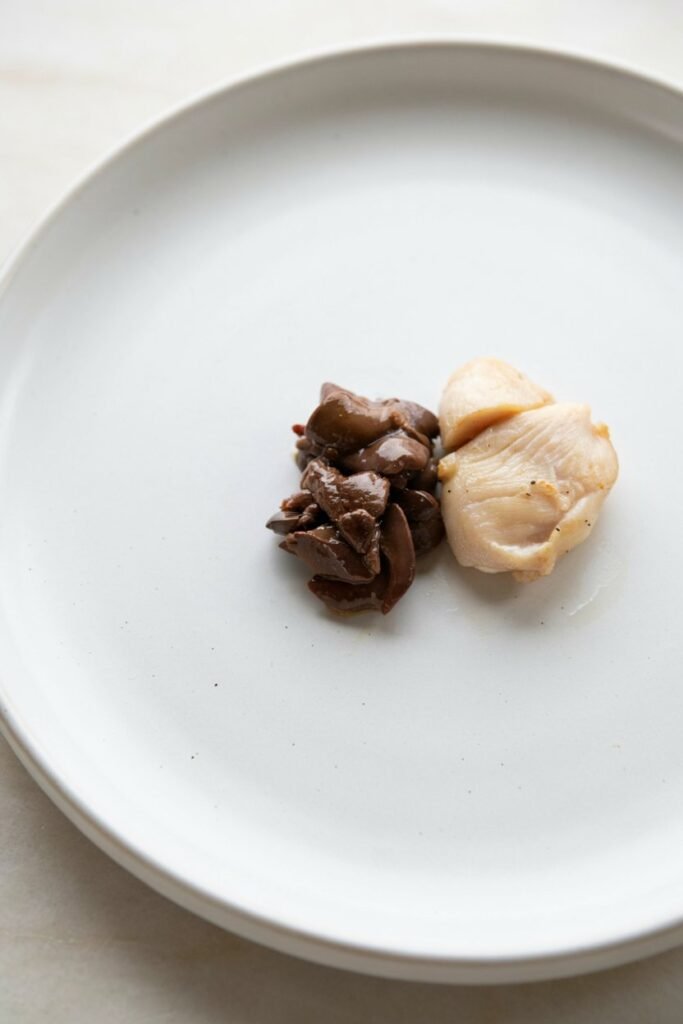
Organ meat is nutrient dense enough that overfeeding it, especially without a properly balanced formulation, can cause more harm than good.
Treat it as a small addition, not a primary ingredient.
If you’re also feeding chicken based meals to a dog in the household, 7 high protein homemade dog food recipes covers several chicken forward options that pair well with a shared grocery list, though the recipes themselves shouldn’t be shared between species.
How to Make Homemade Chicken Cat Food
Step 1: Prepare the Chicken
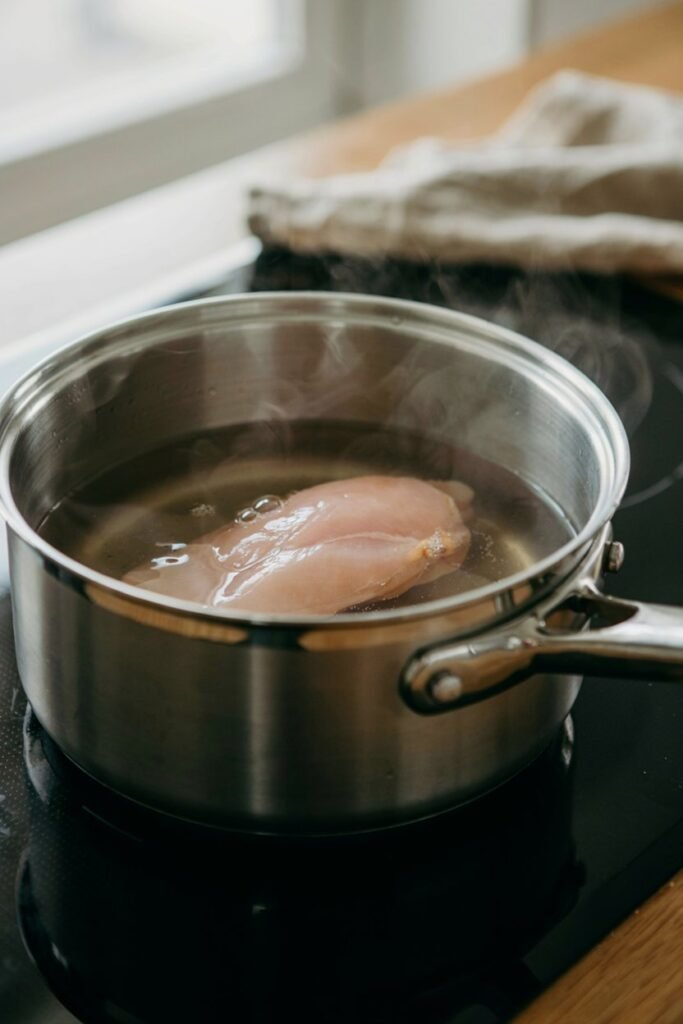
Cook the chicken fully with no seasoning of any kind, whether by boiling, baking, or poaching, until there’s no pink remaining and it reaches a safe internal temperature.
Step 2: Remove Bones and Skin When Appropriate
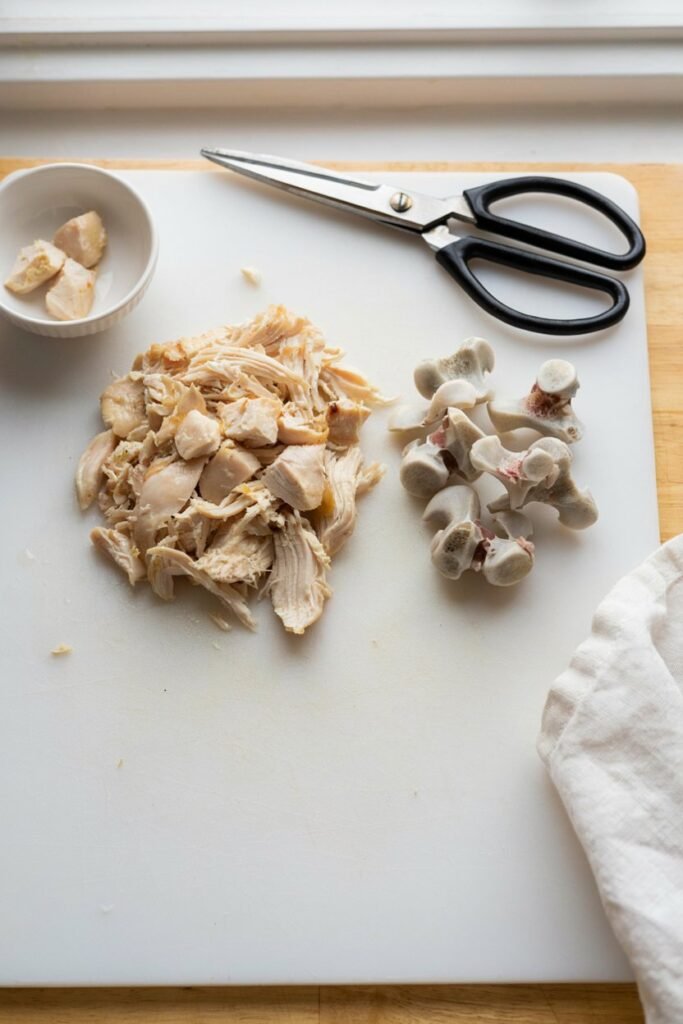
Cooked chicken bones should never be fed to a cat under any circumstances, since they can splinter and cause serious internal injury.
Skin can typically be removed as well, especially for cats who need to manage their weight.
Step 3: Shred or Finely Chop
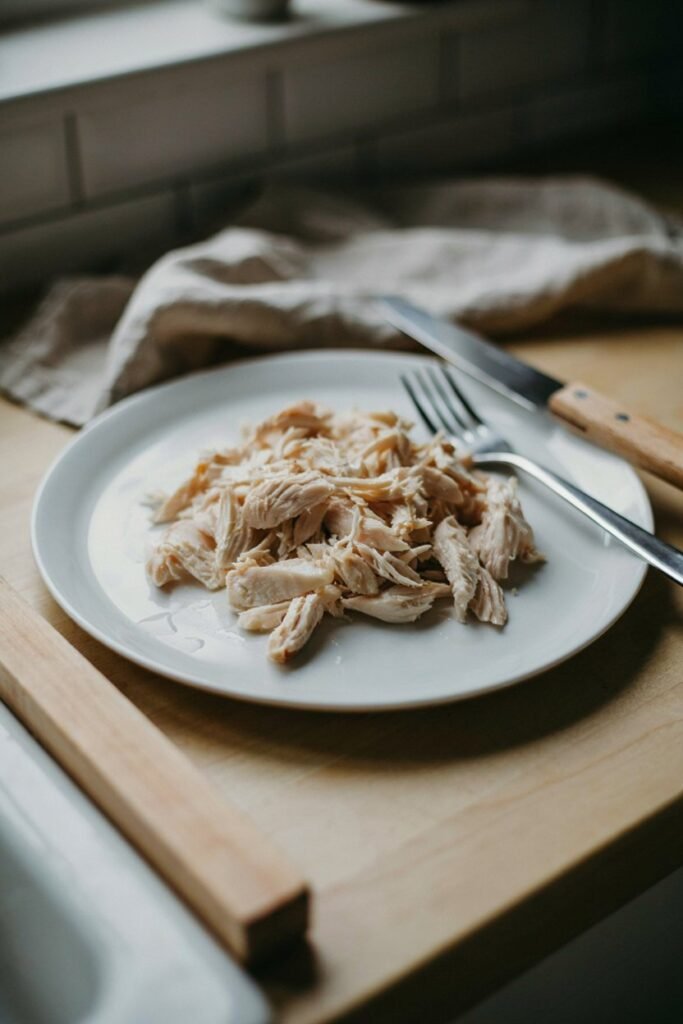
Choose a texture that matches your cat’s preference and chewing ability.
Some cats prefer finely shredded meat, while others do fine with small diced pieces.
Step 4: Add Appropriate Moisture
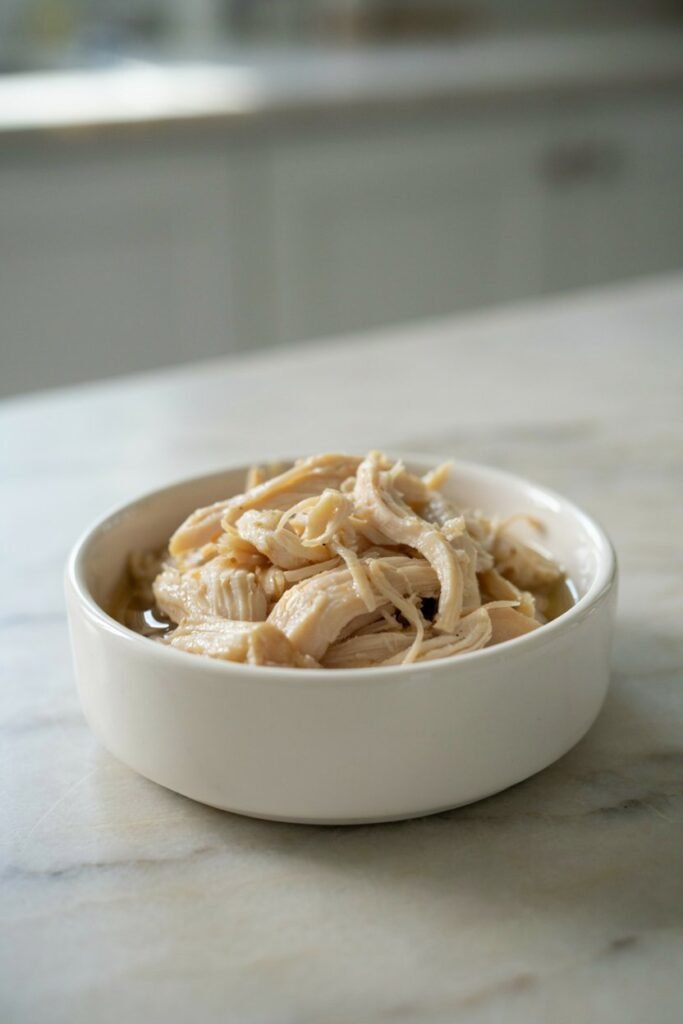
Cats benefit from moisture rich food, partly because many don’t drink enough water on their own.
A small amount of plain water or an appropriate cooking liquid mixed in helps with hydration.
Step 5: Add Only the Ingredients or Supplement Called For
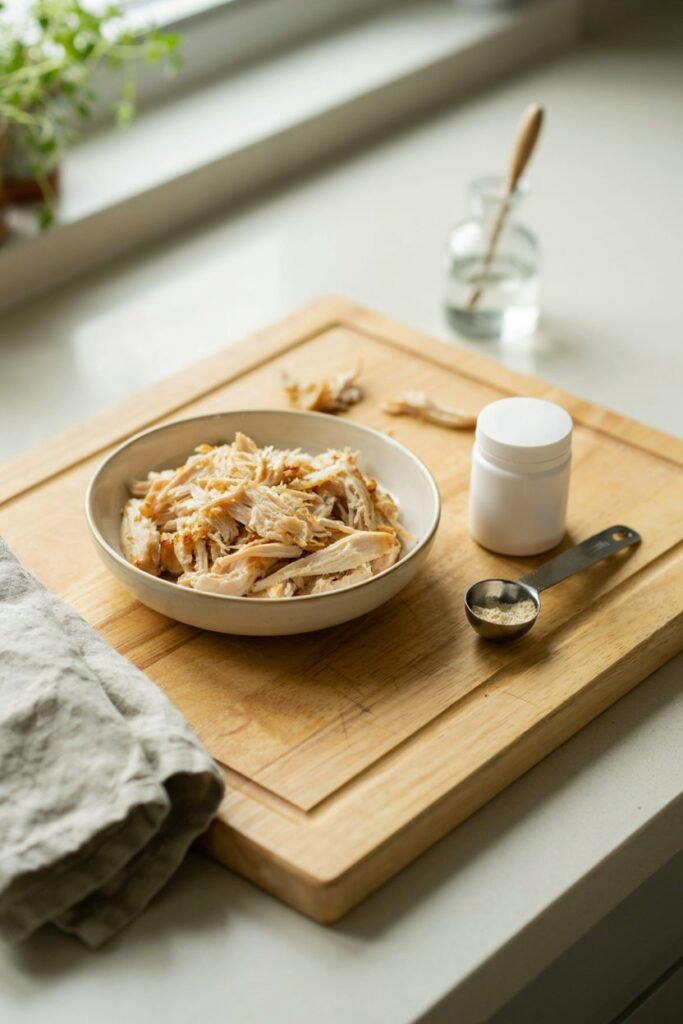
Don’t improvise with human seasonings, sauces, or supplements you haven’t confirmed are safe and appropriate.
If you’re following a professionally formulated recipe, stick to it exactly.
Step 6: Cool Before Serving
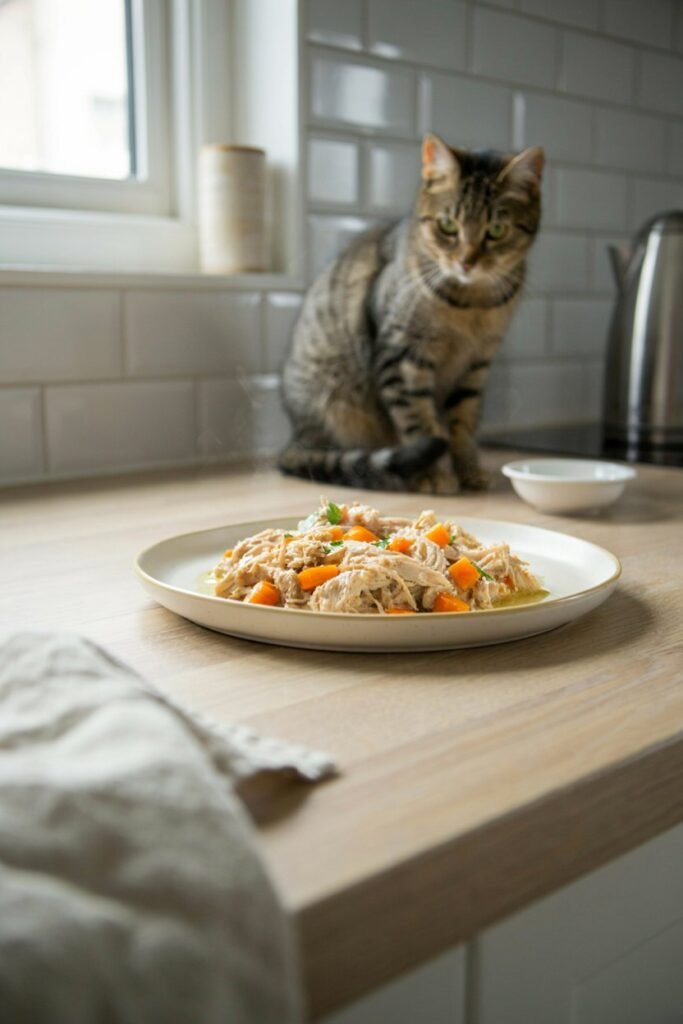
Let the chicken cool completely to room temperature before serving, and always practice safe food handling when preparing meat for a pet.
Ingredients You Should NEVER Add to Chicken Cat Food
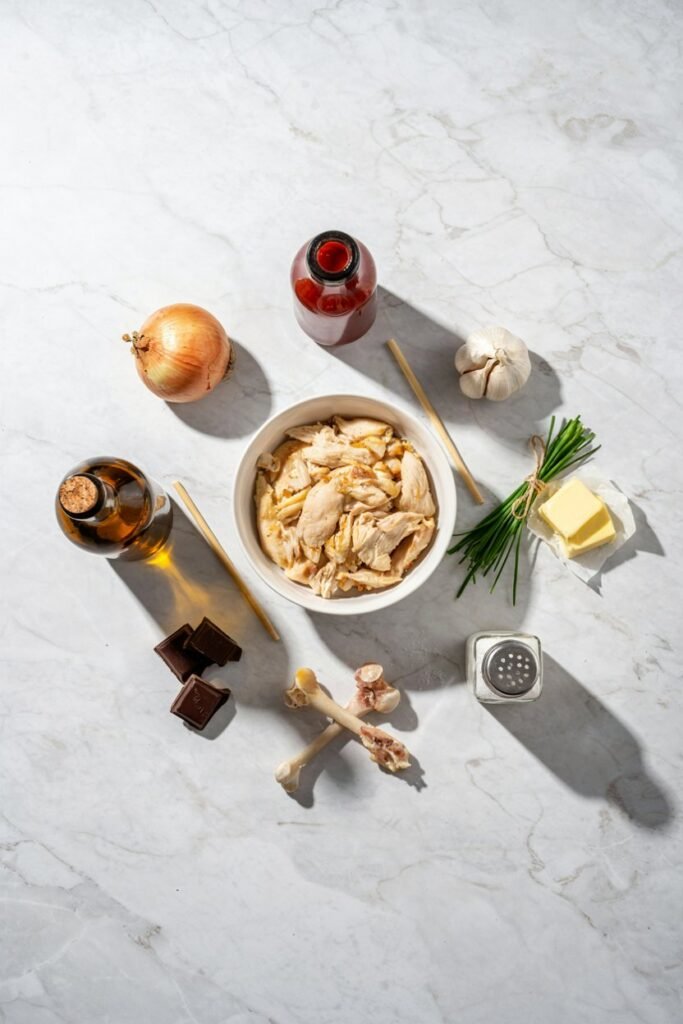
- Onion, garlic, and chives damage red blood cells and can lead to anemia in cats, even in small or powdered amounts.
- Excess salt can cause serious health issues in a species as small as a cat, where the safe margin is much narrower than it is for people.
- Seasoning blends and spicy sauces offer no benefit and can irritate a cat’s digestive system.
- Chocolate contains compounds cats can’t metabolize safely, and toxicity can occur at surprisingly small doses.
- Alcohol affects cats far more severely than humans, even in tiny amounts.
- Xylitol containing products cause a dangerous, rapid drop in blood sugar.
- Cooked bones can splinter and cause choking or internal injury.
- Large amounts of butter or oil add unnecessary fat and calories without any real nutritional benefit.
- Human gravy or sauces often contain onion, garlic, or excess salt, even when it isn’t obvious from the label.
Can Cats Eat Chicken and Rice?
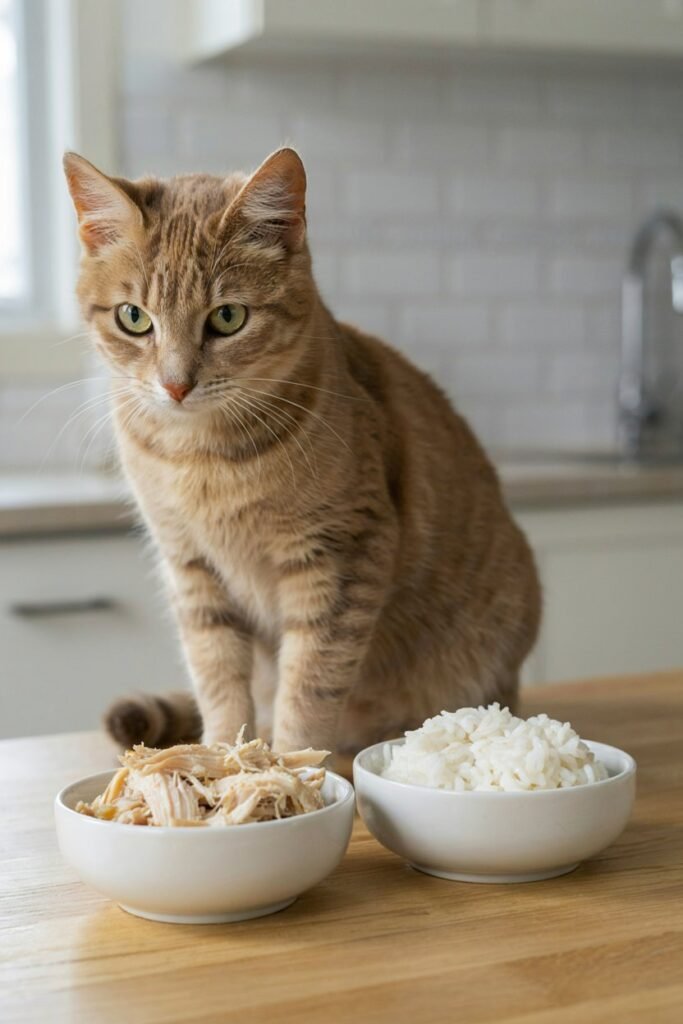
Chicken and rice comes up constantly as a bland, easy to digest meal for pets, and it can genuinely help settle a cat’s stomach on a rough day.
That said, it isn’t automatically a nutritionally complete meal for long term feeding, and it shouldn’t replace a full diet without proper formulation.
It’s also worth remembering that any dietary change should suit the individual cat, and cats showing vomiting, diarrhea, appetite loss, or other signs of illness need veterinary assessment rather than a home recipe as a first response.
How Much Homemade Chicken Cat Food Should You Feed?
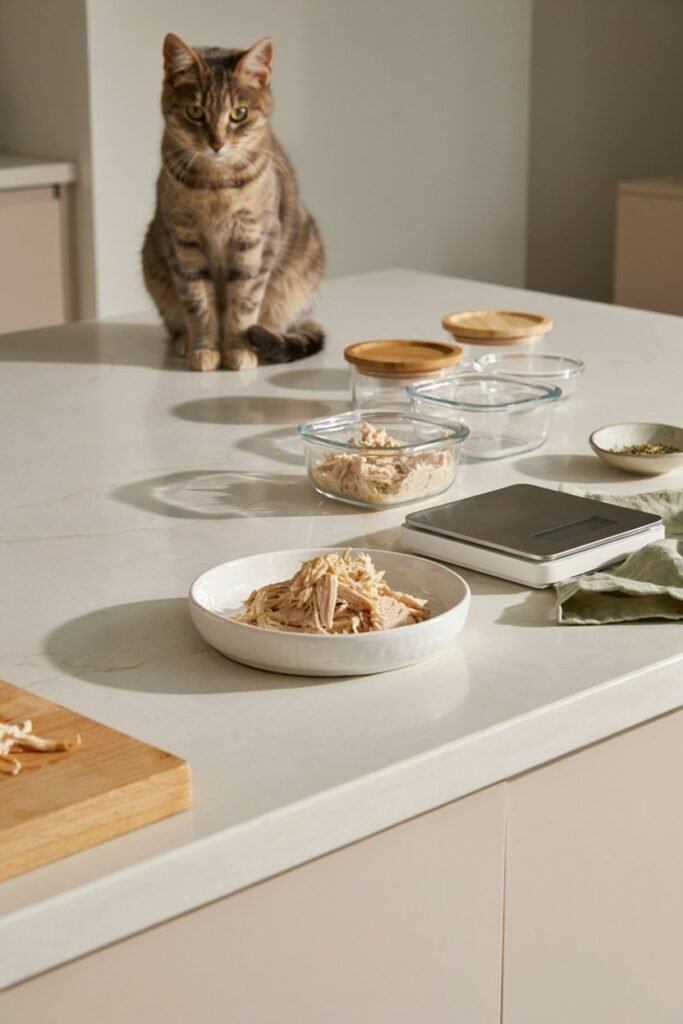
There’s no single portion that fits every cat. Feeding amounts depend on:
- Body weight
- Age
- Activity level
- Neutered status
- Body condition
- Health conditions
- Total calories from other foods your cat already eats
| Cat | What Affects Feeding Needs |
|---|---|
| Kitten | Growth and development |
| Adult | Weight and activity |
| Senior | Body condition and health |
| Overweight cat | Calorie control |
| Underweight cat | Higher calorie needs and veterinary guidance |
If your cat needs to gain weight specifically, cat weight gain meals goes deeper into calorie dense, vet informed feeding strategies built around that goal.
How Often Can Cats Eat Homemade Chicken?
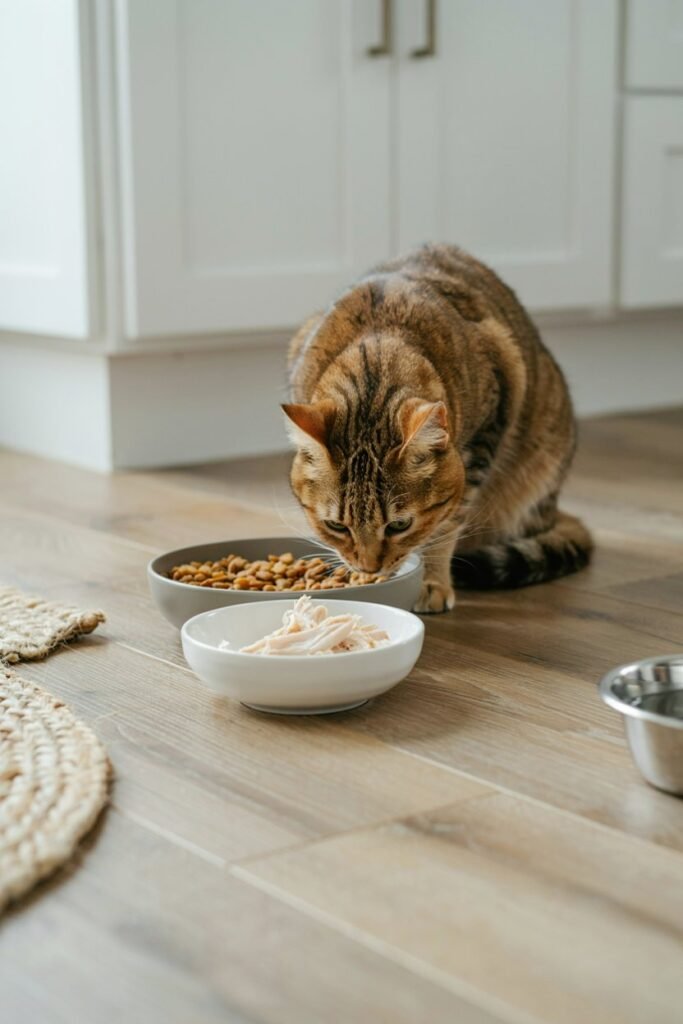
There’s a meaningful difference between occasional homemade food and a primary homemade diet, and it’s worth keeping that distinction in mind every time you’re deciding how to use this recipe.
For occasional use, this chicken meal works well as a supplemental addition to your cat’s regular diet.
For long term, everyday feeding, the recipe needs to come from a properly formulated source, ideally developed with veterinary input.
Can Kittens Eat Homemade Chicken?
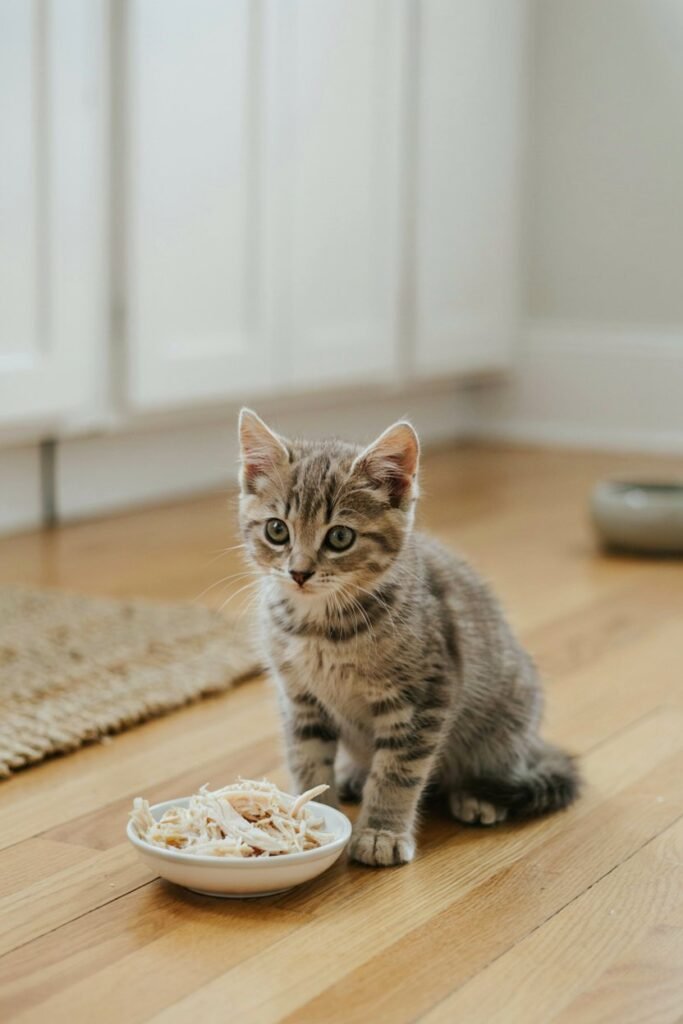
Not automatically, and not without more thought.
Kittens have different nutritional requirements than adult cats because they’re actively growing, and their calcium, phosphorus, and calorie needs are more specific.
A recipe that works fine as an occasional treat for an adult cat shouldn’t become a kitten’s primary diet without a formulation designed specifically for growth.
Can Senior Cats Eat Homemade Chicken?
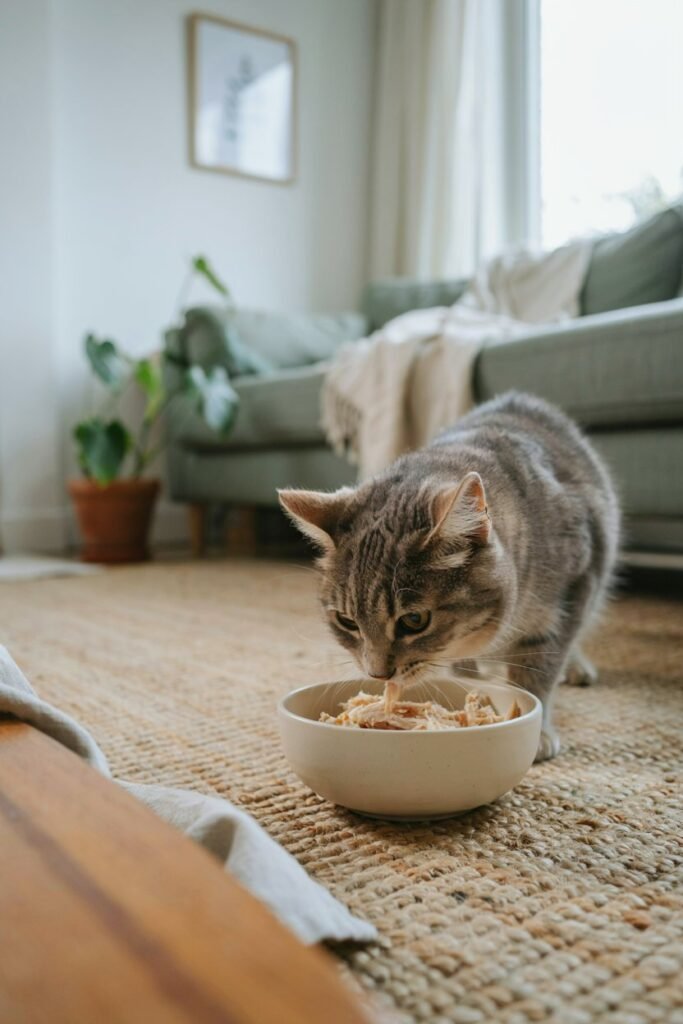
Generally, yes, but a few age related factors are worth watching:
- Dental issues may mean chicken needs to be prepared in a softer texture
- Appetite changes are common in older cats and worth monitoring
- Hydration becomes more important as cats age
- Weight changes, in either direction, should be tracked over time
- Kidney disease and other age related conditions may require a specifically formulated diet
Senior cats with any diagnosed medical condition often need a plan built around that condition specifically, so it’s worth checking in with your vet before making homemade food a regular part of their diet.
For more on feeding older cats generally, homemade cat food for senior cats covers this in more depth.
Can Cats With Sensitive Stomachs Eat Chicken?
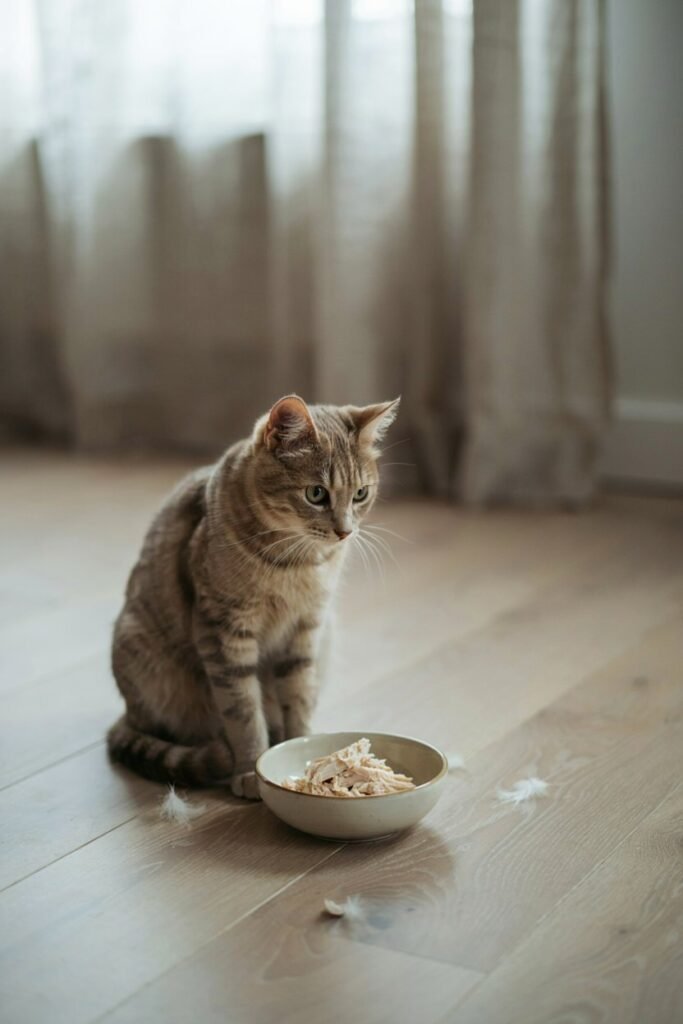
Often, yes, since chicken is generally one of the gentler proteins available.
Any new food should still be introduced gradually, with close attention paid to:
- Vomiting
- Diarrhea
- Excessive gas
- Refusal to eat
- Itching or other signs of intolerance
Homemade chicken shouldn’t be treated as a treatment for an underlying gastrointestinal condition.
If symptoms persist beyond a short adjustment period, that’s a sign to check in with a vet rather than keep adjusting the recipe on your own.
How to Store Homemade Chicken Cat Food
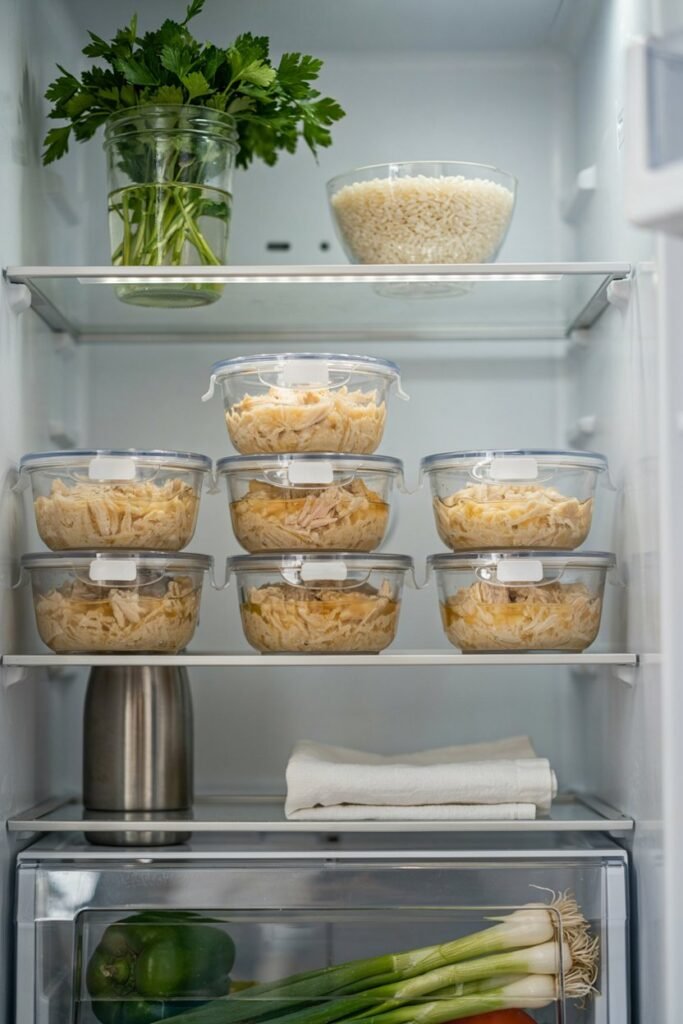
Refrigerator. Store prepared chicken in an airtight container and refrigerate it promptly after it cools, generally for no more than 2 to 3 days.
Freezer. Portion meals into individual servings before freezing so you’re only thawing what you need at a time.
Thawing. Thaw frozen portions in the refrigerator overnight rather than leaving them out at room temperature, which allows bacteria to grow.
Serving. Only put out the amount your cat is likely to finish in one sitting, and promptly refrigerate or discard any leftovers according to safe food handling practices.
Can You Freeze Homemade Chicken Cat Food?
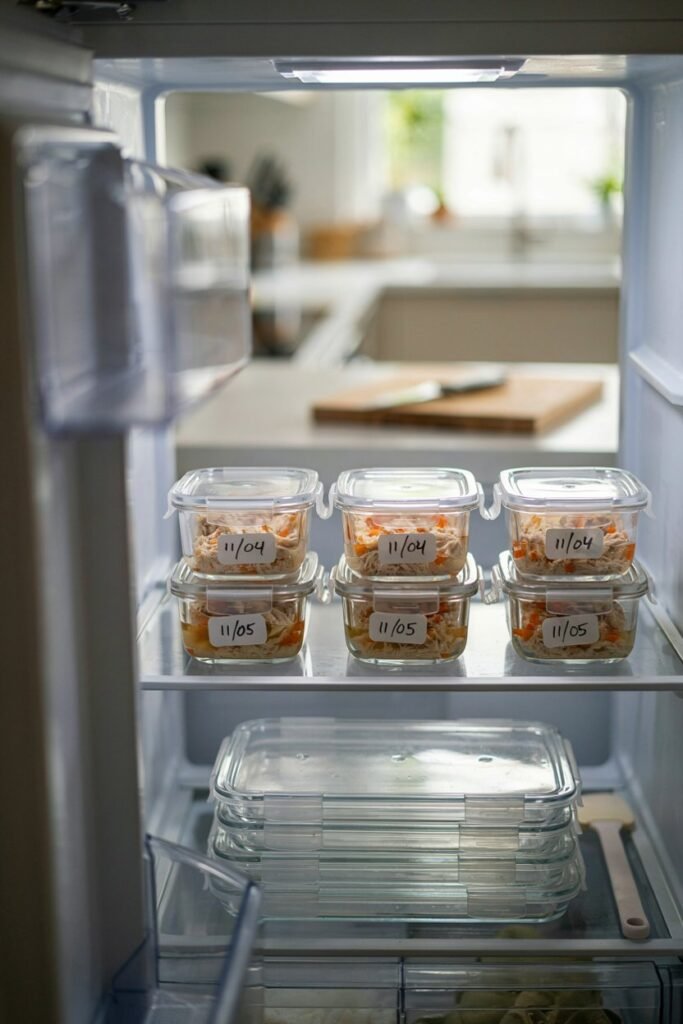
Yes, and a simple system makes this easy to keep up with: cook, cool, portion, label, freeze, thaw, serve.
Using small, labeled containers with the date prepared keeps everything organized and prevents food from sitting in the freezer longer than it should.
Homemade Chicken Cat Food Meal Prep
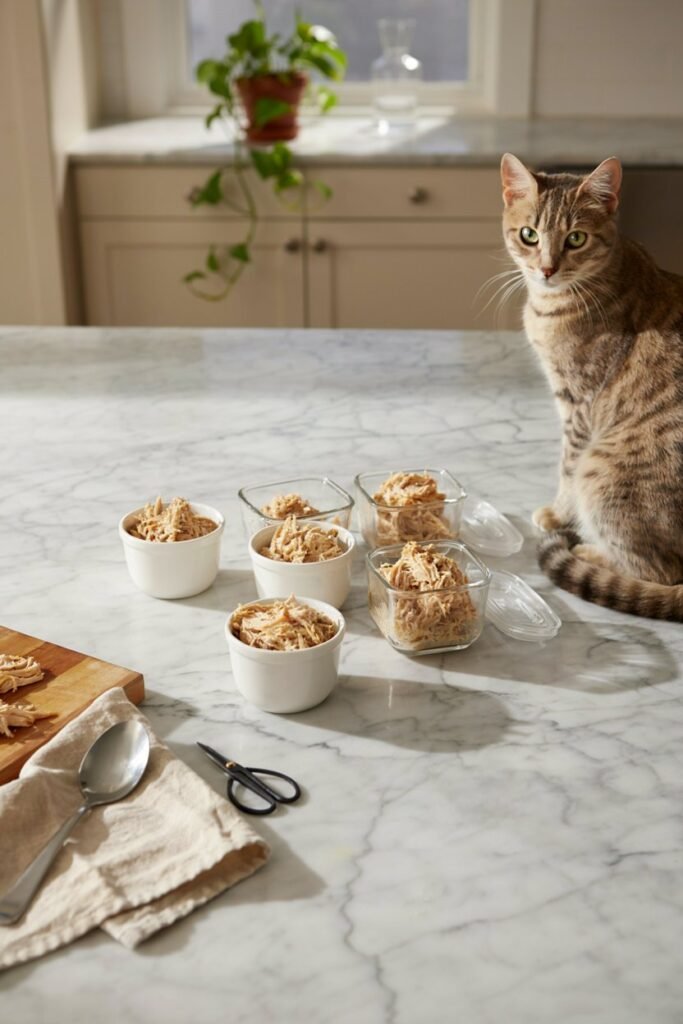
I prefer portioning homemade pet food into small individual containers rather than keeping one large batch in the refrigerator.
It makes mealtime faster and means I’m not repeatedly opening and reheating the same container over several days, which cuts down on how often the food is exposed to room temperature air.
A few habits that make this easier long term:
- Use small containers sized for a single serving
- Label each container with the recipe and preparation date
- Keep the freezer organized by date, oldest portions in front
- Set aside a consistent day each week for batch cooking
For more ideas on building out a full rotation of homemade meals, homemade cat food recipes and homemade cat food recipes, part two both offer additional options worth adding into the mix.
Common Mistakes When Making Homemade Cat Food
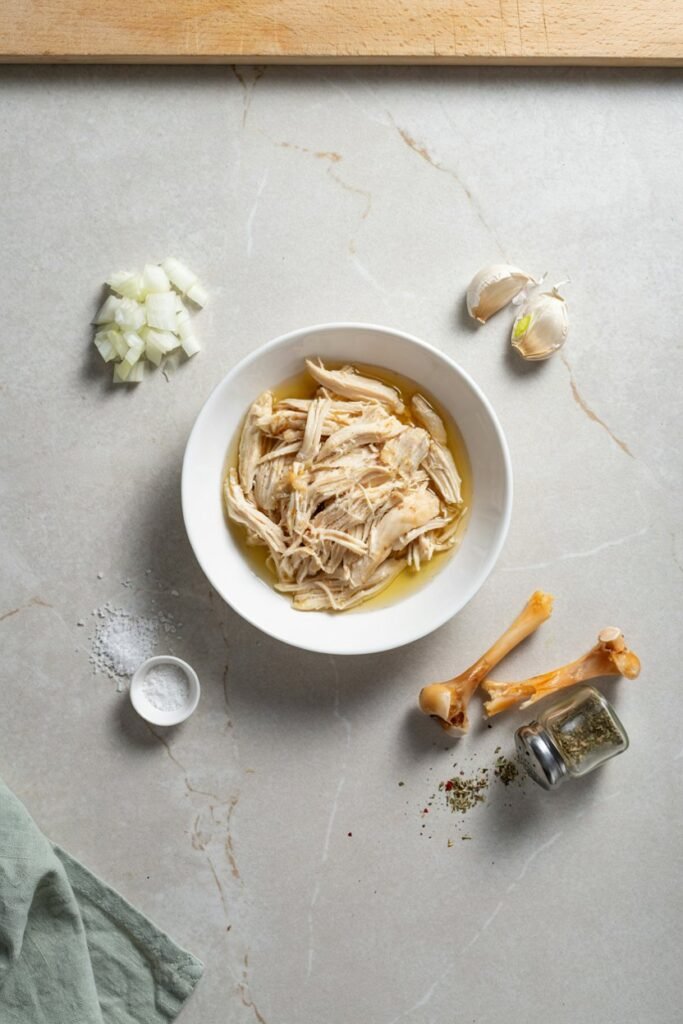
Mistake 1: Feeding only chicken. A diet built entirely around one protein source is missing calcium, taurine, and other nutrients that need to come from elsewhere.
Mistake 2: Adding human seasoning. Onion and garlic are the most dangerous, but any seasoning blend is unnecessary and potentially harmful.
Mistake 3: Feeding cooked bones. They can splinter and cause serious injury, even in small pieces.
Mistake 4: Guessing supplement amounts. Supplements should follow an appropriate formulation, not a rough estimate.
Mistake 5: Changing the diet too quickly. Some cats tolerate sudden changes poorly, which can lead to digestive upset.
Mistake 6: Assuming homemade automatically means healthier. Quality depends entirely on nutritional adequacy, not simply on the fact that it was cooked at home.
How to Introduce Homemade Food to Your Cat
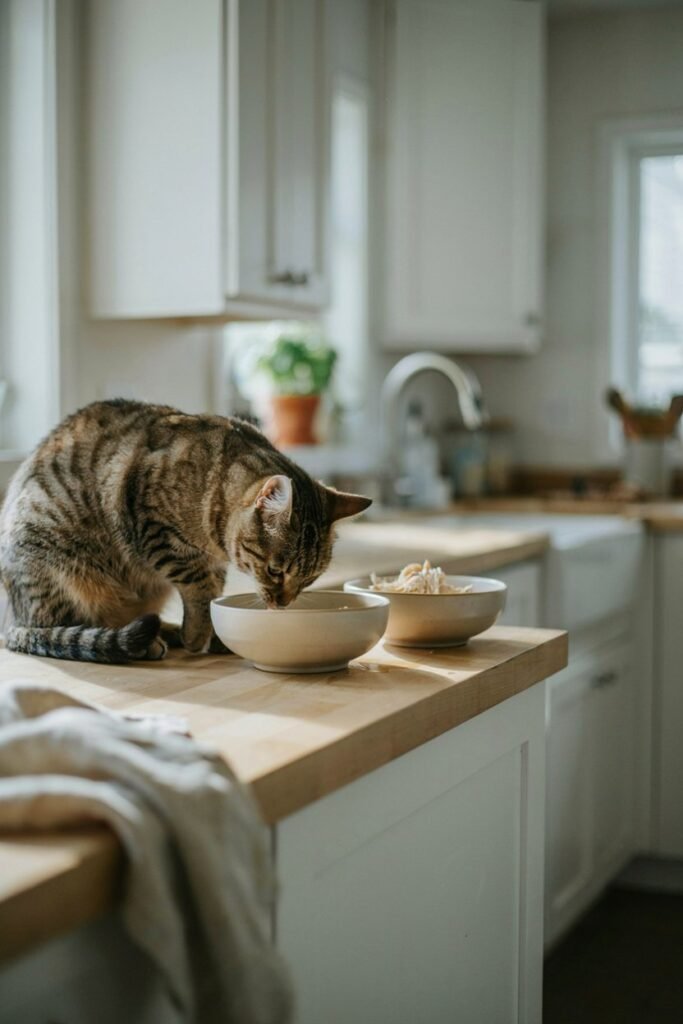
Rather than replacing your cat’s regular food all at once, introduce the homemade portion gradually over about a week, watching appetite and stool quality along the way.
If your cat refuses the new food, don’t encourage prolonged fasting to try to force the switch.
Cats that stop eating for an extended period can develop serious health problems, so persistent appetite loss is a reason to contact your veterinarian rather than wait it out.
Frequently Asked Questions
Can cats eat cooked chicken every day? Yes, as an ingredient within a properly balanced diet. Chicken alone, without additional nutrients, shouldn’t be the sole food fed every day long term.
Can cats eat chicken breast? Yes, chicken breast is lean, easy to prepare, and one of the most commonly used proteins in homemade cat food.
Can cats eat chicken thighs? Yes, chicken thighs are fine as well, and they carry more fat and flavor than breast meat, which some cats prefer.
Can I give my cat chicken and rice? Yes, in moderation. It’s a commonly recommended bland meal but isn’t a complete long term diet on its own.
Can cats eat boiled chicken? Yes, boiling is one of the simplest and safest ways to prepare plain chicken for a cat, as long as no seasoning is added.
Can kittens eat homemade chicken? They can, but kittens have more specific nutritional needs during growth, so any recipe intended as a kitten’s regular diet should be reviewed by a veterinarian first.
How long does homemade cat food last in the refrigerator? Generally about 2 to 3 days when stored in an airtight container. Anything beyond that should be frozen instead.
Can homemade cat food be frozen? Yes, portioning it before freezing makes thawing individual servings much easier later on.
Can I use chicken broth for cats? Plain, low sodium, onion and garlic free broth can be used in small amounts to add moisture and flavor, though it shouldn’t replace water as a primary hydration source.
Can I add vegetables? Some cats tolerate small amounts of certain vegetables, but cats are obligate carnivores and don’t require vegetables the way dogs do, so any additions should be minimal and vet approved.
Is homemade cat food better than commercial cat food? Not automatically. Quality depends on whether the recipe is nutritionally complete, not simply on where it was made.
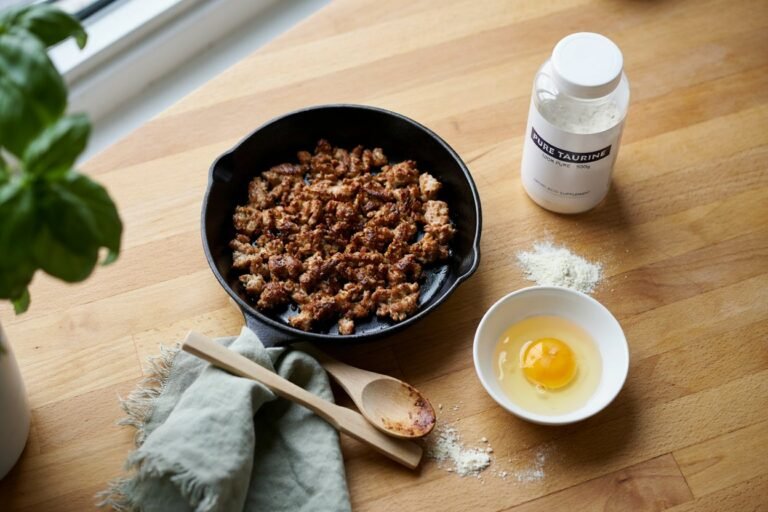
Does homemade chicken contain enough taurine? Not reliably on its own. Taurine is an amino acid cats require in specific amounts, and it’s one of the nutrients most commonly missing from homemade diets that aren’t professionally formulated, which is exactly why a long term homemade diet needs proper nutritional planning rather than chicken alone.
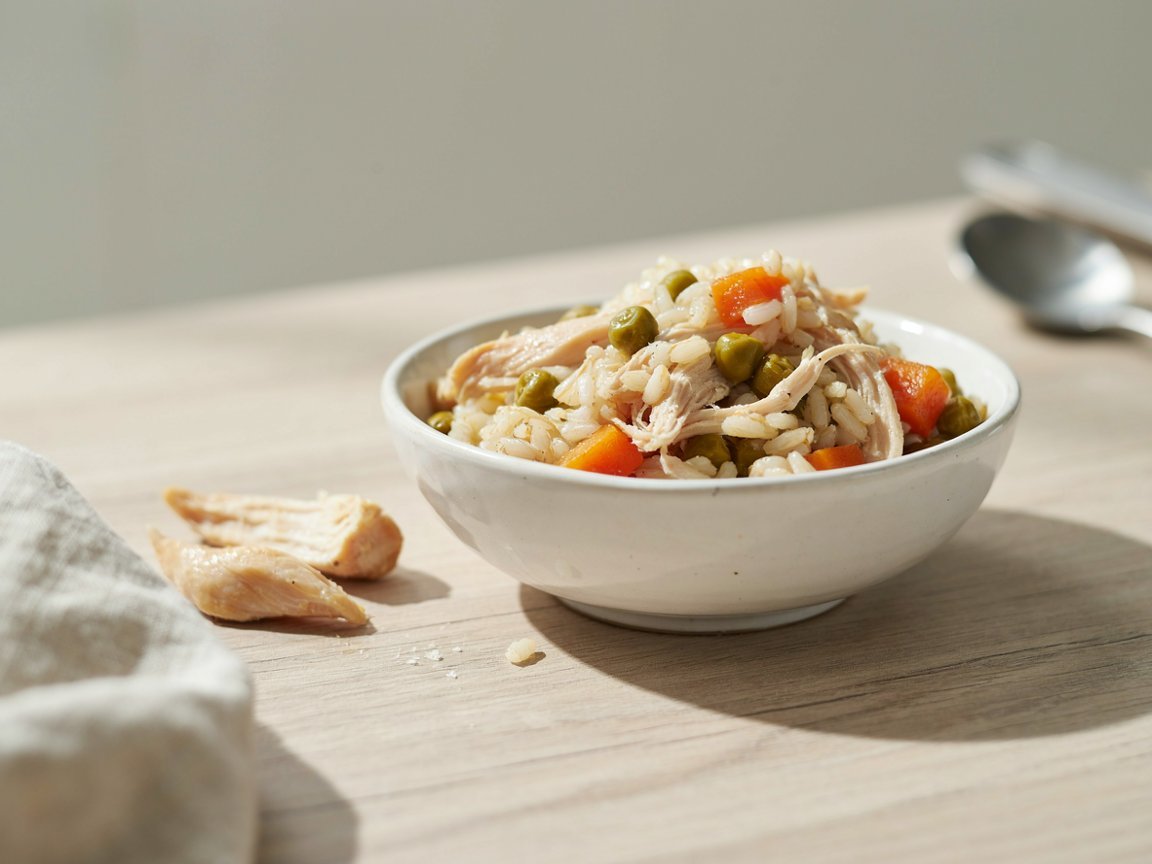

Homemade Chicken Cat Food
Ingredients
Equipment
Method
- Step 1:
- Cook the chicken thoroughly until fully cooked through. Do not add salt, onion, garlic, spices, butter, or seasoning.
- Step 2:
- Allow the cooked chicken to cool slightly, then remove any bones, skin, or visible fat and shred the meat into small pieces.
- Step 3:
- Prepare the rice and pumpkin separately, making sure they are completely plain and free from seasonings.
- Step 4:
- Combine the shredded chicken, cooked rice, and pumpkin in a clean bowl.
- Step 5:
- Add the warm water and mix until the ingredients are evenly combined and reach a soft, moist consistency.
- Step 6:
- Allow the food to cool to a safe serving temperature before offering it to your cat.
- Recipe Notes
- Recipe Notes:
- This homemade chicken recipe should not automatically be considered a complete and balanced diet for cats. Cats have specific nutritional requirements that cannot be met by chicken and a few additional ingredients alone. Use this recipe as an occasional meal or topper unless it has been properly formulated with the necessary feline nutrients. Avoid onion, garlic, salt, seasonings, cooked bones, and other ingredients that can be harmful to cats.
Final Thoughts
Chicken can be a genuinely useful ingredient in a cat’s diet, but a homemade meal built around it needs real nutritional planning to become something more than an occasional addition.
Keep the distinction between occasional homemade food and a complete homemade diet in mind every time you’re deciding how often to serve it, and lean on your veterinarian or a board certified veterinary nutritionist if you want this to become a regular part of your cat’s routine rather than just a treat.
If you’re looking to build out your cat’s homemade meal rotation further, easy chicken based homemade cat recipes and beginner friendly raw inspired cat food ideas are great next steps.
For picky eaters, healthy homemade cat gravy toppers for picky eaters and affordable homemade cat gravy food budget recipes are worth a look.
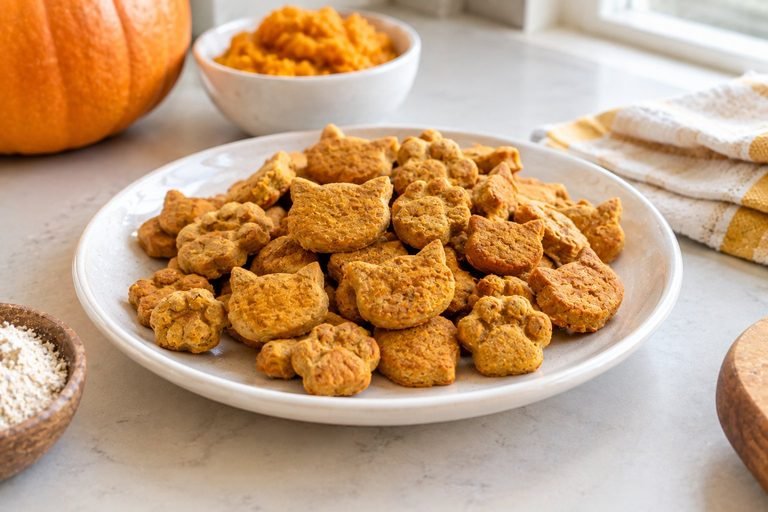
And if you want a simple homemade treat to pair with mealtime, the chicken catnip homemade cat treat recipe is an easy one to add into the rotation, alongside broader daily care guidance in daily cat care routine and happy healthy cat tips.


One Comment