
Chicken and Catnip Homemade Treat for Cats.
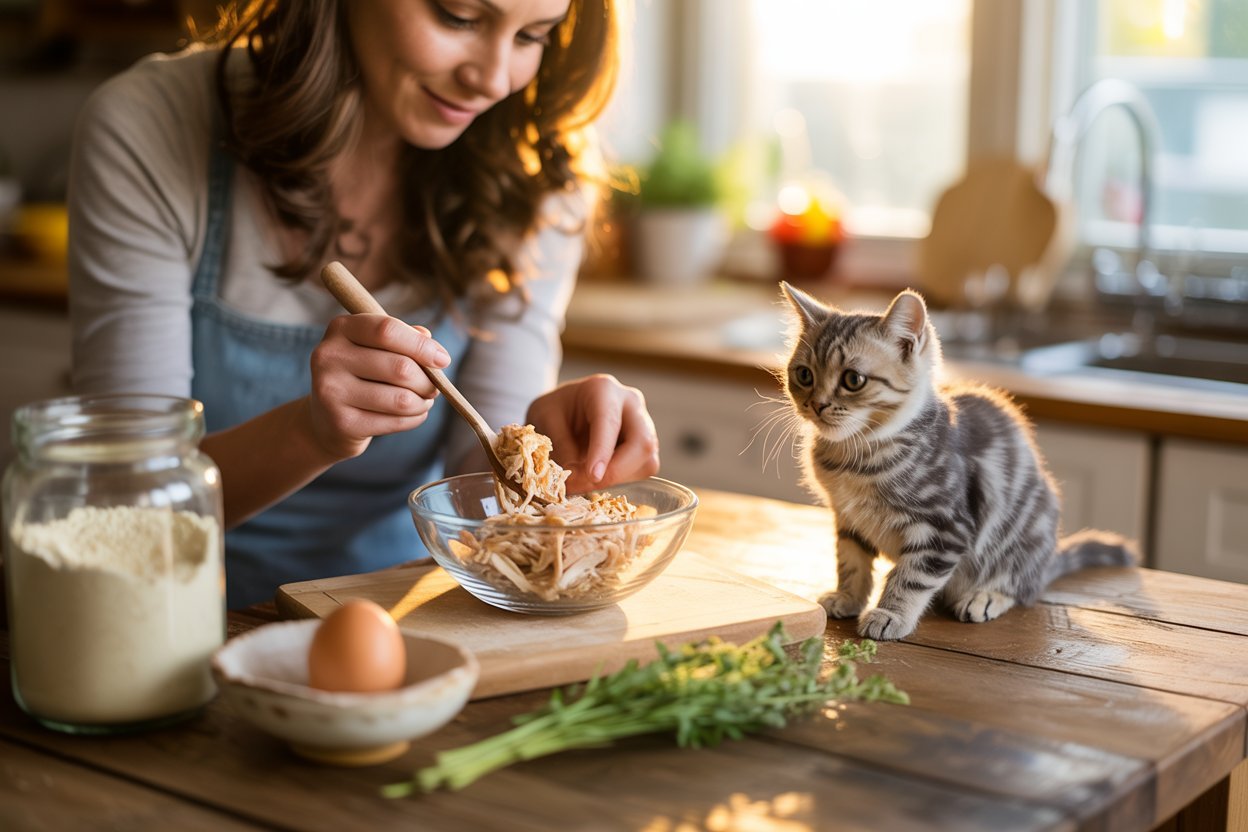
These treats are made with real cooked chicken, kept small and easy to portion, and built without any of the unnecessary seasonings that sneak into a lot of packaged options.
They’re a fun, simple alternative to store bought treats, easy to prepare in a small batch, and just interesting enough with a touch of catnip mixed in to make treat time feel a little more exciting.
If you’ve been wanting to try making your cat’s food and treats at home more generally, a few related guides are worth having handy alongside this one.
Our homemade chicken cat food recipe walks through how to safely turn chicken into an actual meal rather than just a treat, while easy chicken based homemade cat recipes and beginner friendly raw inspired cat food ideas offer more variety once you’re comfortable in the kitchen.
If your cat is a picky eater, healthy homemade cat gravy toppers for picky eaters is a good companion recipe, and for everyday feeding routines beyond treat time, daily cat care routine rounds things out nicely.
Disclaimer: This post may contain affiliate links, which means I may earn a small commission at no extra cost to you. Always ensure all ingredients are safe for cats and consult your veterinarian before introducing new homemade treats.
Amazon Shopping List You Need
- Silicone Cat Treat Molds (Fish or Paw Shapes)
- Fresh or Freeze-Dried Catnip
- Cooked Chicken Breast (Unseasoned, Pet Safe Prep)
- Food Processor or Blender (Small Batch Chopper)
- Stainless Steel Mixing Bowl Set
- Measuring Cups and Spoons Set
- Airtight Treat Storage Container
Quick Recipe Overview

Chicken and Catnip Homemade Cat Treats Prep Time: 15 minutes
Cook Time: 12 to 15 minutes
Total Time: About 30 minutes
Yield: Roughly 30 to 40 small treats, depending on size
Storage: Refrigerator or freezer
Difficulty: Easy
Ingredients
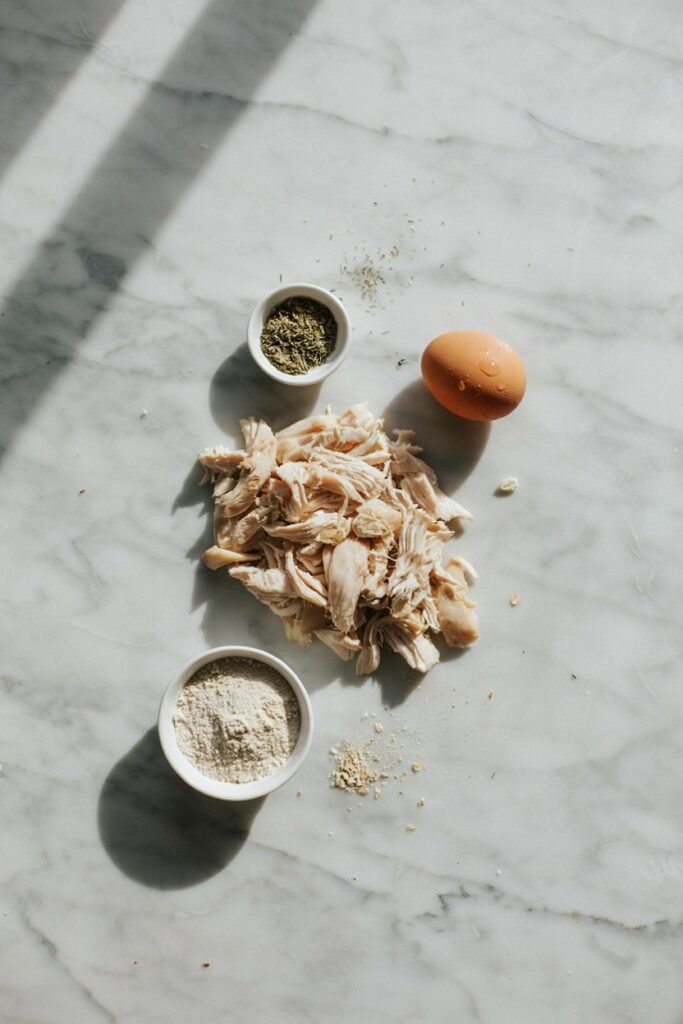
- Cooked boneless, skinless chicken
- 1 egg
- Oat flour or finely ground oats
- A small amount of dried catnip
- Water, if needed
Chicken provides the main protein and gives the treats their flavor, which is really the whole draw for most cats.
Egg helps bind the mixture together and gives the finished treats a firmer texture that holds up well once baked.
Oat flour gives the dough enough structure to be shaped and baked into something that stays together, rather than crumbling apart.
Catnip adds aroma and interest. A small amount goes a long way, since cats can be remarkably responsive to its scent even in tiny quantities.
Why Cats May Enjoy Chicken and Catnip

Chicken offers a familiar, appealing animal protein that most cats gravitate toward naturally, and catnip can make a treat feel more exciting and interactive on top of that.
It’s worth being upfront about something many recipe posts skip over though: not every cat responds to catnip.
Some cats become playful and energetic, some get noticeably relaxed, and some show little to no reaction at all.
None of that is unusual, and it doesn’t mean anything is wrong with the recipe or the cat.
If catnip isn’t landing with yours, the chicken alone is still a treat worth making.
Here’s a more detailed version with extra practical guidance while keeping it clean and easy to read.
Step by Step Preparation
Step 1: Cook the Chicken

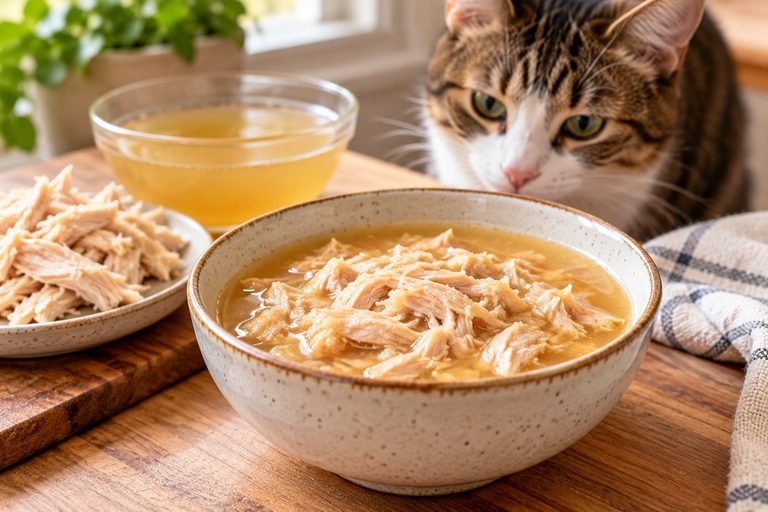
Start by cooking the chicken thoroughly until there is no pink remaining in the center.
Boiling or baking works well for this recipe because both methods allow you to keep the meat completely plain.
Do not add salt, onion, garlic, butter, oil, pepper, or other seasonings.
Once the chicken is cooked, let it cool enough to handle safely.
Step 2: Prepare the Chicken
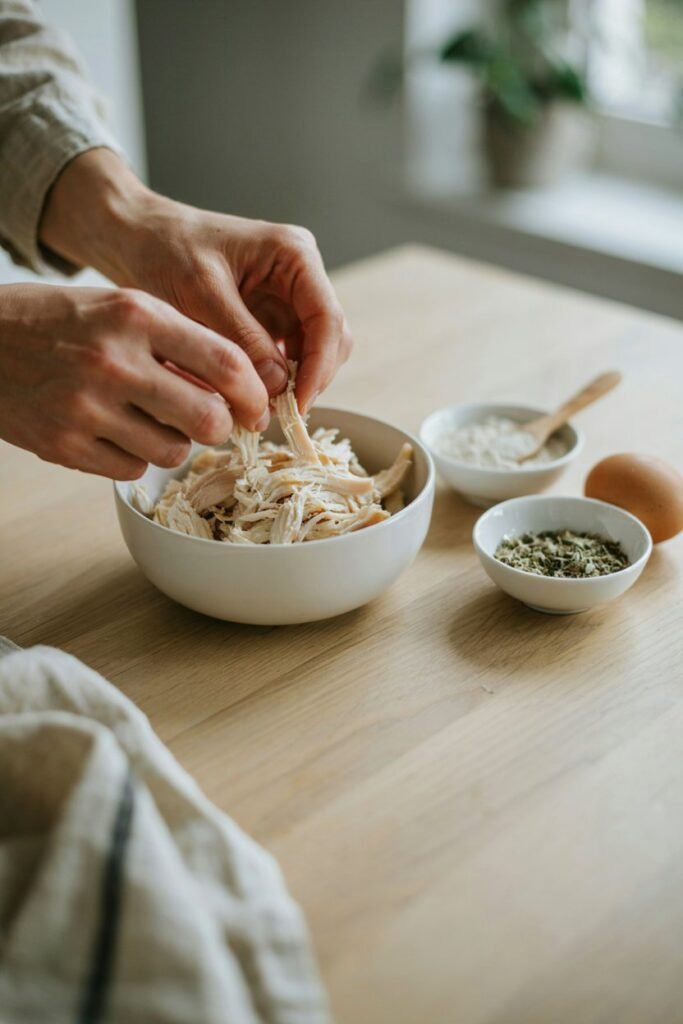
Finely shred the cooled chicken using two forks, or pulse it briefly in a food processor.
The pieces should be small enough to blend easily into the dough.
Avoid leaving large chunks, since they can make the treats difficult to roll and cause the dough to break apart when you cut it.
Step 3: Make the Dough
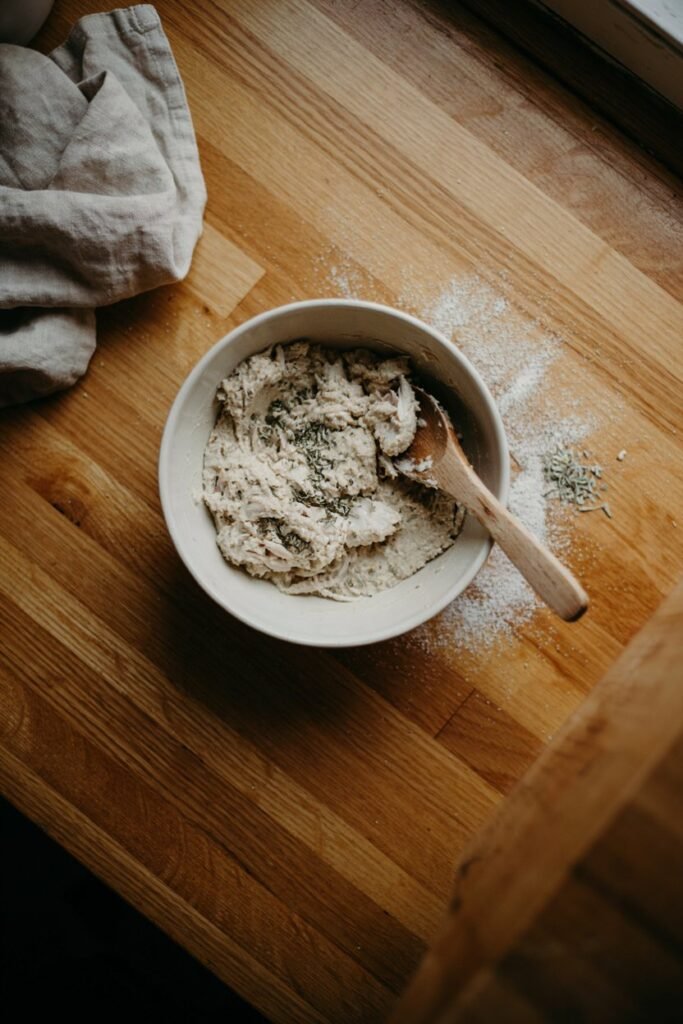
Add the shredded chicken, egg, oat flour, and catnip to a mixing bowl.
Stir everything together until the ingredients begin forming a dough.
The mixture should feel soft and workable rather than wet or sticky.
If it seems too dry and refuses to hold together, add water a teaspoon at a time.
Give the dough a few seconds to absorb the moisture before adding more.
If it becomes too sticky, sprinkle in a little additional oat flour until it becomes easier to handle.
Step 4: Roll and Shape the Treats

Place the dough on a lightly floured surface or sheet of parchment paper.
Flatten it gently, then roll it to an even thickness.
Use a small cookie cutter to create bite sized treats, or simply cut the dough into tiny squares with a knife or pizza cutter.
Keep the pieces small because these are meant to be occasional treats rather than a replacement for your cat’s regular food.
Transfer the pieces to a parchment lined baking tray, leaving a little space between them.
Step 5: Bake

Place the tray in a preheated oven and bake until the treats are firm and completely cooked through.
The exact baking time can vary depending on how thick you cut the pieces, so check them toward the end of the recommended baking time.
Break one treat open before removing the entire batch. The center should be fully cooked rather than soft or doughy.
For a slightly crunchier treat, you can leave the finished biscuits in the turned off oven for a few additional minutes, provided they do not begin to brown excessively.
Step 6: Cool Completely
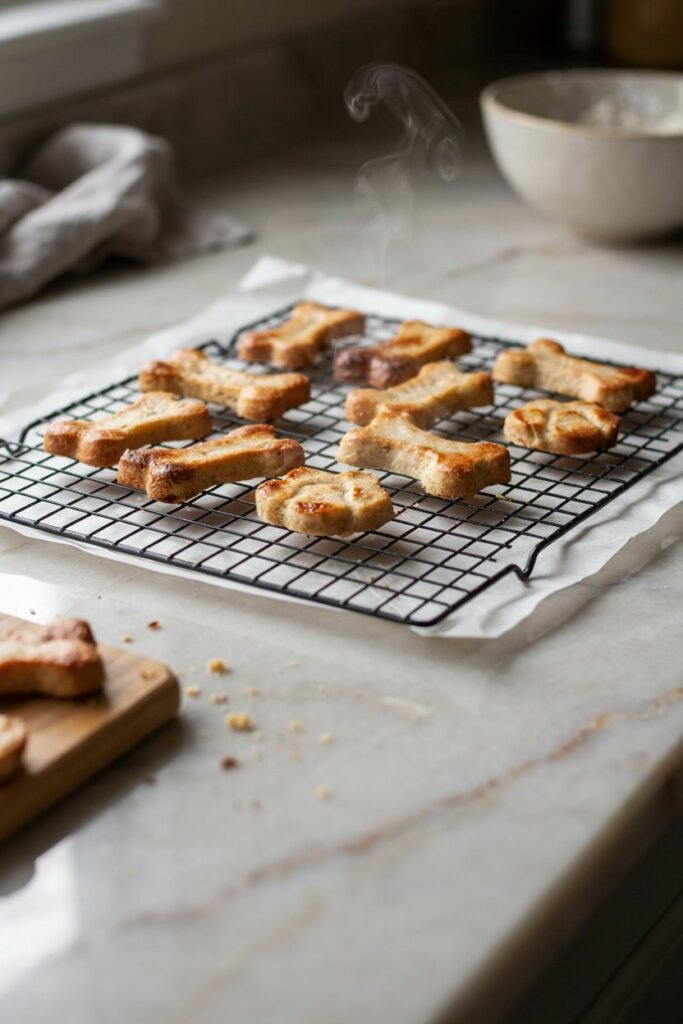
Transfer the treats to a cooling rack and allow them to cool completely before giving them to your cat.
This step matters because the treats continue to firm as they cool, and storing them while they are still warm can trap moisture inside the container.
That extra moisture can make homemade treats soften more quickly and shorten their storage life.
Once completely cool, offer a small piece to your cat and watch how they respond before serving more.
How to Make the Treats the Right Size
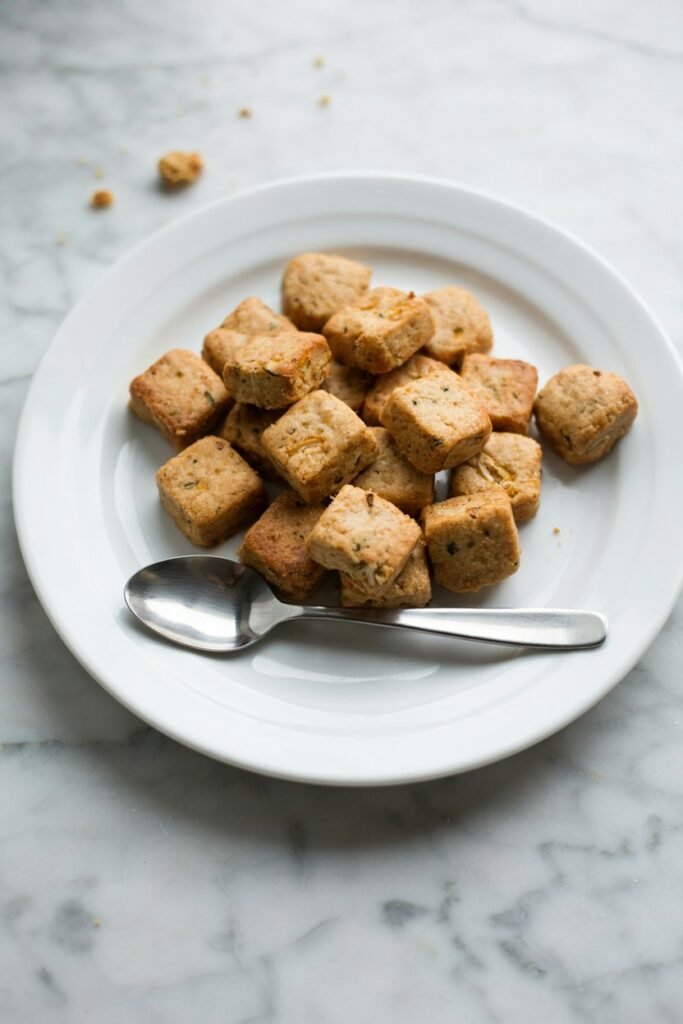
Cats don’t need large treats, and smaller pieces genuinely work better here, especially since these are meant to be an occasional extra rather than a meal replacement.
Smaller pieces also make it much easier to control how many treats your cat actually ends up eating in a sitting, which matters more than it might seem.
How Much Catnip Should You Use?

A little goes a long way, and more catnip isn’t automatically better.
A small pinch mixed into the full batch is usually plenty to give the treats their signature appeal.
If your cat doesn’t respond to catnip at all, simply leave it out.
The chicken treats still work perfectly well without it, and there’s no need to force an ingredient your cat isn’t interested in.
How Many Treats Can Cats Have?
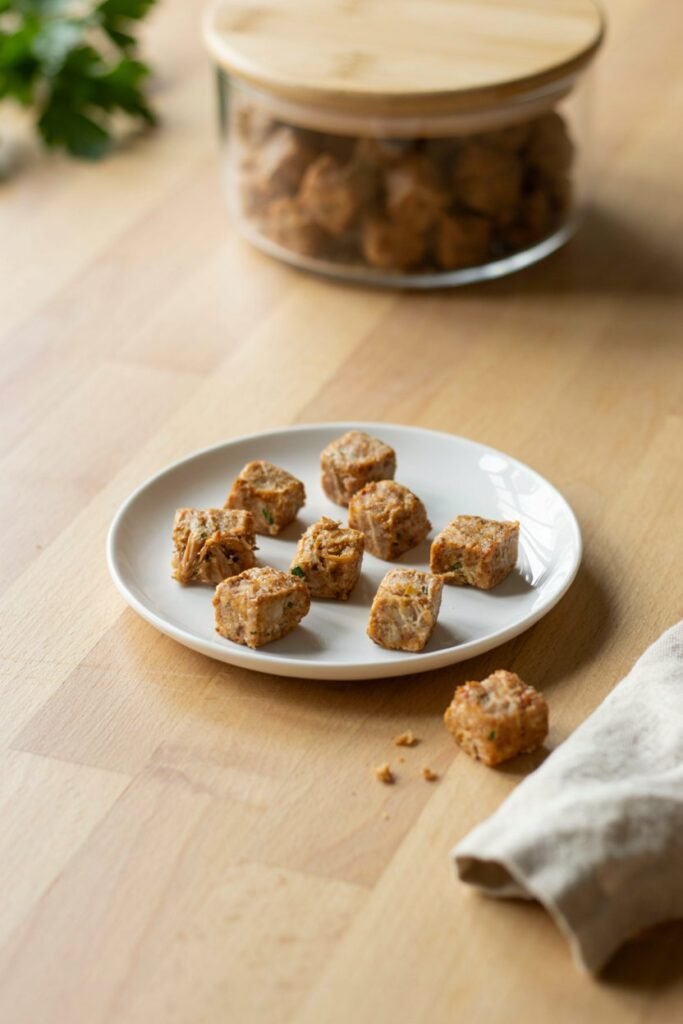
Treats should remain a small part of your cat’s overall diet and shouldn’t replace nutritionally complete cat food.
How many is appropriate depends on a few things: the size of each treat, how often you’re offering them, your individual cat’s size, their overall diet, and their weight and activity level.
There’s no single universal number that fits every cat, since a treat that’s a small addition for one cat could be a meaningful portion of another’s daily intake.
Storage
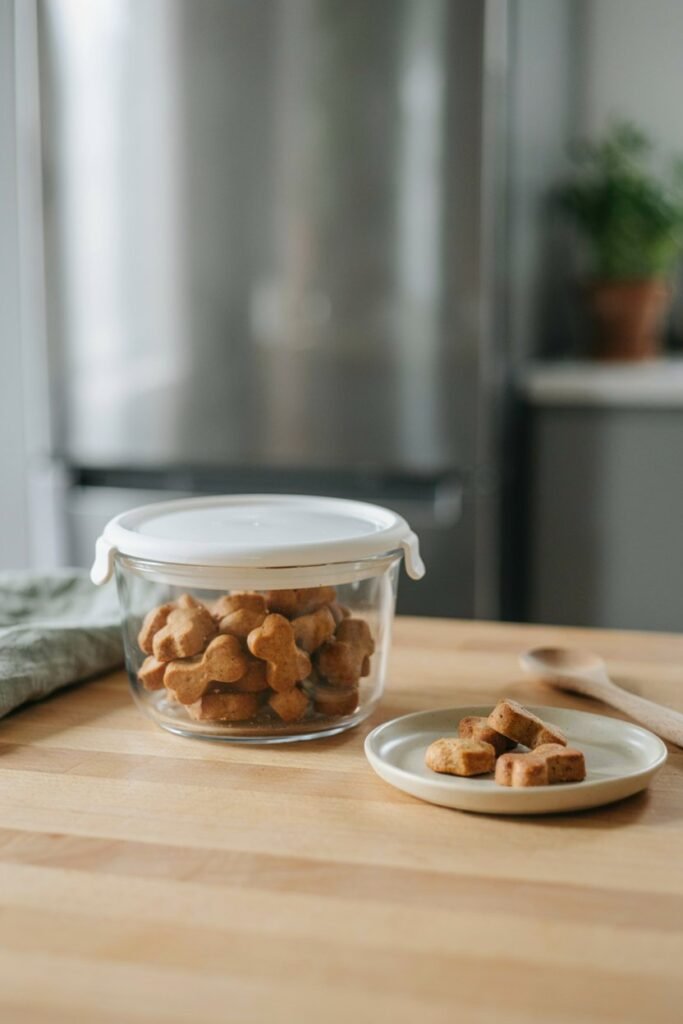
Refrigerator. Store the cooled treats in an airtight container in the refrigerator for up to about a week.
Freezer. These treats freeze well. Portion them into a freezer safe container or bag, and thaw what you need in the refrigerator ahead of time.
Room temperature. Homemade meat based treats shouldn’t be left sitting out for extended periods, since they don’t have the preservatives that keep packaged treats shelf stable.
Can Kittens Eat These Treats?

Kittens have different nutritional requirements than adult cats, and treats shouldn’t displace their complete kitten food, which is formulated specifically to support growth.
For very young kittens especially, it’s worth being cautious about introducing any homemade treat, and a small taste is plenty to start with rather than a regular addition to their routine.
Ingredients to Avoid
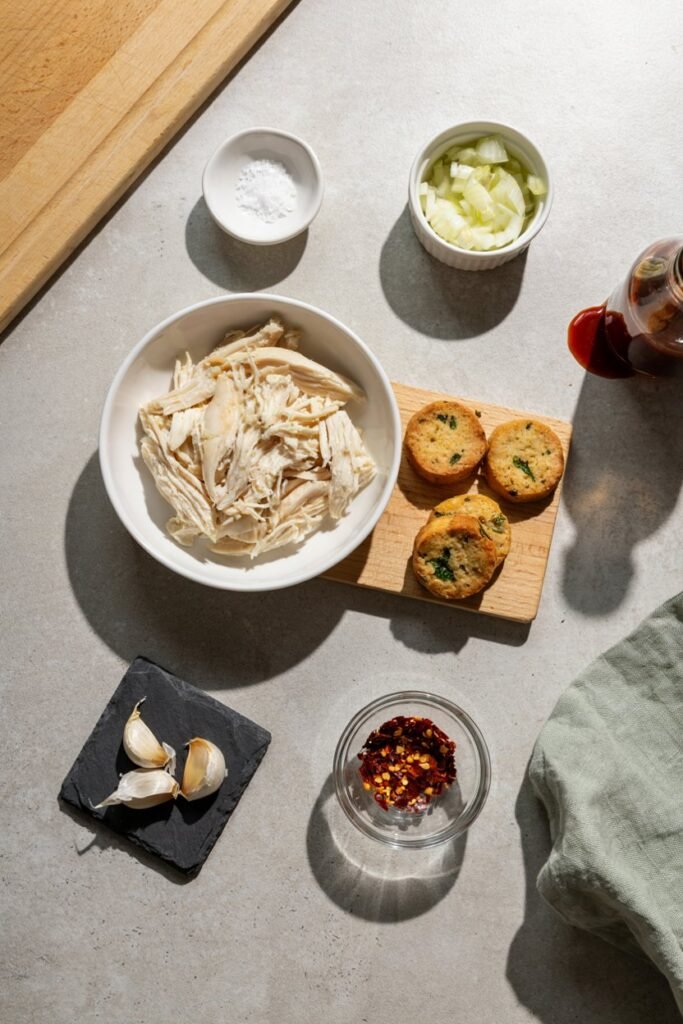
Don’t add any of the following to this recipe or any variation of it:
- Onion
- Garlic
- Excess salt
- Spicy seasonings
- Seasoning blends
- Sauces
- Artificial sweeteners
Even small amounts of onion or garlic can be genuinely harmful to cats over time, so it’s worth treating this list as a hard rule rather than a loose guideline.
Troubleshooting
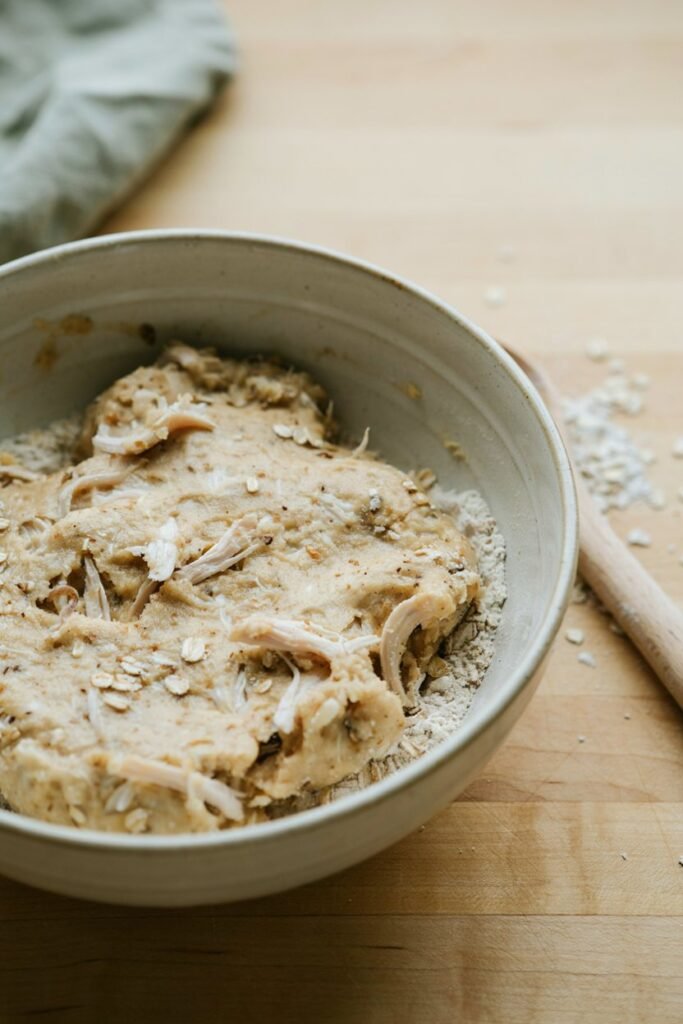
Why is my mixture too dry? Add a small amount of water, a little at a time, until the dough holds together without crumbling.
Why are my treats falling apart? The mixture may need slightly finer ingredients or a bit more egg to help everything bind together properly.
Why doesn’t my cat like them? Your cat may simply prefer a different texture, or may just not be one of the cats that responds to catnip. Neither is a sign anything went wrong.
Can I make them softer? Yes, adjusting baking time or rolling the dough a bit thicker will produce a softer treat, though the chicken still needs to be fully cooked through regardless of texture.
Variations

- Chicken only, for cats who aren’t interested in catnip
- Chicken and catnip, the classic version
- Smaller, crunchier pieces for a more crumbly texture
- Slightly softer treats by rolling the dough thicker and adjusting bake time
It’s best not to modify the core ratio of chicken, egg, and oat flour beyond these variations, since that balance is what keeps the dough workable and the finished treats holding together.
Frequently Asked Questions
Can cats eat homemade chicken treats? Yes, plain, fully cooked chicken prepared without seasoning makes a safe, simple treat for most cats.
Is catnip safe for cats? Yes, catnip is generally considered safe for cats in the small amounts used in a recipe like this one.
Can kittens have these treats? In small amounts, occasionally, yes, but treats shouldn’t replace a kitten’s complete food, which is formulated for their specific growth needs.
How long do homemade chicken treats last? About a week in the refrigerator when stored in an airtight container.
Can I freeze homemade cat treats? Yes, they freeze well when portioned into a freezer safe container or bag ahead of time.
What if my cat doesn’t like catnip? Leave it out entirely. The chicken treats work fine without it, and plenty of cats simply don’t respond to catnip at all.
Can I use canned chicken? Plain, unsalted canned chicken can work in a pinch, though freshly cooked chicken generally gives a better texture and flavor.
Can I make these treats without oats? Oat flour gives the dough its structure, so leaving it out entirely isn’t recommended, though a different mild, dog and cat safe flour could potentially be substituted if oats aren’t an option.
Final Thoughts
These treats work best as exactly what they’re meant to be, a simple, occasional extra rather than a regular part of your cat’s diet.
Keeping the recipe this straightforward, real chicken, a binding egg, a bit of oat flour, and a pinch of catnip, is really the whole appeal.
There’s no need to dress it up further, and a small batch made every so often is genuinely enough to make treat time feel special.


One Comment