Slow Cooker Dog Food Recipes
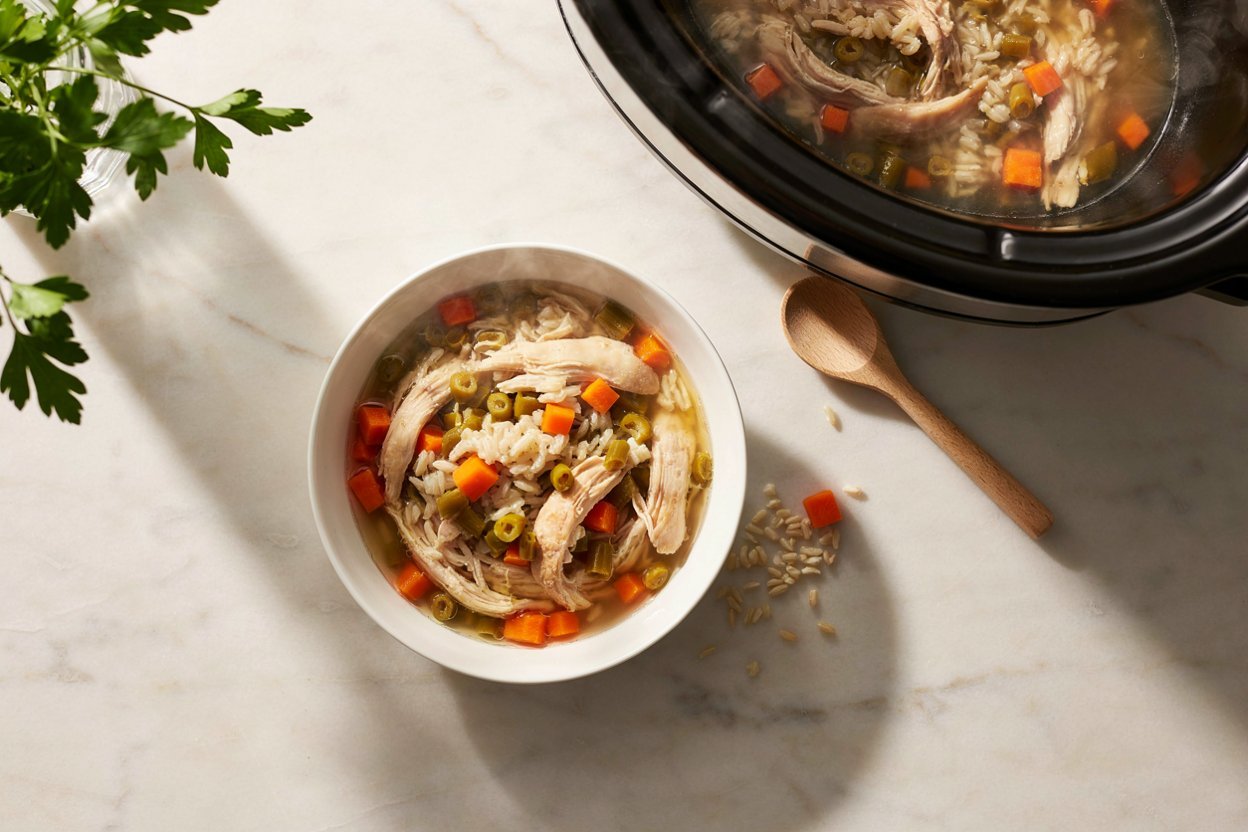
There is something reassuring about coming home to a kitchen that already smells like dinner.
A slow cooker does the kind of work that would otherwise take constant attention on the stove, quietly turning a handful of simple ingredients into a fully cooked, nutrient rich meal for your dog while you go about your day.
For anyone who wants to feed their dog fresh, homemade food but does not have hours to spend standing over a pot, a slow cooker is one of the easiest tools to build that habit around.
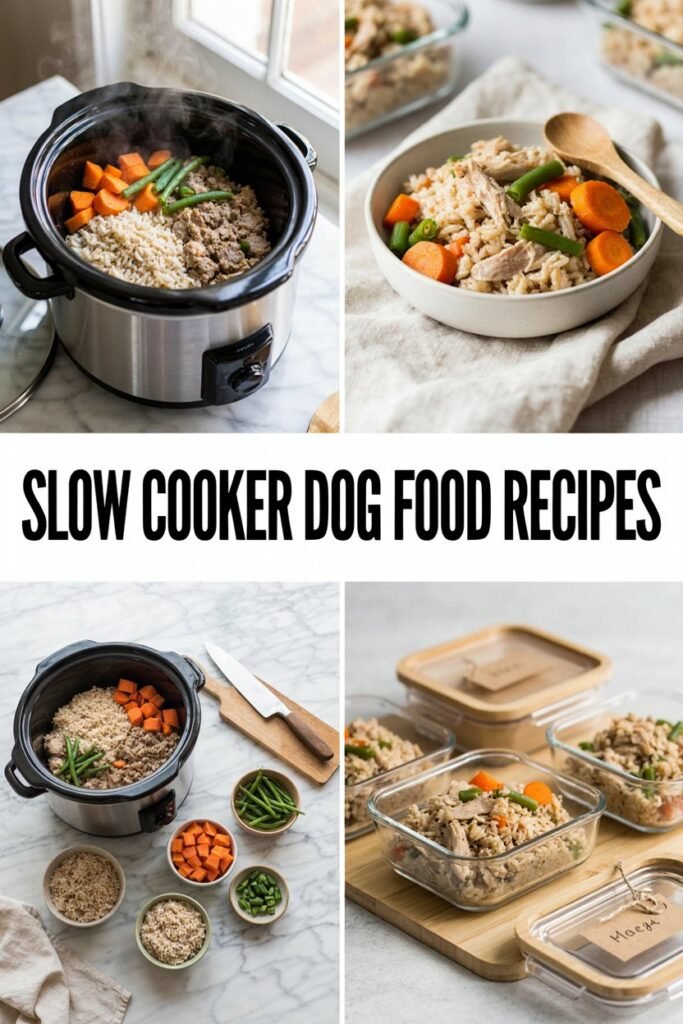
This guide walks through why a slow cooker works so well for homemade dog food, what to know before you start, a full ingredient guide with the reasoning behind each choice, one complete base recipe you can build your rotation around, a few easy ways to vary it, storage guidance, a feeding guide, ingredients to avoid, common mistakes, and answers to the questions dog owners ask most often about slow cooking for their dog.
Disclaimer: This post may contain affiliate links, which means I may earn a small commission at no extra cost to you. Always consult your veterinarian before making changes to your dog’s diet or introducing homemade meals.
Amazon Shopping List You Need
- Slow Cooker Crockpot (Programmable, Large Capacity)
- Digital Kitchen Food Scale
- Glass Meal Prep Containers with Lids
- Airtight Dog Food Storage Container
- Stainless Steel Dog Food Bowls
- Silicone Freezer Food Portion Trays
- Dog Multivitamin Supplement Powder
Why a Slow Cooker Works So Well for Homemade Dog Food
Cooking low and slow has a few real advantages beyond convenience. The gentle, even heat of a slow cooker breaks down tougher, more affordable cuts of meat until they are tender and easy to digest, which means you do not need to buy premium cuts to end up with a meal your dog can eat comfortably.
It also allows vegetables to cook through fully without the risk of scorching that comes with stovetop cooking, since a slow cooker holds a steady, low temperature for hours at a time without needing to be watched.
Because everything cooks together in one pot, a slow cooker also naturally produces a moist, broth rich meal, which supports hydration in a way that dry kibble simply cannot.
And from a practical standpoint, being able to load a slow cooker in the morning and come home to a finished batch in the evening makes homemade feeding realistic for a busy household, rather than something that only works on a free weekend.
Before You Start
A few guidelines apply specifically to slow cooking for dogs, in addition to the general safety guidance that applies to any homemade recipe.
- Talk with your veterinarian before making homemade food your dog’s primary diet, especially if your dog has an existing health condition, since a slow cooker recipe still needs to be part of a nutritionally complete plan if it is going to replace commercial food long term.
- Introduce any new homemade recipe gradually alongside your dog’s current food, watching for digestive upset over the following day or two.
- Cook meat fully before serving, even though a slow cooker’s low temperature might seem gentle. Several hours on low is more than enough time to fully cook any protein used in these recipes.
- Remove any bones before serving, since even bones that have softened during slow cooking can still splinter or pose a choking risk.
- Cool the finished meal fully before serving, since food straight from a slow cooker will be far too hot for your dog to eat safely.
Ingredient Guide
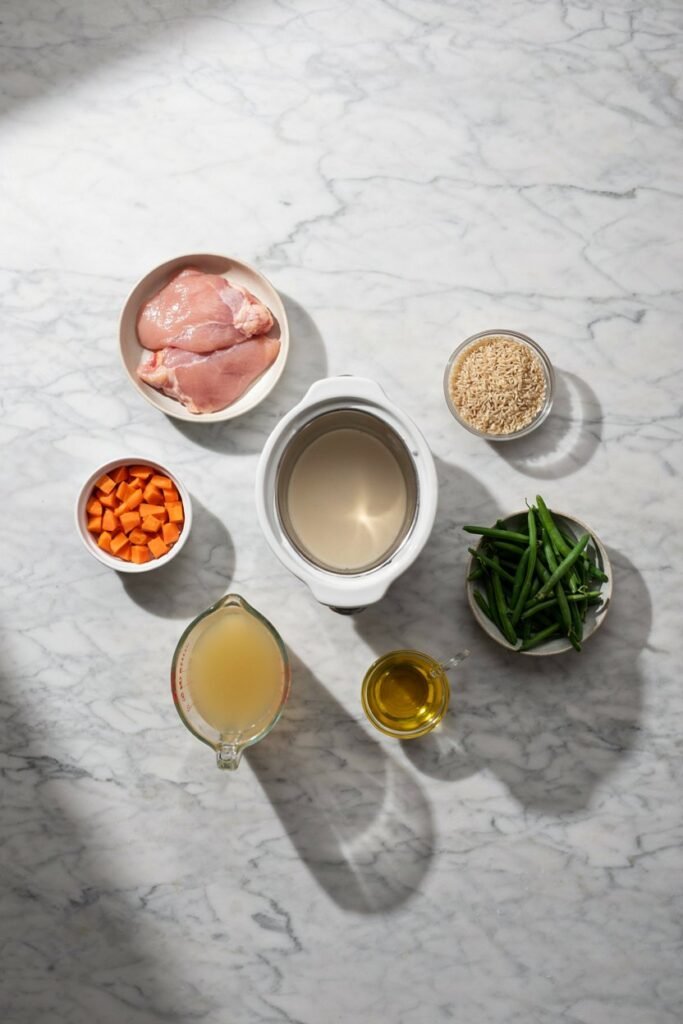
Every ingredient in the recipe below is included for a specific reason, which makes it easy to understand what you are actually feeding your dog rather than just following steps blindly.
Ingredients
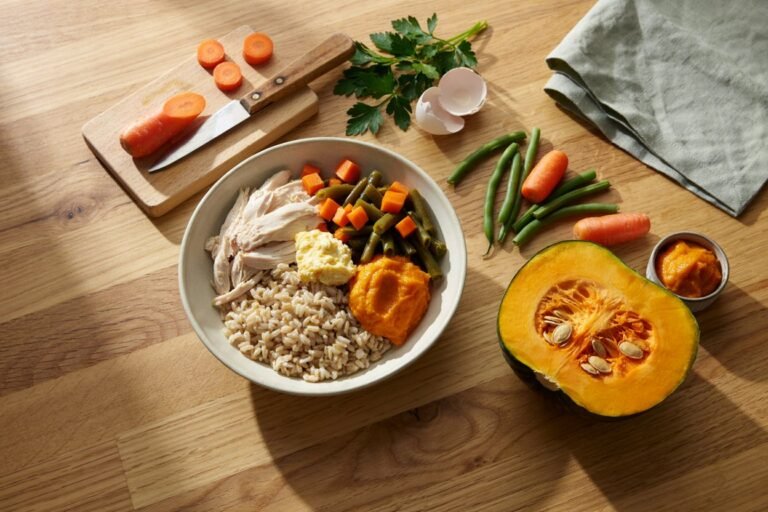
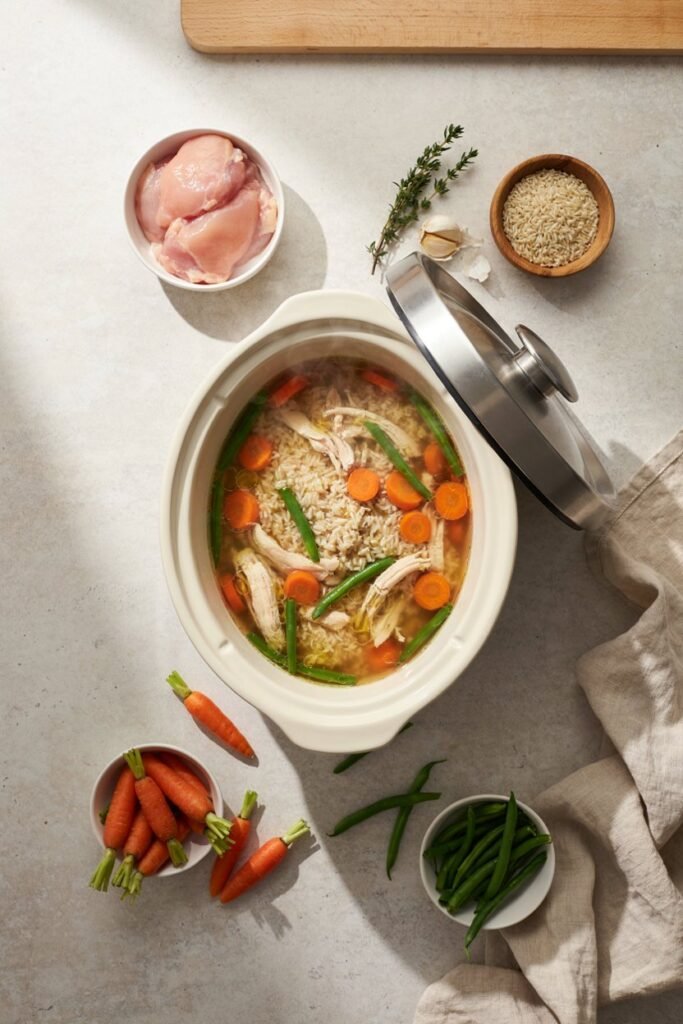
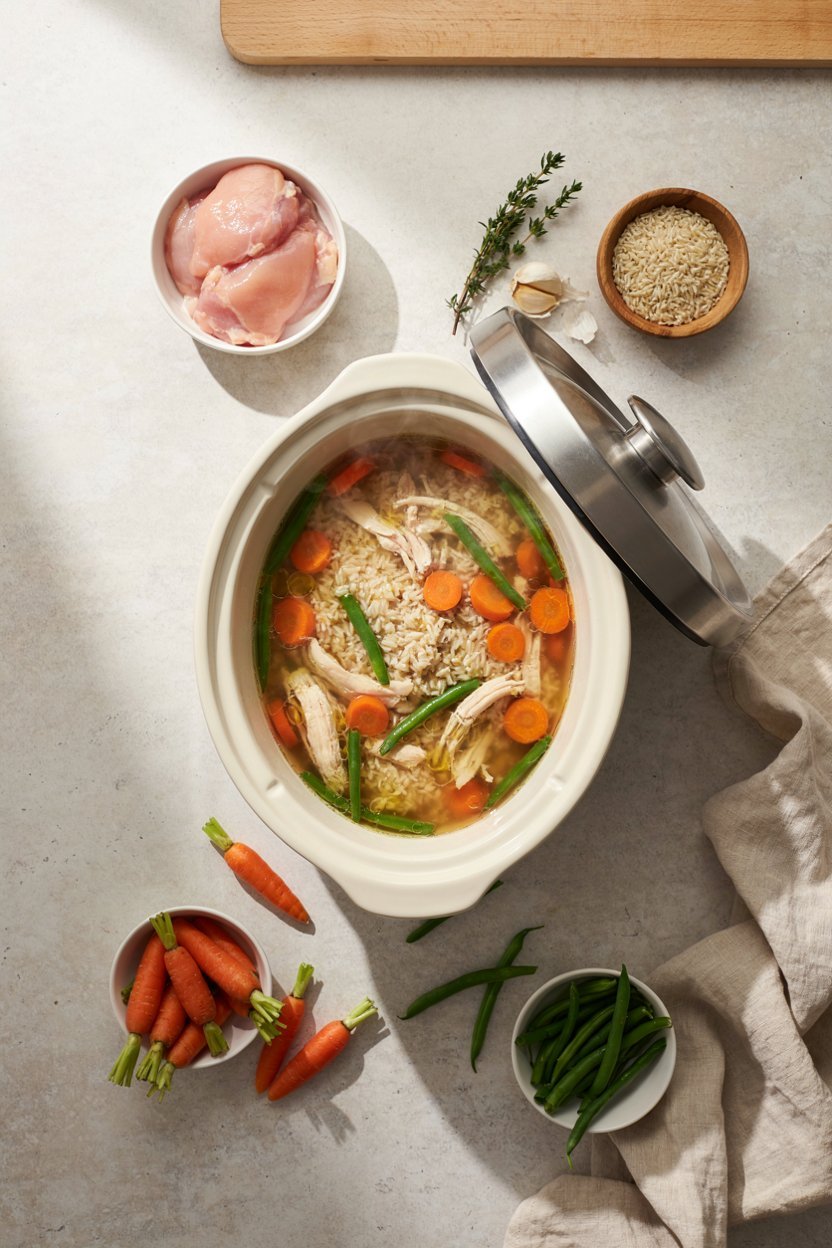
- 2 pounds boneless chicken thighs: an affordable, easily digestible protein with enough natural fat to stay moist and tender through several hours of slow cooking, and gentle enough for most dogs to digest comfortably.
- 1 cup brown rice: a steady source of carbohydrate energy and fiber that softens fully during slow cooking, becoming easy to digest by the time the meal is finished.
- 1 cup diced carrots: adds fiber and beta carotene, which the body converts into vitamin A to support eye health and immune function, while holding its shape reasonably well through a long cook time.
- 1 cup green beans, fresh or frozen: a low calorie source of fiber that helps bulk up the meal without adding significant calories, useful for dogs who need to watch their weight.
- 4 cups low sodium chicken broth, no onion or garlic added: forms the cooking liquid for the entire dish, adding moisture, flavor, and hydration, and doubles as the base that keeps everything from drying out over several hours.
- 1 tablespoon olive oil: adds a small amount of healthy fat, which supports skin and coat health and helps the finished meal feel satisfying rather than lean and dry.
How to Make It
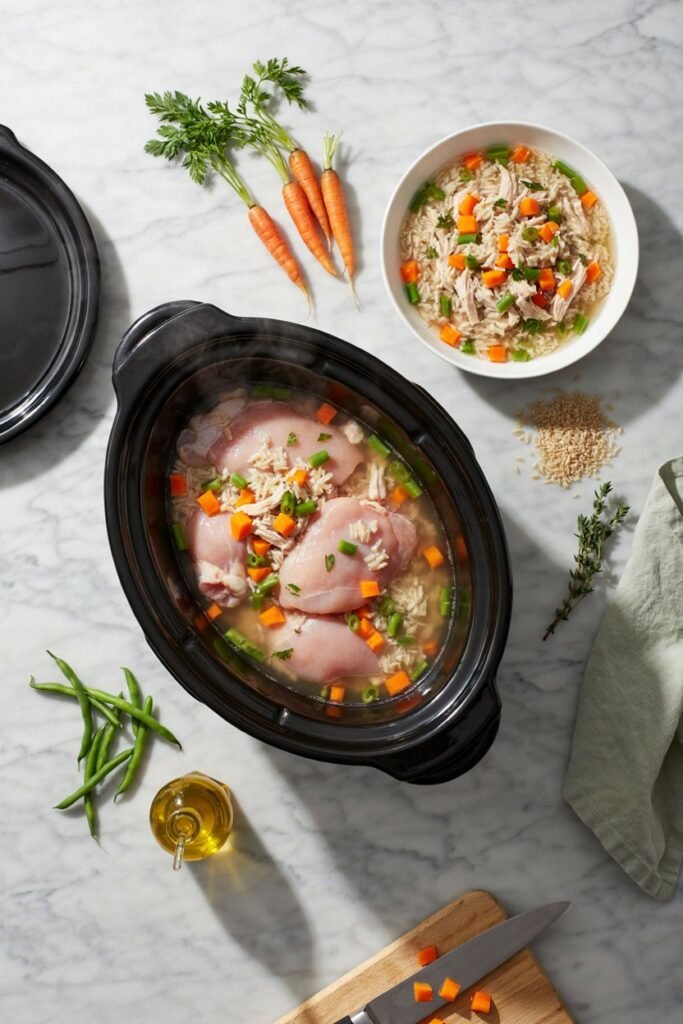
- Add the chicken thighs, brown rice, carrots, and green beans to the slow cooker, distributing everything as evenly as you can across the bottom.
- Pour the broth over the top, making sure the rice and vegetables are mostly submerged so they cook evenly.
- Cover and cook on low for six to seven hours, or on high for three to four hours, until the chicken is fully cooked through and shreds easily with a fork.
- Remove the chicken, shred it into small, bite sized pieces, and return it to the slow cooker, stirring everything together so the meal has an even texture throughout.
- Stir in the olive oil once the cooking is complete, since adding it at the end preserves more of its benefit than cooking it for hours would.
- Let the meal cool completely to room temperature before portioning and serving, since food straight from the slow cooker will be too hot to serve safely.
This recipe yields enough for several days of meals for a small to medium dog, and it scales up easily if you want to cook a larger batch to freeze for later.
A Few Easy Variations
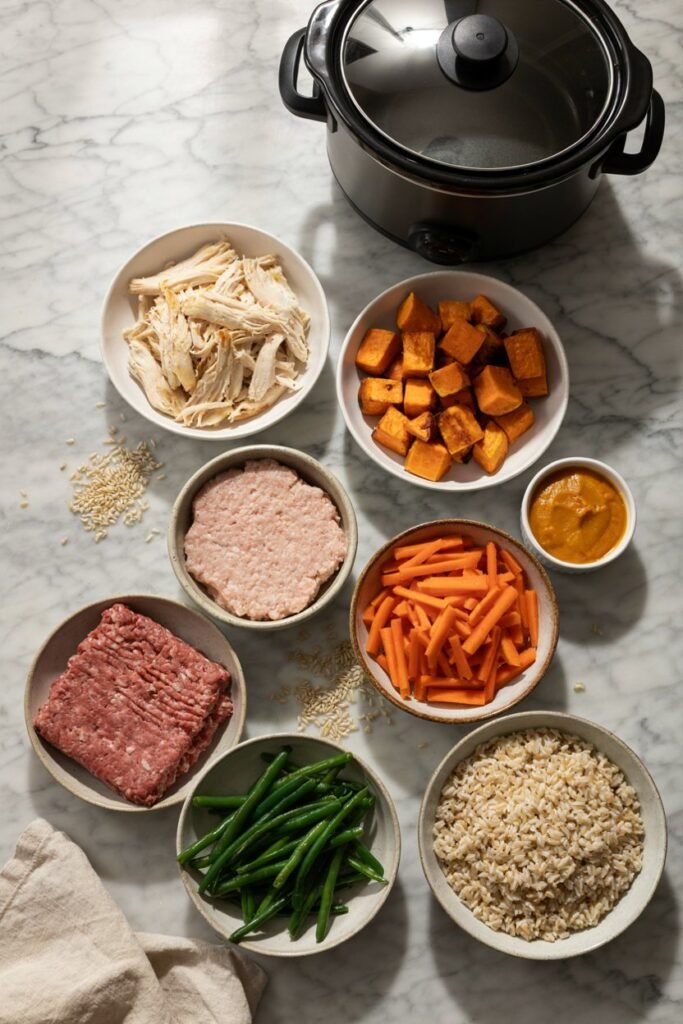
Once you are comfortable with the base recipe, it is easy to build variety into your rotation without changing the method at all.
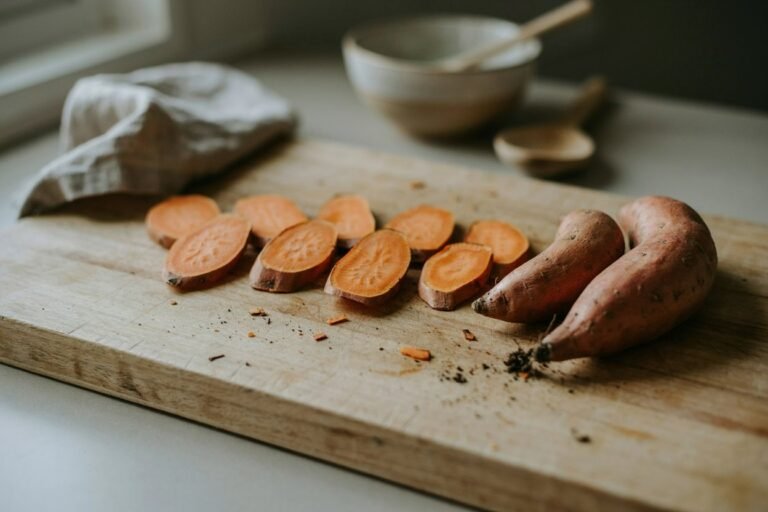
Ground turkey or lean ground beef can replace the chicken thighs for a different flavor and nutrient profile, and sweet potato can replace the brown rice for dogs who do better with a different carbohydrate source.
A spoonful of plain pumpkin puree stirred in near the end of cooking adds extra fiber for dogs prone to occasional soft stool, without changing the overall method or cook time.
If your dog enjoys the texture of a shredded, slow cooked meal, our DIY Farmer’s Dog Instant Pot recipe offers a similar style of meal using a pressure cooker instead, which is worth trying if you want the same kind of homemade feeding on a shorter timeline.
Storage and Freezing
This meal keeps well refrigerated for about four days in an airtight container, and it freezes well for up to three months when portioned into individual servings.
Freezing in flat, labeled bags or small containers makes it easy to thaw exactly the amount you need without having to defrost the entire batch at once.
Thaw frozen portions in the refrigerator overnight rather than at room temperature, and always let food come back closer to room temperature before serving if it has been refrigerated or frozen.
Feeding Guide
How much to feed depends on your dog’s weight, activity level, and overall body condition, and your veterinarian is the best resource for a precise recommendation, particularly if this recipe is going to replace a significant portion of your dog’s regular diet.
As a general starting point, most adult dogs eating a fresh, home cooked diet need roughly two to three percent of their body weight in food per day, split across two meals, with more active dogs needing closer to three to four percent and less active dogs doing well closer to one and a half to two percent.
Watch your dog’s body condition over the first few weeks on this recipe and adjust portions accordingly.
Ingredients to Avoid
- Onion and garlic, in any form, including onion or garlic powder: both are toxic to dogs and should never be used, even in a savory recipe where they might seem like a natural addition.
- Salt, seasoning blends, or bouillon cubes: these are unnecessary and often far higher in sodium than appropriate for a dog’s diet.
- Fatty trimmings or skin left on in large amounts: too much fat, especially after hours of slow cooking that renders it further, can be hard on a dog’s digestion and is a common trigger for pancreatitis in sensitive dogs.
- Grapes, raisins, or any dried fruit: these are toxic to dogs and should never appear in a homemade recipe under any circumstances.
- Any bones left in the meat: even softened bones from slow cooking can splinter or cause a choking hazard, so all protein should be boneless before it goes into the slow cooker.
Common Mistakes to Avoid
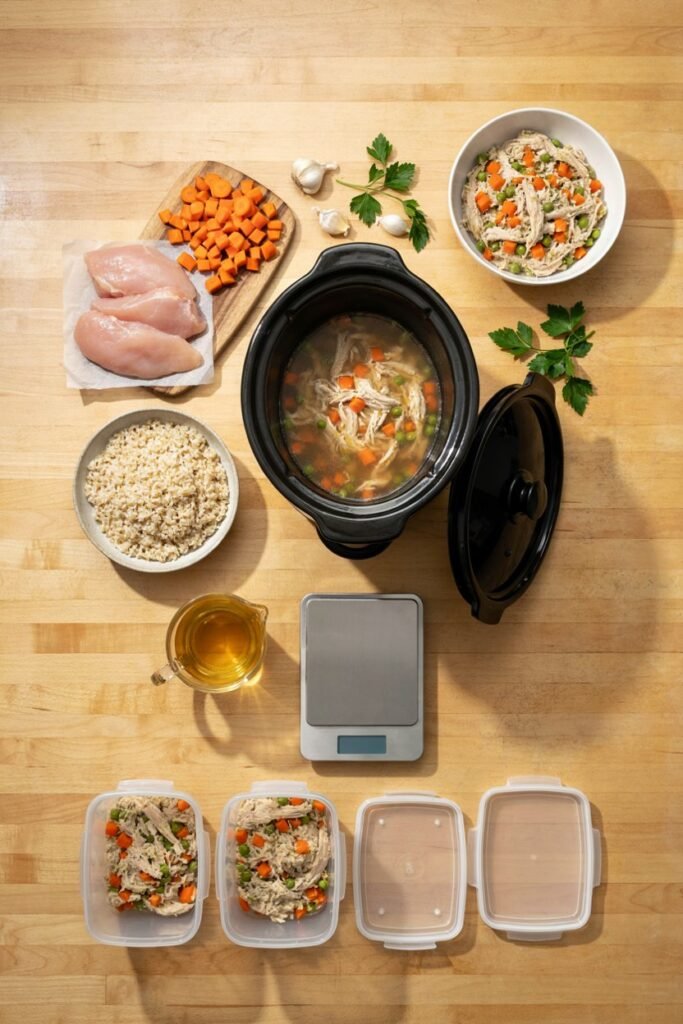
- Adding raw vegetables that are too large to cook through fully in the available time, which can leave pieces tough or undercooked even after several hours on low heat. Dice vegetables into small, even pieces before adding them.
- Skipping the step of shredding the meat before serving, which can leave large chunks that are harder for some dogs to eat comfortably, especially smaller breeds.
- Serving the meal too hot straight from the slow cooker, rather than letting it cool fully first, which can burn a dog’s mouth or simply discourage them from eating.
- Using regular broth or stock without checking the label, when many varieties made for human cooking contain onion, garlic, or high amounts of sodium.
- Not portioning the batch before freezing, which leads to thawing far more food than needed for a single serving and wasting the rest.
Frequently Asked Questions
Can I use a slow cooker to make my dog’s food every week? Yes, many owners cook a large batch once a week and portion it out for daily meals, which is one of the most practical ways to keep homemade feeding sustainable over time.
Do I need to brown the meat before adding it to the slow cooker? No, this recipe is designed to cook the chicken fully in the broth over several hours, so browning beforehand is not necessary, though it is not harmful if you prefer that extra step.
Can I leave the slow cooker on while I am at work all day? Yes, that is part of what makes a slow cooker so convenient. Cooking on low for six to seven hours fits well within a typical workday, and the meal will be ready and safely cooked by the time you get home.
Is this recipe nutritionally complete on its own? This recipe is a good, well rounded base, but if it is going to serve as your dog’s primary diet long term, talk with your veterinarian about whether any additional nutrients or supplements are needed to make it fully balanced over time.
Can I add more vegetables to this recipe? Yes, other dog safe vegetables such as zucchini or peas can be added alongside or in place of the carrots and green beans, following the same small, even dicing approach for even cooking.
Slow Cooker Dog Food
Ingredients
Equipment
Method
- Add the ground turkey to the slow cooker and break it into smaller pieces.
- Add the brown rice, carrots, green beans, pumpkin puree, and water.
- Stir the ingredients gently until they are evenly distributed.
- Cover the slow cooker and cook until the turkey is thoroughly cooked, the rice is tender, and the vegetables are soft.
- Stir the mixture thoroughly once cooking is complete.
- Allow the food to cool completely before portioning and serving.
- Use plain, unseasoned ingredients and do not add onion, garlic, excessive salt, seasoning blends, or cooked bones.
- Allow the food to cool before storing. Refrigerate portions that will be used soon and freeze additional portions for longer storage.
- This recipe should not automatically be considered a complete and balanced long term diet. For regular homemade feeding, have the recipe properly formulated to meet your dog’s individual nutritional requirements.
Final Thoughts
A slow cooker turns homemade dog food from a weekend project into something you can realistically keep up with during a normal week.
Load it in the morning, let it work quietly in the background, and come home to a fully cooked, broth rich meal your dog will be excited about.
Start with the base recipe above, get a feel for how your dog responds, and branch out into the simple variations once you are ready to build a rotation you can stick with long term.