Slow Cooker Chicken Dog Food Recipe
Sunday afternoons in my kitchen usually mean one thing: the slow cooker is out, and it is not making dinner for me. It is making dinner for my dog.
I started making homemade chicken dog food a couple of years ago after getting tired of reading ingredient labels I couldn’t pronounce, and the slow cooker turned out to be the easiest way to do it without babysitting a pot on the stove.
You dump everything in, walk away, and come back four hours later to a kitchen that smells like a Sunday roast and a dog who is doing figure-eights around your ankles.
This recipe is my go-to when I want to give my dog a homemade meal, a food topper, or a bland-diet option after a stomach upset, without turning my whole afternoon into a cooking project.
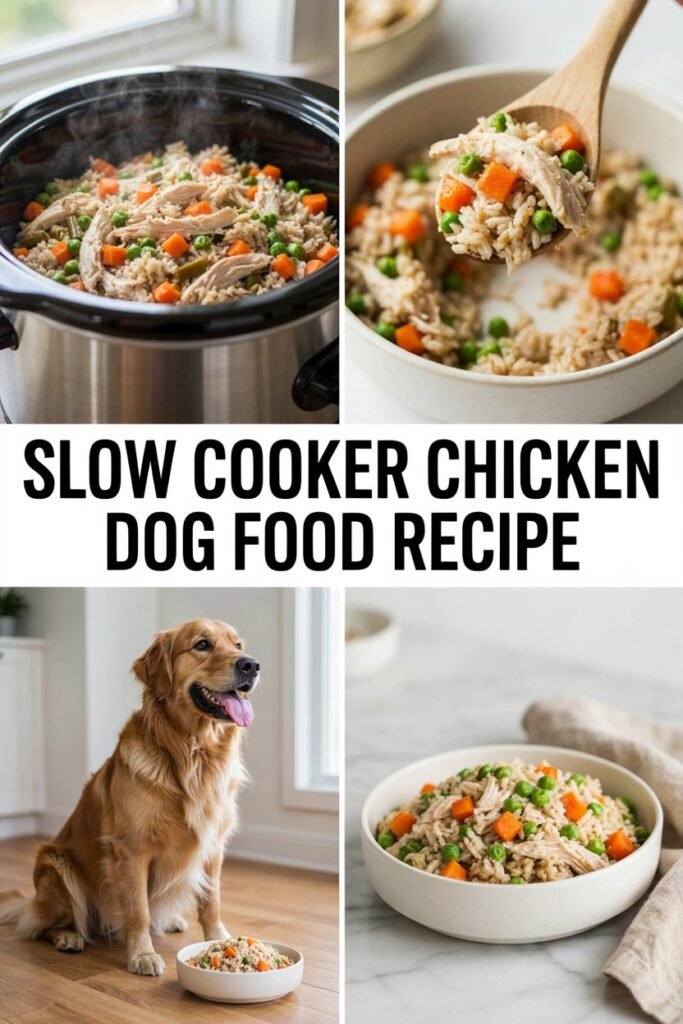
It works whether you’re new to homemade dog food or you’ve been making it for years and just want a low-effort version that doesn’t require standing over anything.
If you’ve tried recipes like my DIY farmer-style dog food or my healthy beef and apple stew for dogs, this one will feel familiar — same philosophy, different protein, and even less hands-on time.
Before we get into it, one thing I want to be upfront about: homemade dog food is a wonderful way to add variety, comfort food, or an occasional topper to your dog’s diet, but a simple recipe like this one should not replace a nutritionally complete diet long-term unless it’s been properly formulated. I’ll walk through exactly what that means later in this post.
Recipe at a Glance
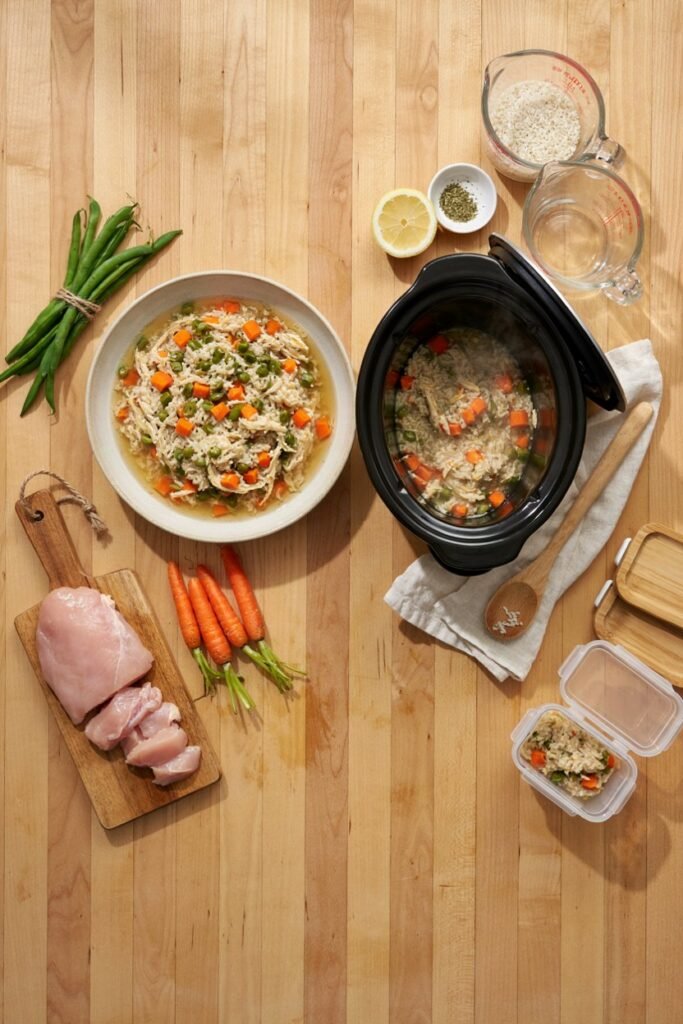
Prep time: 15 minutes Cook time: 4 hours on high or 6–7 hours on low Total time: About 4.5–7 hours (mostly hands-off) Yield: Approximately 10–12 cups of finished food Serving size: Varies by dog size and activity level (more on this below) Storage: Refrigerator up to 4 days, freezer up to 3 months Freezer friendly: Yes
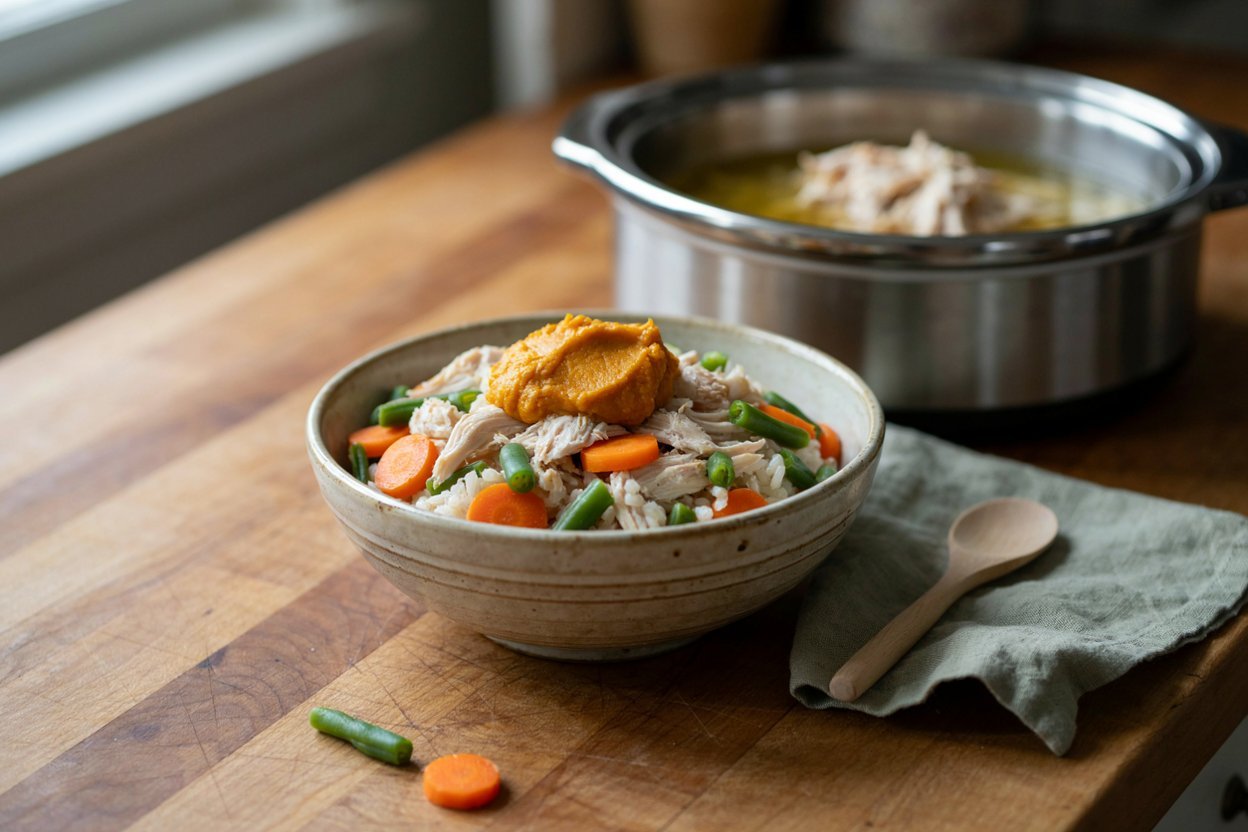
The short version: chicken, rice, carrots, and green beans go into the slow cooker with water, cook low and slow until everything is fall-apart tender, then get shredded and cooled before serving. It’s a simple formula, and it’s forgiving if you need to swap ingredients based on what’s in your fridge.
Why I Like Making This in the Slow Cooker
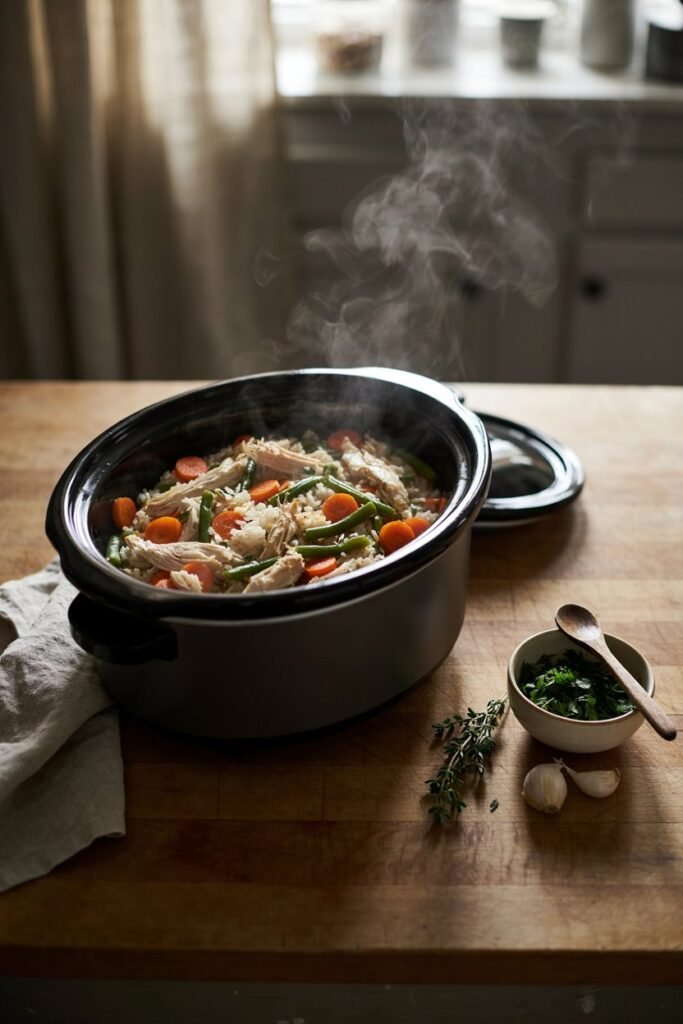
I’ve made homemade dog food on the stovetop, in the oven, and in an Instant Pot, and the slow cooker is still the version I reach for most often. There’s something about being able to load everything in before I start my morning and come back hours later to a finished meal that makes the whole process feel less like a chore.
It’s also more forgiving than stovetop cooking — you don’t have to babysit it, stir constantly, or worry about scorching the bottom of the pot if you get distracted.
The low, steady heat is also gentler on the chicken and vegetables than a fast boil would be. Everything ends up tender enough to shred and mash easily, which matters a lot if you have a smaller dog, a senior dog with dental issues, or a dog recovering from a stomach upset who needs food that’s easy to digest.
If you’ve read my DIY farmer’s dog food Instant Pot recipe, you know I like that method too when I’m short on time — but the slow cooker wins for me on lazy weekends when I have hours to spare and want the food to practically make itself.
There’s also a practical side to this: a slow cooker frees up your stovetop and oven completely, which is genuinely useful if you’re making this alongside your own dinner.
I’ve prepped this dog food in the same kitchen session as a full meal for my family more times than I can count, without ever feeling like I was juggling two cooking projects at once.
Slow Cooker Chicken Dog Food Ingredients
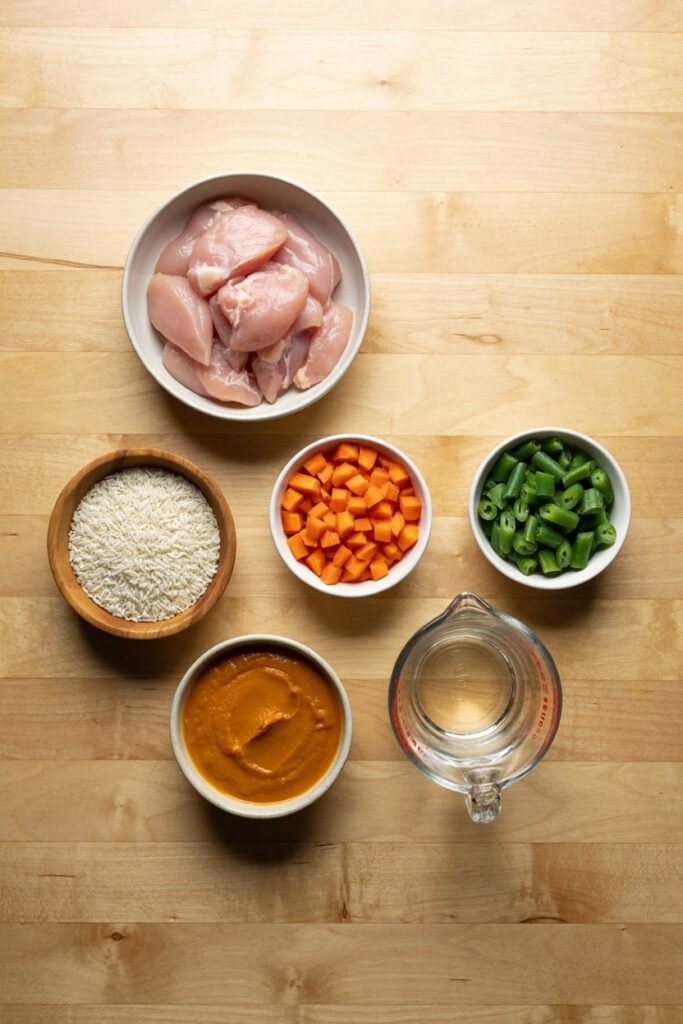
Every ingredient in this recipe earns its place, and I want to explain why, because understanding the “why” makes it much easier to substitute later without messing up the recipe.
Boneless, skinless chicken (breast or thigh) I use boneless chicken because bones — cooked bones especially — can splinter and become a choking or intestinal hazard for dogs.
Skinless keeps the fat content more moderate, which matters if your dog has a sensitive stomach or needs to watch their weight. The chicken needs to cook thoroughly, reaching a safe internal temperature, until it’s tender enough to shred with a fork.
Brown rice or white rice Either works. Brown rice has more fiber and a slightly nuttier texture; white rice is gentler on sensitive digestive systems and is often what vets recommend during a bout of stomach upset. If your dog has never had homemade food before, white rice is the safer starting point.
Carrots Carrots hold their shape reasonably well in a slow cooker while still softening enough to be safe and digestible. They also add a bit of natural sweetness and beta-carotene. Chop them into small, uniform pieces so they cook evenly and are easy for your dog to eat once soft.
Green beans Green beans add fiber and volume without complicating the recipe. Fresh or frozen both work fine — frozen actually holds up nicely in a slow cooker since it’s cooking low and slow anyway.
Pumpkin (optional, but a favorite around here) Plain canned pumpkin (not pie filling) changes the texture of the finished food, making it a little creamier and easier to portion. It’s also gentle on digestion, which is part of why so many owners reach for it. If you want to see pumpkin used more heavily, my 3-ingredient cooked dog food recipes post leans on it in a different way.
Water or unsalted chicken broth Enough liquid to cover the ingredients by about an inch. If you use broth, make sure it’s plain, unsalted, and free of onion or garlic — more on that below.
A quick note on fresh versus frozen: fresh ingredients are ideal, but frozen chicken, carrots, and green beans all work in a slow cooker. Just know that frozen chicken may need slightly longer cook time, and you should always confirm it’s fully cooked through before serving.
As for sourcing, I don’t think you need to buy the most expensive organic chicken on the shelf to make good homemade dog food, but I do try to avoid pre-marinated or pre-seasoned chicken, since those often come loaded with salt, garlic, or other seasonings that aren’t dog-safe. Plain, unseasoned chicken breast or thighs from the regular meat counter is exactly what you want.
The same goes for canned pumpkin — check the label carefully and make sure you’re buying 100% pure pumpkin, not pumpkin pie filling, which contains added sugar and spices like nutmeg that aren’t appropriate for dogs.
Chopping size matters more than people expect. I chop the carrots into pieces no bigger than a pea before cooking, because even after hours in the slow cooker, larger chunks can stay firmer in the center than you’d want for a dog, especially a small breed.
The green beans I cut into roughly half-inch pieces, mostly so they distribute evenly through the finished mixture instead of clumping in one corner of the pot.
Ingredients I Never Add to Homemade Dog Food
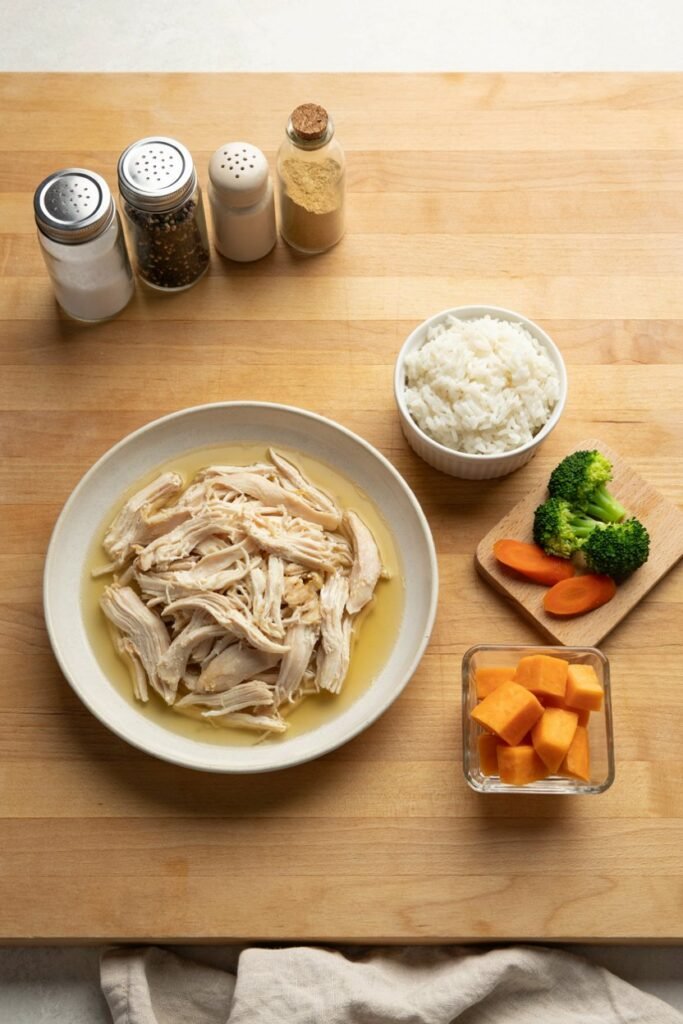
This is the section I take most seriously, because a recipe that looks healthy can still be dangerous if it’s seasoned like something meant for a human dinner table. Never add any of the following to homemade dog food:
- Onions or onion powder
- Garlic or garlic powder
- Chives
- Grapes or raisins
- Chocolate
- Xylitol (a sweetener found in some peanut butters and baked goods)
- Excessive salt
- Seasoning blends, bouillon cubes, or stock that contains any of the above
- Cooked bones of any kind
This recipe should never be seasoned like a human chicken stew. No onion powder, no garlic powder, no bouillon cubes, no heavily salted broth. It might sound bland to you, but dogs don’t need the seasoning — they’re perfectly happy with plain, well-cooked chicken and vegetables.
How to Make Slow Cooker Chicken Dog Food
Step 1: Prepare the Ingredients
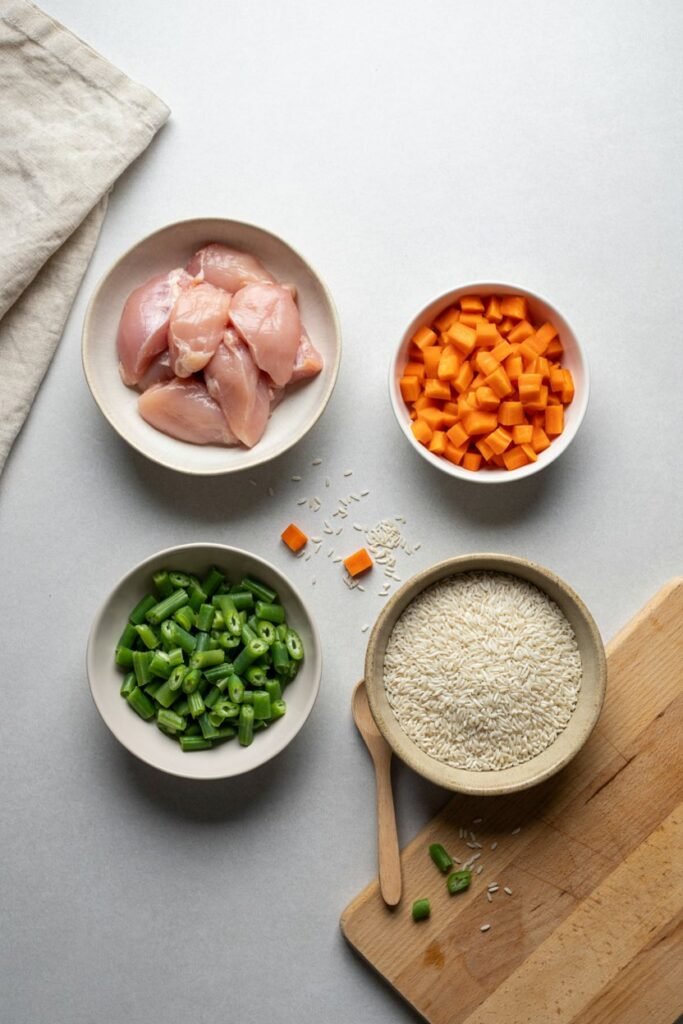
Cut the chicken into large chunks — it doesn’t need to be small since it’ll shred easily after cooking. Dice the carrots into small, bite-sized pieces so they cook evenly and are easy for your dog to chew once done. Trim the green beans and cut them into shorter lengths if they’re large.
Step 2: Add Everything to the Slow Cooker
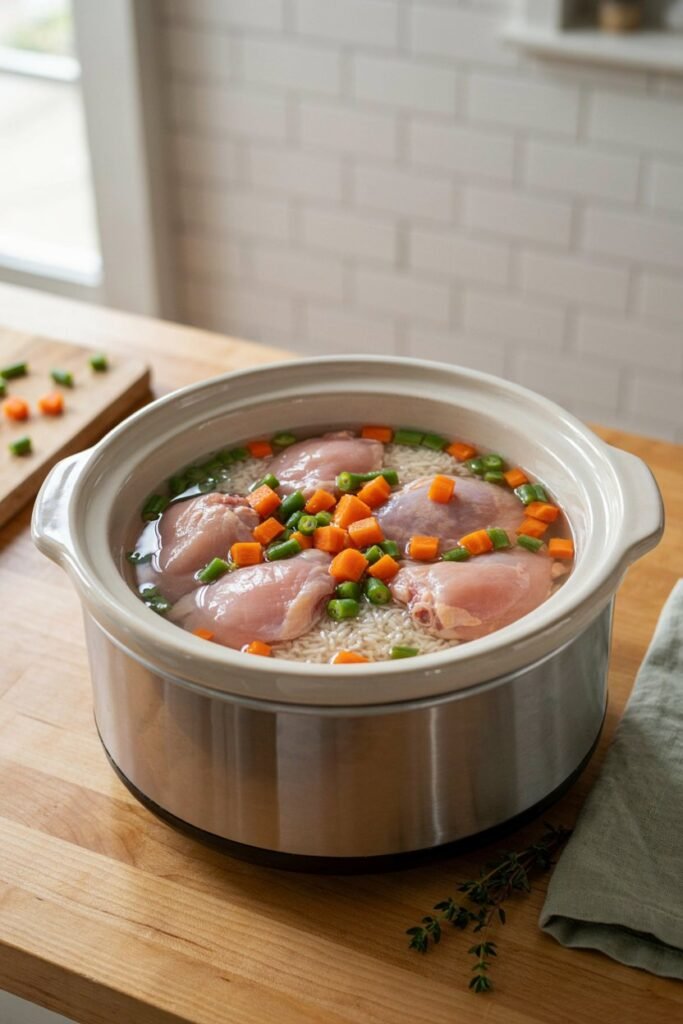
I add the chicken first, then layer the rice, carrots, and green beans on top. Pour in enough water (or unsalted broth) to cover everything by about an inch — the rice will absorb a good amount of liquid as it cooks, so don’t skimp here.
Step 3: Cook
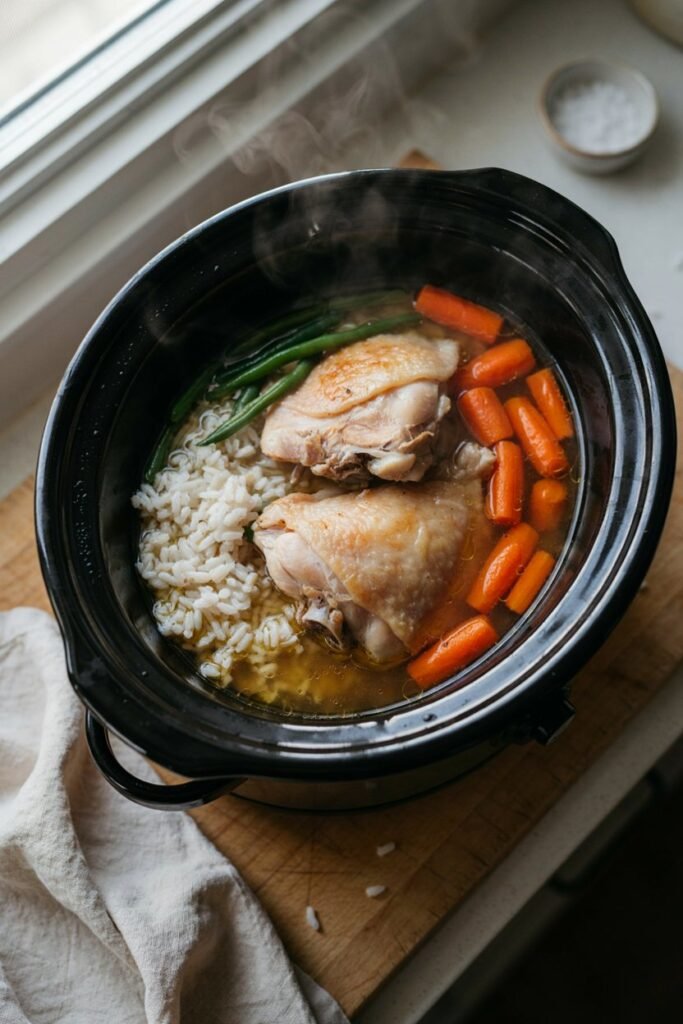
Set the slow cooker to low for 6–7 hours or high for about 4 hours. The chicken needs to reach a safe internal temperature and should be tender enough to pull apart with a fork with almost no resistance.
Step 4: Check the Texture
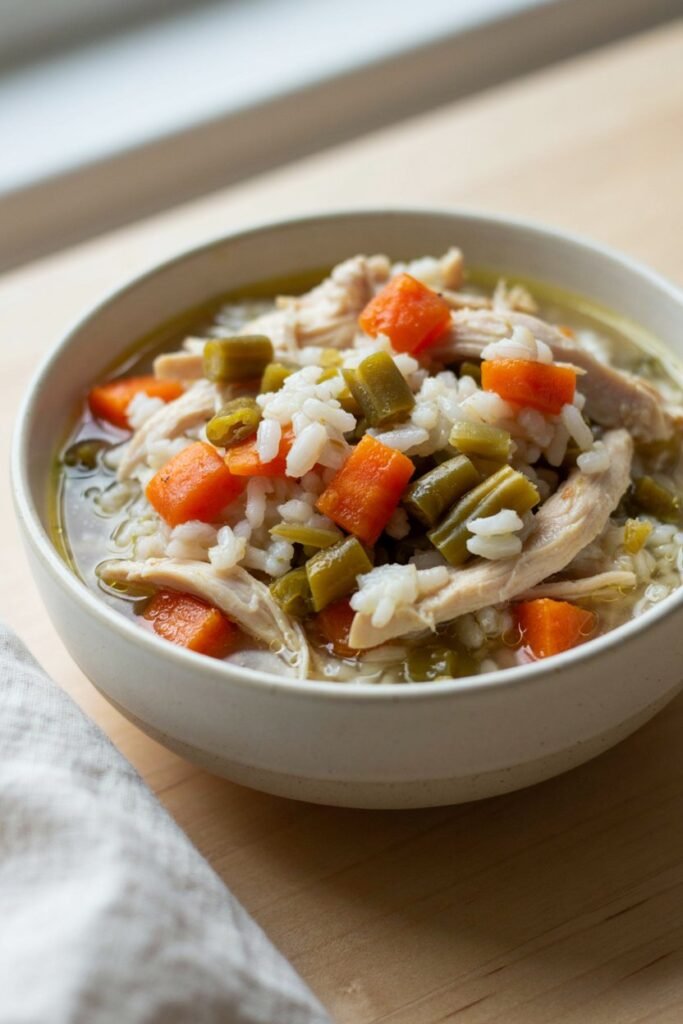
This is where a little personal judgment comes in. I like my dog’s food with the vegetables very soft — soft enough that I could mash them with a spoon — and I shred the chicken fairly fine, finer than I’d shred chicken for my own dinner, because it makes portioning and eating easier for her.
Step 5: Cool Completely
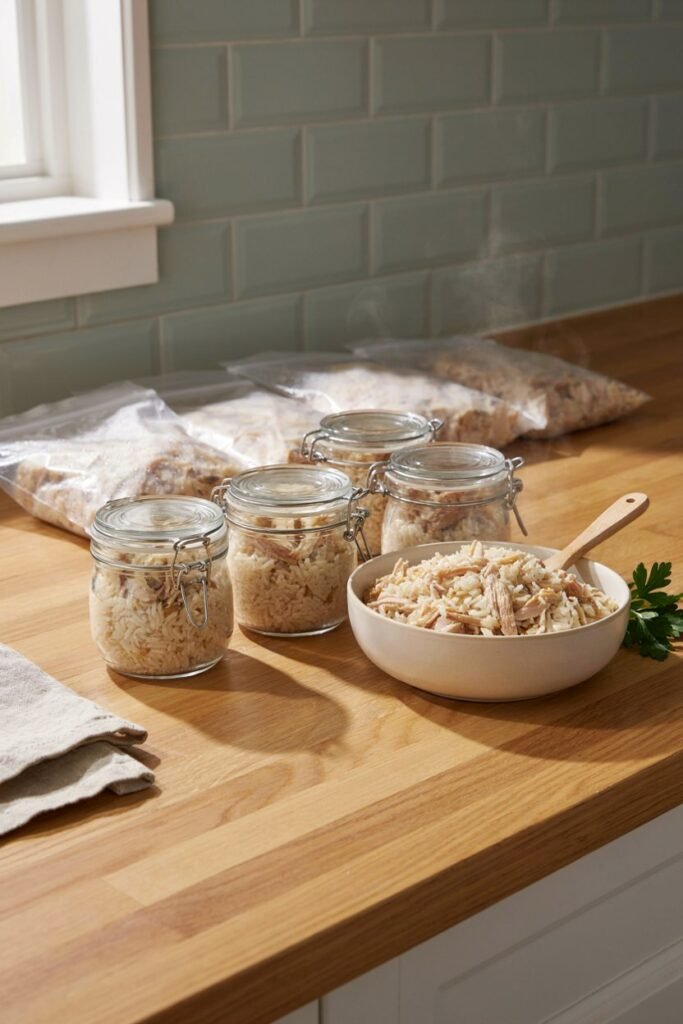
Don’t skip this step. Hot food can burn a dog’s mouth, and it also makes portioning messier. I usually let the pot sit with the lid cracked for 30–45 minutes, then transfer it to shallow containers in the fridge to speed up cooling further.
Step 6: Portion and Store
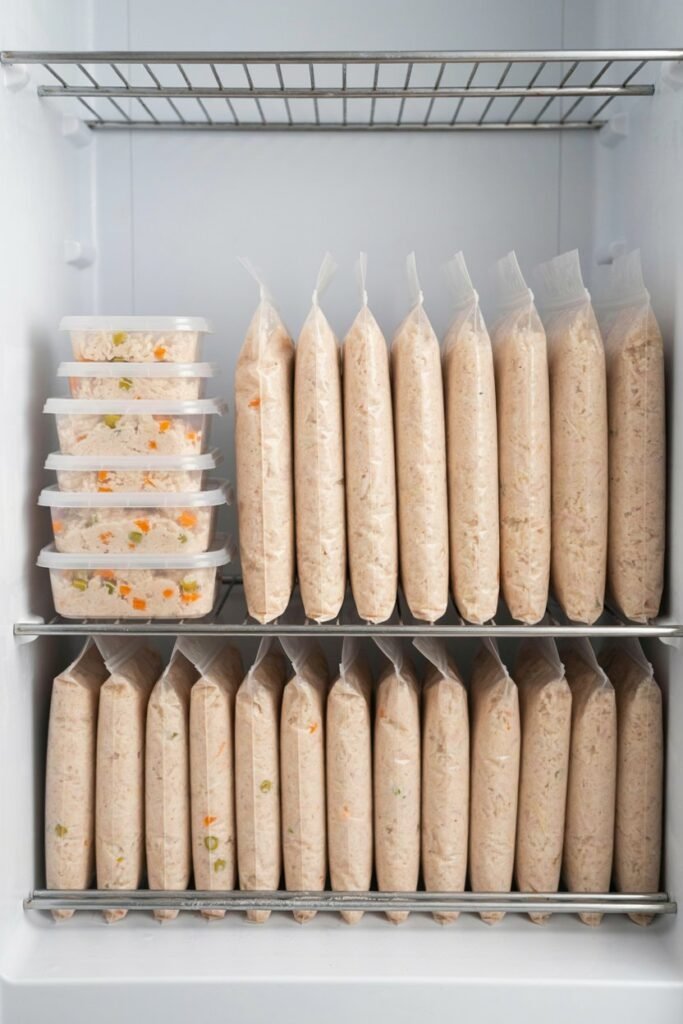
Once fully cooled, divide the food into individual serving-sized portions. I use small glass containers for a few days’ worth in the fridge and freezer bags laid flat for the rest.
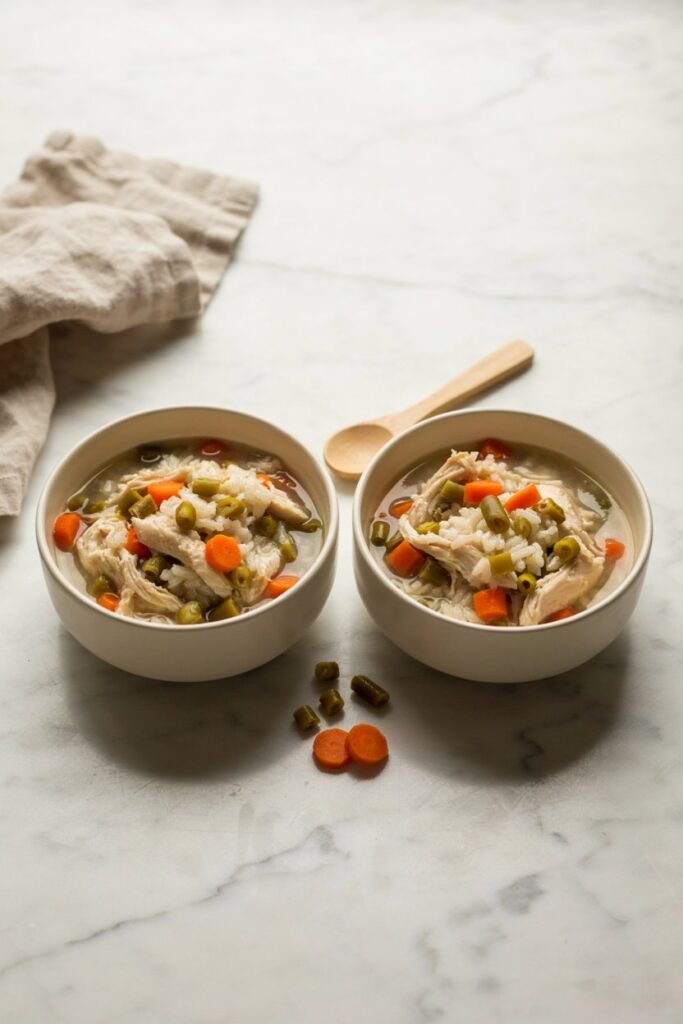
What Should Homemade Dog Food Look Like?
This is a detail a lot of recipes skip, and it’s genuinely useful if you’ve never made homemade dog food before and aren’t sure whether you did it “right.”
- Vegetables: Soft enough to mash easily between two fingers — not mushy to the point of disintegrating, but no resistance when pressed.
- Chicken: Finely shredded, no large chunks, no visible pink.
- Moisture: The mixture should be moist but not soupy — think thick stew, not broth with chunks floating in it.
- Excess liquid: A small amount of extra liquid is fine and can actually help with hydration, but if it looks more like soup than stew, you likely added too much water or didn’t cook it long enough for the rice to absorb it.
- If it’s too dry: Stir in a splash of warm water or unsalted broth until you reach the right consistency.
How Much Should You Feed Your Dog?
I want to be careful here, because serving size is one of those things that gets oversimplified constantly online, and “just feed one cup” isn’t responsible advice. How much homemade food your dog needs depends on:
- Size and current body weight
- Age (puppy, adult, senior)
- Activity level
- Current diet and whether this is a full meal or a topper
- Individual calorie requirements, which vary dog to dog even within the same breed
If you want to use this as a full meal replacement rather than an occasional topper, I’d recommend calculating your dog’s daily caloric needs and working out portions from there, or better yet, discussing amounts with your vet.
For puppies, pregnant or nursing dogs, seniors, or dogs with any medical condition, please talk to your veterinarian or a veterinary nutritionist before making homemade food a regular part of their diet. My homemade cat food for senior cats post touches on similar caution for older pets, and the same logic applies here for dogs.
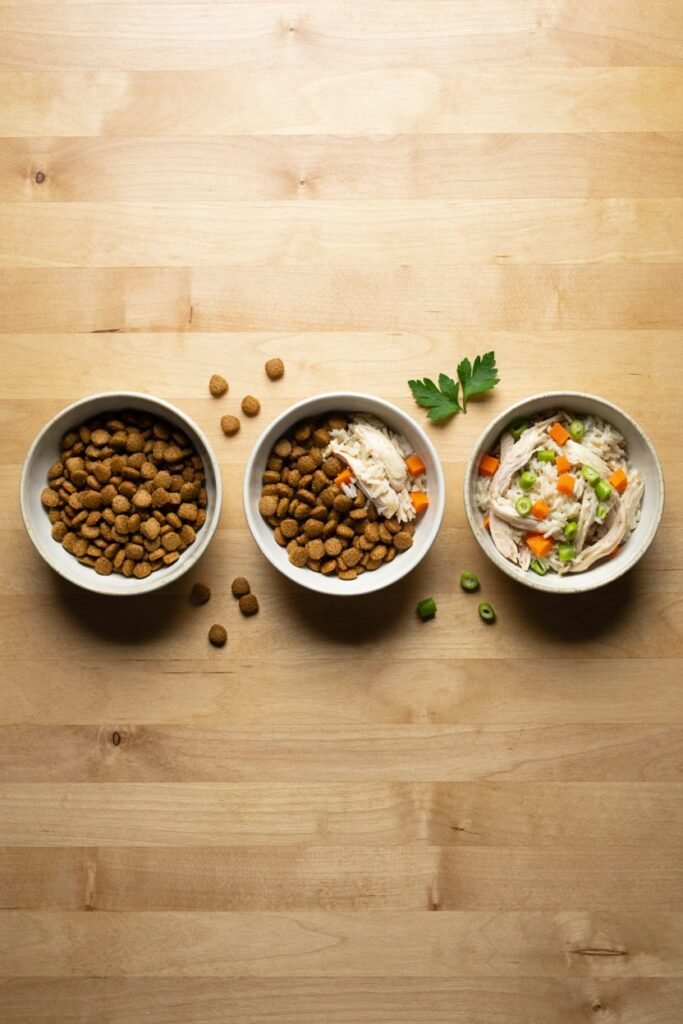
As a general starting point, many owners use this as a topper — a few spoonfuls mixed into regular kibble — rather than a full meal replacement, which sidesteps a lot of the portioning guesswork entirely.
If you’re using it as a full meal, a rough (very rough) starting framework some owners use is somewhere in the range of 2–3% of a healthy adult dog’s body weight per day, split across meals, but this varies enormously based on activity level, metabolism, and the calorie density of your specific batch.
A working dog that spends all day outside will need meaningfully more than a senior lap dog who naps most of the afternoon. This is exactly why I keep coming back to the same advice: use a calculator or your vet’s guidance rather than a flat number, because “one cup for every dog” simply isn’t accurate or safe advice to follow.
Is This Recipe Complete and Balanced?
I want to be honest with you about this, because it’s the part a lot of recipe blogs gloss over.
Chicken, rice, carrots, and green beans make a wholesome, simple meal — but a basic recipe like this should not automatically be treated as a complete and balanced diet for long-term feeding. Dogs need specific amounts of calcium, phosphorus, essential fatty acids, and a range of vitamins and trace minerals that a plain chicken-and-rice dish doesn’t fully provide on its own.
A recipe can look extremely healthy on the surface and still be nutritionally incomplete over time. That doesn’t mean you can’t make this a regular part of your dog’s rotation — it just means that if you want to feed homemade food as their primary diet rather than an occasional meal or topper, you should work with your veterinarian or a board-certified veterinary nutritionist to make sure it’s properly formulated with the vitamins and minerals your dog needs long-term.
This is exactly the same disclaimer I give in my post on the 7 healthiest homemade dog foods, because it applies to virtually every homemade recipe, mine included.
Easy Ingredient Substitutions
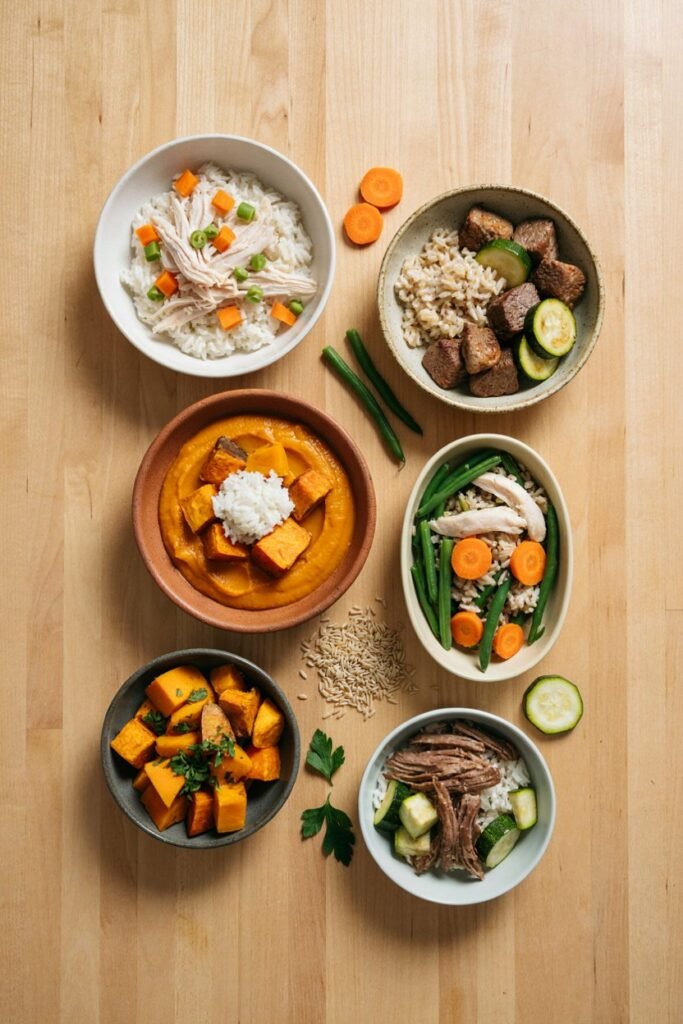
One of the best things about this recipe is how flexible it is. Here are substitutions I’ve used myself:
Chicken thighs instead of chicken breast Thighs have more fat, which can make the food richer and more appealing to picky eaters, but it also means slightly higher calories per serving — something to factor in if your dog needs to manage their weight.
White rice instead of brown rice The texture will be softer and slightly stickier, and it’s easier on sensitive stomachs. This is the swap I make anytime my dog’s stomach seems a little off.
Pumpkin instead of one of the vegetables Swapping in pumpkin changes the consistency to something creamier and can help firm up loose stools. I sometimes do half carrots, half pumpkin.
Other dog-safe vegetables Sweet potato, zucchini, and peas are all reasonable additions or swaps. I wouldn’t recommend randomly throwing in whatever vegetable you have on hand without considering how it changes the overall balance and texture of the dish — stick to known dog-safe options.
If you like the idea of a similar format but want to try beef instead of chicken, my healthy beef and apple stew uses much of the same method.
Homemade Dog Food Troubleshooting
My dog food is too watery
This usually happens when there’s too much liquid relative to the rice, or the rice hasn’t had enough time to absorb it. Let it cook a bit longer with the lid off to reduce the extra liquid, or stir in a few extra tablespoons of rice toward the end.
My dog food is too dry
Stir in a small amount of warm water or plain unsalted broth until you reach a moist, stew-like consistency again.
The chicken is not shredding easily
It likely needs more time. Chicken that shreds easily has been cooked long enough; if you’re fighting with it, put the lid back on and give it another 30–60 minutes.
My dog won’t eat it
Don’t switch foods abruptly. Introduce homemade food gradually alongside their regular diet over several days, slowly increasing the ratio. Sudden diet changes are one of the most common reasons dogs turn their nose up at something new — or worse, get an upset stomach.
Can I freeze it?
Yes. Portion it into individual servings before freezing so you’re not thawing more than you need at once.
Can I make it ahead?
Absolutely — this is one of the best make-ahead dog foods I make. Just refrigerate or freeze promptly after it’s cooled.
How to Store and Freeze Homemade Chicken Dog Food
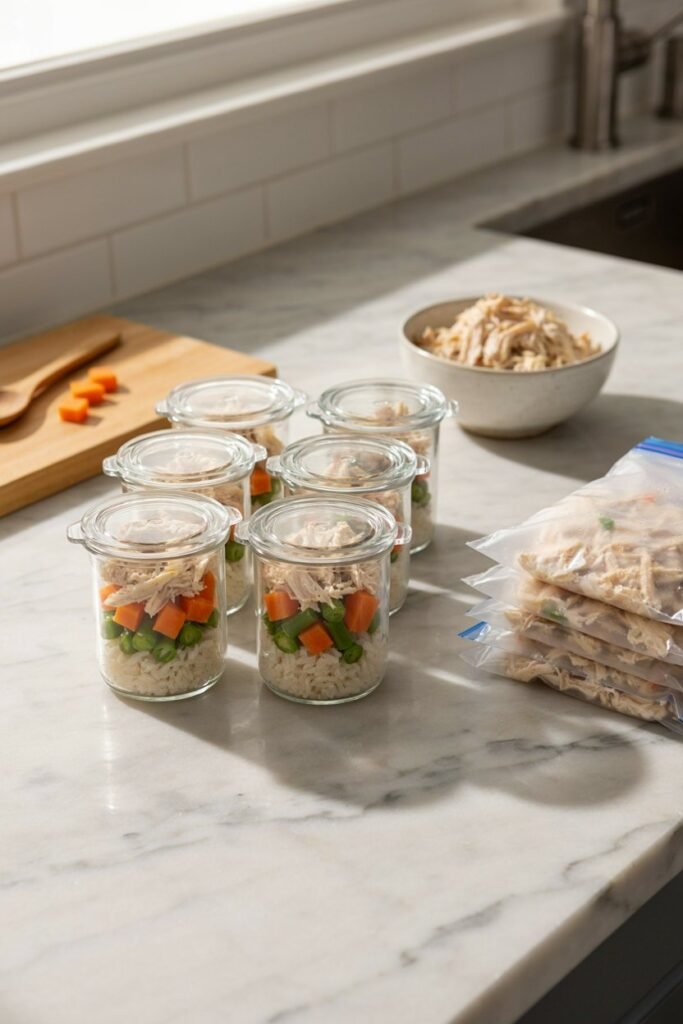
Refrigerator: Store in airtight containers and use within about 4 days. Don’t leave it sitting out at room temperature longer than necessary.
Freezer: Divide into individual portions before freezing so you can thaw only what you need. Freezer bags laid flat save space and thaw faster than a solid block.
Thawing: Thaw in the refrigerator overnight rather than leaving it out on the counter, which lets bacteria grow faster than we’d like.
Reheating: Warm gently and always check the temperature before serving — it should be room temperature or barely warm, never hot.
I also recommend labeling containers with the date you made the batch, especially if you’re keeping multiple types of homemade food in rotation, like this one alongside something like my 3-ingredient peanut butter dog gummies or homemade beef bone broth gummies for treats.
My Tips for Making Homemade Dog Food Easier
A few small things I’ve picked up from making this regularly:
- I shred the chicken while it’s still slightly warm — it comes apart much more easily than once it’s fully cooled.
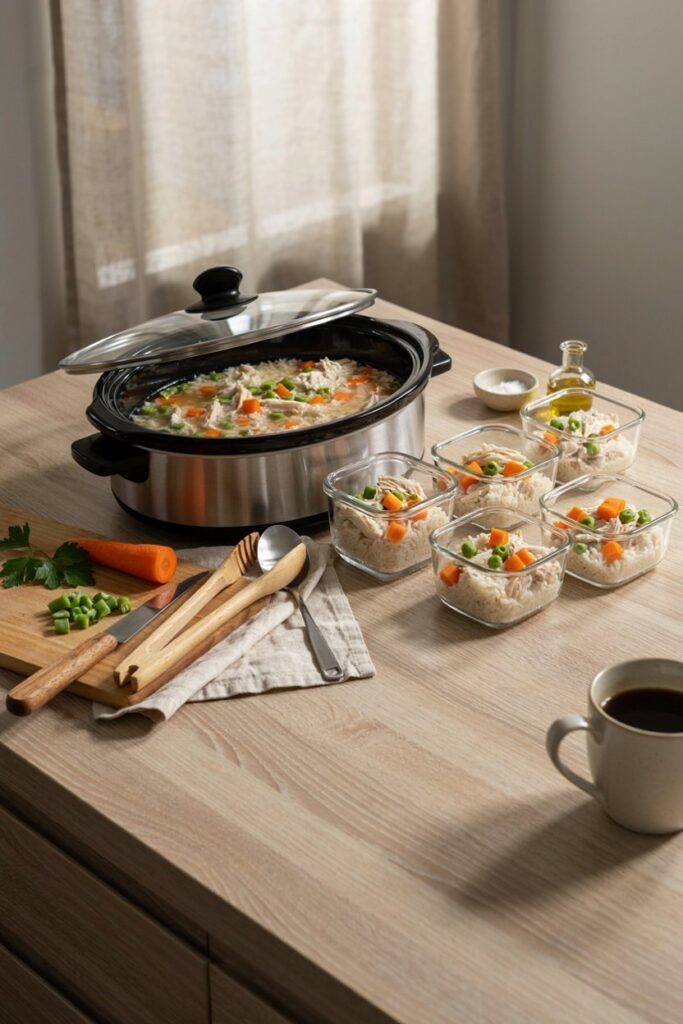
- Cooking on a quiet afternoon works best for me, since once everything’s in the slow cooker, I can walk away and go about my day instead of hovering over a stovetop pot.
- I keep a rotating stash of both this chicken version and a beef version in the freezer, so my dog gets some variety without me cooking twice as often.
- If your dog is a picky eater, a spoonful of this over their regular kibble works as a gentle way to encourage them to eat, similar to how a gravy topper works for cats.
- I always make a double batch — the time cost of doubling ingredients is minimal, and having extra in the freezer means fewer cooking days overall.
Transitioning Your Dog to Homemade Food
If your dog has only ever eaten commercial kibble or canned food, don’t switch them over to this recipe all at once. A sudden change in diet is one of the most common causes of loose stool or an upset stomach in dogs, even when the new food is perfectly healthy.
I introduce homemade food gradually over about a week: start with roughly 25% homemade food mixed into their regular food for a couple of days, then move to 50/50, then 75/25, and finally a full switch if that’s your goal.
If you notice any digestive upset along the way, slow the transition down even further and give their system more time to adjust.
This slow introduction is also a good time to watch for any food sensitivities. Chicken is a common protein in commercial dog food, so most dogs tolerate it well, but if you notice itching, digestive upset, or other unusual symptoms after introducing this recipe, stop and check in with your vet before continuing.
A Note on Variety
I don’t feed my dog the exact same homemade meal every single day, and I’d encourage you not to either, especially if homemade food makes up a significant part of her diet.
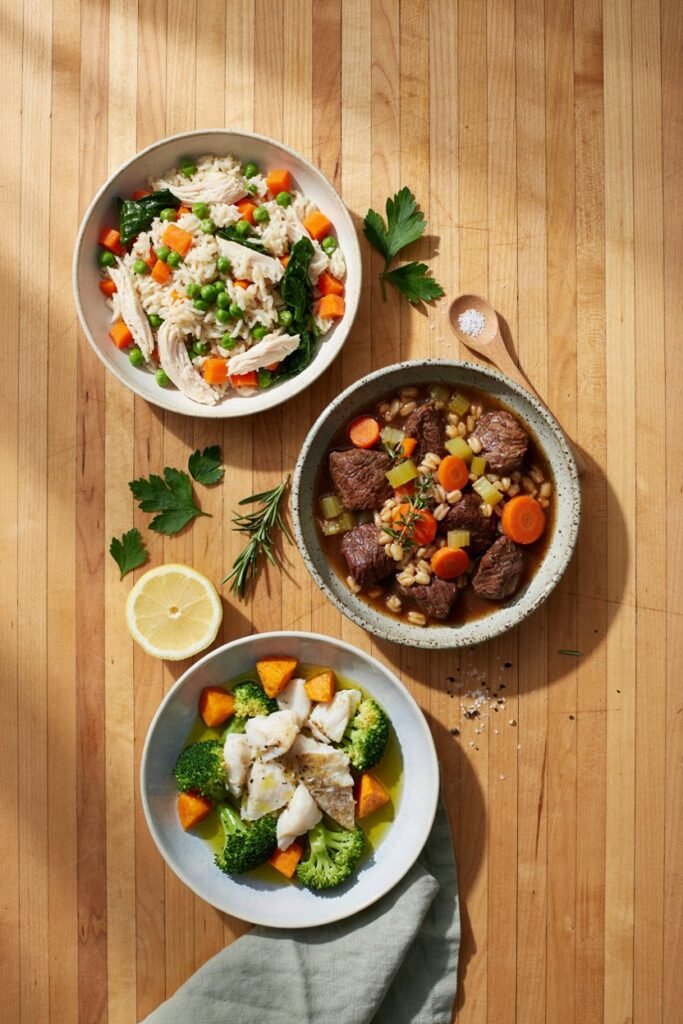
Rotating proteins and vegetables — chicken one week, beef the next, maybe a fish-based meal occasionally — helps provide a broader range of nutrients than any single recipe can offer on its own, and it also keeps mealtime interesting for a dog who might otherwise get bored of eating the same thing day after day.
This chicken version has become a staple in our rotation specifically because it’s so low-effort, but it’s rarely the only thing in the freezer. Having two or three go-to recipes on hand, frozen in labeled portions, makes it easy to mix things up without extra cooking days.
Recipe Card
Slow Cooker Chicken Dog Food
Ingredients
- 2 lbs boneless, skinless chicken breast or thighs
- 1 cup brown or white rice
- 2 large carrots, diced
- 1 cup green beans, trimmed and chopped
- 1/2 cup plain canned pumpkin (optional)
- 4–5 cups water or unsalted chicken broth
Instructions
- Add chicken to the slow cooker, followed by rice, carrots, and green beans.
- Pour in water or broth until ingredients are covered by about an inch.
- Cook on low for 6–7 hours or high for 4 hours, until chicken is fully cooked and easily shreds.
- Shred the chicken directly in the pot and stir in pumpkin if using.
- Let cool completely before portioning.
- Store in the refrigerator for up to 4 days or freeze individual portions for up to 3 months.
Prep time: 15 minutes | Cook time: 4–7 hours | Total time: 4.5–7 hours Yield: 10–12 cups | Storage: Refrigerator or freezer
Notes: Not a complete and balanced diet for long-term feeding without veterinary formulation. Best used as an occasional meal or food topper unless your vet or veterinary nutritionist has helped balance it for daily feeding.
Frequently Asked Questions
Can dogs eat homemade chicken and rice every day? In moderation and as part of a properly balanced diet, yes, but a basic recipe like this shouldn’t be the sole source of nutrition long-term unless it’s been formulated to meet complete nutritional needs. As an occasional meal or topper, it’s a great option.
Can I put raw chicken in the slow cooker? Yes — raw chicken is safe to cook directly in the slow cooker as long as it reaches a safe internal temperature and is fully cooked through by the end.
Can I use frozen chicken? Yes, though it may take slightly longer to cook fully. Always confirm the chicken is completely cooked through before serving.
Can I add vegetables to homemade dog food? Yes, and I’d encourage it — vegetables like carrots, green beans, pumpkin, and sweet potato add fiber and nutrients. Just avoid onions, garlic, and anything from the “never add” list above.
Can I freeze slow cooker dog food? Yes, for up to about 3 months. Portion it before freezing for easier thawing.
How long does homemade dog food last in the refrigerator? About 4 days in an airtight container.
Can puppies eat homemade chicken dog food? Puppies have different and more specific nutritional needs than adult dogs. Talk to your vet before making homemade food a significant part of a puppy’s diet.
Can I replace my dog’s regular food with this recipe? Not without professional guidance to ensure it’s nutritionally complete. As a topper or occasional meal, it’s a wonderful addition.
Can I add supplements? Some owners add vet-recommended supplements to homemade dog food to help fill nutritional gaps. This is worth discussing with your vet if you plan to feed homemade food regularly.
Can dogs eat chicken skin? It’s best to remove the skin. It’s high in fat and can be harder on digestion, especially for dogs prone to pancreatitis or weight gain.
Final Thoughts
This slow cooker chicken dog food has become one of my go-to recipes because it asks so little of me and gives so much back — a happy, food-motivated dog and a kitchen that smells amazing for the rest of the day. It’s simple enough for a first-time homemade dog food maker, but flexible enough that I still make it regularly years later.
If you’re building out a rotation of homemade meals and treats, a few of my other dog recipes pair well with this one: the simple homemade dog food recipes for beginners guide is a good next stop if you want more starter recipes, and the DIY farmer’s dog food Instant Pot recipe is a great option on days when you want something ready faster.
For treats to go alongside meals like this, I love my simple carrot-based dog treat recipes and homemade banana dog treat recipes.
Whatever you decide to make, remember: keep the seasoning out, keep the portions appropriate for your individual dog, and check in with your vet before making any homemade recipe a long-term replacement for a complete diet.