
Easy Fish Meals for Cats
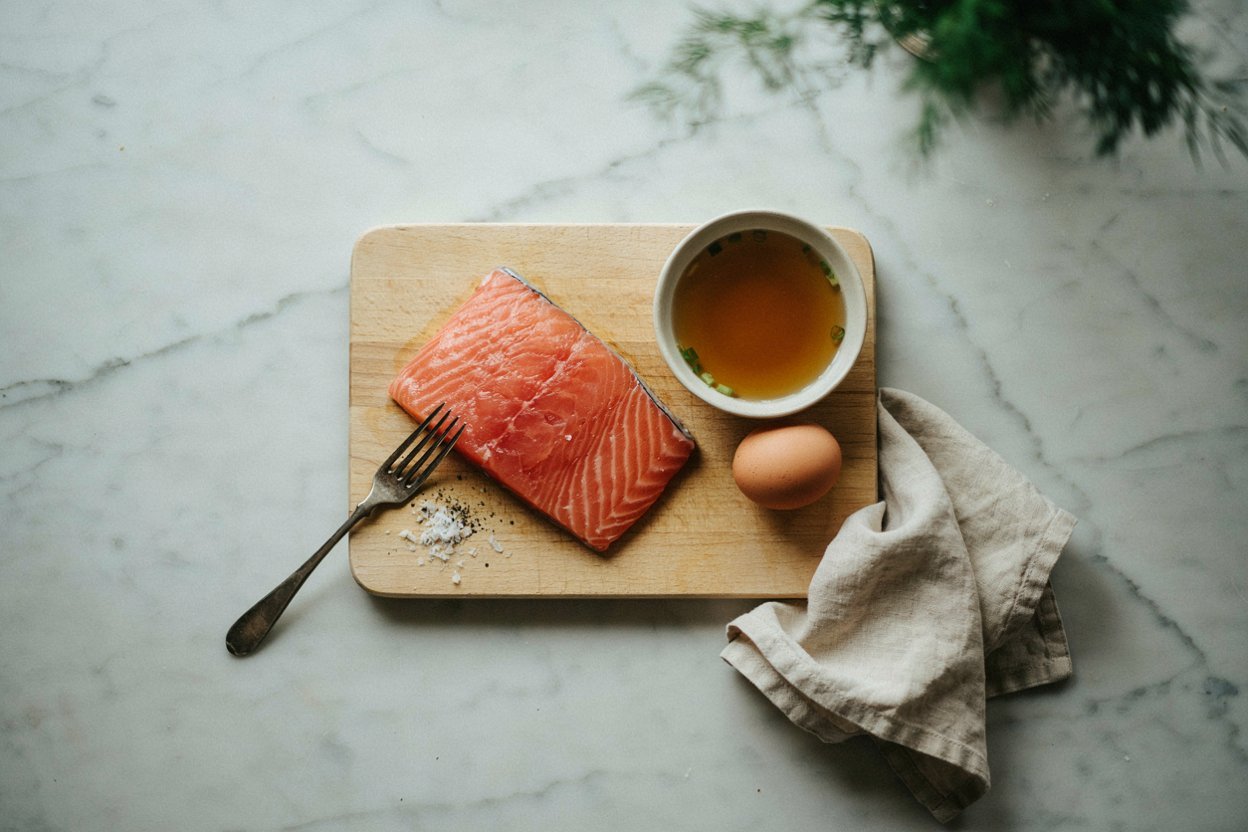
Fish has a reputation as the quintessential cat food, and there’s some truth behind the cliché. The strong aroma of cooked fish genuinely wins over cats who turn their nose up at almost everything else, and it offers real nutritional benefits, particularly the omega fatty acids that support skin, coat, and joint health.
What doesn’t get talked about nearly enough is that fish needs more careful handling than most other proteins in a cat’s diet, from proper cooking to deboning to simply not feeding certain types too often.
This guide walks through one simple, flexible fish meal you can build with whatever fish you have on hand, along with the safety information that actually matters, including why raw fish is a genuine concern and which types need to stay occasional rather than daily.
If you want to build out your homemade cooking rotation beyond fish, a few related guides are worth having open alongside this one.
Homemade chicken cat food recipe and simple homemade cat food with ground turkey offer good non fish starting points, homemade wet cat food recipes cats actually love includes a couple of salmon based recipes that pair well with this one, easy chicken based homemade cat recipes, homemade cat food recipes, and homemade cat food recipes, part two round out your overall rotation, homemade cat food for senior cats and cat weight gain meals cover feeding for specific life stages, cat food ingredients to avoid is worth a look for label reading in general, and beginner homemade cat soup recipes for hydration is a great companion if your cat likes extra moisture with every meal.
Disclaimer
This post may contain affiliate links. As an Amazon Associate, I earn from qualifying purchases at no additional cost to you. I only recommend cat-safe ingredients and kitchen tools that I genuinely find useful for preparing homemade cat meals. Homemade diets can become nutritionally unbalanced if they are not properly formulated, so consult your veterinarian or a qualified veterinary nutritionist before making homemade meals a regular part of your cat’s diet.
Shop on Amazon With 50% Discount On Your Orders
- Digital Kitchen Scale – I use this to measure fish and other ingredients accurately so portions stay consistent.
- Stainless Steel Mixing Bowls – I use these whenever I prepare homemade cat food because they are sturdy, easy to clean, and useful for mixing ingredients.
- Freezer-Safe Meal Prep Containers – I use these to portion homemade cat meals into individual servings and keep extra portions organized in the freezer.
Why Fish Appeals to Cats So Strongly
A cat’s sense of smell is dramatically more sensitive than a person’s, and fish carries an aroma that tends to register as genuinely irresistible to most cats, likely tracing back to how strongly scented prey signals freshness and fat content in the wild.
Beyond palatability, fatty fish like salmon and mackerel offer meaningful amounts of omega 3 fatty acids, which support skin and coat health and may help with inflammation related conditions, something leaner proteins like chicken breast don’t provide nearly as much of on their own.
Why Fish Needs More Careful Handling Than Other Proteins
Raw fish carries real risk. Many types of raw fish contain an enzyme called thiaminase, which breaks down thiamine, an essential B vitamin, in a cat’s body.
Feeding raw fish regularly can lead to a genuine thiamine deficiency over time, which is exactly why this recipe calls for fully cooked fish rather than raw. Cooking deactivates the enzyme and also eliminates the parasite risk associated with raw fish.
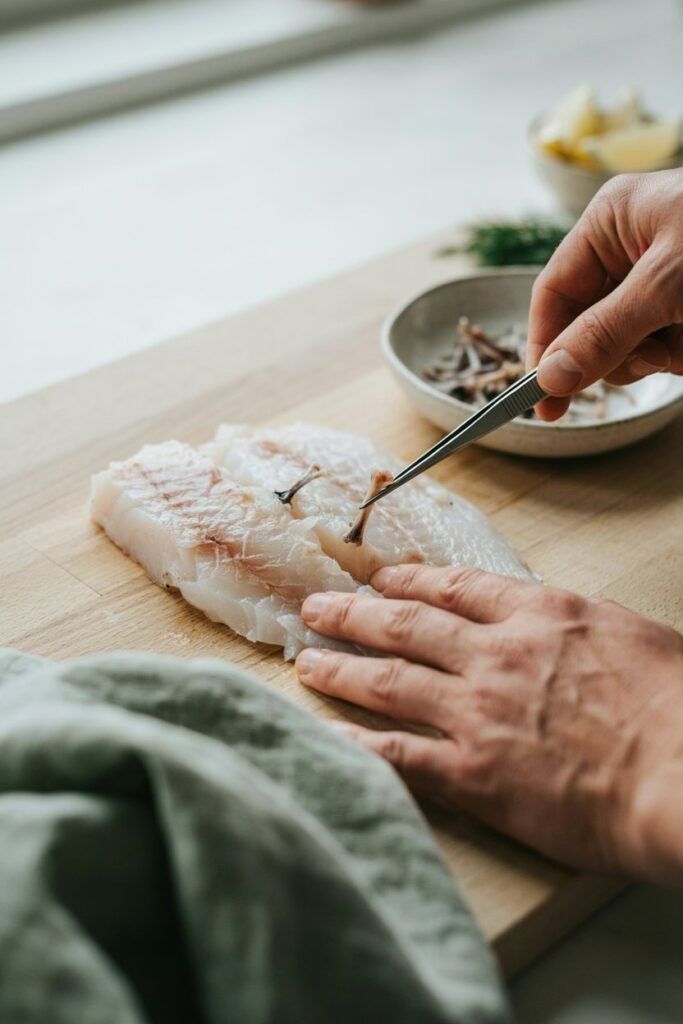
Bones are a genuine hazard. Fish bones are often smaller and more brittle than bones from other proteins, making them easy to miss during preparation and genuinely dangerous if swallowed. Thorough deboning is worth taking slowly rather than rushing through.
Some fish carry more mercury than others. Larger, longer lived fish, particularly certain tuna species, accumulate more mercury over their lifespan than smaller fish like sardines. This doesn’t mean tuna is unsafe in moderation, but it does mean it should stay an occasional addition rather than a daily staple.
Skip anything canned in oil, brine, or with added seasoning. Plain, water packed fish or fish you cook yourself gives you the most control. Oil packed varieties add unnecessary fat, and anything seasoned for human consumption often contains salt, garlic, or onion powder that has no place in a cat’s meal.
An Important Note Before You Start
As with any homemade recipe, it’s worth being upfront that a fish based meal isn’t automatically a complete and balanced diet just because it uses real, whole ingredients.
Cats need adequate taurine, calcium, and a full range of vitamins and minerals in specific amounts that a simple recipe doesn’t fully provide on its own.
Used as an occasional meal or a topper, this recipe is genuinely useful. Used as a cat’s sole, everyday diet, it needs a proper taurine and calcium supplement added according to your veterinarian’s guidance, ideally with a full review to confirm it’s genuinely complete for daily use.
Easy Fish Meal for Cats
Yield: About 3 to 4 small servings Prep Time: 5 minutes Cook Time: 15 to 20 minutes Total Time: About 25 minutes Storage: Refrigerate up to 2 days, freeze up to 2 months
Ingredients
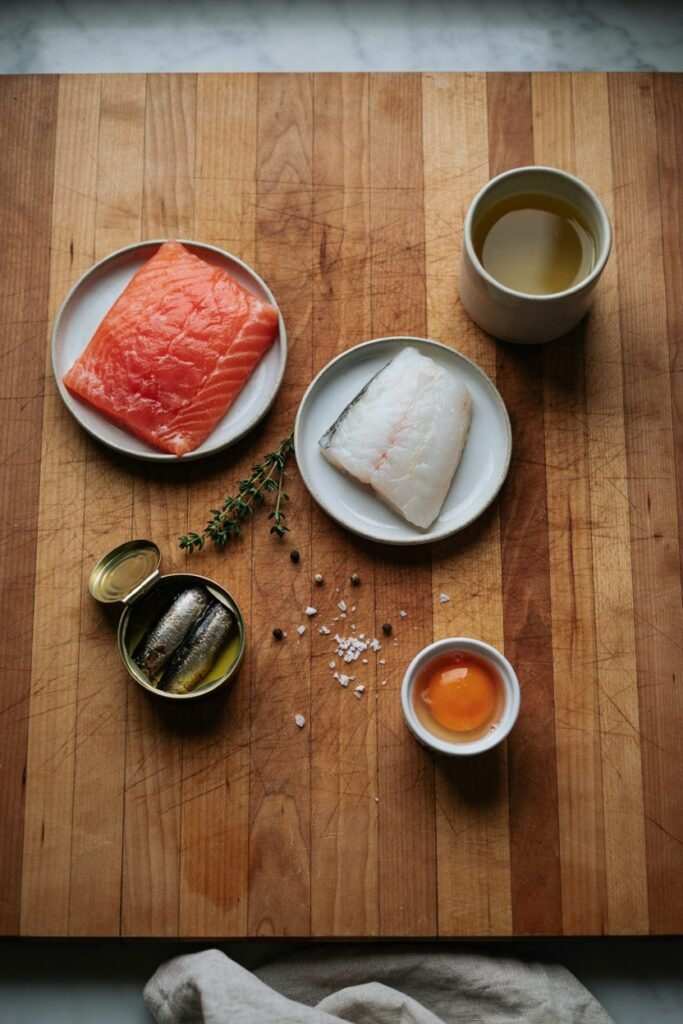
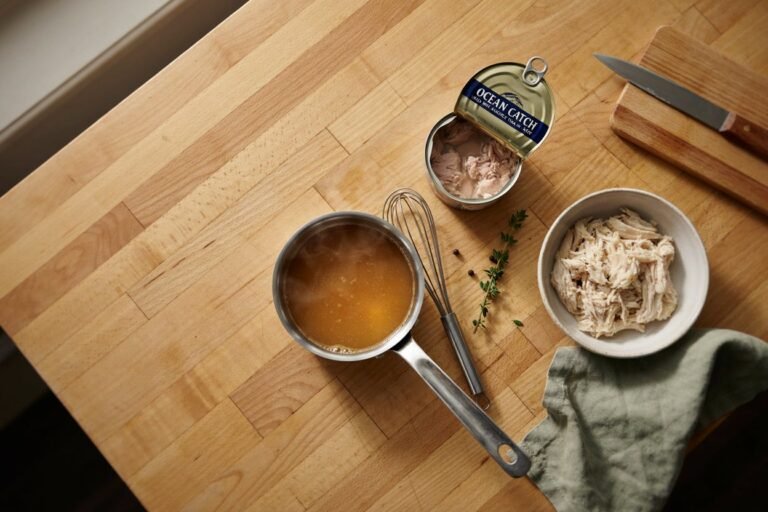
- 1 cup fish of your choice, fully cooked and completely deboned, flaked or diced. Salmon and mackerel offer the richest omega fatty acid content and the strongest aroma, whitefish like cod or haddock is milder and gentler on digestion, and sardines packed in water offer a lower mercury alternative with soft, generally safe bones once cooked. Whichever you choose, the fish is the entire foundation of this meal, so quality and thorough deboning matter more here than in almost any other ingredient in your cat’s rotation.
- 1 egg, fully cooked, optional. Egg adds extra protein and helps bind the mixture into a smoother, more cohesive texture, particularly useful if you want something closer to a pate consistency.
- 2 tablespoons low sodium broth, onion and garlic free. Broth loosens the mixture into an appealing, easy to eat consistency and adds a bit of extra moisture, which matters given how little cats tend to drink on their own.
- A vet recommended taurine and calcium supplement, stirred in once cooled. Not optional if this becomes a regular meal, since fish alone doesn’t reliably provide enough of either nutrient.
How to Make It
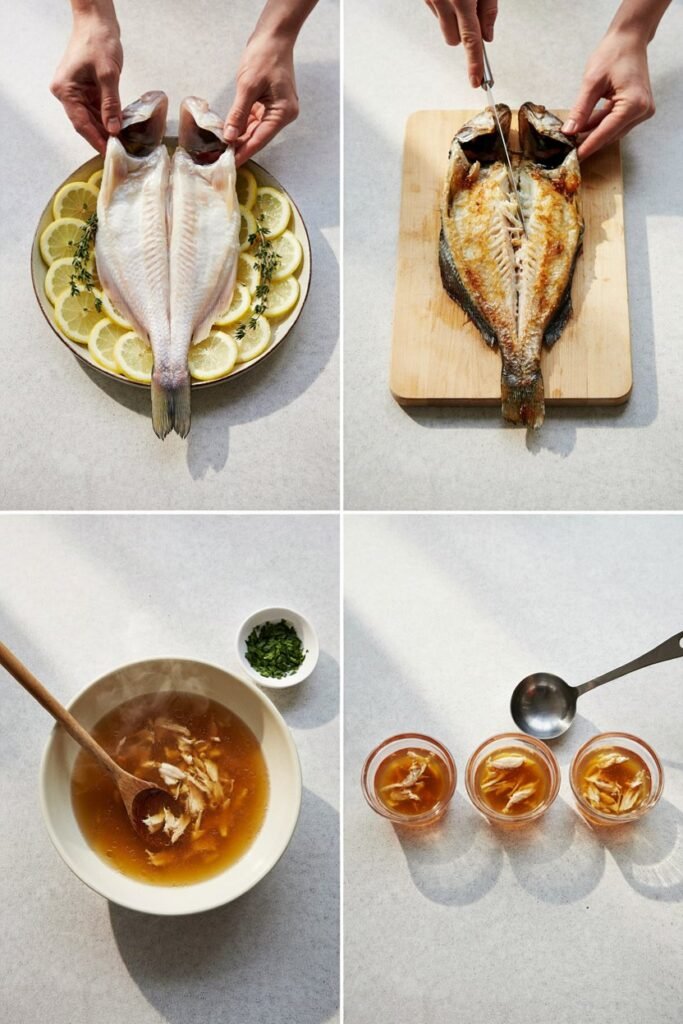
- Cook your chosen fish thoroughly, whether by baking, poaching, or steaming, with nothing added.
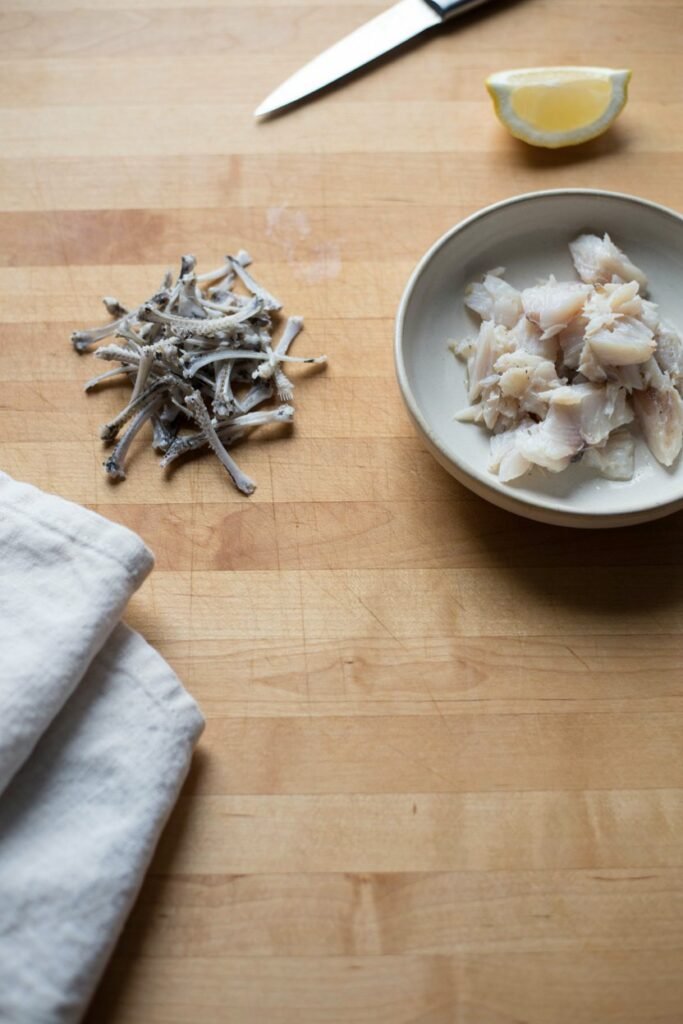
- Once cooked, carefully remove every bone, checking more than once if you’re working with a bonier variety.
- Flake or dice the fish into small, cat appropriate pieces.
- If using egg, cook it fully and either chop it finely or blend it with the fish for a smoother texture.
- Warm the broth gently, then stir it into the fish, and egg if using, until you reach a consistency your cat enjoys, whether that’s a looser, broth soaked texture or a smoother, blended pate.
- Let the mixture cool to room temperature, then stir in the supplement.
- Portion into small servings before refrigerating or freezing.
How Much to Serve
A few tablespoons per meal is appropriate for most adult cats, adjusted for their size and overall diet. Working with your veterinarian to determine a more precise daily amount is the most reliable way to get portions right, particularly if fish is going to be a regular part of your cat’s rotation.
Storage
Refrigerator. Store in a clean, airtight container and use within about 2 days, since fish based food spoils faster than some other homemade meals.
Freezer. Portion into small, individual servings before freezing, generally holding quality for up to 2 months, though texture may shift slightly after thawing.
Serving. Only put out the amount your cat will finish in one sitting, and promptly refrigerate or discard leftovers rather than leaving fish based food sitting out for an extended period.
How Often Should Cats Eat Fish?
Fish works best as a regular part of a varied rotation rather than the sole protein in a cat’s diet, and how often depends on which type you’re using.
Lower mercury options like whitefish and sardines can appear more frequently, while higher mercury fish like tuna should stay an occasional addition, generally no more than once or twice a week at most, and in modest portions even then.
Rotating between a few different fish types, and mixing in non fish proteins like chicken or turkey throughout the week, gives you variety without leaning too heavily on any single ingredient.
How to Transition Your Cat to This Recipe
Introduce this recipe gradually rather than replacing your cat’s regular food all at once. Start with a small amount mixed into their current food, and increase the proportion slowly over about a week, watching appetite and stool quality along the way.
If your cat refuses the new food outright, don’t encourage prolonged fasting to try to force the switch, since cats that stop eating for an extended period can develop serious health problems.
Persistent appetite loss is a reason to contact your veterinarian rather than continuing to push the transition on your own.
Common Mistakes to Avoid
Feeding raw fish. This is the single most important mistake to avoid given the thiamine deficiency risk and parasite concerns associated with raw fish.
Leaving bones in the final meal. Fish bones are small and easy to miss, which makes careful, thorough deboning worth the extra time every single time.
Feeding tuna too often. Its strong appeal can make it tempting to reach for repeatedly, but its higher mercury content relative to smaller fish means it should stay an occasional addition.
Using fish canned in oil or seasoned sauce. Both introduce unnecessary fat or unsafe ingredients like salt and garlic that a plain, water packed or home cooked version avoids entirely.
Skipping the taurine supplement for regular feeding. Fish alone, however appealing, doesn’t automatically provide everything a cat needs for daily, long term nutrition.
Frequently Asked Questions
Can cats eat fish every day? Lower mercury options like whitefish or sardines can be part of a frequent rotation, but fish as a whole works best mixed with other proteins rather than being the sole daily ingredient, and higher mercury fish like tuna should stay occasional.
Is raw fish ever safe for cats? No, raw fish carries a genuine risk of thiamine deficiency from the enzyme thiaminase, along with a parasite risk, which is why this recipe calls for fully cooked fish.
Which fish is best for cats? There’s no single best option. Salmon and mackerel offer strong omega fatty acid content, sardines offer a lower mercury alternative, and whitefish like cod provides a milder, gentler option, so rotating between them offers the most balanced approach.
Can kittens eat fish based meals? In small amounts, generally yes, though a kitten’s overall diet should be reviewed by a veterinarian given their more specific growth related nutritional needs.
Why can’t I use canned tuna in oil? Oil packed tuna adds unnecessary fat that isn’t beneficial the way the fish’s natural omega fatty acids are, and it can contribute to an upset stomach or unwanted weight gain if used regularly.
Are fish bones ever safe once cooked? No, cooked fish bones remain a genuine choking and injury risk and should always be removed completely before serving, regardless of how soft they may appear.
Can I freeze this recipe? Yes, portioning it into small servings before freezing works well, though texture can shift slightly after thawing, particularly if you’ve blended it into a smooth pate.
Does fish cause allergies in cats? Fish is one of the more common food sensitivities reported in cats, so it’s worth introducing this recipe gradually the first time and watching for signs of itching, digestive upset, or other unusual reactions.
How do I know if my cat has had too much mercury from fish? There’s no simple at home test, which is exactly why moderation and variety matter, particularly with higher mercury fish like tuna. If you have specific concerns, your veterinarian can offer guidance tailored to your cat’s situation.
Is it okay to season fish for a cat the way I would for myself? No, plain preparation is essential. Salt, garlic, onion, and other seasonings common in human cooking are unsafe for cats regardless of how mild the amount seems.
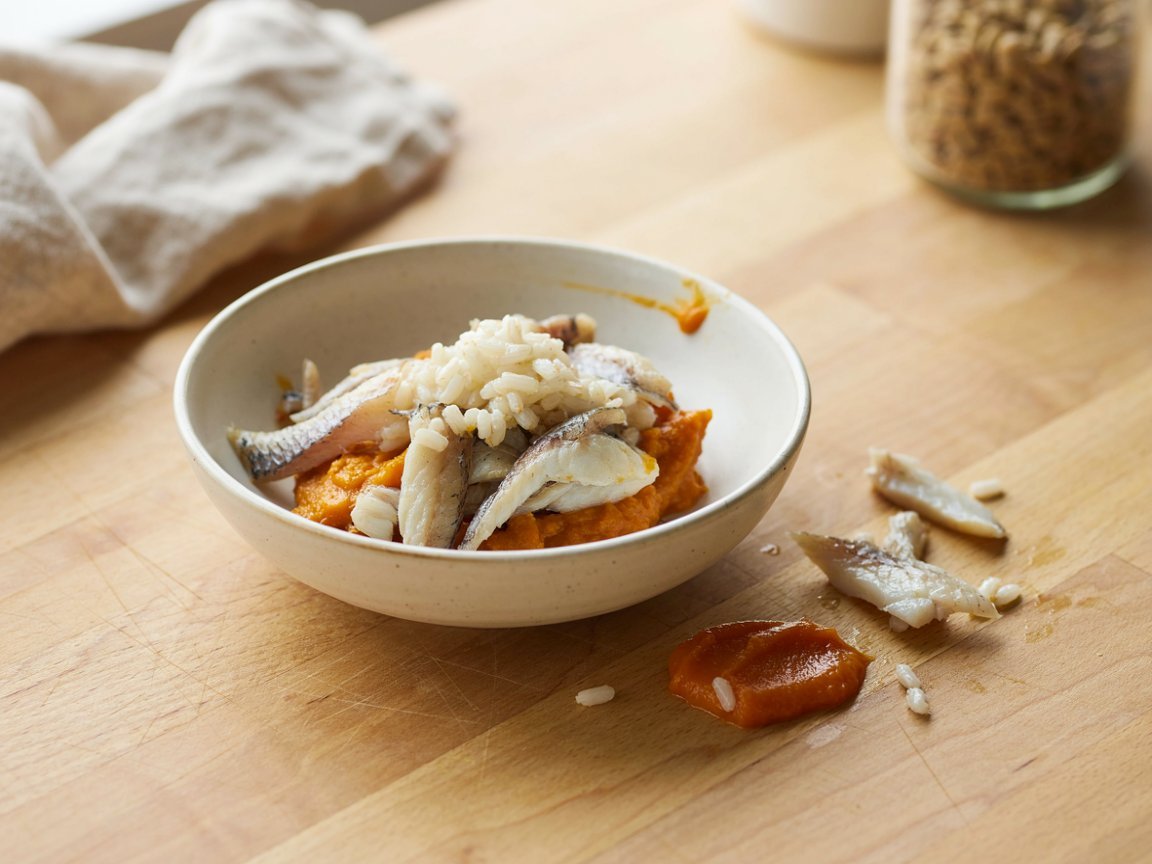
Easy Homemade Fish Meal for Cats
Ingredients
Equipment
Method
- Cook the fish thoroughly without adding oil, butter, salt, garlic, onion, or seasonings.
- Allow the fish to cool slightly, then carefully check for and remove all bones.
- Flake the fish into small, bite sized pieces.
- Add the cooked fish, pumpkin, and rice to a clean mixing bowl.
- Add the warm water and gently mix until the ingredients are evenly combined.
- Allow the meal to cool completely before serving.
- Use plain, fully cooked fish and carefully remove all bones before serving. Avoid smoked, salted, seasoned, fried, or canned fish containing added ingredients.
- This recipe is best treated as an occasional homemade meal or topper unless it has been specifically formulated to meet your cat’s complete nutritional requirements.
Final Thoughts
Fish earns its reputation as a cat favorite honestly, but that appeal comes with real responsibility around preparation, deboning, and moderation that’s easy to overlook when a cat is clearly begging for more.
One simple base recipe, made with whichever fish you have on hand and rotated thoughtfully throughout the week, gives you the nutritional benefits and the enthusiastic reaction without leaning too heavily on any single fish or skipping the safety steps that actually matter most.



2 Comments